
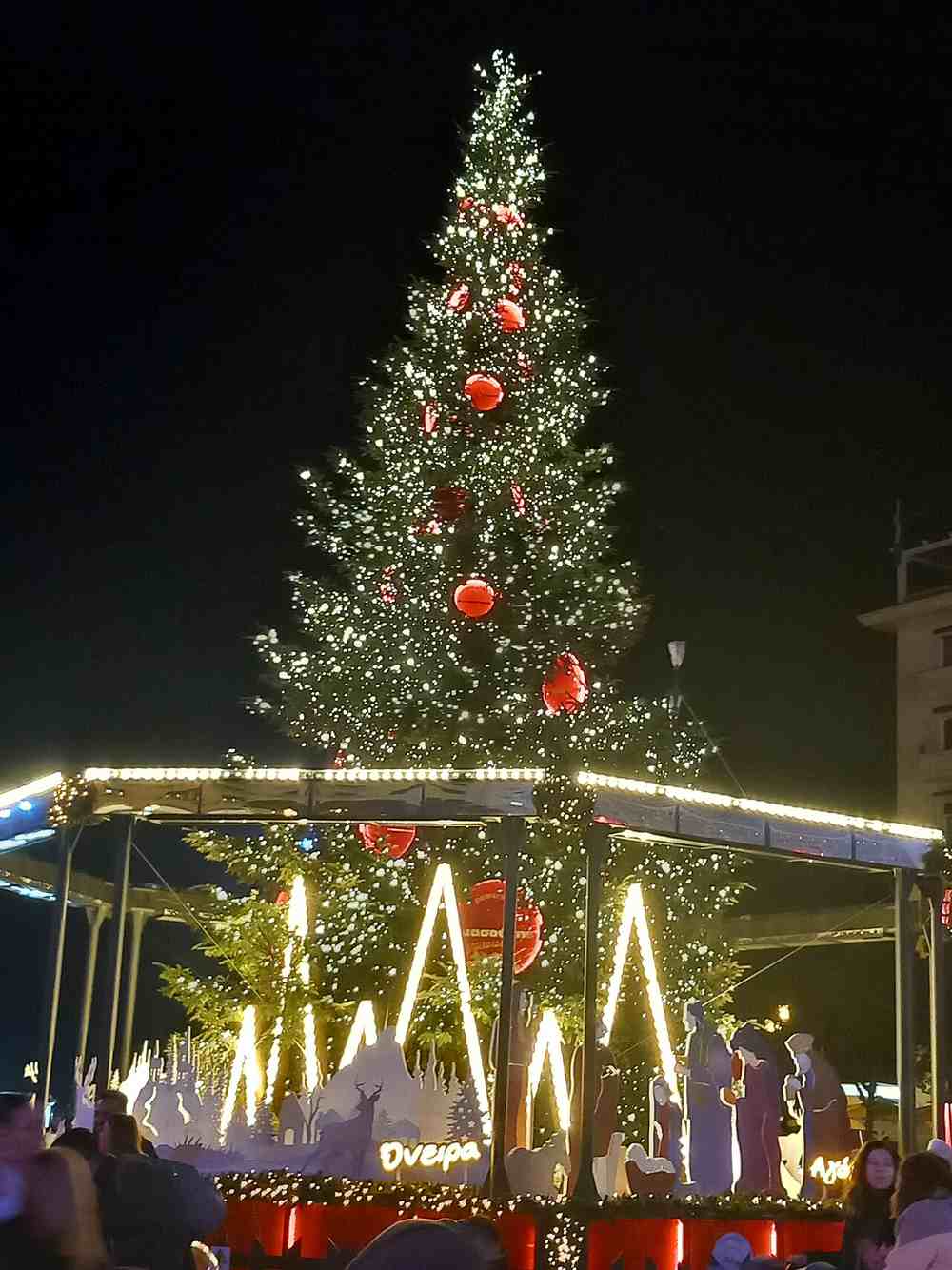
Thessaloniki turns inward in winter, and the season suits the city. The maritime air stays mild but damp, the daylight runs short, and the crowds of summer thin to a fraction of the peak numbers. That shift pushes the day into the museums, the churches, the covered markets, and the cafés that line the streets of the centre. Room rates drop, the seafront empties, and the festive lights climb Aristotelous Square through the holidays. Plan a cold-month visit around the indoor sights, the warming food, and the day trips to the snow with My Greece Tours.
A winter trip rewards a traveller who packs for rain and builds the day around shelter and warmth. The sections below cover whether the city is worth a cold-month visit, the weather and what to pack, the indoor sights that fit the short days, the Christmas and New Year season, the winter food, and the day trips that still work once the snow falls on the mountains. The later parts point toward the ski centres and the waterfalls, and toward the guided Thessaloniki tours that tie the centre together in any weather.
Is Thessaloniki worth visiting in winter?
Yes. Thessaloniki rewards a winter visit with thin crowds, lower room rates, and a compact centre full of indoor sights. The mild maritime climate rarely freezes, and the festive season lights the waterfront through the holidays.
The city carries its life indoors through the cold months, which plays to its strengths. Thessaloniki packs its museums, its Byzantine churches, its bathhouses, and its café culture into a walkable core, so a wet afternoon never strands a visitor far from shelter. The summer heat that drives travellers to the beaches gives way to a cool, workable climate for walking the centre. A winter trip trades the sea and the sun for the indoor heritage and the food, a fair exchange for anyone drawn to history and the table.
The economics of the season favour the winter traveller. Hotels drop their rates once the summer peak passes, and the rooms near Aristotelous Square that fill in high season open up through the cold months. The queues at the White Tower and the museums shorten, and the seafront promenade clears of the summer throng. A visitor weighing the calendar can read the trade-offs in a guide to the best time to visit Thessaloniki, and a note on where to stay in Thessaloniki maps the best base near the centre.
The holiday season lifts the centre from late in the year. Aristotelous Square fills with a festive market, strings of lights climb the buildings, and the waterfront glows after dark. The student population keeps the cafés and bars busy through the term, so the nightlife holds up even as the tourist numbers fall. The season carries its own draw for anyone who prefers a city at work over a city on show.
What is the weather like in Thessaloniki in winter, and what should you pack?
Thessaloniki stays cool and damp through winter. Daytime highs sit near eight to ten degrees in the coldest months, nights fall close to freezing, and rain arrives often. The sea keeps hard frost and heavy snow rare along the coast.
The winter runs from late autumn into the early spring, with December, January, and February at its core. The daytime figures hover in the high single digits through those months, and the nights drop toward one or two degrees. January reads as the coldest stretch of the year, yet the mercury holds above hard frost most days near the water. The gulf moderates the air and keeps the deep cold of the northern interior off the city itself.
Rain marks the season more than cold. The wet spells roll in off the sea and settle over the centre for days at a stretch, so an umbrella earns its place in the bag. Snow reaches the city on rare occasions and seldom holds on the streets, though it dusts the hills behind the town and blankets the mountains inland. The damp cuts sharper than the temperature suggests, and the wind off the water adds a chill along the exposed seafront.
The packing list follows the damp. A warm, water-resistant coat, a folding umbrella, and shoes that shrug off puddles cover the core of a winter trip. Layers work better than a single heavy garment, since the heated interiors of the museums and the cafés run warm against the cold street. A scarf and gloves earn their keep on the windier evenings by the water. The dress stays casual across the city, so comfort on foot matters more than anything formal.
What indoor sights suit the short winter days?
The short days push a winter visit indoors, and Thessaloniki obliges. Its archaeological and Byzantine museums, its domed churches, its covered markets, its Ottoman bathhouses, and its dense café scene keep a traveller warm through a wet afternoon.
The two great museums of the city anchor a rainy day. The Archaeological Museum holds the gold of the Macedonian kings and the finds of the wider region, and the Museum of Byzantine Culture traces the art of the empire that shaped the town. A slow circuit of either fills a morning under a warm roof. A traveller can plan a run of the city’s museums across a wet stretch and cover the ancient and the Byzantine collections without stepping back into the rain for hours.
The Byzantine churches double as shelter and heritage. The domed interiors of the great basilicas hold their mosaics and their frescoes against the weather, and the round hall of the Rotunda keeps its gold vaults dry through any storm. The set of Palaeochristian and Byzantine monuments earns its place on the UNESCO list, and the winter quiet lets a visitor read the interiors without the press of a summer crowd. Each church sits a short walk from the next across the centre.
The covered markets and the old bathhouses carry the day when the rain sets in hard. The stalls of the Modiano and Kapani markets trade fish, cheese, olives, and spice under a roof, and the tavernas tucked among them serve a warm plate at the counter. The Ottoman hammams that dot the centre stand open as monuments, their domed chambers a window on the bath culture of the old city. The market and the bath fill the gaps between the museums and the churches.
The café culture completes the indoor day. Thessaloniki drinks more coffee per head than any other Greek city, and its cafés run full from morning to night through the winter. A window seat over a slow frappe or a hot espresso is the local answer to a grey afternoon, and the coffee culture doubles as the social engine of the town. The student crowd keeps the tables busy, and the warmth of the rooms draws a visitor in off the wet street for an hour at a time.
What are the Christmas and New Year celebrations like in Thessaloniki?
Thessaloniki lights up for Christmas and New Year across the centre. Aristotelous Square carries the main tree and a festive market, the waterfront glows after dark, and the streets fill with shoppers, carols, and holiday stalls through the season.
The festive season centres on Aristotelous Square, the grand plaza that opens onto the sea. The city raises its main tree there, strings the arcades with lights, and sets up a market of wooden stalls that trade crafts, sweets, and hot drinks. The lights run down the avenues and along the waterfront, so an evening walk from the square to the White Tower passes under a canopy of colour. The mild damp air and the glow off the water give the promenade a soft winter mood after dark.
The cultural calendar peaks as the cold sets in. The Thessaloniki International Film Festival, held each November, fills the cinemas and the port warehouses with screenings and draws a crowd of directors and cinephiles to the city. The concert hall and the theatres run a full winter programme of music and stage work. A festive fair with an indoor ice rink sets up on the fairgrounds through the holidays, a draw for families and children.
The student season keeps the city awake through the cold months. The university fills the centre with a young crowd once the term runs, and the bars of Ladadika and the lanes off the front stay busy on winter nights. The energy holds well past the tourist season, driven by locals rather than visitors. A traveller who wants the after-dark side of the city can follow the nightlife from the café tables of the early evening to the bars that run late.
What winter food should you try in Thessaloniki?
Thessaloniki eats well in the cold. The winter table runs to bougatsa fresh from the oven, patsas soup on a raw morning, slow-cooked stews, and long tsipouro sessions with warm meze across the tavernas of the centre.
The morning starts with bougatsa, the layered filo pastry that the city claims as its own. The bakeries pull it from the oven through the day, and the version filled with semolina custard and dusted with sugar warms a cold start better than any pastry. A savoury bougatsa of cheese or minced meat serves as a walking breakfast between sights. The pastry runs so deep in the local habit that a study of bougatsa reads as a study of the city’s mornings.
The cold-weather kitchen turns to soup and slow cooking. Patsas, the tripe soup seasoned with garlic and vinegar, holds its place as the classic winter warmer and the traditional cure for a long night out. The tavernas fill their menus with stews of beef and rabbit, baked beans, and greens through the season. A hot bowl or a slow-cooked plate suits the damp afternoons, and the restaurants of the centre lean into the heavier fare once the temperature drops.
The evening belongs to tsipouro and meze. The local habit gathers a table around small plates, grilled octopus, fried anchovies, cheeses, and pickles, with the clear spirit poured cold against the food. A tsipouradiko session stretches for hours, plate after plate arriving with each round, and the warmth of the room and the drink pushes back the winter outside. The custom runs strongest in the cold months, when the long table indoors is the point of the night.
What winter day trips work from Thessaloniki?
Winter day trips run in every direction from Thessaloniki. The snow settles on Mount Olympus, the Vermio ski centres of Seli and Tria-Pente Pigadia open their slopes, and the Edessa waterfalls run full with the winter rain and melt.
The mountains south and west of the city wear their snow through the winter. Mount Olympus, the highest peak in the country and the seat of the ancient gods, rises white above the coast within a couple of hours of the centre. The lower trails and the mountain villages stay reachable in the cold, and the archaeological park of Dion sits at its foot. A winter run to the mountain trades the summer hiking for the snow-capped view and the quiet of the off-season slopes.
The ski centres of Mount Vermio put a day on the slopes within reach of the city. Seli and Tria-Pente Pigadia, the two resorts on the Vermio range, open their lifts and runs once the snow falls, and both sit close enough for a there-and-back day from Thessaloniki. The pistes suit families and mid-level skiers, and the mountain towns of Naoussa and Veria add a warm lunch and a fireside to the trip. The snow holds through the heart of the winter on the higher runs.
The waterfalls and the wetlands draw the winter traveller west. Edessa, the town of running water, sends its falls over the cliff at their fullest once the winter rain and the melt feed the streams. The spray and the flow run harder in the cold months than at any other time, and the tumbling waterfalls of Edessa reward the short drive from the city. The nearby lakes and the wine country of Naoussa round out a day that pairs the water, the vineyards, and a warm regional table.
The winter day trip rewards an early start and a check of the road. The daylight runs short from December into February, so a departure soon after breakfast leaves room for the drive, the site, and a warm lunch before dark. The mountain passes toward the ski centres carry snow and ice at their height, and a guided run or a car with proper tyres removes the worry of the road. The falls, the slopes, and the peaks all lie within a two-hour reach, which keeps a there-and-back day comfortable even in the cold.
Frequently Asked Questions
How many days do you need in Thessaloniki in winter?
Two to three days cover Thessaloniki in winter at a comfortable pace. A first day handles the museums, the Rotunda, and the seafront, a second the churches, the markets, and the upper town, and a third a day trip to the snow or the waterfalls. The short daylight and the indoor focus reward a slower plan, and a winter Thessaloniki itinerary leaves room for the rain.
Is it cold in Thessaloniki in winter?
Thessaloniki stays cool rather than harshly cold. The daytime highs sit in the high single digits through December, January, and February, and the nights fall toward one or two degrees. Hard frost and lying snow stay rare near the water, though the damp and the wind off the sea cut sharper than the figures suggest. A warm coat and an umbrella handle the season.
Does it snow in Thessaloniki?
Snow reaches the city on rare occasions and seldom holds on the streets, since the gulf keeps the coast milder than the interior. The mountains inland tell a different story, where deep snow blankets Olympus and the Vermio range through the winter. A traveller who wants the snow finds it on a day trip to the ski centres rather than in the centre itself.
What is there to do in Thessaloniki in winter?
The winter day runs indoors through the museums, the Byzantine churches, the covered markets, and the Ottoman bathhouses of the compact centre. The cafés and the tavernas carry the social side, and the festive market on Aristotelous Square lights the holidays. Day trips to Mount Olympus, the Vermio ski slopes, and the Edessa waterfalls add the outdoors, so the season never leaves a visitor short of a plan.
When is the Thessaloniki International Film Festival?
The Thessaloniki International Film Festival runs each November, as the autumn turns to winter. It fills the cinemas of the centre and the restored warehouses of the port with screenings, premieres, and talks, and draws directors and film lovers from across the world. The festival ranks among the major film events of the region, and it opens the cultural season that carries the city through the cold months.
Are prices lower in Thessaloniki in winter?
Yes. Hotel rates drop once the summer peak passes, and the rooms near Aristotelous Square that sell out in high season open up at lower prices through the cold months. The crowds thin at the museums and along the seafront, and the tables at the tavernas free up. A winter visit trades the warm sea for a quieter, cheaper, and more local city.