

A day trip from Thessaloniki to Pella reaches the capital of the Macedonian kingdom and the birthplace of Alexander the Great, a short drive west across the plain of the Axios. The ancient city spreads over an open archaeological site of streets, houses, and public squares, and its pebble mosaics rank among the finest to survive from the Greek world. A modern museum gathers the finds, from the marble head of Alexander to the great floor of the Stag Hunt signed by its maker. Cross the agora, read the mosaics, and set the Macedonian capital in order with My Greece Tours.
The visit rewards a half-day on the plain, with the open site and the museum a short walk apart at the edge of the modern village. The sections below cover what the day trip takes in, what Pella meant to Macedon under Philip the Second and Alexander, and what survives across the site, the mosaics, and the museum. The later parts turn to the drive west, the bus toward Edessa, and the way Pella pairs with Vergina and the other towns of the plain, the shape a guided run of Thessaloniki tours tends to follow.
What does a day trip from Thessaloniki to Pella cover?
A day trip from Thessaloniki to Pella takes in the open archaeological site of the ancient Macedonian capital, its celebrated pebble mosaics, and the Archaeological Museum of Pella, the city that raised Alexander the Great.
Pella lies roughly forty kilometres west of Thessaloniki, out on the flat farmland of the Axios plain toward Giannitsa and Edessa. The drive runs mostly on open road and takes under an hour, which places the site within easy reach of the city for a morning start. The remains sit beside the modern village that carries the ancient name, and the ground stays level and walkable across the whole excavated grid.
The visit splits into two parts a short walk apart. The open site holds the streets, the houses, and the vast agora of the ancient city, with several mosaic floors set in place where they were found. The museum, raised on rising ground above the ruins, gathers the movable finds and the finest of the pebble mosaics under one roof. A traveller reads the city in the field and then meets its treasures indoors, or works the order in reverse.
The site fills a half-day with room to spare, which makes Pella a natural half of a longer loop across the Macedonian plain. Most visitors fold it into a run that also reaches Vergina, the later royal burial ground, so the two ancient capitals read in one day. The pairing heads the list of day trips from Thessaloniki for travellers who follow the trail of Philip the Second and his son.
The day suits anyone drawn to the roots of the Macedonian kingdom rather than the beaches of the north. Walkers, families, and readers of ancient history all find their footing here, the ground open and the story plain. A guide draws the city plan out of the bare foundations and names the myths worked into the mosaics, which the stones alone keep quiet.
What was ancient Pella in Macedonian history?
Ancient Pella served as the capital of the Macedonian kingdom from the end of the fifth century BC. Philip the Second ruled from the city, and Alexander the Great was born here in three hundred and fifty-six BC.
King Archelaus moved the seat of the kingdom to Pella from Aigai, the older royal centre in the hills to the south. The choice set the court on the plain beside a navigable lagoon, closer to the sea and the trade of the Aegean. The city grew into the largest in Macedon over the following century, laid out on a planned grid that marked it as a capital built to a design rather than a town grown by chance.
Philip the Second turned Pella into the seat of an expanding power that came to command the whole of Greece. From this court he drilled the army and the phalanx that would carry his son across Asia, and here the young Alexander grew up before his tutor Aristotle taught him at nearby Mieza. The older capital at Aigai kept its role as the royal burial ground, where the royal tombs at Vergina hold the gold of Philip and his line.
The city stood on the shore of a shallow lagoon that opened to the Thermaic Gulf through a channel, which gave the inland capital a working harbour. Silt carried down by the rivers of the plain filled that lagoon across the centuries, so the sea drew back and left Pella stranded among farmland. The visitor who stands on the site today looks out over fields where ships once rode at anchor below the walls.
Roman armies broke the Macedonian kingdom in the second century BC, and Pella lost its rank to the new provincial order. An earthquake and the shift of power toward Thessaloniki drained the old capital of its life, and the city faded into ruin over the late ancient centuries. The plough worked its buried streets for generations before excavation brought the plan of the Macedonian capital back into the light.
What can you see at the Pella archaeological site?
The Pella archaeological site preserves the planned grid of the ancient capital: the great agora at its heart, the wide colonnaded streets, the grand peristyle houses with their mosaic floors, and the palace on the hill to the north.
The city followed a regular grid of streets that crossed at right angles, the plan that Greek builders of the age laid over a new town. Broad avenues ran the length of the site, lined with columns and drained by a network of stone channels and clay pipes beneath the pavement. That water system marks Pella as a capital built with care, its blocks measured out and its drains cut before the houses rose above them.
The agora formed the commercial and civic heart of the city, one of the largest public squares of the ancient Greek world. Colonnades framed a vast open court, and behind them ran ranks of workshops and shops where potters, metalworkers, and merchants plied their trade. Stamped clay, coin dies, and the waste of the workshops came out of these rooms, which fix the agora as the engine of the city’s wealth.
The grand houses spread across the blocks north of the agora, their rooms set around open peristyle courtyards ringed with columns. The archaeologists named two of them for the mosaics found inside, the House of the Abduction of Helen and the House of Dionysos, each a mansion of the ruling class. Their floors, their bathrooms, and their scale show the wealth of the Macedonian elite who lived within sight of the royal court.
The palace itself crowned the hill on the northern edge of the city, a vast complex of courtyards, halls, and colonnades that looked down over the streets below. Excavation of the royal quarter continues, and the palace stays closed to visitors while the work goes on. The rest of the grid lies open, so a walk through the agora and the houses carries a traveller across the daily fabric of the Macedonian capital.
What are the famous pebble mosaics of Pella?
The pebble mosaics of Pella are floor pictures built from natural river stones, laid in the grand houses of the fourth century BC. They include the Stag Hunt signed by Gnosis, the Lion Hunt, and Dionysus riding a panther.
The mosaicists of Pella worked in coloured pebbles gathered from the rivers of the plain, set close together to draw figures against a dark ground. Thin strips of lead and clay marked out the sharpest lines, the edge of a limb or the fall of a cloak, where the pebbles alone could not hold the detail. The technique reached its height in these floors, the last great flowering of pebble mosaic before cut stone tesserae took its place.
The Stag Hunt stands as the masterpiece of the set, a pair of nude hunters closing on a stag with sword and axe against a plain field. Its maker signed the floor with the words that name Gnosis as the one who made it, a rare mark of a mosaicist’s own hand in the ancient world. The balance of the bodies and the depth of the modelling place the work among the finest floors to survive from Greece.
The House of Dionysos gave up two more of the great floors, the Lion Hunt and the god Dionysus himself riding a panther. The Lion Hunt shows two men and a lion locked in a struggle that many read as a scene from the life of Alexander and his companions. The Abduction of Helen and an Amazon battle came out of the neighbouring mansion, so the myths of Greece run across the floors of the Macedonian elite.
The floors set in place at the open site let a visitor read the mosaics where the ancient rooms once stood, while the originals of the finest work moved indoors for safety. The pebble ground rewards a slow look, since the pictures gather out of thousands of small stones only as the eye settles. A guide names the hunters and the gods and ties each floor to the house that held it.
What does the Archaeological Museum of Pella hold?
The Archaeological Museum of Pella gathers the finds of the ancient capital across thematic halls: the marble head of Alexander, the original pebble mosaics, grave goods, terracotta figures, coins, and the tools of the city’s workshops.
Entry to the site and the museum is set out on the Pella tickets page, with where to buy them, e-tickets and reduced entry.
The marble head of Alexander the Great greets visitors near the entrance, a portrait of the king who was born in the city that the museum serves. Around it the halls trace the life of Pella through the objects that came out of its houses, its agora, its sanctuaries, and its graves. The collection reads as the biography of a single city rather than a survey, which gives the visit a clear thread from room to room.
The finest pebble mosaics moved here from the houses of the site, so the Stag Hunt and its companions can be studied indoors under steady light. Set at the level of the eye or a little above, the floors reveal the run of the pebbles and the lead lines that the open ground keeps at a distance. The museum lets a visitor read the craft of the mosaic close up, where each stone shows its place in the picture.
The halls of daily life and the cults fill out the story with the smaller finds of the city. Terracotta figures, painted pottery, glass, jewellery, and the grave goods of the cemeteries stand beside the coins struck by the Macedonian kings. Clay moulds, tools, and half-worked pieces from the workshops of the agora show the crafts that made the capital rich, from metalwork to the shaping of clay.
The museum makes a natural pair with the great state collection in the city, so a visit to Pella deepens a later look at the Archaeological Museum of Thessaloniki and its Macedonian gold. The two together trace the kingdom from its capital on the plain to the finds gathered across the wider region. A guided visit ties the objects in the cases to the streets and houses just downhill.
How do you get to Pella from Thessaloniki?
Pella lies roughly forty kilometres west of Thessaloniki, a drive of under an hour along the road toward Edessa. Buses of the regional KTEL network run the same route and stop near the site.
The drive west runs out of the city onto the open road that crosses the plain toward Edessa and Florina. The route stays flat and direct, and the trip takes under an hour by car in normal traffic. A car gives the freedom to hold the site and the museum to your own pace and to chain Pella with Vergina or Edessa in the same day, which the traveller who books a rental car in Thessaloniki can arrange with ease.
The regional KTEL buses toward Edessa and Florina leave from the intercity station on the western edge of Thessaloniki and pass the site of Pella on the way. A traveller without a car can ride the bus to the stop by the ruins and cross to the site and the museum on foot. The return runs along the same road, so a day at Pella works by public transport for those content to plan around the schedule.
A guided coach tour lifts the planning off the traveller altogether and folds the site into a set route across the Macedonian plain. The guide handles the drive, the entry, and the order of the site and the museum, and reads the mosaics and the history along the way. The run suits a first visit, when the bare foundations and the myths of the floors gain most from a hand to draw them out.
The site and the museum together fill about half a day, which leaves the rest for a second stop on the plain. A morning at Pella pairs cleanly with an afternoon at Vergina, or with the waterfalls of Edessa further west, so the drive out of the city earns a full day in the field. A planned Thessaloniki itinerary sets the two halves in the right order and keeps the day within reach.
How does Pella pair with Vergina, Veria, Naoussa, and Edessa?
Pella pairs most often with Vergina, the royal burial ground of the Macedonian kings, to read the two capitals in one day. It also combines with Veria, the wine country of Naoussa, and the waterfalls of Edessa.
The classic loop joins Pella and Vergina, the working capital and the royal necropolis of the same kingdom. Pella shows the city where Alexander grew up, while the royal tombs at Vergina hold the burials of his father and his dynasty under the Great Tumulus. The two sites lie a short drive apart across the plain, so a single day carries a traveller from the streets of the capital to the graves of its kings.
The town of Veria sits between the two ancient sites and makes a natural stop for lunch and its own Byzantine churches. A visit to Veria and its old quarter breaks the drive and adds a later chapter of the region’s history to the day. The road ties the three together, so the plough-land of the Macedonian plain reads as one route rather than three separate errands.
The wine country around Naoussa rises in the foothills to the west, where the Xinomavro grape yields the reds of the northern vineyards. Further out, the waterfalls of Edessa spill through the heart of the town on the same westward road, and a run to the waterfalls of Edessa pairs the ancient plain with its greenest corner. Each turns the day at Pella into a fuller loop across the region.
The wider trail of ancient Macedon reaches south to Dion as well, the sacred city of the kingdom below Mount Olympus. A visit to Dion and its sanctuaries sits on a separate axis from Pella, yet it completes the map of the Macedonian world for a traveller with more than one day. Together the sites carry the story of the kingdom from its capital and its graves to its holy ground.
Which artists worked at the royal court of Pella?
King Archelaus filled his new capital at Pella with artists from southern Greece. The playwright Euripides and the painter Zeuxis worked at his court, and Euripides wrote the Bacchae in Macedonia in the last years of his life.
Zeuxis painted the rooms of the royal palace. Euripides died in Macedonia, and the Bacchae was first staged in Athens after his death.
Alexander left Pella for Asia in 334 BC and never returned. The Romans defeated Perseus, the last king of Macedon, at Pydna in 168 BC. They split the kingdom into four republics.
The site also holds the Sanctuary of Darron, a local Macedonian god of healing.
How did the plain around Pella change after antiquity?
The lagoon that once served Pella became Lake Giannitsa, and engineers drained it in the 1920s and 1930s. The dry lake bed turned into the peach orchards that now cover the plain on a day trip to Pella.
Refugees from Asia Minor and the Black Sea settled the drained land after 1922. They planted the orchards.
The orchards between Skydra, Krya Vrysi and Giannitsa produce a large share of the Greek peach crop. The blossom turns the plain pink and white in late March.
Nisi and Paralimni stand on the old lake bed. Patches of reed and open water survive there, with herons and storks.
How does a second day extend a day trip to Pella?
A second day carries the trip north-west from Edessa to the thermal baths of Loutra Pozar, where water at about 37 degrees runs into open pools, and on to the Kaimaktsalan ski centre, the highest in Greece, on Mount Voras.
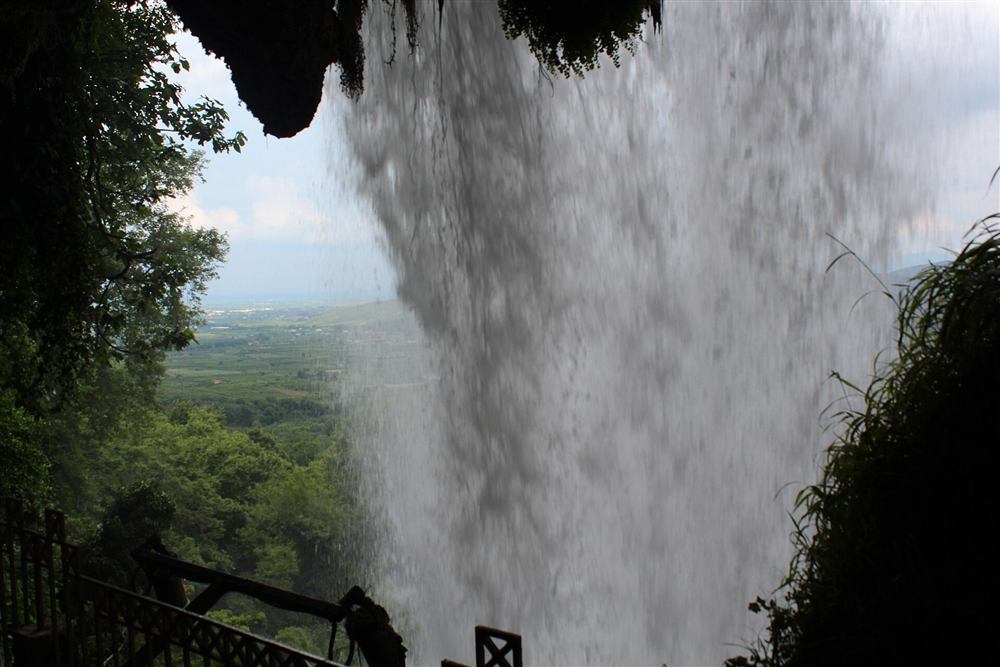
Edessa lies about 45 kilometres beyond Pella on the same road. Its main fall, Karanos, drops about 70 metres off the plateau. A path runs behind the water into a cave.
Loutra Pozar lies in the Almopia valley near Aridaia. A path climbs the gorge above the baths to a waterfall. Our Loutra Pozar day trip page covers the springs.
Mount Voras, also called Kaimaktsalan, rises to 2,524 metres on the border with North Macedonia. Serbian troops took the summit from Bulgarian forces in September 1916. A chapel and a memorial stand on the top.
Edessa suits a night for the falls, Loutra Pozar for the baths and the village of Agios Athanasios for the snow. Our Macedonia tours page covers the wider region.
What stands at Giannitsa on a Pella day trip?
Giannitsa, a short drive west of the ancient site, keeps the tomb of Evrenos Bey, the Ottoman commander who founded the town in the fourteenth century, and an Ottoman bath house. The Greek army won a battle beside the town in October 1912.
The Ottomans made Giannitsa their centre on the plain.
The battle of Giannitsa opened the road to Thessaloniki. The Greek army entered the city days later.
The whole area passed to Greece under the Treaty of Bucharest in 1913. A Pella day trip passes Giannitsa on the road to Edessa.
What food and wine does a Pella day trip taste?
A Pella day trip tastes the peaches and cherries of the plain, trout from the Edessa and Almopia streams, cheese and leek pies from the villages, and the Xinomavro reds of Naoussa and Goumenissa, both within half an hour of the plain.
Peaches ripen from July. The canning plants of the area ship the fruit across Europe.
Goumenissa lies just over the Kilkis border to the north-east. Its wine blends Xinomavro with the local Negoska grape.
Naoussa lies just over the Imathia border to the south-west. Our Naoussa wine day trip page covers its cellars.
Tsipouro is distilled across the plain after the grape harvest. A guided tour from Thessaloniki joins Pella, Edessa and a Naoussa wine tasting in one day.
Frequently Asked Questions
Where is Pella located?
Pella lies roughly forty kilometres west of Thessaloniki, out on the plain of the Axios toward Giannitsa and Edessa. The ancient site sits beside the modern village that carries its name, on flat farmland that was once the shore of a lagoon opening to the sea. The drive from the city takes under an hour by road.
Was Alexander the Great born in Pella?
Yes. Alexander the Great was born in Pella in three hundred and fifty-six BC, in the city that served as the capital of the Macedonian kingdom. His father Philip the Second ruled from the same court, and the young prince grew up here before his tutor Aristotle taught him at nearby Mieza.
What are the Pella mosaics made of?
The famous Pella mosaics are pebble mosaics, built from natural coloured stones gathered from the rivers of the plain. The mosaicists set the pebbles close together against a dark ground and used thin strips of lead and clay to draw the sharpest lines. The Stag Hunt, signed by Gnosis, ranks as the finest of the floors.
Can you visit the palace of Pella?
No. The palace on the hill north of the city stays closed to visitors while excavation of the royal quarter continues. The rest of the site lies open, so a walk crosses the agora, the colonnaded streets, and the grand houses with their mosaic floors. The finest mosaics and the marble head of Alexander wait in the museum.
How do you get to Pella from Thessaloniki?
The quickest way is by car, a drive of under an hour along the road west toward Edessa. Regional KTEL buses toward Edessa and Florina run the same route and stop near the site, so a visit works by public transport as well. Guided coach tours reach Pella and often pair it with Vergina.
How long do you need at Pella?
The open archaeological site and the museum together fill about half a day. That leaves time to pair Pella with a second stop on the plain, most often Vergina and its royal tombs, or the waterfalls of Edessa further west. A full day out of Thessaloniki takes in the capital and one of its neighbours at a steady pace.