
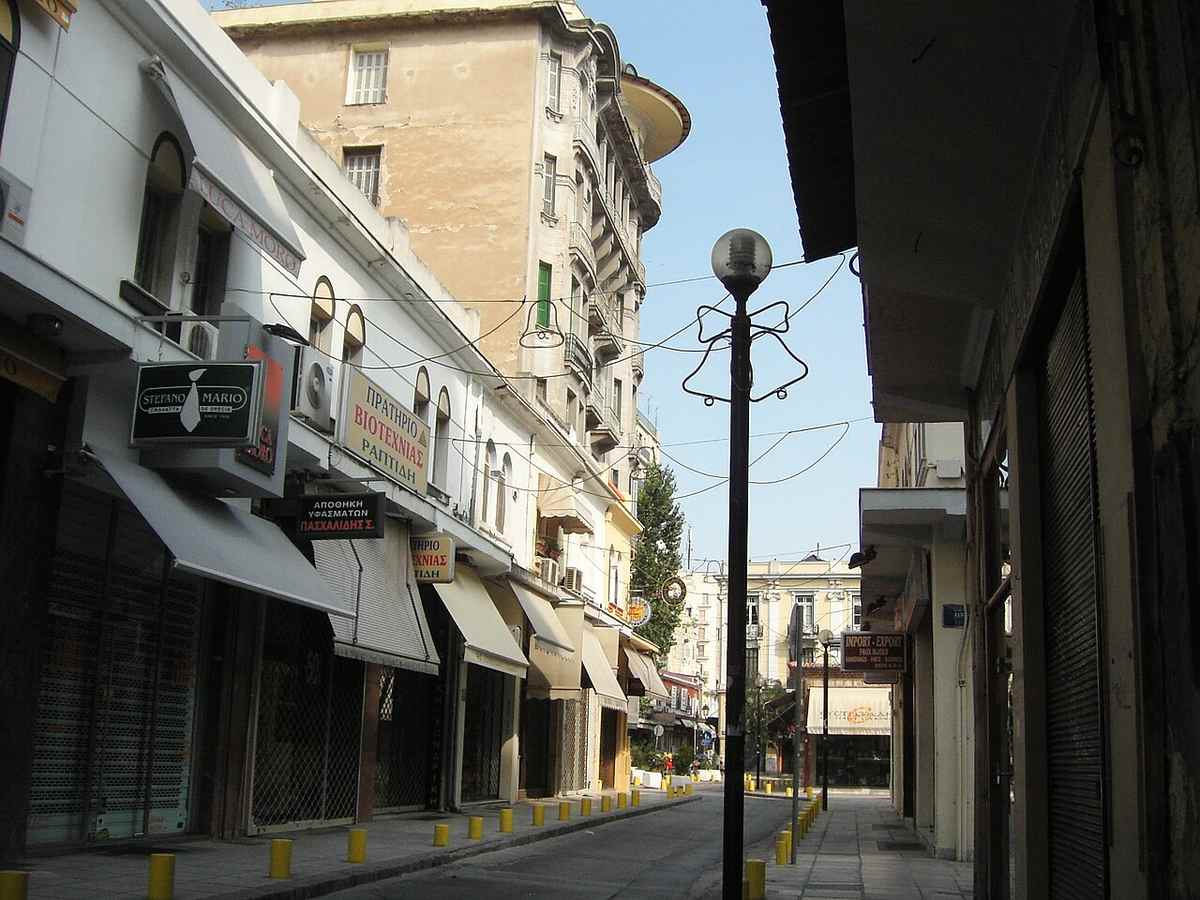
Shopping in Thessaloniki runs along a compact grid of commercial streets, covered market halls, and design districts set within a short walk of the seafront. The wide avenue of Tsimiski carries the fashion chains, the halls of Modiano and Kapani sell food and spices, and the lanes of Valaoritou and Ladadika hold independent design shops. The city rewards a shopper who moves from the bright avenues to the covered halls and back within a few blocks. Trace the clusters, learn what each one sells, and fold the walk into a stay in the city with My Greece Tours.
The map of the centre keeps the fashion streets, the food halls, and the design lanes within a few blocks of one another. The sections below cover where to shop on the main avenues, what the market halls sell, where the antique and design shops sit, which edible goods travel home well, and how the flea and street markets work. The later parts turn to the malls on the ring road and the practical rules of VAT refunds and opening hours, ready to weave into guided Thessaloniki tours.
Where do you shop on the main streets of central Thessaloniki?
The main shopping streets are Tsimiski, Mitropoleos, Proxenou Koromila, and Aristotelous, joined by the pedestrian run of Agias Sofias. Tsimiski carries the fashion chains, while the parallel streets hold boutiques, jewellers, and design labels.
The shopping core sits in the grid between the seafront and Egnatia, the old Roman road that splits the centre. The streets run parallel to the water, so a shopper can walk one avenue in each direction and cover the whole retail heart on foot. The blocks pack fashion, footwear, jewellery, and homeware into a few hundred metres. A first lap along Tsimiski sets the frame, and the side streets fill in the detail. The waterfront lies one block south, which lets a break on the waterfront promenade punctuate the walk.
Tsimiski, the main avenue
Tsimiski is the main commercial avenue of the city, a broad tree-lined street that runs the length of the centre one block back from the sea. The international high-street chains take the ground floors of its grand blocks, from fashion labels to sportswear and cosmetics. Department-store-scale shops stack several floors of clothing and homeware behind the classic façades. Street musicians play along the pavements, and the wide arcades give shelter in the rain.
A shopper who wants the familiar brands under one roofline starts here. The avenue stays busy from morning to evening, and its cross streets drop toward the water past more shopfronts. The eastern end runs toward the seafront and the White Tower, while the western end feeds into Aristotelous Square. A full lap of Tsimiski takes in the bulk of the chain retail in the centre.
The chain stores keep long hours and clear signage, so a visitor finds the familiar labels without a hunt. Cross streets such as Aristotelous, Agias Sofias, and Ionos Dragoumi feed shoppers between the avenue and the sea. The sale windows draw crowds in the winter and summer discount seasons, when the chains cut prices across the racks. A first-time shopper treats Tsimiski as the spine of the trip and branches off it toward the boutiques and the halls.
Mitropoleos, for boutiques and Greek labels
Mitropoleos runs parallel to Tsimiski, one block closer to the sea, and trades the chains for smaller boutiques. The shops here lean toward Greek fashion labels, tailored dresses, leather bags, and shoes made in limited runs. Independent designers keep ground-floor ateliers along the street, so the stock changes from door to door. The cathedral that gives the street its name breaks the shopfronts halfway along.
A browser who wants pieces outside the mass-market range works this street rather than the avenue above. Prices climb toward the cathedral end, where the boutiques turn more exclusive. The calmer pace suits a slow look at the windows, away from the crowds of the main avenue. Cafés along the street give a pause between shops.
Proxenou Koromila and Agias Sofias
Proxenou Koromila sits closest to the waterfront, a quieter street lined with upscale boutiques and jewellers. Designer ateliers, art dealers, and fine-clothing shops fill the restored townhouses along its length. The street draws shoppers after tailored fashion, gold, and one-off design rather than volume retail. Its calm pavements and cafés make it a slower stop than the busier streets behind it.
Agias Sofias runs north from Tsimiski toward the church that names it, and its lower stretch is pedestrianised. The car-free blocks pack clothing shops, shoe stores, and accessory boutiques along an easy walking line. The pace slows here, so browsers move between windows without the traffic of the avenues. The pedestrian street links the fashion core to the market halls a short walk north, so a shopper can drift from the boutiques straight into the food markets.
Jewellers cluster along Proxenou Koromila and Mitropoleos, with gold, silver, and gemstone work in the windows. Watch dealers and opticians share the blocks with the fashion boutiques. A buyer after fine jewellery or a repair finds the specialists in this quieter band near the sea. The trade here runs on service and craft rather than volume, so the pace suits a considered purchase.
Aristotelous Square and its arcades
Aristotelous Square anchors the western end of the shopping district, a grand marble plaza that opens from the avenue down to the sea. Arcaded walkways ring the square and shelter shops, cafés, and old bookstores under their colonnades. The blocks around it hold clothing shops, confectioners, and traditional stores that have traded for generations. The square itself works as the natural meeting point before or after a shopping lap. Its full story sits on the guide to Aristotelous Square, which frames the plaza and its arcades.
Ermou and the market fringe
Ermou runs east to west through the heart of the shopping grid, past the market halls at its western end. The street mixes clothing shops, shoe stores, and bag sellers with the wholesale trade near the markets. Its western blocks feed straight into Kapani and the Bezesteni, so the fashion and the food quarters meet here. A shopper walking Ermou crosses from the boutiques into the covered halls in a single line. The street stays busy with foot traffic through the trading day.
What do the covered market halls of Thessaloniki sell?
The covered markets are Kapani, Modiano, the Bezesteni, and Athonos. Kapani and Modiano sell fish, meat, cheese, olives, and spices. The Bezesteni holds fabric, haberdashery, and small goods, while Athonos mixes food shops with tavernas.
The market halls cluster in the blocks between Aristotelous and Egnatia, a short walk up from the fashion streets. Each hall keeps its own trade and its own character, from open produce lanes to a domed Ottoman bazaar. The Modiano and Kapani markets form the heart of this quarter, ringed by spice shops, delicatessens, and cheese counters. The smell of coffee, cured fish, and dried herbs marks the district before the stalls come into view. A food shopper works these halls for the raw materials of the northern Greek table.
Kapani, the oldest market
Kapani, also called Vlali, is the oldest market of the city, trading since the Ottoman period. Narrow lanes run between stalls piled with fruit, vegetables, olives, and cured meat. Fishmongers lay out the morning catch on ice, and butchers hang their cuts along the aisles. Spice merchants sell saffron, oregano, paprika, and blends by weight from open sacks.
The market keeps working prices and a local crowd rather than a tourist markup. A visitor tastes the everyday food culture of the city in its busiest lanes. Small tavernas and ouzo counters tuck into the edges of the market, so a browse turns into a lunch of grilled fish or mezze. The trade runs hard in the morning and eases through the afternoon.
The lanes also sell cheese, yoghurt, and cured pork from the northern villages, stacked at the dairy counters. Dried beans, lentils, and rice fill sacks at the grocers between the fresh stalls. A shopper after regional staples rather than restaurant meals fills a bag here for a fraction of the shop price. The market rewards an early arrival, when the produce is freshest and the crowd is thin.
Modiano, the restored food hall
Modiano occupies a long covered hall built in the early twentieth century by an architect of the Modiano family. A restoration reopened it as a food hall, with a glass roof over the central aisle. Delicatessens, cheese counters, and grocers line the arcade, alongside bars and small tavernas set among the stalls. Shoppers buy cured meats, cheese, olives, and spices to take home, then stop to eat on the spot.
The hall pairs the market trade with a place to sit, so a food run turns into a meal. The restored ironwork and the light through the glass roof make it a landmark in its own right. Producers from the wider region keep stalls here, which brings northern cheese, honey, and preserves under one roof. A shopper after packaged goods for the suitcase finds them alongside the fresh counters.
The Bezesteni and the Athonos quarter
The Bezesteni is a stone-domed Ottoman market with lead roofs, one of the last of its kind in the city. Its six domes cover a warren of small shops that sell fabric, thread, buttons, jewellery, and watches. The trade here leans toward haberdashery and small manufactured goods rather than food. The building itself repays a look for its Ottoman architecture, set among the modern blocks.
Athonos gathers around a small square north of the main halls, a quarter of food shops, spice sellers, and old-goods dealers. Grocers and delicatessens ring the square, while antique and bric-a-brac shops fill the lanes that feed into it. Tavernas and mezze spots spread their tables across the square at lunch. The mix of edible goods and second-hand finds makes Athonos a browsing quarter rather than a single hall, and a slow loop turns up spices, cheese, and the odd vintage piece side by side.
The Bezesteni also holds jewellers and watch repairers under its domes, a trade that has held the building for generations. Shoppers bring watches and small goods for repair to the specialists inside. The covered lanes stay cool in summer and dry in winter, which draws a steady crowd year-round. A browse here mixes a look at the architecture with a practical errand.
Coffee roasters, dried-fruit sellers, and nut shops ring the market blocks, filling the air with the smell of the trade. These specialist grocers sell Greek coffee ground to order, along with pulses, rice, and jarred goods by weight. The quarter works as one large open-air pantry, spread across the halls and the streets between them. A cook fills a basket from stall to stall rather than one counter, and the whole district trades hardest in the morning.
Where do you find antiques, vintage, and independent design in Thessaloniki?
Antique dealers cluster around Athonos and the old-town lanes, while independent design and concept shops fill the Valaoritou and Ladadika districts. Vintage clothing and second-hand goods turn up in the flea market and the warehouse quarter.
The design and antique trade sits west of the fashion core, in quarters that once held warehouses and workshops. Restored merchant buildings now house concept stores, studios, and galleries beside long-standing tavernas. The two hubs of this scene are Valaoritou, the old rag-trade district, and Ladadika, the former olive-oil quarter by the port. A shopper after Greek design, craft, or vintage works these streets rather than the chain avenues. The same blocks fill with bars after dark, so the district reads two ways across the day.
Valaoritou, the warehouse district
Valaoritou grew as the wholesale garment district, and its high-ceilinged buildings now hold concept stores and design studios. Independent labels, jewellers, and homeware makers keep showrooms behind the old warehouse doors. The stock runs to Greek-made clothing, ceramics, prints, and accessories from young designers. Graffiti and restored façades sit side by side along the lanes.
A buyer after contemporary Greek design starts in these blocks, then follows the side streets for smaller studios. The quarter draws a young crowd, and the shops keep irregular hours around the bars and cafés. Pop-up markets and design fairs land here through the year, which adds craft stalls to the fixed shops. The trade turns over fast, so return visits find fresh stock.
The district also holds galleries, print studios, and shops that sell posters, stationery, and small art. Buyers after a framed print or a design object rather than clothing find them here. The old signage and the industrial doors give the quarter a distinct look that sets it apart from the polished avenues. A creative souvenir, from a ceramic to a screen print, comes out of these blocks.
Ladadika, craft shops among the tavernas
Ladadika takes its name from the olive-oil merchants who once stored their stock in its warehouses by the harbour. The protected quarter keeps its low nineteenth-century buildings, now home to craft shops, design stores, and tavernas. Shoppers find handmade goods, ceramics, and gifts among the restaurants that pack the pedestrian lanes. The district sits a short walk from the port and the food halls, so it folds into a market morning.
Its tavernas make it a natural lunch stop, tied into the wider guide to Thessaloniki restaurants. The cobbled streets and painted façades give the quarter a distinct look, apart from the modern grid around it. Gift shops here lean toward local craft and design rather than mass-produced souvenirs. A browse pairs the shopping with the food and the setting in one loop.
The quarter also hosts craft fairs and pop-up stalls on weekends, when makers set up tables among the tavernas. Leatherwork, candles, and printed textiles turn up at these stalls. A visitor timing a meal to a fair browses the craft and eats in the same lane. The setting, the food, and the shopping fold into one relaxed stop by the port.
Antique and vintage lanes
Antique dealers keep shops around Athonos square and along the old-town streets that climb toward the upper town. Their windows hold furniture, copperware, old maps, vinyl, and the odd piece of jewellery. Bric-a-brac stalls sell coins, postcards, and small collectables at working prices. Hunters after a one-off souvenir sift these shops for a copper briki or an old komboloi.
The trade rewards a slow browse rather than a quick pass, since the stock turns over by the week. Prices vary by piece and by dealer, so a friendly haggle often lands a fairer figure. The lanes double as a window on the city’s past, with printed matter and household goods from earlier decades. A collector builds a day around these shops and the flea market to the north.
Copper and brass goods run through the antique trade, from coffee pots and trays to lamps and small ornaments. Old textiles, embroidery, and rugs turn up at the larger dealers. A buyer with an eye for the genuine article checks the weight and the wear before agreeing a price. These pieces carry more history than a factory souvenir, so they reward the extra hunt.
Non-edible keepsakes with a local stamp
Beyond the food, the city sells keepsakes tied to its own image and craft. The White Tower appears on prints, magnets, models, and art cards in the souvenir shops of the centre. A copper briki, the small pot for brewing Greek coffee, makes a working gift from the antique lanes or the Bezesteni. A komboloi, the string of worry beads, comes in amber, bone, or coloured resin from specialist shops. Greek-made ceramics and jewellery from the design quarters round out the non-edible picks.
What food and edible souvenirs should you take home from Thessaloniki?
Bougatsa and fresh pastries are eaten on the spot, while halva, loukoumia, spices, saffron, cheese, olives, olive oil, and northern wine travel home well. The market halls and the sweet shops of the centre stock them all.
The city trades on food, so the strongest souvenirs are edible. The market halls sell the raw goods, while confectioners and delicatessens pack the sweets and preserves for travel. A visitor learns the local specialities fast, since the same names recur on shop signs across the centre. The pastries belong to the morning and the sweets to the shelf at home. A guided Thessaloniki food tour threads these tastes into one walk through the halls and the bakeries.
Pastries to eat fresh
The signature pastry of the city is bougatsa, a filo parcel filled with semolina cream, cheese, or minced meat and dusted with sugar. Bakeries sell it hot from the tray through the morning, cut into squares on the spot. The sweet cream version reads as breakfast, while the cheese and meat fillings work as a savoury snack. The full story of the pastry sits on the guide to bougatsa.
Eat it fresh rather than boxed, since the filo softens within the hour. The city also bakes koulouri, the sesame bread ring sold from street carts, and tsoureki, the sweet braided loaf. These belong to the day of the visit rather than the suitcase. A morning bakery stop sets up a walk through the market halls that follow.
Trigona, the cream-filled pastry horns, and syrup-soaked cakes fill the confectioner windows alongside the bougatsa trays. These sweets belong to a café stop rather than a suitcase, best eaten with a coffee. The bakeries near Aristotelous and the market halls keep the widest range through the morning. A pastry break punctuates a shopping walk without a long sit-down.
Sweets and preserves that travel
Halva and loukoumia lead the sweets that travel. Halva comes in a dense block of sesame paste, plain or laced with nuts, cocoa, or vanilla, and keeps for weeks. Loukoumia, the soft jellied cubes dusted in sugar, come boxed in rose, mastic, and bergamot. Confectioners also sell spoon sweets, preserved fruit in syrup eaten by the spoonful.
These shelf-stable sweets pack flat in a case and carry the flavours of the north home intact. The confectioners around Aristotelous and the market halls box them for travel on request. Honey from the mountains of the region joins the shelf, sold in jars sealed for the flight. A sweet-toothed shopper fills a gift box from one confectioner in a single stop.
Nuts coated in sugar, candied chestnuts, and chocolate from small makers add to the gift shelf. The confectioners wrap and box these for travel, so they survive the flight intact. A mixed box of halva, loukoumia, and spoon sweets covers a range of tastes in one gift. These keep for weeks in a cupboard, which suits a present bought early in a trip.
Spices, cheese, oil, and wine
The market halls sell spices by weight, from saffron and oregano to paprika and dried herb blends. Northern Greek cheese travels well vacuum-sealed at the delicatessen counters, from hard graviera to salty feta. Olives, olive oil, and jarred preserves fill the grocer shelves in sizes made for a suitcase. Coffee, dried fruit, and nuts round out the pantry goods on offer, so a shopper builds a whole edible kit from the stalls of Kapani and Modiano in one visit.
The city sits at the mouth of the northern vineyards, so wine is a strong buy. Merchants stock reds and whites from the slopes of Naoussa and Halkidiki, alongside monastic wines from Mount Athos. Tsipouro, the grape spirit of the north, sells in bottles built for a gift. A wine shop in the centre packs bottles for travel and advises on the labels, so these northern bottles carry a taste of the region home.
Where are the flea markets and street markets in Thessaloniki?
Open-air produce markets, the laiki, rotate through the neighbourhoods on set weekdays. A flea market for second-hand goods and antiques sits near the old town, and street stalls appear along the market quarter around Athonos.
Beyond the fixed shops, the city runs open-air markets on a weekly cycle. The laiki, the travelling street market, sets up in a different neighbourhood on each day of the week. Produce, fish, cheese, and household goods fill trestle tables along a closed street for the morning. The flea trade keeps its own patch near the old town for second-hand and antique finds. A visitor who times the walk to a market day sees the city shop the way its residents do.
The laiki street market
The laiki is the open-air produce market that moves through the districts by the day of the week. Growers sell fruit, vegetables, and herbs straight from the crate, while stalls offer fish, eggs, cheese, and cheap clothing. Prices drop toward closing time as the sellers clear the tables. The markets run in the morning and pack up by early afternoon.
A traveller staying in a residential quarter can ask which day the local laiki lands and walk it for the produce. The market brings the whole neighbourhood out, so it doubles as a slice of daily life. Seasonal produce sets the stalls, from spring greens to summer stone fruit and autumn grapes. A cook self-catering in an apartment stocks a week from one morning here.
The flea market and second-hand trade
The flea market keeps a run of shops and stalls near the old town, north of the covered halls. Dealers sell second-hand furniture, tools, records, and bric-a-brac alongside genuine antiques. The trade spills onto the pavements on its busiest mornings, when collectors sift the tables early. Bargaining is part of the exchange, so a firm but friendly offer often lands the price.
Hunters after a vintage souvenir rather than a new one work this quarter first. The stock ranges from cheap curios to serious antiques, so a careful eye separates the two. Records, cameras, and old prints draw collectors from across the city. An early start beats the crowd to the fresh stock laid out at dawn.
Book stalls and second-hand dealers sell old volumes, maps, and magazines among the furniture. A patient browse turns up prints and ephemera that suit a frame at home. The dealers know their stock, so a question about a piece often draws out its story. The quarter rewards the collector who returns across a stay rather than passing once.
Seasonal and Sunday markets
Seasonal markets appear through the year, from Christmas stalls on the squares to craft and food fairs on the waterfront. Occasional Sunday markets set up for antiques or design, though most fixed shops stay closed that day. Festival markets bring producers from the surrounding region into the centre for a weekend. A quick check of the local listings shows what is running during a stay, and these pop-up markets add a layer of shopping on top of the year-round trade.
The winter holiday market fills the central squares with stalls of gifts, sweets, and hot drinks. Summer craft fairs line the waterfront on set weekends, with makers from across the north. Food festivals bring regional producers into the centre for a weekend of tastings and sales. A visitor checks the season’s calendar to catch these one-off markets during a stay.
Where are the shopping malls around Thessaloniki?
The large shopping malls sit outside the centre, along the ring road and the eastern suburbs toward the airport. They gather fashion chains, electronics, cinemas, and food courts under one roof, reached by car or city bus.
The covered malls take the edge-of-town model, set on the ring road and the arterial routes rather than the historic core. They hold the same international chains as the centre, plus big-box electronics, toy shops, and supermarkets. Cinemas, food courts, and parking make them a wet-weather and family option away from the street grid. A car or a city bus reaches them in a short ride from the centre. The choice between the malls and the streets often comes down to weather and the length of the shopping list.
Ring-road and suburban malls
The main malls cluster on the eastern side of the city, along the road that runs toward the airport and the suburbs. Each gathers dozens of chain stores across several floors, anchored by a large supermarket and a cinema. Free parking and covered walkways make them the wet-weather choice for a long list. Bus lines link them to the centre, so a car is not essential for the trip. A family staying near the ring road may find the mall an easier base than the crowded avenues, a point worth weighing against your choice of where to stay.
When the malls make sense
The malls earn their place on a rainy afternoon or a family day rather than a browsing walk. They keep continuous hours through the day, including the afternoon break that shutters the street shops. Sunday trading runs at the malls on the dates the law allows, when the centre mostly sleeps. A traveller after a specific electronic item or a full wardrobe run covers more ground under one roof. For character and local trade, though, the streets and halls of the centre still win.
The malls also run late into the evening, past the closing of the street shops, which suits a visitor arriving after a day of sights. Their food courts and cafés give a break between the stores under cover. A family with children finds the space and the facilities easier than the crowded pavements of the centre. The trade-off is the loss of the local character that the halls and lanes carry.
Reaching the malls from the centre
City buses link the centre to the ring-road malls on regular routes, so a shopper without a car still reaches them. A taxi covers the trip in a short ride from the seafront. Drivers use the free parking at the malls, which spares the tight kerb space of the centre. The journey out trades the character of the streets for the range and the shelter of the covered floors. A traveller with a long list and a wet forecast makes the trip worthwhile.
What should visitors know about VAT refunds and opening hours in Thessaloniki?
Non-EU visitors can reclaim VAT on eligible purchases above a set minimum, using a tax-free form stamped by customs at departure. Many shops close for an afternoon break midweek and stay shut on Sundays; confirm hours locally.
Two practical points shape a shopping day: the tax rules for non-EU visitors and the split trading hours of the Greek high street. Both reward a little planning, since a missed customs stamp or a closed afternoon can undo a trip into the centre. The rules follow national patterns rather than city-specific ones. A visitor who learns them once shops the whole country the same way. The notes below set out the basics, though the details shift, so confirm at the shop and the airport.
VAT refunds for non-EU visitors
Shoppers who live outside the European Union can reclaim the value-added tax on goods they carry home, above a minimum spend per receipt. The shop issues a tax-free form at the till, filled in against a passport, and the goods must leave the bloc unused. Customs stamps the form at the point of departure, often the airport, before check-in for non-EU flights. A refund desk or a posted form then returns the tax, minus a handling fee. Keep the receipts, the form, and the goods to hand at the airport, since an unstamped form pays nothing.
Opening hours and the afternoon break
Greek shops keep split hours on several weekdays, opening in the morning, closing for an afternoon break, and reopening in the early evening. Other days run continuous from morning to late evening without the midday gap. Most independent shops stay shut on Sundays, when the malls trade only on set dates fixed by law. The market halls and the laiki work the morning and wind down by early afternoon. Hours shift by season and by shop, so a quick check at the door or a call ahead saves a wasted walk. A compact Thessaloniki itinerary can slot the shopping into the open hours around the sights.
Public holidays close most shops across the city, so a visit that lands on one falls back on the cafés and the tavernas. The dates shift by the calendar of the church and the state, and the tourist-zone shops keep their own reduced hours. A quick look at the holiday dates for the stay avoids a wasted trip into a shuttered centre. The seafront and the sights stay open for a walk on those days.
Planning a Thessaloniki shopping day
A shopping day works best built around the open hours and the clusters. The morning suits the market halls and the laiki, before the produce thins and the stalls pack up. The late afternoon and evening suit the fashion streets and the design quarters, once the shops reopen after the break. The pedestrian links between the avenues, the halls, and Ladadika keep the whole circuit on foot. For the wider list of sights to weave around the shops, the guide to things to do in Thessaloniki sets the frame.
A two-part day splits the shopping cleanly around the afternoon break. The first half runs the market halls, the flea market, and the food shops before they wind down at midday. The break gives time for a long lunch in Ladadika or a rest by the sea. The second half returns to the fashion streets and the design quarters once they reopen in the late afternoon, and runs into the evening when the avenues fill again.
Frequently Asked Questions
What is the main shopping street in Thessaloniki?
Tsimiski is the main shopping street, a broad avenue one block back from the sea that runs the length of the centre. The international high-street chains, department-store-scale shops, and cosmetics stores take its ground floors. The parallel streets of Mitropoleos and Proxenou Koromila add boutiques and jewellers, while the pedestrian stretch of Agias Sofias links the avenue to the market halls to the north.
Which Thessaloniki market is best for food and spices?
Kapani and Modiano are the two food markets of the centre. Kapani, the older of the pair, packs fruit, fish, meat, olives, and open sacks of spices into its narrow lanes. Modiano, the restored covered hall, sells cheese, cured meat, and delicatessen goods alongside bars and tavernas. Both sit a short walk north of the fashion streets, ringed by spice and cheese shops.
What souvenirs are typical of Thessaloniki?
The typical souvenirs are edible: halva, loukoumia, spices, saffron, cheese, olives, olive oil, and northern wine, all sold in the market halls and confectioners. Non-food keepsakes include a copper briki for coffee, a komboloi worry-bead string, and White Tower prints and models. The design shops of Valaoritou and Ladadika add Greek-made ceramics, jewellery, and homeware for a less predictable gift.
Are shops in Thessaloniki open on Sundays?
Most independent shops and the fashion streets stay closed on Sundays, along with the market halls and the laiki. The large malls on the ring road trade on set Sundays fixed by national law, mainly in the tourist and holiday seasons. Cafés, bakeries, and tavernas stay open through the week. A visitor planning a Sunday should check the specific date, since the rules shift across the year.
Can tourists claim a VAT refund in Thessaloniki?
Visitors who live outside the European Union can reclaim the value-added tax on eligible goods above a minimum spend. The shop issues a tax-free form at the till against a passport, and customs stamps it at departure before the goods leave the bloc. A refund desk or a posted form returns the tax, minus a fee. Keep the receipts, the form, and the unused goods to hand at the airport.
Where do locals shop for design and vintage in Thessaloniki?
Locals head to Valaoritou and Ladadika for independent design, concept stores, and Greek-made homeware set in restored warehouses. The antique dealers around Athonos square and the old-town lanes sell furniture, copperware, and collectables. The flea market near the old town adds second-hand goods and bric-a-brac at working prices. These western quarters trade in one-off pieces rather than the chains of the main avenues.