
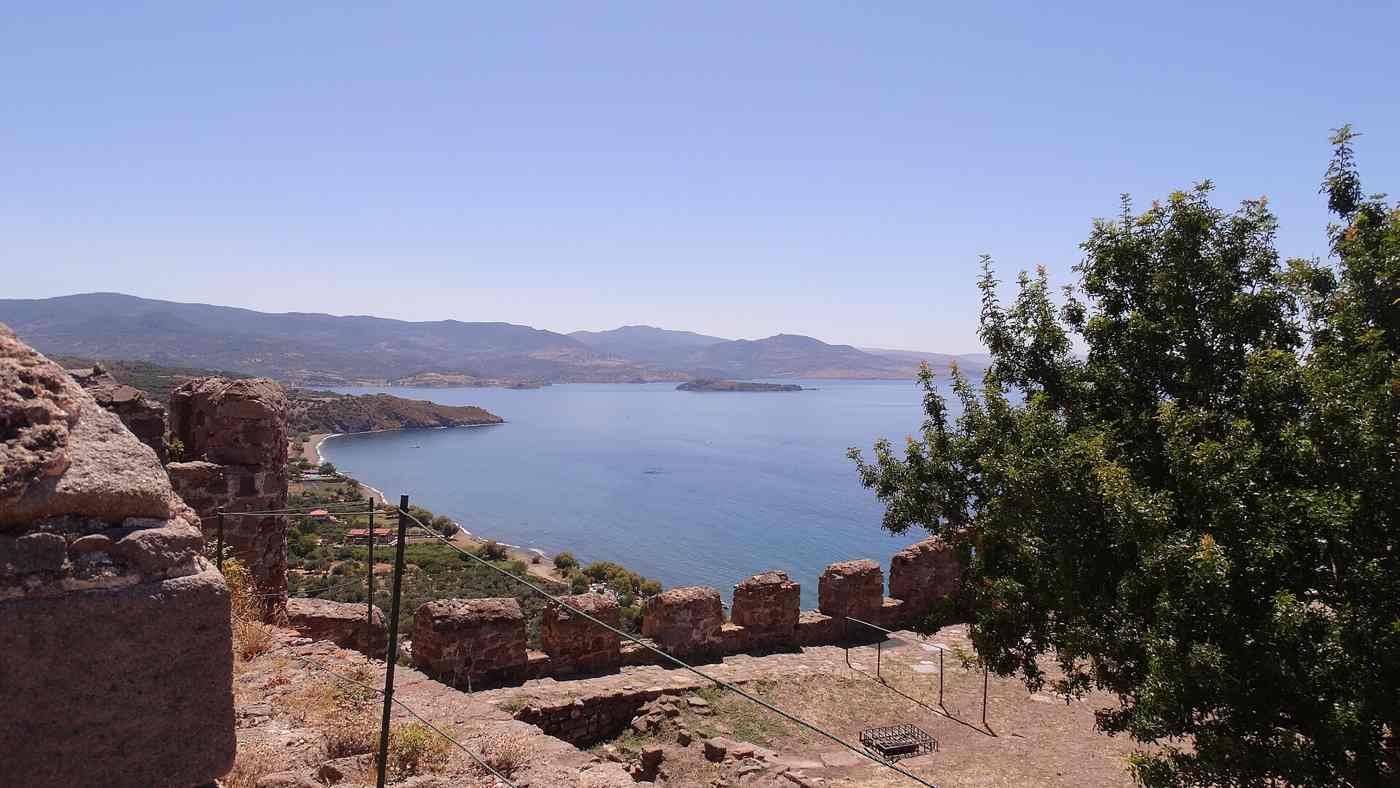
Lesbos, the third-largest Greek island, offers a wealth of things to do that no other Aegean island can match, from natural wonders to living traditions. Here you can walk through the Petrified Forest, one of the largest fossilised woodlands on earth, climb to the medieval castle above Molyvos. Explore the castle, museums and churches of the capital Mytilene. Taste ouzo at the distilleries of Plomari, the drink’s spiritual home. You can soak in natural hot springs, watch flamingos on the Gulf of Kalloni, swim at long sandy beaches, and wander the cobbled streets of mountain villages like Agiasos. Largely untouched by mass tourism, Lesbos rewards the independent traveller with variety and authenticity. Plan the whole trip with Greece Tours.
This guide covers the very best things to do on the island, attraction by attraction.
Here you will find the best things to do in Lesbos: the Petrified Forest, the castle and village of Molyvos, the capital Mytilene, the ouzo distilleries of Plomari. The natural hot springs, birdwatching on the Gulf of Kalloni, the beaches, the traditional villages. The local food and drink that make the island special.
What are the best things to do in Lesbos?
The best things to do in Lesbos are visiting the Petrified Forest, exploring Molyvos and its castle, discovering the capital Mytilene, tasting ouzo in Plomari, bathing in the hot springs, birdwatching on the Gulf of Kalloni, and relaxing on the.
Lesbos offers a remarkable range of things to do, spread across a large and varied landscape of mountains, forests, olive groves, wetlands and long coastlines. Unlike the crowded Cyclades, it has stayed clear of heavy tourism, which makes exploring it a rewarding experience for independent travellers.
The island’s attractions fall into distinct groups: natural wonders such as the Petrified Forest and the hot springs, historic towns and castles like Molyvos and Mytilene. Cultural experiences such as the ouzo distilleries and the mountain villages. Outdoor pursuits including birdwatching, hiking and swimming at uncrowded beaches.
Seeing the best of Lesbos rewards a stay of at least a week and the freedom of a hire car. The sections below cover each of the island’s leading attractions and experiences in turn. You can plan a trip that takes in its natural beauty. Its history and its living traditions. Whether your interest is wildlife, history, food and drink, or simply relaxing on an uncrowded beach. Lesbos has something memorable to offer at every turn, rewarding the traveller who takes the time to explore it fully.
Why visit the Petrified Forest of Lesbos?
The Petrified Forest of Lesbos is one of the largest fossilised woodlands on earth, a UNESCO Global Geopark where entire tree trunks turned to stone twenty million years ago.
The single most remarkable thing to do on Lesbos is to visit the Petrified Forest, in the volcanic west of the island around Sigri. Created when a volcanic eruption around twenty million years ago buried a subtropical forest in ash, it preserves whole fossilised tree trunks, a portion still standing upright, in astonishing detail.
Protected as a UNESCO Global Geopark, the forest can be explored along walking trails through open-air parks, where signs explain the geology and the ancient ecosystem. The petrified trunks, roots and fallen logs, often metres long, are scattered across the barren volcanic hills, creating a landscape found in only a handful of places on earth.
The excellent Natural History Museum of the Lesbos Petrified Forest at Sigri brings the story to life with fossils, reconstructions and displays. Is the ideal starting point for a visit. For anyone interested in nature and the deep history of the planet, the Petrified Forest is an unmissable experience.
A dedicated park at Bali Alonia, near Sigri. An underwater petrified forest offshore add to the geopark, while the whole western landscape of bare volcanic hills is dramatic in its own right. Allow a half-day to combine the museum and a walk through one of the parks. Pair the trip with a visit to the nearby fishing village of Sigri and its beaches on the same western excursion.
What is there to do in Molyvos?
In Molyvos you can climb to a well-preserved medieval castle, wander cobbled streets of stone houses beneath it, stroll the pretty fishing harbour, and swim at nearby beaches.
In the north of the island, Molyvos, also known by its ancient name Mithymna, is widely considered the most beautiful town on Lesbos, and exploring it is one of the great pleasures of a visit. Its grey-stone houses with red roofs climb the hillside in tiers beneath a commanding medieval castle.
The Byzantine and Genoese castle at the summit is well preserved and open to visitors. Rewarding the climb with sweeping views over the town, the harbour and across the strait to the coast of Turkey. Below, the cobbled main street winds up through the old town past craft shops, tavernas and stone mansions draped in flowers.
At the foot of the town lies a charming little fishing harbour lined with fish tavernas, a perfect spot for a meal by the water, while pebble beaches stretch nearby. Just along the coast, the natural thermal baths at Eftalou make Molyvos an ideal base for the northern half of the island.
In summer the town hosts cultural events and a lively evening scene along its harbour and lanes. The neighbouring resort of Petra. Only five kilometres away, adds a sandy beach and its famous rock-top church. Molyvos also makes an excellent starting point for boat trips along the north coast and for the short drive to the birdwatching wetlands and the west of the island.
What can you see in Mytilene, the capital of Lesbos?
In Mytilene you can explore one of the largest castles in the Mediterranean, visit fine archaeological and Byzantine museums, admire the grand church of Agios Therapon, and wander a lively harbour town of neoclassical mansions, shops and cafes, the cultural.
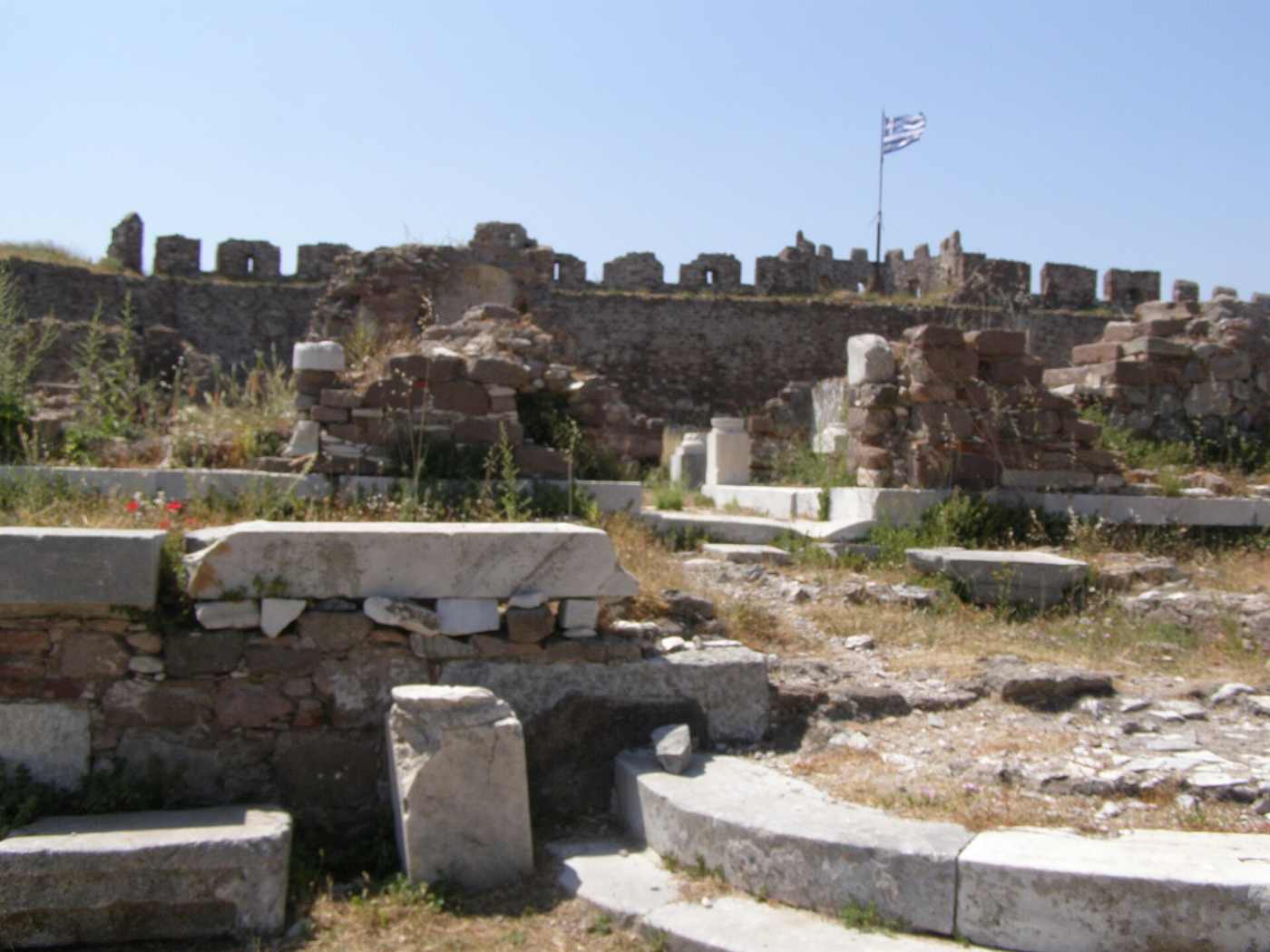
The capital and main port, Mytilene, is the cultural and commercial heart of the island and offers plenty to see. Its huge castle, one of the largest in the Mediterranean, crowns the headland above the town. Its walls enclosing centuries of Byzantine, Genoese and Ottoman history and giving fine views over the sea.
The town is rich in museums, including an important Archaeological Museum with finds from ancient Lesbos, a Byzantine Museum, and the striking Teriade Museum with works by leading modern artists. The grand domed church of Agios Therapon dominates the waterfront, a landmark of the harbour skyline.
Beyond its monuments, Mytilene is a lively working town, with a bustling market, elegant neoclassical mansions, a busy harbour and streets full of shops, cafes and ouzeries. Strolling its waterfront and old quarters, and dining on fresh seafood, is an essential part of experiencing the real Lesbos.
Where can you taste ouzo in Lesbos?
You can taste ouzo in Plomari, the ouzo capital of Greece, on the south coast of Lesbos, where historic distilleries such as Barbayanni and Pitsiladi welcome visitors.
Lesbos is the spiritual home of ouzo, the anise-flavoured spirit that is Greece’s national drink, and tasting it at the source is one of the island’s signature experiences. The centre of production is the seaside town of Plomari on the south coast, whose name is synonymous with fine ouzo across Greece.
Historic distilleries around Plomari, including famous names such as Barbayanni and Pitsiladi. Have produced ouzo for well over a century. And welcome visitors for tours and tastings where you can learn how the spirit is distilled and flavoured. The World Ouzo Museum in the town charts this long tradition.
Enjoying a glass of chilled ouzo with a plate of seafood meze in a waterside taverna, as the locals do, is a quintessential Lesbos ritual. Whether you tour a distillery or simply sip it by the sea, ouzo is woven into the culture of the island and a highlight of any visit.
Plomari itself rewards exploration, a handsome hillside town of tall stone houses tumbling down to the sea, with a shaded central square and a working waterfront. Combine an ouzo tasting with a stroll through its lanes and lunch on fresh sardines. The local speciality. The town becomes one of the most enjoyable half-days on the south coast of Lesbos.
Can you bathe in hot springs on Lesbos?
Yes, Lesbos has some of the hottest natural thermal springs in Europe, and bathing in them is a memorable thing to do.
A volcanic island, Lesbos is rich in natural hot springs. Soaking in their warm, mineral-rich waters is a distinctive and relaxing experience found on only a handful of Greek islands. The thermal waters here are among the hottest in Europe and have been valued since antiquity for their reputed healing properties.
The best-known springs include those at Eftalou near Molyvos, set in a domed stone bathhouse just back from the sea. The springs at Polichnitos. Said to be among the hottest in Europe, near the Gulf of Kalloni. Further springs at Gera and Lisvori add to the choice around the island.
Bathing in these thermal baths, whether in a traditional vaulted spa house or an open-air pool, is both a wellness treat and a link to the island’s ancient past. A soak in the hot springs pairs perfectly with a stay in the north around Molyvos or the south near the gulf.
Is Lesbos good for birdwatching?
Yes, Lesbos is one of the finest birdwatching destinations in Europe, drawing birders from across the world every spring.
Lesbos is celebrated among nature lovers as one of the top birdwatching destinations in Europe, and watching its birdlife is a notable thing to do, especially in spring. Its position on a major migration route, combined with rich wetlands, salt pans, olive groves and mountains, makes it a magnet for a great variety of birds.
The heart of the birdwatching is the Gulf of Kalloni, a large, shallow bay in the centre of the island whose salt marshes and lagoons teem with life. Here visitors can see flamingos, herons, egrets, avocets and, in spring, hundreds of migrating species passing through, including rarities that draw birders from across the globe.
The peak season runs from late April into May, when the spring migration is in full flow and the hillsides are carpeted with wildflowers. With hides, marked sites and specialist guides available, birdwatching on Lesbos is rewarding for experts and beginners alike, and a highlight of a spring visit.
Beyond the Gulf of Kalloni, prime birding spots include the salt pans at Skala Kallonis, the Tsiknias river mouth, and the reservoirs and olive groves inland, each attracting different species. Detailed site guides and organised tours make the island easy to explore for birders. Even casual visitors travelling in spring cannot fail to notice the abundance of birdlife across the wetlands and countryside.
What are the best beaches and villages to explore in Lesbos?
The best beaches on Lesbos include long sandy Vatera, Skala Eressou and the shores near Petra, while the finest villages to explore are the mountain settlement of Agiasos and the rock-topped resort of Petra.
For swimming and relaxing, the beaches of Lesbos are long, uncrowded and varied, from the vast sandy sweep of Vatera on the south coast, one of the longest beaches in Greece, to the sands of Skala Eressou in the west and the pebbly bays of the north. Their calm, clean waters are ideal for families.
Among the villages, the mountain settlement of Agiasos, on the wooded slopes of Mount Olympus, is a highlight, with its cobbled lanes, revered church and traditions of pottery and wood carving. The bohemian west-coast town of Skala Eressou, birthplace of the poet Sappho, has a relaxed, artistic character.
The pretty resort of Petra, near Molyvos, is famous for the church of Panagia Glykofilousa perched on a great rock reached by 114 steps. Exploring these villages and beaches, each with its own character, reveals the diversity that makes Lesbos such a rewarding island to discover.
Other beaches worth seeking out include Eftalou and Anaxos in the north. Tarti and Agios Isidoros in the south. Remote coves reached by rough tracks that reward the effort with near-solitude. Because the island is so large and its coast so long, finding a quiet stretch of sand to yourself is easy, part of the appeal of Lesbos for travellers escaping the crowds of the Cyclades.
What else can you do on Lesbos?
On Lesbos you can also hike Mount Olympus and coastal trails, visit historic monasteries such as Limonos and Ypsilou, sample the island’s olive oil and cheese, dive off the west coast, and enjoy fresh seafood in harbour tavernas across this.
Beyond its headline attractions, Lesbos offers plenty more to fill a longer stay. Walkers can hike the forested slopes of Mount Olympus above Agiasos, the highest mountain on the island. Or follow coastal and countryside trails through olive groves and wildflower meadows, especially rewarding in the green months of spring.
The island is dotted with historic monasteries worth visiting, among them the great Monastery of Limonos near Kalloni. With its museum and library. The clifftop Monastery of Ypsilou in the western volcanic hills. These, along with Byzantine churches and archaeological sites, reveal the deep religious and cultural history of Lesbos.
Food and drink are experiences in themselves: the island produces renowned olive oil, sardines from Kalloni, cheeses and, of course, ouzo. Add diving off the west coast. Boat trips along the shore and long lazy meals of fresh seafood. It is clear that Lesbos rewards curiosity with far more to do than a single visit can hold.
Frequently Asked Questions
How days do you need in Lesbos?
To see the best things to do in Lesbos you need at least five to seven days. Ideally a week or more, because the island is very large. The third-biggest in Greece, and its principal attractions are spread far apart across mountains, forests, wetlands and long coastlines. With a stay of a week you can comfortably combine the headline sights, such as the Petrified Forest in the volcanic west, the castle and cobbled streets of Molyvos in the north. The castle and museums of the capital Mytilene in the south-east, the ouzo distilleries of Plomari. The natural hot springs, while still leaving time to relax on the beaches and wander traditional villages like Agiasos.
With an hour or more of driving between some of them, a hire car is essential for making the most of a visit. Trying to rush the island in only two or three days mean missing much of what makes it special. Travellers with a particular interest, such as birdwatching on the Gulf of Kalloni in spring or hiking the trails of Mount Olympus, wish to stay longer still. Many visitors base themselves in two areas, for example the north around Molyvos and the south or centre near Kalloni or Mytilene. To cut down on driving and explore each region in turn.
In short, allow a week to enjoy Lesbos at a relaxed pace and take in its remarkable variety of things to do.
Is Lesbos worth visiting?
Yes, Lesbos is very much worth visiting, and for travellers who value authenticity, nature and culture over crowds and nightlife it is one of the most rewarding islands in Greece. As the third-largest Greek island, it offers an exceptional range of things to do, from the world-famous Petrified Forest, one of the largest fossilised woodlands on earth, to the medieval castle town of Molyvos, the historic capital Mytilene with its great castle and fine museums. The ouzo distilleries of Plomari, the spiritual home of Greece’s national drink. Add to these the island’s natural hot springs, its celebrated birdwatching on the wetlands of the Gulf of Kalloni, its long uncrowded beaches. Its traditional mountain villages such as Agiasos.
Its renowned olive oil, seafood and local produce, and it is clear that Lesbos has a depth and variety that no other island can match. Crucially, it has remained largely free of the mass tourism that dominates much of the Aegean, so it retains a genuine, unspoilt character and a strong sense of local life. This does mean the island is best suited to independent travellers happy to hire a car and explore. Rather than those seeking a compact resort holiday. Its attractions lie far apart. But for anyone drawn to history, nature, tradition and relaxed authenticity, Lesbos is a fascinating and deeply rewarding destination that repays the effort of getting there and exploring.
What is Lesbos famous for?
Lesbos is famous for things that together give the island its distinctive character and reputation across Greece and beyond. First and foremost, it is renowned as the home of ouzo, the anise-flavoured spirit that is Greece’s national drink. With the town of Plomari and its historic distilleries at the heart of production. The island is equally celebrated for its Petrified Forest in the volcanic west. A UNESCO Global Geopark and one of the largest fossilised woodlands on the planet, where whole tree trunks turned to stone twenty million years ago.
Lesbos is also famous as the birthplace of the ancient poet Sappho, one of the greatest lyric poets of antiquity, who came from Eresos, as well as of the modern Nobel-winning poet Odysseas Elytis and the celebrated folk painter Theophilos, giving it a strong literary and artistic heritage. Among nature lovers, the island is known as one of the finest birdwatching destinations in Europe. Thanks to the rich wetlands of the Gulf of Kalloni, which attract flamingos and rare migrants each spring. It is renowned too for its excellent olive oil, produced from the millions of olive trees that cloak its hills. For the sardines of Kalloni. For its natural hot springs, among the hottest in Europe.
Add the beautiful castle town of Molyvos and the traditional mountain village of Agiasos, and Lesbos is famous as an island of remarkable natural, cultural and gastronomic richness.
What is the best way to get around Lesbos to see the sights?
The best way to get around Lesbos and see its attractions is by hire car, because the island is very large. The third-biggest in Greece. Its principal sights are spread far apart across mountains, wetlands and long coastlines, with an hour or more of driving between some of them. A car gives you the freedom to reach the Petrified Forest in the volcanic west, the castle town of Molyvos in the north, the ouzo distilleries of Plomari in the south, the hot springs.
The birdwatching wetlands of the Gulf of Kalloni and the traditional mountain village of Agiasos, all at your own pace and on your own schedule, which is essential on an island where the public transport is limited. Car hire is readily available at Mytilene International Airport. In the capital and in the larger resorts such as Molyvos and Petra. Booking ahead for the summer season secures both a vehicle and a better rate. A public bus network based in Mytilene connects the capital with the main towns and larger villages, including Kalloni, Molyvos. Plomari and Sigri.
Is a useful and economical option for reaching the principal centres, though services are less frequent to smaller places and outside the peak season, so timetables are worth checking in advance. Taxis are available at the airport, the port and in the towns for shorter journeys and transfers. For visitors who want to see the full variety of things to do across Lesbos, however. To discover the quiet beaches, villages and viewpoints that the buses do not reach. Hiring a car or a motorbike is by far the most practical and rewarding choice, and the natural way to explore this large and beautiful island.