
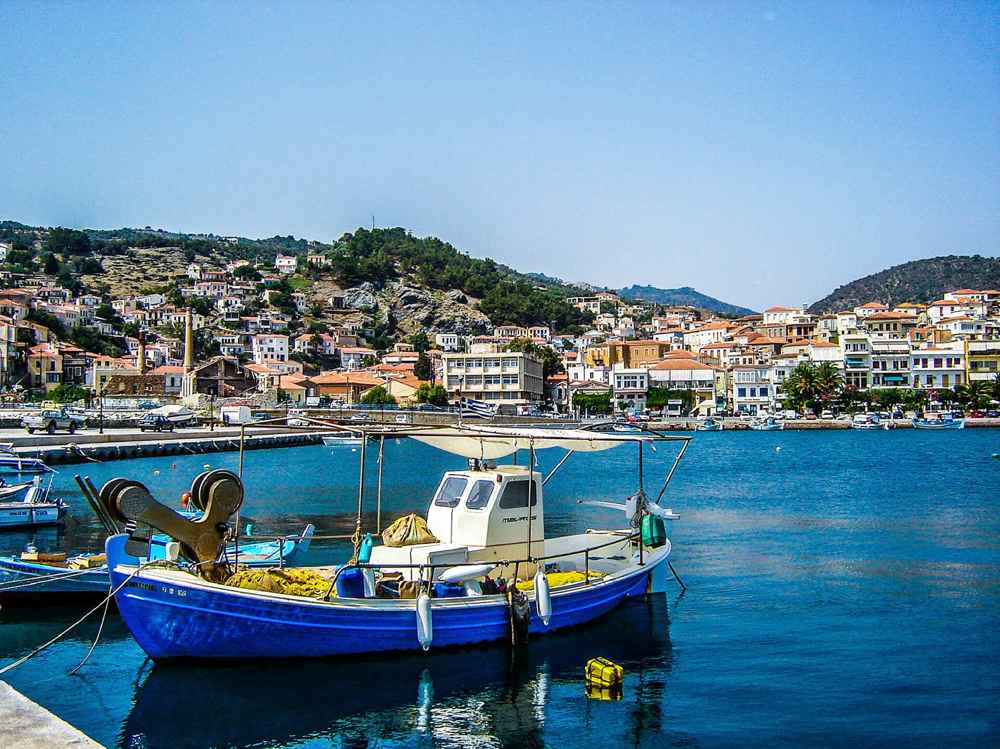
Plomari is a picturesque seaside town on the southern coast of Lesbos, the island’s second-largest town and famous throughout Greece as the capital of ouzo. Built around a harbour and climbing the hillsides in a jumble of old stone and neoclassical houses, it is home to renowned distilleries. Including the Barbayanni ouzo museum and the World of Ouzo, where visitors can tour the copper stills and taste the anise spirit for which Lesbos is celebrated. With its covered market, old soap factories, lively square and nearby pebble beaches, Plomari offers an authentic taste of island life. Plan the whole trip with Greece Tours.
This guide covers Plomari in full: what it is, where it lies, its ouzo heritage, the things to do, the beaches nearby, and how to get there.
Here you will find everything about Plomari on Lesbos: what the town is like, where it lies on the south coast, why it is the capital of ouzo. Its distilleries and ouzo museum, the things to do and see, the beaches nearby. How to get there from Mytilene.
What is Plomari on Lesbos?
Plomari is a picturesque seaside town on the southern coast of Lesbos, the island’s second-largest town and the capital of Greek ouzo.
Plomari is the largest town in the south of Lesbos and the second-largest on the island after the capital, Mytilene, set on the southern coast facing the open Aegean. It is the only sizeable coastal settlement in the south, and a place of real character and tradition.
The town is famous above all as the capital of ouzo, home to some of the most renowned distilleries in Greece, and this heritage is central to its identity. Beyond the ouzo, its old houses climb the slopes around a harbour and a lively central square. With a covered market and the shells of old soap factories recalling its industrial past.
Combining a working, authentic atmosphere with coastal charm and pebble beaches close by, Plomari offers a genuine slice of Lesbos life away from the busier northern resorts. For visitors, it is both a place to discover the traditions of ouzo and a pleasant seaside base for the south of the island.
Where is Plomari on Lesbos?
Plomari lies on the southern coast of Lesbos, facing the open Aegean, around forty-five kilometres south-west of the capital, Mytilene.
Plomari sits on the south coast of Lesbos, on the shore of the open Aegean towards the south-western side of the island. It lies around forty-five kilometres from the capital and main port of Mytilene, a drive of about an hour over the hills and through the vast olive groves for which this part of the island is known.
Plomari is the natural base for exploring this side of Lesbos, with its beaches, mountain villages such as Agiasos. The thermal springs of Polichnitos within reach. The countryside around it is thickly planted with olive trees, the source of both its oil and, in part, its famous ouzo.
Its position on the southern coast, away from the airport and the northern resorts, gives Plomari a distinct, authentic character and a strong sense of local life. The scenic journey to reach it, through the olive-covered hills, is part of the pleasure of a visit.
Why is Plomari famous for ouzo?
Plomari is famous as the capital of Greek ouzo, home to renowned distilleries, some over a century old, whose names are known across the country.
Plomari is celebrated throughout Greece, and beyond, as the capital of ouzo, the anise-flavoured spirit that is central to the identity of Lesbos. Over generations, local families in the town built up distilleries that turned Plomari into an internationally recognised centre of ouzo craftsmanship. The name of the town is synonymous with the drink.
The most famous of these is Barbayanni, whose ouzo is known across the country and whose ouzo museum in the town displays beautifully preserved copper stills. Historic photographs and traditional distillation equipment, explaining the meticulous process behind producing authentic ouzo. The World of Ouzo, at the Arvanitis distillery, offers a similar experience of the town’s ouzo heritage.
Guided tours of the distilleries and museums reveal how the spirit is made and how different methods shape its flavour. They conclude with tastings that let visitors appreciate the distinctive aromas and character of Plomari ouzo. For anyone interested in the traditions of Lesbos, a visit to an ouzo distillery here is an essential and enjoyable experience.
What is there to do in Plomari?
In Plomari you can tour the ouzo distilleries and ouzo museum with tastings, wander the neoclassical streets, the covered market and the old soap-factory buildings, relax at the harbour and central square, and swim at the nearby pebble beaches such.
The essential thing to do in Plomari is to explore its ouzo heritage. Touring a distillery such as Barbayanni or the World of Ouzo, learning how the spirit is made and enjoying a tasting. This is the highlight of a visit and the reason many people come to the town.
Beyond the ouzo, Plomari rewards exploration on foot. Its neoclassical mansions, covered market and the old soap-factory buildings recall a prosperous industrial past, while the harbour and the lively central square. Ringed with traditional kafeneia, are pleasant places to sit and watch local life over a coffee or, fittingly, an ouzo with meze.
The town is also a base for the beaches of the south coast and for trips into the surrounding countryside and mountain villages. Swimming at the nearby pebble beaches, dining on fresh seafood at a harbour taverna. Soaking up the authentic, unhurried atmosphere all add to the pleasures of a stay in Plomari.
What beaches are near Plomari?
The beaches near Plomari are pebble and sand shores on the south coast.
Plomari makes a good base for the beaches of the southern coast of Lesbos. The most popular is Agios Isidoros, a short distance of around four kilometres east of the town, one of the longest beaches in the area. With a mix of sand and fine pebbles, clear water good for snorkelling. Plenty of sunbeds, tavernas and amenities.
To the west of Plomari lies the quieter, more secluded cove of Melinda, kilometres away. Set in a scenic bay with a pebble shore, clear water and a taverna or two, a lovely spot for a calmer day by the sea. Other small coves and beaches dot this stretch of the south coast.
Together, these beaches give Plomari a good choice of swimming close to the town, from the lively, organised Agios Isidoros to the peaceful Melinda. For a fuller picture of the island’s coast, see our guide to the Lesbos beaches, which cover the best shores across the whole island.
What is the town of Plomari like to visit?
Plomari is an authentic, characterful working town rather than a resort, with old stone and neoclassical houses climbing the hillsides around a harbour and a lively square.
Visiting Plomari feels quite different from the polished northern resorts, offering instead the atmosphere of a real, working Greek town with deep roots. Its old houses, some grand and neoclassical, others simple stone dwellings. Climb the steep slopes around the harbour and the river mouth. The streets are a pleasure to wander, full of everyday life.
At the heart of the town is a lively central square. Ringed with traditional kafeneia and cafes where locals gather over coffee and ouzo. Nearby stands the covered market and the shells of the old soap factories that, alongside ouzo, once drove the town’s economy. These give Plomari a distinctive character and a tangible link to its industrial past.
The harbour and seafront add to the appeal, with fishing boats, tavernas serving fresh seafood, and a relaxed, unhurried pace. For travellers who value authenticity over tourist gloss, Plomari is a rewarding place to spend time, soaking up the genuine atmosphere of southern Lesbos.
How do you get to Plomari and is it worth visiting?
You reach Plomari by road from Mytilene, around forty-five kilometres and about an hour away by hire car or bus over the olive-clad hills.
Plomari is reached by road from the capital and main port of Mytilene. A drive of around forty-five kilometres taking about an hour through the hills and olive groves of the south. A hire car gives the most freedom to explore the town and the southern coast, though public buses also connect Mytilene with Plomari.
The town itself is best explored on foot, with its harbour, square, market and distilleries within walking distance, and parking around the edges. Given its position on the south coast, away from the airport and the northern resorts. Many visitors who want to focus on this side of the island choose to stay in or near Plomari.
Plomari is well worth visiting, both for its unique ouzo heritage and for its authentic, characterful atmosphere as the main town of southern Lesbos. Touring a distillery, wandering the old streets and relaxing by the harbour or on the nearby beaches make it a rewarding and enjoyable destination. A highlight of the south of the island.
Frequently Asked Questions
Is Plomari really the ouzo capital of Greece?
Yes, Plomari is widely regarded as the ouzo capital of Greece, and the town on the southern coast of Lesbos is famous throughout the country, and beyond, for its ouzo. Over generations, local families in Plomari built up distilleries that turned the town into an internationally recognised centre of ouzo craftsmanship. Its name has become synonymous with the anise-flavoured spirit. The most celebrated of these is Barbayanni, whose ouzo is known across Greece and whose ouzo museum in the town displays beautifully preserved copper stills, historic photographs and traditional distillation equipment. Explaining the meticulous process behind producing authentic ouzo, while the World of Ouzo at the Arvanitis distillery offers a similar experience of the town’s heritage.
Guided tours of these distilleries and museums reveal how the spirit is made. How different methods and ingredients shape its flavour and aroma. They conclude with tastings that allow visitors to appreciate the distinctive character of Plomari ouzo. The town’s association with ouzo is not merely a marketing label but a genuine. Living tradition rooted in its history and its families. It is reflected in the kafeneia and tavernas where ouzo is enjoyed slowly with meze in the local way. For anyone interested in Greek food and drink traditions. A visit to Plomari and its distilleries is one of the essential experiences of Lesbos. It fully lives up to its reputation as the home of ouzo.
Can you tour an ouzo distillery in Plomari?
Yes, you can tour an ouzo distillery in Plomari, and doing so is one of the main reasons to visit the town and a highlight of a trip to Lesbos. The town is home to renowned distilleries. The best known, Barbayanni, has an ouzo museum where visitors can explore beautifully preserved copper stills. Historic photographs and traditional distillation equipment, learning about the long history of ouzo-making in the town and the meticulous process behind the spirit. The World of Ouzo, at the Arvanitis distillery, offers a similar experience, with the chance to see the working stills and displays about the production and traditions of ouzo. These guided tours explain how the anise-flavoured spirit is distilled.
How the choice of botanicals and the methods used shape its flavour and aroma. How generations of local families made Plomari an internationally recognised centre of ouzo. Crucially, the tours conclude with a tasting, allowing visitors to sample the ouzo and appreciate its distinctive character, ideally in the traditional way, slowly and with a little meze. Admission is generally inexpensive or free with a tasting, though it is worth checking current opening times and whether booking is needed, especially in the peak season or for larger groups. Touring an ouzo distillery in Plomari is an enjoyable, informative and convivial experience. It gives real insight into one of the defining traditions of Lesbos.
Making it an essential thing to do for visitors to the town and the island.
How far is Plomari from Mytilene?
Plomari lies around forty-five kilometres from Mytilene, the capital and main port of Lesbos, on the opposite. South-western side of the island. The journey between the two takes roughly an hour by road. The drive from Mytilene to Plomari crosses the hilly, olive-covered landscape of the south of the island. A scenic route through vast olive groves that are the source of much of the island’s oil and part of the character of this region. For visitors, the most convenient way to make the journey and to explore Plomari and the southern coast is usually to hire a car.
Which gives the freedom to travel at your own pace and to reach the town’s beaches, such as Agios Isidoros. Nearby attractions like the mountain village of Agiasos and the thermal springs of Polichnitos. Alternatively, public buses connect Mytilene with Plomari, though services can be infrequent. Especially outside the peak summer season. It is worth checking timetables in advance if you plan to rely on them, and taxis are available for a more direct but more expensive transfer.
Visitors who wish to focus on the south of Lesbos and the ouzo town of Plomari often choose to base themselves there or nearby, rather than making long daily drives from Mytilene or the northern resorts. Either way, the scenic drive through the olive groves is a pleasant introduction to the southern side of the island.