
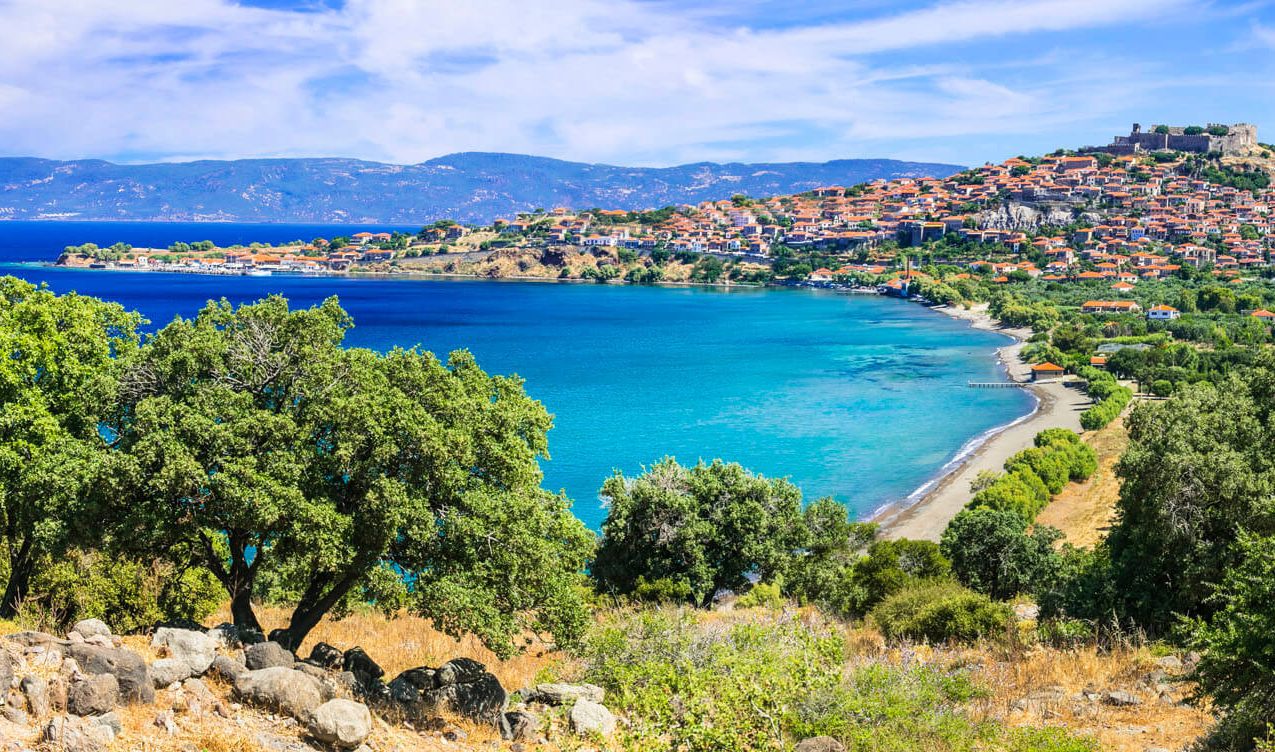
Lesbos travel guide: practical tips, 2-7 day itineraries, top things to do, beaches, ouzo distilleries & hidden coves — insider advice for an authentic escape.
Lesbos Travel Guide: Best Things To Do In Lesbos, Greece
Lesbos is one of those Greek islands that rewards curiosity. Large, quietly dramatic, and rich in history, it blends volcanic beaches, pine-clad hills, centuries-old olive groves, and villages that feel unchanged for generations. In this Lesbos travel guide we’ll share practical planning tips, the top things to do in Lesbos Greece, where to stay, how to get around, and insider suggestions from locals, the kind of notes we’d want before a first trip. Whether you’re after romantic sunset spots, rugged hiking, or quiet tavernas serving the island’s famed ouzo and olive oil, Lesbos delivers without the crowds of more famous isles.
Quick Facts And Practical Planning
Lesbos at a glance
- Location: Northeastern Aegean, close to the Turkish coast.
- Capital: Mytilene (largest town, cultural hub).
- Size: About 1,630 km², one of Greece’s largest islands.
- Language: Greek: English is widely understood in tourist areas.
- Currency: Euro.
- Time zone: Eastern European Time (EET).
Practical planning notes
Lesbos is sizable, so plan travel time between sites. We recommend staying at least 3–4 days to feel the island’s character: a week lets you explore the north and south coasts thoroughly. ATMs and card acceptance are common in Mytilene and tourist towns, but carry some cash for remote villages and small tavernas.
Seasonal tips and crowds
High season (July–August) brings warm sea temperatures and local festivals: we prefer late May–June and September–early October for pleasant weather, fewer crowds, and better prices. Spring paints the island green and is ideal for hiking and birdwatching.
How To Get To Lesbos (Ferry, Plane, And Island Hopping)
By plane
Mytilene International Airport (MJT) handles domestic flights from Athens year-round and seasonal international charters. Flights from Athens take about 55–70 minutes. Arriving by plane is the fastest way to reach the island: we often choose it if our schedule is tight.
By ferry
Ferry routes connect Lesbos with the Greek mainland and nearby islands. Ferries from Piraeus (Athens) are longer; overnight ferries take roughly 8–12 hours, depending on the service. There are quicker options from Kavala and Alexandroupoli. Ticket prices vary widely by season, so book early in summer.
Island hopping
Lesbos sits near Limnos, Chios, and the Turkish coast. Regular ferries and occasional connections make it a good base for an Aegean loop. If you plan island hopping, consider combining Lesbos with Chios for similar rustic charm and comparatively light tourism.
Booking tips
Book domestic flights and inter-island ferries in advance during summer. For flexible travel, we sometimes reserve only key nights and keep a day or two open for spontaneous boat trips and local recommendations from hosts.
Where To Stay: Best Areas And Boutique Hotel Picks
Mytilene, for culture and convenience
Mytilene is our go-to base for first-time visitors. It’s lively, with cafés, museums, and a manageable waterfront. Staying here is ideal for exploring east and central Lesbos and for evening dining options.
Plomari, ouzo, and coastal charm
Plomari on the southern coast is famous for ouzo and attractive pebble beaches. We recommend it for food-focused travelers and anyone who wants a quieter, village-feel stay.
Molyvos (Mandamados area), romantic and photogenic
Molyvos (also called Mithymna) is a postcard-perfect village with a medieval castle, narrow cobbled streets, and dramatic sunsets. It’s perfect for romantic getaways and boutique hotel stays.
Skala Eressos, bohemian and beach-centered
Skala Eressos has a free-spirited vibe, sandy beaches, and a lively tavern scene. It’s a good pick for younger couples and travelers seeking a relaxed atmosphere.
Boutique hotel picks (local favorites)
- Boutique guesthouses in Molyvos: intimate rooms, hilltop terraces, and views over the harbor. Great for sunset-watching.
- Family-run pensions in Mytilene: central location with homestyle breakfasts and local tips.
- Seaside retreats near Plomari: authentic ouzo distillery tours often within driving distance.
We recommend booking smaller properties early in summer: the island’s boutique inventory is limited compared to mainstream Greek islands.
Top Attractions And Cultural Highlights
Ancient and Byzantine sites
Lesbos has archaeological layers from antiquity to Byzantine times. Don’t miss the Archaeological Museum of Mytilene and the castle in Molyvos for context and sweeping views. We like visiting old olive presses and small ruins scattered along country roads.
Ouzo culture and distilleries
Ouzo is a central part of Lesbos’s identity. Plomari’s distilleries are open for tours and tastings. We find guided tastings useful for learning how different distillation methods affect flavor.
Traditional craftsmanship and markets
The island’s markets are where local life unfolds. Mytilene’s central market and small village shops sell olive oil, handmade soaps, and ceramics. We often pick a bottle of local olive oil; Lesbos produces some outstanding cold-pressed oils.
Monasteries and religious heritage
Agios Raphael and numerous small monasteries across the island offer peaceful detours. They’re especially beautiful during religious festivals when locals gather, and traditions are vivid.
Museums and contemporary culture
Lesbos is also literary: it’s the birthplace of Sappho. Museums celebrating local art and history are scattered throughout Mytilene and towns like Kalloni. If you’re curious about modern culture, check local event calendars for concerts and festivals. We’ve found delightful nights out at small venues in Mytilene.
Beaches, Bays, And Hidden Swim Spots
Best known beaches
- Vatera: A long sandy beach on the south coast, ideal for families and sunbathing. The shallow bay warms quickly, and amenities are nearby.
- Skala Eressos: Sandy, wind-protected, and popular with a younger, bohemian crowd.
- Petra Beach (near Molyvos): Pebbly shore with clear water and a photogenic setting below the hilltop village.
Hidden coves and quieter bays
Lesbos rewards those willing to drive a bit. We love small coves on the west coast near Vatera and south of Skala Kalloni, where the water is calm and the crowds thin. Renting a small boat or hiring a local skipper for half a day uncovers secluded coves accessible only by sea.
Beaches for swimming vs. sunbathing
If you’re focused on swimming, seek pebbly beaches with clear water (Molyvos area) or the sandy shallows of Vatera for easy entry. For sunbathing and long walks, the expansive beaches on the south coast are best. Bring water shoes for pebbly shores and a sunshade for quieter spots without facilities.
Safety and facilities
Most popular beaches have tavernas, umbrellas, and sunbeds. For hidden spots, pack food and water. Watch for wind in late afternoon, especially on north-facing shores.
Outdoor Activities: Hiking, Sailing, Snorkeling, And More
Hiking and scenic walks
There are rewarding trails for a range of abilities. The route between Molyvos and Petra offers coastal views, while trails around Polichnitos and the olive groves showcase rural life. We recommend comfortable shoes, a sun hat, and water; shade is limited on many trails.
Sailing and private charters
Charter a small sailboat for a day to visit secluded coves and neighboring islets. We often arrange private half-day trips with local skippers who know where the water is calmest for swimming and snorkeling.
Snorkeling and diving
Snorkeling is best in rocky coves with clear visibility: the Molyvos and Petra areas are reliable. A few small dive operators are offering guided dives to explore underwater rock formations and marine life.
Birdwatching and nature
Kalloni salt pans are famous for migratory birds and flamingoes in spring and autumn. If wildlife interests you, we recommend early morning visits with binoculars and a local guide.
Cycling and climbing
Road cycling on quiet island lanes is rewarding, but expect hills. There are modest climbing opportunities on volcanic rock formations: local operators can arrange guided climbs and equipment.
Food, Wine, And Local Experiences
Must-try dishes and local flavors
Lesbos cuisine emphasizes olive oil, fresh fish, and hearty village dishes. Don’t miss:
- Sardeles (fresh sardines): Often grilled and simply seasoned.
- Skordalia and fava-style purées: Olive oil-forward, comforting sides.
- Chachles (local meat stews) and vegetable pies made with phyllo.
Where to eat: tavernas we like
We favor family-run tavernas away from the main promenade for authentic flavors and fresher ingredients. In Mytilene, small waterfront tavernas serve excellent seafood; in Plomari, you’ll find tavernas paired with ouzo distilleries.
Olive oil, ouzo, and wine experiences
Lesbos has exceptional olive oil; tastings at local presses offer insight into production methods and flavor profiles. Ouzo is a cultural institution here: distillery tours in Plomari include tastings and stories about local traditions. The island also has small wineries producing limited-run wines: tasting appointments are often by arrangement.
Hands-on experiences
We recommend a cooking class with a local family to learn traditional recipes or a market tour to see how islanders shop. These experiences are the best way to understand Lesbos’s food culture and take recipes home.
Sample Itineraries: 2, 4, And 7+ Day Plans
2-Day Weekend Highlights (Mytilene And Nearby Gems)
Day 1: Arrive in Mytilene, explore the waterfront, visit the Archaeological Museum, and enjoy a sunset drink near the castle.
Day 2: Morning drive to Molyvos, wander the castle and harbor, lunch in a seaside taverna, afternoon swim at nearby Petra, return to Mytilene or stay overnight in Molyvos for romance.
4-Day Balanced Itinerary: Culture, Beach Time, And Activity
Day 1: Arrive in Mytilene, city exploration, and museum visit.
Day 2: Morning trip to Kalloni salt pans for birdwatching, afternoon in Skala Kalloni tasting seafood.
Day 3: Drive to Plomari for an ouzo distillery tour and beach time at Vatera.
Day 4: Hike a coastal trail near Molyvos and finish with a seaside dinner.
7+-Day In-Depth Route: North Coast, South Coast, And Hidden Gems
Days 1–2: Mytilene and museums, short trip to Agios Efstratios (if schedules allow) or local villages.
Days 3–4: Molyvos, Petra, and nearby coves for swimming and sunset watching.
Days 5–6: Plomari, distillery visits, and south coast beaches like Vatera.
Days 7+: Explore inland villages, olive presses, and quieter western coves. We leave room for a boat day to hidden spots and potential day trips to nearby islands.
Practical Tips, Safety, And Local Customs
Money, ATMs, And Card Acceptance On The Island
ATMs are available in Mytilene and larger towns; smaller villages may not have an ATM. Most tavernas accept cards, but it’s wise to carry cash for small purchases and remote areas. We keep a mix of cash and cards to avoid surprises.
Transport On The Island: Rentals, Buses, And Taxis
Renting a car gives the most freedom and is recommended for exploring remote beaches and villages. Roads are generally good, but expect narrow, winding lanes. Public buses connect major towns, but schedules can be infrequent: taxis are available but can be limited in rural areas.
Accessibility, Health Services, And Emergency Info
Mytilene has the main hospital and pharmacies; remote villages have basic health services. For emergency calls, dial 112. If you require medical support, we advise staying closer to Mytilene or informing hosts where the nearest clinic is.
Respectful Behavior, Photography, And Local Etiquette
We encourage learning a few Greek phrases; a friendly “kalimera” or “efharisto” goes far. Dress modestly when visiting monasteries. Ask permission before photographing people, especially elders, at markets or festivals. Sample local customs at mealtimes: a shared meze is communal, and refusing small offers of food can seem impolite.
Safety
Lesbos is safe for travelers: usual precautions apply. Keep valuables secure and be cautious when swimming in unsupervised coves if currents or wind pick up. For boat trips, confirm life jackets and safety briefings with operators; we always ask about safety equipment before boarding.
Conclusion
Lesbos rewards slow, curious travel, its ouzo, olive oil, Petrified Forest, beautiful villages and quiet beaches offering an authentic Greek island escape far from the crowds of more famous isles.
Packing And Timing Tips For Different Seasons
- Spring (April–June): Pack layers, hiking shoes, a light rain jacket for occasional showers, and binoculars for birdwatching.
- Summer (July–August): Swimwear, sun protection, light clothing, and a portable fan for hotter inland days.
- Autumn (September–October): Similar to spring, warm afternoons, cool evenings.
- Winter: Fewer services open: pack warm layers if you travel off-season.
Ferry Routes, Schedules, And Booking Advice
Book the main ferry legs in the summer well ahead. For spontaneous local runs between islands, check local port offices and ask hotel hosts for up-to-date schedules. We often rely on their local knowledge to snag less-advertised connections.
Airport Arrival: Mytilene International (MJT) Essentials
MJT is compact and efficient. Taxi stands and car rental desks are outside arrivals. If you arrive late, consider spending your first night in Mytilene to avoid driving unfamiliar roads in the dark.
Staying In Mytilene Versus Coastal Villages (Pros And Cons)
- Mytilene pros: services, dining choices, museums, transport links. Cons: less romantic and quieter beaches.
- Coastal village pros: charm, sunsets, proximity to beaches. Cons: fewer services and quieter nightlife. We sometimes split stays, a few nights in Mytilene, then time in Molyvos or Plomari.
Romantic Stays And Quiet Boutique Hotel Neighborhoods
For couples, we recommend hillside boutique hotels around Molyvos or small seaside pensions in Plomari. Seek rooms with terraces for private sunset views and ask hosts to arrange a private boat trip for a memorable evening.
Ancient Sites, Museums, And Olive Presses To Visit
Visit the Archaeological Museum of Mytilene, the small local museums in towns like Kalloni, and working olive presses where you can learn production methods and taste fresh oil. We find these visits grounding and deliciously informative.
Traditional Villages, Hot Springs, And Cultural Events
Mandamados and Vareltzidis-style villages offer authentic architecture and everyday life. There are also thermal springs near Eftalou that are worth a soak. Check local calendars for festivals (panigyria), they’re joyous and food-filled.
Best Beaches For Swimming, Sunbathing, And Families
Vatera is family-friendly with long sandy stretches. Molyvos and Petra offer clear water for swimming, while Skala Eressos suits those looking for a livelier beach scene.
Hidden Coves, Secluded Beaches, And How To Reach Them
Hire a small boat or join a private charter to reach secluded coves along the west and south coasts. A local skipper can navigate shallow approaches and recommend the quietest spots.
Sunset Spots And Romantic Views (Including Lighthouse And Hilltop Vistas)
We love the Molyvos castle ramparts, the lighthouse near Plomari, and hilltop terraces above Mytilene for sunset. Bring a drink and arrive early to claim a viewpoint.
Top Hiking Trails And Scenic Walks (Difficulty And Duration)
Short coastal trails near Petra are easy (30–90 minutes). Longer hikes across hills and between villages can take 2–5 hours and involve steady climbs. Check trail conditions locally and bring water.
Boat Tours, Private Charters, And Sailing Routes
Half-day private charters from Molyvos or Mytilene will visit hidden bays and snorkeling spots. For a calm day, head south to the shallow bays near Vatera: for dramatic cliffs, head north around Molyvos.
Best Snorkeling And Diving Sites Around Lesbos
Look for rocky coves around Molyvos and Petra. Dive shops in Mytilene and Molyvos can arrange guided dives to local underwater features: ask about visibility and currents before booking.
Climbing, Cycling, And Adventure Options
Cycling on secondary roads is rewarding for fit riders. Local guides can arrange climbing days on volcanic rock formations and multi-activity packages combining hiking and sea activities.
Where To Eat: Must-Try Local Dishes And Taverna Recommendations
Try grilled sardines, local cheeses, vegetable pies, and fresh-caught fish. Ask restaurant owners for their daily specials; they often reflect what’s fresh from the market that morning.
Olive Oil, Ouzo, And Local Wineries: Tasting Experiences
Book olive press and ouzo tours in advance during high season. Distillery tastings in Plomari are informative and convivial. For wine, contact small producers ahead of time for private tastings.
Cooking Classes, Markets, And Food Tours Led By Locals
Cook with a local family or join a market-to-table tour to learn recipes and sourcing. These experiences are often arranged through small local operators; we can recommend trusted partners at Greece Tours who grew up on the island.
2-Day Weekend Highlights (Mytilene And Nearby Gems)
(See sample itinerary above.) Prioritize convenience: stay in Mytilene, pick one coastal village, and balance cultural sights with a swim.
4-Day Balanced Itinerary: Culture, Beach Time, And Activity
(See sample itinerary above.) Mix museums, an ouzo distillery visit, and at least one private boat trip.
7+-Day In-Depth Route: North Coast, South Coast, And Hidden Gems
(See sample itinerary above.) Allow spare days for spontaneous discoveries, like a festival or a recommended home-cooked lunch.
Money, ATMs, And Card Acceptance On The Island
(See practical tips above.) Keep cash for smaller purchases and don’t rely solely on cards in remote areas.
Transport On The Island: Rentals, Buses, And Taxis
(See practical tips above.) We generally rent a car for full flexibility and use local guides for special routes.
Accessibility, Health Services, And Emergency Info
(See practical tips above.) Confirm medical access if you have specific needs, and carry travel insurance that covers island activities.
Respectful Behavior, Photography, And Local Etiquette
Be polite, ask before photographing people, and embrace local hospitality. A small phrasebook and an open mind go a long way.
Final note
Lesbos is quietly powerful: it rewards slow travel, curiosity, and a taste for authentic experiences. We recommend taking your time, sampling the food, meeting locals, and allowing a boat day to shape your favorite memories. When you travel with local experts, such as those at Greece Tours, you’ll discover tucked-away olive presses, trusted tavernas, and the best sunset vistas that make Lesbos feel like a private discovery rather than a checklist.
What is Lesbos known for?
Lesbos is the third-largest Greek island, known for its ouzo, its excellent olive oil, the UNESCO Petrified Forest, the ancient poet Sappho, and its green, forested landscape, all enjoyed with far fewer crowds than most Greek islands.
Lesbos, also spelled Lesvos, stands out among Greek islands for its size and its authentic, uncrowded character. Around seventy per cent of the island is covered in forest and olive groves, giving it a green, lush landscape unusual in the Aegean. It is celebrated for its ouzo, distilled above all in Plomari, its outstanding olive oil, its UNESCO-listed Petrified Forest, and its links to the ancient poet Sappho, who was born here. Add historic castles, thermal springs and traditional mountain villages, and Lesbos offers a rich, varied island experience rooted in genuine local life.
Where is Lesbos located?
Lesbos lies in the north-eastern Aegean Sea, close to the coast of Turkey and south of Limnos. Covering around 1,630 square kilometres, it is the third-largest Greek island, reached by air or ferry to its capital, Mytilene.
Lesbos sits in the north-eastern Aegean, only a short distance from the Turkish mainland across a narrow strait. It is the third-largest island in Greece, covering about 1,630 square kilometres, with a deeply indented coastline that forms two great gulfs, Kalloni and Gera. Its size and position give it a varied landscape of mountains, forests, olive groves and long coastlines, and make it a natural base for exploring the north-eastern Aegean, including the neighbouring islands of Chios and Limnos.
What is the capital of Lesbos?
The capital of Lesbos is Mytilene, the island’s largest town and main port, on the south-eastern coast. A lively cultural hub, it has a Byzantine castle, neoclassical and Ottoman architecture, important museums and a busy waterfront lined with cafes and tavernas.
Mytilene is the capital, main port and cultural heart of Lesbos, set on the south-eastern coast facing Turkey. Its architecture reflects the island’s long history, with neoclassical mansions, Ottoman mosques and a grand Byzantine castle raised on the site of ancient fortifications. The town holds the Archaeological Museum, the Teriade Museum with works by Chagall, Picasso and Matisse, and the museum of the folk painter Theophilos. Its waterfront, cafes, shops and markets make Mytilene the natural base for a first visit to the island.
What is the Petrified Forest of Lesbos?
The Petrified Forest of Lesbos is a UNESCO Global Geopark in the west of the island, near Sigri, where whole tree trunks were fossilised by volcanic ash around twenty million years ago. It is one of the world’s most important petrified forests.
One of the great natural wonders of Lesbos is its Petrified Forest, protected within a UNESCO Global Geopark in the barren volcanic landscape of the western island around Sigri and Eressos. Around twenty million years ago, a volcanic eruption buried a subtropical forest in ash, fossilising entire tree trunks, roots and leaves, which survive today as stone. Visitors can walk among the standing and fallen petrified trunks and see the finds displayed in the Natural History Museum at Sigri, a striking and unusual highlight quite unlike anything on other Greek islands.
Why is Lesbos famous for ouzo?
Lesbos is famous for ouzo because it is the heartland of the anise-flavoured Greek spirit, above all in the southern town of Plomari. Its historic distilleries, the oldest over a century old, produce renowned ouzo and offer tours and tastings of this cultural institution.
Ouzo is central to the identity of Lesbos, and the island is considered the home of the finest Greek ouzo. The southern coastal town of Plomari is the heartland of production, with historic distilleries, the oldest dating back well over a century, whose names are known across Greece. These distilleries welcome visitors for tours and tastings, explaining how the anise-flavoured spirit is made and how different methods shape its flavour. Enjoyed slowly with meze and fresh seafood, ouzo is as much a social ritual on Lesbos as a drink.
What is Molyvos on Lesbos like?
Molyvos, also called Mithymna, is the most beautiful village on Lesbos, on the northern coast. Built up a hillside beneath a medieval castle, its cobbled streets, stone houses, flower-draped lanes, harbour and sunsets make it the island’s most photogenic and romantic spot.
Molyvos, officially Mithymna, on the north coast, is widely regarded as the loveliest village on Lesbos. It rises up a steep hillside crowned by a well-preserved medieval castle, its cobbled streets lined with stone houses, shops, cafes and art galleries and draped in flowers. Below lies a pretty fishing harbour ringed with tavernas. The village is famous for its atmosphere and its sunsets, and makes a romantic base, with a long pebble-and-sand beach nearby and the resort of Petra just along the coast.
What are the best beaches on Lesbos?
The best beaches on Lesbos include long, sandy Vatera on the south coast, sandy Skala Eressou in the west, the pebbly shores of Molyvos and Petra in the north, and family-friendly Anaxos and Agios Isidoros, offering clear water and both organised and quiet stretches.
For an island of its size, Lesbos has a wealth of beaches to suit every taste. On the south coast, Vatera is one of the longest sandy beaches in Greece, ideal for families, while Agios Isidoros near Plomari is lively and well organised. In the west, Skala Eressou offers a long sandy beach with a relaxed, bohemian atmosphere and a link to the poet Sappho. In the north, Molyvos, Petra and Anaxos provide clear water and a mix of sand and pebbles, with water sports and tavernas close at hand.
What is Plomari on Lesbos?
Plomari is a picturesque town on the south coast of Lesbos, famous as the home of Greek ouzo. Built around a harbour, it has traditional houses, old coffee shops, distilleries and pebble beaches nearby, giving an authentic taste of island life.
Plomari, on the south coast, is the second-largest town on Lesbos and the centre of the island’s ouzo industry. Its old houses climb the slopes around a harbour and a lively central square lined with traditional kafeneia, and its distilleries draw visitors for tours and tastings. Nearby lie attractive pebble beaches such as Agios Isidoros, and the town makes a good base for the south of the island, combining a working, authentic atmosphere with coastal charm and a strong sense of local tradition.
What is the village of Agiasos?
Agiasos is a traditional mountain village on the slopes of Mount Olympus in central Lesbos, known for its cobbled streets, stone houses, craft workshops and the church of Panagia. Cool and green, it is one of the island’s most authentic and picturesque villages.
Agiasos, set on the wooded slopes of Mount Olympus, the highest mountain on Lesbos, is one of the island’s most beautiful and traditional villages. Its narrow cobbled lanes, stone houses with wooden balconies and shaded squares give it a timeless character, and it is known for its craftsmanship in wood carving and pottery. At its heart stands the church of Panagia, an important pilgrimage site with a revered icon. Cool and green even in high summer, Agiasos offers a glimpse of authentic mountain life away from the coast.
Who was Sappho and why is she linked to Lesbos?
Sappho was the great ancient Greek lyric poet, born on Lesbos around the seventh century BC, most likely at Eressos. Celebrated across the ancient world for her poetry of love, her name and that of her island gave rise to the words “sapphic” and “lesbian”.
Lesbos is the birthplace of Sappho, one of the most celebrated poets of the ancient world, who lived on the island around the seventh and sixth centuries BC, traditionally at Eressos in the west. Admired throughout antiquity for her lyric poetry, largely about love and addressed to women, she gave her name and that of her island to the words “sapphic” and “lesbian”. Today Skala Eressou, below ancient Eressos, is a place of pilgrimage for visitors drawn by her legacy, and her memory remains part of the island’s cultural identity.
What is the Gulf of Kalloni known for?
The Gulf of Kalloni, a large enclosed bay in the centre of Lesbos, is famous for its birdwatching and its sardines. Its salt pans attract flamingos and migratory birds in spring and autumn, while the celebrated Kalloni sardines are prized across Greece.
The Gulf of Kalloni, a vast, almost enclosed bay cutting into the heart of Lesbos, is one of the island’s natural treasures. Its shallow, sheltered waters and the salt pans around Kalloni rank among the finest birdwatching sites in Europe, drawing flamingos, herons and migratory birds in their thousands in spring and autumn, when birdwatchers come from across the world. The gulf is equally famous for its sardines, the celebrated Kalloni sardines served in the tavernas of Skala Kalloni, best enjoyed fresh with a glass of local ouzo.
When is the best time to visit Lesbos?
The best time to visit Lesbos is late spring and early autumn, from May to June and September to early October, when the weather is warm and sunny, the sea inviting and the island quiet. Spring brings green landscapes ideal for hiking and birdwatching.
Lesbos is rewarding from spring through autumn, but the shoulder months are the finest. May and June bring warm, sunny days, a green, flower-filled landscape and a sea warming for swimming, along with excellent conditions for hiking and birdwatching and far fewer visitors. September and early October offer warm seas after the summer and a relaxed atmosphere. July and August are the hottest and busiest months, lively with local festivals but warmer inland, while winter is very quiet, with reduced services, suiting only those seeking solitude.
How do you get around Lesbos?
You get around Lesbos best by hire car, given the island’s large size and scattered sights. Public buses link the main towns but run infrequently, and taxis are limited in rural areas, so a rented car or scooter gives the most freedom to explore.
Lesbos is one of the largest Greek islands, with its highlights spread across long distances, so renting a car is by far the best way to get around and explore the villages, beaches and the western Petrified Forest at your own pace. The roads are generally good, though narrow and winding in the hills. Public buses connect Mytilene with the main towns such as Molyvos, Plomari and Kalloni, but services are infrequent, and taxis, though available, are limited in rural areas, so independent transport is well worth arranging in advance.
What food is Lesbos known for?
Lesbos is known for its fresh sardines from Kalloni, its excellent olive oil and ouzo, and its Ladotyri cheese matured in olive oil. Hearty village dishes, fresh seafood and phyllo pies feature strongly, best enjoyed at family-run tavernas across the island.
The food of Lesbos reflects its rich farming and fishing traditions and is a highlight of any visit. The island is famous for the sardines of Kalloni, traditionally salted or grilled, and for its outstanding olive oil, pressed from vast ancient groves. Local specialities include Ladotyri, a hard cheese matured in olive oil, hearty meat stews, vegetable pies in phyllo pastry, and fresh fish and seafood along the coasts. All of this pairs naturally with the island’s celebrated ouzo, and dining at a family taverna is one of the great pleasures of Lesbos.
Are there hot springs on Lesbos?
Yes, Lesbos has natural thermal hot springs, among the hottest in Europe. Popular spots include the seaside springs at Eftalou near Molyvos and the thermal baths at Polichnitos and near Gera, where warm mineral waters are enjoyed in traditional bathhouses or by the sea.
Lesbos is one of the best Greek islands for thermal springs, thanks to its volcanic geology, and its mineral-rich waters rank among the hottest in Europe. Near Molyvos in the north, the seaside springs at Eftalou are a favourite, where warm water meets the sea in a small vaulted bathhouse and open pools. In the south and centre, the thermal baths at Polichnitos and near Gera offer hot mineral waters long valued for their health-giving properties. A soak in these historic springs is a relaxing and distinctive Lesbos experience.
Is Lesbos worth visiting?
Lesbos is well worth visiting for travellers seeking an authentic, uncrowded Greek island rich in nature, history and tradition. With its ouzo and olive oil, Petrified Forest, beautiful villages, beaches and thermal springs, it rewards slow, curious travel far from the tourist crowds.
Lesbos is one of the most rewarding of the Greek islands for those who value authenticity over crowds. Large and varied, it offers green forests and olive groves, historic Mytilene and beautiful Molyvos, the unique Petrified Forest, long sandy beaches, world-class birdwatching, and the traditions of ouzo, olive oil and thermal springs, all experienced among genuine local life rather than mass tourism. It rewards slow, curious travel, a hire car and time to explore, and leaves visitors with the sense of having discovered a quieter, deeper side of Greece that many never see.
Lesbos Travel Guide — Frequently Asked Questions
What are the best things to do in Lesbos, Greece, for a first-time visitor?
Start in Mytilene for museums and waterfront dining, visit Molyvos for its castle and sunsets, tour Plomari’s ouzo distilleries, swim at Vatera or Petra, and explore Kalloni salt pans for birdwatching. Allow 3–4 days minimum; a week lets you see the north and south coasts more thoroughly.
When is the best time to visit Lesbos to avoid crowds and enjoy good weather?
Late May–June and September–early October are ideal: warm sea temperatures, fewer crowds, pleasant hiking conditions, and better prices. Spring is great for birdwatching and greenery; July–August is busiest with local festivals and hotter weather.
How do I get to Lesbos — is flying faster than taking the ferry?
Flying into Mytilene International Airport (MJT) is the fastest (55–70 minutes from Athens) and best for tight schedules. Ferries run from Piraeus and northern ports (overnight, 8–12 hours from Athens); book summer ferry and flight legs early for availability.
Can I do island hopping from Lesbos, and which nearby islands are easiest to reach?
Yes—Lesbos connects to Limnos, Chios, and sometimes Turkish ports via regular ferries. Chios pairs well with similar rustic charm. Schedules vary seasonally, so check local ports or ask hosts for lesser-known connections when planning an Aegean loop.
What practical tips should I know about money, transport, and safety on Lesbos?
Carry some cash—ATMs and card acceptance are common in Mytilene and tourist towns, but limited in remote villages. Rent a car for flexibility; buses run between major towns but infrequently. Lesbos is generally safe: take usual precautions, confirm life jackets on boat trips, and dial 112 for emergencies.
Find more experiences in My Greece Tours:
- Corfu Tours: Private Tours in Corfu, Walking Tours, Corfu Tour Guide & Guides
- Crete Travel Guide: Experience Crete, Greece – The Island Local Guide From a Local
- Delos
- Ephesus Tours: Explore Ancient Ephesus Adventures with Ephesus Tour Packages
- Epidaurus Day Tour – Self-Guided Epidaurus Tours to Ancient Epidaurus
- Explore Delphi, Greece: Ultimate Guide to the Archaeological Site of Delphi