
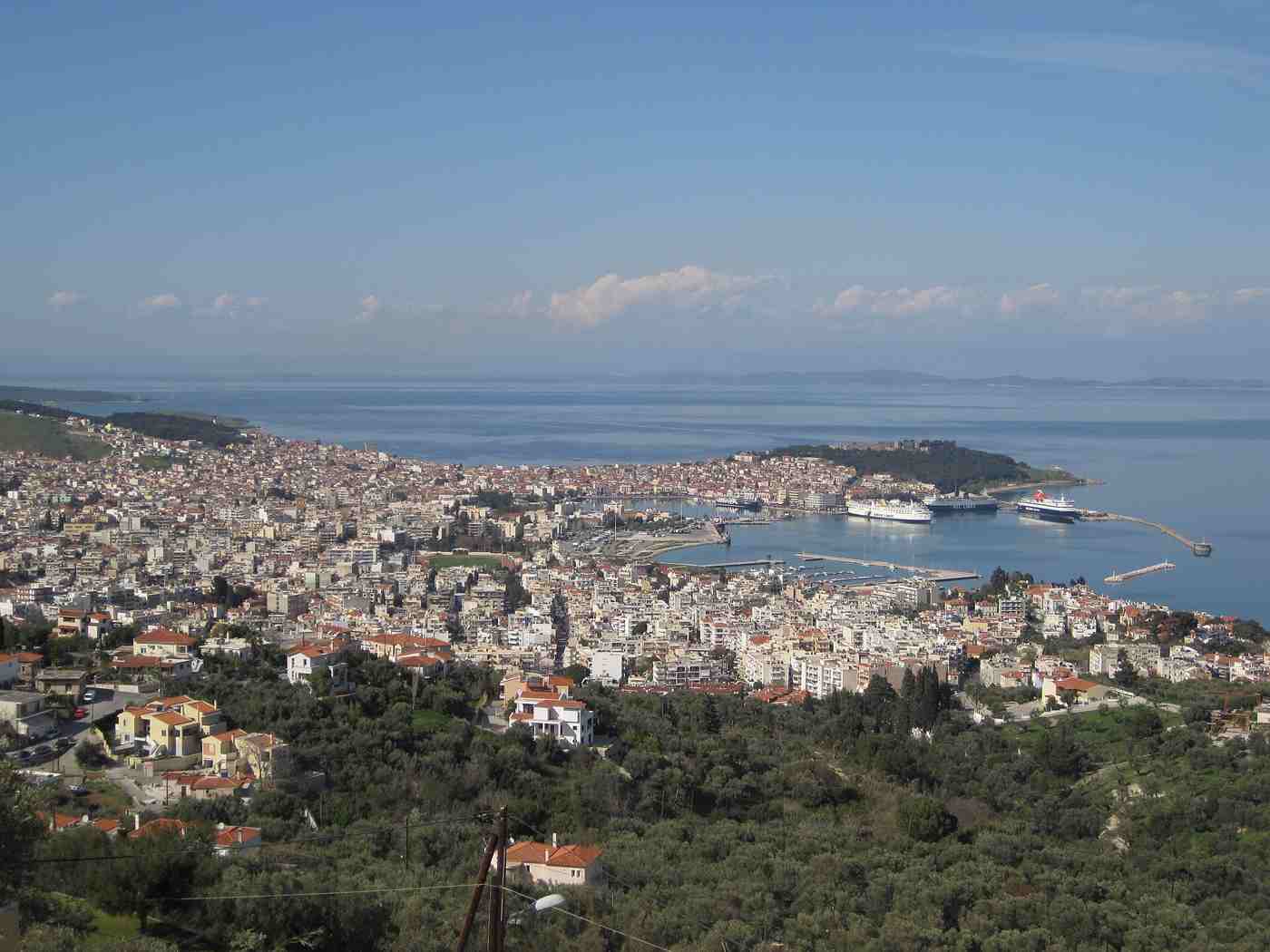
Mytilene is the capital, main port and lively cultural heart of Lesbos, a handsome town on the island’s south-eastern coast where neoclassical mansions. Ottoman monuments and a grand Byzantine castle reflect its long and layered history. The bustling waterfront is lined with cafes, ouzeries and tavernas, and the paved streets behind lead to museums, churches and markets. Home to the impressive castle, the Archaeological Museum and the Teriade Museum with works by Chagall. Picasso and Matisse, Mytilene rewards a day’s exploration and makes the natural gateway to the island. This guide covers Mytilene in full: what it is, where it lies, the things to do. Its castle, its museums, its churches and monuments, where to eat. Plan the whole trip with Greece Tours.
How to get there.
Here you will find everything about Mytilene, the capital of Lesbos: what the town is like, where it lies, the best things to do. Its Byzantine castle, its museums, its historic churches and monuments, the waterfront cafes and ouzeries. How to get there by air or ferry.
What is Mytilene on Lesbos?
Mytilene is the capital and main port of Lesbos, a lively town on the south-eastern coast.
Mytilene is the capital, largest town and main port of Lesbos, set on the south-eastern coast of the island facing the Turkish mainland across a narrow strait. As the cultural and administrative heart of the island, it is where most visitors arrive and a lively, characterful town in its own right.
Its long history is written in its architecture, which blends grand neoclassical mansions from a prosperous merchant era, Ottoman-period mosques and monuments, and a great Byzantine castle overlooking the sea. Behind the harbour, paved streets lead through neighbourhoods of cafes, shops, tavernas and traditional ouzeries.
Lively from early morning until late at night, Mytilene combines the everyday bustle of a working Greek town with a rich cultural offering of museums, churches and festivals. It rewards exploration on foot and makes the natural base and gateway for a visit to Lesbos.
What is there to do in Mytilene?
In Mytilene you can stroll the lively waterfront, explore the great Byzantine castle, visit the Archaeological and Teriade museums, see historic churches and Ottoman monuments, wander the market streets, and enjoy the cafes, ouzeries and tavernas of the harbour and.
There is plenty to do in Mytilene for a town of its size. The essential experience is to stroll the long, busy waterfront, lined with cafes and tavernas. Then climb to the great Byzantine castle on its wooded hill for history and views. The paved streets behind the harbour lead into lively neighbourhoods of shops, ouzeries and squares.
The town is rich in culture, with the Archaeological Museum. The Teriade Museum and the museum of the folk painter Theophilos among its highlights, along with grand churches and Ottoman-era monuments. Wandering the central market streets, browsing for local olive oil, ouzo and crafts, is a pleasure in itself.
By night, Mytilene comes alive with its cafes, bars and ouzeries, where locals gather over ouzo and meze. Whether exploring its history by day or enjoying its lively waterfront by evening, the capital offers a rewarding. Authentic slice of island life. A base from which to explore the rest of Lesbos.
What is the castle of Mytilene?
The castle of Mytilene is a great Byzantine fortress on a wooded hill above the town, among the largest in the Mediterranean.
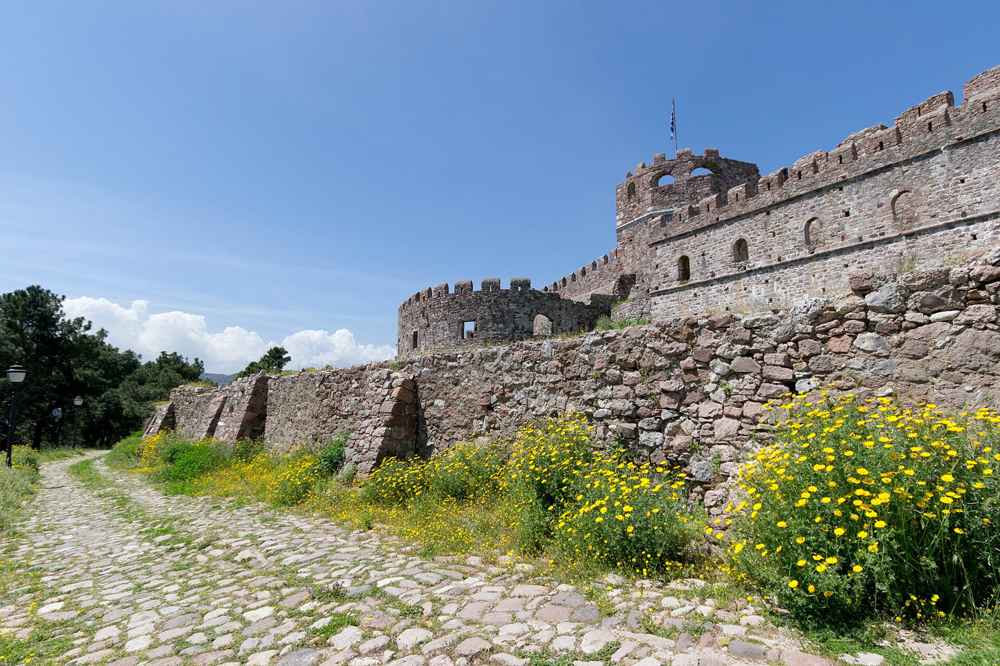
The most prominent landmark of Mytilene is its castle, a great fortress standing on a pine-clad hill between the town’s two harbours. One of the largest castles in the Mediterranean. It was founded in Byzantine times on ancient foundations and later greatly expanded by the Genoese Gattilusi lords who ruled the island, and by the Ottomans.
Within its extensive walls survive towers, gates, cisterns, the remains of buildings from its long history, and traces of an ancient temple, reflecting the eras that shaped it. The wooded slopes around it make a pleasant place to walk, and the castle is a peaceful green retreat above the busy town.
The castle is open to visitors and well worth exploring for its history and atmosphere, and for the views it commands over Mytilene, its harbours and the sea towards Turkey. It is one of the essential sights of the capital and a reminder of the island’s strategic importance over the centuries.
What museums are there in Mytilene?
Mytilene has several fine museums, including the Archaeological Museum, with finds from ancient Lesbos, the Teriade Museum, displaying works by Chagall, Picasso, Matisse and Léger, and the museum of the folk painter Theophilos.
For its size, Mytilene has a remarkable range of museums. The Archaeological Museum, housed in two buildings, displays finds from ancient Lesbos, from prehistoric and classical times to the Roman era. Including sculpture, mosaics and everyday objects that bring the island’s ancient past to life.
Just outside the town at Varia are two of the island’s cultural treasures. The Teriade Museum, founded by the Lesbos-born art publisher Teriade, holds an extraordinary collection of works by great modern artists including Chagall. Picasso, Matisse, Léger and Miró, a surprising and world-class gallery on a Greek island.
Next to it stands the museum of Theophilos, the celebrated self-taught folk painter born on Lesbos, whose vivid, naive scenes of Greek life and legend are a delight. Together, these museums make Mytilene an unexpectedly rich destination for lovers of art and history, and a highlight of a visit to the island.
What churches and monuments can you see in Mytilene?
In Mytilene you can see the grand domed church of Agios Therapon on the waterfront, the Metropolitan church of Agios Athanasios, the Ottoman-era Yeni Cami mosque, and the landmark statue known as the Statue of Liberty, alongside neoclassical mansions and.
Mytilene is rich in churches and monuments that reflect its layered history. The most striking is the great church of Agios Therapon on the waterfront, whose grand dome dominates the harbour skyline. An impressive example of the town’s prosperous era, alongside the Metropolitan church of Agios Athanasios.
From the Ottoman centuries survive monuments such as the Yeni Cami, a large mosque in the old Turkish quarter near the market. A reminder of the long period of Ottoman rule and the town’s mixed heritage. Grand neoclassical mansions, built by wealthy merchant families, line many of the streets.
Down by the harbour stands a landmark statue of a woman holding a torch, known locally as the Statue of Liberty, a symbol of the town. Together with the castle and the museums, these churches, mosques and monuments give Mytilene a wealth of sights that repay a day’s exploration on foot.
Where can you eat and drink in Mytilene?
In Mytilene you can eat and drink at the cafes, ouzeries and seafood tavernas of the busy harbour and the paved back streets.
Mytilene is an excellent place to eat and drink, reflecting its status as the island’s lively capital. The harbour front is lined with cafes, bars and restaurants, busy from morning coffee to late-night drinks, while the paved streets leading inland from the water hide traditional tavernas, ouzeries and mezedopolia.
The town is especially known for its ouzeries, an institution on Lesbos, the home of ouzo. Where the anise spirit is enjoyed slowly with a succession of small meze dishes, from grilled sardines and octopus to cheeses and vegetables. Sharing ouzo and meze by the water is a quintessential Mytilene experience.
Seafood features strongly, with waterfront tavernas serving the fresh catch, and the central market is the place to buy local olive oil, cheeses, ouzo and produce. Whether for a leisurely lunch, an ouzo-and-meze session or a lively evening out, Mytilene offers some of the best and most authentic dining on the island.
How do you get to Mytilene and is it worth visiting?
You reach Mytilene by air, at the island’s international airport nearby, or by ferry to its port from Athens and other ports.
Mytilene is the main point of arrival on Lesbos, served both by Mytilene International Airport. A short distance south of the town with flights from Athens and Thessaloniki. By its harbour, which receives ferries from Piraeus and other ports. Most visitors to the island therefore pass through the capital.
The town itself is easily explored on foot, with the harbour, castle, museums and market all within reach, though a hire car is useful for reaching the Teriade and Theophilos museums at Varia and for exploring the rest of the island, from Molyvos in the north to the Petrified Forest in the west. As the transport hub, it is also the natural base for onward travel to Molyvos, Plomari and the west.
Mytilene is well worth visiting in its own right, not merely as a gateway. Its Byzantine castle, world-class museums, grand churches. Lively waterfront and famous ouzeries give it real depth and character. Time spent here adds greatly to an understanding and enjoyment of Lesbos and its rich history and culture.
Frequently Asked Questions
Is Mytilene worth visiting on Lesbos?
Mytilene is well worth visiting, both as the natural gateway to Lesbos and as a rewarding destination in its own right. With a wealth of history, culture and lively local life packed into the island’s capital. As the largest town and main port, set on the south-eastern coast facing Turkey, it is where most visitors arrive by air or ferry. It deserves more than a passing glance. Its standout sight is the great Byzantine castle, one of the largest in the Mediterranean. Founded in Byzantine times and expanded by the Genoese Gattilusi lords and the Ottomans, which crowns a pine-clad hill and offers history, shaded walks and fine views.
The town also has an unexpectedly rich cultural offering, including the Archaeological Museum with finds from ancient Lesbos, and, at nearby Varia. The world-class Teriade Museum, with works by Chagall, Picasso, Matisse and Léger. The museum of the beloved folk painter Theophilos. Add grand churches such as the domed Agios Therapon, Ottoman-era monuments like the Yeni Cami mosque, elegant neoclassical mansions. A busy central market and a waterfront lined with cafes and famous ouzeries. Mytilene reveals itself as a place of real character and depth. Lively from early morning until late at night, it offers an authentic slice of island life alongside its historic sights. Makes an excellent base for exploring the rest of Lesbos.
For anyone visiting the island, spending time in Mytilene is both practical and genuinely enjoyable.
What is Mytilene famous for?
Mytilene is famous first and foremost as the capital and cultural heart of Lesbos, and for the wealth of history, art and tradition concentrated in the town. It is known for its great Byzantine castle, among the largest fortresses in the Mediterranean. Standing on a wooded hill above the harbours and reflecting the successive Byzantine, Genoese and Ottoman rulers of the island. The town is also celebrated for its museums, above all the Teriade Museum at nearby Varia, which holds a remarkable collection of works by modern masters including Chagall, Picasso, Matisse and Léger.
An extraordinary thing to find on a Greek island, alongside the museum of the self-taught folk painter Theophilos, a much-loved figure born on Lesbos, and the Archaeological Museum. Architecturally, Mytilene is famous for its grand neoclassical mansions. Built by wealthy nineteenth-century merchant families. For landmarks such as the domed church of Agios Therapon on the waterfront and the Ottoman-era Yeni Cami mosque, which speak of its mixed heritage. Like the rest of Lesbos, the town is strongly associated with ouzo, and its traditional ouzeries, where ouzo is served with meze, are an institution.
More broadly, as the main town of an island famous as the birthplace of the poet Sappho and for its olive oil, ouzo and green landscapes. Mytilene stands as the vibrant hub of all that Lesbos is known for, combining history, art, gastronomy and lively local life.
How do you get from Athens to Mytilene?
You can get from Athens to Mytilene, the capital of Lesbos, either by air or by ferry, with flying being much the faster option. The quickest way is to take a domestic flight from Athens International Airport to Mytilene International Airport, which lies a short distance south of the town. With the flight taking roughly fifty-five to seventy minutes. There are regular year-round services, making this the easiest choice for visitors on a tight schedule. Alternatively, you can travel by ferry from the port of Piraeus, the main port of Athens, to the harbour of Mytilene, though this is a much longer journey.
With overnight ferries typically taking somewhere in the region of eight to twelve hours depending on the service and any stops en route. The ferry can be a pleasant and economical option for those who enjoy sea travel or who wish to bring a car to the island. Overnight crossings allow you to sleep during the journey and arrive in the morning. In summer, it is important to book both flights and ferry tickets well in advance, as demand is high and services can sell out, particularly for cabins on the overnight ferries and for cars. Once you arrive in Mytilene, whether by air or sea. The town itself is easily explored on foot.
Hiring a car is recommended for getting around the large island of Lesbos and reaching villages such as Molyvos and Plomari and the western Petrified Forest. Whichever way you choose to travel, Mytilene is the main gateway to Lesbos and the starting point for exploring the island.