
Lefkada sits in the Ionian Sea. Joined to the Greek mainland by a short causeway and a floating bridge. It is one of the few Greek islands reached entirely by car. This road link keeps the island compact and easy to tour, yet it packs a wide range of attractions into a small area. Bright west-coast beaches, offshore boat trips, a windswept south coast, green mountain villages and a small historic town all sit within a short drive of each other. Visitors can fill a week without repeating a single type of day out. Plan the whole trip with Greece Tours.
The attractions divide into a few clear groups that make planning straightforward. The beaches are the headline draw, followed by boat trips to the offshore islets, then watersports on the wind-blown south coast. Inland, walking trails, waterfalls and traditional villages give a cooler, greener contrast, while Lefkada Town adds castle walls, a monastery and local food and wine. Cape Lefkatas closes the island at its exposed southern tip, ending in white cliffs and a lighthouse. This guide works through each group in turn, so travellers can match the weather, the season and their own pace to the right corner of the island.
What are the best beaches in Lefkada?
The beaches of Lefkada are the island’s main draw, spanning the white cliffs of Porto Katsiki and the sheltered cove of Mylos. West-coast sand and clear water define the coastline.
The beaches of Lefkada line the western shore in a run of pale limestone bays. Porto Katsiki is the most photographed, a curve of bright sand beneath a tall white cliff reached by a long stairway from the car park above. A short distance north, Egremni stretches under a similar cliff face, while Kathisma is the longest and most developed of the western beaches, with room for sunbeds and easy road access. These bays face the open Ionian, so the water runs deep and clear, and the light on the cliffs draws steady crowds through the summer months. Most lie within about half an hour of each other by road.
Smaller coves reward those willing to walk or drive a little further. Below the village of Agios Nikitas, Mylos is a sheltered pocket of clear water backed by low green slopes. Reached on foot over a short headland path or by a brief boat shuttle from the village beach. In the south, Agiofili sits near the port of Vasiliki, a small pebble-and-sand bay with very clear water that many reach by a short boat ride rather than the steep track down. Each of these bays offers calmer conditions than the exposed western giants, which makes them a good choice on a breezy afternoon when the open coast turns rough.
Conditions across the beaches of Lefkada vary sharply between the coasts, so it helps to read the wind before choosing. The west-coast beaches sit fully open to the afternoon breeze, which can build a lively swell and stir the fine sand, while the eastern and southern bays stay far calmer. Facilities also differ from one beach to the next. Kathisma carries the fullest set of services, with parking, loungers and seasonal tavernas, whereas Egremni and the smaller coves keep only limited shade and amenities. Bringing water, food and sun cover makes sense at the quieter spots, where the nearest shop can be a long climb away and the sand offers little natural shelter.
Access shapes the day as much as the sand itself. Porto Katsiki and the western cliffs demand steep stairs or sloping paths, so sturdy footwear and an early start help before the car parks fill. The southern bays near Vasiliki often prove easier to reach by sea, and small boats run short shuttles that turn a hard scramble into a simple ride. Families with young children usually favour Kathisma or the calmer eastern beaches, where the entry is gentle and the services close at hand. Planning the route around the midday heat keeps the beach days comfortable and unhurried, and leaves time to move on to a second bay by late afternoon.
What boat trips run from Lefkada?
Boat trips leave from Nydri and Vasiliki for the offshore islets, chiefly Skorpios and Meganisi. Cruises, self-drive boats and kayak tours reach sea caves, blue caves and neighbouring islands.
Nydri is the main harbour for boat trips on the east coast, a lively resort that faces a cluster of small green islands. Day cruises leave the quay each morning and thread between these islets, the best known being Skorpios, the private island once owned by the shipping magnate Onassis. Boats usually circle Skorpios rather than land, then pause at sheltered bays for swimming stops in glass-clear water. Larger islands such as Meganisi lie a little further out, their coastline pierced by sea caves that smaller craft can nose into. The gentle waters of the inner channel keep these trips calm and suitable for most travellers, including those uneasy on open sea.
Vasiliki, on the south coast, offers a second base for trips and tends to reach the wilder western caves. From here boats run to blue caves along the cliffs, where the light turns the water a deep luminous shade, and continue toward the offshore islands on longer days out. Self-drive rentals let confident visitors take a small boat without a skipper, following a marked route between coves at their own pace. These craft carry modest engines and stay within sheltered zones, giving independent groups the freedom to picnic and swim away from the busier organised cruises. A short briefing at the base covers the route and the simple handling before departure.
Kayak tours add a slower, closer way to explore the coastline. Guided paddles trace the shore beneath the cliffs, slipping into blue caves and narrow inlets that larger boats cannot enter, and often pause on hidden pebble beaches for a rest. These trips suit travellers who want a quiet, active morning on the water rather than a full-day cruise. Meganisi again features on routes, its indented coast offering caves and calm bays within reach of a steady paddler. Guides usually match the distance to the group. Keeping the effort within comfortable limits for mixed abilities and first-time paddlers. Carry the basics for a safe morning close to the shore.
Longer voyages open the door to the wider Ionian. Island hops run across to Kefalonia and Ithaca, the neighbouring giants that rise on the southern horizon, giving a full day ashore on a second island before the evening return. These crossings take in open water, so they run on settled days and follow the morning calm. Whichever trip visitors pick, the pattern stays similar: an early departure, a string of swimming stops, and a return by late afternoon. Booking a day ahead helps in peak season, when the popular Skorpios and Meganisi cruises from Nydri fill their places quickly and the self-drive boats are claimed soon after sunrise.
Where can visitors windsurf in Lefkada?
Vasiliki is the island’s windsurfing and kitesurfing base, where a reliable thermal wind builds most afternoons. Agios Ioannis near the town offers a second wind spot beside its old windmills.
Vasiliki draws windsurfers from across Europe thanks to a dependable daily pattern. The bay sits at the mouth of a valley that funnels a thermal wind, calm at dawn and building through the afternoon into a steady breeze from the same quarter. Mornings therefore suit beginners and gentle sailing, while the stronger afternoon flow rewards experienced riders. Several centres line the shore, hiring boards and rigs and running lessons for every level, so newcomers can start on stable kit in flat water. This reliable rhythm has made the bay a long-standing windsurfing centre in the Mediterranean, and the same wind keeps the water busy with sails through the long summer afternoons.
Kitesurfing shares the same south-coast waters and follows the same thermal cycle. The afternoon wind that powers the windsurfers also lifts the kites, and dedicated zones keep the two sports apart for safety on the busier days. Instruction is available for those new to the sport, starting with kite control on the beach before any water work. Equipment hire covers the full range of sizes, so riders can match the sail or kite to the strength of the day. The consistency of the breeze, rather than its raw force. Is what makes the bay so suited to learning and to steady progress. The flat inshore water gives beginners a forgiving place to start.
Agios Ioannis provides a second wind spot closer to Lefkada Town. The beach runs along a flat, open stretch beside a line of old stone windmills, a reminder that people have harnessed this wind for generations. The exposure gives reliable conditions for windsurfing and kitesurfing, with shallow water near the shore that helps beginners find their feet. Its position near the town makes it easy to combine a session with a stroll through the old streets or a meal afterwards. The windmills, some restored and some ruined, give the beach a backdrop found nowhere else on the island. The sunset light over the water draws walkers as well as sailors.
Beyond the two main centres, the island suits a broad mix of water activities. Calmer eastern bays serve stand-up paddling and gentle kayaking, while the open west coast can turn lively enough for bodyboarding on a breezy day. Timing remains the key to a good session anywhere on Lefkada, since the wind climbs steadily from a quiet morning to a firm afternoon. Checking the daily forecast and the local pattern helps visitors line up the right sport with the right hours. For many, a morning swim followed by an afternoon on the water becomes the natural shape of a day here. The short drives make it easy to chase the best conditions along the coast.
What waterfalls and walks does Lefkada offer?
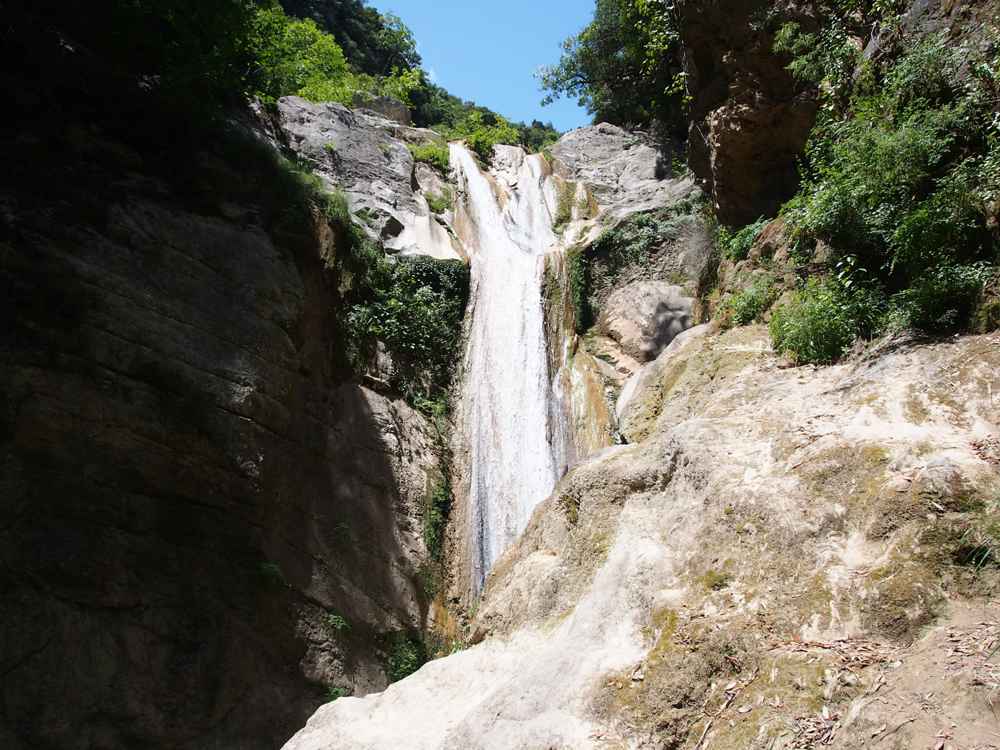
Lefkada offers easy walks to water despite its dry reputation. The Nydri waterfalls fall into cool pools a short way inland, and the Dimosari gorge gives a longer shaded route past streams and rock pools.
The Nydri waterfalls make the easiest inland excursion on the island. A short signed road climbs from the resort into a wooded ravine. A level path of about fifteen minutes leads to the falls. Where water drops over mossy rock into a cool pool. The setting turns green and shaded even at the height of summer, a sharp contrast to the bright coast below. The pool is small and the water cold, yet the short walk and the change of scene make it a popular half-day trip. A taverna near the trailhead gives walkers a place to pause before the return, and the level ground suits families with younger children.
The Dimosari gorge offers a longer and more rewarding walk in the hills above the east coast. The route follows a stream through a green ravine, passing small waterfalls and clear rock pools where walkers can cool off along the way. Sections run on old stone paths and simple bridges, and the gradient stays moderate, so reasonably fit visitors manage it without special equipment. The gorge keeps its shade and its running water well into the dry season, which makes it one of the coolest places to spend a hot afternoon. Sturdy shoes and enough drinking water are the sensible basics for the full circuit, which takes hours at an unhurried pace.
These walks reveal a side of the island that the beaches hide. Inland Lefkada rises quickly into green, mountainous country, ridged with olive groves, pine and running springs that feed the gorges below. Footpaths link many of the upland villages, following old mule tracks between terraces and chapels, and the higher ground stays noticeably cooler than the coast. Spring brings wild flowers and full streams, while autumn offers clear air and quiet trails after the summer crowds thin. Even a short drive uphill trades the busy shoreline for birdsong and shade. The views back over the sea reward the climb. Opening across the lagoon and the offshore islands to the mainland beyond.
Planning a walking day suits the cooler ends of the day and the milder months. Early starts avoid the midday heat, and the light in the gorges is at its best in the morning. The interior roads are narrow and winding, so a little extra driving time is wise, and turnings to the trailheads can be easy to miss. Combining a gorge walk with a village lunch makes a natural full day away from the beach. Families with older children handle both the Nydri path and the gentler stretches of Dimosari, while the falls alone suit those who want only a brief taste of the green interior before returning to the coast for an afternoon swim.
Which mountain villages are worth exploring?
Karya and Englouvi are the two main mountain villages, one known for embroidery and the other for lentils. Both sit in the cool hills of the interior, ringed by terraced slopes and old plane trees.
Karya is the largest of the hill villages and the centre of the island’s embroidery tradition. Set on a green plateau ringed by mountains, it gathers around a shaded square of plane trees, cafes and a small church. The village is known across the island for a distinctive needlework, and a local museum preserves the techniques and the story of the craft. Narrow lanes climb between stone houses draped in vines, and the cool air makes it a welcome retreat from the summer coast. Karya also serves as a hub for the surrounding hamlets, with tavernas that draw visitors up from the beaches for a long lunch in the shade of the plateau.
Englouvi sits higher still, one of the loftiest settlements on the island, and is famous for its lentils. The surrounding fields, worked in small stone-walled plots, produce a valued crop that appears on menus across Lefkada, and the village celebrates the harvest each summer. The thin mountain air and long views over the ridges give the place a quiet, remote feel far removed from the resorts. A cluster of tavernas serves the local lentils in simple, hearty dishes, best eaten in the cool of the evening. The drive up is winding but short, and the change in temperature is immediate, dropping degrees from the humid shore in a matter of minutes.
Smaller villages scattered through the hills reward an unhurried drive. Whitewashed chapels, old olive presses and stone threshing floors sit beside the road, and hamlets keep a single kafeneio where the pace has barely changed in generations. The mountain church of Faneromeni, above Lefkada Town, adds a monastery with wide views over the lagoon and the sea beyond, and is among the most visited inland sights. Roadside viewpoints open suddenly on hairpin bends, framing the coast far below. Wandering between these settlements gives a feel for the working island behind the beaches, where farming and craft still shape daily life across the terraced slopes and olive groves.
A village tour works well as a break from the coast or a cooler afternoon plan. The roads are narrow and steep in places, so unhurried driving and a full tank make sense before setting out. Many travellers link two or three villages with a gorge walk or a monastery visit to fill a relaxed day inland. Lunch is the natural centrepiece, as the hill tavernas cook the local lentils, salami and vegetable dishes that define the island’s kitchen. Returning to the coast for a late swim rounds off a day that shows the green. Farmed heart of the island rather than its shoreline. The descent brings the sea back into view at every bend.
What lies at Cape Lefkatas and its lighthouse?
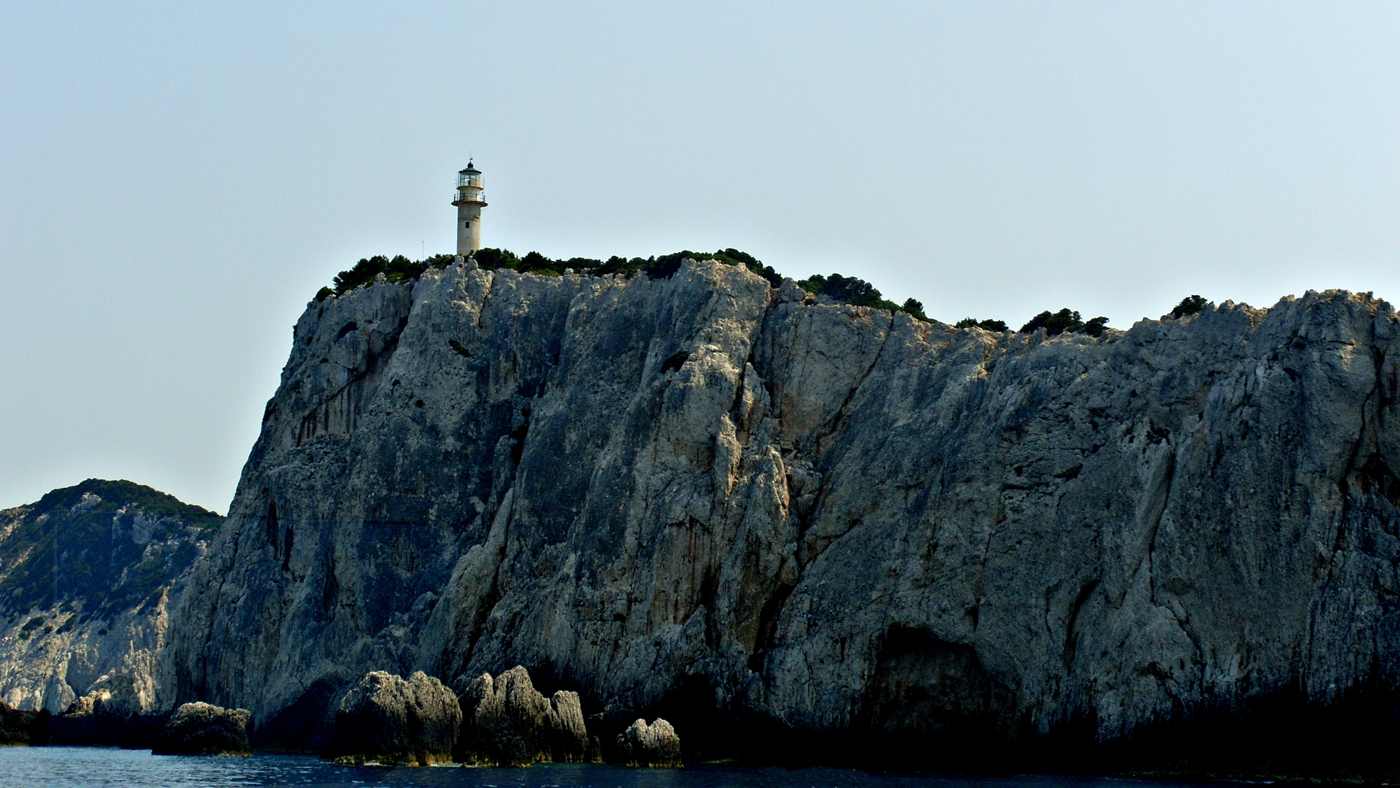
Cape Lefkatas forms the island’s southern tip, ending in tall white cliffs and a lighthouse. The headland is linked to the poet Sappho, said in legend to have leapt from these rocks into the sea.
Cape Lefkatas marks the exposed southern end of the island, a long promontory that falls away in sheer white cliffs to the sea. A lighthouse stands near the point, guarding the passage where the Ionian meets the open water, and the drive out crosses bare, wind-scoured country quite unlike the green interior. The cliffs give the cape its old name, from a word for white, and share the pale rock that colours the western beaches. Few facilities exist at the tip, so visitors bring their own water and shade. The reward is a bare, windswept landscape and a wide horizon in every direction, with the sea stretching south toward the open Ionian.
The headland carries a long thread of legend and history. In antiquity a temple stood here, and the point became known for a ritual leap from the cliffs into the sea below. The poet Sappho is bound to the site by the most famous of these tales. Which holds that she threw herself from the rocks for love, giving the cape its enduring literary fame. Whether history or myth, the story has drawn travellers to the spot for centuries. The sheer drop and the crash of the sea far below make the legend easy to picture. The lonely setting adds to its weight. Far from the noise of the summer resorts on the coast.
The drive to the cape is an experience in itself. A single road runs south from Vasiliki through a thinning landscape of scrub, low vines and grazing land, past the odd chapel and the occasional wind-bent tree. The final stretch is exposed and often breezy, and the tarmac gives way to a rougher surface near the lighthouse. Along the way, tracks branch off to remote southern beaches and coves reached by visitors. The sense of leaving the busy resorts behind grows with every mile, until the road simply ends at the cliffs and the plain white tower above the sea, where only the wind and the gulls break the quiet.
Timing and care shape a visit to the point. Late afternoon brings the best light on the cliffs and the lighthouse, though the wind often strengthens as the day wears on, so a firm footing near the edge matters. The exposed ground offers little shelter, and the nearest supplies lie back toward Vasiliki, so a full water bottle is wise. Many travellers combine the cape with a stop at Porto Katsiki, which lies on the same western side, turning the trip into a full day of cliffs and beaches. Sturdy shoes and an eye on the weather keep the outing safe and comfortable, and an early return avoids driving the rough road in fading light.
What food, wine and culture define Lefkada?
Lefkada Town anchors the island’s culture, with an old quarter, the Agia Mavra castle and the Faneromeni monastery nearby. Local tables feature lentils, salami, riganada and the red Vertzami wine.
Lefkada Town sits at the northern gateway, just across the causeway, and holds the island’s history and daily life. The old quarter is a grid of narrow lanes lined with timber-framed houses, a style built to flex in earthquakes, with metal-clad upper storeys above ground-floor shops. Cafes, bakeries and small squares fill the centre, and a long waterfront looks out over the lagoon and the marina. Guarding the approach stands the Agia Mavra castle, a broad fortress on the spit between the town and the mainland, raised to control the crossing. Its walls and gates still frame the entrance to the island today, and a short walk leads out to the ramparts above the water.
Religious and cultural sites cluster around the town and the nearby hills. The Faneromeni monastery, set on a wooded rise above the lagoon, is the island’s most important, offering quiet courtyards and wide views over the water and the town below. Within the streets, small churches hold carved screens and icons in the local style, and a handful of museums cover the island’s folklore, its writers and its archaeology. Each summer a folklore festival fills the town with music and dance from across the region, a long-running event that draws groups from around the Mediterranean. These sights give the wet-weather days an easy and rewarding focus, and keep the town lively into the late evening.
The local kitchen leans on the produce of the hills and the sea. Englouvi lentils appear in soups and stews, cured salami is a speciality of the island. Riganada. A rustic dish of bread soaked with tomato, oil and oregano, turns simple ingredients into a satisfying plate. Fish and seafood come fresh from the surrounding waters, and honey, olive oil and mountain greens round out the table. Village tavernas serve these dishes in generous, unfussy portions, often under a canopy of vines. Eating well is straightforward across the island. Whether in a hill hamlet or a harbourside taverna in the town. Prices tend to ease as the road climbs away from the busiest resorts.
Wine completes the picture, led by the deep red Vertzami grape grown on the island. Local producers press it into a dark, full-bodied wine that pairs naturally with the salami and lentil dishes of the region, and tavernas pour it by the carafe. Small wineries in the interior welcome visitors to taste and buy, giving another reason to head inland. Between the food, the wine, the castle and the festival, Lefkada Town and its surroundings fill the days when the beach is not the plan. This blend of coast, mountain and culture is what lets the island reward a longer, slower stay, rather than a single quick visit to the sand.




Frequently Asked Questions
How days are needed to see Lefkada?
Lefkada rewards a stay of about five to seven days for a rounded visit. That span allows two or three days on the beaches of the west and south coasts. A full day on a boat trip from Nydri or Vasiliki. A day inland among the gorges and mountain villages. A shorter break of three days covers the headline beaches and a single cruise, but leaves little room for the interior or Cape Lefkatas. Because the island is road-connected and compact, most drives between the main sights take under an hour, which keeps the daily distances short. Travellers who want to slow down.
Mix beach days with walks and linger over village lunches find a week fills easily without any sense of rushing between attractions. Still leaves an afternoon or two in Lefkada Town.
Is Lefkada suitable for families with children?
Lefkada suits families well, thanks to its short drives and its mix of calm and lively beaches. The eastern and southern bays, such as those near Nydri, offer gentle, shallow water and easy access that works for young children, while Kathisma on the west coast has parking and services close at hand. Boat trips to the offshore islets make an easy day out, with frequent swimming stops in sheltered water. Inland, the short walk to the Nydri waterfalls and the pools of the Dimosari gorge give older children an active morning without a demanding hike. Rainy or windy days can be filled in Lefkada Town, with its castle, waterfront and tavernas.
The compact size of the island keeps every option within a comfortable reach for tired legs, so days rarely mean long journeys in the car.
When is the best time to visit Lefkada?
Lefkada is at its most settled from late spring to early autumn, when warm, dry weather and calm seas suit beach days and boat trips. High summer brings the strongest heat and the largest crowds, along with the reliable afternoon wind at Vasiliki that windsurfers seek out. Late spring offers green hills, full streams in the Dimosari gorge and quieter beaches, while early autumn keeps the sea warm after the peak crowds thin. The shoulder months give the most comfortable walking weather for the gorges and mountain villages, where midsummer heat can be tiring.
Winter is mild but wet, and many seasonal tavernas and boat services close, so travellers seeking the full range of attractions plan their trip for the long, warm middle of the year, when every part of the island is open.
How do visitors get around Lefkada?
Lefkada is reached and toured most easily by car, since a short causeway and a floating bridge join it directly to the mainland. A hire car gives the freedom to reach the western cliff beaches, the mountain villages and Cape Lefkatas, many of which lie beyond regular public transport. Buses link Lefkada Town with the larger resorts such as Nydri and Vasiliki and beaches. They run to a limited timetable that suits a relaxed pace more than a packed itinerary. Boats fill the gaps along the coast, with short shuttles to bays like Agiofili and day cruises to the offshore islands.
Roads inland are narrow and winding, so unhurried driving is wise, yet distances stay short and most journeys between the main sights take well under an hour from the town.
What makes Vasiliki good for windsurfing?
Vasiliki owes its reputation to a dependable thermal wind that forms almost every summer day. The bay lies at the foot of a valley that channels the breeze. The water stays calm at dawn and builds through the afternoon into a steady flow from the same direction. This rhythm lets beginners learn in the gentle morning conditions and gives experienced riders stronger wind after midday, all within the same sheltered bay. Several centres along the shore hire boards and rigs and run lessons, so newcomers can start on stable equipment. The consistency of the wind, rather than its raw strength, is what has made the bay a long-standing windsurfing and kitesurfing base.
Agios Ioannis, near Lefkada Town, offers a second wind spot beside its old windmills, giving riders an alternative when the pattern shifts.
Which beaches on Lefkada are easiest to reach?
The beaches of Lefkada vary widely in how easily they are reached, so a little planning pays off. Kathisma on the west coast is among the simplest, with a road running to a large car park and services beside the sand. The calmer eastern and southern bays generally offer gentle access as well, which suits families and less mobile visitors. By contrast, Porto Katsiki and Egremni sit below tall cliffs and require long stairways or steep paths from the parking above. Some southern coves, such as Agiofili near Vasiliki, are quickest to reach by a short boat shuttle rather than the rough track down.
Choosing between an easy road beach and a dramatic cliff bay often comes down to how much climbing the day allows. How early the car parks fill in high season.