
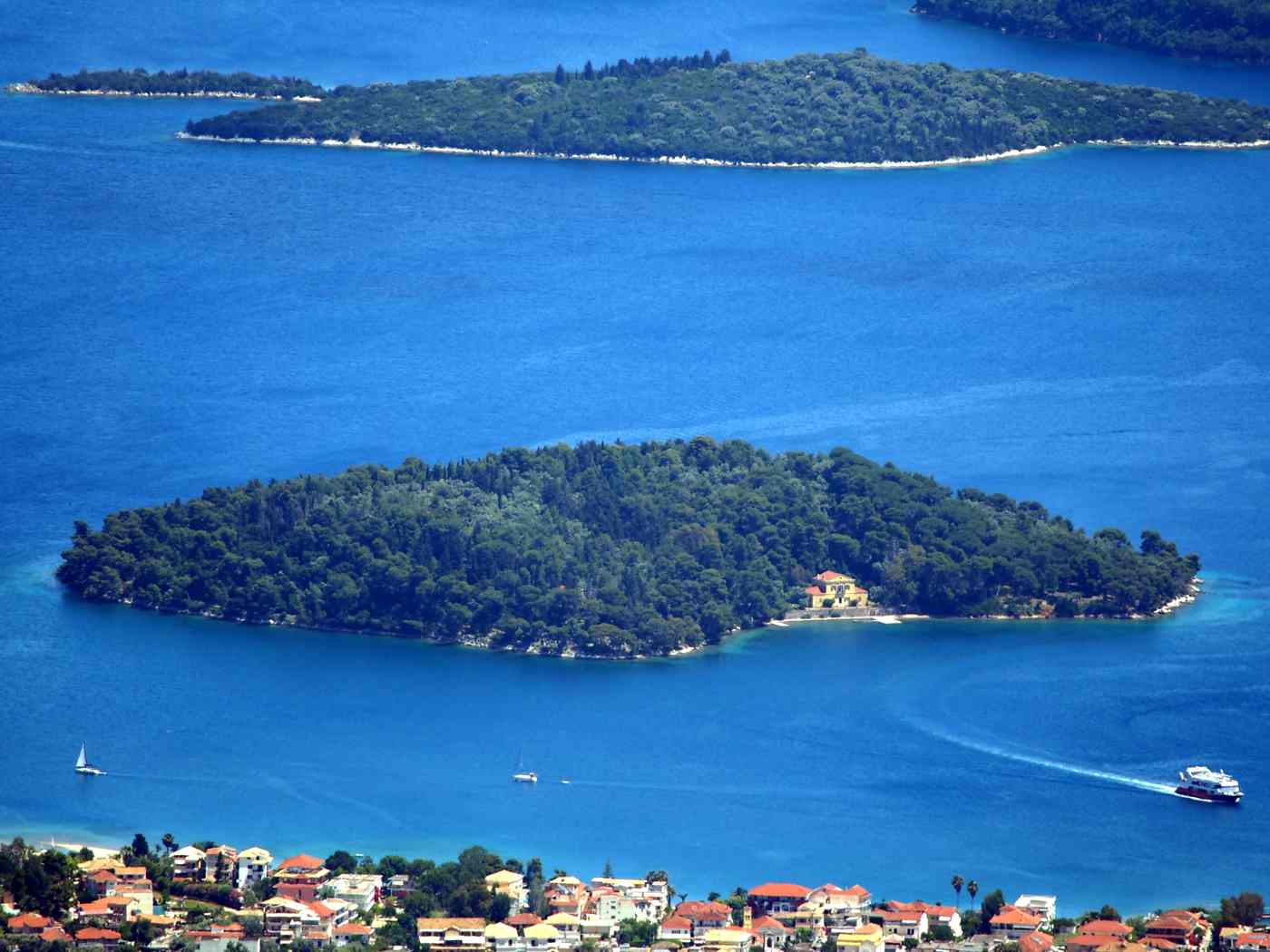
A Lefkada itinerary rewards the traveller who treats the island as a driving route rather than a single resort. Lefkada joins the mainland by a causeway, so a hire car reaches the north town, the west-coast cliffs, the sheltered east coast and the mountain interior across roughly fifty kilometres. Three days catch the headline sights, five days cover the island without rushing, and a week adds slower beaches and a full day at sea. This guide sets out each length, the best bases. The driving between the regions and the day-by-day plan that ties the whole island together into one clear route from north to south. Plan the whole trip with Greece Tours.
The geography decides the pace. West-coast beaches sit under steep cliffs on winding descents, the south holds the windsurfing bays and the cape, and the interior climbs to stone villages above the coast road. Distances read as short on the map yet stretch on the bends, so the town-to-Vasiliki run of about fifty kilometres takes an hour to ninety minutes. June and September deliver warm sea, open tavernas and lighter traffic than midsummer. The plans below group the sights by region to cut back-and-forth driving. Keep the boat trip on its own day and leave room to swim between the drives so each zone gets its own unhurried half-day.
How days do you need in Lefkada?
Five days cover Lefkada properly without rushing. Three days catch the highlights, and a week adds quieter beaches, the south-east coves and a longer day on Meganisi at a slower pace.
The right length follows the island’s shape. Lefkada spreads its sights across four distinct zones: the north town and its castle, the west-coast beaches under the cliffs, the southern windsurfing bays with the cape, and the mountain interior of Karya and Englouvi. Reaching each zone means a separate drive on winding roads, so a schedule that ignores the geography burns hours in the car. Five days give one region per day with a swim built in, which is why the full plan below runs Lefkada Town, the west beaches, the south. A boat trip from Nydri and the interior across five relaxed sections, each grouped to keep the daily driving inside a comfortable window.
Three days work for a first visit that keeps to the headline sights. The short plan holds the west-coast beaches, one boat trip and the town, dropping the interior villages and the south-east coves to stay inside the time. Travellers on a long weekend or a stopover between Ionian islands take this route and still stand on Porto Katsiki, ride a boat around the offshore islets and walk the causeway to the castle. The trade-off is pace: three days mean earlier starts, tighter driving windows and shorter swims. With each region visited once rather than lingered over. The plan reads as a tour of the essentials rather than a settled stay on the island.
Seven days change the character of the Lefkada itinerary from a tour into a stay. The extra time opens the south-east coast around Sivota and Mikros Gialos, the quieter beaches that the shorter plans skip. A full day on Meganisi rather than a passing cruise. A week lets a morning at sea sit beside an afternoon in a mountain village without a rushed transfer between them. It also builds in slack for weather, so a windy west-coast day swaps with a sheltered east-coast one and the schedule bends rather than breaks. The island runs about fifty kilometres north to south, and seven days absorb that distance comfortably with room left over for a lazy beach afternoon.
The car is the deciding factor at every length. Public transport links the town with the main resorts yet leaves the cliffs. The cape and the interior awkward to reach on a schedule. A hire car turns each zone into a half-day loop. June and September suit every version of the Lefkada itinerary, with warm sea, open tavernas and roads that move faster than the August peak. Whichever length fits the calendar, the structure stays the same: base centrally. Group each day by region. Keep the boat trip on its own day so the drives and the swims never compete for the same hours across the island’s fifty-kilometre length.
Where you base yourself for a Lefkada itinerary?
A central base cuts the driving. Lefkada Town suits sightseeing and the west coast, Nydri suits boat trips and the east, and two bases split the island by side for longer trips.
The base sets the shape of every drive, so the choice matters more here than on a compact island. Lefkada Town sits at the north end beside the causeway and the Agia Mavra castle, within easy reach of the west-coast beaches and the interior villages. It puts the harbour, the market and the evening tavernas on the doorstep and keeps the runs to Porto Katsiki and Kathisma short. A base here favours a Lefkada itinerary weighted towards the cliffs, the town’s own sights and the mountain roads that climb from the north. With the south a longer but manageable day trip that returns to the same harbour each evening for dinner on the waterfront.
Nydri, on the sheltered east coast, is the island’s boat-trip hub and the natural base for time on the water. From its quay the cruises set out around Skorpios and Meganisi and towards the Papanikolis cave, so a stay here shortens the sea day to a walk to the harbour. Nydri also sits closer to the south-east coves of Sivota and Mikros Gialos and to Vasiliki’s windsurfing bay down the coast road. The trade-off is distance from the west-coast beaches, which become a longer cross-island drive. An east-coast base leans towards the sea. The south and the sheltered swims rather than the exposed cliffs and the photogenic descents of the Ionian side.
Splitting two bases suits the five- and seven-day plans and removes the longest transfers. A pattern of two nights near the town or the west coast followed by two or three nights around Nydri lets each half of the island sit within a short drive on its own days. The west beaches and the interior fall to the first base. The boat trip and the south to the second. The single mid-trip move replaces several long daily crossings on the winding roads.
This split answers the question of where to stay in Lefkada for travellers who want to see the whole island without a home base at one end pulling every daily drive back across the map on the winding coast roads.
Distance frames the decision at every option. The island measures roughly fifty kilometres north to south on winding roads. The town-to-Vasiliki run of about fifty kilometres takes an hour to ninety minutes, so a base at one end reaches the other in a real drive rather than a quick hop. A single central base keeps luggage in one place and works well for three days; a two-base split earns its move on the longer trips. Either way, the beaches of Lefkada, the cape and the mountain villages all sit within a half-day loop once the base is chosen to match the Lefkada itinerary’s weight, whether that weight falls on the cliffs or the water.
Lefkada in three days: the short highlights plan
Three days hold the essentials: the town and castle, the west-coast beaches, and one boat trip from Nydri. The plan drops the interior and the south-east coves to stay unrushed.
The three-day plan opens with the north. Day one takes Lefkada Town, the causeway across the lagoon. The Agia Mavra castle guarding the channel and the Faneromeni monastery on the hill above with its view over the town and the water. The morning covers the harbour and the market at a walking pace. The castle sits at the causeway’s edge for a short stop. The monastery caps the day with the wide outlook across the lagoon. This first day sets the island in context before the drives to the coast begin. It keeps the car mostly parked while the town’s sights fall within easy reach of each other on foot.
Day two turns to the west coast and its cliffs. The road runs south to Porto Katsiki, the island’s signature beach beneath a sheer white wall, then north again to Egremni and Kathisma along the same coast. These three beaches define the west. Each reached by a descent from the clifftop road. The day is a sequence of drives and swims rather than a single long stay in one place. Starting early beats the midday crowds at the most photographed cove. The run between them keeps the driving on the scenic upper road with the sea opening below at each turn. The parking waiting at the head of every beach descent.
Day three goes to sea, the single boat trip that the short plan protects. From the Nydri quay on the east coast the cruise circles Skorpios and Meganisi and calls at the Papanikolis cave. Trading the wheel for the water after two days of coastal driving. The trip fills the day, so the morning transfer across the island to Nydri is the only drive, and the afternoon returns to the harbour for a late lunch. Ending the three days at sea balances your Lefkada itinerary: town on day one, cliffs on day two, islets on day three. With each region visited once and the pace kept steady from the first morning to the last.
The compromises are clear and deliberate. Three days leave out the mountain interior of Karya and Englouvi, the Dimosari waterfalls and the south-east coves around Sivota and Mikros Gialos, all of which the longer plans restore. The schedule also asks for early starts, since each day pairs a drive with a swim and the boat day sets its own departure time from the quay. A central base at Lefkada Town or Nydri holds your Lefkada itinerary together, and June or September keep the roads and the beaches workable. For a first visit or a stopover between islands, this route stands the traveller on the island’s best-known ground without a wasted hour on the winding coast roads.
Lefkada in five days: the full day-by-day itinerary
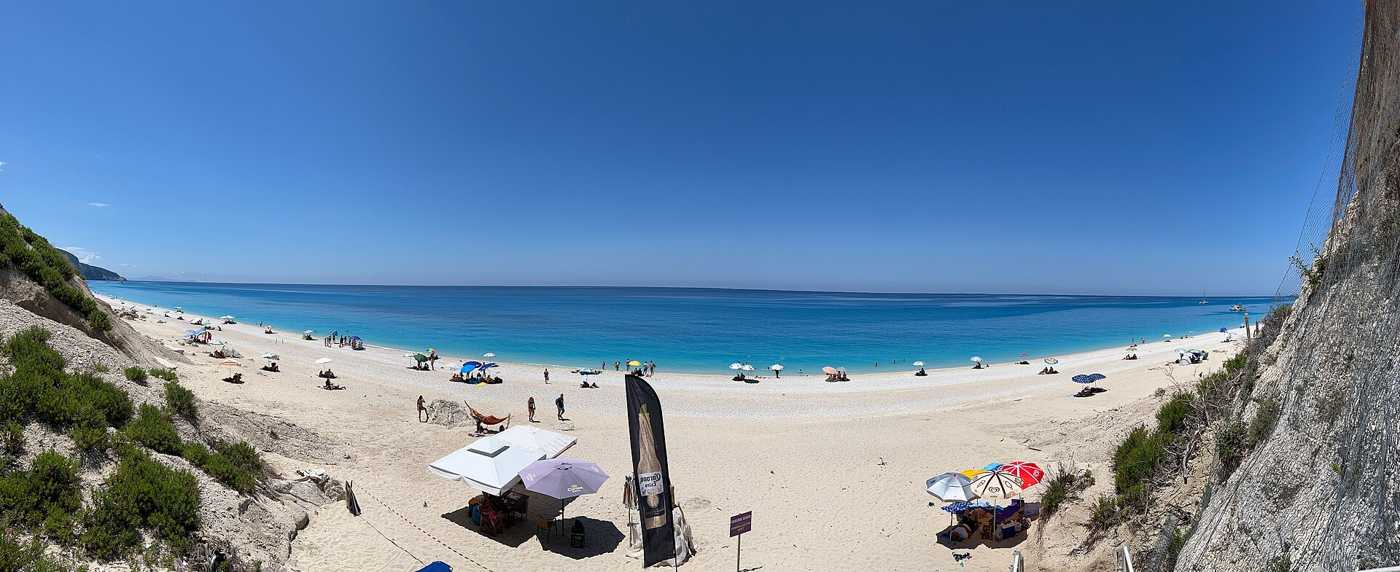
Five days give one region a day: the town and castle, the west beaches, the south and cape, a Nydri boat trip, and the mountain interior ending at Agios Nikitas.
Day one settles the north. Lefkada Town opens the Lefkada itinerary with the causeway across the lagoon. The Agia Mavra castle at the channel and the Faneromeni monastery above, its terrace looking back over the roofs and the water. The morning walks the harbour, the market streets and the waterfront. The castle sits at the causeway for a short visit. The monastery closes the day on the hill above the lagoon. Keeping the first day close to base means the car stays mostly parked while the island’s history and layout come into focus, setting up the coastal drives that follow. This is the anchor of the five-day Lefkada itinerary and its gentlest day.
Day two commits fully to the west coast. The clifftop road runs to Porto Katsiki beneath its white wall, then to Egremni and Kathisma along the same shore. Three of the beaches of Lefkada that draw the island’s photographs. Each lies below a descent from the upper road, so the day threads drives and swims together with the sea always in view over the edge. An early start reaches the famous cove before the midday arrivals, and the northward run links the three without backtracking down the coast. This is the day the west earns its reputation, and it stays entirely on the exposed Ionian side of the island from morning to the last swim.
Day three works the south and the cape. Vasiliki‘s bay opens the day with windsurfing on the afternoon wind or a swim in the sheltered water, then the cove of Agiofili sits a short hop away for clear, quiet swimming below its slope. The afternoon climbs to Cape Lefkatas at the island’s southern tip, where the Doukato lighthouse marks the cliff edge and the sunset closes the day over the open sea. The town-to-Vasiliki run of about fifty kilometres takes an hour to ninety minutes. The drive south sets the day’s rhythm and the cape rewards the distance at dusk with the widest horizon the island offers.
Days four and five turn to sea and mountain. Day four is the boat trip from Nydri around Skorpios and Meganisi with the Papanikolis cave. A full day on the water with only the transfer to the quay by car. Day five climbs into the interior at Karya and Englouvi, the stone villages above the coast. With the Dimosari waterfalls in their gorge. Drops back to the west at Agios Nikitas to end at the coast. Five days close having covered every zone: north town, west cliffs, southern cape, offshore islets and mountain villages. One region a day with swims built into the drives and no day forced to carry two regions at once.
Lefkada in seven days: adding the slower days
Seven days keep the five-day Lefkada itinerary and add quieter beaches, the south-east coves of Sivota and Mikros Gialos, and a longer day on Meganisi rather than a passing cruise.
A week builds on the five-day frame rather than replacing it. The town day, the west-coast beaches, the south and cape. The Nydri boat trip and the mountain interior all stay. The two extra days spread the schedule so no single day carries two regions at once. The result is slower mornings, longer swims and time to sit in a village or on a beach without the next drive pressing on the afternoon. Seven days absorb the island’s fifty-kilometre length comfortably. Turning transfers that felt like a rush at five days into unhurried loops with room for the weather to shift a plan between the two coasts.
One extra day opens the south-east coast that the shorter plans skip. Sivota sits in a narrow inlet lined with tavernas at the water’s edge, and Mikros Gialos holds a pebble bay on the sheltered side away from the west-coast wind. These coves face the calmer Ionian channel, so they suit swimming on days when the exposed beaches take the breeze off the open sea. A day here pairs a morning swim with a harbourside lunch and a slow coastal drive. Filling in the stretch of shoreline between Nydri and the southern bays that a five-day plan passes without stopping. It keeps the driving light and close to the east-coast base.
The second extra day expands Meganisi from a boat-trip stop into a destination. Rather than circling the island on the Nydri cruise, a full day crosses to Meganisi to walk its villages. Swim its bays and take the pace of a smaller island offshore. The longer visit trades the wide sweep of the standard trip for time ashore, reaching the quieter corners that the passing boat only sees from the water. Combined with the south-east coves, this second day gives the week its distinct shape: the same headline sights as the five-day Lefkada itinerary. Plus two days that slow down and look closer at the sheltered channel and its islands rather than rushing past them.
Seven days also add resilience to the schedule. With slack in your Lefkada itinerary, a windy west-coast morning swaps for a sheltered east-coast swim. A boat day moves to a calmer window. A hot afternoon shifts to the cooler interior. The quieter beaches the week restores spread the crowds and give a fallback when the famous coves fill in the peak hours. June and September remain the target window, with warm sea and open tavernas across the whole island. A week suits the traveller who wants Lefkada as a place to stay rather than a route to complete. Keeping every region in reach while removing the pressure of the daily drives from your Lefkada itinerary.
How does a Lefkada itinerary handle the driving and distances?
The island runs about fifty kilometres north to south on winding roads. Grouping sights by region and keeping the boat trip on its own day cuts the daily driving to a comfortable loop.
Distance sets the logic of every plan. Lefkada measures roughly fifty kilometres from the northern causeway to the southern cape. The roads bend along cliffs and over the interior, so times run longer than the kilometres suggest. The town-to-Vasiliki run of about fifty kilometres takes an hour to ninety minutes, and the west-coast descents to the beaches add time again at the ends of the drives. An itinerary that hops between zones each day loses hours to the bends. Which is why every plan above groups the sights by region and drives each loop once rather than crossing the island twice in a single day.
The hire car is the working assumption throughout. The causeway carries the road onto the island. From there the car reaches the cliffs. The cape and the mountain villages that public transport leaves awkward to time on a schedule. Each region becomes a half-day loop from a central base: the west beaches on the clifftop road. The south to Vasiliki and the cape, the interior up to Karya and Englouvi. Parking sits at the top of the beach descents. The drive delivers the traveller to the cliff edge and a short walk on foot finishes the approach to the sand below. The same pattern repeating at Porto Katsiki, Egremni and Kathisma.
The boat trip earns its own day for a reason. Keeping the Nydri cruise around Skorpios. Meganisi and the Papanikolis cave separate from the driving days means the wheel and the water never compete for the same hours of the afternoon. The only car use on that day is the transfer to the quay, which frees the schedule for a full run at sea. The same principle protects the other days: one region, one loop. One swim. The driving stays inside a comfortable window and the sights get their time rather than being squeezed between long transfers across the island’s winding spine from the north town to the southern cape.
Season and pace complete the picture. June and September carry lighter traffic than the August peak, so the winding roads move faster and the beach car parks fill later in the day. Starting early beats both the heat and the crowds at the west-coast coves, and grouping the drives by region keeps each day’s total on the road low. A central base holds the shorter trips together, while a two-base split earns its single move on the longer ones. Handled this way, the driving becomes part of the Lefkada itinerary’s scenery rather than its cost. Every zone from the causeway to Cape Lefkatas stays within reach of a single settled base.
What to do on the west-coast beach day of a Lefkada itinerary?
The west-coast beach day of a Lefkada itinerary strings together Porto Katsiki, Egremni and Kathisma below the cliffs. Athani and Agios Nikitas anchor the winding descent roads.
The west coast holds the postcard shoreline, and one full day covers its three headline stops without haste. Porto Katsiki sits below white cliffs reached by roughly eighty steps, so an early arrival secures parking before the coach groups climb the winding road from Athani. The turquoise water and the sheer rock backdrop reward the descent, and the steps make the return the harder half. Bringing water, footwear with grip and shade matters, because the cove faces open sea with sparse cover. Starting here, then working north, keeps the sun behind the camera through the morning and avoids the midday queue at the single clifftop car park.
Egremni lies further along the same coastline, a long stretch of white pebble backed by tall cliffs. The old access stairway was lost to an earthquake and rebuilt, so reaching the sand now means either the reconstructed steps or a taxi boat from Vasiliki or Agios Nikitas. The boat option turns the transfer into part of the day and removes the steep climb back, which suits families and anyone carrying gear. The pebble underfoot keeps the water clear, and the scale of the beach spreads visitors thin even in high season. Checking the day’s swell before committing helps, since the exposed western aspect can raise waves that make swimming and boarding awkward.
Kathisma closes the Lefkada itinerary as the organised beach of the trio, with sunbeds, tavernas and a broad sweep of pale sand and pebble. The facilities make it the practical afternoon base once the wilder coves are ticked off, and its west-facing line puts the sunset directly over the water. Paragliders often drift down from the ridge above, adding movement to the horizon. Because it draws steady numbers, arriving for the late afternoon rather than midday finds emptier sand and cheaper parking. Staying through dusk here rounds out the west-coast beach day, since the light over the Ionian is the reason the coast earns its reputation.
Linking the three depends on the network of narrow roads that drop from the ridge villages of Athani and Agios Nikitas. The tarmac winds through hairpins with blind bends and sheer drops, so a small car and unhurried pace serve better than speed. Fuel and supplies are thin once the descent begins, meaning a stop in a hilltop village before dropping to the coast is sensible. Signposting is basic and mobile coverage patchy in the folds of the hills, so a downloaded map helps. Treating the driving as part of the experience rather than an obstacle makes this the most scenic single day of any west-coast plan.
What does the east-coast and boat-trip day include?
The east-coast day pairs a Nydri cruise to Skorpios, Meganisi and the Papanikolis cave with the calm beaches at Nikiana, Lygia and Mikros Gialos. The Dimosari waterfalls sit close by.
Nydri is the launch point for the island’s boat trips, and a day at sea from its harbour is the signature east-coast outing. Cruises loop past Skorpios, the private island once owned by the Onassis family, whose shoreline is viewed from the water rather than landed. The same route carries on to Meganisi, the largest of the satellite islets. Threads into the Papanikolis sea cave, a deep grotto named after a submarine that reputedly sheltered there. Most sailings pause for swimming stops in sheltered bays along the way. Booking a morning departure leaves the afternoon free and dodges the freshening wind that ruffles the channel later in the day.
The eastern shoreline itself is the calm counterweight to the exposed west, and its beaches suit swimmers who want flat water. Nikiana and Lygia sit close to Nydri with shallow, protected entries and tavernas along the front, making them easy stops for a half-day. Further south near Poros, Mikros Gialos offers a quieter pebble bay ringed by hills, with clear water and space to spread out. These are among the beaches of Lefkada that stay swimmable when the meltemi stirs the opposite coast. Ordering the day so the boat trip runs in the morning and the calm coves fill the afternoon keeps both halves working with the wind rather than against it.
Behind Nydri the land climbs quickly to the Dimosari gorge, where the Nydri waterfalls tumble through a shaded ravine a short drive and walk from the resort strip. The path follows the stream past rock pools to the falls, a cool contrast to the beaches and an easy leg-stretch for families. The walk is signposted from the village and takes under an hour each way at a gentle pace. Sturdy shoes help on the damp stone near the water. Slotting the gorge in on the same day as the east-coast beaches makes geographic sense, since both cluster around Nydri and need no long transfer across the island.
This is the day that shows why so many first-time visitors base themselves on the east coast. The concentration of things to do in Lefkada around a single harbour means a boat trip, three swimmable beaches and a waterfall walk fit into one loop without much driving. Families in particular gain from the flat water, the short transfers and the shade of the gorge on a hot afternoon. The tavernas along Nikiana and Lygia handle lunch without a detour. Keeping the car for the beach and waterfall legs and the boat for the islets divides the day cleanly, so nobody spends the afternoon retracing the morning’s route.
What to see on the south day around Vasiliki and Cape Lefkatas?
The south day centres on Vasiliki for windsurfing, the taxi-boat cove of Agiofili, and sunset at Cape Lefkatas by the Doukato lighthouse. The afternoon ‘Eric’ wind drives the bay.
Vasiliki sits at the head of a deep southern bay that funnels a reliable afternoon thermal known locally as ‘Eric’, which makes it one of the Mediterranean’s steadier windsurfing spots. Mornings on the water are calm and suit beginners and swimmers, while the breeze builds through the afternoon for experienced sailors. The village doubles as a ferry port, with crossings to Kefalonia and Ithaca, so it carries a working-harbour feel alongside the boarding scene. Tavernas and rental centres line the waterfront. Timing a visit around the wind pattern is the key: gentle water before lunch, then either the board or the shore to watch the fleet once the gusts fill in.
From Vasiliki a taxi boat runs to Agiofili, a white-pebble cove tucked under cliffs just around the headland and reached most easily by sea. The short hop lands on clear, deep water framed by pale rock, and the boat schedule means visitors are dropped and collected rather than left to a long walk. The cove is small, so an early crossing beats the crowd that builds by midday. There is a rough footpath as an alternative, but the boat is the simpler choice. Pairing Agiofili with the morning calm at Vasiliki uses the quiet window well, before the afternoon wind turns attention back to the main bay.
Cape Lefkatas closes the south day at the island’s dramatic southern tip, where cliffs fall to the sea beside the Doukato lighthouse. The headland carries the old legend of the poet Sappho’s leap, and the ground drops sharply enough that the drive out feels remote. Sunset is the reason to make the Lefkada itinerary, with the light falling over open water and the lighthouse silhouetted against it. The road is long and winding, so leaving Vasiliki with time in hand avoids a rushed return in the dark. Bringing a layer helps, because the exposed cape cools quickly once the sun is down and the wind still runs.
Sequencing the three stops makes the south day flow with minimal backtracking. A calm morning swim or lesson at Vasiliki, the taxi boat to Agiofili before midday, lunch back in the village. Then the afternoon board session or a rest. Finally the drive to Cape Lefkatas for dusk. The distances are short but the roads slow, so the schedule leans on the wind and the light rather than the clock. Windsurfers who base in Vasiliki treat this as their home patch and simply add Agiofili and the cape on rest days. For everyone else it is the most varied single day in the south.
How do you spend the town and northwest day?
The town and northwest day covers Lefkada Town’s causeway, Agia Mavra castle, marina and Faneromeni monastery, the Gyra lagoon windmills, then Agios Nikitas village above Mylos and nearby Pefkoulia.
Lefkada Town anchors the north, reached by a causeway and a floating bridge that link the island to the mainland shore of the Ionian. Guarding the crossing is Agia Mavra castle, a Venetian-era fortress on the seaward side whose walls frame the approach. The town itself keeps a distinct earthquake-resistant architecture, with upper storeys clad in sheet metal and timber, and a pedestrian main street of shops and cafés. The marina draws yachts on the Ionian circuit and gives the waterfront its evening bustle. A morning on foot covers the castle, the old streets and the harbour before the heat peaks, leaving the afternoon for the coast to the west.
Above the town, the Faneromeni monastery looks down over the lagoon and the rooftops from a wooded hill, a short drive up for the view and the quiet courtyard. Below stretches the Gyra, a shallow lagoon separated from the sea by a long sandbar, where old windmills stand along the spit. A flat walking and cycling track runs the bar, popular in the cool of early evening. The lagoon feeds the town’s salt-marsh birdlife and gives a gentler landscape than the cliffs further south. Combining the monastery viewpoint with a stroll on the Gyra bar fills the late morning before the road turns west toward the northwest coast villages.
Agios Nikitas is the whitewashed village that gives the northwest its character, a car-light lane of tavernas and rooms running down toward the sea. Cars park above and the last stretch is walked, which keeps the centre calm. Directly below lies Mylos beach, reachable on foot over the headland or by a short taxi boat from the village front, a sheltered cove of clear water. The village makes an easy lunch stop and a natural base for couples who want quiet evenings. Its scale is small and its streets narrow, so it rewards a wander rather than a checklist, with the sea always steps downhill.
Just north of the village, Pefkoulia opens as a long sandy beach with more room and easier road access than the coves around Agios Nikitas. It handles the afternoon swim once the village and town are seen, with space for families and a taverna or two at the back of the sand. The combination gives the day its shape: history and harbour in the morning at Lefkada Town. The lagoon and monastery around midday, then the village and its beaches through the afternoon. The transfers are short and the roads gentler than the far south, which makes this one of the most relaxed themed days on the island.
What is the mountain-interior day like?
The interior day climbs to the villages of Karya, known for embroidery, and Englouvi, the highest settlement, famed for lentils. The Dimosari gorge and its waterfalls complete the Lefkada itinerary.
The interior day trades the coast for the ridge, where the road climbs into cooler air and traditional villages. Karya sits in a green upland bowl and is known for its needlework. A local embroidery tradition kept alive in a small museum and a shaded central square ringed by plane trees. The village makes a natural first stop, with tavernas serving mountain cooking and a slower pace than the resorts below. Mornings are best before the day heats, and the drive up is part of the appeal as the sea drops away behind. Karya anchors the Lefkada itinerary and gives the clearest sense of how islanders lived away from the beaches.
Higher still lies Englouvi, the island’s loftiest village, set on a plateau that grows the lentils it is known for across Greece. The fields and threshing floors around the settlement mark a farming culture that persisted where the coast turned to tourism. The air is noticeably cooler, and the views stretch across the interior ridges. A meal built around the local pulse is the reason many make the climb, and the village keeps a quiet, lived-in feel. Pairing Englouvi with Karya covers the two defining upland settlements in one loop, since the road strings them together along the spine of the island without a long detour.
Water is the day’s third theme, found in the Dimosari gorge where streams cut a shaded ravine down toward the east coast. The Dimosari waterfalls sit at the head of a signposted footpath that follows the stream past rock pools, a cool walk that contrasts with the dry hilltops above. The gorge links the interior route back toward Nydri, so it slots in as the descent leg rather than a separate trip. Sturdy footwear helps on the wet stone, and the shade makes it a welcome midday stop. The falls give the mountain day its payoff, ending on running water after the climb through the villages.
Driving is the thread that holds the interior day together, and the roads demand patience more than the coast does. The climbs are steep, the bends tight, and the surface rougher in places, so a small car and low gears serve well. Fuel and shops thin out once the ridge road begins, so filling up in town beforehand is wise. The reward is an emptier, greener side of the island that few day-trippers reach, where the beaches of Lefkada give way to embroidery, lentils and waterfalls. Kept unhurried, the Lefkada itinerary from Karya through Englouvi and down the gorge fills a full day with ease.
How do you adapt the Lefkada itinerary for families, couples and windsurfers?
Families favour the calm east coast, boat trips and the Dimosari walk; couples choose Agios Nikitas, sunsets and quiet coves; windsurfers base in Vasiliki. June and September suit all three.
Families gain most from the sheltered east coast, where Nikiana, Lygia and Mikros Gialos offer shallow, calm water and tavernas within reach of the sand. A Nydri boat trip to Skorpios, Meganisi and the Papanikolis cave breaks up the beach routine with swimming stops. The Dimosari gorge walk gives a shaded. Gentle outing away from the sun. Keeping a family plan on the east side cuts driving and keeps transfers short, which matters with young children. The organised facilities at Kathisma also work when the family ventures west for a day. Structuring a Lefkada itinerary around flat water and low mileage removes the friction that steep cliff descents can add.
Couples tend to weight your Lefkada itinerary toward the northwest and the sunsets. Agios Nikitas gives quiet whitewashed lanes and evenings with the sea below, while the coves of Mylos and Pefkoulia stay calmer than the busy resorts. The west-coast beaches of Kathisma and the drive out to Cape Lefkatas deliver the dusk light that makes the Lefkada itinerary. Quiet taxi-boat coves like Agiofili suit those who want water without crowds. A couples’ plan leans on timing rather than distance: early starts at the popular beaches, then unhurried evenings in a hillside village. The mix of scenery and slow pace is where the island rewards a two-person trip.
Windsurfers organise everything around Vasiliki, where the afternoon ‘Eric’ wind fills the southern bay with reliable strength. Basing in the village puts the rental centres, the launch and the tavernas within walking distance, so board days need no driving at all. Mornings on calm water suit lessons and easy sailing, and the wind builds through the afternoon for stronger sessions. Rest days add the taxi boat to Agiofili or the sunset run to Cape Lefkatas without leaving the south. This is the clearest single-base version of the Lefkada itinerary, since one bay supplies the sport, the accommodation and the food, and the wind sets the daily rhythm.
Timing ties the three versions together, and the shoulder months of June and September serve all of them best. The sea is warm, the crowds thinner than midsummer, and the heat and winds steadier for planning around. A car remains essential in every version, because the roads wind and public transport is sparse between the beaches and villages. Whichever profile fits, the themed days scale up or down: families compress to the east, couples spread across the northwest, windsurfers stay in the south. Building your Lefkada itinerary from a base that matches the group, then adding the themed days that suit it, keeps the driving sensible and the days full.
Frequently Asked Questions
Is a car essential for a Lefkada itinerary?
A car is essential on Lefkada, because the themed days spread the beaches, villages and viewpoints across an island where public transport is sparse and infrequent. The west-coast coves of Porto Katsiki. Egremni and Kathisma sit at the end of winding descent roads from Athani. The interior villages of Karya and Englouvi climb steep ridge routes that buses do not serve well. A small car handles the hairpins and tight parking better than a large one, and it turns the driving into part of the scenery rather than a chore. Filling up in Lefkada Town before heading into the hills is sensible, since fuel thins out on the ridge.
Only a windsurfing trip based entirely in Vasiliki can work without one, and even then a rest-day car helps.
How days do you cover the whole island?
Covering every themed day comfortably takes about seven days on Lefkada. That span allows one day each for the west-coast beaches, the east-coast boat trip from Nydri, the south around Vasiliki and Cape Lefkatas. Lefkada Town with the northwest. The mountain interior of Karya, Englouvi and the Dimosari gorge, with spare time for weather or a return to a favourite spot. A shorter five-day trip still fits the west coast, an east-coast boat day, the south and the town, leaving out the interior. Three days force a choice between the beaches and the boat trip.
Padding your Lefkada itinerary rather than packing it keeps the days relaxed and leaves room for slow evenings in the villages.
Which coast has the calmest beaches for swimming?
The east coast holds the calmest water for swimming, since it faces the sheltered channel between Lefkada and the mainland rather than the open Ionian. Nikiana and Lygia near Nydri have shallow, protected entries suited to children, and Mikros Gialos near Poros gives a quiet pebble bay ringed by hills. These stay swimmable when the wind ruffles the exposed west. The west-coast beaches of Porto Katsiki, Egremni and Kathisma are more dramatic but face open sea, so swell can build there on windy days. Vasiliki in the south is calm in the morning before the afternoon ‘Eric’ wind fills the bay for windsurfing.
Choosing the east coast for reliable flat water, and the west for scenery, is the simple rule that guides most beach days on the island.
What is the best month to visit Lefkada?
June and September are the best months to visit Lefkada, because the sea is warm. The crowds are thinner than in high summer. The heat is easier for driving the winding roads and walking the gorges. In these shoulder months the west-coast beaches of Porto Katsiki and Egremni are less pressed for parking. The Nydri boat trips run without the peak queues. The interior villages of Karya and Englouvi stay pleasant to explore in the cooler air. Windsurfers still find the afternoon wind at Vasiliki reliable through both months. July and August bring the strongest sun and the fullest resorts, which suits those who want a lively scene but adds heat and traffic.
Planning around June or September gives the fullest island with the least friction.
Can you reach Egremni and Agiofili without steep steps?
Both Egremni and Agiofili are most easily reached by taxi boat, which avoids the steep steps down the cliffs. Egremni lost its old stairway to an earthquake. Although steps were rebuilt. A boat from Vasiliki or Agios Nikitas turns the transfer into a scenic ride and removes the hard climb back. Agiofili sits in a small white-pebble cove around the headland from Vasiliki, and the short taxi-boat hop is the simplest way in, dropping and collecting visitors on schedule. A rough footpath exists to Agiofili for those who prefer to walk. For families, older visitors or anyone carrying gear, the boats are the practical choice.
Booking an early crossing beats the midday crowd that builds at both coves in high season.
What makes Nydri a good base for a first trip?
Nydri makes a strong first-trip base because it concentrates the island’s boat trips and its calmest beaches around a single harbour. From its quay, cruises reach Skorpios, Meganisi and the Papanikolis sea cave, while the sheltered coves of Nikiana and Lygia sit minutes away and the Dimosari waterfall walk climbs the hills behind. That cluster of things to do in Lefkada means a boat day, three swimmable beaches and a gorge stroll fit into one loop with little driving. Which suits families and first-timers finding their feet. The resort strip carries tavernas, rentals and evening bustle. Its east-coast position also keeps the water calm when the west is windy.
For a couple or a windsurfer chasing quiet or wind, the northwest or Vasiliki fit better, but Nydri covers the broadest mix.
Can you follow a Lefkada itinerary without a hire car?
A Lefkada itinerary works far better with a hire car than without one, because the local buses are limited and infrequent and the west-coast beaches and mountain villages are barely served. Buses connect Lefkada Town with the larger resorts such as Nydri and Vasiliki and reach Kathisma in season. A car-free trip can still take in the town. A couple of organised beaches and a boat trip from Nydri. Reaching Porto Katsiki, Egremni, the interior villages of Karya and Englouvi and the quieter coves, though, means a car, a scooter, an organised excursion or a taxi. Visitors without a car usually base in Nydri or the town, join day boat trips and beach shuttles. Accept a shorter.
Resort-focused version of the island rather than the full five-day loop. Booking the boat trips and any beach shuttles a day ahead in high summer keeps a car-free plan running smoothly across the week.