
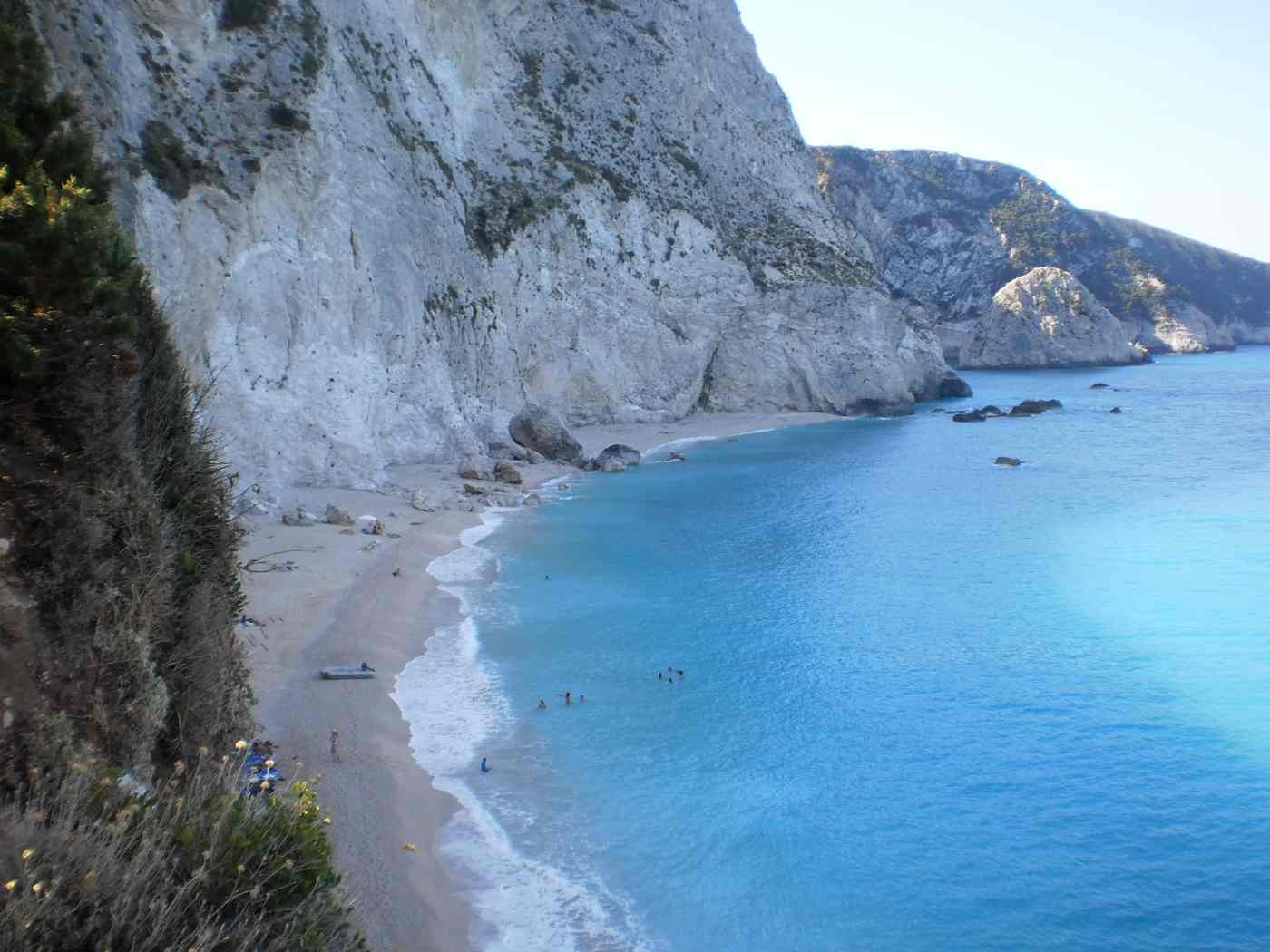
Porto Katsiki is the trademark beach of Lefkada. Set on the southwest coast of the Ionian island about 40 kilometres from Lefkada Town and roughly 15 kilometres from the village of Vasiliki. A tall white limestone cliff drops almost sheer to a crescent of pale pebbles and fine sand, with turquoise shallows giving way to deep blue open water. The image appears on postcards across the Ionian Islands and on countless travel covers. The beach faces west and the open sea, so it collects the afternoon wind and the island’s finest sunsets in equal measure, drawing photographers to the clifftop above. Plan the whole trip with Greece Tours.
Reaching the sand means walking down a long staircase of about eighty steps from the clifftop, where a paid car park and a few seasonal canteens sit above the drop. The winding mountain road from Athani narrows near the end, and visitors skip the drive entirely by arriving on a day cruise from Nydri, Vasiliki or nearby Kefalonia. Boats anchor offshore for a swim in the deep water. Porto Katsiki sits close to Egremni and Kathisma, the other two headline beaches of the west coast. All three can be combined on a single day out from Lefkada Town.
What and where is Porto Katsiki in Lefkada?
Porto Katsiki is Lefkada’s most famous beach, on the island’s southwest coast about 40 kilometres from Lefkada Town. A white limestone cliff frames a crescent of pale pebbles and sand below.
Porto Katsiki lies on the exposed western flank of Lefkada, an Ionian island off the western coast of mainland Greece. The beach sits below the village of Athani, reached by a mountain road that threads through olive groves and low scrub before dropping toward the sea. From Lefkada Town in the north the drive covers about 40 kilometres and takes roughly an hour, since the last stretch is slow and winding. The seaside resort of Vasiliki lies around 15 kilometres away on the south coast, making it the nearest sizeable base for a short morning trip down to the beach.
The setting defines the beach more than its size. A tall white limestone cliff rises almost vertically behind the sand, streaked pale grey and cream where the rock has weathered. At its foot stretches a narrow crescent of pale pebbles mixed with fine sand, a few hundred metres long. The water directly offshore turns from clear turquoise in the shallows to deep blue within a short distance, because the sea floor falls away quickly. This contrast between white rock, bright pebbles and layered blue water is what makes the view instantly recognisable across the Ionian and its neighbouring islands.
The name Porto Katsiki translates loosely as the port of the goat, a nod to the steep terrain that once suited grazing animals better than people. Over the decades the beach has become the single most reproduced image of Lefkada, printed on postcards, guidebook covers and tourism posters for the wider Ionian Islands. Its fame rests almost entirely on the clifftop view rather than on amenities, which remain limited. Visitors who arrive expecting a developed resort strip find instead a narrow shelf of pebbles beneath a wall of rock. Backed only by a car park and a handful of seasonal canteens.
Most people meet Porto Katsiki in one of two ways. Drivers approach from the clifftop, park above the beach and take in the panorama before descending the staircase to the water. Others arrive by sea on organised day cruises, viewing the cliff from the deck and swimming from a boat anchored offshore. Either route reaches the same crescent of sand, though the clifftop offers the framed postcard angle while the boat gives the head-on perspective of the rock face. The beach works well as one stop on a wider tour of the west coast, combined with Egremni and Kathisma nearby.
Why is Porto Katsiki known for its white cliff and pale pebble crescent?
Porto Katsiki’s fame comes from the contrast of a sheer white limestone cliff above a pale pebble-and-sand crescent and deep blue water. The clifftop view is among the most photographed in Greece.
The cliff behind Porto Katsiki is limestone, the pale sedimentary rock that forms much of Lefkada’s western coastline. Its face rises steeply, almost sheer in places, and its light colour reflects the strong Ionian sunlight so that it appears to glow against the darker sea. Rockfalls over the years have shaped the profile, and loose scree gathers at the base where the wall meets the beach. The height of the cliff, combined with its near-vertical drop, gives the beach its enclosed. Amphitheatre-like feel and frames the crescent of sand from above when seen from the clifftop viewpoint at the top.
The beach itself is a mixture of pale pebbles and fine sand rather than pure sand. Underfoot the surface is smooth, made up of small rounded stones washed by the sea, with softer patches nearer the waterline. The pale material keeps the shore bright and pushes the colour of the shallows toward a clear turquoise. Because the crescent is narrow and backed by the cliff, space on the sand is limited, and it fills quickly through the middle of the day in the peak season. Sunbeds and umbrellas occupy part of the strip in season, leaving the rest to towels laid on the pebbles.
The water is the third element of the famous image. Close to shore it reads as bright turquoise over the pale pebbles, then deepens to a strong blue as the sea bed drops away. This rapid change in depth produces the banded colour effect seen in photographs taken from the clifftop. The clarity is high, since the exposed western position keeps the water moving and free of sediment. On calm mornings the surface is glassy and the colour bands are sharpest. By afternoon the west wind ruffles the surface and the deeper blue dominates the view from above the beach.
The clifftop viewpoint above Porto Katsiki ranks among the most photographed spots in Greece. From the edge of the car park and the path along the top, the whole crescent appears far below. Framed by the white rock and ringed by the colour bands of the sea. The angle foreshortens the beach and exaggerates the height of the cliff, which is why the postcard version looks so exaggerated. Photographers gather here in the late afternoon when the low sun lights the rock face and the water. The view, rather than the swimming, is what draws a large share of visitors to the site.
How do you reach Porto Katsiki by car and the staircase?
Porto Katsiki is reached by the winding mountain road from Athani to a paid clifftop car park, then a descent of about eighty steps. The final stretch of road narrows near the end.
The road approach runs down the west side of Lefkada through the village of Athani, the last settlement before the coast. From Lefkada Town the route covers about 40 kilometres and takes close to an hour, as the mountain sections are slow. Beyond Athani the road descends toward the sea in a series of bends, and the final stretch narrows near the end where two vehicles pass with care. Drivers coming from Vasiliki, around 15 kilometres away on the south coast, join the same road for the last part of the journey down to the clifftop car park above the beach.
At the top of the cliff sits a paid car park set back from the edge, the main arrival point for visitors coming by road. Spaces fill through the middle of the day in high summer, and cars sometimes line the approach road when the park is full. From here a short path leads to the clifftop viewpoint and to the head of the staircase. A few seasonal canteens stand near the car park, selling drinks and light food during the busy months. The parking area, viewpoint and staircase together form the small clifftop hub above an otherwise undeveloped beach and coastline.
From the clifftop a long staircase descends to the sand, about eighty steps built into the slope. The climb down is straightforward, though the return uphill in the heat of the afternoon takes more effort, especially carrying beach gear. Handrails run along parts of the route, and the steps switch back as they drop toward the shore. Visitors with limited mobility, or families with very young children, find the descent and the climb back demanding. Reaching the beach on foot is the trade-off for the setting, since the same cliff that frames the view also separates the car park from the water below.
Arriving early rewards drivers with easier parking, cooler steps and calmer water before the afternoon wind builds. The beach lies exposed with little natural shade beyond the foot of the cliff, so the walk down and the hours on the sand fall largely under open sun. Late in the day the car park empties as coach and cruise groups leave, and the light on the cliff softens toward the well-known sunset. Those planning to combine Porto Katsiki with Egremni and Kathisma along the west coast benefit from starting in the morning, since each beach involves its own drive and its own descent.
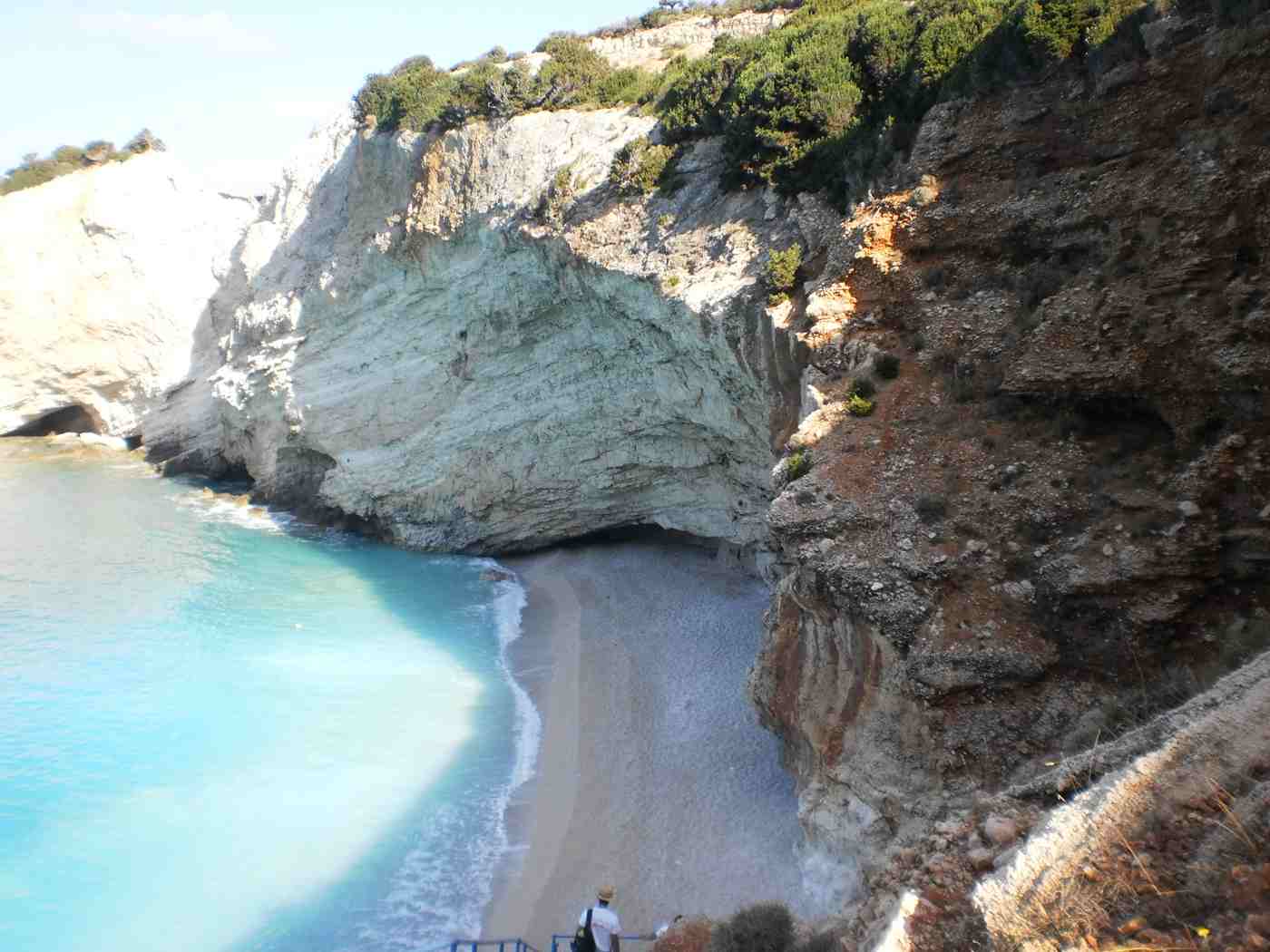
What are the swimming conditions and the west-facing wind at Porto Katsiki?
Porto Katsiki faces west and the open sea, so it takes the afternoon wind and swell, and the water deepens quickly. Conditions suit confident swimmers more than small children.
The beach faces due west into the open Ionian, which shapes its conditions through the day. Mornings are often calm, with a settled surface and clear water. As the afternoon progresses a west wind commonly rises, pushing swell onto the exposed shore and stirring the surface. Because no headland shelters the crescent from the open sea, there is little protection once the wind sets in. Swimmers who prefer flat water tend to arrive early, while those who enjoy small waves stay through the afternoon. The same exposure that brings the wind also keeps the water clean and clear along this stretch of coast.
The sea bed off Porto Katsiki shelves steeply, so the water becomes deep within a short distance of the shore. Wading out, swimmers lose their footing quickly compared with the gentle shallows of many enclosed bays. The deep water is part of what gives the beach its strong blue colour, but it also means there is no long paddling zone for small children. Parents with young families usually stay close to the waterline and keep a careful watch. Strong swimmers value the clear, deep water for its openness, and the rapid drop-off allows swimming close to shore without a long wade out.
On windy afternoons the swell builds enough to make entry and exit over the pebbles awkward, and the backwash tugs at the feet. There is no natural reef or breakwater to calm the water, so the sea state follows the open Ionian directly. Swimmers judge the conditions before going in and stay within their comfort in the deeper water. Calmer mornings offer the easiest and safest swimming, with the clearest visibility. The combination of deep water, afternoon wind and open exposure means Porto Katsiki rewards confident swimmers, while cautious visitors treat the beach mainly as a place to admire and cool off.
Beyond the swimming line, day-cruise boats anchor in the deep water off the beach through the season. Passengers dive or step from the boats straight into the clear sea, viewing the white cliff from the water rather than the clifftop. This head-on angle shows the full height of the rock wall above the crescent. Swimmers from the shore share the bay with these anchored boats but stay nearer the sand, while the vessels keep to the deeper water further out. The open, west-facing position that brings the wind also makes the anchorage a popular stop on cruises from Nydri, Vasiliki and Kefalonia.
When is the best time for the sunset and the clifftop view?
Late afternoon and sunset bring the finest light to Porto Katsiki, when the low sun lights the white cliff and the sea. The west-facing beach catches the island’s best sunsets.
Porto Katsiki faces west across open water, which places the setting sun directly ahead of the beach and the clifftop. In the final hour of daylight the sky and sea take on warm colour, and the pale limestone wall catches the low light and turns golden. This westward aspect gives the beach a claim to some of the finest sunsets on Lefkada. Many visitors time their trip so that the drive down and the hours on the sand end with the evening light. The absence of any land on the horizon means the sun drops straight into the sea, unbroken by hills or islands.
The clifftop viewpoint comes into its own in the late afternoon. Earlier in the day the high sun flattens the scene and casts the beach into shadow beneath the cliff. As the light lowers the rock face brightens and the colour bands of the water deepen. Photographers gather along the top for this window, when the framing from above is at its strongest. The car park is quieter by then, as coach and cruise groups have usually departed. Standing at the edge with the crescent far below and the sun over the open sea is the image most visitors carry away from Porto Katsiki.
Timing across the season matters as much as the hour of the day. Through the peak summer months the beach and car park are busiest around midday, when cruise passengers and coach tours overlap. Late spring and early autumn bring softer light, thinner crowds and easier parking, though the west wind still rises in the afternoons. The canteens and organised swimming facilities operate mainly during the warm season, so an out-of-season visit finds the beach quieter and barer. Whatever the month, the contrast between morning calm and afternoon wind holds, and the sunset window remains the quietest and most rewarding time on the clifftop.
Getting the most from Porto Katsiki often means arriving twice in one visit. A morning swim uses the calm, clear water before the wind builds, while a return to the clifftop late in the day captures the sunset light. Those short on time usually choose the afternoon, accepting the wind for the sake of the golden hour and the view. The staircase climb back up is easier in the cooler evening air than under the midday sun. Ending the west-coast day at Porto Katsiki, rather than starting there, lets the sunset over the open Ionian close the trip from the clifftop edge.
What facilities are there and what visitors bring?
Porto Katsiki offers only a paid clifftop car park, a few seasonal canteens and sunbeds and umbrellas. Visitors bring water, sun protection, footwear for the pebbles and cash.
Facilities at Porto Katsiki are limited and concentrated at the clifftop rather than on the sand. The main provision is the paid car park set back from the edge, alongside a few seasonal canteens that sell drinks and light food during the warm months. On the beach itself a section of sunbeds and umbrellas is set out in season, leaving the rest of the narrow crescent open. There is no resort development, no line of tavernas and no permanent buildings on the shore. The setting stays largely natural, defined by the cliff and the pebbles rather than by any built amenities along the water.
Shade is scarce, since the beach is open to the sky and only the foot of the cliff throws shadow at certain hours. Visitors who want reliable cover rent an umbrella or bring their own. The surface underfoot is pale pebbles mixed with sand, warm and hard on bare feet at midday, so beach shoes or sandals make the walk to the water easier. The staircase of about eighty steps also favours proper footwear over flip-flops for the climb back up. Sun protection matters through the day, as the open aspect and the reflective pale rock and pebbles intensify the exposure on the shore.
Bringing water is sensible, because the canteens are few and the climb back up the steps in the heat is thirsty work. A packed supply of drinks and snacks covers the hours on the sand without relying on the seasonal stalls. Carrying cash is wise, since small clifftop canteens and the car park do not always take cards. There are no shops down at the beach, so anything needed for a comfortable hours is best brought from Athani, Vasiliki or Lefkada Town. Rubbish is carried back up the staircase as well, keeping the narrow crescent clean beneath its cliff and undeveloped.
The beach suits visitors prepared for a natural, exposed setting rather than a serviced resort. Confident swimmers, photographers and day-trippers touring the west coast find it rewarding, while families with very young children weigh the deep water and the long staircase carefully. The descent and climb rule out easy access for anyone with limited mobility. Those arriving by cruise avoid the steps altogether, swimming from the boat and viewing the cliff from the sea. For drivers, a little preparation, water, footwear, sun protection and cash, turns the limited facilities into a comfortable half-day at one of Lefkada’s landmark beaches.
How does Porto Katsiki compare with Egremni and Kathisma nearby?
Porto Katsiki, Egremni and Kathisma are the three headline beaches of Lefkada’s west coast and sit close enough to combine in one day. Each has a white cliff backdrop and deep blue water.
Egremni beach lies a short distance north of Porto Katsiki along the same west coast, another long beach set beneath a high white cliff. It is broader and longer than Porto Katsiki’s compact crescent, with an even more demanding descent from the clifftop. Both beaches share the pale pebbles, the deep clear water and the exposure to the west wind. Egremni’s access has been affected by landslides in the past, which at times has changed how visitors reach the sand. Where Porto Katsiki is famous for the framed clifftop view, Egremni is known for the sheer length of its shore below the rock wall.
Kathisma beach sits further north again and offers a different experience from Porto Katsiki. It is a long, wide beach with far more development, including beach bars, sunbeds, watersports and road access that reaches close to the sand without a long staircase. The water still deepens fairly quickly and the west wind still blows, but the setting is busier and more serviced. Visitors who find Porto Katsiki too exposed or too steep often pair it with Kathisma for an easier afternoon. Together the two show the range of the west coast, from a natural clifftop landmark to a lively organised beach with full amenities.
These three rank among the best known of the beaches of Lefkada, and sit close enough that a single west-coast day can take in all of them. Drivers usually start from Lefkada Town, about 40 kilometres from Porto Katsiki, and work down the coast, or base themselves at Vasiliki around 15 kilometres away for a shorter run. Each beach involves its own turn off the main road and its own descent, so an early start leaves time for swims at more than one. Ordering the day to finish at Porto Katsiki places the sunset at the most photographed of the three, with the drive back through Athani afterwards in the evening light.
Arriving by sea removes the drive and the staircase entirely. Day cruises run to Porto Katsiki from Nydri and Vasiliki on Lefkada, and from nearby Kefalonia, anchoring offshore so passengers swim in the deep water beneath the cliff. This route trades the clifftop view for the head-on perspective of the white rock wall from the water. Many boat trips string together several west-coast and southern beaches in one outing, giving a sea-level tour of the coastline. For visitors without a car, or those who prefer to avoid the winding road and the steps, the cruise is the simplest way to reach the beach.
Frequently Asked Questions
Where exactly is Porto Katsiki in Lefkada?
Porto Katsiki lies on the southwest coast of Lefkada, an Ionian island off the western side of mainland Greece. It sits below the village of Athani, on the exposed western flank of the island facing the open sea. From Lefkada Town in the north the beach is about 40 kilometres away, a drive of close to an hour along mountain roads. The resort of Vasiliki on the south coast is nearer, around 15 kilometres, making it a common base for a short trip. The beach forms a narrow crescent of pale pebbles and sand at the foot of a tall white limestone cliff.
A paid car park, a clifftop viewpoint and a staircase of about eighty steps sit above the sand, with Egremni and Kathisma beaches close by along the same west coast.
How steps lead down to Porto Katsiki beach?
A staircase of about eighty steps leads from the clifftop car park down to the sand at Porto Katsiki. The steps are built into the slope and switch back as they descend toward the shore, with handrails along parts of the route. Walking down is straightforward, but the climb back up in the afternoon heat takes more effort, particularly when carrying beach bags, umbrellas and coolers. The descent and return make the beach demanding for visitors with limited mobility and for families with very young children. Proper footwear helps on both the steps and the pebbles below. Starting early, when the air is cooler and the car park quieter, makes the climb easier.
Visitors who arrive by day cruise avoid the staircase altogether, swimming from a boat anchored in the deep water offshore.
Is Porto Katsiki suitable for swimming with children?
Porto Katsiki suits confident swimmers more than small children, because the water deepens quickly and the beach faces the open sea. The sea bed shelves steeply just off the pebbles, so there is no long, shallow paddling zone for young families. The beach also faces west, which brings an afternoon wind and swell onto the exposed shore, and the surface can turn choppy after calm mornings. Parents with children usually stay close to the waterline, keep a careful watch and visit early when the sea is calmest. The long staircase of about eighty steps adds a further consideration for families carrying gear and young children.
Families seeking gentler, shallower water often pair Porto Katsiki with the more developed Kathisma beach further north along the same coast, which offers an easier setting for a relaxed afternoon.
Can you reach Porto Katsiki by boat instead of driving?
Day cruises reach Porto Katsiki by sea, which avoids the winding mountain road and the long staircase. Boats run from Nydri and Vasiliki on Lefkada, and from nearby Kefalonia, anchoring in the deep water offshore so passengers can swim beneath the white cliff. Arriving this way gives a head-on view of the tall rock wall from the sea, rather than the framed panorama seen from the clifftop. Many trips combine several west-coast and southern beaches in a single outing, offering a sea-level tour of the coastline. For visitors without a car, or those who prefer to skip the drive through Athani and the climb of about eighty steps. The cruise is the simplest route to the beach.
Swimmers from the boats share the bay with those who have come down from the clifftop car park.
When is the best time to visit Porto Katsiki?
Early morning and late afternoon are the two best windows at Porto Katsiki, for different reasons. Mornings bring calm, clear water before the west wind rises, along with easier parking and a cooler climb on the staircase. Late afternoon and sunset bring the finest light, when the low sun lights the white cliff and the sea. The west-facing beach catches some of the best sunsets on Lefkada. Midday in peak summer is the busiest, with cruise passengers and coach tours overlapping at the car park and on the narrow sand. Late spring and early autumn offer softer light and thinner crowds, though the canteens and organised facilities run mainly in the warm season.
Visitors combining Porto Katsiki with Egremni and Kathisma benefit from an early start to fit the west-coast beaches into one day.
What facilities does Porto Katsiki have?
Porto Katsiki has only limited facilities, concentrated at the clifftop rather than on the beach. The main provision is a paid car park set back from the edge, with a few seasonal canteens nearby selling drinks and light food in the warm months. On the sand, a section of sunbeds and umbrellas is set out in season, while the rest of the narrow crescent stays open. There is no resort development, no line of tavernas and no permanent buildings on the shore, and shade is scarce beyond the foot of the cliff. Visitors bring water, sun protection, footwear for the pebbles and steps, and cash, since small clifftop stalls and the car park do not always take cards.
Anything needed for a comfortable hours is best brought from Athani, Vasiliki or Lefkada Town.