
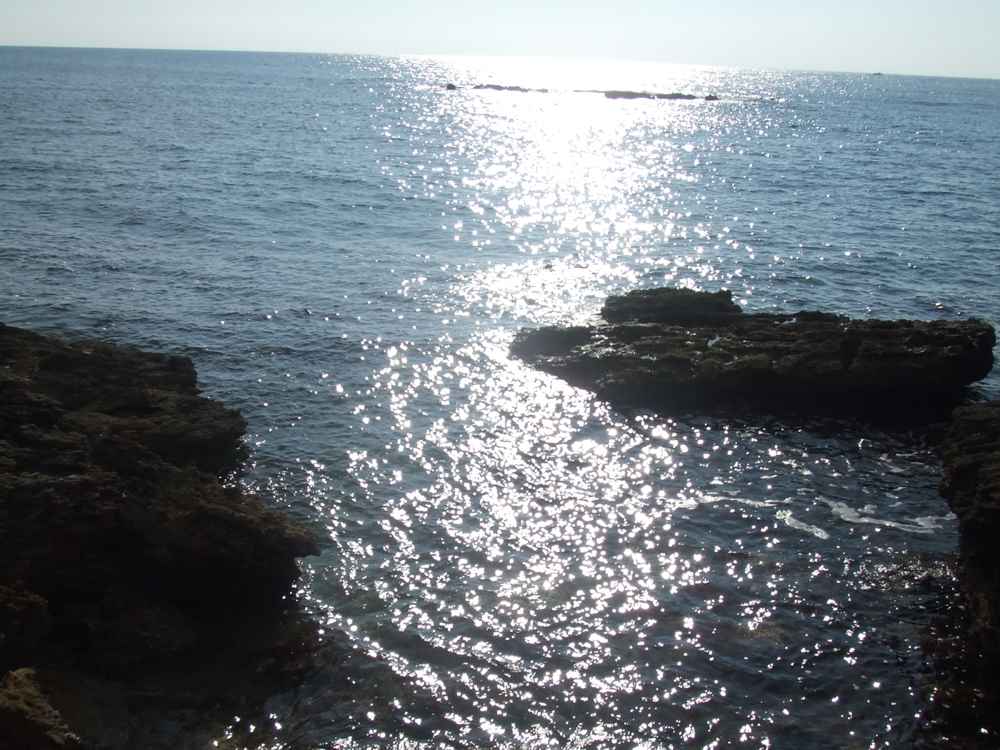
Kounopetra is one of the quieter curiosities of Kefalonia, a flat rock lying in the shallow sea off the southwest tip of the Paliki peninsula. It sits near the village of Manzavinata, a short drive south of Lixouri, on a stretch of low cliffs and clear water that most visitors pass without pausing. The name is usually taken to mean the cradle rock or the swaying rock, and it points to the strange behaviour that made the site locally famous. For generations the rock reputedly rocked with a slow, rhythmic movement, a motion said to be visible to the naked eye from the shore above. Plan the whole trip with Greece Tours.
The story of Kounopetra is really the story of that movement and the day it ended. The great Ionian earthquake that reshaped the seabed across the region is credited with stopping the swaying, and the rock has stood still ever since. What remains is a peaceful corner of the Paliki coast, with a small pebble cove nearby for a swim and views out over the Ionian Sea. It works best as a brief, offbeat stop on a wider tour of the peninsula rather than a full beach day. This guide covers what Kounopetra is, the legends around it, and how to reach it from Lixouri and Argostoli.
What exactly is Kounopetra in Kefalonia?
Kounopetra is a large flat rock lying in the shallow sea off the southwest tip of the Paliki peninsula in Kefalonia, near Manzavinata, south of Lixouri.
Kounopetra is a natural geological feature rather than a built monument or a formal attraction. It takes the form of a broad, flat slab of rock resting in the shallow water a short distance from the shore. On the exposed southwest edge of the Paliki peninsula. The surrounding coast is quiet and undeveloped, framed by low cliffs and unusually clear water that lets the shape of the rock show through from the ground above. There are no gates, tickets or opening times, and the site is simply part of the open coastline that runs south from Lixouri towards the tip of the peninsula.
The setting places Kounopetra firmly within the character of Paliki, the western lobe of Kefalonia that reaches out into the Ionian Sea. This is the flatter, gentler side of the island, known for its pale beaches and its slower pace compared with the busier east around Argostoli. The rock lies close to the village of Manzavinata, one of the small farming settlements that dot the interior of the peninsula. From the coast here the horizon is broad and open, with the sea stretching uninterrupted towards the west and the light shifting through the day across the water.
First-time visitors sometimes expect something more dramatic than they find. Kounopetra is not a towering sea stack or a deep cave but a low, unassuming platform of stone at the water’s edge. Its interest lies almost entirely in its story rather than in its size. Reading about the reputed movement beforehand tends to change how people look at the rock, turning a plain grey slab into the centre of a genuine local legend. The reward is atmosphere and quiet rather than spectacle, which suits travellers who enjoy offbeat corners.
For orientation, Kounopetra sits within easy reach of several better-known points on the Paliki coast. The Kipouria monastery stands on the cliffs to the north, while the popular beaches of Xi and Megas Lakkos lie to the east. The coast around Agios Nikolaos with its lighthouse continues to the south. Placed among these, Kounopetra becomes a natural link in a loop of the peninsula rather than a destination people travel to on its own. Understanding where it fits in this small network of sights is the key to planning a rewarding half-day in the area.
Why is Kounopetra famous for its swaying movement?
Kounopetra is famous because the flat rock reputedly rocked with a slow, rhythmic motion said to be visible from the shore, a behaviour that gave the site its name and its legend.
The fame of Kounopetra rests almost entirely on its reputed movement. According to local accounts passed down over generations, the flat rock did not sit still like ordinary stone but rocked gently and continuously in the shallow water. The motion is said to have been slow and rhythmic. A steady swaying rather than any sudden shift. Reputedly it be followed by the naked eye from the low ground above the shore. For a large slab of rock to appear to move on its own was remarkable enough to fix the site firmly in the memory and folklore of the Paliki peninsula.
The name itself carries the story. Kounopetra is usually understood to mean the cradle rock or the swaying rock, a description drawn directly from the movement people reported seeing. A cradle rocks a child gently back and forth, and the comparison captures the calm, repeating rhythm that local accounts describe. Names of this kind often outlast the phenomena that inspired them. Here the word preserves the memory of the swaying even for visitors who arrive long after the motion is said to have stopped. The name is now the first clue any newcomer receives about what once made the place special.
One of the most repeated tales concerns a British warship that is said to have visited the coast to test the movement. According to the story, sailors tied a chain to the rock in an attempt to hold it fast. Expecting to prove the swaying an illusion or to stop it by force. The rock reputedly continued to move despite the chain, and the attempt only deepened the mystery rather than solving it. Whether the episode happened exactly as told is impossible to confirm, yet the tale has become a fixed part of how the site is remembered and retold.
Such stories be treated with care rather than as settled fact. Reports of the movement come mainly from local memory and older accounts, and the precise nature of any motion, its rhythm and its scale, cannot now be measured or verified. What can be said is that the belief in the swaying was strong and widespread enough to name the rock and to draw curious visitors to this remote stretch of coast. The value of Kounopetra today lies in this blend of geology and legend, where a quiet feature carries a story far larger than its plain appearance suggests.
How did the earthquake stop Kounopetra from moving?
The great Ionian earthquake that reshaped the seabed across the region is credited with halting the swaying, and Kounopetra has stood still ever since.
The turning point in the story of Kounopetra was the great Ionian earthquake that struck the region and reshaped much of the seabed around the islands. This was one of the defining events in the recent history of Kefalonia, felt across the whole island group and remembered for the scale of the damage and change it brought. Along the coasts the tremor altered the ground and the shallows in ways that were permanent, shifting rock and reworking the floor of the sea. It was against this backdrop of upheaval that the swaying of Kounopetra is said to have come to an end.
According to the accounts, the earthquake did what a British warship’s chain reputedly not, and stilled the rock for good. Where the slab had rocked gently for as long as anyone recorded, it afterwards lay motionless, and it has remained so through every season since. The change is described as sudden and complete rather than gradual, tied directly to the shaking of the ground rather than to any slow wearing away. In the folklore of the peninsula the quake marks a clear before and after, dividing the age of the moving rock from the quiet stillness that visitors find today.
In geological terms, the connection is entirely plausible even if the details cannot be recovered. A large tremor can lift, drop or lock features on the seabed, changing how water moves around them and how a balanced slab responds to the swell. Whatever mechanism once allowed Kounopetra to appear to sway, it is easy to imagine such a delicate arrangement being disrupted by ground movement on the scale the earthquake delivered. The rock that had seemed to defy stillness for generations was, in the end, changed by the same forces that reshaped the coast around it.
For the visitor, this history explains why the site now looks so ordinary. The stillness is not the absence of a story but the final chapter of one, the point at which a living legend became a fixed memory. Standing above the motionless rock, it takes a little imagination to picture the slow rocking that once drew people here. That gap between the plain sight and the remembered movement is exactly what makes Kounopetra rewarding for travellers who like their landmarks to carry meaning rather than simply to look impressive.
What is the coast and the nearby cove at Kounopetra like?
The coast at Kounopetra is quiet and undeveloped, framed by low cliffs and clear water, with a small pebble cove nearby suited to a short swim.
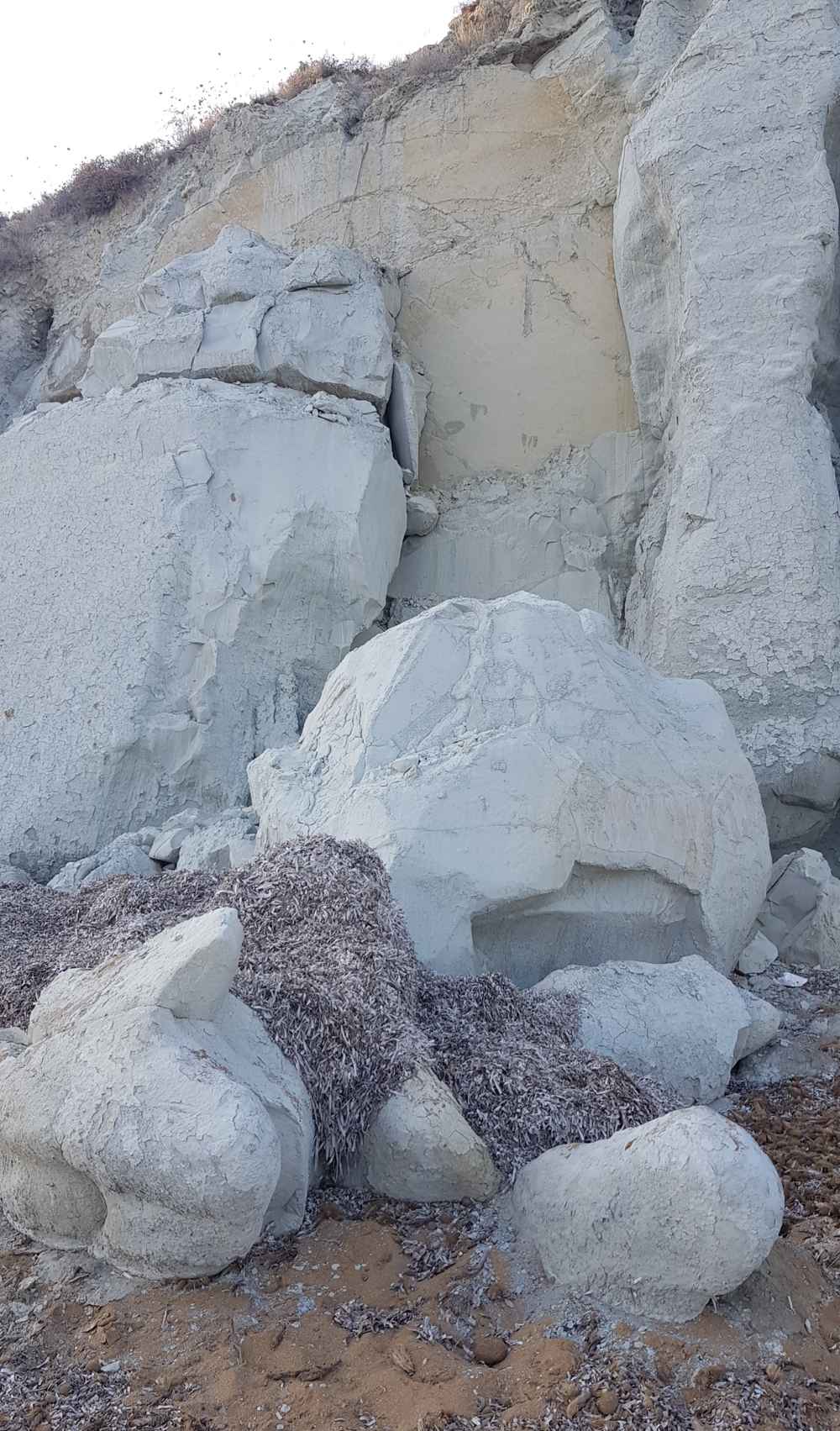
The stretch of coast around Kounopetra is one of the calmer corners of the Paliki peninsula. Low cliffs run along the shoreline, and the water below is notably clear, taking on shades of blue and green that change with the light and the depth. There are no large resorts, beach bars or crowds here, which gives the whole area a peaceful, slightly remote feeling. The openness of the western horizon adds to the sense of space. With the Ionian Sea spreading out towards the sunset and little to interrupt the view except the occasional passing boat far offshore.
Close to the rock lies a small pebble cove that offers the chance of a swim for those who want one. This is a modest, natural spot rather than an organised beach, with pebbles underfoot and clean, clear water that suits a quick dip on a warm day. It is the kind of place where a handful of visitors share the shore rather than a busy strand packed with sunbeds. Anyone hoping for extensive sand and full facilities is better served by the larger beaches nearby. For a brief, refreshing pause the cove fits the character of the site perfectly.
The mood of the place rewards a slower kind of visit. Kounopetra suits travellers who are happy to sit for a while, take in the quiet and the light, and appreciate the setting as much as the rock itself. Photographers often find the combination of low cliffs, clear shallows and open sea appealing, especially as the day cools towards evening. Because the coast faces west, the late afternoon light is particularly soft here, giving the water and the pale stone a warm glow that makes the short detour worthwhile even without the pull of the legend.
Practical comforts are limited, and visitors come prepared. This is open coastline rather than a serviced beach, so there is little in the way of shade, refreshments or amenities on the spot. Sturdy footwear helps on the uneven ground near the shore, and it is wise to bring water and sun protection, particularly in the heat of summer. The nearby village of Manzavinata and the town of Lixouri are the natural places to find supplies. Food and other services, keeping the coast itself unspoiled and quiet for those who make the trip out to the rock.
What else is close to Kounopetra on the Paliki peninsula?
Close to Kounopetra lie the Kipouria monastery to the north, the beaches of Xi and Megas Lakkos to the east, and the lighthouse and coast around Agios Nikolaos to the south.
Kounopetra is best enjoyed as one stop among several on the Paliki peninsula, and the surrounding area gives plenty of reason to linger. To the north, perched dramatically on the cliffs, stands the Kipouria monastery, a working religious site famous for its clifftop position and its sweeping views west over the open sea. The drive between the monastery and the rock threads through the quiet interior of the peninsula, passing small villages and farmland. Pairing the two makes a natural half-day, combining the human story of the monastery with the geological curiosity of the swaying rock.
To the east lie some of the most distinctive beaches on this side of Kefalonia. Xi is well known for its reddish sand and shallow, gently sloping water, while nearby Megas Lakkos offers a broad stretch of shore backed by pale cliffs. These beaches are more developed than the cove at Kounopetra, with easier access and more facilities, and they make a comfortable contrast to the wild simplicity of the rock. Many visitors combine a swim at Xi or Megas Lakkos with the short detour to Kounopetra, balancing a relaxed beach stop against the offbeat interest of the legend.
Further along the coast to the south, the area around Agios Nikolaos brings a lighthouse and more of the peninsula’s rugged shoreline. This corner of Paliki feels remote and elemental, with the lighthouse marking the meeting of land and sea and the coast falling away in low cliffs and quiet inlets. It rounds out a picture of a peninsula that rewards slow exploration, where each stop adds a different texture, from monastery to beach to lighthouse. Kounopetra sits comfortably within this loop, a small but memorable link in a chain of understated sights.
Taken together, these places make Paliki a rewarding region to explore by car over a day or two. The distances between the main points are short. The roads pass through gentle countryside and along the coast, so it is easy to string stops into a single relaxed itinerary. Lixouri, the peninsula’s main town, sits at the centre of this network and works well as a base or a starting point. From there, a loop taking in Kounopetra, the beaches, the monastery and the southern coast captures the quiet, uncrowded charm that sets western Kefalonia apart.
Who is Kounopetra suited to and how long you spend?
Kounopetra suits curious, unhurried travellers who enjoy legends and quiet coastline. Most visitors spend around fifteen to thirty minutes, or a little longer with a swim in the nearby cove.
Kounopetra is a site for a particular kind of traveller. It appeals most to those who enjoy stories, folklore and geological oddities, and who are content with a modest sight made meaningful by its history. People chasing dramatic scenery, long sandy beaches or lively resorts will find more of what they want elsewhere on the island. The rock rewards curiosity and patience rather than delivering an instant spectacle, so a little background reading beforehand greatly improves the visit. For anyone drawn to offbeat corners and local legend, it is a small but genuinely memorable stop.
The time needed at Kounopetra is short by nature. A quick look at the rock, a read of any information to hand and photographs typically take around fifteen to thirty minutes. Those who wish to swim in the nearby pebble cove or simply sit and enjoy the quiet coast extend the visit to an hour or so. Because the interest is concentrated rather than sprawling, there is no plan a long stay. This makes the site ideal to slot into a wider tour of the peninsula rather than treating it as a destination in its own right.
Families and mixed groups can enjoy the stop provided their expectations match the setting. Children often find the idea of a rock that once rocked by itself appealing, and the small cove gives them somewhere to paddle on a warm day. The lack of facilities and the uneven ground mean a little care is needed, and very young children be watched near the water and the cliffs. For couples and independent travellers, the quiet and the open sea views make it a peaceful pause, especially in the softer light of the late afternoon.
The site fits naturally into a slower, curiosity-led style of travel. Visitors who like to build their own routes around history and landscape, stopping where a story catches their interest, will get the most from Kounopetra. It rewards those who treat Kefalonia as more than a beach holiday and who enjoy piecing together the character of a region from its smaller, stranger details. Approached in that spirit, a brief stop at the swaying rock becomes one of the small, distinctive memories that give a trip to the Paliki peninsula its particular flavour.
How do you reach Kounopetra from Lixouri and Argostoli in Kefalonia?
Kounopetra lies a short drive south of Lixouri near Manzavinata. From Argostoli, take the ferry across the bay to Lixouri, then continue by car to the southwest coast of the peninsula.
Reaching Kounopetra is straightforward once travellers understand the layout of the Paliki peninsula. The rock lies on the southwest coast, a short drive south of the town of Lixouri and close to the village of Manzavinata. From Lixouri, the route runs down through the peninsula towards the coast, passing small settlements and open countryside along the way. The final stretch follows quieter local roads down towards the shore. Having a hire car or scooter makes the trip far easier, as public transport to this remote corner of the island is limited and infrequent.
For visitors based on the eastern side of Kefalonia, the journey usually begins in Argostoli, the island’s capital. The two towns sit across a broad bay from one another, and the simplest way across is the regular ferry that links Argostoli and Lixouri. This short crossing is a pleasant part of the trip in itself. Offering views back over the water and saving the long drive around the head of the bay by road. Once across in Lixouri, travellers continue by car towards Manzavinata and the coast, following the same route as those already on the peninsula.
Driving the whole way around the bay is possible for those who prefer to keep their own vehicle without using the ferry. The road route from Argostoli loops around the northern end of the bay before turning south into Paliki, and it takes noticeably longer than the direct crossing. Many visitors combine the ferry one way with the road the other, or simply use the ferry both ways for speed and ease. Either way, once on the peninsula the distances to Kounopetra are short, and the rock can be reached comfortably within a modest drive from Lixouri.
Signage to Kounopetra is limited, so it helps to know the surrounding landmarks and to use a map or navigation on the approach. Aiming for Manzavinata first and then following the coast towards the southwest tip is a reliable strategy. The nearby beaches of Xi and Megas Lakkos and the Kipouria monastery make useful reference points along the way. Because the site sits on open coast with little in the way of facilities, it is sensible to fill up on fuel, water and supplies in Lixouri before setting out, ensuring the short detour to the swaying rock stays relaxed and trouble-free.
Frequently Asked Questions
Does Kounopetra still move today?
No, Kounopetra no longer moves. According to local accounts, the flat rock reputedly swayed with a slow, rhythmic motion for as long as anyone recorded, a movement said to be visible from the shore above. The great Ionian earthquake that reshaped the seabed across the region is credited with halting the swaying, and the rock has stood still ever since. Visitors today find a motionless slab of stone rather than the rocking feature the legend describes. The interest of the site now lies in that history and in the gap between the plain sight and the remembered movement. Rather than in any motion that can still be seen.
Reading the story beforehand helps travellers appreciate why this quiet rock earned its name and its lasting local fame.
What does the name Kounopetra mean?
The name Kounopetra is usually taken to mean the cradle rock or the swaying rock. The description comes directly from the movement local accounts report, in which the flat rock reputedly rocked gently and continuously in the shallow water. A cradle rocks a child slowly back and forth, and the comparison captures the calm, repeating rhythm that people described seeing. Names of this kind often outlast the phenomena that inspired them. Here the word preserves the memory of the swaying even for visitors who arrive long after the motion is said to have stopped. For travellers the name is the first clue to what made this modest feature special.
Turning a plain grey slab on a quiet coast into the centre of a genuine Kefalonian legend worth seeking out.
Is there a beach for swimming at Kounopetra?
There is a small pebble cove near Kounopetra that offers the chance of a short swim, though it is not a full beach. The cove is a modest, natural spot with pebbles underfoot and clean. Clear water that suits a quick dip on a warm day rather than a long day by the sea. It has little in the way of shade, sunbeds or refreshments, so visitors bring water and sun protection with them. Anyone wanting sand, facilities and easier access is better served by the larger beaches nearby. Such as Xi with its reddish sand or the broad shore at Megas Lakkos to the east.
The cove at Kounopetra fits the quiet, offbeat character of the site, offering a refreshing pause rather than a beach day in itself.
How long you spend visiting Kounopetra?
Most visitors spend around fifteen to thirty minutes at Kounopetra, since the interest is concentrated rather than sprawling. A look at the rock, a read of any information to hand and photographs cover the essentials in a short time. Those who wish to swim in the nearby pebble cove or simply sit and enjoy the quiet coast extend the stop to an hour or so. Particularly in the soft light of the late afternoon. Because the site is modest in scale, there is no plan a long stay. It works best slotted into a wider tour of the Paliki peninsula alongside the Kipouria monastery. The beaches of Xi and Megas Lakkos.
The coast around Agios Nikolaos, forming one memorable link in a relaxed half-day loop of western Kefalonia.
How do you get to Kounopetra from Argostoli?
From Argostoli, the simplest way to reach Kounopetra is to take the regular ferry across the bay to Lixouri. Then continue by car towards the southwest coast of the Paliki peninsula. The short crossing saves the long drive around the head of the bay and offers pleasant views over the water. Once in Lixouri, the route runs south through the countryside towards the village of Manzavinata and the coast beyond, where the rock lies in the shallow sea. Driving the whole way around the bay by road is possible but takes noticeably longer. Having a hire car or scooter makes the trip much easier, as public transport to this remote corner is limited.
Signage is sparse, so aiming for Manzavinata first and using a map on the final approach is the most reliable strategy.
Is Kounopetra worth visiting in Kefalonia?
Kounopetra is worth visiting for travellers who enjoy legends, folklore and quiet, offbeat corners rather than dramatic scenery or lively resorts. Its appeal lies in the story of a flat rock that reputedly swayed for generations until the great Ionian earthquake stilled it. A history that gives real meaning to an otherwise modest sight. The setting is peaceful, with low cliffs, clear water and open views west over the Ionian Sea, and a small pebble cove nearby for a swim. It works best as a brief stop on a wider tour of the Paliki peninsula, combined with the Kipouria monastery. The beaches of Xi and Megas Lakkos. The coast around Agios Nikolaos.
Approached with curiosity and a little background reading, the swaying rock becomes one of the small, distinctive memories that give western Kefalonia its character.