
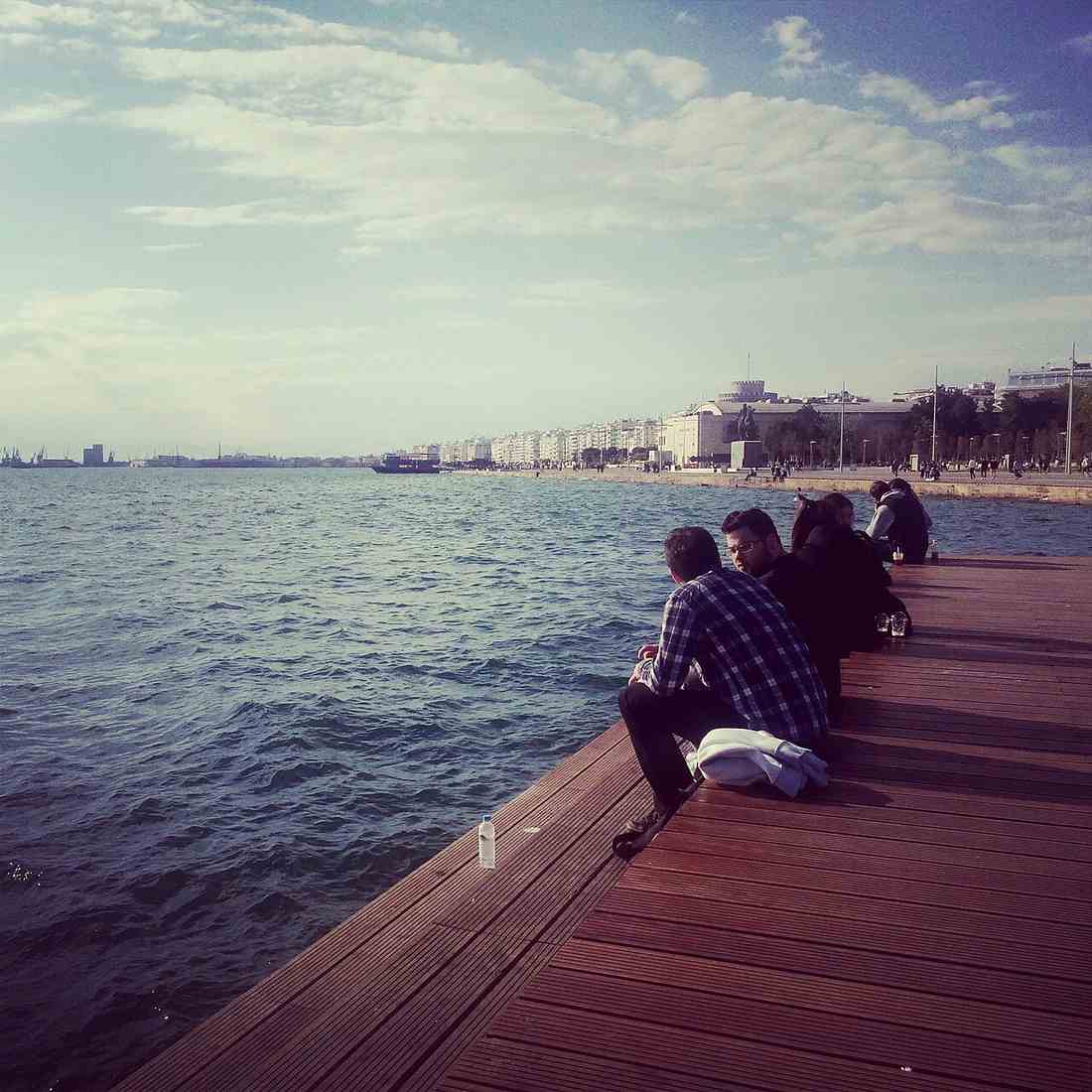
Thessaloniki works as a family city because its heart is flat, compact, and turned toward the sea. A single paved waterfront runs for kilometres past gardens, sculptures, and cafés, level enough for a scooter or a first bicycle. The centre packs a climbable tower, a science centre with a planetarium, and museums into a short walk or a two-stop bus ride. Boats cross the bay, a water park sits a short drive out, and warm bougatsa feeds a child on the move. Plan a route that matches the ages in the group and pace it with My Greece Tours.
A family visit rewards a clear order more than a long list of stops. The flat seafront carries the youngest travellers, the tower and the science centre hold the school-age group, and the archaeology suits older children who read. The sections below cover the waterfront, the White Tower, the museums, a water and beach day, the food children eat, and where to base a family, so a day builds without backtracking. Fit the walk to nap times and to the heat of the afternoon, and pair the free hours with the guided Thessaloniki tours that open the history for the adults.
What makes Thessaloniki an easy city for a family?
Thessaloniki suits families because its centre is flat, walkable, and edged by a car-free seafront. A scooter, a pram, or a bike rolls the promenade, and the sights sit within a short walk of the water.
The old core sits on a slope that falls to the gulf, yet the streets along the water stay level. Egnatia and the parallel avenues carry the shops and the food, while the seafront carries the wheels. A family can leave a hotel near Aristotelous Square, reach the water in five minutes, and turn either way along the paved front without a single road to cross. That layout removes the daily strain of a hilly city and lets young legs set the pace.
Distances stay short across the centre. The White Tower, the archaeological and Byzantine museums, and the main square line up along one kilometre of seafront, so a stroller reaches each in turn. The bus runs the length of the shore for the legs a child will not walk, and a ticket covers the ride either way. Grandparents keep up on the flat, which makes the city a fit for three generations at once. A full guide to things to do in Thessaloniki maps these stops in one line.
The climate shapes the plan more than the map. Summer middays turn hot, so families move the museums and the shaded gardens into the early afternoon and keep the seafront for the cooler hours. Spring and autumn open the whole day to the outdoors, with mild light for the promenade and the tower roof. A quick read of the best time to visit Thessaloniki sets the season before the day plan takes shape.
What can families do on the Thessaloniki waterfront?
The Thessaloniki waterfront runs about five kilometres of flat, car-free promenade from the port to the concert hall. Children ride scooters and hired bikes past thematic gardens, the Umbrellas sculpture, and cafés that line the redesigned New Waterfront.
The Thessaloniki waterfront promenade splits into two moods. The stretch by the White Tower stays busy with street performers, snack bars, and the boats that load at the quay. South of the tower the New Waterfront opens into a wide, redesigned park front that runs to the concert hall. The paving stays smooth for a pram or a scooter the whole way, and low walls hold the sea at a safe edge for the youngest walkers.
A rental stand near the Makedonia Palace hotel hires wheels by the hour. The stock covers adult bikes, children’s bikes, tandem buggies, and small go-karts a child pedals, which turns the flat front into a track for an hour. A family sets a target down the shore, rides to it, and turns back at an ice-cream stop. The lack of traffic on the promenade lets a parent hand a nervous rider real road for the first time.
The New Waterfront strings a line of thematic gardens along the sea, each built around one idea. The Garden of Water, the Garden of the Seasons, and the Alley of the Umbrellas give a walk a set of goals a child can name and find. George Zongolopoulos set his tall steel Umbrellas on the front here, a run of open frames that has become the emblem of the modern city. The sculpture makes a fixed meeting point and a photograph that fixes the day.
Boats cross the bay from the quay by the White Tower through the day. Wooden vessels rigged to look like galleons circle the gulf on a thirty-minute loop, and the deck fare is the price of a drink rather than a ticket, which suits a short attention span. The ride shows the city from the water, the tower and the front laid out along the shore. A child who tires of the walk trades it for a spell at sea and comes back ready to go on.
Is the White Tower a good stop with children?
The White Tower rewards children with a climb up a spiral ramp through six floors to a roof that overlooks the gulf. The tower stands about thirty-four metres tall and holds a museum of the city inside its round wall.
The White Tower anchors the south end of the old seafront, the marker where the promenade meets the New Waterfront. Its round stone shell rises above the water as the symbol of Thessaloniki, so the walk to it gives a family a clear destination. The tower once guarded the sea wall and later held a prison, a past that hooks an older child before the door. The open square around the base gives the youngest room to run before the climb.
The inside turns the climb into the attraction. A spiral ramp winds up the round wall past six floors of exhibits on the city’s history, each a short stop rather than a long read. Screens, sounds, and models carry the story for a child who will not stand at a case, and the steady slope suits small legs better than a stair. The rooms stay cool through the summer, which makes the tower a shaded stop in the heat of the day.
The roof pays off the climb. The terrace opens a full view over the gulf, the seafront, and the roofs of the centre toward the upper town on the hill. A child picks out the boats below, the curve of the bay, and the mountains across the water on a clear morning. The height gives the visit its reward and a photograph over the sea. A slow descent by the same ramp closes the loop back to the square.
The tower pairs with the seafront for a full morning outdoors. The equestrian statue of Alexander the Great stands a short walk south along the front, a landmark a child spots from far off. The lawns of the New Waterfront spread beyond it with room to run and rest between the paved paths. A family climbs the tower, walks the front to the statue, and turns the two into one loop by the water.
Which Thessaloniki museums work for kids?
The Noesis Science Center and Technology Museum suits kids best, with a planetarium, a large-screen theatre, a motion simulator, and old machines to work. Older children take to the Archaeological Museum and the Museum of Byzantine Culture in the centre.
The Noesis Science Center and Technology Museum sits on the eastern edge of the city, a short drive or bus ride from the centre. Its planetarium ranks among the largest in the country and throws the night sky across a domed ceiling for a seated audience. A large-screen cinema and a motion simulator add rides that pin a school-age child to the seat. The technology wing lines up vintage cars, engines, and machines a visitor can crank, which turns science into something to touch. Half a day here fills the hottest hours indoors.
The city also runs a children’s museum built for ages four to fifteen, where the exhibits work by hand rather than behind glass. Its rooms set a child loose on play that teaches without a lecture, a fit for a rainy morning or a tired afternoon. The staff run workshops that give parents an hour to sit while the child builds. A stop here balances a day that leans on walking and history with pure play.
Older children who read take to the Archaeological Museum of Thessaloniki for the gold of ancient Macedon. Wreaths, masks, and jewellery worked in fine gold hold a child who knows the myths, and the halls stay compact enough for a short visit. A fan of Greek gods and heroes reads the cases as the props of the stories. The museum sits by the seafront, a short walk from the tower, so it folds into the day on the front.
The Museum of Byzantine Culture stands next door and carries the medieval city in mosaics, icons, and everyday finds. Its galleries suit an older child who has met the churches of the centre and wants the tools, coins, and dress behind them. The building won a European museum award for the clear way it lays out the age, which keeps a young visitor moving through the rooms. A pairing of the two museums fills a cooler morning near the water.
How do you plan a beach or water-park day near Thessaloniki?
A beach or water-park day means a short drive out of Thessaloniki. Waterland, a water park with a wave pool and slides, sits east of the city, and the beaches of Halkidiki open the coast for a day.
Waterland lies at Tagarades, on the eastern outskirts, a drive of roughly half an hour from the centre. The park ranks among the larger ones in the region and lays out a wave pool, a lazy river, and a bank of slides graded from toddler chutes to steep drops. A shaded children’s zone keeps the youngest in shallow water while an older sibling climbs the towers. A car or a taxi reaches it fastest, and a family tends to give it the whole day rather than a half.
The nearest sand sits across the bay at Peraia and the villages along the airport coast, a short drive or a seasonal boat from the centre. The water shelves gently there, and the beach bars hire loungers for a family that wants a base for the afternoon. The city’s own seafront holds no swimming beach, so the sand always means a short trip out. A morning at the museum and an afternoon on the sand splits a hot day well.
The three legs of Halkidiki open the finest beaches within reach for a full day out. A Halkidiki day trip from Thessaloniki reaches clear water and pine-backed coves inside an hour on the road to the first leg. The calm, shallow bays on the west side suit children who wade rather than swim. A cool box, a sun tent, and an early start turn the trip into the highlight of a family week.
A beach day rewards an early start and a late return. The coast fills through the afternoon in summer, so a family that leaves the city by mid-morning claims shade and shallow water before the crowd. A packed lunch and a change of clothes keep the group out until the heat drops. The drive back lands in the centre for an early dinner on the front, which closes the day on the seafront the trip began from.
Where should a family stay and eat in Thessaloniki?
A family stays best near the seafront around Aristotelous Square, within a flat walk of the promenade, the tower, and the museums. Children eat bougatsa, koulouri bread rings, and gyros from the street, sold cheap through the day.
The where to stay in Thessaloniki choice for a family points to the flat blocks between Aristotelous Square and the seafront. A base here puts the promenade, the tower, and the museums inside a walk a child can manage, with no hill and no long transfer. The square opens straight to the water, so a family reaches the boats and the bikes in minutes. Rooms above the centre trade the walk for a climb, which a pram turns into a daily chore.
Street food carries a family through the day at low cost. Bougatsa, the city’s phyllo pastry filled with custard or cheese, makes a breakfast a child eats on the move. Koulouri, the sesame bread ring sold from carts, fills a gap between stops for the price of a coin. Gyros, souvlaki, and cheese pies fill the lunch, and the ice-cream stands on the front close the loop. The Thessaloniki markets add stalls of fruit and nuts for a picnic on the grass by the sea.
One quarter tests a family with a pram. Ano Poli, the Upper Town, keeps the steep, cobbled lanes and the old houses that the lower city lost, and the climb rewards a view over the roofs to the gulf. The cobbles and the gradient fight a stroller, so the quarter suits a carrier or older legs rather than wheels. A bus or a taxi lifts a family to the top, and the walk then runs downhill toward the centre. Save the upper town for a cooler hour and a child who walks.
Pace beats coverage on a family day. A morning on the flat seafront, a break for food and a rest, and one indoor stop in the heat build a rhythm a child holds. The bus and the boats cover the legs young legs will not, and an early night keeps the next day whole. A ready Thessaloniki itinerary sets the order of the stops, which a family bends to nap times and the weather.
How do you get around Thessaloniki with children?
You get around central Thessaloniki with children on foot, since the sights line one flat kilometre of seafront. City buses run the shore for longer legs, taxis fill the gaps, and the bay boats double as a ride.
Walking covers the core for a family. The seafront, the White Tower, the two museums, and the main square sit within one flat kilometre, so a stroller links them without a ride. Pavements stay wide along the front and the central avenues, though the side streets narrow and park cars on the kerb. A carrier helps for the youngest on the busier blocks inland, where the crowd thickens around the market and the shops.
City buses run the length of the shore and the main avenues for the legs a child will not walk. The stops sit close along the seafront, and a single ticket covers the ride and a change within its window. A pram boards through the wide central doors, and the low floor helps a parent on and off. The service saves tired legs on the return from the far end of the New Waterfront back to the centre.
Taxis fill the gaps that the bus and the walk leave. A ride to the Noesis science centre, to Waterland, or up to the upper town costs little across the compact city and spares a family the wait. Drivers take a child seat if a parent brings one, since the cabs carry none as standard. A short hop by taxi turns a far stop into an easy addition rather than a half-day expedition.
The bay boats work as transport as well as a treat. A loop from the quay by the White Tower rests tired legs and shows the seafront from the water, then lands the family back where it started. Cars stay parked for the centre, where the walk and the bus beat the search for a space. Keep the car for the beach, Halkidiki, and the water park, where it turns a long trip into a short one.
Frequently Asked Questions
Is Thessaloniki good for a family holiday?
Yes. The centre is flat and compact, with a car-free seafront that carries scooters, prams, and hired bikes for kilometres. A climbable tower, a science centre with a planetarium, and a water park a short drive out cover a range of ages. Boats cross the bay, street food feeds a child cheaply, and the bus links the stops the youngest will not walk, which makes the city an easy first trip in Greece.
What can toddlers do in Thessaloniki?
Toddlers do best on the New Waterfront, where the flat, car-free path suits a pram or a first scooter and the thematic gardens give short goals to reach. The Umbrellas sculpture and the boats at the quay hold attention for a photo and a short ride. The seafront cafés and ice-cream stands set the pace, and the square by the water gives open ground to run without traffic.
How many days do you need in Thessaloniki with kids?
Three days fit a family well. One day covers the seafront, the White Tower, and the boats; a second takes the Noesis science centre and a museum in the centre; a third runs a beach or the water park out of town. A shorter stay drops the day trip, while a longer one adds Halkidiki or the upper town. The order bends to nap times and the heat of the afternoon.
Is the White Tower suitable for children?
Yes. A spiral ramp climbs the round wall through six floors, which suits small legs better than a stair, and the exhibits run on screens and sound rather than long labels. The roof opens a view over the gulf and the seafront that pays off the climb. The tower stands about thirty-four metres tall at the south end of the old promenade, a clear target for a walk along the water.
Where can families swim near Thessaloniki?
The city seafront holds no swimming beach, so families drive out to the coast. Peraia and the villages along the airport road offer shallow, gentle water within a short drive. Waterland, a water park with a wave pool and slides, sits east of the city at Tagarades. The beaches of Halkidiki open the clearest water for a full day out, an hour by road toward the first of its three legs.
What food do kids like in Thessaloniki?
Kids take to bougatsa, the city’s phyllo pastry filled with sweet custard or cheese, eaten warm from the bakery. Koulouri, the sesame bread ring sold from street carts, fills a gap for the price of a coin. Gyros, souvlaki, and cheese pies cover a quick lunch, and the ice-cream stands on the seafront close the day. The markets add fruit and nuts for a picnic by the sea.