
Thessaloniki spreads along a gulf in northern Greece as a compact port city with a flat centre and a steep upper town. The heart of the city sits in a walkable grid, while a driverless metro line, the OASTH bus network, taxis, bikes, and scooters carry you further. The lower town rewards the walker, and the climb to Ano Poli or the ride to the eastern suburbs asks for wheels. Plan the moves between the sights, the seafront, and the hill with My Greece Tours.
The city gives the visitor clear ways to travel, each suited to a stretch of the map. The sections below cover how to cross the centre on foot, how the metro and the buses run, when a taxi or an app earns its keep, and how bikes, driving, and accessibility play out on the ground. The later parts turn to parking and to travel with a pram or a wheelchair, so a walk of the centre folds neatly into the guided Thessaloniki tours.
How do you get around Thessaloniki?
The compact centre of Thessaloniki is best crossed on foot, backed by a driverless metro line, the OASTH city buses, metered taxis with hailing apps, and shared bikes and e-scooters for the longer hops.
The city falls into two halves that shape every journey. The flat lower town runs from the railway station in the west to the White Tower in the east, laid out on a broad grid beside the gulf. Its avenues and squares sit within walking reach of one another, so most sights of the centre need no transport at all. The ground then tilts sharply north toward the walls, where the old quarter climbs the slope. That contrast, flat grid against steep hill, decides when you walk and when you ride across the map of the centre.
Public transport fills the gaps that the walk leaves open. A single metro line runs beneath the main axis of the city and links the railway station with the eastern districts in under twenty minutes. The OASTH bus network reaches every quarter, the suburbs, and the airport that the metro does not touch. The two share one ticket system, so a visitor moves between train and bus on the same fare. Buy and validate tickets as the operator directs, and confirm the current price at a machine or a kiosk before you ride.
Taxis and app-hailed cars cover the door-to-door trips that transit cannot, from a late arrival to a ride up the hill. Shared bikes and electric scooters wait at docks along the flat seafront for a quick roll between the squares. The mix lets a traveller match the tool to the task across a full day of things to do in Thessaloniki. Walk the core, ride the metro along the axis, and keep a taxi or a scooter for the longer or steeper legs.
Is the centre of Thessaloniki walkable?
Yes. The lower centre of Thessaloniki is flat and tightly gridded, so its main sights sit within a fifteen-to-twenty-minute walk of one another. Only the climb to the upper town demands real effort.
The flat grid makes the lower town a pleasure to cross on foot. Aristotelous Square opens onto the sea at the middle of the front and works as the natural hub of a walk. From the square the seafront path reaches the White Tower in about fifteen minutes to the east. A turn inland climbs to the Roman Forum in roughly ten minutes to the north. The Rotunda and the Arch of Galerius stand a short stretch beyond, so the Roman and Byzantine core reads as one walk.
The seafront gives the finest walking line in the city, a broad paved strip that runs for kilometres beside the water. The waterfront promenade carries strollers, runners, and cyclists from the port past the White Tower to the concert hall in the east. Its flat, smooth surface suits every pace and needs no map, since the sea stays on one side the whole way. The stretch turns a plain transfer between districts into the best free sight of the centre.
The one real climb rises to the north, where the streets leave the grid and steepen toward the Byzantine walls. Ano Poli, the upper town, keeps its lanes narrow, cobbled, and sharply pitched above the modern city. The reward is the view over the gulf and the best-kept old quarter, yet the ascent taxes the legs and the knees. A bus up and a walk down spares the hardest effort, a plan that suits a warm day or a full schedule.
Sensible footwear pays off across the whole centre, not only on the hill. Marble kerbs and paving stones grow slick after rain, and the older lanes carry uneven slabs and the odd step. The distances stay short, so a steady pace covers the ground without strain. A traveller who plans the day around the flat core and saves the climb for one dedicated push walks most of Thessaloniki with ease.
How does the Thessaloniki metro work?
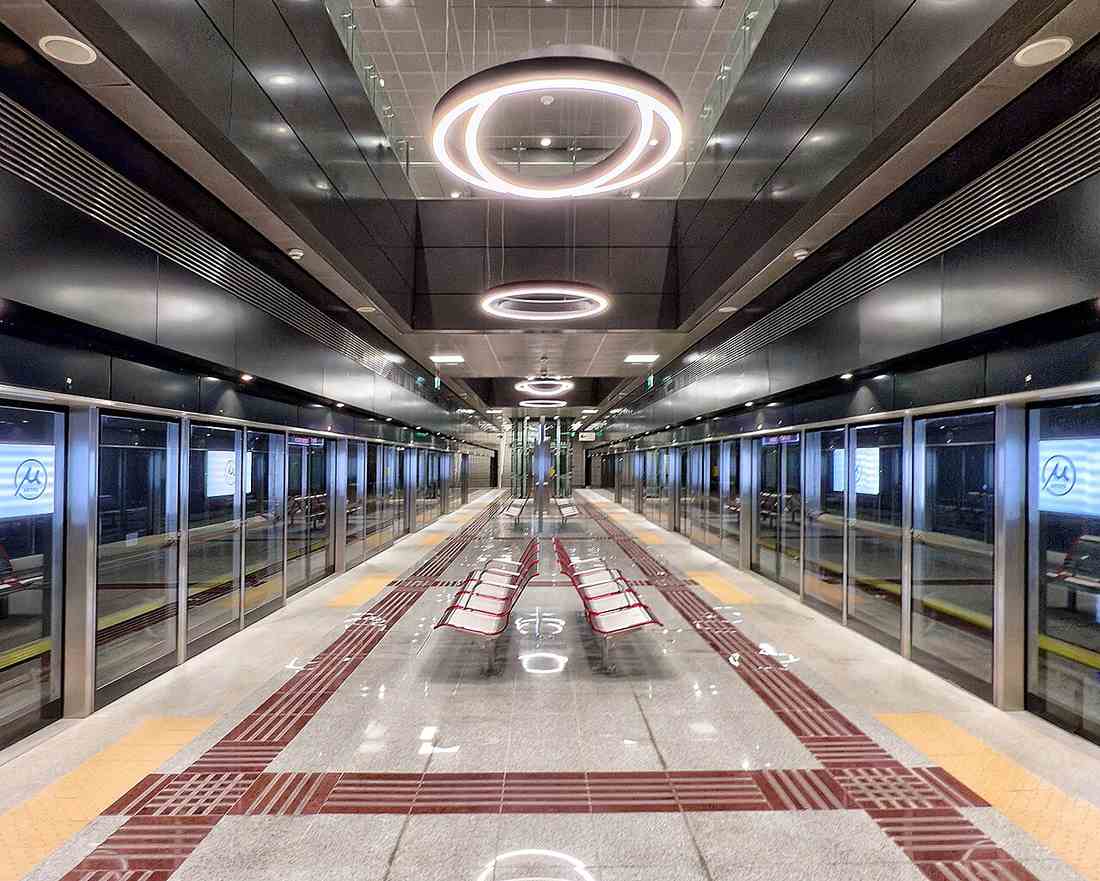
The Thessaloniki metro runs one driverless line of thirteen stations beneath the city’s main axis, from the New Railway Station to Nea Elvetia. Trains arrive every few minutes and cross the centre in under twenty minutes.
The line threads the length of the lower city below the main road that carries most of its traffic. Its trains run without a driver, guided by an automatic system, and reach the platforms behind glass screen doors that open in step with the carriages. Services arrive at short, steady intervals through the day, so a rider rarely waits long. The full run from the western railway station to the eastern terminus takes under twenty minutes, a pace no surface trip can match through the centre.
The chain of thirteen stations includes stops at the door of the sights. Venizelou station sits beside the market streets and the shopping core around Aristotelous. Agias Sofias station stands close to the great Byzantine church that shares its name. Sintrivani station reaches the Arch of Galerius, the Rotunda, and the Archaeological Museum at the eastern edge of the centre. The New Railway Station stop ties the metro to the mainline trains, so an arrival by rail becomes a simple change onto the city network.
The dig for the line turned up a stretch of the ancient city, and the builders kept it on show. Venizelou station holds a length of the marble-paved road that ran through Roman and Byzantine Thessaloniki, uncovered where the trains now pass. The antiquities lifted during the works stand displayed within the station itself, set behind glass for the rider to read. The stop doubles as a small museum, where the layers of the old town meet the newest transport of the city underground.
One line serves the city so far, with an extension under construction to carry the trains southeast toward Kalamaria. The metro does not yet reach the airport, which sits beyond its eastern end. A traveller bound for the terminal relies on the bus for the journey between the airport and the city centre. For trips inside the built-up core, though, the single line already carries the heaviest flow along the spine of Thessaloniki.
How do you use the OASTH city buses?
OASTH runs the city bus network across Thessaloniki, its suburbs, and the airport. Buy a ticket, validate it on board, and pay by contactless card where the machines allow; night buses marked with an N cover the small hours.
The bus remains the workhorse of travel in Thessaloniki, and it reaches far past the metro line. OASTH, the city transport authority, runs the network across the whole urban area, out to the suburbs, and along the coast to the airport. Its routes fan from the seafront and the main squares to every quarter that the single metro line leaves aside. The modern low-floor buses share the roads with heavy traffic, so a ride can slow at the peaks of the morning and the evening.
The ticket system runs on one fare shared with the metro. A rider buys a ticket from a machine, a kiosk, or the reader on board, then validates it at the start of the trip. Contactless bank cards, phones, and watches work on the buses where the equipment is fitted, and cash is refused on many services. Confirm the current fare and the accepted means of payment before you board, since the rules shift and a valid, validated ticket avoids a fine.
One route earns a special mention for the visitor. A circular cultural line loops the main sights from the White Tower, past the museums, the churches, and the upper town, in a single ride that doubles as a tour. The airport service runs the length of the city to the terminal for a fixed fare, a cheaper alternative to the taxi. Route maps and live times sit in the standard transit apps, which spare the guesswork at an unfamiliar stop.
The buses thin out late at night, when a network of night routes takes over. These services carry an N before the number and link the centre with the districts through the small hours. Their gaps stretch longer than the daytime runs, so a check of the timetable saves a cold wait. For an early flight or a late arrival, though, a taxi or an app car often beats the night bus for speed and certainty.
Are taxis and taxi apps a good way to get around Thessaloniki?
Yes. Metered taxis wait at ranks across Thessaloniki and answer street hails, while nationwide hailing apps summon a car to your spot. Both suit late hours, heavy bags, or the climb to the upper town.
The taxi covers the trips that walking and transit leave awkward. Cars work to a meter, gather at ranks by the squares and the stations, and stop for a raised hand on the street. A fixed set of surcharges applies to luggage, to the airport run, and to the night hours, so the fare climbs above the bare meter on those trips. Ask for the meter to run and keep small change ready, since a short city hop costs little across the flat centre.
The hailing apps used across Greece work in Thessaloniki as well. A traveller books a licensed taxi through the app, watches the car approach on the map, and pays by the registered card or in cash. The app fixes the pickup point, which helps when a language gap or an unmarked corner would slow a street hail. The same tools show a fare estimate before the ride, so the cost holds no surprise at the door.
Taxis and app cars earn their keep on the trips that tax the legs or the clock. The steep climb to Ano Poli, a late return from dinner, or a run to the airport with bags all suit a car over a walk or a wait. A group splits the fare and often matches the cost of separate transit tickets. Keep a taxi in reserve for the awkward hour or the heavy load, and lean on foot and metro for the rest of the day.
Can you get around Thessaloniki by bike or e-scooter?
Yes. Shared bikes and electric scooters wait at docks along the flat seafront and the central grid, ready to unlock through an app. The level lower town suits two wheels; the steep upper town does not.
Two wheels move a rider fast across the flat heart of the city. Shared bikes and electric scooters stand at docks through the central grid and along the water, each unlocked and paid through a phone app. The level ground of the lower town lets a casual rider cover the distance between the squares in minutes, well short of the walk. Park the machine at a marked dock at the end of the ride, since a stray drop can draw a charge.
The seafront gives the scooter and the bike their finest run. The long promenade carries a wide, flat lane beside the gulf, clear of the heavy road traffic that fills the avenues inland. A ride from the port to the concert hall in the east strings the whole front together at an easy pace. The open path turns the transfer between the western and eastern ends of the centre into the smoothest leg of the day.
The wheels meet their limit where the ground tilts and the traffic thickens. The climb to Ano Poli defeats a shared bike and strains a scooter, so the upper town stays a job for foot or bus. The busy central avenues mix cars, buses, and riders in tight lanes, which asks for care and a helmet where one is offered. Keep the two wheels to the flat grid and the seafront, and leave the hill and the rush-hour roads to other means.
How do you drive, park, and get around Thessaloniki with a pram or wheelchair?
Driving and parking in the dense centre test the visitor, so the car earns its place mainly on day trips out of the city. The metro and the flat seafront offer step-free travel, while the cobbled upper town challenges prams and wheelchairs.
A car helps for the trips beyond the city, yet it hinders more than it helps inside the centre. Narrow one-way streets, controlled parking zones, and scarce kerb space make driving in the core a chore. A paid garage or a guarded lot near the edge of the centre spares the daily hunt for a space. A day trip is the moment the car earns its place, so a traveller books car rental in Thessaloniki for the road out and chooses where to stay in Thessaloniki within walking reach of the sights.
The city has grown friendlier to the pram and the wheelchair, above all on its newest routes. The metro runs step-free from street to platform, with lifts, level boarding, and the glass screen doors that guard the edge. The seafront promenade rolls flat and smooth for kilometres, the easiest long path in the city for wheels of any kind. The wide pavements of the central grid, where parked cars and café tables leave them clear, carry a buggy without trouble.
The old quarter and the odd rough kerb still test the wheels. The cobbles and the steep pitch of Ano Poli defeat most prams and chairs, so the upper town suits the able walker or a taxi to the top. The low-floor buses lower a ramp at the stops for a chair, though a crowded service can still prove a squeeze. A plan that leans on the metro, the seafront, and the flat core keeps a Thessaloniki itinerary smooth for a family or a traveller on wheels.
Frequently Asked Questions
Do the metro and buses use the same ticket in Thessaloniki?
Yes. The metro and the OASTH city buses share a single fare and ticket system, so one validated ticket covers a trip that changes between train and bus. Buy from a station machine, a kiosk, or the reader on board, and validate at the start of the ride. Contactless cards and phones work where the equipment is fitted, and cash is refused on many buses, so confirm the current rules before you travel.
Does the Thessaloniki metro reach the airport?
No. The single metro line runs from the New Railway Station in the west to the eastern districts and does not extend to the airport. A traveller heading to or from the terminal takes the OASTH airport bus or a taxi, both of which run the length of the city to the coast. An extension of the metro is under construction toward the southeast, though it too stops short of the airport.
Is Thessaloniki easy to explore on foot?
Yes, for the flat lower town. The central grid packs the main squares, churches, and Roman sights within a fifteen-to-twenty-minute walk of one another, and the seafront promenade links the ends of the centre on level ground. The one hard stretch is the climb to Ano Poli, the upper town, which rises steeply on cobbled lanes. A bus up and a walk down spares the toughest ascent.
What are the archaeological finds at Venizelou metro station?
Venizelou station preserves a length of the marble-paved road that ran through Roman and Byzantine Thessaloniki, uncovered when the tunnel was dug. The antiquities lifted during the works stand on display within the station, set behind glass beside the platforms. The stop works as both a metro station and a small museum of the ancient city, where the old road meets the modern line underground.
How do taxis work in Thessaloniki?
Taxis run to a meter and gather at ranks by the squares, the stations, and the seafront, and they stop for a street hail. Surcharges apply to luggage, to the airport run, and to the night hours, so the fare rises above the bare meter on those trips. The hailing apps used across Greece also summon a licensed taxi to a fixed pickup point and show a fare estimate before the ride.
Can you get around Thessaloniki with a pram or wheelchair?
The newest routes make it manageable. The metro offers step-free travel with lifts and level boarding, and the flat seafront promenade rolls smoothly for kilometres. The wide central pavements carry a buggy where cars and tables leave them clear. The cobbled, steep lanes of Ano Poli remain the hard exception, best reached by taxi, while the low-floor city buses lower a ramp for a wheelchair at the stops.