
Getting around Symi rests on a short road grid and the sea. The harbour of Gialos, the hill town of Chorio, the bay of Pedi and the southern road to Panormitis form the whole paved network. A local bus and a taxi rank cover these routes, taxi-boats reach the roadless coves, and stone steps link the two levels of the town. Distances stay small across the island.
This guide covers each option in turn: the layout of the roads, the bus between Gialos, Chorio and Pedi, the taxi rank, car and scooter rental, the taxi-boats, and walking the steps and old paths. It also weighs whether a stay in the town needs any vehicle at all. Before you plan the transport, it helps to know how to get to Symi in the first place, since the island holds no airport.
What does the road network on Symi look like?
The road network on Symi is short. One main road links the harbour of Gialos, the upper town of Chorio and the bay of Pedi, and a second road runs south to Panormitis Monastery, with rough tracks branching to a handful of quiet bays.
The built area of Symi hugs the north coast around the deep inlet of Gialos. The harbour road curves along the water, then climbs the slope toward Chorio, the old town on the ridge. A short branch drops east to Pedi, the sheltered bay with its fishing quay. From the saddle between the villages, the single southern road runs inland toward Panormitis Monastery. Tarmac ends where the ground steepens, and dirt tracks take over for the far bays. The paved grid stretches only a short distance end to end. A car crosses it within minutes. This compact frame shapes how the bus, the taxis and the rental scooters move each day. Every trip on the island threads back through this small grid of roads.
Two levels define the town itself. Gialos sits at sea level around the horseshoe port, lined with tall houses and the ferry quay. Chorio spreads across the ridge above, reached by road or by the stone stairway that cuts straight up the hillside. The road between them loops the long way round, while the steps climb direct. Pedi lies over the far side of the ridge, a short walk downhill to its beach and moorings. The road network holds no ring route and no through traffic, and the island ends at the water on every side. Each village connects back to the same central junction. Grasping these three points makes every later route simple to follow.
The southern road carries the longest drive on the island. It leaves the saddle above the town and winds through bare hills toward the bay of Panormitis on the far coast. The surface stays paved the whole way, though it narrows and bends across the ridges. Side tracks peel off toward remote bays such as Marathounta and Nanou, rougher and slower than the main route. No settlement of size sits along this road, only chapels, terraces and grazing land. The drive to the monastery runs about half an hour from the port. This single artery ties the quiet south back to the busy harbour. Traffic on it stays light outside the monastery visiting hours. Drivers meet little oncoming traffic on the run to the south.
Parking shapes the edges of the grid. The harbour front bars most cars along the quay, so vehicles gather at the fringes of Gialos and along the approach roads. Chorio offers roadside space near its upper entrance, a walk from the houses deeper in. The alleys of both villages take foot traffic alone, too narrow and stepped for wheels. A rental car or scooter therefore parks at the rim and continues on foot. This pattern matters when you weigh whether a vehicle earns its keep. The short grid, the tight lanes and the limited parking all point the same way. Movement inside the town happens on foot, whatever brings you to its edge. Wheels wait at the rim while feet finish the journey.
How does the local bus work on Symi?
A small local bus links Gialos, Chorio and Pedi through the day on Symi. It runs a short loop from the harbour up to the town and down to Pedi beach, then back, keeping the three main points connected without a car.
The bus on the island is a single minibus rather than a large coach. It seats a modest group and fills quickly at peak crossing times. The route runs a fixed triangle: the Gialos harbour front, the upper square of Chorio, and the waterfront at Pedi. From the port it climbs the road to the town, then drops to the Pedi bay before turning back. The full loop takes only minutes end to end, given the short distances. Riders board at marked stops along the quay and the main road. The driver collects a flat fare on boarding, paid in cash. This one vehicle carries most car-free visitors between the three points they use daily.
Service on the bus follows the daylight hours rather than a dense timetable. Departures space out across the morning, midday and evening, thinning after dark. The gaps between runs stretch longer than on a city line, so a glance at the posted board saves a wait. Times shift with the season, busier in the warm months and sparse in winter. The harbour stop stands near the main taxi rank, which makes swapping between the two easy. Late returns from Pedi or Chorio lean on the taxi instead, once the bus stops for the night. Planning a beach afternoon around the return runs keeps the day smooth. The bus rewards a quick check of its rhythm.
Fares on the bus stay low and flat, charged per ride rather than by distance. Passengers pay the driver directly, so exact coins help at busy stops. The same ticket covers the whole loop, whether you ride one leg or the full triangle. No pass or booking applies; you board and pay on the spot. This simplicity suits short island hops, where a taxi would cost far more for the same leg. Groups often split between the bus for the outward trip and a taxi for the loaded return. The low fare makes the bus the cheapest wheeled option on the island. It carries the everyday traffic that the taxis price out of reach. For short island hops the flat fare beats any taxi rate.
The bus suits certain trips better than others on the island. It handles the Gialos, Chorio and Pedi triangle well, the corridor where most beds and tavernas sit. It does not run out to Panormitis in the south, which the taxi or a tour boat serves instead. Nor does it reach the roadless coves, the domain of the taxi-boats. Luggage fits only in small amounts, so the bus works for day moves, not full transfers with heavy bags. Riders with a Pedi or Chorio base use it as a daily shuttle to the port. Within its short route the bus earns its place. Outside that corridor the island turns to taxis, boats and feet.
How do taxis operate on Symi?
A rank of taxis covers the short routes on Symi from the Gialos harbour front. The cars run between the port, Chorio, Pedi and the southern road, filling the gaps the bus leaves and reaching Panormitis on request across the island.
The taxi rank sits on the Gialos harbour front, the natural hub of the island. Cars wait along the quay near the ferry berth and the bus stop. The fleet stays small, sized to the island rather than a city, so wait times climb when ferries and tour boats unload at once. A phone call brings a car to a villa or a taverna when the rank runs dry. Drivers know every road on the grid, from the port up to Chorio and out toward Panormitis. Fares follow the short distances, with the drive to the monastery the longest single leg. The taxi fills the schedule gaps the bus cannot, above all late at night. The rank stays the first call for a ride across the island.
Taxis on the island earn their keep on the trips the bus skips. They carry loaded travellers from the ferry quay up to a Chorio guesthouse, where cars cannot reach the door and bags finish on foot. They run beach-goers to the head of a track, or out to Panormitis and back on a fixed return. Late diners in Chorio ride down to a Pedi or harbour bed once the bus stops. The cars also link the two villages when the steps feel too steep after shopping. A taxi costs more than the flat bus fare, traded for the door-to-door speed. On an island this compact, no ride runs long or dear by city measures. The short island roads keep every taxi leg brief and simple.
Booking a taxi on the island stays informal and direct. Travellers grab a waiting car at the rank, wave one down on the harbour road, or phone the driver for a pickup. Hotels and tavernas call a car for guests when the rank empties. No app or central dispatch runs the fleet, so a saved driver number pays off for evening returns. Peak arrivals strain the small pool, so a short wait follows a big ferry. Fares stay by the trip on these short legs, agreed plainly before a longer run to the south. Cash settles the ride on arrival. This hands-on system fits the scale of the island, where drivers and regulars know each other. A quick word at the rank sets up the next ride with ease.
Taxis reach corners of the island the bus never touches. They run the full southern road to Panormitis, a trip outside the bus loop entirely. They drop walkers at trailheads for the interior paths and collect them at the far end hours later. They handle heavy transfers from the ferry, sparing the stone steps to Chorio. What they cannot do is reach the roadless coves, which stay the work of the taxi-boats from the harbour. Within the paved grid, a taxi goes anywhere a car goes, on demand. The rank turns the short island roads into a quick door-to-door service. Arrivals with bags or a hill-top bed lean on it as the smoothest wheeled link.
Can you rent a car or scooter on Symi?
Car, scooter and quad rental exists on Symi, though the supply stays limited. The roads run narrow, steep and winding, so drivers move slowly, and given the short distances and tight parking, most visitors skip a vehicle for a short stay.
Rental outfits on the island offer cars, scooters and quad bikes from bases near the harbour. The fleets stay small, so the choice narrows fast in the busy season and booking ahead helps. A car suits a family bound for the south or a beach run to Marathounta. A scooter or quad fits a solo rider chasing coves along the tracks. Rates run by the day, with fuel from the island single station near the port. Drivers carry a valid licence, and a motorbike licence covers the larger scooters. The rental desk hands over a machine sized for tight island roads. This limited supply meets the light demand of a place where most guests walk instead. Booking a day or two ahead secures a machine in the busy season.
The roads themselves set the tone for any rental on the island. The main routes stay paved, yet they run narrow, with sharp bends and steep grades across the ridges. Blind corners and single-lane pinches ask for a slow, steady hand at the wheel. Rock faces and open drops edge parts of the southern road to Panormitis. The side tracks to the far bays turn to loose dirt, jarring on a scooter and slow in a car. Goats, walkers and the odd delivery van share the tarmac. None of this rewards speed, so journeys take longer than the map distances suggest. A cautious driver handles the island roads, but they demand full attention.
Scooters and quads draw the bulk of rentals on the island. They thread the narrow roads more easily than a car and park in tighter spots at the village edges. A quad grips the rough tracks toward Nanou and Marathounta better than a road scooter. Helmets come with the hire and the law requires them on the open road. The catch is exposure: sun, wind and loose gravel all bite harder on two wheels. Riders carry water and cover up on the shadeless southern run. For a confident rider the scooter opens the tracks the bus and taxi leave alone. It trades comfort for reach across the dry interior of the island.
Renting a vehicle pays off only for certain plans on the island. It rewards a base outside the town, a run of beach days along the tracks, or a slow tour of the south. It earns little for a short stay rooted in Gialos and Chorio, where feet, bus and boat already reach everything. Parking at the village rims adds a walk to every return. The narrow roads and limited fleet cap the appeal further. Weigh the daily rate against a handful of taxi fares before you book. A longer, beach-hopping trip can tip the numbers toward a rental. A couple of harbour nights rarely do on this compact island.
How do taxi-boats reach the roadless beaches on Symi?
Small taxi-boats reach the roadless beaches of Symi from the Gialos harbour. Coves such as Agios Nikolaos, Nanou and Dysalona hold no road, so the boats run out each morning and collect swimmers in the afternoon along the coast.
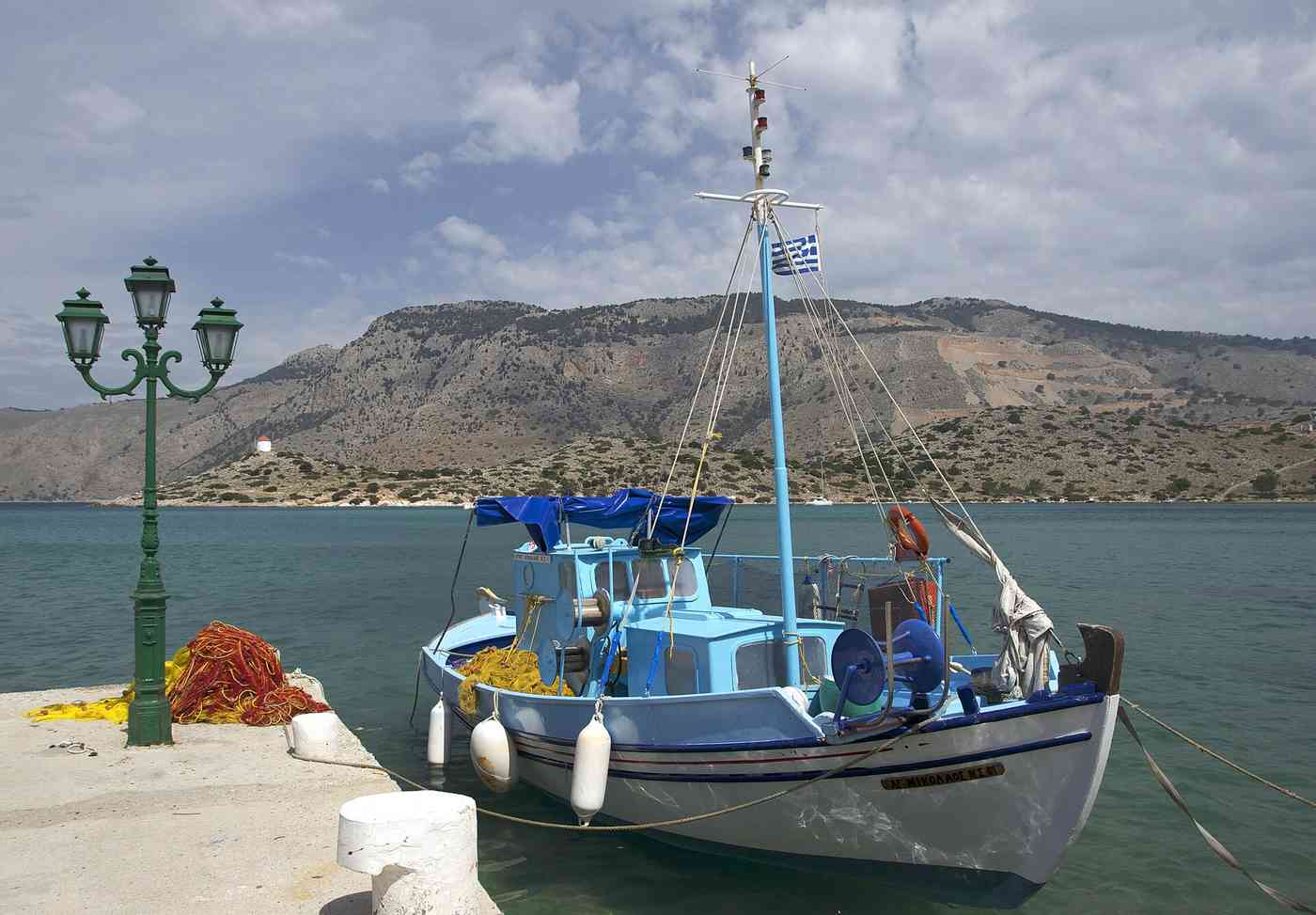
The taxi-boats to the beaches leave from the Gialos harbour front each morning in the swimming season. Small open launches line the quay, each posting the coves it serves and its return times on a board. Passengers pick a beach, pay on the quay or on board, and step off onto the pebbles a short ride later. The boats round the coast to shores that no road reaches, dropping bathers and returning by a set afternoon hour. This sea shuttle turns the harbour into the gateway to the island open-sea beaches. It saves the rough tracks and long walks that the land route to these bays would demand.
Agios Nikolaos ranks as the busiest taxi-boat run on the island. It holds the only sandy, tree-shaded cove with sunbeds and a taverna, so the boats fill fast for it. Nanou lies further down the east coast, a long pebble beach below a green ravine, reached by boat or a rough track. Agios Georgios Dysalona hides beneath a sheer cliff that shades it by afternoon, and no road touches it at all. Marathounta and other southern bays join certain boat routes as well. Each cove keeps its own character, from shaded sand to open pebble under rock. The boats spread swimmers across these shores the roads skip. The beach you pick sets which launch you board. The posted board on the quay lists each cove and its boat.
The taxi-boats run on a simple daily rhythm through the season. Departures cluster in the morning, when swimmers head out to the coves. Returns follow in the late afternoon, on times chalked beside each berth. A round-trip fare covers the ride out and the pickup, agreed at the quay before boarding. Bad weather can hold the boats in port, and the open east coast catches the wind. Passengers carry their own water, shade and food, and the smaller coves hold no shop. The launches take cash and rarely book ahead; you choose a boat on the morning quay. This informal service scales with the day crowd and the sea state on the coast. A calm morning sends the launches out; a stiff wind keeps them tied up.
Taxi-boats fill a gap no road or bus can close on the island. They reach coves walled off by cliffs, where a track would cost hours and a scrambling descent. They spare a scooter the loose dirt down to Nanou and the long haul back uphill. They let a car-free visitor swim at a different beach each day, all from the same harbour quay. The trade-off is the timetable: you leave and return on the boat hours, not your own. Missing the afternoon pickup means a long wait or a costly special run. Within those set times, the boats open the whole coast to swimmers. They turn the sea into the true road to the beaches on the island.
What is walking the Kali Strata like on Symi?
Walking is central to getting around Symi, above all the Kali Strata. This broad stone stairway climbs from Gialos to Chorio in hundreds of steps, and old mule paths thread the interior, linking the villages, chapels and bays on foot.
the Kali Strata is the stone stairway that joins the two levels of the town on the island. It climbs from the Gialos harbour straight up the hillside to the old town of Chorio. The steps number in the hundreds, broad and worn smooth, flanked by tall neoclassical houses. Walkers pause at landings where the harbour view opens wide below. The climb takes a steady twenty to thirty minutes at an easy pace, longer in the midday heat. The same route down spares the winding road and its loops. This grand staircase stands as both a monument and the main pedestrian link. Firm shoes and a water bottle turn the ascent into a plain walk.
Beyond the great stairway, old footpaths lace the interior of the island. Cobbled mule tracks and monopatia once tied the villages to the terraces, chapels and remote bays. Walkers still follow them from Chorio out to the Kastro, the ruined castle on the summit, and down toward Pedi and the coast. A signed path drops from the town to the Pedi bay in under an hour on foot. Longer routes cross the dry hills to Agios Vasilios or Marathounta on the south shore. The paths run rocky and shadeless, so an early start and sturdy boots pay off. These trails carry hikers where the roads never went. On foot the island opens far past the reach of any wheel.
Walking doubles as everyday transport inside the two villages on the island. The lanes of Gialos and Chorio run too narrow and stepped for any car, so residents move on foot with baskets and handcarts. Deliveries finish the last stretch by hand or by mule up the alleys. Between the harbour and the upper town, the Kali Strata beats the road for anyone without a vehicle. Short errands, taverna visits and the daily climb home all happen on the steps. The pace stays slow and the grade steep, but the distances stay small. Feet, not wheels, rule the historic core of the town. This is why the island reads as walkable despite its hills.
Walking on the island demands respect for the terrain and the sun. The Kali Strata and the mule paths run steep, uneven and largely without shade. Midday heat in high summer turns the climb hard, so dawn and dusk suit the longer routes. Sturdy shoes guard against the polished, ankle-turning stones. Water matters, and fountains stay rare once you leave the harbour. The reward is direct: the steps and paths reach places no bus or car can, from the castle to the hidden bays. Walkers set their own hours, free of any timetable. A fit visitor treats feet as the most flexible way to cross the island.
How do you reach Panormitis and the south of Symi?
The southern road links the town to Panormitis Monastery on Symi. A taxi, a rental car or a tour boat covers the half-hour route, while the bus stays on its northern loop, so most day-trippers ride a car or arrive by sea.
Panormitis sits at the far south of the island, around a deep, sheltered bay. The great monastery of the Archangel Michael stands at the water edge, a place of pilgrimage with a bell tower over the harbour. The single southern road runs to it from the saddle above the town. The drive covers bare ridges and terraced slopes for about half an hour before dropping to the bay. No village lines the way, only chapels and grazing land. The bus does not serve this route, so the trip falls to the taxi, a rental or a boat. Day-trippers often pair the monastery with a swim at a southern cove. This southern run is the longest single journey on the island roads.
A taxi handles the Panormitis run as a fixed return trip. The driver waits at the bay while you tour the monastery, then brings you back to the port. The fare is agreed in advance for the round trip, set by the distance and the wait. This suits a couple or a small group without a rental. A hired car or scooter covers the same road at your own pace, with a stop at Marathounta or a chapel on the way. Fuel comes from the single station near the harbour before you set off. The road stays paved but narrow and winding, so allow more time than the distance suggests. A flexible day in the south favours a rental or a taxi.
Boats offer the other way to reach Panormitis on the island. Excursion boats and certain ferries call at the monastery bay direct from Gialos or from Rhodes. The sea approach shows the domed church and the bell tower rising from the shore, a view the road cannot match. A boat trip pairs the monastery with a swim stop at a southern cove on the same run. Timings follow the excursion schedule rather than your own clock. The sea route also spares the winding drive for anyone uneasy on narrow roads. Pilgrims and day-trippers alike let the boat blend the visit into a coastal cruise. It turns the journey south into part of the day out. The sea approach frames the monastery against the sheltered bay.
The south of the island holds more than the monastery alone. Rough tracks branch off the main road toward remote bays such as Marathounta and Nanou, slow going for a scooter or a sturdy car. Agios Vasilios and Agios Emilianos lie on the west side, reached by track or on foot. These corners see light traffic and hold no bus or taxi rank of their own. A rental gives the freedom to link the monastery with a quiet beach in one loop. Walkers cross to the same bays on the old paths from the town. The south rewards a full day and a set of wheels or strong legs. It is the empty, open counterweight to the busy northern harbour.
Do you need a car to get around Symi?
A car is not needed for a stay in the town on Symi. The bus, the taxi rank, the taxi-boats and the stone steps cover the harbour, Chorio, Pedi and the beaches, so short-stay visitors move around the island without renting wheels.
The case against a vehicle rests on the small size of the island. The paved grid runs only a short distance, and the town own lanes bar cars entirely. A rental parks at the village rim and then you walk in, so it saves little on the core routes. The bus covers the Gialos, Chorio and Pedi triangle for a flat fare. Taxis handle the loaded transfers and the run to Panormitis on demand. Taxi-boats reach the beaches the roads miss. Between them, these services cover the whole map a short-stay guest uses. A car sits idle at the edge through most of a harbour-based trip. For most town stays, the wheels add cost without adding reach.
A vehicle earns its place on a narrower set of trips. A base outside the town, away from the bus loop, leans on a rental to reach the port and the beaches. A run of beach days along the southern tracks favours a scooter or quad over daily taxi fares. A slow, independent tour of Panormitis and the western bays suits a hired car. Travellers with limited mobility value door-level transport the stepped town denies. Longer stays tilt the daily rate in a rental favour. For these plans the wheels repay their cost in reach and freedom. The choice turns on where you sleep and how far off the harbour you roam. A far villa or a beach-heavy week tips the balance toward wheels of your own.
The stepped layout of the town shapes the decision as firmly as distance does. Gialos and Chorio hand their alleys to walkers alone, so no car reaches most front doors. Luggage climbs the Kali Strata by hand, by mule or by a taxi to the nearest road head. A visitor who dislikes steep steps still cannot avoid them inside the villages, vehicle or not. This is why a rental solves less than it seems on the island. The town works on foot by design, and the transport around it fills the rest. Wheels help at the edges and on the long southern road. They do little within the historic core where most beds sit. The stepped core stays a walking zone whatever you park at the edge.
Weighing it up, the island tilts toward car-free for the typical stay. Short distances, a working bus, a ready taxi rank and the beach boats close the gap a rental would fill. The steep, stepped town blocks cars from the very streets most guests walk. A vehicle pays off for out-of-town bases, long stays and beach-heavy plans, and little else. Test your own plan against these cases before booking a rental. A couple of harbour nights need no wheels at all. A week in a far villa with daily beach runs is the exception. On this compact island, feet and the shared services carry most visitors well.
What practical tips help you get around Symi?
Short distances make getting around Symi simple with a plan. Pack light for the Kali Strata steps, wear firm shoes, carry water, note the bus and boat return times, and keep a taxi number for the climb to Chorio with bags.
Luggage sets the first practical concern on the island. The Kali Strata and the village lanes bar wheeled cases, so soft bags or backpacks travel better than rigid suitcases. A taxi carries heavy bags to the nearest road head, but the final stretch to a Chorio door climbs on foot. Guesthouses on the steps sometimes arrange a porter or a mule for arrivals. Travelling light turns the stairway from an ordeal into a short walk. Pack for the steps rather than for smooth pavements. This single choice shapes how the whole arrival feels. A right-sized bag makes the stepped town easy from the first minute you land.
Footwear ranks next among the practical points on the island. The stone steps and mule paths run polished and uneven, hard on flat soles and sandals. Firm shoes with grip steady the climb and the descent alike. The Kali Strata alone counts hundreds of steps, a real effort in the heat. Water and a hat guard the walker on the shadeless upper stretches. An early or late climb beats the midday sun for the steep routes. Small habits like these turn the hills from a barrier into a plain daily walk. On this stepped island, the right shoes matter more than any ticket you buy.
Timing ties the whole day together on the island. The bus and the taxi-boats run on set hours, not a constant service, so a glance at the boards saves a wait. Note the last bus back from Pedi or Chorio before an evening out. Fix the afternoon pickup time when you board a beach boat in the morning. Keep a taxi number for the gaps, above all for a late return uphill with bags. Weather can hold the boats in port, so a backup beach on the road helps. A little planning around these rhythms keeps the short distances working in your favour. The island rewards the traveller who reads its timetable once.
Short distances stay the quiet advantage of the island for getting around. No point on the paved grid lies far from another, so a missed bus rarely wrecks a plan. Cash covers the bus, the taxi and the boats, and cards rarely work on these short rides. A single fuel station near the harbour serves the rentals, so top up before the southern run. Sun cover, water and firm shoes handle the shadeless roads and steps alike. Match your base to your plan: the harbour for a car-free trip, the fringes for a rental. With these habits the island moves easily under foot, wheel and boat. Its small scale forgives most slips in timing.
Frequently Asked Questions
Does Symi have a local bus?
Symi runs a small local bus between Gialos, Chorio and Pedi through the daylight hours. The single minibus loops from the harbour up to the old town, then down to the Pedi bay, and back on the same route. It charges a low flat fare, paid to the driver in cash. Departures space out across the day and thin after dark, so a look at the posted board helps. The bus does not reach Panormitis or the roadless coves, which fall to taxis and boats.
How do you get to the beaches without a road on Symi?
Small taxi-boats reach the roadless beaches from the Gialos harbour front. Coves such as Agios Nikolaos, Nanou and Agios Georgios Dysalona sit below cliffs with no road, so the boats run out each morning and collect swimmers in the afternoon. Passengers pick a beach at the quay, pay a round-trip fare, and step off onto the pebbles a short ride later. The launches post their coves and return times on a board. Bad weather can keep them in port, so a road-served beach makes a useful backup.
Do you need to rent a car on Symi?
A car is not needed for a stay based in the town. The bus, the taxi rank, the taxi-boats and the Kali Strata steps cover the harbour, Chorio, Pedi and the beaches between them. The paved grid runs short, and the village lanes bar cars anyway, so a rental parks at the rim and you walk in. Wheels pay off for out-of-town bases, beach-heavy plans and longer stays, and little else. A couple of harbour nights need no vehicle at all.
How long does the walk up the Kali Strata take?
The climb up the Kali Strata takes a steady twenty to thirty minutes from Gialos to Chorio at an easy pace. The stairway counts hundreds of broad stone steps, worn smooth and flanked by tall neoclassical houses. Landings along the way open wide views over the harbour. Midday heat in summer slows the ascent, so an early or late climb suits it better. Firm shoes and a water bottle turn the steps into a plain walk. The same route down spares the long, winding road.
How do you reach Panormitis Monastery on Symi?
The southern road links the town to Panormitis Monastery, about half an hour away by taxi or rental car. The bus does not run this route, so the trip falls to a taxi as a fixed return, a hired car or scooter, or an excursion boat. Boats reach the monastery bay direct from Gialos and pair the visit with a swim at a southern cove. The paved road stays narrow and winding across bare ridges, so the drive takes longer than the distance suggests. Fuel comes from the single harbour station.
Are there taxis on Symi?
Symi keeps a rank of taxis on the Gialos harbour front, near the ferry berth and the bus stop. The small fleet runs between the port, Chorio, Pedi and the southern road to Panormitis. Cars fill the gaps the bus leaves, carry loaded travellers to Chorio road heads, and run fixed returns to the monastery. Wait times climb when ferries and tour boats unload at once, so a saved driver number helps for evening pickups. Fares follow the short island distances and settle in cash on arrival.
What is the top way to get around Symi for a short stay?
Walking, the local bus and the taxi-boats cover most of a short stay based in the town. Feet handle the Kali Strata between Gialos and Chorio, the bus links the three main points for a flat fare, and the boats reach the beaches the roads miss. A taxi fills the gaps, above all loaded transfers and the run to Panormitis. Renting a car adds little for a harbour base, and the town bars vehicles from its lanes. Pack light, wear firm shoes and note the return times.