
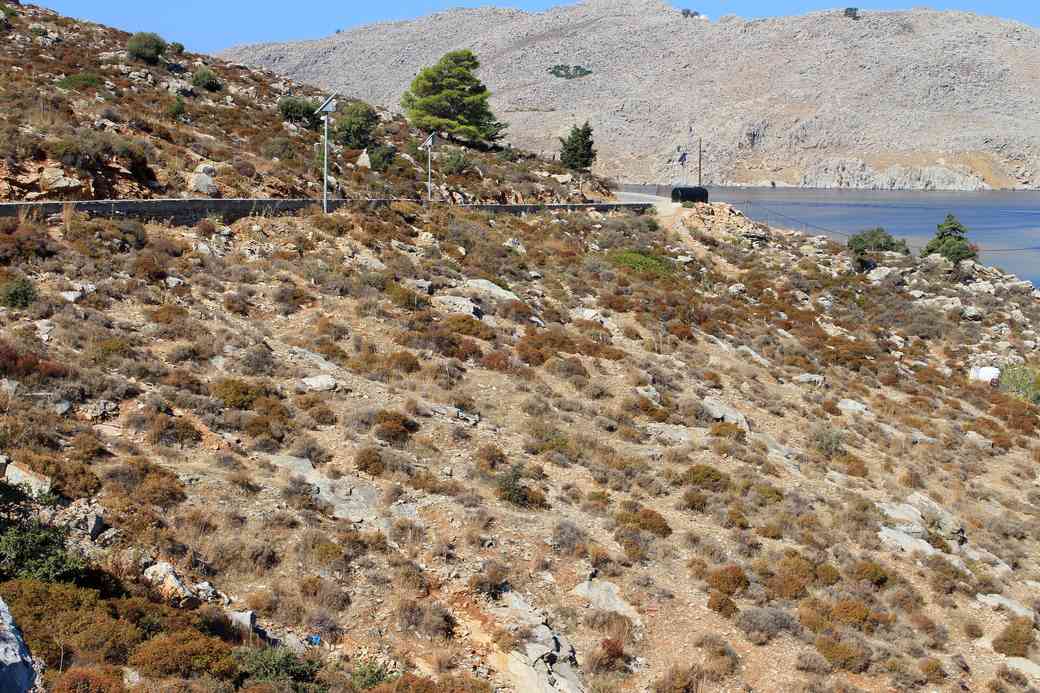
Symi is a dry, rocky island of bare limestone hills, low scrub and clear sea in the Dodecanese. The land carries little soil and sparse tree cover, so the nature of the island rests on hardy plants, wild herbs and the animals of the rock. Phrygana, the low scrub of thyme, sage and oregano, covers the slopes and scents the air. Pine and cypress fill the sheltered valleys, where the ground holds more water than the open hillsides. Birds of prey and Eleonora’s falcons ride the wind above the cliffs, while goats graze the bare ground below. The sea caves shelter the rare Mediterranean monk seal. This guide reads the landscape, the plants, the birds and the protected nature of the island in turn.
The natural character of Symi rests on two things: the barren, rocky land and the deep, clean sea around it. The limestone hills rise steep and dry from the water, covered in phrygana rather than forest. Parts of the island and its surrounding sea fall under the European Natura network, which protects the habitats of the coast and the interior. The clear water supports fish, octopus and the sponges that made the island famous through its diving trade. Wild herbs line the paths that walkers follow across the interior. Reptiles and insects live in the warm scrub, and the sea caves hold one of Europe’s rarest mammals. The sections below read the nature of the island from the rock to the open sea.
What defines the dry, rocky landscape of Symi?
Bare limestone hills, thin soil and low scrub define the dry, rocky landscape of Symi. The steep slopes carry phrygana rather than forest, and the barren ground and clear sea set the natural character of the island.
Limestone forms the backbone of the island and shapes every view across it. The hills rise steep and pale from the sea, stripped of soil by wind, sun and grazing over long ages. Grey rock breaks the surface on the ridges and the upper slopes, where little grows between the stones. The stone holds heat through the day and drains water fast, so the ground stays dry. Walkers cross bare rock on the higher paths, with the sea in view on both sides. The steep limestone gives the island its hard, angular skyline above the harbour. This bare stone, more than any plant, defines the look of the land and marks the island as one of the driest in the region.
Phrygana covers the slopes below the bare rock and gives the land its low, grey-green skin. The scrub grows in rounded, spiny cushions close to the ground, spaced across the dry hillsides. Thyme, sage and oregano fill the phrygana and release their scent in the heat of the day. The plants keep low against the wind and the sun, storing water in tough leaves and woody stems. Bees and insects work the flowers when the scrub blooms in the warm months. Goats browse the phrygana and keep it cropped short across the open ground. This hardy scrub, adapted to drought and thin soil, clothes most of the island and stands as the main plant cover between the rock and the sea.
Thin soil marks the ground across the open parts of the island. Rock lies close under the surface, and the little earth that forms washes down the steep slopes in the rains. The bare, stony ground holds no large plants and no true forest on the exposed hills. Sun and drought bake the land through the long summer, cracking the surface and drying the scrub. The barren look of the interior sets the island apart from greener, wetter islands to the west. Goats and wild herbs make the most of the sparse ground between the stones. This poverty of soil, paired with heat and drought, explains why low scrub and bare rock, rather than trees, cover the greater part of the land.
Spiny shrubs share the dry ground with the aromatic herbs of the phrygana. The plants guard their leaves with thorns and hard stems against the goats and the drought. Low, tangled bushes fill the gaps between the thyme and the sage on the open slopes. The spines and the tough growth suit a land of heat, wind and hungry grazing animals. Lizards shelter in the shade of the shrubs, and insects feed on the flowers. The scrub browns in the summer heat, then greens again with the cooler, wetter weather. This mix of spiny and aromatic plants, hugging the stony ground, builds the phrygana that defines the dry, rocky character of the island above the clear sea. Goats and lizards move through this scrub on the dry slopes.
Which wild herbs and plants grow across Symi?
Thyme, sage and oregano grow across Symi as the wild herbs of the phrygana, alongside spiny shrubs and seasonal flowers. The herbs scent the paths and the dry slopes, and they green again with the cooler, wetter weather.
Thyme spreads across the dry slopes as the signature herb of the island’s scrub. The low, woody plant grows in tight cushions among the stones, tuned to drought and heat. Small leaves lock in water and carry the sharp scent that fills the air on a hot path. Bees work the tiny flowers when the thyme blooms, and the island’s honey carries the taste. Walkers brush the plant on the narrow trails and release its smell underfoot. The herb greens after the rains and browns again through the baking summer. This drought-hardy plant, common on every open slope, gives the phrygana its scent and marks the wild character of the land. Thyme also binds the thin soil on the slopes.
Sage and oregano join the thyme as the common cooking herbs of the wild scrub. The plants grow low and grey-green among the stones, sharing the dry ground with the thyme. Oregano dries on the stem in the summer heat and holds its scent long after the flowers fade. Sage carries soft, pale leaves that resist the drought and the strong sun of the open hills. Islanders gather the wild herbs from the slopes for the kitchen and for tea. The scent of the plants rises from the ground on a warm, still day. This gathering of aromatic herbs, thriving on the thin, stony soil, fills the phrygana and scents the dry air across the interior of the island. Sage and oregano dry well for winter use.
Seasonal flowers colour the scrub when the rains soften the dry ground. Bulbs and low herbs push up through the stones in the cooler months and bloom before the summer heat. The flowers feed the bees and insects that work the phrygana across the slopes. Spiny shrubs guard the flowers and the herbs from the grazing goats on the open ground. The bloom fades fast as the drought returns and the land browns under the sun. Walkers meet the flowers on the trails in the mild, wetter part of the year. This short, bright flush of growth, set against the grey scrub and bare rock, shows the wild plant life of the island at its fullest across the hills. The flowers fade within weeks as the heat returns.
Wild herbs line the footpaths that cross the dry interior of the island. Thyme, sage and oregano crowd the edges of the old stone trails between the villages and the bays. The plants release their scent as walkers pass, marking the route by smell as much as sight. Goats keep the scrub cropped along the paths, opening the ground between the herbs. The dry slopes carry the herbs from the harbour up to the ridges and down to the sea. Insects and lizards live among the plants beside the trail. This scented border of wild herbs, running the length of the paths, ties the plant life of the island to the walks that cross its rocky interior. Walkers follow the scent from one bay to the next.
Where do pines and green valleys survive on Symi?
Pine and cypress survive in the sheltered valleys of Symi, where the ground holds more water than the bare hills. The trees fill the folds and hollows of the interior, giving the dry island its pockets of green.
Pine trees fill the sheltered valleys that cut into the dry interior of the island. The folds in the land trap water and shade, so the ground holds more moisture than the open slopes. Pines root in these hollows and rise above the low scrub of the hills around them. The trees give shade, resin and a darker green against the pale rock and grey phrygana. Birds shelter in the pine cover, away from the bare, exposed ground. The valleys carry the trees from the higher ground down toward the sheltered bays. This band of pine, tucked into the wetter folds of the land, breaks the bare, rocky look of the island and marks the greenest ground across the interior.
Cypress trees stand among the pines in the sheltered valleys and by the monasteries. The tall, dark trees rise in narrow columns from the folds where water gathers. Cypress tolerates the dry, stony ground better than most trees and holds its shape through the heat. The trees mark the courtyards of the old monasteries and the wetter hollows of the interior. Their dark green stands out against the pale limestone and the low scrub of the hills. Birds roost in the dense cover through the day. This scatter of cypress, rooted in the sheltered ground, adds height and shade to the interior. The trees fill the pockets of green that survive on the dry, rocky island. Cypress also breaks the wind that dries the open slopes.
Valleys hold the water that lets the trees grow on an otherwise dry island. Rain runs off the bare rock of the hills and gathers in the folds and hollows below. The deeper soil and the shade in the valleys keep the ground damp longer than the open slopes. Roots reach the water that the porous limestone stores beneath the surface. Pine, cypress and taller shrubs take hold where the moisture lasts through the summer. Walkers drop from the bare ridges into the cooler, greener air of the valleys. This gathering of water in the low ground creates the sheltered pockets where trees survive against the drought that browns the rest of the island each summer. The damp air in the valley cools the walker on a hot day.
Shade and shelter set the valleys apart from the bare, sun-struck hills above them. The trees close the sky over the trails and drop the temperature under their cover. Walkers rest in the shade of the pines on a hot crossing of the interior. The still air in the folds holds the scent of resin and warm needles. Wildlife gathers in the green cover for water, shade and food away from the open rock. The valleys break the walk between the harbour and the remote bays with a band of green. This contrast, between the shaded valley and the bare hill, shapes the interior. The valleys mark the rare places where trees soften the rocky land. Such green cover stays scarce across the dry slopes.
How does Natura protect the nature of Symi?
Natura, the European network of protected sites, covers parts of Symi and its surrounding sea. The designation guards the habitats of the coast, the scrub and the water, from the falcon cliffs to the monk seal caves.
Natura is the European network that protects important habitats and species across the continent. The network lists sites for their rare plants, animals and landscapes, on land and at sea. Parts of the island and its surrounding water fall inside this network of protected areas. The designation recognises the value of the cliffs, the scrub and the clear sea around the coast. The listing sets the island’s nature within a wider European effort to guard threatened habitats. The protection covers both the land of the interior and the marine zone offshore. This place in the Natura network marks the natural worth of the island and ties its wild land and sea to a continent-wide system of conservation. The listing carries duties for the state to uphold.
The land within the network holds the scrub, the cliffs and the wild plant life of the island. Phrygana, bare rock and sheltered valleys make up the protected habitats of the interior. The cliffs and rocky coasts give nesting ground to the birds of prey and the falcons. Wild herbs, spiny shrubs and the animals of the scrub live inside the listed area. The designation guards these habitats against damage and unplanned building on the coast. Walkers cross the protected ground on the old paths between the villages and the bays. This shelter of the land habitats, from the falcon cliffs to the herb-scented scrub, keeps the dry, rocky nature of the island intact across the interior. Rules guard the ground from harm across the listed area.
The sea around the island falls within the protected marine zone of the network. The clear, deep water, the reefs and the coastal caves make up the listed marine habitat. The sea caves shelter the rare Mediterranean monk seal, a species the network aims to protect. Fish, octopus and the sponge beds live in the guarded water off the rocky coast. The designation limits damage to the seabed and the life it supports around the island. Divers and snorkellers read the reefs inside this protected stretch of sea. This care for the marine habitat, from the seal caves to the sponge beds, extends the island’s conservation from the dry land out into the deep, clear water. Boats keep clear of the marked refuges on the coast.
Protection balances the nature of the island against the pressures of visitors and building. The network sets limits that keep the cliffs, the scrub and the sea from harm. The rare monk seal, the nesting falcons and the sponge beds all gain from the guarded ground and water. The designation guides how the coast and the interior develop around the wild habitats. Walkers, divers and boat crews share the protected land and sea with the wildlife. The barren hills and the clean sea keep their natural character under the listing. This framework of protection, spanning the land and the marine zone, secures the island’s nature for the long term against the strain of a busy coast. The rules hold the coast steady for the wild habitats.
What birds and falcons fly over the cliffs of Symi?
Birds of prey and Eleonora’s falcons fly over the cliffs and skies of Symi. The falcons nest on the rocky coasts and islets, hunting on the wind, while other raptors ride the currents above the bare hills.
Birds of prey rule the skies above the bare hills and cliffs of the island. The raptors ride the warm air that rises off the sun-struck rock through the day. The birds hunt over the open scrub, where reptiles, insects and small prey live among the stones. The steep cliffs and empty ridges give the raptors clear ground to soar and watch. Walkers on the high paths see the birds turn on the wind above the interior. The dry, open land suits hunters that need long views and rising air. This population of birds of prey, at home on the cliffs and the thermals, ranks among the strongest signs of wild nature in the skies over the island. The birds drift for hours on the rising air.
Eleonora’s falcons nest on the rocky coasts and islets around the island. The slim, fast falcons breed late in the year to feed their young on the autumn passage of migrating birds. The birds hunt on the wing over the sea and the cliffs, twisting after prey in the air. The rocky islets offshore give the falcons safe nesting ground away from the land. The colony gathers on the coastal rock through the breeding season before the long flight south. Walkers and boat crews watch the falcons hunt above the water and the cliffs. This falcon, tied to the rocky coasts and the autumn migration, stands among the rarer birds that nest on the island and its surrounding islets. The colony returns to the same coastal rock each year.
Cliffs and rocky islets give the island’s birds the nesting ground they need. The steep coastal rock keeps eggs and young out of reach of ground animals and people. Falcons and birds of prey pick the ledges and the empty islets for their nests. The bare stone holds the heat and the height that the cliff-nesting birds prefer. Boats pass the islets where the falcons gather through the breeding season. The protected status of the coast guards these nesting sites within the Natura network. This link between the rocky coast and the nesting birds shows why the cliffs and islets rank among the most important wild habitats on and around the island. The nests sit high on the bare stone above the water.
The open skies over the island carry more than the raptors and the falcons. Smaller birds cross the interior on migration, resting in the scrub and the sheltered valleys. Seabirds work the clear water along the rocky coast and the offshore islets. The dry scrub and the pine valleys give food and shelter to the birds that pass or stay. Insects and reptiles in the phrygana feed the birds that hunt the low ground. Walkers hear birdsong on the trails through the cooler, greener part of the year. This traffic of birds, from the high raptors to the small migrants in the scrub, fills the skies and adds to the wild life of the dry island. Birdsong rises from the scrub in the mild months.
Why do sea caves on Symi shelter the monk seal?
Sea caves along the coast of Symi shelter the rare Mediterranean monk seal, one of Europe’s most endangered mammals. The seals rest and breed in the hidden caves, safe from disturbance in the clear, deep water of the coast.
The Mediterranean monk seal ranks among the rarest mammals in Europe and lives along this coast. The seal keeps to quiet, remote stretches of shore away from people and boats. The animal rests, breeds and raises its pups in the shelter of coastal caves. The clear, deep water of the island suits the seal, which hunts fish and octopus below. The remote bays and rocky coves give the shy mammal the quiet it needs. The Natura network protects the seal’s habitat around the island. This endangered seal clings to the hidden parts of the coast. The animal stands as the rarest creature of the island’s nature. Its presence gives a chief reason for the protection of the sea. The species survives only in scattered coastal refuges.
Sea caves cut into the rocky coast and give the monk seal its refuge. Waves and time have carved openings and chambers into the limestone at the waterline. The caves stay dark, quiet and hard to reach, which suits the shy seal. Certain caves hold a hidden beach inside, where a seal hauls out to rest or breed. The clear water lets the animal slip in and out of the cave mouths unseen. The remote coast keeps the caves free of the disturbance that drives the seal away. This shelter of the sea caves, tucked into the rocky coast, holds the key to the survival of the monk seal in the waters around the island. The dark water hides the seal from passing boats.
Remote coves under the cliffs give the seal the quiet coast it needs. The deep, sheltered bay at Agios Georgios Dysalona sits beneath a tall cliff, reached only by boat. Steep rock and clear, deep water ring these hidden inlets around the coast. The absence of roads keeps the coves quiet and the water clean for the wildlife. Boats pass on set routes, so the seal finds calm stretches away from the traffic. The cliffs shade the water and hide the cave mouths along the shore. This pattern of remote, cliff-backed coves, cut off from the roads, gives the monk seal and the coastal birds the undisturbed ground they need on the island. Swimmers reach the cove only by the day boats.
The monk seal’s rarity drives much of the marine protection around the island. The species sits among the most endangered mammals on the continent, its numbers reduced across the sea. Disturbance, lost habitat and the pressure of boats threaten the seal along its coasts. The Natura listing guards the caves and the clear water that the animal depends on. Quiet coves, clean sea and undisturbed caves give the seal a chance to breed and rest. Divers and boat crews keep their distance from the known refuges on the coast. This effort to protect the seal, focused on the caves and the deep water, ties the island’s conservation to one of the rarest mammals in Europe. Clean, quiet water gives the seal its last strongholds.
What land animals and reptiles live in the scrub of Symi?
Goats, reptiles and insects live in the dry scrub of Symi. The goats graze the bare hillsides, while lizards, snakes and insects shelter among the stones and the phrygana across the interior of the island.
Goats are the most visible land animals across the dry hills of the island. The hardy animals graze the phrygana and the sparse growth between the bare stones. Goats climb the steep, rocky slopes that other grazers rarely reach on the interior. Their browsing keeps the scrub cropped low and shapes the look of the open ground. The animals roam the hillsides above the villages and the bays, ranging far from water. Walkers meet the goats on the trails and hear their bells across the quiet slopes. This population of grazing goats keeps to the bare rock and the scrub. The goats form the largest land animal of the island. The herds stay a constant sight on the dry hills through the year.
Lizards dart across the warm rock and the scrub through the heat of the day. The reptiles bask on the stones to gather heat, then vanish into the cracks when disturbed. Lizards hunt the insects that live among the thyme, sage and spiny shrubs. The dry, sun-baked ground of the island suits these cold-blooded animals well. The phrygana and the stone walls give the lizards cover from the hunting birds above. Walkers glimpse them on the paths and the rocks in the warm months. This quick, sun-loving reptile, feeding in the scrub and basking on the rock, ranks among the common wild animals of the dry interior and the coast of the island. The lizards feed hardest in the warm morning light.
Snakes and other reptiles share the scrub with the lizards across the island. The animals keep to the cover of the phrygana and the stones, hidden from the sun and the birds. Reptiles hunt insects and small prey among the low, spiny growth of the dry hills. The warm, stony ground gives the cold-blooded animals the heat they need to move and feed. The snakes stay out of sight and slip away from walkers on the trails. Birds of prey hunt the reptiles from the skies above the open scrub. This hidden life of snakes and reptiles, woven into the phrygana, adds to the wild animals that live between the bare rock and the herb-scented scrub of the island. The reptiles rest under the stones through the cold.
Insects fill the scrub and the flowers through the warm months on the island. Bees work the thyme, sage and oregano when the phrygana blooms across the slopes. Butterflies and beetles feed on the wild plants and the seasonal flowers of the dry ground. The insects pollinate the herbs and feed the lizards, birds and other animals of the land. The warm, dry scrub suits the insects that thrive in heat and light. Walkers hear the hum of the bees and cicadas on the trails in the heat of the day. This layer of insect life, tied to the wild herbs and the scrub, underpins the food web that supports the birds and reptiles of the island. The insect hum fills the dry air at midday.
What marine life fills the clear sea around Symi?
Fish, octopus and sponges fill the clear, deep sea around Symi. The clean water supports life over the reefs and the rocky coast, and the sponge beds that made the island famous through its old diving trade.
The deep, clear sea sets the character of the island as strongly as the bare land. The water turns deep close to the steep, rocky coast, so open sea lies near the shore. Little sediment reaches the coast, so the water stays clear and light travels far below. Fish, octopus and sponges live over the rock and the reefs in the clean water. The clarity draws divers and snorkellers to read the seabed and the marine life. The sea keeps its clean, salty character around the whole rocky coast of the island. This deep, transparent water, paired with the barren land, forms the second half of the island’s natural identity and supports the life below the surface. The clear sea frames the bare coast on every side.
Fish and octopus work the rock and the reefs along the clear coast of the island. Bream drift over the seabed, while octopus hide in holes in the rock at the beach ends. The remote pebble bay at Nanou beach drops into deep, clear water rich in marine life. Snorkellers watch the fish over the rocky edges, where the seabed falls close to shore. The clean water brings the colour and movement of the sea life into sharp view. Moray eels wedge into the deeper rock, and larger fish patrol the drop-offs offshore. This spread of fish and octopus, active over the rocky seabed, gives the clear water of the island its steady show of marine life. The rocky ends draw the fish close to the swimmer.
Sponges grow on the shaded rock and the deep beds off the coast of the island. The animals cling to the stone and filter the clear water for food below the surface. The sponge beds made the island famous through its diving trade in the days of the sponge fleet. Divers today pass the dark, soft sponges on the reefs and the walls of the coast. The deep, clean water that the sponges need also suits the fish and the octopus. The Natura network guards the beds within the protected marine zone. This growth of sponges on the rock, a living link to the island’s past, ranks among the marine life that fills the clear sea around the coast. The fleet once dived these same beds by hand.
The clean sea supports a food web from the sponge on the rock to the larger fish offshore. Reefs and rocky ground gather the life along the steep coast of the island. Octopus, bream and moray feed over the stone, while bigger fish patrol the deep drop-offs. The clear water and the protected marine zone keep the sea healthy around the coast. The monk seal hunts this same fish and octopus from its caves along the shore. Divers and snorkellers read the reefs and the marine life in the clear water. This chain of sea life, from the filtering sponge to the hunting seal, shows the clean, deep water at the heart of the island’s wild nature. The reefs hold the life along the steep coast.
How do walkers experience the nature of Symi on foot?
Walkers experience the nature of Symi on the old stone paths that cross the dry interior. The trails run through the herb-scented scrub, the pine valleys and the bare hills, linking the harbour to the remote bays.
The old stone paths carry walkers through the wild nature of the island’s interior. The Symi hiking trails follow the routes that once linked the villages, the monasteries and the bays. The paths cross bare ridges, drop into pine valleys and skirt the herb-scented scrub. Walkers read the phrygana, the flowers and the rock at close range on foot. The trails open ground that no road reaches across the dry interior. Goats, lizards and birds cross the paths through the day. This network of old footpaths threads the scrub and the valleys of the island. The routes give the closest view of the plants, the animals and the landscape. Walkers meet the wild nature of the island at every step on foot.
Wild herbs scent the paths that walkers follow across the interior of the island. Thyme, sage and oregano crowd the edges of the trails and release their smell underfoot. The scent marks the walk as much as the views of the rock and the sea. Bees and insects work the herbs beside the path in the warm months. The dry scrub carries the plants from the harbour up to the ridges and down to the bays. Walkers gather the smell of the herbs on a hot, still afternoon. This scented ground, running the length of the trails, ties the plant life of the island to every walk across its rocky, herb-covered interior. The herbs mark the trail by smell from bay to bay.
The trails open long views over the bare hills and the clear sea below. Walkers climb from the harbour to the ridges, with the water in sight on both sides. The bare limestone, the grey scrub and the deep blue sea fill the view from the high paths. The routes drop to remote bays where the rock meets the clear, deep water. Birds of prey turn on the wind above the ridges as walkers cross. The trails link the dry interior to the coast at the quiet, roadless coves. This union of land and sea in a single walk shows the two halves of the island’s nature, the barren rock and the clean water, from the old paths. The high paths open the widest views on the island.
Walkers pick the cooler, wetter part of the year for the trails across the island. The scrub greens, the flowers bloom and the herbs scent the air in the mild months. The bare paths carry little shade, so walkers carry water and sun cover on the dry ridges. The pine valleys give the only real shade on a hot crossing of the interior. Sturdy shoes suit the rough, stony ground of the old routes. The remote bays reward a walk with a swim in the clear, deep water. This planning, matched to the season and the dry ground, lets a walker take in the plants, the birds and the landscape of the island on foot. A full day on the trails takes in both land and sea.
Frequently Asked Questions
Is Symi a green island?
Symi is not a green island; it is a dry, rocky island of bare limestone hills and low scrub. Phrygana, the low Mediterranean scrub of thyme, sage and oregano, covers most of the slopes rather than forest. Pine and cypress survive only in the sheltered valleys, where the ground holds more water than the open hills. The barren land and the clean, clear sea define the natural character of the island. Wild herbs, spiny shrubs and grazing goats fill the dry interior between the bare rock and the coast.
What is phrygana on Symi?
Phrygana is the low Mediterranean scrub that covers the dry slopes of Symi. The scrub grows in rounded, spiny cushions close to the ground, made up of thyme, sage, oregano and hardy spiny shrubs. The plants keep low against the wind and the sun, storing water in tough leaves and woody stems. The herbs scent the air in the heat and feed the bees, while goats crop the scrub short. Phrygana clothes most of the island between the bare rock of the ridges and the clear sea, and it stands as the main plant cover of the dry interior.
Does Symi have Natura protection?
Symi has Natura protection over parts of the island and its surrounding sea. Natura is the European network that guards important habitats and species across the continent, on land and at sea. The listing protects the falcon cliffs, the phrygana scrub and the clear water off the coast. The sea caves that shelter the rare Mediterranean monk seal fall within the protected marine zone. The designation limits damage to the coast and the seabed and ties the island’s wild land and sea to a continent-wide conservation effort.
What birds live on Symi?
Birds of prey and Eleonora’s falcons are the birds most tied to the wild cliffs of Symi. The raptors ride the warm air above the bare hills and hunt over the open scrub, where reptiles and insects live. Eleonora’s falcons nest on the rocky coasts and islets, breeding late to feed their young on the autumn migration of smaller birds. Migrant birds cross the interior and rest in the scrub and the pine valleys. Seabirds work the clear water along the rocky coast. The cliffs and islets give all these birds their nesting and hunting ground.
Is the Mediterranean monk seal found around Symi?
The Mediterranean monk seal is found around Symi, in the sea caves along the rocky coast. The seal ranks among the most endangered mammals in Europe and keeps to quiet, remote stretches of shore. The animal rests, breeds and raises its pups in dark coastal caves, safe from disturbance in the clear, deep water. The seal hunts fish and octopus below the surface off the rocky coves. The Natura network protects the caves and the water that the seal depends on, which makes the remote coast vital to its survival around the island.
What wild herbs grow on Symi?
Thyme, sage and oregano are the wild herbs that grow across the dry slopes of Symi. The plants make up the phrygana scrub and grow low among the stones, tuned to drought and heat. The herbs release their scent in the warm air and line the old paths that cross the interior. Bees work the thyme flowers, and the island’s honey carries the taste. Islanders gather the wild herbs from the hills for the kitchen and for tea. Spiny shrubs and seasonal flowers share the stony ground with the herbs across the open hillsides.
Can you see wildlife while hiking on Symi?
You can see wildlife while hiking on Symi, since the old stone paths cross the wild scrub, the pine valleys and the bare hills. Walkers meet grazing goats on the slopes and glimpse lizards basking on the warm rock. Birds of prey and Eleonora’s falcons turn on the wind above the ridges and the cliffs. Bees and insects work the wild herbs beside the trail through the warm months. The paths run from the harbour to the remote bays, where the clear, deep water supports fish, octopus and the coastal life of the island.