
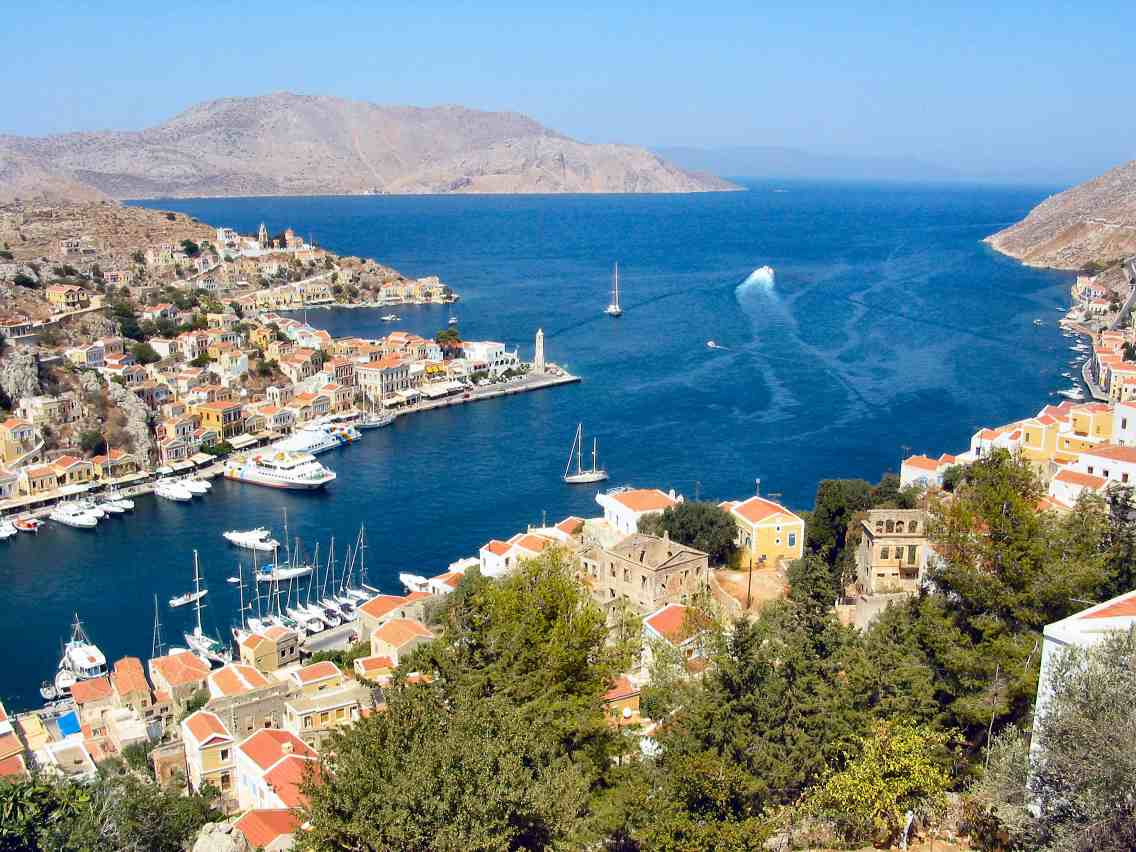
Small taxi-boats are the main way to reach the beaches of Symi, the Dodecanese island near the Turkish shore. The road network on the island stays short, tied to the port, the upper village and the monastery road. The coves along the east and south coast hold no road or only a rough track. Boats leave the Gialos harbour front and the bay of Pedi each morning, round the coast, and land swimmers on the pebbles. The craft return in the afternoon to collect them, working a posted schedule on the quay. This guide covers why the boats are needed, where they leave from, the coves they serve, the schedule, tickets, the excursion trips, the season, and practical tips.
The boats serve the coves of Agios Nikolaos, Agia Marina, Nanou, Marathounta, Agios Georgios Dysalona and Nimborio along the coast. Skippers drop swimmers on the shore and note the pickup time before they round the coast. Larger excursion boats run a full-day loop that ties a run of bays to a stop at Panormitis Monastery. Passengers buy a ticket on the quay or on board, pick a return time, and take a seat for the ride. The service runs from late spring to autumn, busiest in peak summer. The taxi-boat runs faster and easier than a scooter over the loose tracks, and it reaches shores with no road. This overview sits within the wider Symi vertical of guides on the town and the beaches around the island.
Why do you need a taxi-boat to reach the beaches on Symi?
Small taxi-boats are the main way to reach the beaches of Symi. The road network on the island stays short, and the smaller bays hold no road or only a rough track. Boats carry swimmers from the harbour to each shore.
The road network on Symi covers only a short stretch around the port and the two hill villages. Beyond that ring the coast turns steep and bare. The bays along the east and south shore sit below cliffs, cut off from any paved road. A rough dirt track reaches a handful of them, slow and hard on a scooter. Small taxi-boats close this gap for swimmers. The boats leave the harbour front and round the coast to each cove. They land bathers straight on the pebbles that the roads never reach. This water link turns the sea into the main path to the beaches. The short road grid makes the boats the practical choice on the island.
Short roads leave the coast of Symi split into two worlds. Cars and scooters serve the port town, the upper village and the monastery road. The beaches sit apart from that grid, tucked into coves the tarmac skips. Walkers reach a handful of bays on foot over dry paths, a long hot trek. Taxi-boats give the easy alternative for the shore. Skippers run set trips from the harbour to the swimming coves each day. The sea route saves the climb and the dust of the tracks. Bathers step off the boat onto the pebbles within a short ride. The boat carries children, bags and cool boxes that a footpath cannot. This split between road and coast keeps the taxi-boat central to a beach day.
The terrain of Symi drives swimmers onto the water. Dry limestone hills rise straight from the sea around most of the island. Roads cost money to cut and hold on such steep ground. The port, the village of Chorio and the monastery road take up the built network. The coves between them keep no road at all. A rough track drops to Marathounta and one or two more bays. Everywhere else the cliffs block a car. Taxi-boats slip along the base of these cliffs with ease. The boats reach shingle strands that sit under sheer rock. This hard landscape explains why the sea, not the road, opens the beaches of the island. The water route stays quicker than any climb over the ridge.
Access shapes the whole beach day on Symi. The harbour front works as the hub for the coast. Boats fan out from there to the coves each morning. Swimmers without a car rely on this link for the shore. The rough tracks demand a scooter, sturdy shoes and care over loose stone. The boat asks only a ticket and a seat on the quay. Families, older visitors and day trippers pick the water for ease. The service runs through the warm months when the beaches fill. Skippers know the coves and the safe landings along the coast. The boat also skips the parking squeeze in the crowded port. This dependable link makes the taxi-boat the backbone of a swim on the island.
Where do the taxi-boats leave from on Symi?
Taxi-boats leave from two points on Symi. Most start at the Gialos harbour front in the main town, where skippers line the quay each morning. Others run from Pedi, the bay east of the port, giving swimmers a second departure base.
The main departure point sits along the Gialos harbour front on Symi. Skippers moor their small boats against the quay in the town. Signboards on the waterfront list the coves and the departure times. Swimmers walk the harbour edge and pick a boat by its board. The quay runs below the tall mansions that ring the port. Boats leave from here through the morning toward the coves. The harbour front holds the ticket sellers, the boards and the moored craft in one strip. Bathers gather bags and board within a short walk of the town cafes. The central quay makes Gialos the busy heart of the taxi-boat run. This waterfront works as the main gate to the beaches by sea.
Pedi gives the second departure base for the taxi-boats on Symi. The bay lies a short ride east of the main port, past the village. Boats leave the small jetty at Pedi for the coves along the coast. Swimmers staying near the bay board here rather than back in town. The Pedi service reaches Agia Marina and Agios Nikolaos close along the shore. Skippers run set trips from the jetty through the warm months. The bay holds tavernas and a beach of its own beside the boats. Bathers step from the quay onto the deck within a short walk. This second base spreads the departures across the east of the island. Pedi and Gialos together cover the coast for swimmers.
The two harbours split the coast between them on Symi. Gialos on the west sends boats round to the north and the far south. Pedi on the east feeds the close coves of Agia Marina and Agios Nikolaos. Swimmers choose the base that sits nearest their room. Boards on each quay list the coves that boat will serve. The harbour front at Gialos draws the larger crowd and the round-island craft. The Pedi jetty stays quieter, geared to the near beaches. Skippers at both points post the morning departures and the return runs. Bathers read the boards, pick a cove and take a seat. Each base runs its own timetable through the season. This pair of bases keeps the whole east and south shore within reach.
The harbour front sets the rhythm of the beach day on Symi. Boats fill through the early morning as swimmers reach the quay. Skippers call out the coves and load bags onto the decks. The last craft leave the port by the middle of the morning. Pedi follows the same pattern from its jetty east of town. Bathers who miss the morning boats wait for the next run. The quays empty as the boats round the coast to the coves. Ticket sellers stay on the waterfront to book the return legs. The base clears through the day and fills again for the pickups. This steady flow off the harbour front frames the whole trip to the beaches.
Which beaches do the taxi-boats serve on Symi?
Taxi-boats on Symi serve a chain of coves along the east and south coast. The boats call at Agios Nikolaos, Agia Marina, Nanou, Marathounta, Agios Georgios Dysalona and Nimborio, dropping swimmers on the pebbles and collecting them later in the day.
The east coast coves head the taxi-boat list on Symi. Agios Nikolaos draws swimmers to its sandy beach and shallow water. Agia Marina sits close by, a cove with a tiny chapel islet offshore. Boats from Pedi and Gialos reach both within a short ride. The sheltered aspect keeps the water calm for children. Skippers drop bathers on the shore and note the pickup time. Trees and tavernas back the sand at Agios Nikolaos. Swimmers wade to the chapel islet at Agia Marina in calm sea. The boats link the pair on the same morning run. Each cove holds a taverna for food between swims. This close eastern cluster opens the taxi-boat map for the beaches.
Nanou beach ranks among the busiest taxi-boat stops on Symi. The cove lies on the south coast under wooded slopes. Grey pebbles and clear deep water mark the shore. A taverna backs the beach and serves the boat crowd through the day. Skippers from Gialos round the coast to land swimmers here. The bay faces the sheltered side, away from the north wind. Bathers snorkel the rocky flanks where fish gather offshore. Boats drop groups in the morning and return in the afternoon. The wooded backdrop gives Nanou more shade than the bare southern coves. The clear water rewards a mask and fins off the pebbles. This popular stop sits near the middle of the taxi-boat run.
Agios Georgios Dysalona gives a cliff-backed taxi-boat stop on Symi. The cove hides under a sheer wall that towers over the pebbles at Agios Georgios Dysalona. No road reaches the bay, so the boat forms the only easy way in. Skippers from Gialos round the south coast to land swimmers on the shore. The cliff throws shade over part of the beach through the afternoon. Deep clear water fills the cove below the rock wall. Bathers snorkel the base of the cliff where the water darkens fast. Boats drop groups and return for them later in the day. The bay holds no taverna, so swimmers carry water and food. This cliff-backed cove shows why the taxi-boat opens beaches the road skips.
The south coast rounds out the taxi-boat chain on Symi. Marathounta opens a wide pebble bay where goats cross the shore. Nimborio lies west of the port, a long inlet with flat rocks and a taverna. Boats reach Marathounta on the run down the sheltered south coast. Nimborio takes a short hop west from the Gialos harbour front. Skippers drop swimmers at each and set the pickup time. The coves share deep clear water and rocky sides for snorkelling. Marathounta holds one taverna back from the pebbles. Nimborio keeps early Christian ruins near its shore. Each stop offers a different shore within one boat network. This spread of southern and western coves completes the map the boats serve.
How do the taxi-boat schedule and returns work on Symi?
Taxi-boats on Symi run a posted schedule of departures. The boats leave the harbour each morning, drop swimmers at the coves, and return in the afternoon to collect them. Swimmers read the board and pick a return time before they board.
The posted schedule drives the taxi-boat day on Symi. Boards on the harbour front list each cove and its departure times. Boats leave through the morning, one after another, for the beaches. Skippers set a first run early and a later morning run. Swimmers match their cove to the times on the board. The afternoon brings the return legs back to the port. Each boat notes who it dropped and where along the coast. Bathers pick their pickup slot before they step aboard. The schedule stays posted on the quay for all to read. The boards update with the coves each craft will reach. This clear timetable keeps the drops and pickups in order through the day.
Morning departures form the core of the run on Symi. The first boats leave the harbour soon after breakfast. Later craft follow through the middle of the morning. Swimmers reach the coves while the sea stays flat and cool. The boats spread groups across the beaches along the coast. Skippers time the drops so each cove gets its bathers early. The morning slot gives the longest stretch on the shore. Bathers who leave late catch a smaller window before the return. The harbour front empties as the boats fan out to the coves. A steady stream of craft keeps the quay busy until midday. This morning rhythm sets up the full day at the beaches.
The afternoon return closes the taxi-boat cycle on Symi. Boats round the coast again to collect the morning swimmers. Skippers reach each cove at the time set on the board. Bathers gather on the pebbles as the boat pulls in. The craft take on groups and head back toward the port. The last pickup marks the end of the beach day. Swimmers who miss it face a long wait or a costly private ride. The boats fill on the way home with tired, sunburnt bathers. Skippers count heads against the morning drop at each stop. The return legs follow the same coves in reverse order. This afternoon sweep carries the crowd back to the harbour.
Timing ties the whole taxi-boat trip together on Symi. Swimmers pick both the departure and the return before they leave the quay. The board pairs each cove with its morning and afternoon slots. Bathers plan a short swim or a full day by the times. Skippers hold to the posted runs through the season. A single boat handles the drop and the later pickup at a cove. Groups confirm the return with the skipper as they land. The clear slots stop swimmers from stranding on a road-free shore. Bathers note the last run and keep an eye on the hour. The posted times leave little room for confusion on the quay. This match of drop and pickup keeps a beach day safe and simple.
How do you buy a ticket and board a taxi-boat on Symi?
Passengers buy a taxi-boat ticket on the quay or on board on Symi. Sellers on the harbour front take the fare and mark the cove. Swimmers pick a return time, step onto the deck, and take a seat for the ride.
Tickets change hands in two ways on Symi. Sellers on the Gialos harbour front take the fare on the quay. Other skippers collect the fare on board once swimmers sit down. Bathers pay for the round trip to the chosen cove. The price covers the drop and the later pickup. Cash works best on the waterfront and the decks. Swimmers state their cove and their return time at purchase. The seller marks the boat and the slot on a slip. Bathers board with the ticket ready for the skipper. Groups buy together to keep the same boat home. This simple sale puts a swimmer on the shore within one short ride.
Boarding runs straight from the quay on Symi. Swimmers walk the harbour front and find the boat for their cove. The board and the skipper confirm the cove and the times. Bathers step from the stone quay onto the open deck. Skippers stow bags, cool boxes and towels for the ride. The boats carry a set number of seats along the rails. Groups take their places as the craft fills for the run. The skipper casts off once the seats hold their bathers. The short trip rounds the coast to the swimming cove. Children and older visitors board with a hand from the crew. This easy boarding turns the harbour front into the start of the beach.
The fare buys a place on the round trip on Symi. Payment covers the ride out and the pickup home. Swimmers keep the ticket or the slip for the return leg. Skippers check the slips against the seats at each stop. Bathers pick the return time when they pay the fare. The choice sets how long they stay on the shore. Sellers on the quay book the slot before departure. Groups that split across boats confirm each return with the skipper. The round-trip price holds for the coves along the coast. Passengers pay once and ride both legs of the trip. This clear fare keeps the drop and the pickup under one payment.
Boarding on board suits swimmers who miss the quay sellers on Symi. Skippers take the fare from bathers once they sit on the deck. The crew name the cove and the return time at the rail. Swimmers hand over cash and take a seat for the ride. The boat pushes off when the seats hold their groups. Bathers confirm the pickup slot before the craft rounds the coast. The on-board sale keeps the boarding quick on the busy quay. Skippers still mark who lands at each cove. Groups keep the return time in mind through the day. A short queue on the quay clears within minutes at peak times. This flexible payment lets swimmers board fast and reach the shore.
What do the round-the-island excursion boats on Symi cover?
Larger excursion boats on Symi run round-the-island trips. The boats combine a run of bays in one day and add a stop at Panormitis Monastery. Passengers swim at each cove and tour the monastery before the boat heads back.
The round-the-island boats run a full-day loop from Symi town. Larger craft leave the Gialos harbour front in the morning. The boats trace the coast past the cliffs and the coves. Passengers swim at a run of bays through the day. The loop reaches shores that the small taxi-boats skip. Skippers point out the caves and the rock stacks along the way. Lunch often comes on board or at a cove stop. The craft carry more seats and shade than the small boats. Groups book the trip for the whole circuit of the island. The boat rounds the south before it turns back to the port. This full loop turns the coast into one long day on the water.
Panormitis Monastery anchors the excursion loop on Symi. The large white monastery sits in a deep bay on the south coast. Boats moor at the quay below its walls for a stop. Passengers step ashore to walk the courtyard and the church. The monastery holds a bell tower that rises over the bay. Pilgrims and day trippers fill the site through the season. The stop breaks the day between the swimming coves. Swimmers tour the grounds before the boat pushes off again. The bay stays calm and deep for the moored craft. Boats time the visit around the swimming stops on the coast. This monastery stop sets the round-island trip apart from a plain beach run.
The excursion boats trade beach time for coastline on Symi. The loop shows the cliffs, the caves and the far bays in one day. Passengers see the whole coast rather than a single cove. Skippers stop for swims at set points along the route. The larger craft handle the open water off the headlands. Groups without a car reach the far south by this trip. Shade and seats on deck suit a long day afloat. Bathers pack water, sun cover and food for the hours at sea. The circuit ends back at the Gialos harbour front by evening. The trip covers ground no taxi-boat reaches in a morning. This round-island run suits swimmers after a broad tour of the coast.
Excursion trips differ from the small taxi-boats on Symi. The large boats run a fixed loop, not a drop-and-return to one cove. Passengers stay aboard for the day rather than swim at a single shore. The taxi-boats serve one beach and a set pickup time. The excursion craft combine the bays with the monastery stop. Swimmers pick the loop for variety over a day on one shore. The taxi-boat suits a long swim at a chosen cove. Skippers on the excursion run set the pace for the group. Both leave the same harbour front in the morning. This split gives visitors a choice between one cove and the whole coast.
Is a taxi-boat better than the rough roads on Symi?
A taxi-boat beats the rough roads for most beaches on Symi. The boat runs faster and easier than a scooter over loose track, and it reaches coves with no road at all. Swimmers land straight on the pebbles without the dust.
The boat wins on speed for the beaches of Symi. A scooter grinds slowly over the loose, broken tracks inland. The sea route cuts straight across the bays to the coves. Swimmers reach the shore in a short ride from the harbour. The rough roads climb, twist and drop over the dry hills. Dust and heat mark the land route through the middle of the day. The boat glides past the cliffs with no such toil. Bathers arrive cool and rested on the deck. The water path saves the sweat of the tracks. A car cannot even reach the cliff-backed coves at all. This speed keeps the taxi-boat ahead of the road for a swim.
Access sets the boat apart from the roads on Symi. The cliff coves hold no road and no track at all. Agios Georgios Dysalona sits under sheer rock with the sea as its gate. The taxi-boat forms the only easy way onto those pebbles. Roads reach the port beaches and a handful of tracked bays. The boat opens the whole east and south shore. Swimmers gain coves that a scooter can never touch. Skippers land bathers where the tarmac simply ends. The sea route erases the barrier of the cliffs. The road grid stops well short of the finest swimming coves. This reach makes the boat the sole path to the hidden beaches.
Comfort tips the choice toward the boat on Symi. The tracks jolt a scooter over stone, gravel and ruts. Riders reach the coves hot, dusty and shaken by the ground. The boat carries bathers, bags and cool boxes with no strain. Families load children and gear onto the deck with ease. The sea breeze cools the ride round the coast. A footpath demands a long, hot trek over dry hills. The boat asks only a seat and a short wait. Older visitors favour the deck over the rough saddle. The boat also skips the parking and fuel that a scooter needs. This ease of travel draws the crowd onto the taxi-boats.
The road still holds a place for a few trips on Symi. A scooter gives freedom to leave a cove outside the boat times. Drivers reach Marathounta and a handful of tracked bays on their own hours. The road suits swimmers who want to linger past the last pickup. Taxi-boats bind bathers to the posted return slots. The track rewards riders ready for dust and rough ground. The boat still wins for the cliff coves with no road. Most swimmers weigh ease against freedom for each beach. Skippers cover the coves the roads cannot serve. The choice turns on the cove and the day a swimmer plans. This balance leaves the taxi-boat ahead for the road-free shores.
When do the taxi-boats run through the season on Symi?
Taxi-boats on Symi run through the season from late spring to autumn. The boats work the warm months when swimmers fill the coves, then wind down as the weather cools. Winter closes the service, and the beaches sit quiet.
The season opens in late spring on Symi. Warm days and calm seas draw the first swimmers to the coves. Boats start their runs from the harbour as the water heats. The service builds through early summer toward the peak. Skippers add runs as the crowds grow on the quay. The coves fill with bathers through the warm months. Sea temperatures hold high into the autumn on this coast. The boats keep their schedule while the weather stays settled. Spring trips find quieter coves before the summer rush. The first boats test the water as the shops reopen. This long warm window frames the taxi-boat season on the island.
Peak summer marks the busiest run on Symi. The harbour front fills with swimmers through the hot months. Skippers run frequent boats to spread the crowd across the coves. Every beach draws bathers on the long, still days. The queues on the quay grow at the morning departures. Boards fill with the coves and the return times. Boats leave packed for the shore and return packed at dusk. The heat pushes swimmers onto the water for relief. Skippers hold to tight schedules to move the crowd. Early starts secure a seat when the boats fill fast. This high season packs the decks and the beaches of the island.
Autumn winds the season down on Symi. The crowds thin as the summer heat eases off. Boats cut back their runs from the harbour front. Sea temperatures still hold warm into the early autumn weeks. Swimmers find quiet coves and open decks late in the season. Skippers drop the frequency as the bookings fall. The last warm spells keep a trimmed service on the water. Calm days still carry bathers to the sheltered south coves. The boards shorten as the coves see fewer visitors. The service fades toward the first autumn storms. This tail of the season rewards swimmers after quiet beaches.
Winter closes the taxi-boats on Symi. Cold seas and rough weather empty the coves. Boats stay tied up through the off months. Swimmers who visit then rely on the road and track. The cliff coves fall out of reach with the boats gone. The service returns with the warm days of the next spring. Skippers refit the craft through the quiet winter. The harbour front sits still without the beach crowd. The season runs from late spring to autumn and no further. Bathers plan a beach trip inside that warm window. This yearly break marks the off-season for the boats on the island.
What practical tips help for a taxi-boat beach day on Symi?
A taxi-boat beach day on Symi calls for an early start and a clear return time. Swimmers carry water, sun cover and food for the road-free coves. Missing the last pickup means a long wait or a costly private ride back.
An early start sets up the taxi-boat day on Symi. Swimmers reach the harbour front before the first boats fill. The morning sea stays flat and cool for the ride. Bathers claim a seat and a cove ahead of the crowd. Boards list the departures and the return slots on the quay. Groups pick both times before they board. The early boats give the longest stretch on the shore. Skippers load bags and cast off through the morning. A late arrival leaves a smaller window at the beach. The quay clears fast once the morning boats depart. This early start makes the most of a day on the coast.
Supplies matter on the road-free coves of Symi. The cliff bays hold no shop and often no taverna. Swimmers carry water, sun cover, a hat and food. Agios Georgios Dysalona keeps no service at all on its shore. Bathers pack enough for the hours between the drop and the pickup. Shade stays thin on the open pebbles at midday. Cash covers the fare, the loungers and any taverna stop. Groups bring a cool box for the long stretch afloat and ashore. A taverna backs the eastern coves, yet the cliff bays hold none. Water tops the list for the hot hours on the shore. This simple packing keeps a beach day smooth on the coast.
Return timing guards against a stranding on Symi. Swimmers confirm the last pickup with the skipper at the drop. The board on the quay lists the final return run. Bathers keep an eye on the hour through the day. A missed boat leaves them on a road-free shore. The cliff coves offer no walk-out path over the rock. Skippers count heads against the morning drop at each stop. Groups gather on the pebbles before the pickup time. Swimmers who linger risk a long wait for a private ride. A private boat back costs far more than the scheduled fare. This care over the return keeps a beach day from turning sour.
Sound habits round out the taxi-boat day on Symi. Swimmers check the weather before they book a cove. The sheltered south coves stay calm when the north wind blows. Bathers pick a boat that matches their swim plan. Sturdy shoes help on the pebbles and the rocky flanks. Snorkel gear rewards the clear water at the cliff coves. Groups keep the ticket or slip for the return leg. Skippers know the safe landings along the coast. A hat and water carry bathers through the midday heat. The right cove and the right boat make the day run smooth. This steady planning turns a boat trip into an easy beach day.
Frequently Asked Questions
Why are taxi-boats the main way to reach Symi’s beaches?
Taxi-boats are the main way to reach the beaches of Symi because the road network on the island stays short. The port, the upper village and the monastery road take up the built grid, and the coves between them hold no road or only a rough track. Small boats leave the harbour front and round the coast to land swimmers on the pebbles. The sea route reaches shores that a scooter can never touch. Bathers step off the deck within a short ride of the town, straight onto beaches the tarmac skips.
Where do the taxi-boats leave from on Symi?
Taxi-boats leave from two points on Symi. Most start along the Gialos harbour front in the main town, where skippers moor their small boats against the quay. Boards on the waterfront list the coves and the departure times. Others run from Pedi, the bay east of the port, which gives swimmers a second base close to the eastern coves. Gialos serves the north and the far south, while Pedi feeds the near beaches of Agia Marina and Agios Nikolaos. Swimmers pick the base nearest their room and read the board for the cove.
Which beaches do the taxi-boats serve on Symi?
Taxi-boats on Symi serve a chain of coves along the east and south coast. The boats call at Agios Nikolaos, Agia Marina, Nanou, Marathounta, Agios Georgios Dysalona and Nimborio. Skippers drop swimmers on the pebbles and return for them in the afternoon. The coves share deep, clear water and rocky sides for snorkelling. Agios Georgios Dysalona sits under a sheer cliff with no road, so the boat forms its only easy gate. Nanou and Marathounta lie on the sheltered south, while Agios Nikolaos and Agia Marina cluster on the east near Pedi.
How does the taxi-boat schedule work on Symi?
Taxi-boats on Symi run a posted schedule of departures. The boats leave the harbour each morning, drop swimmers at the coves, and return in the afternoon to collect them. Boards on the quay pair each cove with its departure and pickup times. Swimmers read the board, pick a return slot, and confirm it with the skipper before they board. A single boat handles the drop and the later pickup at a cove. The last run marks the end of the beach day, so bathers keep an eye on the hour.
How do you buy a taxi-boat ticket on Symi?
Passengers buy a taxi-boat ticket on the quay or on board on Symi. Sellers on the Gialos harbour front take the fare and mark the cove and the boat. Other skippers collect the fare on the deck once swimmers sit down. The price covers the round trip, so it pays for the drop and the later pickup. Cash works best on the waterfront and the boats. Swimmers state their cove and their return time at purchase, then step from the quay onto the open deck for the ride.
What do the round-the-island excursion boats on Symi cover?
Larger excursion boats on Symi run a full-day loop from the Gialos harbour front. The boats combine a run of bays with a stop at Panormitis Monastery on the south coast. Passengers swim at each cove, then step ashore to tour the monastery courtyard and church. The craft carry more seats and shade than the small taxi-boats, geared to a long day afloat. Skippers point out the cliffs, caves and rock stacks along the route. The loop suits swimmers after a broad tour of the coast rather than a day on one shore.
When do the taxi-boats run on Symi?
Taxi-boats on Symi run through the season from late spring to autumn. The boats work the warm months when swimmers fill the coves, then cut back as the weather cools. Peak summer brings the busiest departures, with frequent boats and queues on the quay. Sea temperatures hold warm into the early autumn, so late-season swimmers still find open decks and quiet coves. Winter closes the service, and the beaches sit quiet, left to the road and the rough track. Bathers plan a boat trip inside that warm window.