
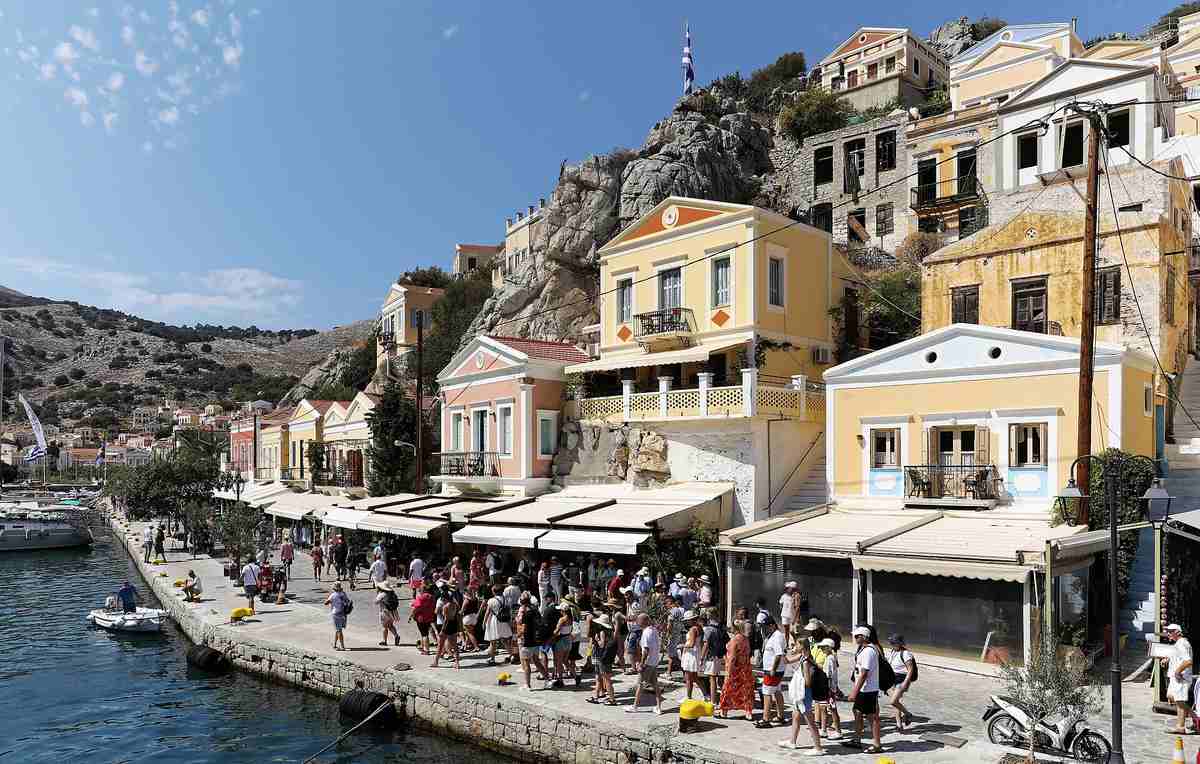
Symi builds its food scene around the harbour front of Gialos and the lanes of Chorio. Tavernas, ouzeri, mezedopoleia and fish restaurants line the water and sit under the neoclassical mansions. The signature dish is the tiny Symi shrimp, garides Symis, fried and eaten whole with ouzo. Fresh fish, octopus and seafood fill the menus beside Dodecanese vegetable dishes. Chorio tavernas add rooftop tables with wide views over the port below. Bakeries and patisseries sell the local sweets across the town. The working island keeps kitchens open beyond the summer months. This guide covers the food scene, the shrimp, the fish, the mezedes, the harbour and Chorio tables, the sweets, the crowds, the booking, the prices and the practical tips.
Eating well on Symi means knowing where each kind of table sits. The harbour front of Gialos gathers the fish restaurants and the ouzeri by the water. The lanes of Chorio hold the tavernas with rooftop views over the port. Prices run higher on the waterfront than in the back lanes uphill. Day boats from Rhodes crowd the harbour at lunch, and the evening turns calmer. Tables fill fast in July and August, so booking matters at the peak. This page anchors the food of the island inside the wider Symi vertical. It links the harbour, the shrimp, the town and the places to stay. The result maps where to eat across the port and the hill of Chorio. The plan follows the boats and the light of the day.
What is the food scene like on Symi?
Symi builds its food scene around the harbour of Gialos and the lanes of Chorio. Tavernas, ouzeri, mezedopoleia and fish restaurants line the water and sit under the mansions, serving the local shrimp, fresh fish and Dodecanese dishes.
The food of Symi centres on the harbour front of Gialos. Tavernas and fish restaurants ring the quay under the tiered mansions. Ouzeri and mezedopoleia set their tables at the edge of the water. Diners sit beside the moored boats and the reflected houses. The port draws the lunch crowd and the evening tables alike. Waiters carry plates of fried shrimp and grilled fish across the quay. The scene runs the length of the harbour around the deep inlet. Menus lean on the sea, the shrimp and the vegetable dishes of the Dodecanese. The stone quay holds table after table through the warm months. The harbour front forms the first and busiest layer of the island’s food. Every table looks out on the moored fishing boats.
Chorio, the upper town, holds the second layer of the food scene. Tavernas sit along the stepped lanes above the harbour of Gialos. Rooftop terraces open wide views over the port and the sea. The climb up the Kali Strata leads walkers to these upper tables. Kitchens here cook the same shrimp, fish and Dodecanese dishes as the quay. Prices sit lower in the back lanes than on the waterfront below. Locals fill the Chorio tavernas away from the day-boat crowds. The tables catch the breeze on the ridge through the summer heat. Evening light falls across the harbour from the terraces of the upper town. Chorio balances the harbour front with quieter rooms and a longer view. The upper tables stay cool after the sun drops.
The island splits its tables between the water and the hill. The harbour of Gialos gathers the fish restaurants and the ouzeri by the sea. The lanes of Chorio hold the tavernas with rooftop views over the port. Each kind of place keeps its own rhythm through the day. Day boats from Rhodes fill the waterfront at lunch and thin by dusk. Evenings turn calmer as the crowds return across the water. Bakeries and patisseries add sweets to the mix along both levels. The working town keeps kitchens open beyond the peak summer months. Menus stay rooted in the shrimp, the fish and the garden vegetables. The two levels together map where every meal sits on the island. The catch and the garden set both menus alike.
The food of Symi rewards a plan that follows the day. Morning brings pastries and coffee from the bakeries near the quay. Lunch fills the harbour tables as the day boats tie up at Gialos. Afternoon quietens the waterfront once the cruise crowds head back. Evening opens the tavernas of Chorio on the ridge above the port. Ouzo and fried shrimp start the night at the mezedopoleia by the water. Grilled fish and octopus follow at the fish restaurants along the quay. Sweets from the patisseries close the meal across the town. The rhythm shifts the crowd from the water to the hill and back. A day of eating traces the whole harbour and the upper town of Chorio. The harbour and the hill share one long day.
What are the Symi shrimp, and where do you eat them?
The Symi shrimp, garides Symis, are the tiny prawns that give the island its signature dish. Cooks fry them whole and serve them as a meze with ouzo at the harbour tavernas and the ouzeri of Gialos.
The Symi shrimp are the small prawns known as garides Symis. The tiny shellfish come from the deep waters around the island. Cooks fry them whole, shell and all, until they turn crisp. Diners eat the entire shrimp in one bite, heads included. The dish arrives as a meze on a shared plate at the taverna. A glass of ouzo sits beside it at the harbour table. The small size marks the shrimp apart from larger Mediterranean prawns. The frying keeps the shell light and the flesh sweet. The plate anchors the island’s food identity on every menu. The Symi shrimp stand as the first thing to order by the water at Gialos. The fried plate reaches the table within minutes of the order.
Garides Symis carry the name of the island on menus across Greece. The prawns breed in the deep sea channels off the coast. Local boats land them for the tavernas of Gialos and Chorio. The catch reaches the kitchens fresh through the fishing season. Cooks salt and fry the whole shrimp in hot oil. The result crunches from shell to tail on the plate. Ouzo, the anise spirit, cuts the salt of the fried shellfish. The pairing turns the shrimp into the classic island meze. Tavernas serve the plate as a starter before the grilled fish. The garides Symis fix the island’s name to its most famous catch of the sea. The prawns stay small even at the height of the season.
Eating the Symi shrimp follows a simple rule at the table. Diners take the whole prawn, shell and head, in one bite. The crisp shell carries most of the flavour after the frying. Salt and the sweet flesh balance together on the tongue. A squeeze of lemon sharpens the fried shellfish. Ouzo or a cold white wine washes the plate down. The meze suits sharing across a harbour table at dusk. The shrimp open a meal built on the sea and the garden. Cooks pile the small prawns high on a single plate. The shared dish sets the tone for the rest of the taverna table on Symi. The lemon and the ouzo frame the plate from the first bite. Diners share the prawns before the fish arrives.
The Symi shrimp appear on nearly every taverna menu on the island. Harbour restaurants at Gialos list the garides Symis near the top. Ouzeri and mezedopoleia serve them as the anchor of the meze table. Chorio tavernas cook the same plate above the port on the ridge. The dish stays available through the working year, not the summer alone. Prices rise on the waterfront and ease in the back lanes uphill. The catch links the kitchens to the fishing boats of the harbour. Diners trace the island’s food identity through this one small prawn. The plate rewards a first night with ouzo by the water. The Symi shrimp reward every visitor who reaches the island’s tables. The prawns open the meal on the first night by the water.
What fresh fish and seafood do Symi tavernas serve?
Symi tavernas serve fresh fish, octopus and seafood landed by the local boats. Kitchens grill whole fish, char octopus over coals and fry small catch, filling the harbour menus of Gialos with the daily catch of the surrounding sea.
Fresh fish anchors the menus of the fish restaurants at Gialos. Local boats land the daily catch at the harbour each morning. Kitchens grill whole fish over coals and dress them with oil and lemon. Sea bream, sea bass and red mullet reach the tables in season. The catch changes with the day and the weather at sea. Waiters bring the whole fish to the table for the diners to choose. The grill keeps the flesh firm and the skin crisp. Herbs and olive oil finish the plate beside a wedge of lemon. The harbour restaurants build their name on this daily fish. The sea sets the menu at the tables along the quay of Symi. The grill smokes along the quay through the evening.
Octopus holds a fixed place on the seafood tables of Symi. Fishermen hang the catch to dry along the harbour rails at Gialos. Cooks char the tentacles over hot coals until the edges crisp. The grilled octopus arrives with oil, vinegar and a scatter of oregano. Diners share the plate as a meze beside the fried shrimp. A glass of ouzo cuts the smoke of the charred flesh. The dish ranks among the classic starters of the island tavernas. The drying and grilling follow the old method of the Aegean coast. Octopus fills the plate between the shrimp and the grilled fish. The charred tentacles round out the seafood table by the water at Gialos. The dried catch hangs in the sun above the tables.
Small fried fish fill out the seafood menus across the island. Cooks dust fresh anchovies and picarel in flour and fry them whole. The crisp small fish arrive hot as a shared meze plate. Squid and cuttlefish join the fryer through the fishing season. Kitchens ring the calamari and serve it with lemon and salt. The fried plates suit the ouzo table beside the shrimp and octopus. Diners pick at the small catch across a long harbour meal. The fryer keeps the kitchen quick through the busy summer nights. The plates draw on the same boats that land the larger fish. Fried seafood keeps the meze table full between the grilled courses on Symi. The fryer runs hot from the first orders of the night.
Seafood on Symi ties the tavernas to the boats of the harbour. The catch reaches the kitchens hours after the nets come in. Prices track the day’s landing and the size of the fish. Whole fish sells by weight at the fish restaurants of Gialos. The waiter weighs the chosen fish before it meets the grill. Diners pair the catch with a Dodecanese white and a garden salad. The freshness marks the harbour tables apart from inland kitchens. Octopus, shrimp and small fried fish open the meal as mezedes. The grilled whole fish crowns the table as the main course. The sea supplies the heart of every seafood dinner on the island. The waiter names the day’s catch at the table.
What Dodecanese dishes and mezedes fill Symi menus?
Symi menus fill with Dodecanese vegetable dishes and shared mezedes beside the seafood. Kitchens cook stuffed vegetables, wild greens, chickpea and tomato plates, and cheese starters, spreading small dishes across the table for diners to share with ouzo and wine.
Dodecanese vegetable dishes share the table with the seafood on Symi. Kitchens stuff tomatoes and peppers with rice and herbs from the garden. Wild greens, horta, arrive boiled and dressed with oil and lemon. Chickpeas simmer into thick plates baked in the island ovens. Tomato fritters bind ripe fruit, onion and mint into fried rounds. Stuffed vine leaves, dolmades, add a rolled meze to the spread. The garden feeds the kitchen through the growing season on the island. The vegetable plates balance the salt of the fried seafood. Diners share the dishes across the middle of the table. The Dodecanese garden fills the meze board beside the catch of the sea. The garden plates fill the table beside the fried prawns. Ripe tomatoes carry the summer menu.
Mezedes shape the way the island eats at the taverna table. Cooks send out small plates for the whole table to share. Fried shrimp, charred octopus and stuffed vegetables land together. Cheese starters like fried saganaki join the spread of dishes. Dips of fava, the yellow split pea puree, arrive with warm bread. The table fills with plates rather than single large courses. Ouzo and wine pace the meal across the shared mezedes. The style suits the long harbour evenings of the summer. Diners graze from plate to plate through the night. The meze table turns dinner into a slow spread of the island’s dishes on Symi. The plates land in waves for the table to share. Ouzo carries the meze from the first dish to the last.
Cheese and bread ground the meze table across Symi. Kitchens fry saganaki until the cheese browns and softens inside. Local bread mops the oil from the vegetable and pulse plates. Fava, the split pea puree, spreads thick under raw onion. Grilled island cheese joins the plates from the Dodecanese kitchens. The starches and cheese carry the salt of the seafood meze. Diners tear the bread across the shared table by the water. The plates keep the ouzo flowing through the harbour evening. The cheese courses bridge the vegetables and the grilled fish. Bread and cheese hold the meze table together on the island of Symi. The bread soaks up the oil of the pulse plates. Ouzo pairs with the browned cheese at the table.
Salads and garden plates close the Dodecanese spread on Symi. The Greek salad piles tomato, cucumber, onion and olives under feta. Caper leaves and wild herbs flavour the island’s own versions. Boiled greens dressed in oil sit beside the stuffed vegetables. The garden plates lighten the fried and grilled seafood courses. Olive oil from the region finishes each salad at the table. Diners balance the food of the sea with the fruit of the land. The vegetable dishes fill the table between the meze and the fish. The Dodecanese kitchen leans on its gardens as hard as its boats. Fresh salads round out the shared table across the harbour and Chorio. The salad greens cut the richness of the fried plates. Olives and feta finish the spread.
How do harbour-front and Chorio tavernas differ on Symi?
Harbour-front tavernas at Gialos sit by the water and draw the day-boat crowds at higher prices. Chorio tavernas climb the lanes above, adding rooftop views over the port, quieter rooms and lower prices in the back lanes.
The tables of Symi Town and Gialos split between the water and the hill. Harbour-front tavernas line the quay at the foot of the mansions. Diners sit beside the moored boats and the neoclassical houses. The waterfront draws the day-boat crowd through the lunch hours. Waiters serve fried shrimp and grilled fish along the busy quay. The setting puts the sea at the edge of every table. The bustle of the port fills the harbour restaurants at Gialos. Prices climb on the quay where the view meets the water. The harbour front gathers the loudest and busiest tables of the island. The waterfront sets the classic scene of dinner on Symi. The moored boats sit close enough to touch from the quay. Lanterns light the tables at dusk.
Chorio tavernas sit above the harbour in the stepped upper town. The climb up the Kali Strata leads to these higher tables. Rooftop terraces open wide views across the port of Gialos. The ridge catches the evening breeze above the heat of the quay. Kitchens cook the same shrimp, fish and vegetable dishes as the water. Locals fill the Chorio rooms away from the day-boat crowds. The lanes keep the tables quieter than the busy waterfront. Prices ease in the back streets of the upper town. Diners trade the harbour bustle for the long view and the calm. Chorio rewards the climb with a table over the whole port of Symi. The terraces open the widest view over the port. Evening light falls across the whole bay.
Price marks the clearest split between the two kinds of table. The harbour front at Gialos charges more for the seat by the water. The view of the boats and mansions lifts the waterfront rates. Back-lane tavernas in Chorio set lower prices for the same dishes. The uphill rooms trade the waterside seat for a gentler bill. Diners weigh the harbour setting against the cost of the meal. The same fried shrimp costs less a short climb uphill. Locals steer toward the quieter and cheaper Chorio tables. The waterfront keeps its premium for the front-row view of the port. Prices sort diners between the quay and the upper town of Symi. The bill drops with every step up from the water. Locals know the cheaper rooms by name.
Timing shapes the choice between harbour and hill on Symi. Lunch belongs to the harbour front as the day boats tie up. The quay fills with visitors from Rhodes through the midday hours. Evening shifts the crowd toward the tavernas of Chorio above. The upper terraces catch the sunset over the port and the sea. Night quietens the waterfront once the cruise crowds leave. Diners plan lunch by the water and dinner on the ridge. The two levels suit the two halves of the day. Harbour bustle gives way to the calm of the upper town. The rhythm of the crowd sorts the tables of Symi by the hour. The crowd moves uphill as the light fades over the port. The ridge fills after the boats depart.
Where do you find sweets and bakeries on Symi?
Bakeries and patisseries across Symi sell the local sweets, pastries and bread. Shops near the harbour of Gialos and in Chorio bake honey pastries, syrup sweets and biscuits, opening early for coffee and closing the taverna meals of the day.
Bakeries near the harbour of Gialos open early on Symi. The ovens turn out fresh bread for the tavernas and the homes. Trays of biscuits and syrup sweets fill the shop windows. Patisseries sell honey pastries and almond treats through the day. Coffee and a pastry start the morning by the quay. The bakers work before the day boats reach the port. Loaves and rolls supply the meze tables along the waterfront. The shops sit among the tavernas at the foot of the mansions. Sweet and savoury baking share the same harbour street. The bakeries feed the island from the first hour of the day at Gialos. The smell of fresh bread drifts along the quay at dawn. Trays refill through the morning rush.
Patisseries carry the sweet side of the island’s food on Symi. Shops display baklava layered with nuts and honey syrup. Almond biscuits and semolina cakes fill the counters. Spoon sweets, fruit preserved in syrup, sit in glass jars. Local honey flavours the pastries across the town. Diners close a taverna meal with a sweet from the patisserie. Coffee pairs with the syrup cakes through the afternoon. The shops line the harbour and climb into the lanes of Chorio. Sweet plates round out the day between the savoury meals. The patisseries hold the dessert course of the island at Gialos and above. The honey ties the sweets to the hives of the island. Almond and semolina carry the afternoon plates. Coffee follows the cake through the day.
Chorio holds its own bakeries above the harbour of Symi. The upper town shops serve the tavernas along the ridge. Bread and biscuits reach the tables of the stepped lanes. The climb up from Gialos passes small ovens in the quarter. Sweet pastries fuel the walk up the Kali Strata. The bakers supply both the homes and the upper tavernas. Coffee and cake pause the climb through the old town. The shops keep the same syrup sweets as the harbour below. The upper bakeries feed the ridge without a trip to the port. Chorio bakes for its own tables above the water on the island of Symi. The ridge shops save the walk down to the harbour. Fresh loaves reach the upper tables each morning.
Sweets and bread frame the eating day across Symi. Morning opens with coffee and a pastry from the harbour bakery. Bread from the ovens carries the meze tables through lunch. Afternoon brings syrup cakes and spoon sweets from the patisseries. The taverna meal closes with baklava or almond biscuits. Local honey ties the sweets to the gardens and hives of the island. The bakeries stay open through the working year, not the summer alone. Diners trace the sweet course from the quay to the upper town. Bread and honey pastries bracket the savoury plates of the day. The bakeries and patisseries complete the food map of the island of Symi. The oven smoke rises over the quay from first light. Sweet and savoury share the same street.
Where do day-trippers and evening diners eat on Symi?
Day-trippers from Rhodes crowd the harbour front of Gialos at lunch, filling the waterfront tavernas. Evening diners find the port calmer once the boats leave, and locals climb to the quieter Chorio tavernas above for a long dinner.
Day boats from Rhodes land visitors at Gialos through the morning. The crowd fills the harbour front tavernas at lunch on Symi. Waterfront tables turn over fast as the cruise groups eat. Fried shrimp and grilled fish feed the midday rush by the water. The quay grows loud and busy under the summer sun. Waiters work the packed harbour tables through the lunch hours. The day-trippers hold to the waterfront near the boat berths. The port bustles while the cruise ships sit out in the bay. Lunch marks the peak of the harbour crowd on the island. The day boats set the rhythm of the waterfront at midday on Symi. The berths fill with day boats through the noon hours. Groups pour onto the quay from the gangways.
The boats leave Gialos in the late afternoon on Symi. The cruise crowd returns to Rhodes before the evening falls. The harbour front quietens once the day-trippers depart. Tables empty on the quay as the light softens over the port. The waterfront shifts from the lunch rush to a calmer pace. Evening diners find room at the harbour restaurants by the water. The bustle of the boats gives way to the sound of the sea. The port settles into its slower night rhythm along the quay. The departure of the day boats reopens the quiet waterfront. Evening returns the harbour to the island and its overnight guests. The last gangway lifts as the light turns gold. The quay empties toward the evening calm.
Evening diners climb to the tavernas of Chorio on Symi. The upper town fills as the harbour crowd thins below. Rooftop terraces open the sunset over the port and the sea. Locals favour the quieter rooms above the waterfront bustle. The ridge tables catch the breeze through the warm night. Dinner runs long across the stepped lanes of the old town. The climb up the Kali Strata leads to the upper kitchens. The same shrimp and fish reach the tables above the harbour. Evening belongs to Chorio once the day boats have gone. The upper town gathers the night diners over the quiet port of Gialos. The terraces gather the night diners over the port. Lanterns mark the tables along the ridge. Dinner runs late into the night.
The split between lunch and dinner sorts the tables of Symi. Day-trippers own the harbour front through the midday hours. Evening diners spread between the calm quay and the upper town. Gialos serves the cruise crowd fast at lunch by the water. Chorio serves the slow dinner over the port at night. The boats set the loud pace of the waterfront at noon. The ridge sets the quiet pace of the island evening. Diners who stay overnight reach the calmer tables after the boats leave. The rhythm rewards the guests who eat once the crowd has gone. The hours divide the island’s tables between the water and the hill. The water and the hill split the day between them. Guests time the meal to the boats.
How do booking and prices work at Symi restaurants?
Tables at Symi restaurants book up in July and August, so reserving ahead secures a harbour seat. Prices run higher on the waterfront of Gialos than in the back lanes of Chorio, where the same dishes cost less by the plate.
Booking a table matters at the peak of the season on Symi. Harbour restaurants at Gialos fill through July and August. Reserving ahead secures a seat by the water on busy nights. Guests who plan a stay through where to stay on Symi book dinner near their rooms. The waterfront tavernas hold the highest demand at the peak. A call or a walk-by earlier in the day locks the table. The port packs its quayside seats on the warm summer evenings. Early diners find room before the harbour tables fill. The reservation keeps the front-row seat over the water. Booking ahead settles the harbour table before the evening rush at Gialos. The busiest nights turn away walk-in diners. A booking holds the front-row seat.
Prices split between the waterfront and the back lanes on Symi. The harbour front at Gialos charges more for the seat by the water. The view of the boats and mansions lifts the quayside rates. Tavernas in the Chorio lanes set gentler prices uphill. The same fried shrimp costs less away from the waterfront. Diners trade the harbour view for a lighter bill in the upper town. Fresh whole fish sells by weight at the fish restaurants. The waiter weighs the catch before the price is set. Menus list the shrimp, the mezedes and the salads by the plate. The location of the table shapes the cost of the meal on Symi. The waterfront rate buys the seat above the moored boats. The uphill bill stays lighter.
The peak months set the tightest tables on Symi. July and August pack the harbour front through the evening. Day boats and overnight guests compete for the quayside seats. Reserving ahead beats the crowd on the busy summer nights. The shoulder season eases the pressure on the tables. The working town keeps kitchens open beyond the summer peak. Quieter months let diners walk in without a booking. The harbour still fills first when the boats run at their busiest. Chorio tables stay easier to reach than the waterfront. The calendar sorts the demand between the peak and the quieter season. The peak weeks pack every quayside table by dusk. The shoulder weeks open the walk-in seats. Overnight guests plan the busy nights ahead.
A little planning settles the cost and the table on Symi. Diners who watch the bill choose the back lanes of Chorio. Those set on the water book the harbour front ahead of time. Whole fish by weight runs higher than the meze plates. Shared mezedes spread a lower cost across the table. Ouzo and house wine keep the drinks bill modest. Lunch on the quay costs more than dinner in the upper town. The reservation locks the peak-season seat by the water. The menu and the location together set the price of the meal. A clear plan matches the table to the budget on the island of Symi. The shared plates spread the bill across the table. House wine keeps the total low.
What practical tips help you eat well on Symi?
Eating well on Symi means booking harbour tables in peak months, choosing Chorio lanes for lower prices, and timing dinner after the day boats leave. Ordering the fried shrimp, grilled fish and shared mezedes covers the island’s core dishes.
Timing the meal beats the crowds at the tables of Symi. Lunch on the harbour front runs busiest as the day boats land. Dinner after the boats leave finds the quay calm again. Evening on the Chorio ridge catches the sunset over the port. Booking ahead holds a waterfront seat through July and August. The back lanes offer walk-in tables at gentler prices. A morning pastry from the bakery starts the eating day. The rhythm moves the diner from the water to the hill. Planning the hours sidesteps the packed midday quay. Good timing shapes the whole day of eating on the island of Symi. The boats set the pace of the whole eating day. Lunch runs loud and dinner runs calm. The hours reward a simple plan.
Ordering well covers the core dishes of the island table. The fried Symi shrimp open the meal as the signature meze. Charred octopus and small fried fish round out the seafood plates. Grilled whole fish by weight crowns the main course. Dodecanese stuffed vegetables and wild greens balance the sea. Fried cheese and fava spread the meze across the table. A Greek salad and local bread ground the spread. Ouzo pairs with the fried shrimp at the start of the night. A sweet from the patisserie closes the meal. A full order traces the island’s food from the sea to the garden on Symi. The order runs from the sea to the garden and the oven. Ouzo opens it and a sweet closes it.
Choosing the right table shapes the meal on Symi. The harbour front at Gialos puts the sea at the table’s edge. Chorio tavernas trade the waterside for a rooftop view and lower prices. Fish restaurants suit a dinner built on the whole grilled catch. Ouzeri and mezedopoleia fit a spread of shared small plates. Bakeries and patisseries handle the morning and the sweet course. Diners match the place to the meal they want. The working town keeps kitchens open beyond the summer peak. Locals steer toward the quieter Chorio rooms uphill. The right table sorts the harbour bustle from the calm of the ridge. The place sets the mood of the meal on the island. Fish tables suit the grill and ouzeri suit the meze.
A handful of habits carry a visitor through the food of Symi. Sturdy shoes handle the climb to the Chorio tavernas above. A booking secures the harbour table on the busy summer nights. Cash eases the bill at the smaller back-lane kitchens. An early start beats the day-boat crowd to the quiet quay. The whole fish sells by weight, so the waiter weighs the choice. Ouzo and the fried shrimp mark the classic first order. The sweets from the patisserie close the day near the harbour. The rhythm of the boats sets the calm and the crowd. These habits turn a day on Symi into a full run of its tables. The habits carry a diner through the day. Cash and sturdy shoes ease the way.
Frequently Asked Questions
What is the signature dish of Symi?
The Symi shrimp, garides Symis, are the signature dish of the island. Cooks fry the tiny prawns whole and serve them as a meze with ouzo. Diners eat the entire shrimp, shell and head, in one bite. The small size and the crisp fried shell set the dish apart from larger prawns. Harbour tavernas and ouzeri at Gialos list the garides Symis near the top of the menu. The plate opens a meal built on the sea and the Dodecanese garden.
Where are the best places to eat on Symi?
The harbour front of Gialos and the lanes of Chorio hold the tables on Symi. Fish restaurants and ouzeri line the quay by the water for the day-boat lunch and the evening meal. Tavernas in Chorio climb the stepped lanes above, adding rooftop views over the port and lower prices in the back lanes. Bakeries and patisseries across both levels handle the bread, the coffee and the sweets. The waterfront suits the classic harbour dinner, while the ridge rewards the climb with a long view over the port.
What seafood do Symi tavernas serve?
Symi tavernas serve fresh fish, octopus and small fried seafood landed by the local boats. Kitchens grill whole sea bream, sea bass and red mullet over coals with oil and lemon. Fishermen dry octopus on the harbour rails, then char the tentacles for the meze table. Cooks fry anchovies, picarel and calamari for shared plates beside the Symi shrimp. Whole fish sells by weight at the fish restaurants of Gialos. The catch reaches the kitchens hours after the nets come in, so the menu tracks the daily landing.
Are Symi restaurants expensive?
Prices on Symi turn on the location of the table. The harbour front at Gialos charges more for the seat by the water and the view of the boats and mansions. Tavernas in the back lanes of Chorio set lower prices for the same fried shrimp, grilled fish and mezedes. Whole fish sells by weight, so the main course runs higher than the shared meze plates. Shared mezedes and house wine keep the bill modest. Diners who watch the cost eat uphill, while those set on the water pay the waterfront rate.
Do you need to book a table on Symi?
Booking a table pays off in the peak months on Symi. Harbour restaurants at Gialos fill through July and August, so a reservation secures a seat by the water on busy nights. A call or a walk-by earlier in the day locks the table before the evening rush. The back lanes of Chorio stay easier for walk-in diners at gentler prices. Quieter months let guests find room without a booking. The waterfront still packs first when the day boats run at their busiest, so planning ahead beats the crowd.
When is Symi quieter for dinner?
Evening turns Symi calmer once the day boats leave for Rhodes. Day-trippers crowd the harbour front of Gialos at lunch, then depart in the late afternoon. The quay quietens as the cruise groups return across the water. Evening diners find room at the waterfront and climb to the quieter tavernas of Chorio above. The upper town catches the sunset over the port and the breeze along the ridge. Guests who stay overnight reach the calmest tables after the boats have gone, away from the midday rush by the water.
What sweets can you try on Symi?
Bakeries and patisseries on Symi sell honey pastries, baklava, almond biscuits and semolina cakes. Spoon sweets, fruit preserved in syrup, sit in glass jars on the counters. Local honey flavours the pastries across the harbour and the upper town of Chorio. Shops near the quay at Gialos open early for coffee and a morning pastry. Diners close a taverna meal with baklava or almond biscuits from the patisserie. The bakeries stay open through the working year, so the sweet course runs beyond the summer season.