
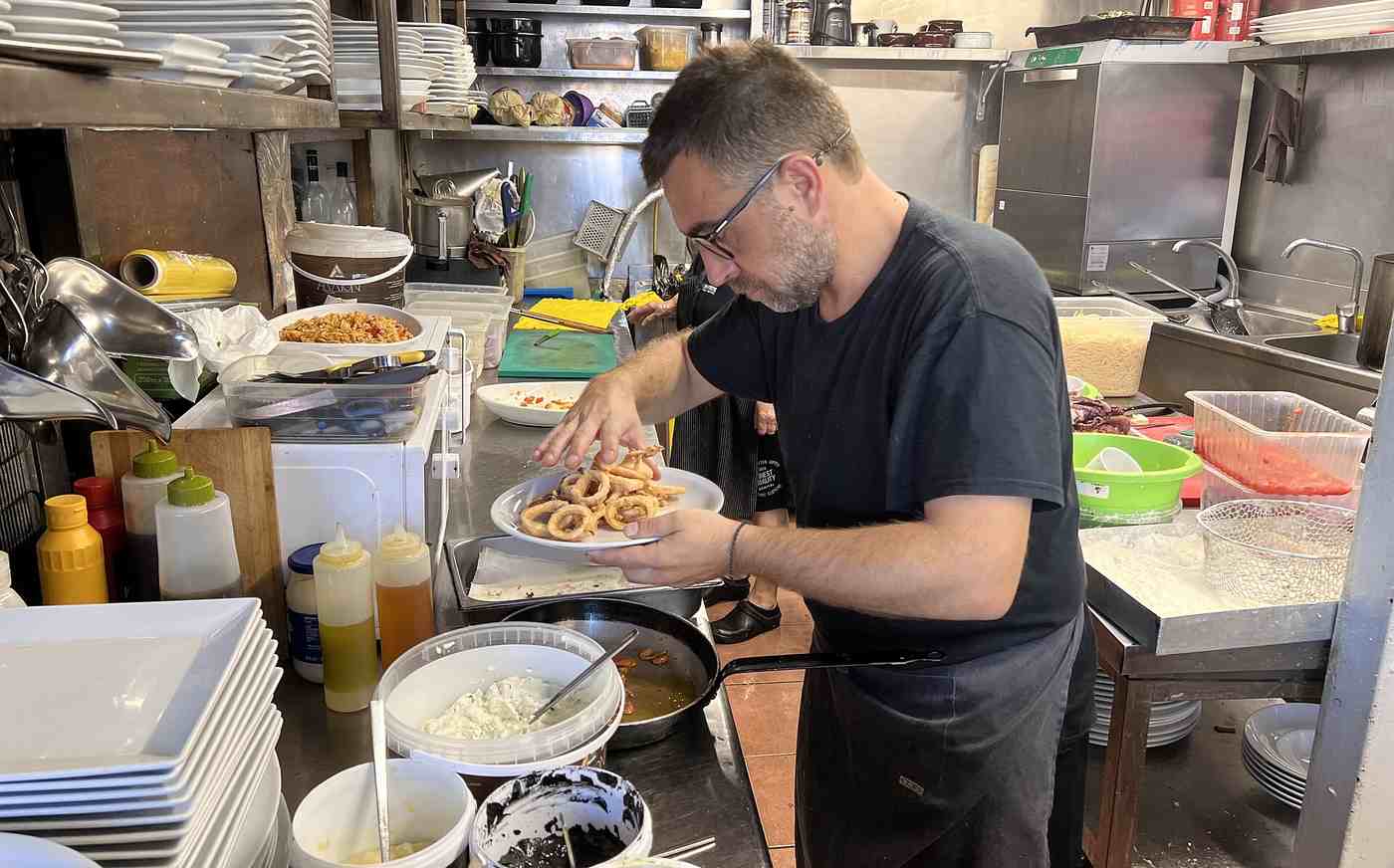
Symi shrimp, known locally as garides Symis or garidaki, rank as the signature dish of Symi, a small island in the Dodecanese. These tiny shrimp come from the deep sea around the island and reach the plate whole. Cooks fry them crisp, so the thin shell, the head and the tail turn edible in one bite. Diners eat the shrimp whole, without peeling. The catch defines the seafood table of the island and marks a point of local pride. This guide covers what the shrimp are, why they stay small, how the tavernas cook them and where to order a plate.
The shrimp belong to the wider food culture of Symi, an island better known for its neoclassical harbour and its old sponge trade. Fishermen land the catch from cold, deep water, and the small size sets the shrimp apart from larger prawns. Tavernas serve them as a meze, a shared starter paired with lemon and a glass of ouzo or tsipouro. The dish sits beside fresh fish and octopus on the local table. This overview points to detailed guides on the harbour town, the beaches and the bays where visitors settle across the island.
What are Symi shrimp?
Symi shrimp, called garides Symis or garidaki, are tiny shrimp caught in the deep sea around Symi. Cooks fry them crisp, and diners eat them whole, shell, head and tail together, as a meze with lemon.
Symi shrimp carry the local names garides Symis and garidaki, the small-shrimp form of the Greek word for shrimp. The catch comes from the deep sea around Symi, an island in the southeastern Dodecanese. The shrimp measure a fraction of a common prawn, small enough to eat whole. Fishermen bring them in fresh, and the tavernas fry them the same day. The thin shell crisps in the pan, so the head, the body and the tail turn edible together. Diners take the shrimp by hand and eat them without peeling. This whole-shrimp habit sets the dish apart from the peeled prawns of the mainland. The plate arrives golden, salty and light, a starter to share around the table.
The name garidaki marks the size of the catch, a diminutive that means little shrimp. The shrimp grow no bigger than a finger joint, so the shell stays thin and soft. Frying turns that shell crisp rather than tough, and the crunch carries the flavour of the sea. Cooks dust the shrimp with flour, drop them into hot oil and lift them out in a minute. The heads hold the strongest taste, and diners eat them along with the rest. This method keeps the dish simple, a matter of fresh shrimp, flour, oil and salt. The tavernas of the harbour treat the recipe as fixed, changed little across generations of cooks on the island.
Symi shrimp stand as the best-known food of the island, named for the place that lands them. The dish reaches most menus along the harbour of Symi, listed among the mezedes rather than the mains. A plate serves as a starter, ordered to share while diners choose the fish and the wine. The shrimp pair with lemon, bread and a glass of ouzo or tsipouro in the local style. Cooks serve them hot from the pan, the crisp shell still holding the heat of the oil. The small size means a plate holds a generous count, eaten by the handful. This shared, unhurried course opens a seafood meal beside the water on the island of Symi.
The shrimp reflect the fishing tradition that shaped Symi long before tourism reached the harbour. Boats worked the deep channels around the island for sponges and for fish across the centuries. The small deep-water shrimp came up in the nets and entered the local kitchen as a prized catch. Households fried them at home, and the tavernas carried the habit onto their menus. The dish now stands as a marker of the island, ordered by visitors who want the local taste. Cooks take pride in the freshness of the catch and the speed of the frying. This link between the deep sea and the table keeps Symi shrimp at the centre of the island’s food.
Why are Symi shrimp so small on Symi?
Symi shrimp stay small because they grow in the deep, cold water around the island. The depth and the low temperature keep the shrimp tiny, thin-shelled and firm, small enough for cooks to fry and diners to eat whole.
Symi shrimp owe their size to the deep, cold sea around the island rather than to a separate species alone. The seabed drops fast off the coast of Symi, and the shrimp live in the cold layers below the warm surface. Cold, deep water slows growth, so the shrimp stay small and firm through their lives. The low temperature keeps the shell thin, the trait that lets cooks fry the whole shrimp crisp. Fishermen work these deep channels with nets set for the small catch. The result reaches the plate as a shrimp measured in centimetres, not the length of a prawn. This natural size, fixed by the sea itself, gives the dish its whole-shrimp form on the island.
The waters around Symi run deeper than the shallow, warm bays common across the Aegean. The steep coast and the narrow channels toward the Turkish shore hold cold water close to land. Shrimp in these depths grow slowly and keep a compact body and a fine shell. That slow, cold growth explains why the local catch never reaches the bulk of a warm-water prawn. Fishermen prize the small shrimp for the sweetness that the cold water gives the flesh. The tavernas turn that sweetness into the crisp meze known across the island. This tie between the deep sea and the tiny shrimp roots the dish firmly in the geography of Symi.
The small size shapes how cooks handle Symi shrimp in the kitchen. A thin shell needs no peeling, so the whole shrimp goes straight into the flour and the oil. Frying a small shrimp takes under a minute, and the crisp finish depends on that speed. Larger prawns demand peeling, grilling or a sauce, a different dish altogether. The tiny garidaki instead reward a hot pan and a quick lift onto the plate. Salt and lemon complete the course, with no heavy sauce to mask the sea flavour. This simple treatment suits the size of the catch and keeps the taste of the deep water at the front of the dish.
The deep-water origin also sets the season and the supply of Symi shrimp. Boats reach the cold channels in settled weather and land the catch in modest daily amounts. The limited haul keeps the shrimp a local specialty rather than a mass-market export. Tavernas along the harbour take the fresh catch each day and fry it while it stays sweet. Diners who order the plate taste a shrimp landed hours before, close to the shore of the island. The freshness matters more than the count, and cooks build the dish around it. This short path from the deep sea to the table defines the character of Symi shrimp.
How are Symi shrimp cooked and eaten on Symi?
Cooks fry Symi shrimp whole and crisp in hot oil, often with a light dusting of flour. Diners eat them whole by hand, shell, head and tail together, with a squeeze of lemon and a glass of ouzo or tsipouro.
Cooks fry Symi shrimp whole, the standard method along the harbour of the island. The shrimp arrive fresh, rinsed and left in the shell, ready for the pan. A light dusting of flour helps the shell crisp and hold a golden colour. The shrimp go into hot oil and lift out within a minute, before the flesh turns tough. Salt finishes the plate, and lemon arrives on the side for the diner to squeeze. The heat of the oil crisps the thin shell so the head and tail turn brittle and edible. This quick fry keeps the shrimp light and dry rather than greasy, the mark of a well-cooked plate on Symi.
Diners eat Symi shrimp whole, a habit that surprises visitors used to peeling prawns. The crisp shell breaks under the teeth, and the head and tail crunch along with the body. Peeling is neither needed nor expected, and the tavernas serve the shrimp for eating by hand. The whole shrimp carries more flavour than a peeled tail, since the shell and head hold the taste of the sea. A squeeze of lemon cuts the oil and lifts the salt on the plate. Bread mops up the last of the juices beside the shrimp. This direct, hands-on way of eating turns the dish into a shared, social course at the table.
The tavernas serve Symi shrimp hot from the pan, timed to reach the table crisp. Cooks fry to order rather than ahead, so the shell keeps its crunch. The plate lands as a starter, set in the centre for the table to share. Ouzo or tsipouro joins the shrimp, poured over ice in the local style. The aniseed of the ouzo and the salt of the shrimp balance each other across the meze. Lemon, bread and a bowl for the eaten shells complete the setting. This unhurried pairing of drink and shrimp opens the seafood meal that follows on the island of Symi.
The recipe stays plain by design, built on the freshness of the catch. Flour, hot oil and salt form the whole method, with no batter or heavy coating. Cooks avoid sauces that would soften the crisp shell or hide the sea flavour. The quality rests on the shrimp themselves and the speed of the frying. A skilled cook lifts the shrimp at the moment the shell turns crisp and the flesh stays sweet. Over-frying dries the shrimp, and under-frying leaves the shell chewy. This narrow window explains why the tavernas of the harbour treat the simple dish as a test of the kitchen on Symi.
What do Symi shrimp taste like as a meze on Symi?
Symi shrimp taste sweet, salty and of the sea, with a light crunch from the crisp shell. Served as a shared meze with lemon, bread and ouzo or tsipouro, they open a seafood meal rather than stand as a main course.
Symi shrimp taste sweet and clean, a flavour the cold deep water gives the flesh. The crisp shell adds a light crunch, and the head carries the strongest taste of the sea. Salt from the frying and a squeeze of lemon sharpen each bite on the plate. The shrimp read as light rather than rich, so a shared plate opens the appetite. The aniseed of ouzo or the grape note of tsipouro cuts the salt and the oil. Bread carries the juices and the lemon between mouthfuls of shrimp. This balance of sweet flesh, salt and citrus explains the place of the dish at the start of a seafood meal on the island.
The tavernas serve Symi shrimp as a meze, one plate among a spread of shared dishes. Diners order the shrimp to open the meal, alongside salads, dips and grilled octopus. The small size suits sharing, since a plate holds a generous count for the table. Guests reach in with their hands and eat the shrimp between sips of ouzo or tsipouro. The meze style keeps the pace slow, a course drawn out over conversation beside the water. A seafront table near Nos beach or along the quay sets the scene for the plate. This shared, unhurried format defines how the island eats its best-known catch.
The pairing with ouzo or tsipouro carries the weight of local custom on Symi. The spirits arrive over ice, cloudy and cold, poured to sip slowly beside the shrimp. Aniseed and salt balance across the palate, a match built over generations of island meals. Water and a little ice soften the spirit between bites of the crisp shrimp. The combination suits the heat of the harbour and the slow rhythm of a seaside lunch. Diners who skip the spirit still take lemon and bread with the plate. This drink-and-meze tradition frames the shrimp as a social course rather than a quick bite on the island.
The flavour rewards eating the shrimp whole rather than picking at the flesh. The shell and head hold the concentrated taste of the deep sea, lost when a shrimp is peeled. The crunch of the crisp shell contrasts with the soft, sweet body inside. Lemon and salt lift both parts, and the oil carries the flavour across the plate. A cold spirit resets the palate between handfuls of shrimp. This layered taste, shell and flesh together, marks the dish out from a plain peeled prawn. The whole-shrimp habit turns a simple fried starter into the signature seafood flavour of Symi.
Where do you eat Symi shrimp in Gialos and Chorio?
Diners eat Symi shrimp in the tavernas of Gialos, the harbour, and Chorio, the upper town. Seafront tables along the quay and family kitchens in the old town both serve the fried garides Symis fresh, as a shared meze.
Diners find Symi shrimp on the menus of the tavernas in Symi Town and Gialos, the harbour at the heart of the island. Waterfront kitchens line the quay below the tiers of neoclassical mansions. The tavernas list the shrimp among the mezedes, fried to order from the daily catch. Tables sit at the water’s edge, so diners eat the plate with the boats and the harbour in view. The setting suits a slow lunch or an early evening meze beside the sea. Cooks bring the shrimp hot from the pan to the shared table. This harbourside scene is where most visitors first meet the fried garides Symis on the island.
Chorio, the older upper town, holds family tavernas that serve Symi shrimp away from the quay. The Kali Strata steps climb from the harbour to Chorio, linking the two halves of the town. Kitchens in the lanes above cook the same fried shrimp for a quieter, local crowd. The upper town trades the harbour view for shade, calm and a village feel. Prices along these lanes often run gentler than the busiest tables on the waterfront. Diners who climb the steps reach tavernas set among the old houses and chapels. This split between harbour and upper town gives two settings for the same dish across Symi.
Seafront tables spread along the Gialos quay and toward the swimming spots at the town’s edge. The bay near the harbour draws walkers and swimmers, and cafes and tavernas line the shore. A meal of Symi shrimp pairs well with a swim and a table close to the water. The strip toward Nos gathers seafront kitchens within a short walk of the port. Diners settle in for a long lunch, shrimp first, then fish and salad. The view over the harbour and the moored boats frames the meze. This easy mix of swimming and seafood keeps the waterfront busy through the warm season on Symi.
The tavernas of Gialos and Chorio treat Symi shrimp as a fixed part of the local menu. Cooks source the catch from the day boats and fry it fresh for each order. The dish appears as a starter, listed to share before the main fish. Visitors ask for garides Symis by name and receive a plate hot from the pan. The freshness of the catch, not a long recipe, carries the quality of the plate. Both the harbour and the upper town keep the shrimp on the table through the season. This steady presence across the town marks the dish as the island’s own on Symi.
How do Symi shrimp fit the wider seafood cuisine of Symi?
Symi shrimp anchor a seafood cuisine that also features fresh fish, grilled octopus and shellfish from the waters around the island. The shrimp open the meal as a meze, followed by the day’s catch cooked simply with oil, lemon and herbs.
Symi shrimp sit at the head of a seafood table built on the fresh catch of the island. Fishing boats land fish, octopus and shellfish alongside the tiny shrimp each day. The tavernas cook the catch simply, with oil, lemon, herbs and salt rather than heavy sauces. A meal opens with the fried shrimp, then moves to grilled or fried fish. Octopus, dried in the sun and grilled over coals, joins the shrimp among the mezedes. Salads, wild greens and dips fill the rest of the shared table. This spread of sea and garden dishes places the shrimp within a broader island cuisine on Symi.
Grilled octopus stands beside Symi shrimp as a second signature of the local table. Fishermen catch the octopus in the bays and hang it to dry before the grill. The tavernas char it over coals and dress it with oil, vinegar and oregano. The smoky octopus and the crisp shrimp offer two textures within the same meze course. Both pair with ouzo or tsipouro in the island style. Diners share the plates, reaching across the table between sips. This pairing of shrimp and octopus shows how the local kitchen draws its best dishes straight from the sea around Symi.
Fresh fish forms the main course that follows the shrimp on the island’s tables. Boats land bream, snapper and other catch from the deep water off the coast. Cooks grill or fry the whole fish and serve it with lemon and oil. The quiet fishing bays feed this trade, among them Pedi, where waterside tavernas plate the day’s landing. The shrimp open such a meal, and the fish carries it forward. Price tracks the catch and the weather rather than a fixed rate. This chain from boat to plate keeps the seafood honest and local across the tavernas of Symi.
The seafood cuisine of Symi grows from the deep water that also yields the shrimp. Cold, clear channels around the island support fish, octopus and the tiny garidaki alike. The tavernas build their menus around whatever the boats bring in each morning. Simple cooking lets the freshness of the catch lead the plate. Bread, salad and a cold spirit round out the meal beside the shrimp and fish. The habit of sharing plates ties the whole table together over a long lunch. This sea-led kitchen, anchored by the shrimp, gives Symi a food identity rooted in its own waters.
Why are Symi shrimp a matter of local pride on Symi?
Symi shrimp carry the island’s name and stand as its best-known food, so locals treat them as a matter of pride and identity. Visitors order the tiny garides Symis by the plate to taste a dish tied directly to the island.
Symi shrimp carry the name of the island, so the dish doubles as a badge of place. Locals point to the shrimp as proof of the quality of their deep waters. The tiny garides Symis appear on almost no other tables, which makes them a specialty of the island alone. Cooks take pride in landing the catch fresh and frying it with care. The dish appears on menus as a marker of authenticity, a taste that belongs to Symi. Residents and returning visitors order it as a link to the island’s fishing past. This bond between the shrimp and the name of the island turns the plate into a point of identity.
The pride around Symi shrimp grows from the fishing history that shaped the island. Boats worked these waters for sponges and fish across the centuries, and the shrimp came up in the same nets. The catch fed households long before it drew visitors to the harbour tables. That heritage gives the dish weight beyond its size on the plate. Cooks pass the simple method down, guarding the crisp fry and the fresh catch. The shrimp stand for a self-sufficient island that lived from the sea. This deep root in local history keeps the dish central to how Symi sees its own food.
Visitors order Symi shrimp by the plate to taste a dish tied to the island itself. Guides and menus flag the garides Symis as the food to try on a first visit. A shared starter of fried shrimp opens the seafood meal and the introduction to the island. Diners eat the shrimp whole, in the local way, and pair the plate with ouzo or tsipouro. The direct link between the deep sea and the table draws travellers to the dish. Ordering it signals a wish to eat as the island eats. This role as the visitor’s first taste cements the shrimp as the emblem of Symi.
The shrimp anchor the food identity of Symi in a way stronger than any single taverna. The dish belongs to the island rather than to one kitchen, cooked the same simple way across the harbour. Locals judge a table by the freshness of its catch and the crisp of its fry. Visitors carry the memory of the whole fried shrimp home as the taste of the island. The name garides Symis binds the food to the place in a single phrase. Pride, history and the deep sea meet on the plate of shrimp. This shared ownership keeps the dish at the centre of local identity on Symi.
Frequently Asked Questions
What are garides Symis?
Garides Symis, also called garidaki, are the tiny shrimp of Symi, the island’s signature dish. The shrimp come from the deep, cold sea around the island and grow no bigger than a finger joint. Cooks fry them whole and crisp, so the thin shell, the head and the tail turn edible together. Diners eat them by hand, without peeling, as a shared meze with lemon and a glass of ouzo or tsipouro. The name marks both the catch and the island that lands it.
Do you eat Symi shrimp whole?
Diners eat Symi shrimp whole, shell, head and tail together, without peeling. The frying crisps the thin shell so it breaks under the teeth and carries the flavour of the sea. The head holds the strongest taste, and the whole shrimp gives more flavour than a peeled tail. A squeeze of lemon and a pinch of salt lift each bite. Eating the shrimp by hand turns the plate into a social, shared course at the table beside the water.
Why are the shrimp on Symi so small?
The shrimp stay small because they grow in the deep, cold water around Symi. The seabed drops fast off the coast, and cold, deep channels slow the growth of the shrimp. The low temperature keeps the body compact and the shell thin, the trait that lets cooks fry the whole shrimp crisp. Fishermen prize the small catch for the sweetness that the cold water gives the flesh. The size comes from the sea itself, not from a change in the kitchen.
How are Symi shrimp cooked?
Cooks fry Symi shrimp whole in hot oil, often with a light dusting of flour. The shrimp go in fresh, in the shell, and lift out within a minute, before the flesh turns tough. Salt finishes the plate, and lemon arrives on the side. The heat crisps the thin shell so the head and tail turn brittle and edible. The recipe stays plain, built on the freshness of the catch and the speed of the frying rather than a sauce or a batter.
Where can you eat Symi shrimp?
Diners eat Symi shrimp in the tavernas of Gialos, the harbour, and Chorio, the upper town. Waterfront tables along the quay serve the shrimp fried to order from the daily catch, with the boats in view. Family kitchens in the lanes of Chorio cook the same dish for a quieter, local crowd. Quiet fishing bays such as Pedi also plate fresh seafood. Visitors ask for garides Symis by name and receive the fried shrimp hot from the pan.
What do you drink with Symi shrimp?
Diners pair Symi shrimp with ouzo or tsipouro, the local spirits served cold over ice. The aniseed of ouzo and the salt of the crisp shrimp balance each other across the meze. Water and a little ice soften the spirit between bites. Lemon and bread round out the plate, cutting the oil and carrying the juices. Guests who skip the spirit still take lemon with the shrimp. The pairing frames the dish as a slow, shared course beside the sea on Symi.