
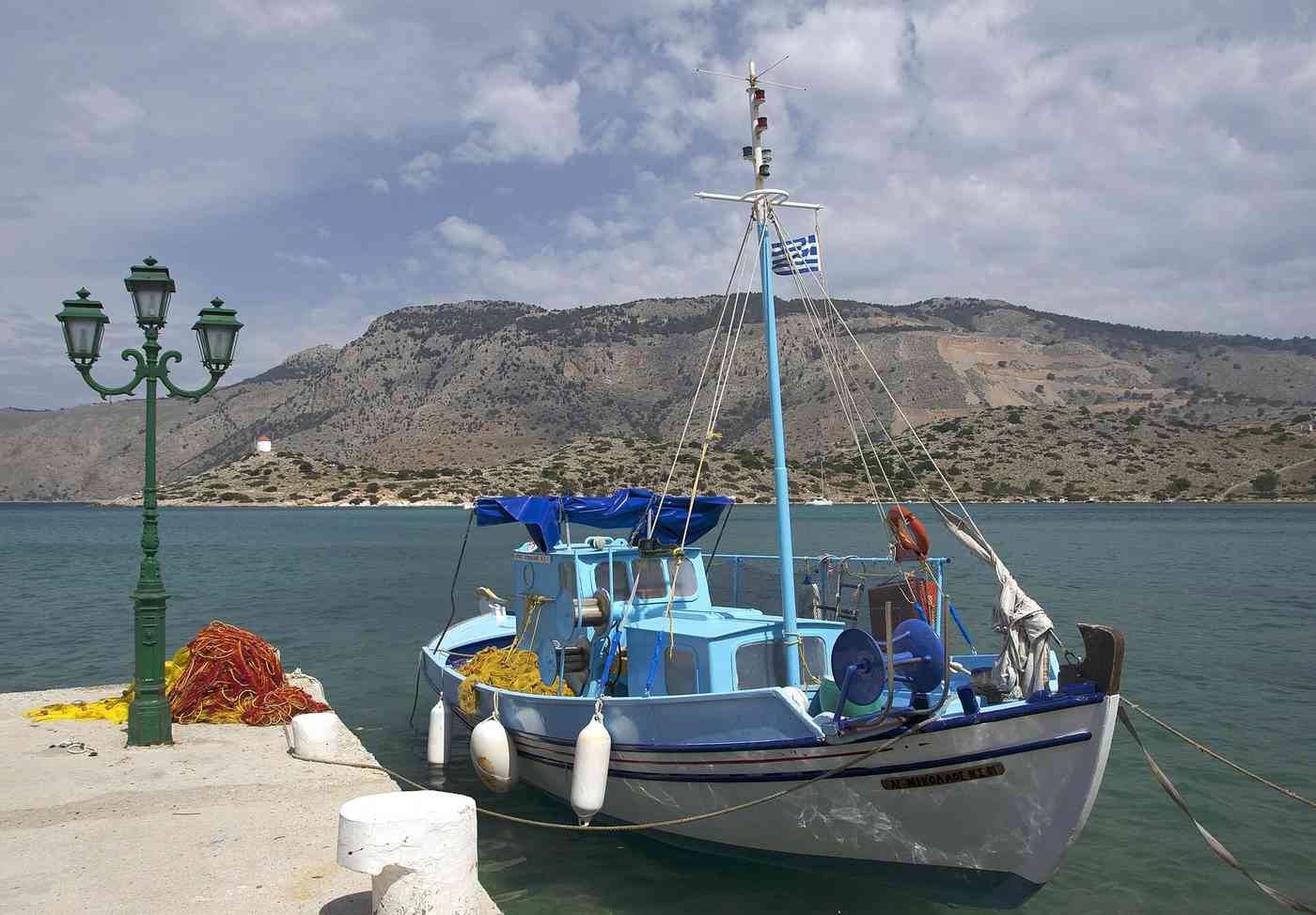
Nimborio is a small settlement and beach on the northwest side of Symi, set across the bay from the harbour of Gialos. The name also appears as Emborios or Nimborios on maps and signs. A shingle and pebble shore lines the waterfront, backed by tamarisk trees and a scatter of waterside tavernas and rooms. The bay faces west, so the water stays calm and the light turns golden at the end of the day. This guide covers where Nimborio sits, how to reach it from Symi Town, the beach and its swimming, the early-Christian mosaics and the rock-cut Dodeka Spilia nearby, and where to eat and stay beside the sea.
Nimborio offers a quieter alternative to the busy quayside of Gialos, a short trip of three to four kilometres from the main harbour. A road, a local bus and a taxi-boat across the water link the two, so day visitors reach the beach with ease. The shallow, clear water and the tamarisk shade suit families and children, and the sheltered bay keeps the sea flat through the day. This overview sits within the wider Symi vertical, pointing to detailed guides on the town, the ferry routes and the neighbouring bays that frame a stay on the island.
What and where is Nimborio beach on Symi?
Nimborio is a small settlement and beach on the northwest side of Symi, set across the bay from the harbour of Gialos. Also written Emborios or Nimborios, it holds a shingle beach, tavernas and rooms beside calm, sheltered water.
Nimborio lies on the northwest coast of Symi, one of the Dodecanese islands close to the Turkish shore. The settlement sits across the wide bay from Gialos, the main harbour of the island. Low hills covered in scrub rise behind the waterfront, and the shore curves in a gentle arc along the sea. A handful of houses, tavernas and rooms line the beach road, backed by tamarisk trees. The bay opens to the west, so the water stays sheltered from the meltemi wind that stirs other coasts. Fishing boats and small yachts anchor offshore in the calm shallows. This compact scale keeps Nimborio quiet and local, a short trip from the crowds of the main port on Symi.
The name Nimborio appears in three forms across maps, signs and guidebooks. Emborios and Nimborios both point to the same beach and settlement on the northwest of the island. The word traces back to the Greek term for a trading post or market by the sea. Nimborio grew as a small harbour and farming edge of the bay, away from the grand mansions of the port. Stone houses and low modern rooms now spread along the waterfront and the slopes above. A chapel, a jetty and a row of tavernas mark the built-up core beside the shingle. The rest of the shore stays open and backed by trees. This mix of names and calm shore sets Nimborio apart from Gialos over the bay.
Nimborio ranks among the calmest corners of Symi, well away from the bustle of the ferries and day boats. The bay holds a beach, a scatter of tavernas and rooms rather than shops and crowds. Boats anchor overnight in the shelter of the west-facing water, and swimmers share the shallows with the odd yacht. The pace runs slow, and the evenings stay quiet once the day trippers return to the port. Rooms and studios give a seaside base without the noise of the main harbour. The shingle shore and the tamarisk shade draw families who want the sea within easy reach. This local character brings back visitors who prefer calm water to the busy quay of Gialos on Symi.
The bay sits on the western flank of the island, facing the open sea and the sunset. Rocky ridges frame the shore, and old paths climb from the beach to the chapels above. The water runs clear and shallow near the shingle, then deepens toward the mouth of the bay. Goats graze the lower slopes, and the smell of herbs drifts down from the dry hillside. A single surfaced road links Nimborio with Symi Town, dropping to the waterfront within a couple of minutes. The setting keeps the settlement compact, so the beach, the tavernas and the rooms stand within a short walk of one another. This tight layout beside the sea gives Nimborio its restful character on the northwest coast of Symi.
How do you get to Nimborio on Symi?
Nimborio lies three to four kilometres from Symi Town on the northwest coast. A surfaced road carries cars and the local bus to the beach, and a taxi-boat crosses the harbour from Gialos through the warm season.
Reaching Nimborio starts with the wider question of how to get to Symi, since the island has no airport of its own. Ferries and day-cruises from Rhodes land at Gialos, the main harbour, and the route to Nimborio begins there. The road runs northwest around the bay and drops to the waterfront within minutes. Signs point the way, and the surfaced road carries cars, scooters and the island bus. Travellers arriving by yacht anchor straight off the beach in the sheltered bay. The short distance of three to four kilometres makes Nimborio an easy base for anyone who wants the town within quick reach. This range keeps the beach open to day visitors and overnight guests alike on Symi.
The local bus links Symi Town with Nimborio on a regular timetable through the warm season. The minibus climbs from the clock tower at Gialos and runs round the bay to the beach road. The ride takes under ten minutes and costs a flat fare paid to the driver. Taxis wait at the harbour rank and cover the route in a similar time for a set charge. Walkers follow the road or the older coast path, a route of about half an hour on foot. The bus schedule thins in the evening, so visitors staying for dinner check the last return time before they set out. This choice of road transport keeps Nimborio within easy reach of the port and the ferries on Symi.
The taxi-boat gives the most scenic link between Gialos and Nimborio across the water. Small local craft leave the main harbour on a fixed schedule and cross straight to the beach. The trip lasts a matter of minutes and skips the road around the bay. Passengers pay a modest fare on board and pick a return time in the afternoon. The short sea crossing turns a simple transfer into part of the day out. Riders watch the mansions of the port shrink behind them as the calm bay opens ahead. This water route lets visitors reach Nimborio without a car and lands them steps from the shingle. The boats run through the summer, when the sea stays flat across the harbour of Symi.
Drivers reach Nimborio on the single surfaced road that runs northwest from Symi Town. Parking spreads along the beach road and the edges of the settlement, though space fills on summer weekends. Rented scooters and small cars give independent range to the bay and back again. The road stays narrow in places, with tight bends on the descent to the shore. Fuel and hire outlets cluster around Gialos rather than at Nimborio, so drivers refuel before the trip. The compact layout means a visitor can leave the car at the head of the beach and cover the shore, the tavernas and the water on foot. This easy access by road and boat makes Nimborio a simple half-day trip from the port of Symi.
What is Nimborio beach like on Symi?
Nimborio beach is a shingle and pebble shore on the northwest of Symi, backed by tamarisk trees. The water runs shallow, calm and clear, sheltered from the wind, which suits families and children who swim close to the shingle.
Nimborio beach curves along the waterfront where the bay meets the settlement. The shore mixes grey shingle and small pebble, backed by tamarisk trees and a paved beach road. The water deepens gently from the shingle, so the shallows stay calm and warm through the day. Sunbeds and umbrellas cover part of the beach, while the rest keeps an open, local feel. A jetty and a scatter of small boats mark the working side of the bay. Swimmers share the clear water with the odd yacht anchored offshore. The west-facing bay keeps the sea flat when the meltemi wind stirs the exposed coasts elsewhere on the island. This calm, shaded shore makes Nimborio an easy swim on the northwest of Symi.
The shingle and pebble floor gives Nimborio clear water that stays clean and bright. The lack of fine sand keeps the sea from clouding, so swimmers see the stones on the bottom. Tamarisk trees line the back of the beach and throw natural shade over the shingle. Hired umbrellas add cover for those who settle in for the day. The gentle slope of the shore lets children wade far out over calm, shallow water. The mouth of the bay opens west, so the light stays soft and the surface stays flat. Snorkellers find rocky patches at the edges of the beach that hold small fish. This mix of clear water, shade and shelter marks Nimborio as a swimming beach on Symi.
Families favour Nimborio for the shallow, sheltered water at the edge of the bay. Children wade far out over a gentle shingle floor before the depth increases toward the open sea. The calm surface and the short walk from the road make the beach easy for parents. Shade comes from tamarisk trees and hired umbrellas along the shore. Tavernas sit steps from the shingle, so lunch and cold drinks stay within reach. The lack of strong currents and the shelter of the west-facing bay keep the swimming safe in settled weather. This blend of shallow water, shade and nearby food explains why Nimborio draws families staying across the island of Symi through the warm months of the year.
The beach at Nimborio sits a short trip from Symi Town and Gialos, yet it feels a world apart from the busy quay. The port fills with day visitors from Rhodes, while the beach keeps a slow, local pace. Swimmers cross by road, bus or taxi-boat and settle on the shingle for the day. The waterfront stays low-key, with tavernas, a chapel and rooms rather than large hotels. Evenings bring a quiet local crowd to the beach tables as the light fades over the bay. The pace here runs slower than the crowded harbour front of the port. This calm setting gives Nimborio a character all its own on the northwest coast of Symi.
What can you see near Nimborio on Symi?
Nimborio holds early-Christian mosaic floors near the settlement and a rock-cut site known as the Dodeka Spilia, the twelve caves. These ancient remains sit close to the beach, so visitors pair a swim with a short walk to the ruins.
Early-Christian mosaic floors lie near the settlement of Nimborio, a trace of a basilica from late antiquity. The patterned stone floors survive in the open ground behind the beach, close to the shore. Geometric designs and simple motifs run across the surviving panels of the mosaic. The floors mark the site of an early church that once stood on the northwest of the island. Visitors reach the remains on a short walk from the waterfront along a marked path. Low walls and scattered stone around the floors hint at the plan of the old building. This quiet archaeological site gives Nimborio a layer of history beyond the beach and the tavernas on Symi.
The Dodeka Spilia, the twelve caves, form a rock-cut site a short way from Nimborio. The name points to a row of chambers carved into the rock near the shore. The hollows served as tombs or store rooms in the distant past, cut by hand into the stone. A path from the beach reaches the site, which sits close to the early-Christian floors. Visitors explore the carved openings and the views over the bay from the rock. The bare stone and the sea below give the spot a stark, quiet feel. This rock-cut monument adds a second ancient site to a short walk from the shingle of Nimborio on the northwest of Symi.
Nimborio pairs a beach day with a short archaeological walk on the northwest of the island. The mosaic floors and the Dodeka Spilia sit within easy reach of the waterfront on marked paths. Visitors swim in the calm bay, then dry off and follow the trail to the ruins. The route runs across open ground backed by dry hills and the odd chapel. Sturdy shoes and water help on the stony path in the heat of the day. The sites carry no ticket or gate, so walkers explore them at their own pace. This blend of swimming and history sets Nimborio apart from beaches that offer only the sea on Symi.
Chapels and old paths ring the bay of Nimborio, giving walkers routes above the shore. Whitewashed churches stand on the slopes and headlands, marking the ground of the settlement. Trails climb from the beach toward Symi Town and the upper village of Chorio. The dry hills carry herbs, goats and the odd stone terrace from older farming days. Views open across the bay to the mansions of Gialos and the open sea beyond. The walks stay short but stony, so hats and water make the routes easier. This network of paths and chapels frames a beach visit with the quiet backcountry of the northwest coast of Symi.
Why does Nimborio suit a sunset swim on Symi?
Nimborio faces west, so the bay catches the evening light and the sun sets over the water. The calm, sheltered sea and the shingle shore make a late swim easy, away from the day-trip crowds that fill Gialos by day.
The west-facing bay gives Nimborio a clear view of the sunset over the open sea. The sun drops behind the water rather than the hills, so the light lingers on the beach. Swimmers stay in the calm shallows as the sky turns gold and pink over the bay. The tavernas along the shore fill for evening drinks and dinner beside the water. The shingle holds the warmth of the day, and the sea stays flat in the still air. Boats swing at anchor offshore as the light fades over the northwest coast. This evening setting marks Nimborio apart from the east-facing bays that lose the sun early on Symi.
A late swim at Nimborio pairs the calm sea with the colours of the evening sky. The sheltered bay holds its warmth after the day trippers leave for the port. Swimmers have the shingle and the shallows near to themselves once the boats head back. The clear water stays flat in the still evening air, so a slow swim comes easy. Families linger over dinner at the waterside tavernas as the light drops. The west view turns the whole bay toward the sunset, a rare angle among the island beaches. This quiet end to the day gives Nimborio a draw beyond the swimming and the shingle of the busier coves on Symi.
The sunset crowd at Nimborio stays small and local, unlike the packed quay of the port. Visitors drive, ride the bus or catch the taxi-boat back to the beach for the evening. The tavernas open onto the water, so diners watch the light fade as they eat. The calm bay reflects the sky, doubling the colours across the flat sea. The dry hills behind the shore glow warm in the last of the sun. Boats and the odd swimmer break the still surface of the bay. This blend of calm water, open view and quiet tables makes Nimborio a favoured spot for the end of a day on Symi.
The west-facing angle also shapes the daytime feel of Nimborio on the northwest coast. Morning light stays soft on the beach, while the strong sun arrives later over the ridge. The bay dodges the worst of the meltemi wind that hits the north and east shores. Calm water through the day suits swimmers, snorkellers and families with young children. The evening then brings the sunset that sets the beach apart from its neighbours. This steady arc of light, from soft morning to golden dusk, runs across the sheltered bay. Such a rhythm gives Nimborio an easy, restful character through the whole day on Symi.
Where can you eat and stay at Nimborio on Symi?
Nimborio holds a handful of waterside tavernas and rooms along the beach, a quieter base than the harbour of Symi Town. The tavernas serve fresh fish and Greek dishes, and the rooms suit visitors who want calm water near the sea.
Nimborio holds a small cluster of rooms and studios set back from the beach. The buildings stay low and spread along the waterfront and the lower slopes behind the shore. Guests wake to the bay and the calm water rather than the bustle of the main port. The quiet setting suits families, walkers and returning visitors who value calm over nightlife. A short ride or trip by boat links the rooms to the shops and ferries of Symi Town. Rooms fill through the warm months, so early booking counts on this limited stretch of coast. This modest scale keeps Nimborio personal, without the large resort hotels absent from the whole island of Symi.
Waterside tavernas line the Nimborio beach, plating fresh fish landed by the local boats. Cooks serve Symi shrimp, the tiny garides eaten whole, alongside octopus, calamari and grilled catch. Salads, wild greens and mezes fill the tables under the tamarisk trees by the water. Meals stretch across the evening as the light fades over the west-facing bay. Prices run gentler than the busiest corners of the port, and the pace stays slow and local. Diners reach the tavernas on foot from the beach or by taxi-boat from Gialos. This handful of family kitchens makes Nimborio a favoured spot for a long, quiet dinner beside the sea on Symi.
Nimborio keeps its services simple, with tavernas, a chapel, a jetty and rooms around the shore. The beach and the water sit within a couple of minutes of the rooms and the tables. Guests stock up on wider supplies in Gialos, a short bus, road or boat trip away. Evenings stay quiet once the day boats leave, and the beach tables draw a local crowd. The mosaic floors and the Dodeka Spilia offer a short walk from the waterfront. Fuel, banks and the larger shops sit at the port rather than the beach. This easy, self-contained layout lets visitors settle into Nimborio without the crowds of the busier corners of Symi.
Nimborio rewards travellers who want a calm, seaside base close to the sights of the island. Families choose it for the shallow water, the short walks and the relaxed beach tavernas. Walkers use it as a start point for the chapels, the mosaics and the coast paths behind the shore. Swimmers and snorkellers value the clear, sheltered water off the shingle. Rooms and studios book up across summer, so visitors secure a place well ahead of the trip. The bus, road and taxi-boat keep the shops and ferries of Symi Town within easy reach. This balance of quiet and access makes Nimborio a steady favourite among returning guests to the island of Symi.
How does Nimborio compare with Gialos and Pedi on Symi?
Nimborio is calmer and more local than Gialos, the main harbour, and it faces west across the bay. Pedi lies on the east coast with a sandy beach, while Nimborio offers a shingle shore, sunset swims and quiet water on Symi.
Gialos wraps around the main harbour of Symi, lined with tiers of neoclassical mansions. Ferries, day-cruises, shops and tavernas crowd its quay from morning until late evening. Nimborio, across the bay to the northwest, keeps a quieter pace along its shingle shore. The main port handles arrivals, sponge stalls and the bustle of the town, while Nimborio holds a beach and calm water. One offers the buzz and the sights, the other a sheltered swim and the sunset. Visitors often base themselves near the port and ride out to Nimborio for the beach. This contrast lets a stay on Symi mix the lively harbour with a restful seaside retreat close by.
Nimborio and Pedi sit on opposite flanks of the island, so a boat day can link the two. Pedi lies on the east coast, a fishing village with a sandy beach and a green valley behind it. Nimborio faces west on the northwest coast, with a shingle shore and a sunset view over the sea. Pedi catches the morning light, while Nimborio holds the calm of the evening. Both keep a quiet, local pace away from the crowds of the port. Swimmers who tour the coast pair the sandy east bay with the shingle beach to the west. This contrast gives a stay on Symi two calm bays with a different feel each.
Choosing between Nimborio, Pedi and Gialos comes down to the balance a visitor wants. Gialos puts ferries, dining choice and the sights of the town at the doorstep. Nimborio trades that bustle for a shingle beach, calm water and the sunset over the bay. Pedi adds a sandy shore and a green valley on the sheltered east coast. Day visitors from Rhodes see Gialos and rarely cross to the quieter bays. Overnight guests gain the choice of all three, riding the road or the taxi-boats between them. Families and walkers lean toward Nimborio and Pedi, while shoppers and ferry travellers favour the main port of Symi.
The three bays frame Symi from different angles across the low ridges between them. Gialos shows the tiered mansions rising in an amphitheatre above the busy quay. Nimborio opens onto a west-facing shore with clear water and the sunset beyond. Pedi spreads along a green bay backed by orchards on the east coast. Roads, buses and taxi-boats connect the port with both beaches in under ten minutes. Walkers cross between them on old paths over the dry hillside. This close pairing puts the grand harbour and the two quiet bays within easy reach on a single visit to the island of Symi.
Frequently Asked Questions
Where is Nimborio on Symi?
Nimborio is a small settlement and beach on the northwest coast of Symi, set across the bay from the harbour of Gialos. The name also appears as Emborios or Nimborios on maps and signs. It lies three to four kilometres from Symi Town, reached by road, by the local bus or by a taxi-boat across the harbour. The shingle beach faces west, holds calm and clear water, and backs onto tamarisk trees, a chapel and a handful of waterside tavernas and rooms beside the sea.
Is Nimborio beach good for families?
Nimborio beach suits families well, thanks to the shallow, sheltered water at the edge of the bay. The sea deepens gently over a shingle and pebble floor, so children wade safely near the shore. The west-facing bay stays calm when the wind stirs the open coasts of Symi. Tamarisk trees and hired umbrellas give shade along the beach, and tavernas sit steps from the shingle for lunch and cold drinks. The short walk from the beach road makes the shore easy to reach with young children through the warm months.
How do you get from Symi Town to Nimborio?
Nimborio lies three to four kilometres from Symi Town on the northwest coast, reached in three ways. A local bus climbs from the clock tower at Gialos and runs round the bay to the beach in under ten minutes. Taxis cover the same route quickly for a set fare from the harbour rank. A taxi-boat crosses the water from Gialos through the warm season, giving a short coastal ride straight to the shingle. Walkers follow the road or the older coast path over the hillside in about half an hour on foot.
What can you see near Nimborio?
Nimborio holds two ancient sites within a short walk of the beach on the northwest of Symi. Early-Christian mosaic floors survive in the open ground behind the shore, the trace of a basilica from late antiquity, with geometric patterns across the stone. The Dodeka Spilia, the twelve caves, form a rock-cut site nearby, a row of chambers carved by hand into the rock. Both sites carry no gate or ticket, so walkers explore them at their own pace. Marked paths link the beach with the ruins across open, stony ground.
Why does Nimborio face the sunset?
Nimborio sits on the northwest coast of Symi, so its bay opens to the west and the open sea. The sun drops behind the water rather than the hills, which gives the beach a clear view of the sunset. Swimmers stay in the calm shallows as the sky turns gold over the bay, and the tavernas fill for evening drinks and dinner beside the water. The west angle also shelters the bay from the meltemi wind that hits the north and east coasts, so the sea stays flat through the day and into the evening.
Is Nimborio quieter than Gialos on Symi?
Nimborio is calmer and more local than Gialos, the main harbour of Symi Town. Gialos handles the ferries, shops and day-cruise crowds from Rhodes, who leave by late afternoon. Nimborio keeps a shingle beach, calm water and a handful of tavernas and rooms at a slower pace. The two sit across the bay, three to four kilometres apart, linked by road, bus and taxi-boat. Families, walkers and swimmers favour Nimborio and its west-facing shore, while shoppers and ferry travellers base themselves at the main port of the island.