
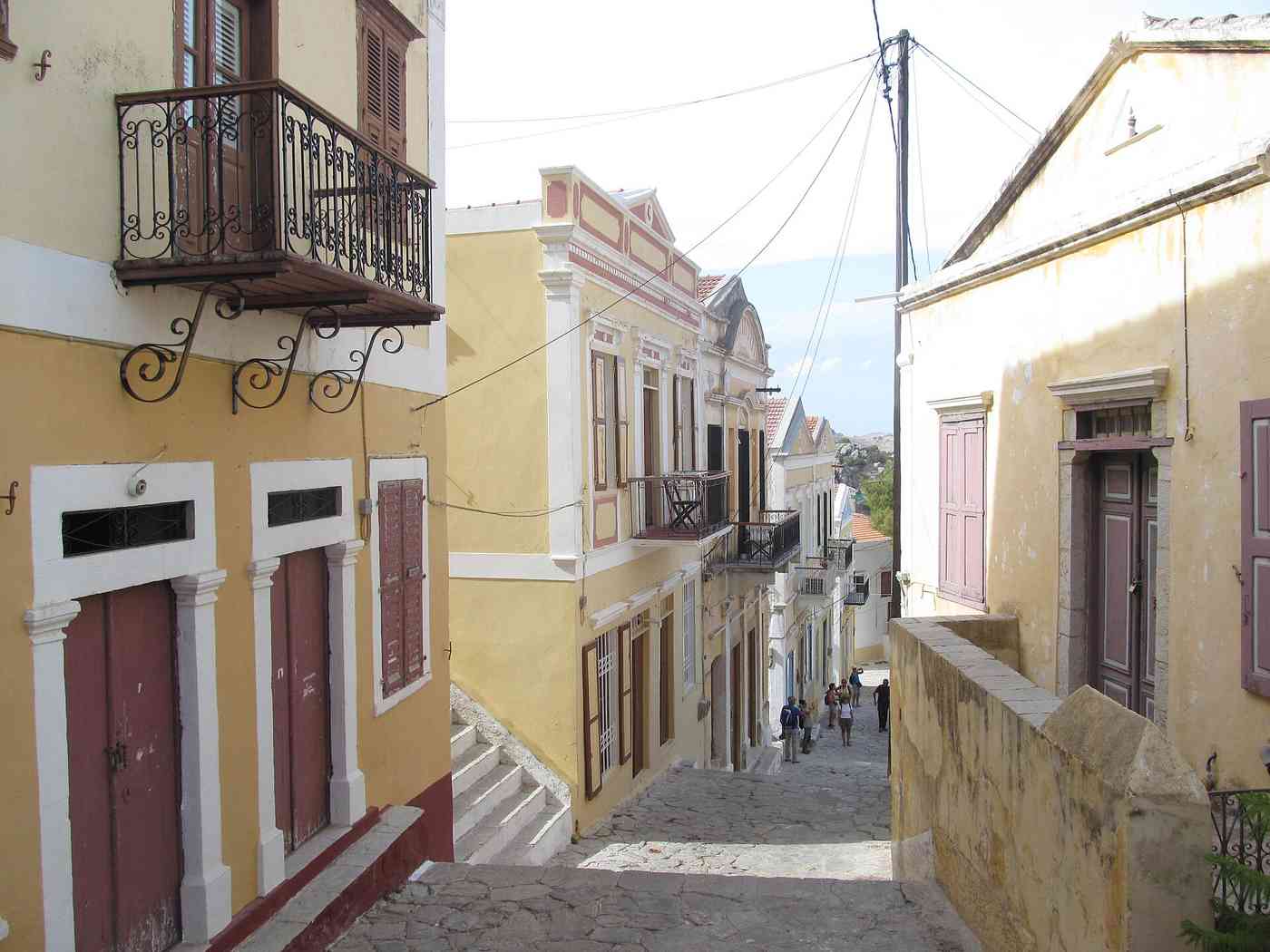
The Kali Strata is the broad stone stairway that climbs from Gialos, the harbour of Symi, to Chorio, the old town on the hill above. The name means the good steps. Roughly 500 wide treads of stone and marble carry residents and visitors between the two levels of the town. The stairway passes neoclassical mansions, small chapels and quiet courtyards. This guide covers the meaning, the step count, the climb time, the mansions, the destination at the top and the parallel Kataraktis route.
Walking the Kali Strata reads as a walk through the history of Symi. The stairway served as the main artery of the town before the coastal road, and residents used it every day. Restored houses stand beside empty shells along the climb. The steps are lit after dark, and the cool hours of early morning and evening suit the ascent. This page anchors the stairway within the wider Symi vertical, linking the harbour, the upper town and the routes around the island.
What is the Kali Strata on Symi?
The Kali Strata is the broad stone stairway that links Gialos, the harbour of Symi, to Chorio, the upper old town on the hill. The name means the good steps in Greek, and the route remains the main pedestrian link between the two levels.
The Kali Strata forms the historic spine of Symi Town. The stairway rises from the waterfront at Gialos to the ridge of Chorio, the older quarter of Symi. The two settlements sit on different levels, and the steps join them in a single climb. The lower town wraps around the harbour, while the upper town holds the churches and the castle site. The name Kali Strata translates as the good steps, a label earned by the wide, even treads. The route works as a street rather than a rough path. Residents, day visitors and pilgrims all use the same stairway to move between the port and the hill above the bay. The stairway stays in view from the harbour tables at the water’s edge below.
The good steps carry more history than any road on Symi. The stairway existed as the main artery of the town before the coastal road reached the harbour. Families walked it daily to reach homes, shops and churches on the higher ground. Merchants and sponge captains built their houses along the ascent during the island’s trading years. The wide treads let loaded mules and walkers share the route. The stairway climbs in a steady line, broken by landings and small platforms. Stone walls and painted doorways frame each stretch of the climb. The Kali Strata still functions as a working thoroughfare, not a preserved relic, and residents of Chorio pass along it on ordinary errands throughout the day and evening.
The Kali Strata sets the tone for a first visit to the upper town. The stairway starts a short walk inland from the quay at Gialos, near the shops and tavernas of the port. Signs and the flow of walkers point the way toward the base of the steps. The lower treads pass guesthouses and cafes built into restored mansions. The gradient stays gentle at first, then climbs more steadily toward Chorio. Bougainvillea and potted plants spill over the walls beside the route. The stone underfoot shifts between grey slabs and paler marble worn smooth by generations of feet. The climb rewards a slow pace, and the widening view over the harbour opens with each landing gained on the way up.
The two-level layout of Symi Town explains the need for the Kali Strata. Ships anchored in the deep harbour at Gialos, so trade and arrivals gathered at sea level. Homes and churches spread up the safer ground of Chorio on the ridge. The stairway stitched the working port to the residential hill. Walkers still feel that division on the climb, moving from the busy quay to the quiet lanes above. The lower steps carry the noise of the harbour, and the upper steps meet the calm of the old town. This vertical town shaped daily life across the trading century. The Kali Strata remains the thread that ties the two halves of Symi into a single place.
How many steps does the Kali Strata on Symi have?
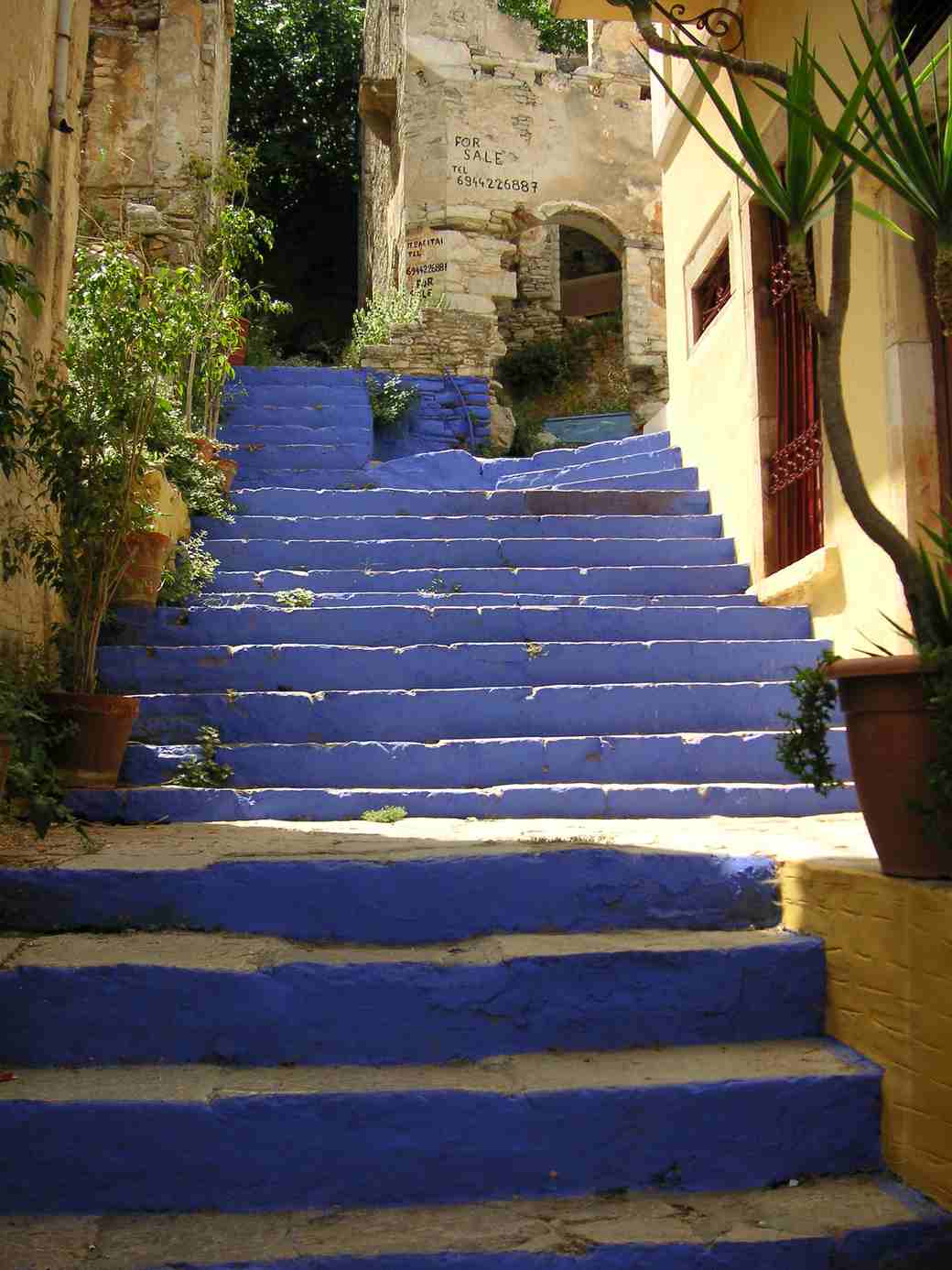
The Kali Strata has roughly 500 wide steps of stone and marble. The treads climb from the harbour at Gialos to Chorio in a steady line. Their width and even surface make the stairway a stone street rather than a narrow path.
The step count of the Kali Strata sits at about 500 treads. The exact figure shifts with where a walker starts at the harbour and stops in the upper town. The treads run wide across the full breadth of the stairway. Stone slabs form most of the surface, and marble sections appear along the older stretches. The width sets the Kali Strata apart from the tight lanes of other island towns. Two people climb side by side without crowding. The scale reflects the wealth that built Symi Town, since a grand stairway matched the tall mansions rising along it. The 500 steps give the route its identity and its Greek name, the good steps, earned by their generous proportions.
The surface of the Kali Strata blends stone and marble underfoot. Grey slabs pave the bulk of the climb, laid in broad courses across the width. Marble treads mark the sections near the finer mansions and the landings. Generations of feet have polished the stone to a smooth sheen. This polish turns slick after the rare rain, so grip matters on the descent. The treads rise at a measured height, which keeps the gradient walkable rather than steep. Low retaining walls hold the stairway against the slope of the hill. The builders cut the steps wide to carry the daily traffic of a busy port town. The result reads as engineered infrastructure, a stone road climbing the hillside of Symi in ordered tiers.
The width of the Kali Strata carried the working life of Symi. Loaded mules once climbed the treads beside residents heading home. Water carriers, traders and builders used the same broad steps every day. The generous scale let heavy loads pass without blocking foot traffic. Compared with the stepped alleys of the Cyclades, the Kali Strata reads as a boulevard. Landings break the ascent at intervals and give room to rest or let others pass. Cafes and guesthouses along the lower steps set out tables on the flat sections. The stairway holds its width from the base at Gialos to the squares of Chorio. This deliberate breadth explains why the route earned the name the good steps rather than a plain stair.
Counting the treads of the Kali Strata occupies more than one climber on the way up. The rough total near 500 covers the full run from the quay to the upper squares. Different starting doorways and finishing lanes shift the tally by a dozen steps. Landings interrupt the count and reset the rhythm of the climb. The wide treads and the steady rise make the numbers easy to lose. What stays fixed is the scale, a stairway broad enough for a working port town. The 500 steps stand as the figure repeated across guides to Symi. The exact number matters less than the effort and the reward of reaching Chorio at the top of the hill.
How long does it take to climb the Kali Strata in Symi?
The climb up the Kali Strata takes about 15 to 20 minutes at a steady pace. Early morning and the hour before sunset offer the coolest walking conditions. The steps are lit after dark, so an evening ascent stays clear and safe.
The climb from Gialos to Chorio runs about 15 to 20 minutes. Pace, stops and the summer heat stretch or shorten that figure. A steady walker reaches the upper squares inside 20 minutes without rushing. Rest landings along the route invite short pauses for the view. The gradient holds a constant angle, which lets walkers settle into a rhythm. Fitness and footwear shape the experience more than the raw distance. The stairway gains real height between the harbour and the ridge, so the legs feel the effort. Carrying water eases the walk in the warm months. The 15-to-20-minute climb turns the link between the two towns into a short, rewarding journey rather than a chore up the hill.
The best hours for the Kali Strata fall in early morning and the evening. Midday sun strikes the open slope, and shade stays limited along the treads. Morning light keeps the stone cool and the harbour view crisp. Evening brings a softer glow across the mansion facades and the water below. The steps are lit after dark, so an ascent after dinner stays safe and clear. Walkers heading up for sunset reach the top as the harbour turns gold. Heat builds fast on the treeless hillside between late morning and mid-afternoon. Avoiding that window keeps the climb comfortable through the warm season. The lighting at night also draws photographers, who frame the glowing stairway against the darkened rooftops of Symi Town.
Timing the climb around the day-cruise pattern rewards an overnight visitor. Day boats from Rhodes land in the morning and leave in the late afternoon. Walking the Kali Strata after the boats depart returns the steps to a quiet calm. The evening ascent meets residents returning home and diners heading to the upper tavernas. Early risers gain the stairway to themselves before the port wakes. The cool of first light suits a climb toward the castle site and the squares. Visitors on a single day trip fit the walk between lunch and the return sailing. Planning the climb for the softer hours turns a hot, exposed stair into a measured walk through the heart of the old town on Symi.
The descent of the Kali Strata runs faster than the climb but demands more care. Gravity shortens the return toward Gialos to little over 10 minutes. The polished stone turns slick underfoot, so a controlled pace protects the knees. Families with children take the steps slowly in both directions. Older walkers use the landings to break the effort into stages. The steady gradient suits a range of fitness levels rather than only the fit. A relaxed group allows extra time for photographs and rests. Both the climb and the descent reward unhurried timing over speed. Building the walk into a morning or evening plan leaves room to enjoy the stairway and the views across Symi Town.
What mansions line the Kali Strata on Symi?
Neoclassical mansions line the Kali Strata along its full climb. Sponge merchants and ship captains built them during the island’s trading years. Restored houses stand as lived-in homes beside others left as open shells from the years of decline.
Neoclassical mansions define the walls of the Kali Strata. Captains and sponge merchants raised these tall houses during the island’s wealthy trading years, the same era that shaped Symi Town and Gialos. Pedimented facades, carved cornices and painted shutters face the steps. Ochre, cream and dusty pink coat the plaster fronts. Tiled roofs and iron balconies complete the architectural style. The grandest houses stand on the lower and middle stretches, closest to the harbour trade. Their scale matched the fortunes made from sponge diving and shipping. The mansions turn the stairway into an open-air record of the island’s building tradition. Each facade along the climb marks the ambition of a merchant family from the port below.
The mansions along the Kali Strata split between restored homes and empty shells. Careful restoration has returned scores of facades to their painted, shuttered state. Owners live in these houses year-round, and washing lines and herb pots mark the occupied doorways. Other mansions stand roofless, their windows open to the sky. These shells date from the decline that followed the collapse of the sponge trade and the wartime years. Ivy and wildflowers claim the abandoned interiors. The contrast between the polished and the ruined gives the climb its texture. A restored suite sits beside a crumbling neighbour on the same landing. This mix of repair and ruin tells the economic story of Symi in a single stretch of the stone stairway.
The restored mansions along the Kali Strata now hold guesthouses and studios. Owners have converted the tall rooms into rentals that keep the original stonework and painted ceilings. Guests wake to harbour views framed by the old shuttered windows. The conversions fund the upkeep that saves the facades from ruin. Small cafes and craft shops occupy other ground floors on the lower steps. This reuse keeps the stairway alive rather than turning it into a museum piece. Visitors staying along the route climb and descend the steps as part of daily life. The renovated houses anchor a quiet trade in rooms above the port. Choosing a base on the Kali Strata puts a traveller inside the architecture that defines the upper town of Symi.
The colours of the Kali Strata mansions follow a set palette of the island. Ochre, deep red, cream and faded blue coat the plaster fronts. Stone quoins and carved lintels frame the doors and tall windows. Wooden shutters, painted to match or contrast, close against the summer sun. The style borrowed from the wider building fashion of the trading century. Symmetry governs each facade, with balanced windows around a central door. The decline that emptied the shells followed the fall of the sponge trade and hard years of occupation. Restoration since has revived the original scheme on the occupied houses. The painted fronts along the climb record the taste and the wealth of the port at its height.
Where does the Kali Strata lead in Symi?
The Kali Strata ends near the squares of Chorio, the upper town of Symi. The top holds churches, the Kastro castle site and the town museum. The ridge opens wide views over the harbour and the bay below.
The Kali Strata delivers walkers to the heart of Chorio. The top of the climb opens onto small squares ringed by houses and cafes. Narrow paved lanes branch off toward the churches and the castle site. The Church of the Panagia stands within the old quarter above the steps. A town museum nearby holds finds and objects from the island’s past. Residents gather in the upper squares away from the harbour bustle. The finish of the stairway marks the historic core of Symi, settled long before the port grew below. Walkers pause at the top to catch breath and take in the view. The squares of Chorio reward the climb with the quiet everyday life of the upper town.
The ridge above the Kali Strata carries the Kastro, the medieval castle site of Symi. The fortress crowns the ancient acropolis at the highest point of Chorio. Its walls and the chapel inside look out over the bay and the coast toward Turkey. From the same height, the land drops east toward Pedi and its sheltered bay. The castle site rewards the extra climb beyond the main squares. Stone stairs and lanes lead up from Chorio to the summit. The view stretches across the tiered rooftops, the harbour mouth and the open sea. Walkers who reach the Kastro gain the widest outlook on the island. The castle ties the upper town to the long defensive history of Symi.
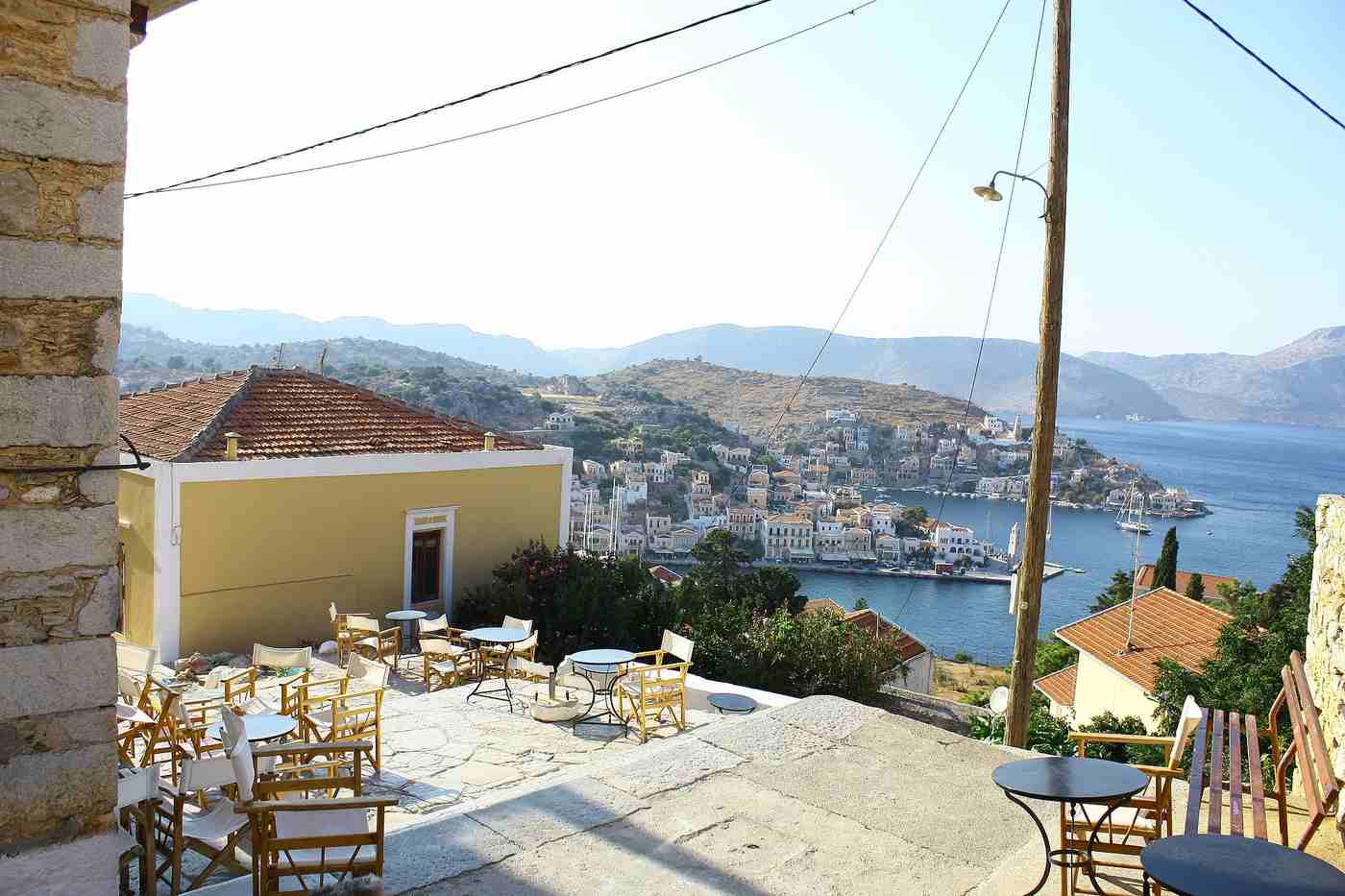
The view stands as the reward at the top of the Kali Strata. The harbour of Gialos spreads directly below, its mansions stacked around the water. The tiered rooftops fall away in ochre and terracotta toward the quay. The bay opens beyond the harbour mouth toward the neighbouring coast. Boats trace white wakes across the blue as they come and go. The outlook shifts through the day, sharpest in the clear morning light. Photographers favour the descent, framing the rooftops and the port from the upper steps. The wide panorama explains part of the appeal of the climb. Reaching the ridge of Chorio turns the effort of the stairway into a sweeping survey of Symi Town and its harbour.
The churches around the top of the Kali Strata anchor the faith of Chorio. Bell towers rise above the lanes and mark the skyline of the upper town. The Church of the Panagia holds a place within the old quarter near the squares. Painted interiors and carved screens fill the larger churches. The town museum gathers finds, costumes and objects from the island’s past. Feast days fill the upper squares with residents and returning families. The religious and civic core of Symi sits at the head of the stairway, not by the harbour. Reaching this ground on foot connects the climb to the working heart of the old community. The top of the steps holds the layered memory of the town.
What is the Kataraktis stairway on Symi?
The Kataraktis is a second stone stairway on Symi that runs parallel to the Kali Strata. It also connects Gialos and Chorio on foot. The route gives walkers an alternative climb between the harbour and the upper town.
The Kataraktis runs as the second stairway between the two levels of Symi Town. The route climbs a parallel line to the Kali Strata, linking Gialos and Chorio. Walkers use it as an alternative path up or down the hill. The name Kataraktis points to the run of water that once followed the slope. This stairway carries lighter traffic than the main good steps. Residents and walkers who know the town take it to vary the climb. The two stairways give the upper town foot access where roads stay limited. A visitor can climb one route and descend the other. Combining the walk with a boat trip to Panormitis Monastery rounds out a full day on Symi.
The two stairways of Symi Town serve the same purpose in different lines. The Kali Strata holds the mansions, the cafes and the main flow of walkers. The Kataraktis climbs a quieter parallel course up the hillside. Both routes rise from the harbour level to the squares of Chorio. The upper town has limited road access, so the steps remain the practical link on foot. Locals choose between the two by habit and by errand. The parallel stairways reflect a town built for walkers before cars arrived. Neither route allows vehicles, which keeps the climb a purely pedestrian affair. Knowing both paths lets a visitor loop through Chorio and back to Gialos without retracing the same stretch of stone.
The Kataraktis rewards walkers who want to explore beyond the main stairway. The quieter route passes houses and courtyards away from the cafe tables of the Kali Strata. Its treads carry the same stone construction as the better-known climb. The path offers a different angle on the mansions and the rooftops. Walking up one stairway and down the other builds a loop through the old town. This circuit reveals corners of Chorio that the direct climb misses. The Kataraktis keeps the residential calm of the upper lanes. Both stairways date from the town’s building years and share its stonework. Tracing the pair gives a fuller sense of how Symi Town knits its harbour and its hilltop quarter together on foot.
Finding the Kataraktis takes a short search off the main route on Symi. The stairway climbs a line set apart from the busier Kali Strata. Its name recalls the water that ran down the slope in the rains of winter. Local knowledge points walkers to the lower entrance near the harbour lanes. The route gains the ridge of Chorio by a quieter course. Stone treads and plain walls mark the climb without the cafes of the main steps. The Kataraktis rewards a return visitor keen to read the town in full. Two parallel stairways for one small town show the scale of the old settlement. Walking the pair reveals how thoroughly Symi built for life on foot before the road arrived.
How do you walk the Kali Strata on Symi comfortably?
Comfortable walking on the Kali Strata starts with sturdy shoes and the cool hours. The polished stone rewards grippy soles, and morning or evening avoids the midday heat. Water, a hat and steady pacing carry a walker to the top.
Comfort on the Kali Strata begins with the right footwear. The stone treads have polished to a smooth sheen over generations. Grippy soles hold better than smooth ones on the slick surface. Sandals slip on the worn marble, so closed shoes suit the climb. The gradient stays steady rather than steep, which eases the effort. Pacing the ascent with short stops at the landings keeps the legs fresh. The 500 steps reward a measured rhythm over a rushed sprint. Descending calls for extra care, since the polished stone runs slick underfoot. Sturdy shoes and a slow pace turn the climb into a straightforward walk. The stairway suits any visitor willing to trade a rushed pace for a steady one on Symi.
Heat and light shape a comfortable climb of the Kali Strata. The open slope carries little shade between the mansions and the sky. Midday sun pushes temperatures up fast through the warm season. Walking in early morning or the evening sidesteps the worst of the heat. Carrying water matters on the exposed treads, and a hat guards against the glare. The steps are lit after dark, so a night ascent stays clear and cool. Evening walkers reach the top as the harbour lights come on below. Sunscreen guards the skin on the bright, reflective stone. Timing the climb for the softer hours keeps the walk pleasant. The cool of morning and the calm of evening both beat the fierce midday sun on the hillside.
A short plan makes the Kali Strata easy for any visitor. Starting from the harbour at Gialos, walkers find the base of the steps inland from the quay. Cash covers a drink at a cafe on the lower landings before the climb. The route needs no ticket and stays open at all hours. Photographers gain the best light from the upper steps at dawn and dusk. Reaching Chorio opens the squares, the churches, the castle site and the museum. Descending by the parallel Kataraktis varies the return to the port. The climb pairs well with a harbour lunch and an afternoon swim on Symi. Planning the walk around the cool hours and sturdy shoes lets any traveller enjoy the historic stairway in full.
Practical habits round out a comfortable walk on the Kali Strata. Light clothing and a filled water bottle handle the warm months. A phone or camera captures the harbour view from the upper landings. The open hours and free access let walkers choose their own moment. Wheeled luggage struggles on the treads, so guests staying above pack light or use a porter service. Morning walkers beat the day-cruise crowds heading up from the port. Evening walkers share the steps with diners bound for the upper tavernas. Resting at a landing cafe breaks the climb without losing the rhythm. Planning around heat, footwear and timing lets any traveller walk the historic stairway of Symi with ease.
Frequently Asked Questions
What does Kali Strata mean?
Kali Strata means the good steps in Greek. The name marks the wide, even treads that set the stairway apart from the narrow stepped lanes of other island towns. The route links Gialos, the harbour of Symi, to Chorio, the upper old town on the hill. Builders cut the steps broad to carry the daily traffic of a wealthy port. Two walkers climb side by side along the stone and marble treads. The generous width earned the stairway its lasting name on Symi.
How many steps does the Kali Strata have?
The Kali Strata has roughly 500 wide steps of stone and marble. The exact count shifts with where a walker starts at the harbour and stops in the upper town. Grey stone slabs pave most of the climb, and marble treads mark the older stretches near the finer mansions. The treads run wide enough for two people to climb abreast. Generations of feet have polished the surface smooth. The 500 steps give the stairway its identity and its Greek name on Symi.
How long does it take to climb the Kali Strata?
The climb up the Kali Strata takes about 15 to 20 minutes at a steady pace. Rest landings along the route let walkers pause for the harbour view. The gradient holds a constant angle, so the ascent settles into a rhythm. Early morning and the hour before sunset bring the coolest conditions and the best light. The steps are lit after dark, which keeps an evening ascent clear. Carrying water eases the walk on the exposed slope through the warm months of Symi.
What is at the top of the Kali Strata?
The top of the Kali Strata opens onto Chorio, the upper old town of Symi. Small squares, cafes and churches ring the finish of the climb. The Kastro castle site crowns the ancient acropolis at the highest point, with wide views over the harbour and the bay. A town museum nearby holds objects from the island’s past. Residents live in the lanes around the squares year-round. The ridge rewards the climb with the quiet everyday life of the upper town and a sweeping harbour view.
Is the Kali Strata the only stairway in Symi Town?
The Kali Strata is the main stairway, but a second route called the Kataraktis climbs a parallel line nearby. Both stairways connect Gialos and Chorio on foot, where roads stay limited. Walkers climb one route and descend the other to loop through the old town. The Kataraktis carries lighter traffic and passes quieter residential corners. Its treads share the same stone construction as the better-known climb. Knowing both paths lets a visitor explore Chorio without retracing the same stretch of stone on Symi.
When is the best time to walk the Kali Strata?
Early morning and the hour before sunset are the best times to walk the Kali Strata. The open slope carries little shade, and midday sun pushes temperatures up fast through the warm season. Cooler hours keep the stone comfortable and the harbour view crisp. The steps are lit after dark, so an evening ascent after dinner stays clear. Sturdy shoes grip the polished stone, and carrying water eases the exposed climb. Avoiding the midday heat turns the stairway into a pleasant walk on Symi.