
Mikro Seitani and Megalo Seitani are two remote coves on the wild northwest coast of Samos, west of Karlovasi and the Potami valley. Both sit inside a protected area that shelters the Mediterranean monk seal, and neither has a road, a taverna or a sunbed. Reaching them means a coastal walk or a boat, and carrying every supply. Plan the whole trip with Greece Tours.
This guide explains what the two Seitani coves are and how they differ. From the small pebble inlet of Mikro Seitani to the long sandy sweep of Megalo Seitani below Mt Kerkis. It covers the monk-seal protected area, the walk in from Potami, the boat option, and the no-facilities reality that keeps this stretch of Samos coast wild and quiet.
What are Mikro and Megalo Seitani on the wild northwest coast of Samos?
Mikro and Megalo Seitani are two remote, undeveloped coves on the wild northwest coast of Samos, west of Karlovasi and Potami, sitting inside a protected area that shelters the Mediterranean monk seal.
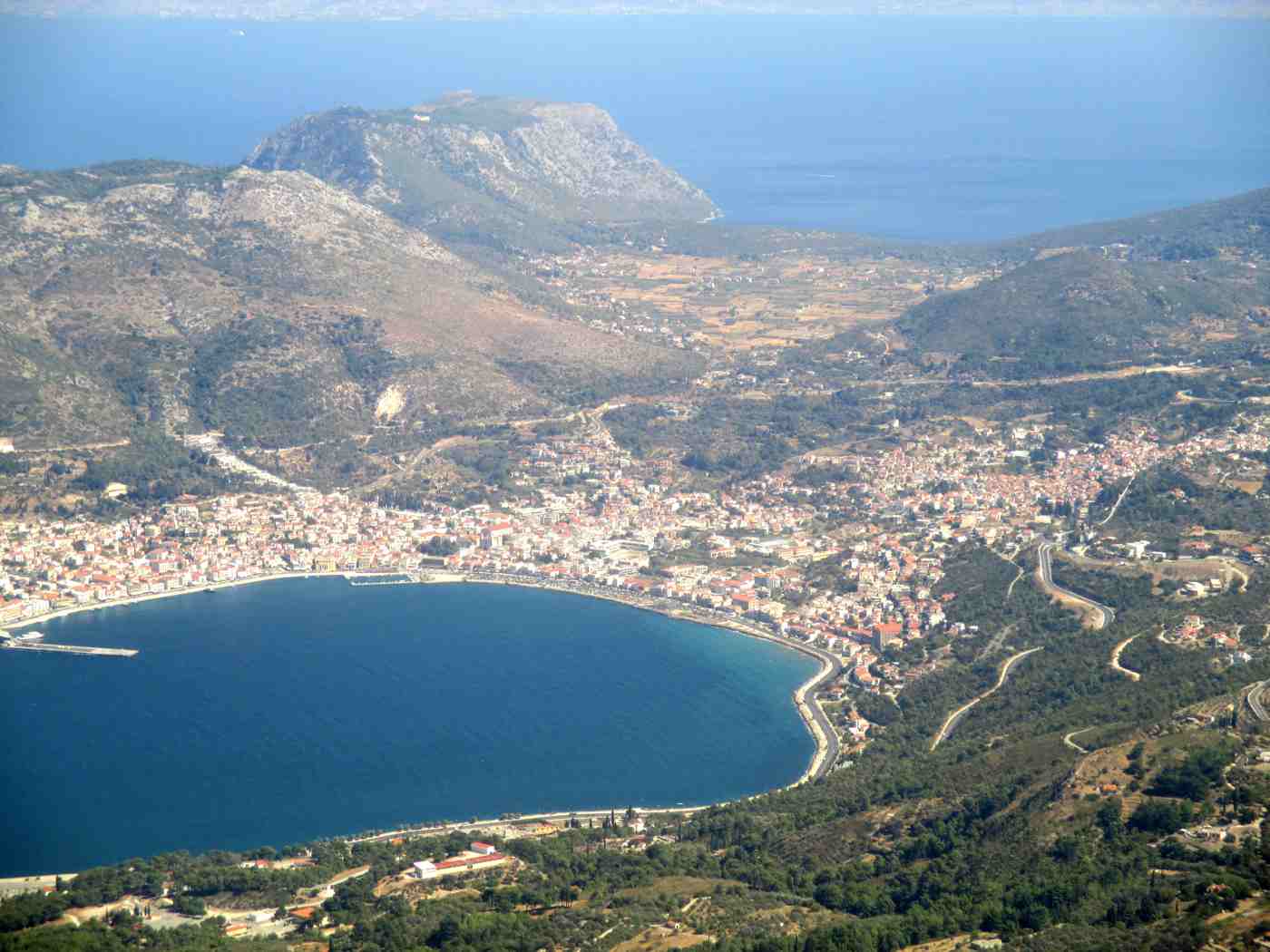
The two Seitani coves lie along the roadless northwest shore of Samos, beyond Karlovasi and the Potami valley, where the mountain drops straight into the Aegean. Mikro Seitani and Megalo Seitani mark the last accessible beaches before the coastline turns entirely wild under Mt Kerkis. This stretch carries no tavernas, no sunbeds and no vehicle access, which keeps visitor numbers low and the landscape close to its natural state. Walkers reach the coves from the end of the road past Potami, following a coastal path that hugs cliffs and pine-clad slopes. The remoteness shapes the whole visit here.
Those who carry water and supplies gain quiet sea and empty sand far from the organised resorts near Kokkari and Pythagorio. The name Seitani attaches to both the small and the large cove, distinguished by size.
Samos stretches its greenest, steepest flank along this northwest corner, and the Seitani coves sit at its heart. The wider island of Samos holds busy harbours and organised bays, yet this shore stays deliberately undeveloped inside a designated protected zone. Cliffs of grey limestone fall toward clear water, broken only by the two pockets of pebble and sand that form Mikro and Megalo Seitani. Oak, pine and low scrub cover the slopes above, giving cover to birds and the rare monk seal that hauls out in sea caves. No hotel, road or power line breaks the view across open sea toward Ikaria.
This combination of mountain, forest and empty coast makes the Seitani area one of the last truly wild edges of the eastern Aegean.
Mikro Seitani sits closer to Potami as the first cove on the walk, a compact scoop of pebbles cupped inside a narrow rocky inlet. Megalo Seitani lies about twenty to thirty minutes further west, opening into a far longer band of sand beneath sheer cliffs. The coastal path connects both, climbing over headlands and dipping to sea level, with the sound of waves and cicadas the only company. Distances feel modest on the map yet the terrain is rough, exposed and hot, so the walk earns its reward. Most visitors pair the two, swimming at Mikro first, then pushing on to the wider sands of Megalo.
Others reach the coves by small boat from Karlovasi and nearby harbours when the sea stays calm, avoiding the climb entirely.
Protection status shapes everything a visitor finds at Seitani, from the empty shore to the strict lack of building. The coves fall within a nationally protected coastal zone tied to the wider network of wild Samos beaches, though these two sit at the untamed extreme. Development is banned, so there are no umbrellas for hire, no showers and no lifeguards along either bay. This absence of infrastructure is the point. It preserves a breeding and resting habitat for the Mediterranean monk seal and a rare stretch of undisturbed Aegean coast. Strong swimmers, walkers and lovers of solitude gain the most from the effort.
Families with small children, or anyone wanting shade and services, find the organised coves near Kokkari a far easier option for a beach day.
What is Mikro Seitani, the small pebble cove in a rocky inlet on Samos?
Mikro Seitani is a small pebble cove tucked inside a narrow rocky inlet on the northwest coast of Samos, the first beach reached on the coastal walk west of Potami, with clear deep water and no facilities.
Mikro Seitani forms a compact horseshoe of grey and white pebbles wedged between two rocky arms that shelter it from open swell. The inlet runs deep and narrow, so the beach itself measures only around thirty metres across, framed by steep scrub-covered slopes. Water at the entrance turns quickly from pale turquoise over the pebble shallows to a deep blue where the seabed drops away. The cove faces north, so the meltemi wind can push waves inside on rough days, while calm mornings leave the surface glassy and clear. Smooth stones and the odd flat rock give room to lay a towel. Space fills fast when a boat or a group of walkers arrives.
The setting feels enclosed, private and quiet, cut off from any road or building.
Swimmers value Mikro Seitani for water that stays clean, cool and strikingly clear against the pale pebble floor. The sheltered inlet keeps the shallows calm on most mornings, giving easy entry over rounded stones that reward water shoes. Snorkellers follow the rocky sides of the cove, where fish gather around the boulders and the seabed shelves into darker blue. No canteen, tap or bin exists here, so every swimmer brings water, food and a bag for rubbish and carries it all out again. Shade is minimal once the sun climbs, with only the slope and scattered bushes offering cover, so an umbrella and hat matter.
The reward for this self-reliance is a swim in near-solitude, often shared with only two or three other walkers along the whole cove.
Reaching Mikro Seitani means walking, since no road descends to the cove and cars stop at the end of the track past Potami. From the car park beyond the Potami waterfalls a signed coastal path leads west. It climbs over a headland before dropping to the first beach in about thirty to forty minutes. The route runs mostly in the open, over stone and dry earth, with sturdy shoes and sun protection strongly advised for the exposed sections. A small wooden sign usually marks the short spur down to Mikro Seitani itself, easy to miss among the scrub. Boats offer the only alternative, running from Karlovasi and nearby coves on calm days to drop swimmers offshore.
The walk, though short, demands real footwear, water and an early start before the midday heat builds.
Mikro Seitani suits walkers, swimmers and anyone chasing a quiet, undeveloped cove within reach of Karlovasi. The absence of any building or service turns the visit into a small expedition, best planned with full water bottles and packed food. Swimming stays straightforward in calm conditions. A northerly meltemi can raise chop and current inside the inlet, so weaker swimmers watch the sea before entering. The pebble shore heats up under strong sun, and the lack of shade makes an umbrella or a shaded hour worthwhile. Most walkers treat Mikro Seitani as a first stop, cooling off here before continuing west to the longer sands of Megalo Seitani.
Carrying out all rubbish protects the fragile habitat, keeping this pocket of the coast as clean and wild as the first arrivals found it.
What is Megalo Seitani, the long sandy beach below cliffs and Mt Kerkis on Samos?
Megalo Seitani is a long sandy beach on the wild northwest coast of Samos, set below steep cliffs and the slopes of Mt Kerkis, further west than Mikro Seitani and reached only on foot or by boat.
Megalo Seitani opens as a broad band of pale sand and fine gravel, the longest natural beach on this wild coast. Unlike the enclosed pocket of Mikro Seitani, it stretches openly along the shore. A wall of steep cliffs and the green lower slopes of Mt Kerkis rise behind. The sand shelves gently into clear, deep water that shifts from turquoise near the shore to dark blue offshore. Its greater length and open aspect give more room to spread out, though the same exposure lets the meltemi build waves on windy afternoons. Behind the beach a dry riverbed and dense vegetation climb toward the mountain, part of the protected wilderness that bans all building.
The scale of sand, cliff and empty sea sets Megalo Seitani apart as the grandest of the two remote coves.
Swimming at Megalo Seitani takes place against one of the wildest backdrops on Samos, with Mt Kerkis rising almost straight from the shore. The long beach gives space to swim well away from others, and the clean, deep water suits confident swimmers who enjoy open sea. Calm mornings bring flat, glassy conditions ideal for a long swim, while the exposed setting means afternoon wind and swell arrive quickly. No lifeguard, buoy or marked zone exists, so swimmers judge the sea themselves and stay within their limits. The sheer cliffs give a little shade only early and late in the day, leaving the sand fully exposed at noon.
Walkers who push past Mikro Seitani earn a rare stretch of coast here. Mountain, cliff and open Aegean meet with no development at all.
Megalo Seitani lies at the far end of the coastal walk, about an hour on foot from the road past Potami. The path continues west beyond Mikro Seitani, tracing the cliff line over rock and scrub before descending to the long sandy shore. Total walking time from the trailhead runs around sixty to ninety minutes each way, depending on pace, stops and heat. The open, rugged route carries no water source, so hikers carry two litres each and start early to beat the strong midday sun. Boats from Karlovasi and nearby harbours reach Megalo Seitani on calm days, landing swimmers straight on the sand without the climb. Anyone walking the full distance plans the return carefully.
The same exposed path must be retraced in the afternoon heat back toward Potami and the car.
Megalo Seitani rewards the effort with the emptiest large beach on Samos, often nearly deserted outside peak August days. Its length swallows the small groups of walkers and boat arrivals who make it here, leaving long stretches of untouched sand. The wild setting suits strong swimmers, hikers and photographers drawn to cliffs, mountain and open sea without a building in sight. No tavern, toilet or bin exists, so visitors bring food, water and a rubbish bag and leave nothing behind on the sand. The protected status that keeps the beach undeveloped also shelters the monk seals that use the coast, making quiet, low-impact behaviour important.
Those seeking sunbeds, snacks and easy access find the organised beaches near Kokkari far more comfortable, while Megalo Seitani rewards the self-sufficient.
How does the protected area shelter the Mediterranean monk seal at Seitani on Samos?
The Seitani coast lies inside a protected area created to safeguard the Mediterranean monk seal, one of the world’s rarest seals, which rests and breeds in the sea caves along this undeveloped northwest shore of Samos.
The Mediterranean monk seal ranks among the most endangered marine mammals on Earth, with only a small global population surviving. Greece holds a large share of these seals, and the wild coasts and sea caves of the Aegean give them vital refuge. Adults grow to about two metres or more and haul out on remote, undisturbed shores to rest, give birth and nurse their pups. The Seitani coast, with its cliffs, caves and lack of any road or building, offers exactly the seclusion the species needs. Human crowds, boats and noise disturb the seals and can drive mothers from their pups, so quiet behaviour protects them directly.
The protected zone around Mikro and Megalo Seitani exists first to guard this fragile animal, with public beach access allowed only under low-impact conditions.
Protection of the Seitani coast comes through its status as part of a designated conservation area within the wider European network of protected sites. The rules keep the shore free of building, roads and organised tourism, preserving both the monk-seal habitat and the surrounding forest and cliffs. Visitors reach the beaches on foot or by small boat, and responsible operators keep their distance from caves where seals rest. Approaching a hauled-out seal, entering sea caves or making loud noise all count as harmful and are strongly discouraged. Leaving no litter matters too, since plastic and waste threaten seals and the fish they feed on. This framework lets people still swim and walk at Mikro and Megalo Seitani.
Human pressure stays low enough for the seals and the coast to endure.
Spotting a monk seal at Seitani stays rare, since the animals are shy, low in number and mostly active away from people. Most visitors never see one, and the sheltered sea caves that seals prefer sit away from the swimming beaches. A distant head surfacing offshore, or fresh tracks on quiet sand, marks the closest encounter for the lucky. Anyone who does see a seal keeps well back, stays quiet and never blocks its path to the water or a cave. Feeding, chasing or photographing a seal at close range causes stress and breaks the spirit of the protected area. Treating a sighting as a privilege rather than a target keeps both the visitor and the animal safe.
This care helps the small Aegean population hold on along the Samos coast.
The protected status ultimately shapes the entire visitor experience at Mikro and Megalo Seitani, from the empty sand to the missing services. Conservation of the monk seal explains why no beach bar, road or hotel appears. The walk in stays the only easy way for most people. Understanding this context turns a hot, effortful hike into something purposeful, a visit to one of the last wild refuges in the Aegean. Respecting the rules keeps the coves open to walkers while protecting the seals that make the area special. The reward is a swim and a stretch of coast almost unchanged by tourism, shared with a rare and ancient marine mammal.
Guarding that balance falls to every visitor who carries out their rubbish and treads lightly on the Seitani shore.
What makes the Seitani beaches on Samos so wild, with no facilities and no road?
The Seitani beaches stay wild because a protected-area ban on building leaves no road, no tavernas, no sunbeds and no shade at either cove, so every visitor walks in or arrives by boat carrying all their own supplies.
No facilities of any kind exist at Mikro or Megalo Seitani, a deliberate result of the coast’s protected status. Visitors find no canteen, no toilets, no sunbeds, no umbrellas and no fresh water at either cove or along the path between them. Everything needed for the day travels in on foot or by boat, including drinking water, food, sun protection and a bag for all rubbish. Shade is scarce once the sun rises high, so a beach umbrella becomes the main defence against the strong Aegean glare. The pebble and sand shores heat quickly, and the exposed walk offers no shelter, making an early start and full water bottles essential.
This bare, stripped-back setting is exactly what draws walkers seeking a coast untouched by the beach bars and loungers found elsewhere on Samos.
No road reaches either Seitani cove, ending instead at a rough car park past Potami where the coastal footpath begins. From there the only ways in are walking the cliffside trail or arriving by small boat when the sea stays calm. The path crosses open, rocky ground with steep climbs and descents, demanding sturdy shoes rather than sandals or flip-flops. Round trips on foot run from about ninety minutes for Mikro Seitani to three hours or more for Megalo Seitani and back. This lack of vehicle access keeps crowds small, since day-trippers after an easy beach choose the roadside coves near Kokkari instead.
The effort filters visitors down to walkers and boat passengers, which is a large part of why the Seitani coast feels remote and quiet.
Self-sufficiency governs a safe visit to Seitani, where no shop, tap or rescue service waits along the coast. Walkers carry at least two litres of water each in summer, plus food, a hat, sunscreen and sturdy footwear for the rough trail. An early start avoids the fierce midday heat on the shadeless path, and turning back is wiser than pushing on when water runs low. Swimmers judge the open sea themselves, since a northerly meltemi raises waves and current fast on this exposed coast with no lifeguard. Mobile phone signal is patchy among the cliffs, so walkers tell someone their plan and keep to daylight hours for the return.
Respecting these limits turns the wild character of Seitani from a hazard into the very quality that makes the trek worthwhile.
The wild Seitani coves suit walkers, strong swimmers and travellers who value solitude over sunbeds and beach service. Anyone willing to hike in, carry supplies and swim on an unguarded shore gains two of the emptiest beaches on Samos. Families with small children, or visitors wanting shade, food and easy parking, find the organised north-coast beaches a far better fit. The reward for the effort is a coast almost free of buildings, crowds and noise, backed by cliffs, forest and Mt Kerkis. This combination of a long walk, no facilities and full protection preserves Mikro and Megalo Seitani as a rare wild frontier.
Visitors who come prepared, tread lightly and carry out every scrap of rubbish keep the Seitani beaches wild. The walkers and the monk seals that follow depend on it.
How long is the coastal walk into the Seitani beaches from the end of the road past Potami?
The coastal path to Seitani begins where the dirt road past Potami ends. Walkers reach Mikro Seitani in about 30 minutes and continue to Megalo Seitani in around 60 minutes total.
The drive ends beyond Potami beach, west of the main north-coast road. Cars stop at a small clearing where the asphalt turns to dirt track. The route to the Seitani beaches runs entirely on foot along a marked coastal path from here. The trail climbs gently over rock and packed earth above the shoreline. Mikro Seitani sits about 30 minutes along this path, tucked into a narrow rocky inlet. Megalo Seitani lies further west, about 60 minutes from the road end in total. The surface stays uneven, with loose stones and exposed roots on the steeper sections. Sturdy shoes grip the ground far better than sandals here. Waymarks and worn stretches mark the route at intervals.
The path holds close to the cliff edge, so walkers keep a steady, careful pace throughout.
Most walkers reach the trailhead by driving west from Karlovasi, the northwest port town. The road runs past Potami beach and its river gorge before ending at the dirt clearing. Parking space at the clearing stays limited, so early arrival helps on busy summer mornings. The first stretch of trail passes through low shrub and pine above the water. Views open west across the Aegean toward the far headlands. The ground rises and dips as the path follows the natural line of the coast. Small wooden signs confirm the direction toward Mikro Seitani. The walk stays shaded in patches under scattered trees near the start.
The cover thins beyond that point and the sun reaches the trail directly. Water bottles and hats belong in every pack from here.
The middle section of the path traces the top of low sea cliffs. Rock underfoot alternates with compacted earth and short gravel runs. Walkers cross two dry stream beds cut into the slope. The trail width narrows to a single track in places, so groups walk in file. The water below shows deep blue over rock and paler turquoise over sand. Mikro Seitani appears as a small pebble cove set in a rocky notch. The descent to its shore drops sharply over a short, steep pitch. Most people pause here before continuing the longer leg west. Shade stays scarce on this exposed middle stretch. The onward path to Megalo Seitani climbs again above the next headland.
Total walking time to the far beach runs to about an hour.
The return follows the same coastal path back toward Potami. Walkers time the trek so daylight covers both legs comfortably. The round trip to Megalo Seitani and back runs about two hours of walking, apart from beach time. Afternoon heat builds on the exposed sections, so most people start early. The path carries no lighting, so nobody wants to be caught out after dusk. Firm footing matters most on the steep descents near each cove. Trekking poles help walkers with weaker knees on the rocky drops. The trail links Potami, Mikro Seitani and Megalo Seitani in one continuous line. Fit walkers cover the whole route without strain. Sun protection stays essential across the whole crossing.
Steady pacing and regular water breaks keep the walk manageable throughout the day.
How do visitors reach the Seitani beaches by boat from Samos?
Small boats reach Megalo Seitani from Karlovasi and nearby north-coast harbours during summer. The sea route skips the coastal walk and lands passengers directly on the sandy beach below the cliffs.
Boat trips to Megalo Seitani leave from the northwest coast in the warm months. Small day boats and taxi boats run when the sea stays calm. The crossing follows the shoreline west past Potami and the Seitani cliffs. Passengers reach the long sandy beach in a short ride of about fifteen minutes. The boat option suits people who prefer to skip the coastal trek. Families with small children often choose the water route for its ease. The sea approach also reveals the coastline from a fresh angle. Steep green slopes rise straight from the water along this stretch. Boats anchor offshore and passengers wade the final metres to shore. Rough weather cancels the crossing on short notice.
Landing depends fully on calm conditions and a settled sea.
The boat ride removes the physical demand of the coastal path entirely. Older travellers and those with limited mobility reach the beach this way. Operators run trips on fixed departures during the summer season. Return pickups follow set times, so passengers plan their beach hours around them. The short sea crossing keeps the whole outing well within a single day. Certain boats combine Megalo Seitani with Potami beach on one route. The water stays deep and clear along the approach to the shore. Swimmers slip straight from the beach into calm blue sea. The boat leaves no trace, matching the undeveloped character of the cove. Passengers carry their own water and food aboard.
No jetty or pier marks the beach, so every landing happens on sand.
Mikro Seitani sees fewer boat landings than its larger neighbour. Its rocky inlet gives less room for boats to anchor safely. Most sea traffic aims for the open sand of Megalo Seitani instead. Walkers and boat passengers meet on the same beach through the day. The mix stays small, since neither cove holds any development. Boat operators know the monk-seal protection rules for the wider area. They keep clear of the caves and rocks where the seals shelter. The protected status limits how close boats approach certain sections of coast. Responsible skippers cut engines near the shore to reduce noise. Calm mornings offer the smoothest sea for the crossing. Wind often rises by early afternoon along this coast.
This care keeps the wild coves quiet for both wildlife and swimmers.
Choosing between boat and walk comes down to fitness and time. The boat saves effort and delivers passengers straight onto the sand. The walk rewards trekkers with cliff-top views the boat never shows. Combining both works well, since walkers can arrange a boat pickup. A one-way boat return spares tired legs the second hour of trail. Departures depend on weather, so plans stay flexible around the sea state. Booking ahead helps during the busiest weeks of the season. The undeveloped coves offer no ticket office or booth at the shore. Arrangements happen in Karlovasi or the nearby harbours before departure. Morning departures give the calmest ride and the longest beach day.
Afternoon returns bring visitors back before the evening wind. Either approach lands visitors on two of the wildest beaches on Samos.
What do visitors pack for a self-sufficient day at the Seitani beaches?
The Seitani beaches carry no shops, taverna or fresh water, so visitors pack everything themselves. Water, food, sun shade, and sturdy shoes head the list for a full day on the wild coast.
Water tops the packing list, since neither cove holds a tap or spring. Each person carries at least two litres for a full summer day. The walk in and out burns energy under strong sun. Extra water covers the trail time on top of the beach hours. Food comes from the pack too, as no taverna stands on either beach. Sandwiches, fruit and snacks travel well without cooling. A refilled bottle from Karlovasi or Potami starts the day right. Salt from the sea and heat from the sun both drive thirst. Rationing water across the day keeps energy steady on the return leg. A small cooler bag keeps food fresh through the heat.
Frozen water bottles double as ice and drink. Running short of water turns the walk back into a hard slog.
Shade needs planning, since Megalo Seitani offers almost none at midday. The cliffs behind the beach cast shadow only late in the afternoon. A beach umbrella or a light sun tent gives essential cover. Both pack down small enough to carry along the coastal path. Mikro Seitani holds thin natural shade near its rocky edges only. Even there, cover stays thin through the hottest hours. A wide hat, sunglasses and high-factor sunscreen protect exposed skin. Reapplying sunscreen matters after every swim in the salt water. The exposed sand reflects heat straight back at sunbathers. Light colours reflect the sun better than dark clothing. A thin cotton cover-up shields the shoulders on the walk.
Bringing shade turns a punishing midday into a comfortable stretch on the beach.
First-aid basics belong in every pack for the remote coves. Blister plasters help on the rocky trail in and out. Antiseptic, painkillers and tape cover minor cuts on sharp rock. No pharmacy or clinic stands within reach of the beaches. The nearest help sits back in Karlovasi, an hour or more away. Sturdy trainers or trekking shoes guard the feet on loose stone. Water shoes ease entry over the pebbles at Mikro Seitani. A small dry bag keeps phones and keys safe from sand and spray. A power bank covers a dead phone battery far from any socket. A waste bag carries every scrap of rubbish back out. Nothing stays behind on the protected shore.
Careful packing turns the wild coast into a safe, self-reliant day out.
Timing shapes the whole self-sufficient day on this coast. Early starts beat the worst heat and the crowds on the sand. Morning walkers reach Megalo Seitani while the cliffs still cast thin shade. Midday sun bakes the open beach with little relief. Leaving before late afternoon avoids the walk back in fading light. A packed lunch stretches the visit without a return for food. Snorkel gear adds hours of clear-water swimming to the day. A book and a mat turn the beach into a full-day base. Everything carried in must travel back out again by hand. A checklist before leaving town prevents any forgotten essential. Water, shade, food, shoes and a first-aid kit form the core.
Self-reliance defines every hour spent on the Seitani beaches.
What are swimming and the sea views like along the path to the Seitani beaches?
Clear, deep water fronts both Seitani coves, with calm swimming on settled days. The coastal path runs high above the shore, opening wide Aegean views across the water toward the distant horizon.
Megalo Seitani drops into deep, clear water straight off its sandy shore. Swimmers reach comfortable depth a short way out from the beach. The sea stays cool and clean, fed by the open Aegean. Rocky sections at Mikro Seitani suit snorkelling over stone and weed. Fish gather around the submerged rocks close to the inlet. The beach at Megalo Seitani sits below the northern slopes of Mount Kerkis. The mountain wall shelters the cove from southerly wind. The water lies flat and glassy near the sand on calm days. Underwater visibility runs about five metres in the clear conditions. Snorkellers spot small fish and sea urchins among the rocks.
Swimmers wear shoes to cross the pebbles at Mikro Seitani. The seabed shifts from sand to rock within a short swim.
Safety in the water depends fully on the day’s sea state. Calm mornings give the easiest and safest swimming at both coves. North winds push swell onto this exposed coast by afternoon. Rising waves make entry and exit over rock harder at Mikro Seitani. No lifeguard patrols either beach, so swimmers judge conditions themselves. Strong swimmers still respect the open water and stay within depth. Children swim only under close watch on the shelving sand. The absence of any facility means help sits an hour away. Checking the forecast before setting out avoids a rough, risky sea. Swimmers keep a phone in a dry bag for emergencies. Marking the return route from the beach prevents any confusion.
A settled, windless day gives the safest window for a swim.
The coastal path delivers the widest sea views on this stretch of Samos. Walkers look down on blue water breaking white against the rocks below. The trail traces the cliff edge for much of its length. The coastline unfolds west of Potami in a series of headlands. The eye reaches far across the northern Aegean on clear days. The green slopes of the interior rise sharply behind the shore. Karlovasi’s bay sits back to the east along the same coast. The path frames Mikro Seitani’s inlet from directly above before the descent. Megalo Seitani’s long sand shows as a pale curve below the cliffs. Photographers stop often along the cliff-top for the open vistas.
These high views reward every walker who chooses the trail over the boat.
Combining a swim with the walk makes a full coastal day. Trekkers cool off at Mikro Seitani before pushing on to Megalo Seitani. The clear water rewards the effort of the hour-long trail. Snorkelling fills the hottest part of the day at either cove. Fresh water and rest between swims keep energy up on the return. The views stay in sight all the way back toward Potami. Sunset light catches the western headlands on a late return walk. Swimmers dry off and pack before the evening wind picks up. A dry towel and a change of clothes ease the walk home. The path and the sea together define a day at Seitani.
Few beaches on Samos pair such clear water with such open trail views.
Who does the Seitani trek suit, and when is the best time to go?
The Seitani trek suits reasonably fit walkers comfortable on rocky coastal paths. Late spring and early autumn bring the best mix of warm sea, mild walking temperatures, and quieter beaches.
The trek suits walkers with steady footing and a basic fitness level. The hour-long path over rock demands care rather than great strength. Regular hikers handle the route with ease and energy to spare. Families with older children manage the walk at a slower pace. Toddlers and very young children fit the boat option far better. People with knee or hip trouble find the steep descents hard. The boat spares them the rocky trail in both directions. Confident swimmers gain most from the deep, clear water at each cove. Beachgoers who want a taverna and sunbeds pick a developed shore instead. Solo walkers manage the trail well in daylight hours. Groups keep together on the narrow cliff-top sections.
Seitani rewards those who accept a wild coast with no services.
Late spring brings warm days, wildflowers and a sea warming for swimming. May and June give long daylight and comfortable walking temperatures. The trail stays green before the summer sun dries the slopes. Early autumn holds warm water from the long summer heat. September and October bring cooler air for the walk and calmer crowds. High summer delivers the hottest and hardest conditions on the exposed path. July and August push midday heat past comfortable walking levels. Early morning stays the only cool window in peak summer. Sea temperature peaks in late summer after months of warming. Winter closes most boat services along the north coast. Rain and wind make the cliff path slippery in the cold months.
Shoulder-season visits pair mild trails with warm, swimmable water.
The best day starts early from Karlovasi or Potami. Morning departure beats the heat on the exposed coastal path. Walkers reach the beach before the midday sun and the crowds. A shoulder-season weekday brings the quietest experience at both coves. Peak summer weekends draw more walkers and boats to Megalo Seitani. Even then, the wild setting keeps numbers far below busy resort beaches. Timing the return for late afternoon avoids the harshest heat. The cooling walk back frames the coast in softer light. A dawn start and an early finish make the safest plan. A full water supply and sun cover matter most in high summer. Sturdy shoes stay essential across every season on the rocky trail.
Good timing turns a demanding trek into a smooth coastal day.
Seitani suits travellers chasing wild nature over easy comfort. The reward comes as two undeveloped coves on a protected coast. Fit walkers, keen swimmers and nature lovers gain the most here. The monk-seal habitat adds rare value to the remote setting. A day at Seitani pairs a real trek with clear-water swimming. The lack of services filters out casual crowds year-round. Those who prepare well leave with a standout Samos memory. The wild coast rewards effort, planning and respect for the protected land. Late spring and early autumn frame the finest window for the trip. The two coves close the northwest beach circuit near Karlovasi. A visit rounds out any nature-focused Samos itinerary.
Seitani stands among the most rewarding coastal walks on the whole island.
Frequently Asked Questions
How long is the walk to the Seitani beaches?
The coastal walk to the Seitani beaches takes about 30 minutes to Mikro Seitani and around 60 minutes to Megalo Seitani from the road end past Potami. The path begins where the dirt track west of Karlovasi and Potami finishes at a small parking clearing. The route runs entirely on foot from there along a marked coastal trail above the sea. The surface mixes rock, packed earth and loose gravel, so the pace stays moderate rather than fast. Mikro Seitani appears first, set in a rocky inlet about halfway along the trail. Megalo Seitani lies further west, reached in roughly an hour of steady walking. The return follows the same path, adding another hour back to the road.
A full round trip to Megalo Seitani covers about two hours of walking, apart from beach time. Fit walkers manage the distance comfortably in good shoes. Early starts beat the heat that builds on the exposed sections by midday.
Can you do the Seitani walk with kids?
Older children with hiking experience manage the walk to the Seitani beaches, while toddlers and young kids suit the boat far better. The hour-long trail runs over rock and loose stone with steep descents near each cove. Steady, sure-footed children handle it at a slower family pace with regular breaks. The exposed path offers little shade, so hats, water and sunscreen protect young walkers. Parents carry extra water for children, who tire and overheat faster on the climb. The boat from the northwest coast removes the trek entirely for families with small kids. It lands passengers straight on the sand at Megalo Seitani in a short ride.
Children swim on the shelving sand under close watch at the beach, since no lifeguard patrols. The deep water off Megalo Seitani suits confident young swimmers only. Packing a shade tent, snacks and swim shoes turns the wild cove into a workable and safe family day out on the coast.
How likely am I to see monk seals at Seitani?
Spotting a Mediterranean monk seal at the Seitani beaches stays rare, since the animals are shy, scarce and mostly hidden in sea caves. The protected coast shelters one of Europe’s most endangered mammals along its cliffs and inlets. Seals rest and breed in caves that visitors never enter, away from the beaches. Most walkers see no seal at all across a full day on the coast. Lucky visitors glimpse a head surfacing offshore or a shape in the clear water. Early morning and quiet, calm conditions raise the slim chance of a sighting. Swimmers keep their distance and never chase or corner any seal they see. The protected status bans disturbance of the animals and their caves.
Boats stay clear of the rocks where seals shelter along this coast. Patience and silence help more than any planned tour. Realistic expectations matter, since the monk seal’s presence, not a guaranteed sighting, gives the Seitani coast its rare natural value.
Is there water and shade at the Seitani beaches?
Water and shade come from your own pack, since the Seitani beaches hold no shops, taps, taverna or natural cover at midday. Each person carries at least two litres of water for a full summer day on the coast. The hour-long walk and the strong sun both drive thirst well beyond a single bottle. A refilled supply from Karlovasi or Potami covers the trail and the beach hours. Shade needs a beach umbrella or a light pop-up tent, carried in along the path. Megalo Seitani’s open sand offers almost no cover until the cliffs shadow it late in the afternoon. Mikro Seitani holds thin natural shade near its rocky edges only.
A wide hat, sunglasses and high-factor sunscreen guard exposed skin through the day. Reapplying sunscreen after each swim keeps the protection working. Frozen bottles stay cool for hours and double as ice. Planning water and shade in advance turns a harsh, exposed cove into a comfortable full-day beach base.
Should I take the boat or walk to Seitani?
Choosing between the boat and the walk depends on fitness, time and what each traveller wants from the day. The walk covers about an hour each way over a rocky coastal path from the road end past Potami. It rewards trekkers with cliff-top sea views that the boat route never shows. The boat leaves from Karlovasi and the northwest harbours in summer, landing passengers straight on the sand at Megalo Seitani. It removes the physical demand entirely, suiting families, older travellers and anyone short on time. The sea crossing runs about fifteen minutes when conditions stay calm. Combining both works well, since walkers arrange a boat pickup to spare tired legs on the return.
The boat depends fully on settled weather, while the walk goes ahead in most conditions. Booking the boat ahead helps during the busiest summer weeks. Fit walkers chasing the views pick the trail. Those wanting easy access to the sand choose the boat every time.
How difficult is the Seitani trek?
The walk to the Seitani beaches rates as moderate, since it demands sure footing and stamina rather than technical skill or great strength. The path runs about an hour each way over rock, packed earth and loose gravel above the sea. Steep, short descents drop to each cove and test the knees on the way down. The trail narrows to a single track along cliff-top sections that call for care. No scrambling or climbing features on the route, so steady walkers cope well. Loose stone underfoot makes sturdy trekking shoes far safer than sandals. The main challenge comes from heat and sun on the exposed, shadeless path. Fit hikers finish the round trip with energy to spare.
People with knee or hip trouble find the descents hard and often pick the boat. Trekking poles ease the steep drops for less confident walkers. Good shoes, water and an early start keep the difficulty well within reach.
When is the best season to visit the Seitani beaches?
Late spring and early autumn give the best season for the Seitani beaches, pairing warm sea, mild walking temperatures and quieter trails. May and June bring long daylight, green slopes and comfortable heat for the hour-long walk. The sea warms enough for swimming while the path stays cool in the morning. September and October hold warm water from the long summer while the air turns milder. These shoulder months keep crowds low at both undeveloped coves. High summer delivers the hottest and hardest conditions on the exposed, shadeless path. July and August push midday heat past comfortable walking levels, so only early starts work. Peak-season sea temperatures reach their warmest after months of sun.
Winter closes most boat services and leaves the cliff path slippery in rain and wind. Off-season walkers trade warm swimming for solitude on the quiet coast. A shoulder-season weekday delivers the finest balance of warm water, calm trails and open space on the sand.