
Potami is a green river valley and beach on the northwest coast of Samos, a short drive west of the town of Karlovasi. A signed path leaves the beach and follows a permanent stream into a shaded forest gorge. It passes a small Byzantine chapel on the way to a waterfall and a cold rock pool. The lower walk stays easy and suits families, while a metal ladder and a rock scramble lead sure-footed walkers to higher falls above. Forest, running water and sea sit close together at the mouth of the gorge. Plan the whole trip with Greece Tours.
This guide walks Potami from the beach to the highest falls. It covers what the valley is, the river walk along the stream, and the old chapel of Metamorphosis on the path. It then reaches the first waterfall and its rock pools, and finishes with the higher falls, the ladder and the scramble above. Potami combines a swim, a forest walk and a piece of Byzantine history in one compact outing on the northwest coast of the island.
What is Potami and its green valley near Karlovasi on Samos?
Potami is a wooded river valley and beach on the northwest coast of Samos, just west of Karlovasi, where a stream cuts a shaded gorge that leads inland to waterfalls and rock pools.
Potami lies about 2 kilometres west of Karlovasi, the northwest town and second ferry port of the island. The valley opens behind a beach of sand and pebbles, then narrows into a forested gorge carved by a permanent stream. Plane trees, oleander and dense evergreen shade cover the water, so the air stays cool even at midday in high summer. Green slopes climb toward Mt Ampelos on one side and the mass of Mt Kerkis to the southwest. Karlovasi supplies the nearest shops, tavernas and parking, and a coastal road reaches the beach car park within minutes. Walkers start from that beach and head upstream on foot into the shaded ravine.
The stream runs year-round, fed by mountain springs, which keeps the gorge green when much of the Aegean turns dry and brown.
The Potami valley ranks among the greenest corners of Samos, and it pairs a swim with an easy forest walk in one short outing. The whole island earns its reputation as one of the most wooded in the eastern Aegean, and this gorge shows why. Reaching Potami takes only a short drive from Karlovasi. The site fits neatly into a day exploring the northwest coast of Samos, from the beach up to the falls. The setting mixes river, forest and sea within about three hundred metres. Families paddle at the shore while stronger walkers push inland toward the cascades. The valley also marks the start of the long coastal trail to the remote Seitani coves further west.
Signposts at the beach point the way, and the path stays clear and well trodden through the trees.
The walk starts where the paved road ends behind Potami beach, beside a taverna and a small parking area. A dirt track runs beside the stream for the first stretch, flat and wide enough for easy walking. Reeds, planes and figs crowd the banks, and the water runs clear over gravel and grey stones. The track soon becomes a footpath that crosses the stream repeatedly on flat rocks and simple wooden planks. Sturdy sandals or trainers keep feet dry at the crossings, since the stones turn slick where the current runs. The gorge walls rise higher as the path climbs gently, and birdsong replaces the sound of the sea behind.
Timber steps and a short handrail help at the steeper, wetter sections closer to the falls.
Potami works as a half-day outing that mixes beach time with a forest walk to the falls. Swimmers start on the sand, then follow the stream inland once the sun climbs high over the bay. The gorge offers shade and cool air that the open beach lacks through the middle of the day. Mountain water keeps the pools cold, a sharp change from the warmer sea a short walk away. The valley rewards early arrivals with quiet paths, easy parking and the pools almost empty. Buses reach Karlovasi from Vathy, though the last stretch to the beach suits a car, taxi or a walk in summer.
The whole site sits within a compact green pocket on the wilder northwest side of the island.
How does the river walk from Potami beach follow the stream on Samos?
The river walk begins at the eastern end of Potami beach on Samos and follows the stream inland on a signed path, crossing the shallow water on stones and boards as the gorge narrows toward the first falls.
The walk starts where the paved road ends behind Potami beach, beside a taverna and a small parking area. A dirt track runs beside the stream for the first stretch, flat and wide enough for easy walking. Reeds, planes and figs crowd the banks, and the water runs clear over gravel and grey stones. The track soon becomes a footpath that crosses the stream repeatedly on flat rocks and simple wooden planks. Sturdy sandals or trainers keep feet dry at the crossings, since the stones turn slick where the current runs. The gorge walls rise higher as the path climbs gently, and birdsong replaces the sound of the sea behind.
Timber steps and a short handrail help at the steeper, wetter sections closer to the falls.
The path clings to the streambed for most of the route, so the walk stays shaded and cool. Ferns and moss coat the boulders in the damp air, and small fish dart in the clearer pools along the way. The valley funnels a light breeze off the sea, which carries the scent of pine and river mint. Distances are short here: the whole gorge to the upper falls covers well under 2 kilometres one way. The route follows water, so it suits early morning or late afternoon, when the light filters low through the canopy. Children manage the lower section with help at the crossings, and the shade makes the walk comfortable through the hottest months.
Signs at each junction keep walkers on the correct bank toward the chapel and the falls.
Potami beach anchors the walk at its seaward end, a broad strand of sand and pebbles below wooded slopes. The bay opens to the north, so the water is clear and the swimming easy when the meltemi drops. Potami rates among the finest of the northwest Samos beaches, and it draws walkers as much as swimmers. A canteen and sunbeds operate near the road end in season, while the western sand stays quieter and wilder. Most walkers finish the gorge, then return to the beach for a swim and a rest under the tamarisks. The car park sits just behind the sand, so the beach doubles as the natural base for the whole outing.
Shade thins over the pebbles by midday, so early swimmers keep the calmest water and the easiest parking.
The onward coastal path leaves Potami toward the west, climbing over a headland to the Seitani coves. Mikro Seitani appears first, a small sand-and-pebble cove reached on foot in around 40 minutes from the beach. Megalo Seitani lies further on, a longer sand beach beneath the cliffs of Mt Kerkis, roughly an hour and a half away. Both coves fall within a protected zone for the Mediterranean monk seal, so no road reaches them and facilities are absent. Walkers carry water, sun cover and food, since the exposed cliff path offers little shade after the gorge. The Potami gorge and the Seitani walk combine into a longer half-day for those with time and stamina.
A boat trip from Karlovasi also reaches Megalo Seitani, sparing the return climb over the headland.
What is the Byzantine church of Metamorphosis on the Potami path?
The church of Metamorphosis tou Sotiros is a small stone Byzantine chapel beside the Potami stream, one of the oldest surviving churches on Samos, standing on the path a short way inland from the beach.
The chapel stands on the right of the path, roughly ten minutes upstream from Potami beach. Builders raised it in the middle Byzantine period. Its worn stone walls and single low dome mark it as one of the earliest churches on the island. A short flight of steps climbs to the door beneath the trees. Fragments of older masonry sit reused in the walls, hinting at an even earlier structure on the same ground. Faint wall paintings survive inside the dim interior, blackened by candle smoke and age. The setting under the planes, with the stream running close by, gives the chapel a quiet, shaded calm. The spot suits a pause on the walk to the falls.
A ruined tower and older chapel stand higher on the slope above, reached by a steep side path.
The chapel dedicates to the Metamorphosis tou Sotiros, the Transfiguration of Christ, and it still holds services on the feast day. Whitewashed inside in parts, it keeps a simple single-aisle plan under its low dome. The little church ranks among the more unusual things to do in Samos. No other island walk passes a Byzantine monument set in a forest gorge. Visitors step inside quietly when the door stands open, and cover shoulders out of respect. A spring and old stonework lie near the chapel, part of the water system that once served the valley. The building gives the Potami walk a layer of history alongside its river and falls.
The feast of the Transfiguration falls in high summer, when a small service and gathering fill the shaded clearing by the stream.
The path passes the chapel on the way to the falls, so the two sights link in one short walk. Pilgrims and walkers have used this route up the valley for centuries, drawn by the spring water and the shade. The chapel’s position marks the halfway feel of the lower gorge, between the beach behind and the cascades ahead. Cool air settles here even in July and August, held by the dense canopy and the running stream. Benches or flat rocks nearby give a spot to rest before the rougher ground higher up. The stone walls and the sound of water make the chapel the quiet heart of the Potami valley.
From the chapel the gorge narrows sharply, and the path turns rockier as the first waterfall draws near.
The dedication to the Transfiguration links the chapel to a wider network of mountain churches across Samos. Small chapels dot the island’s ridges and gorges, often beside springs or on old paths between villages. Potami’s church stands out for its age and its forest setting rather than for size or decoration. Restoration work has stabilised the stonework while keeping the plain, early character of the building. Photographers frame it against the planes and the stream, especially in the soft light of morning. The chapel rewards a slow look, since its worn walls carry more history than its modest size suggests to passing walkers. A small car park and the beach taverna sit within walking distance below.
Guided walks sometimes start here, pairing the chapel with the falls and the gorge flora.
What are the first waterfall and rock pools on the Potami walk?
The first waterfall drops into a clear green rock pool at the end of the easy path, a short walk beyond the chapel, where the gorge walls close in and swimmers wade or float beneath the falling water.
The first pool sits about fifteen minutes upstream from the beach, where the path ends at the water. A modest waterfall spills over a lip of grey rock into a green basin deep enough to swim. The gorge pinches tight here, and vertical walls draped in ferns rise on both sides of the pool. Cold spring water fills the basin year-round, so the swim stays bracing even at the height of summer. Sunlight reaches the water only around midday, when the narrow slot of sky above lets the beams down. Walkers wade in from a shelf of rock at the pool’s edge, then float beneath the falling stream in the shade.
The rock underfoot turns slick with algae near the pool, so walkers step with care on the wet stone.
A string of rock pools runs along the stream above and below the main basin, linked by low cascades. The pools hold clear, cold water over smooth grey stone, and small fish shelter in the deeper corners. Bathers pick a pool to suit their nerve, from shallow paddles to a proper swim under the fall. The rock has worn into natural seats and ledges, where walkers rest and dry in the patches of sun. Moss and maidenhair fern hang from the seeping walls, kept lush by the constant spray and damp. The scene changes with the season, since spring melt drives a fuller flow than the thinner late-summer stream.
Water shoes grip the slick stone between pools, and a dry bag keeps phones and towels safe from the spray.
Swimming in the first pool ranks as the highlight of the Potami walk for most visitors. The water sits cold and fresh against the summer heat, a sharp contrast to the warm sea at the beach. Space is tight in the basin, so a dozen swimmers fill it at busy midday hours. Morning visits give the pool almost to yourself, before the tour groups and families arrive from the coast. The falling water masks noise and cools the air, turning the pool into a natural refuge in the gorge. A rope and simple footholds help swimmers climb out onto the rock where the edge runs steep and smooth.
Towels, water and a warm layer make the swim comfortable, since the shaded basin stays cool after a dip.
The first pool marks the turnaround for most walkers, who return to the beach the way they came. The path to this point stays easy, so families and casual visitors reach the falls without any scrambling. Reaching the higher cascades beyond needs a rougher climb up the rock and a fixed metal ladder. Walkers content with one swim and the chapel stop here and head back down the shaded gorge. The round trip from the beach to the first pool and back fills about an hour at a gentle pace. This lower section delivers the core of Potami: forest, a Byzantine chapel, a waterfall and a cold green pool.
Signs warn that the ground beyond turns slippery and steep, so parties finish their walk at this pool.
How do you reach the higher falls above the first pool on Samos?
The higher falls sit upstream of the first pool, reached by a fixed metal ladder and a rock scramble along the stream, a route for sure-footed walkers that climbs past smaller cascades to a taller upper waterfall.
The route to the higher falls starts at the first pool, where a metal ladder scales the rock beside the waterfall. Climbers grip the rungs and haul up past the fall to the streambed above, wet and steep in places. Above the ladder the way turns into a scramble over boulders, tree roots and slick rock along the water. Both hands come into play here, so walkers keep bags light and secure for the climb. The gorge narrows further, and the walls press close overhead as the stream drops through a chain of small cascades. Only sure-footed walkers with good shoes push on beyond the ladder into this rougher upper section.
The ladder can sit wet and cold under the spray, so a firm grip and dry footing matter on every rung.
The upper waterfall stands taller than the first, dropping down a smooth rock face into a shaded pool. Fewer walkers reach it, so the upper gorge stays quiet even when the beach and first pool grow busy. The pool here runs cold and deep, ringed by high walls that hold the damp and shade all day. Reaching this point from the beach takes around 40 minutes, depending on the flow and the walker’s pace. The scramble rewards effort with a wilder scene, where rock, water and forest close in on every side. Care matters on the way back down, since the wet rock and the ladder feel harder to descend than to climb.
Walkers short on time turn back at the ladder, content that the first pool already delivers the best swim.
Spring and early summer bring the fullest flow, when melt and rain drive the falls hard over the rock. Late summer thins the stream, so the upper falls slow to a trickle by August in a dry year. The pools hold water through the season, fed by the springs that keep the gorge green year-round. Rain makes the rock and ladder dangerous, so walkers skip the upper scramble after a downpour. Cool morning light suits the climb, before the midday heat builds on the exposed sections above the canopy. The changing flow gives the upper gorge a different character from month to month across the walking season.
Walkers check the flow at the first pool before committing, since a strong current signals harder ground higher up.
The higher falls suit fit, sure-footed walkers, while everyone else enjoys the beach, chapel and first pool below. Proper shoes, dry bags and water make the scramble safer on the wet rock above the ladder. Groups keep together on the climb and help each other over the trickier boulders and the ladder rungs. The upper gorge stays cool and shaded, a reward for the extra effort beyond the first waterfall. Walkers allow half a day for the full Potami visit, from a beach swim to the higher falls and back. The Potami valley packs beach, forest, a Byzantine chapel and stacked waterfalls into one compact northwest corner of the island.
Sturdy footwear, water and an early start make the difference between a rushed scramble and a relaxed day at Potami.
What is Potami beach on Samos like below its wooded slopes?
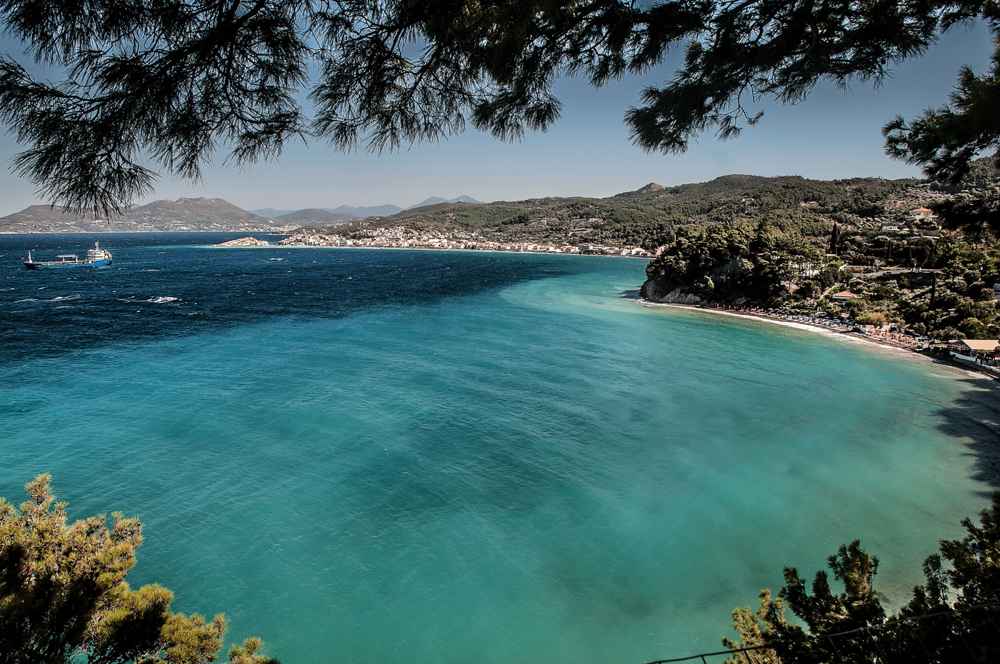
Potami beach sits on the northwest coast of Samos, west of Karlovasi. Sand and pebbles meet clear water below steep wooded slopes, with shade from trees and space for swimmers seeking calm.
Potami beach fronts a wide bay about 3 km west of Karlovasi town. The shoreline mixes fine sand near the water with rounded grey pebbles higher up the slope. Green hills covered in pine and plane trees rise straight behind the sand, giving natural shade through the warmest hours. The water stays clear and deepens gently, so swimmers reach comfortable depth within two or three strides. A small seasonal canteen near the road sells drinks and light snacks in summer. Sunbeds and umbrellas cover part of the central strand, while the quieter western end stays open for towels. Parking sits close to the beach entrance beside the river mouth.
The setting feels calm because forest, not buildings, forms the backdrop along this northwest stretch of Samos.
The beach lies at the mouth of the Potami river, where fresh water meets the Aegean. Behind it the forested valley climbs toward the interior mountains of northwest Samos. On clear days walkers see the ridgelines that lead south toward Mount Kerkis, the highest peak on the island at around 1,434 metres. The northern coast here faces open sea, so light afternoon waves sometimes reach the shore. Morning hours stay calmest, with flat water ideal for families. The pebble sections warm quickly under the sun, and water shoes protect feet on the coarser patches. Fishing boats pass offshore heading to and from Karlovasi harbour.
Pine scent from the slopes drifts across the sand whenever the breeze turns onshore along this quiet northwest bay of the island.
Two ends define Potami beach, each with a different character. The eastern side near the car park holds most sunbeds and the seasonal canteen. Families gather here for easy access and gentle entry into the water. The western end grows quieter and more natural, backed by tamarisk trees and low rock. Snorkellers explore the rocky edges, where small fish shelter among the stones. A footbridge crosses the river behind the sand toward the valley path and the church. Swimmers often float in the calm shallows before walking upstream to the waterfalls. The sand holds enough space for towels even in peak August weeks.
Sunset light spreads across the water rather than sinking behind the beach, giving long golden evenings on the shore.
Facilities at Potami stay simple, matching its forest setting. The seasonal canteen covers drinks, coffee and light food during summer months. No large resort lines the bay, so the beach keeps a natural feel year round. Visitors bring water, snacks and shade for longer stays, since options end when the canteen closes. The nearest full shops, tavernas and bakeries sit in Karlovasi, about 3 km east. Walkers often combine a morning swim with the river walk and church visit in one trip. The river mouth stays shallow and safe for young children paddling near the bank. Rock pools upstream add a cooler, freshwater alternative to the sea. Sunbeds rent for a small daily fee in high season.
This mix of sea, river and forest makes Potami a full half-day destination on Samos.
Where does the coastal path from Potami lead toward Mikro and Megalo Seitani?
The coastal path from Potami runs west above the sea to Mikro Seitani, a small cove, then continues to Megalo Seitani, a long sandy beach. Both lie inside a protected Mediterranean monk-seal refuge on northwest Samos.
The Seitani path begins at the western end of Potami beach, beyond the river mouth. A marked trail climbs onto the low cliffs and heads west along the coast. Mikro Seitani, the first cove, sits about 1.5 km from Potami over rock and pine. This small pebble beach lies in a sheltered inlet with clear, deep water. Walkers reach it in around forty minutes at a steady pace. The trail then climbs again and continues west toward Megalo Seitani. No road serves either cove, so both stay quiet and undeveloped through the season. Sturdy shoes matter here, because the ground turns rocky and uneven in places.
The route offers wide sea views north across the Aegean toward the neighbouring islands and the distant Turkish coastline beyond.
Megalo Seitani stretches as a long strip of pale sand at the mouth of a gorge. It sits about 3 km west of Potami, or roughly ninety minutes of walking. The Kakoperato gorge descends here from the slopes of Mount Kerkis toward the sea. Deep, clear water and near-total quiet define this remote northern beach. Most visitors arrive on foot, though small boats also reach the cove in calm weather. Travellers planning the trek check how to get to Samos before mapping the coast route. No canteen operates at Seitani, so walkers carry all their own water and food. The beach forms part of a protected zone, where camping and fires stay banned.
Shade is limited, making an early start the practical choice on this exposed western shore.
The wider area carries protection as a Mediterranean monk-seal refuge. Monachus monachus, one of the rarest seals on earth, shelters in the caves along this coast. The quiet coves of Mikro and Megalo Seitani give the species undisturbed breeding ground. Rules ask visitors to stay on the marked path and avoid the sea caves. Loud noise, litter and night camping all disturb the protected wildlife here. Sightings stay rare, since the seals keep to hidden inlets away from swimmers. The same waters shelter fish, turtles and seabirds along the northwest shore. Respecting the refuge keeps the beaches open and the habitat intact for the seals. Walkers gain a remote coastline in return, free of roads, hotels and crowds.
This balance of access and protection defines the Seitani section of the Samos coast path.
Planning matters for the full Potami-to-Seitani walk. The round trip to Megalo Seitani covers about 6 km and takes three to four hours. Water, sun protection, a hat and firm shoes rank as essentials for the route. Morning starts avoid the midday heat on the exposed sections of cliff. The path stays clear and waymarked, yet rocky ground demands steady footing throughout. Turning back at Mikro Seitani shortens the outing for those wanting a lighter walk. Strong swimmers reach the coves and enjoy long swims in the clear, deep water. The return climb back toward Potami adds effort in the afternoon sun. Combining the beach, the waterfalls and Seitani fills a full day on northwest Samos.
Checking the weather helps, because strong wind and swell turn the exposed coves rough.
How do you reach Potami beach and the waterfalls from Karlovasi on Samos?
Potami sits about 3 km west of Karlovasi on the northwest coast of Samos. A paved road runs from Ormos Karlovasou to the beach, driveable in around ten minutes, with parking near the sand.
Karlovasi forms the second town of Samos, on the northwest coast. It splits into districts: Ano (upper), Meseo (middle), Neo (new) and Ormos, the port. The road to Potami leaves from Ormos Karlovasou, the harbour district by the sea. Drivers follow the coast west, passing the marina and the last houses of town. The paved route reaches the Potami car park in about ten minutes. Signs for Potami and Seitani mark the turn toward the beach and valley. The final stretch runs through pine woods close to the shoreline. Karlovasi holds the second ferry port of Samos, with links to Piraeus and nearby islands.
Shops, tavernas, banks and a hospital serve the town for anything needed before the walk. This makes Karlovasi the natural base for visiting Potami and the northwest coast.
Visitors without a car reach Potami from Karlovasi in different ways. Walking the coast road takes about forty minutes each way from Ormos. The flat, scenic route follows the shoreline west past small inlets. Taxis run from Karlovasi and reach the beach in roughly ten minutes. A local bus links Karlovasi with Vathy and Pythagorio, though it stops short of the beach. Renting a car or scooter gives the easiest access to Potami and the trailhead. Cyclists ride the coast road, since gradients stay gentle along this stretch. The car park sits beside the river mouth, a short step from the sand. From there the valley path to the waterfalls starts on foot.
This range of options keeps Potami reachable whether travellers drive, walk or ride from Karlovasi town.
Karlovasi links to the rest of Samos by road and sea. The port receives ferries from Piraeus, Ikaria, Fourni and the Cyclades on set days. Buses connect Karlovasi with Vathy, the capital, about 35 km east across the island. The drive to Pythagorio and the airport covers around 45 minutes by car. Kokkari, with its beaches and windsurf bay, sits about 20 km east on the north coast. The mountain villages of Manolates and Vourliotes rise on Mount Ampelos above the coast road. Potami works well as a half-day trip from any of these bases. Drivers from Vathy or Kokkari reach Karlovasi in under an hour along the northern route.
This central position on the northwest coast makes Karlovasi a useful hub for exploring Samos beaches and trails.
Timing the trip from Karlovasi shapes the whole day at Potami. Morning arrivals find the calmest water and the coolest walking conditions. The valley path to the waterfalls stays shaded, easing the climb even at midday. Parking near the sand fills quickly on summer weekends, so early starts help. Drivers refuel and shop in Karlovasi before heading west, since Potami has no full stores. The last stretch of road passes close to the sea through pine woods. Afternoon light suits swimming and relaxing on the beach after the river walk. A single day covers Karlovasi town, Potami beach and the falls without rushing. The short 3 km distance keeps the whole outing flexible and easy to plan.
This proximity makes Potami one of the simplest half-day trips on the northwest coast of Samos.
What do you bring for the Potami walk, and when is the best time to go?
Water shoes, drinking water, sun protection and firm footwear cover the Potami walk. Late spring and early autumn suit it best, when the river runs and heat stays moderate on Samos.
Footwear ranks first on any Potami packing list. Water shoes protect feet in the rock pools and on the slippery stones underwater. Firm trainers or hiking shoes handle the rocky valley path and the Seitani trail. Sandals suit the beach, yet offer little grip on the wet ladder to the higher falls. A dry bag or waterproof pouch keeps phones and keys safe near the pools. Swimmers pack a towel and swimwear for the sea and the freshwater pools alike. Sun cream, sunglasses and a hat guard against the strong midday light on the beach. Insect repellent helps in the shaded, damp valley during summer evenings. A small first-aid kit adds security for the rockier scrambles upstream.
Packing light but complete keeps the walk comfortable from the beach to the waterfalls.
Water and food matter, because Potami offers no shops beyond the seasonal canteen. Each walker carries at least one to two litres of water in summer. Snacks, fruit or a packed lunch suit the longer walk toward Seitani. The canteen on the beach covers drinks and light food only in high season. No taverna operates in the valley or along the coastal trail. Cash helps, since card payment reaches small canteens rarely on this coast. A refillable bottle cuts plastic waste on the protected shoreline. The nearest full supermarkets and bakeries sit in Karlovasi, about 3 km east. Buying supplies in town before the drive avoids running short at the beach.
This simple planning keeps the day smooth across the beach, the falls and the Seitani route.
Season shapes the Potami experience more than any other factor. Spring, from April to June, brings the fullest river flow and green valley. The waterfalls run strongest then, feeding deep, cold pools below the rocks. Summer, from July to September, brings warm sea and busy beach days. The pools shrink in high summer, though shaded water stays cool in the gorge. Autumn keeps the sea warm for swimming into October, with quieter trails. Winter rain refills the river, yet the path turns muddy and slippery for walking. The beach draws most visitors between June and September. The waterfalls reward a spring visit, when the flow peaks after the rains.
Choosing the season around your priority, swimming or the falls, sets the ideal time for Potami.
Time of day and weather refine the plan further. Early morning gives cool air, calm sea and empty parking near the sand. Midday heat makes the shaded valley path a welcome escape from the sun. Late afternoon suits a swim and a rest on the beach after the walk. Weekdays stay quieter than weekends at Potami through the summer season. Strong north winds, the meltemi, sometimes stir the sea on this exposed coast. Checking the forecast helps before attempting the longer Seitani section on foot. Clear, calm days bring the best swimming in the sea and the pools. Rain days turn the ladder and rocks slippery, so the falls demand extra care.
Matching the visit to weather and time keeps the whole Potami outing safe and rewarding.
Who does the Potami walk suit best, families or sure-footed hikers?
The Potami walk suits both groups at different stages. Families enjoy the beach, the short path and the first waterfall, while sure-footed hikers tackle the ladder to the higher falls and the Seitani trail.
Families with young children find plenty at Potami without any hard climbing. The beach offers safe, shallow water for paddling near the river mouth. The flat path from the sand reaches the small church in about five minutes. The first waterfall and its pool lie a short, easy walk upstream. Children swim in the cool pool below the first cascade in spring and summer. The shaded valley keeps toddlers comfortable away from the midday sun. Parents turn back at the first pool, skipping the ladder to the higher falls. Rock pools and the stream give younger kids safe places to explore. A beach picnic rounds off the trip after the short river walk.
This easy lower section makes Potami a strong family choice on the northwest coast of Samos.
Sure-footed hikers gain more from Potami beyond the first pool. A short scramble over rocks leads above the first cascade to the gorge. A fixed metal ladder climbs a rock wall toward the higher waterfalls. Wet rock and moving water make this upper section demanding and slippery. Confident walkers reach a series of pools and falls set deep in the ravine. Good grip, steady balance and water shoes matter for the climb. Beyond the falls, the coastal path to Mikro and Megalo Seitani tests stamina. That route covers rocky ground and takes three to four hours return. Strong hikers combine the falls, the gorge and the Seitani coves in one long day.
This upper terrain rewards experience, giving a wilder side of the Potami valley on Samos.
Older children and teenagers bridge both sides of the walk. Kids over about eight often manage the scramble to the higher falls with help. Adults guide them over the rocks and up the ladder step by step. Swimming in the upper pools rewards the extra effort on hot days. Groups mix abilities by splitting at the first pool when needed. Younger members stay at the beach and lower falls with one adult. Fitter walkers push on to the higher pools or the Seitani path. This flexibility lets one family enjoy Potami at different levels together. Clear judgement of each child’s confidence guides how far up the gorge to go.
Matching the route to the group keeps the day safe across the beach, the falls and the trail.
Visitors who skip the climb still enjoy a full Potami day. Beach lovers stay on the sand, swimming in the calm northern bay. History-minded travellers walk to the small Byzantine church and the ruined castle above. Photographers work the river, the pools and the forest light along the valley. Older or less mobile visitors reach the church and first pool on the gentle path. The upper falls stay optional, not essential, for a rewarding trip. Cafés and tavernas in nearby Karlovasi round off the outing afterwards. The beach alone justifies the short drive from town for most travellers. This range of options makes Potami work for almost every type of visitor.
Reading your group’s energy and interest sets the right depth of walk on this Samos coast.
Frequently Asked Questions
Is the Potami walk good with kids?
Potami suits families with children well, thanks to its easy lower section. The beach offers shallow, calm water for paddling near the river mouth. From the sand, a flat path reaches the small Byzantine church in about five minutes. The first waterfall and its pool lie a short, easy walk upstream through shade. Children swim in the cool pool below the first cascade during spring and summer. The valley stays shaded, keeping younger kids comfortable away from the midday sun. Most parents turn back at the first pool, skipping the metal ladder to the higher falls. That upper scramble over wet rock suits older, sure-footed children with adult help only.
Water shoes protect small feet on the slippery stones in and around the pools. A beach picnic and a swim round off an easy half-day for a family. The short 3 km distance from Karlovasi keeps the whole trip simple with young children on Samos.
How long does the Potami walk take?
The Potami river walk takes a range of times depending on how far you go. The easy stretch from the beach to the small church needs about five minutes on flat ground. Reaching the first waterfall and its pool adds another ten to fifteen minutes upstream. A return trip to the first falls fills roughly one hour, including a swim in the pool. Climbing the metal ladder to the higher falls adds thirty to forty minutes for sure-footed walkers. The full outing to the upper cascades and back takes about two hours at a steady pace. Extending west along the coast to Mikro Seitani adds around forty minutes each way.
The complete walk to Megalo Seitani and back covers about 6 km over three to four hours. Most families spend two to three hours total, mixing the beach, church and first falls. Planning a half-day at Potami leaves time for both the walk and the sea.
Can you swim in the Potami pools?
Swimming in the Potami pools works well from spring through early autumn. The first pool below the lowest waterfall holds cool, clear freshwater fed by the river. Its depth suits a proper swim after the rains, when the flow runs strongest in spring. The water stays cold, since it descends shaded from the gorge above. Higher pools, reached past the ladder, offer deeper, quieter spots for confident swimmers. Rock walls and small cascades enclose these upper pools within the forested ravine. The pools shrink in high summer, though shaded stretches keep enough depth for a dip. Water shoes help on the slippery, algae-covered stones underfoot in every pool.
Swimmers combine the freshwater pools with the sea at Potami beach nearby in one visit. Diving is unsafe, because submerged rocks and changing depth hide beneath the surface. Checking depth before entering keeps swimming in the Potami pools safe and calm across the whole season on Samos.
Do you need water shoes for Potami?
Water shoes rank as the most useful footwear for the Potami walk. The river bed, pool edges and cascade stones stay slippery with algae and moving water. Firm rubber soles grip these wet rocks far better than bare feet or flip-flops. The metal ladder to the higher falls demands secure footing that sandals rarely give. Water shoes also protect against sharp stones and hidden edges beneath the pools. On the pebble beach, they ease walking over the coarser sections toward the sea. Closed water shoes suit the coastal path to Seitani better than open sandals on rock. Quick-drying pairs move easily from the sea to the freshwater pools without discomfort.
Children especially benefit, since young feet slip on the smooth, wet stones. Trainers work for the dry valley path, yet water shoes handle both land and water. Packing one sturdy, quick-drying pair covers the beach, the pools and the falls at Potami beach on Samos.
Where do you park at Potami?
Parking at Potami sits beside the river mouth, close to the western end of the beach. A gravel and dirt area holds cars a short step from the sand. The paved road from Ormos Karlovasou leads straight to this car park in about ten minutes. Parking stays free, with no ticket machine or attendant on site. Shade under nearby trees covers part of the parking area on hot days. Spaces fill quickly on summer weekends and through the busy August weeks. Early morning arrivals find the easiest parking and the calmest beach conditions. The lot lies right at the trailhead, where the valley path to the falls begins.
Overflow cars line the roadside verge nearby when the main area fills. No large coach park exists, keeping vehicle numbers naturally limited here. Drivers from Karlovasi cover the 3 km in roughly ten minutes to reach it. Arriving before mid-morning secures a space and the best of the day at Potami on Samos.
Can you continue from Potami to Seitani beach?
The Seitani continuation extends the Potami walk west along a wild, protected coast. The trail starts at the western end of Potami beach, past the river mouth. It climbs onto low cliffs and heads toward Mikro Seitani, the first cove. Mikro Seitani lies about 1.5 km on, a small pebble beach reached in around forty minutes. The path then continues to Megalo Seitani, a long sandy beach at a gorge mouth. Megalo Seitani sits roughly 3 km from Potami, about ninety minutes of steady walking. No road reaches either cove, keeping both coves quiet and free of development. The whole area forms a Mediterranean monk-seal refuge, with rules to protect the wildlife.
Walkers carry water, food and sun protection, since no canteen serves the coves. Firm shoes matter, because the ground turns rocky and exposed along the cliffs. The round trip covers about 6 km over three to four hours return from Potami on Samos.
What is the best season to visit Potami?
Late spring and early autumn rank as the best seasons for Potami. Spring, from April to June, brings the fullest river flow and the strongest waterfalls. The pools run deep and cold then, fed by the winter and spring rains. Green covers the valley, and wildflowers line the path in these months. Early autumn keeps the sea warm for swimming into October, with quieter trails. The meltemi wind eases by late September, calming the sea for the coastal walk. Summer, from July to September, brings the warmest sea and the busiest beach days. The pools shrink in high summer, though shaded gorge water stays cool for a dip.
Winter refills the river, yet rain leaves the path muddy and the rocks slippery. Beach visitors favour June to September for the warm water and long days. Waterfall seekers choose April and May, when the flow peaks after the rains. Matching the season to your goal sets the ideal time to visit Potami on Samos.