
Samos rewards travellers who want more than a single beach. This large, green island off the Turkish coast carries a UNESCO-listed ancient town, the vast Heraion sanctuary. North-coast pebble coves and the terraced vineyards that produce its famous sweet Muscat wine. The birthplace of Pythagoras, Samos joins early science, deep history and mountain scenery on one long coastline. Plan the whole trip with Greece Tours.
This guide covers the core things to do on Samos, region by region. It moves from the reasons the island rewards a longer stay, through the UNESCO Pythagoreion and its Eupalinos Tunnel. The Heraion of Hera, the beaches around Kokkari. The wine villages of Mt Ampelos. Practical notes on distances, transport and timing run through every section.
Why does Samos reward a longer visit than most Aegean islands?
Samos combines green mountains, ancient science and sweet wine in one eastern-Aegean island. Pythagoras was born here, the Heraion and Pythagoreion hold UNESCO status, and Muscat vineyards climb Mt Ampelos above pine forest and pebble coves.
Samos rises off the Turkish coast in the eastern Aegean, separated from Asia Minor by the narrow Mycale strait. The channel narrows to about 1.2 kilometres near Turkey, so mainland Anatolia stays in view across the water. Two mountains define the island: Mt Kerkis reaches about 1,434 metres in the west, and Mt Ampelos rises through the centre. Pine forest, cypress and vineyards cover the slopes, giving Samos a greener face than the bare Cyclades. Rivers and springs feed shaded gorges near Karlovasi and Potami. This mountainous, wooded interior frames the walks, wine drives and hidden coves that fill a Samos itinerary. The three main towns, Vathy, Pythagorio and Karlovasi, anchor the coast.
This scale rewards a run of unhurried days rather than one quick stop.
Samos gave the ancient world Pythagoras, the mathematician and philosopher whose name marks the harbour town of Pythagorio. Two other thinkers came from the island: the astronomer Aristarchus, who placed the sun at the centre of the cosmos, and the philosopher Epicurus. A tall statue of Pythagoras stands on the Pythagorio waterfront, one arm raised like the hypotenuse of a triangle. The archaeological museum in Vathy holds finds from across the island, including the giant marble Kouros, a youth figure standing about five metres tall. Walking the streets where these figures lived turns Samos into a lesson in early science. The waterfront statue draws a steady stream of photos in the harbour town.
This intellectual heritage runs alongside the beaches and vineyards that draw most visitors to the island today.
Sweet Muscat wine carries the name of Samos across Greece and Europe. Growers plant Muscat Blanc a Petits Grains on stone terraces that climb Mt Ampelos to high altitude. Cool nights there concentrate the sugar in the grapes. The island cooperative gathers the harvest and markets the PDO Samos wines, from fortified Vin Doux to the sun-dried Nectar. A visit to Samos pairs tastings with the vineyards, villages and coast that shape the wine. Bottles travel home easily as a record of the trip. The cooperative shop near Vathy stocks the full range for buyers. This combination of science, wine and green mountains separates Samos from the drier islands further south.
Few Aegean islands pack a UNESCO site, a famous grape and a 1,400-metre peak into one coastline.
Samos measures about 43 kilometres from east to west, so a car or scooter opens up the whole island. The airport, Aristarchos of Samos, sits near Pythagorio in the southeast, close to the UNESCO sites. Ferries dock at Vathy in the northeast and Karlovasi in the northwest, splitting arrivals across two coasts. A road ring links the towns, beaches and mountain villages, with the drive between Pythagorio and Karlovasi taking about an hour. Buses connect the main towns, though a hire car reaches the remote coves and the wine villages more freely. Planning around one base near your priorities cuts driving time. Taxis fill gaps on shorter hops between the towns.
This layout lets a first-time visitor mix ancient ruins, north-coast swims and mountain wine tastings inside a single week.
What makes the UNESCO Pythagoreion worth a half-day on Samos?
Pythagoreion preserves an ancient Greek engineering feat and a working harbour on the southeast coast. The Eupalinos Tunnel drove an aqueduct straight through a mountain, the old mole still shelters fishing boats, and a Roman-era theatre overlooks the bay.
The Eupalinos Tunnel ranks among the engineering marvels of the ancient Greek world. Workers dug the aqueduct straight through Mt Kastro, boring from both ends at once and meeting deep inside the rock. The tunnel runs about 1,036 metres long and once carried spring water to the town below Pythagorio. A lower channel held the clay pipes, while the upper gallery gave access for repairs. Visitors walk a lit stretch of the tunnel on guided routes, ducking under the low rock ceiling. The feat shows the same mathematical confidence that Samos gave the world through Pythagoras. Standing inside the mountain turns an abstract achievement into a physical space you can measure with your own steps.
Cool air fills the passage even in high summer. The tunnel alone justifies the stop at Pythagoreion.
Pythagorio wraps around a harbour that has sheltered ships since ancient times. The old stone mole, built on foundations laid in antiquity, still curls out to protect the modern fishing and pleasure boats. Ancient Samos ran a powerful navy from this bay, and the tyrant Polycrates made the island a sea power across the eastern Aegean. Today tavernas and cafes line the quay, looking across the water toward the Turkish coast. Fishing boats unload the morning catch beside yachts and day-trip vessels bound for Turkey. Statues and marble fragments line the small square behind the quay. The scale is human, and the working port keeps its old purpose alive.
Sitting at the harbour edge ties the town’s UNESCO history to the everyday life that continues around the same protected water.
Above the harbour, a restored ancient theatre steps up the hillside with a wide view over the bay. The rows of seats host summer performances, reviving a space that entertained the ancient town. Higher on the slope, the Castle of Lykourgos Logothetis recalls the fight for independence, with a church and small museum beside it. Roman baths and stretches of the ancient city wall survive around Pythagorio, marking layers of settlement. The compact centre lets you walk between the theatre, the castle and the harbour in an easy morning. Signposts and the archaeological path link the scattered monuments. Cafes near the waterfront rest tired legs between the sites.
This density of ruins inside one small town explains why Pythagoreion carries the UNESCO listing together with the nearby Heraion sanctuary of Hera.
Pythagorio lies about 14 kilometres from Vathy and close to the airport, so it makes an easy base or day trip. A road climbs to the tunnel entrance on the hill above the town, with a car park at the site. The harbour fills with day boats that cross the narrow Mycale strait to Kusadasi in Turkey in about 1 to 1.5 hours. Beaches spread along the coast on either side, from the airport sands to quieter eastern coves. The marina holds sailing yachts and excursion boats for the surrounding waters. A bus links Pythagorio with Vathy through the day. A stay here places the UNESCO monuments, the coast and the Turkey crossing within a short radius.
This central position makes Pythagorio the natural first stop on a Samos itinerary.
Why does the Heraion of Samos matter beyond its single standing column?
The Heraion was one of the largest temples of the ancient Greek world, dedicated to the goddess Hera. A single column stands from a forest of vanished pillars, and the Sacred Way once linked the sanctuary to Pythagoreion.
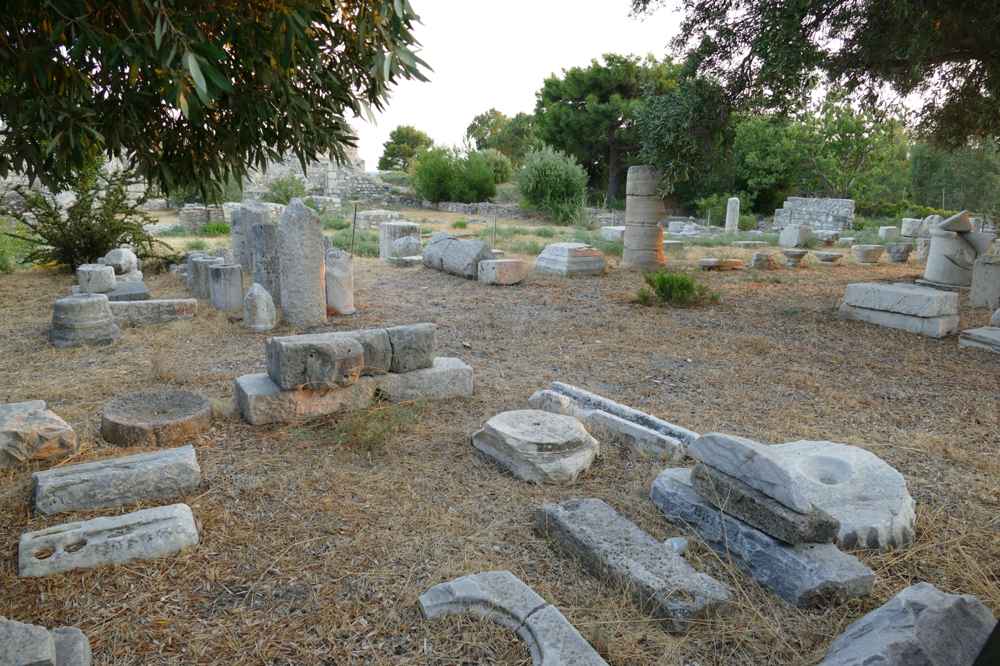
The Heraion rose on marshy ground about 6 kilometres west of Pythagorio, beside the sea. Builders planned it as one of the largest temples of the ancient Greek world. Hera, queen of the gods, was born on Samos in myth, and the sanctuary honoured her. Successive temples stood on the site, each grander than the last, ringed by a double row of tall columns. The great temple counted well over a hundred columns in its full plan. Today a single column stands to part of its height, rebuilt from surviving drums, marking the vanished forest of stone. Foundations, column bases and scattered blocks map the floor across the field.
Walking the outline conveys the ambition of a sanctuary that once rivalled the greatest temples of the ancient Mediterranean.
The Heraion worked as a sanctuary, not just a single temple, filling the plain with altars, statues and offerings. Pilgrims followed the Sacred Way, a paved road about 5 kilometres long, from the town at Pythagoreion to the shrine. Lines of statues, including groups of standing figures, edged the route and the sacred precinct. A great altar stood before the temple for sacrifices to Hera. Column drums and carved blocks lie across the grass. Bronze and pottery offerings arrived from across the Mediterranean, and finds from the site now fill the museums at Vathy and Pythagorio. The seaside setting linked the goddess to the island’s naval power.
Reading the layout shows how religion, trade and politics met at the Heraion, binding it to the harbour town under the shared UNESCO listing.
Excavations at the Heraion produced the giant Kouros, the largest surviving statue of a standing youth from ancient Greece. The marble figure stands about five metres tall and now anchors the archaeological museum in Vathy. Smaller Kouroi, ivory carvings, bronze cauldrons and imported ornaments came from the sanctuary soil. These finds prove that Samos traded with Egypt, the Near East and the wider Greek world. The museum arranges the objects so the scale of the offerings becomes clear. Labels in Greek and English explain each object. Seeing the Kouros indoors, then standing in the empty field where it fell, joins the two halves of the story.
This pairing of site and museum rewards visitors who give the Heraion and Vathy a shared half-day rather than a quick photo stop.
The Heraion sits near the village of Ireon on the flat southern coast, an easy drive from Pythagorio. A road runs close to the entrance, with parking beside the fenced site. Little shade covers the open field, so a hat and water help on summer visits. Morning light keeps the walk cooler across the field. Interpretive signs guide you around the single column, the temple foundations and the altar. The site combines well with Pythagoreion, since both form one UNESCO listing a short drive apart. A morning at the Heraion followed by the tunnel and harbour builds a full day of ancient Samos. Beaches and tavernas along the south coast round off the outing.
This cluster of monuments turns the southeast corner into the historical heart of any Samos trip.
Which north-coast beaches sit near the fishing village of Kokkari?
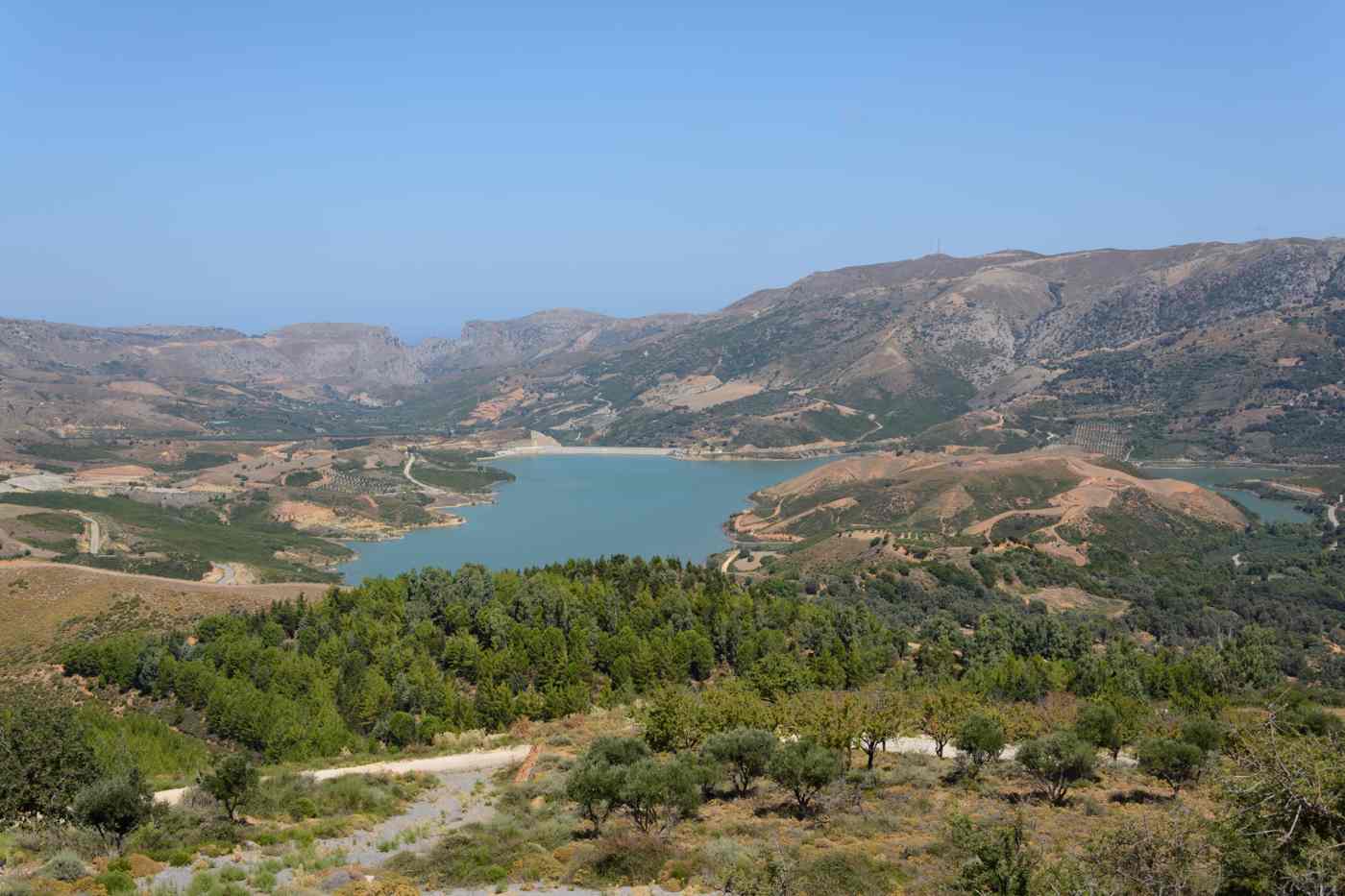
Kokkari anchors the north coast between Vathy and Karlovasi as a fishing and windsurf village. The pebble coves of Tsamadou, Lemonakia and Tsabou lie just west under pine and tamarisk, each reached by a short drive.
Kokkari sits on the north coast about 10 kilometres west of Vathy, built around a twin-bayed headland. The old village grew as a fishing port, and caiques still tie up along the pebble waterfront below the tavernas. A long pebble beach curves on the exposed side, where the meltemi wind draws windsurfers through summer. Whitewashed houses, narrow lanes and a small church back the harbour. Fish tavernas serve the daily catch at tables near the water. The village keeps a working character alongside its tourism, with nets and boats beside the cafes. Boat trips leave the quay for coves along the coast. Kokkari also makes a strong base for the beaches strung west along the coast.
This mix of harbour life, swimming and wind makes the village the hub of the northern shore.
West of Kokkari, three pebble coves line the coast road in quick succession. Tsamadou drops steeply to clear water under a pine-clad slope, with sunbeds on one side and a free section beyond. Lemonakia curls into a sheltered bay just before it, backed by tamarisk trees and a taverna. Tsabou, the quietest of the three, sits a little further west with fewer facilities. The Samos beaches guide maps these coves alongside the island’s other shores. Each cove faces north, so the meltemi can push up waves on windy afternoons. Steep paths and small car parks control access from the coast road. Tavernas sit above two of the three coves.
This run of coves gives the north shore its reputation for clear, deep water within a short drive of Kokkari and Vathy.
Further west toward Karlovasi, the coast turns wilder and greener. Potami mixes sand and pebbles below a river gorge, where a short walk reaches waterfalls and a rock pool inland. Beyond Potami, a coastal path leads on foot to Mikro Seitani, a small sandy cove, and Megalo Seitani, a longer beach under cliffs. The Seitani coves form a protected refuge for the Mediterranean monk seal, with no road and no facilities. Walkers carry their own water and shade to these remote strands. The effort filters the crowds and leaves the beaches quiet even in high summer. A rough track ends where the footpath begins. This stretch shows the untamed northwest of Samos.
The organised coves near Kokkari and the busy airport sands to the south make a clear contrast.
North-coast beaches share one habit: they catch the meltemi, the dry summer wind from the north. On calm days the water lies flat and clear over pebbles and sand. On windy afternoons the same coves build a chop that suits surfers more than swimmers. Checking the wind before choosing a beach saves a rough swim. The south and east coasts, around Pythagorio and Vathy, stay more sheltered when the meltemi blows hard. A hire car reaches the string of coves along the coast road quickly, while buses serve the main villages. Sunbeds and umbrellas cover the organised sections. Pebbles mean water shoes help at most coves.
Reading the day’s wind and swapping coasts keeps swimming comfortable across a Samos week, whatever the summer weather brings to the northern shore.
What do the Mt Ampelos wine villages of Manolates and Vourliotes offer?
Manolates and Vourliotes cling to the pine slopes of Mt Ampelos above the north coast. Stone houses, terraced Muscat vineyards and walking trails surround both villages, and tavernas pour the local sweet wine among the mountain forest.
Manolates clings to a pine ridge on Mt Ampelos, about 4 kilometres up a winding road from the coast. Stone houses with wooden balconies stack along stepped lanes too narrow for cars. Workshops sell ceramics and painted crafts, and tavernas serve local dishes with the sweet Muscat wine. The village looks down over forested slopes toward the sea at Aidonia, the so-called Valley of the Nightingales. Walking trails leave from the edge of the village into the pine and plane trees. The cool mountain air offers relief from the summer heat on the coast. Manolates ranks among the most visited of the Ampelos villages, yet keeps its quiet stone character.
A slow lunch here pairs the mountain setting with the wine that made the island famous.
Vourliotes sits a short drive from Manolates, gathered around a central square ringed by tavernas. Painted houses in red, ochre and blue line the lanes that spread from the plateia. The Moni Vronta monastery, one of the oldest on the island, stands on a slope nearby among the vineyards. Terraced Muscat vines climb the surrounding hillsides, feeding the island’s famous wine. The Samos wine tradition runs strongest in villages like this, where growers still work the steep terraces. Tavernas around the square pour the local sweet white with mountain cooking. Footpaths link Vourliotes to Manolates and the monastery for walkers. Vineyard terraces frame the village on every side.
This pair of villages forms the heart of the Ampelos wine country, high above the beaches of the north coast.
Stone terraces wrap the slopes of Mt Ampelos, holding the soil for the Muscat vines. Growers work small plots by hand on ground too steep for machines, sometimes above 800 metres. The island cooperative collects the grapes from these mountain villages and turns them into the PDO Samos wines. Tastings run at the cooperative and at small wineries, pouring the range from dry Muscat to the sweet Vin Doux and Nectar styles. A wine museum near Vathy, at Malagari, sets out the history of the trade. Buying a bottle at the source links the drink to the terraces you can see from the villages. Barrels and old presses fill the museum rooms.
This working landscape of vines, forest and stone gives the mountain drives a purpose beyond the view over the coast.
A drive through the Ampelos villages makes one of the best half-days on Samos. The road climbs from Kokkari or Agios Konstantinos on the north coast through pine forest and hairpin bends. Manolates, Vourliotes, Stavrinides and Ambelos string along the slope, each with parking at its edge. Cars stop below the villages, since the stone lanes run too narrow to drive. Cool air, spring water and shade make the mountains a summer escape from the beaches. Tavernas open for lunch with the local wine, and trails invite a short walk between meals. The loop rejoins the coast road near Kokkari for an afternoon swim. Signposts mark each village along the mountain road.
This combination of mountain villages, wine and forest gives Samos a highland side that few Aegean islands can match.
Where can you taste PDO Samos Muscat on the island?
The Samos winemaking cooperative and independent wineries pour PDO Samos Muscat across the island. Tasting rooms near Vathy and in the Ampelos villages serve sweet fortified styles beside drier modern bottles.
Muscat Blanc à Petits Grains grows on the terraced slopes of Mt Ampelos, the range that shapes Samos wine. Growers train the low vines on stone terraces that climb from about 300 metres to around 900 metres. The altitude and sea breeze keep acidity in the small aromatic berries. Producers hand-pick the grapes and sort them by ripeness for different styles. The cooperative gathers fruit from villages across the northern slopes, then vinifies it centrally near Vathy. This structure lets small farmers sell tiny plots into one PDO label. The result carries orange-blossom and honey aromas that mark the appellation. Tastings usually start with the grape story before the first pour reaches the glass.
Guides explain how the sweet wines concentrate in the sun after picking.
Tasting rooms cluster in two zones: the waterfront near Vathy and the wine villages on Mt Ampelos. Visitors driving from Kokkari reach the northern cellars in about 20 minutes along the coast road. A flight of pours moves from dry white Muscat through the medium styles to the fortified Nectar. Staff pour small measures and pair them with local cheese, olives and walnuts. Booking ahead helps at the smaller family cellars during the summer peak. Travellers planning a base near the wineries can compare towns in our guide on where to stay in Samos. Vathy and Pythagorio both put tasting rooms within a short drive of the room.
Certain cellars sell bottles to ship home, and most keep tastings casual and short. A designated driver keeps the drive back to Kokkari or Karlovasi safe.
PDO Samos covers four main styles under one appellation. The dry white Muscat pours pale and floral, made for the table beside grilled fish. Samos Doux, the classic sweet wine, adds fortification for a richer, honeyed finish. Vin Doux Naturel and the sun-dried Nectar sit at the sweetest end, aged for depth. Grand Cru bottlings mark selected vineyards on the higher terraces. Tasting flights let visitors track how one grape splits into dry, medium and dessert wines. The sweet styles pair with baklava, blue cheese or dark chocolate. Prices vary by cellar, so ask before ordering a full flight. Rooms often label the vineyard altitude on the sheet, which helps compare the cooler high slopes with warmer ground.
Buyers note the sugar level on each label to plan pairings at home.
Manolates and Vourliotes anchor the wine route on the northern slopes of Mt Ampelos. Vourliotes sits about 4 kilometres above Kokkari, its central square ringed by tavernas pouring the local sweet wine. Manolates climbs higher into chestnut and pine, reached by a narrow road with tight bends. Both villages keep small cellars where growers sell their own bottles straight from the barrel. The drive links tasting with cool mountain air and long views over the north coast. Walkers can follow marked paths between the villages and the springs of the Ampelos forest. A tasting circuit pairs one waterfront cellar near Vathy with one mountain village in a single day.
Drivers watch for goats and oncoming cars on the single-lane stretches. Most cellars welcome visitors through the afternoon and into early evening.
How do you reach the Potami waterfalls and the Seitani coves near Karlovasi?
Potami beach sits about 3 kilometres west of Karlovasi, where a marked path follows the river to the waterfalls. The Seitani coves lie further west on foot, reached by a coastal trail past Potami through protected wild country.
Potami mixes sand and pebbles at the mouth of a short river gorge below Karlovasi. Swimmers reach it by car in about 10 minutes from the town, then park near the beach. A footpath leaves the west end and enters the plane-tree gorge along the flowing water. The trail passes a small Byzantine church, Metamorfosi, one of the oldest on Samos. Wooden steps and a metal ladder climb past rock pools toward the first cascade. The river runs strongest in spring, when snowmelt from Mt Ampelos feeds the falls. Walkers wade the last stretch in low water to reach the pool under the drop. Sturdy sandals grip the wet stone better than flip-flops on the slick sections.
The gorge stays shaded and cool even at midday in summer.
Karlovasi serves as the northwest gateway to both Potami and Seitani. The town holds the island’s second ferry port, so arrivals by boat can start walking the same day. Travellers weighing ferries against flights can plan the trip with our guide on how to get to Samos. Buses link Vathy and Pythagorio with Karlovasi across the mountain road in about an hour. Drivers park at Potami and continue west on foot, since no road reaches the Seitani coves. The town spreads across old, middle and port districts along the coast. Tavernas near the harbour refuel walkers after the return from the gorge or the coves. A morning start beats the afternoon heat on the exposed coastal path.
Shops in Karlovasi stock water and snacks before the walk.
Mikro Seitani and Megalo Seitani lie inside a protected reserve west of Potami. Mikro Seitani, the closer cove, sits about 1.5 hours on foot along the cliff path. It forms a small pebble bay in a narrow inlet with clear, deep water. Megalo Seitani opens further on as a longer sand beach below steep slopes. The reserve shelters the Mediterranean monk seal, one of the rarest seals on earth. No road, kiosk or sunbed reaches either cove, so walkers carry their own water and shade. The path runs high above the sea with no tree cover on long stretches. Boat trips from Karlovasi offer another way in when the coastal trail feels too long.
Hikers time the return for daylight, since the cliff path has no lighting.
Potami and Seitani reward a full half-day when combined into one route. Walkers start at Potami beach, climb to the waterfalls, then return and continue west toward Mikro Seitani. The round trip to Megalo Seitani and back covers about 12 kilometres on foot. Shade is scarce past Potami, so a hat, water and sunscreen matter on the open cliffs. The reserve bans camping, fires and loud music to protect nesting birds and the seals. Spring and autumn bring cooler air and a fuller river for the gorge section. Families with young children often stop at Potami and skip the longer Seitani leg. A boat pickup turns the one-way walk into a shorter outing for tired legs.
Local buses drop walkers near Potami for those without a car.
What can you see in Vathy and its archaeological museum?
Vathy, the capital of Samos, wraps around a deep bay on the northeast coast. Its Archaeological Museum holds the giant Kouros of Samos, a marble youth nearly 5 metres tall from the Heraion sanctuary.
Vathy climbs from the harbour up the slopes around a deep, sheltered bay. The lower waterfront, called Vathy proper, lines the port with cafes, offices and the ferry quay. Above it, old Ano Vathy keeps narrow lanes and tile-roofed houses from the town’s trading past. The main square, Pythagoras Square, marks the centre with a fountain and four stone lions. A short walk leads to the town beach at Gagou, north of the port. Ferries from Piraeus and the northeast Aegean islands dock at the Vathy quay through the season. The bay’s shape shelters the harbour from the meltemi that scours the open north coast. Waterfront tavernas serve the day’s catch beside the moored fishing boats.
Evening walkers follow the palm-lined quay from the ferry gate to the square.
The Archaeological Museum of Vathy ranks among the richest island museums in Greece. Its centrepiece, the Kouros of Samos, stands nearly 5 metres tall in a purpose-built hall. Sculptors carved the marble youth as a votive offering for the Heraion, the sanctuary of Hera. Its scale makes it the largest surviving free-standing kouros from the ancient Greek world. The galleries also hold bronze griffin heads that once decorated giant cauldrons at the Heraion. Ivory carvings, small bronzes and wooden figures show trade links with Egypt and the Near East. Two buildings split the collection between the large sculptures and the smaller finds. The museum sits a short walk inland from Pythagoras Square in central Vathy.
Signs guide visitors through the halls in Greek and English.
Vathy works as a base for the eastern corner of Samos. East of town, the coast road reaches the pebble bays of Kerveli and Mykali in about 15 minutes. Psili Ammos, a sandy beach facing Turkey, sits near the narrowest point of the strait. The wetland at Alyki draws flamingos and herons to shallow lagoons south of the airport road. Inland, the village of Manolates on Mt Ampelos lies within a 30-minute drive for a wine stop. The Zoodochos Pigi monastery caps the eastern cape with wide views across to Anatolia. Ano Vathy’s lanes reward a slow walk past churches and old captains’ houses.
A rental car opens all of these stops on a single loop from the harbour. Buses cover the main routes, but reach the small bays less often.
The museum opens on a set schedule that shifts between the summer and winter seasons. Visitors check the current hours at the gate or the culture ministry site before arriving. A single ticket covers both buildings, with reduced rates for students and older visitors. Morning visits stay cooler inside the sculpture hall before the midday crowds arrive. Photography without flash is allowed in most galleries, which protects the ancient pigments. The Kouros hall gives space to walk around the full figure and read its scale. Allowing about 90 minutes covers the sculptures, the bronzes and the smaller find rooms. The site sits within a flat, short walk of the port, so day-trippers fit it around a ferry.
Benches in the shaded courtyard give a rest between the two buildings.
How does the day boat from Samos to Kuşadası in Turkey work?
Day boats cross the Mycale strait from Pythagorio or Vathy to Kuşadası on the Turkish coast. The narrow channel spans about 1.2 kilometres at its tightest, and the sailing runs roughly 60 to 90 minutes each way.
Passenger boats link Samos with Kuşadası across one of the shortest Greece–Turkey sea gaps. Most sailings leave from Vathy or Pythagorio in the morning and return in the evening. The route crosses the Mycale strait, where Samos sits about 1.2 kilometres off the Turkish shore at the narrowest. Travellers hand passports to the operator or port police for the border check on both sides. The boat clears Greek exit control, then Turkish entry at the Kuşadası cruise port. Visa rules depend on nationality, and a Turkish e-visa is arranged online before the trip. The crossing suits a full-day outing rather than a rushed hour on the far shore.
Operators post the season’s departure days, since sailings thin outside the summer months. Boats fill fast in high summer, so seats book ahead.
Kuşadası serves as the gateway to Ephesus, one of the best-preserved ancient cities in the Mediterranean. Guided tours from the port reach the ruins in about 30 minutes by road. The site holds the marble Library of Celsus, a great theatre and long colonnaded streets. Nearby stand the House of the Virgin Mary and the last column of the Temple of Artemis. Kuşadası itself offers a seafront promenade, a bazaar and the small Pigeon Island fort. Day-trippers pick either a guided Ephesus tour or free time in the town’s markets. The return boat leaves in late afternoon, which fits a morning at the ruins and lunch.
Guides usually build in a stop for Turkish tea or a carpet workshop. The port sits within walking distance of the old town’s cafes.
Border formalities shape the timing of every Samos–Kuşadası crossing. Passengers check in at the port about an hour before departure to clear passport control. A valid passport is required; national ID cards do not cover the Turkey crossing for most nationalities. The Turkish port charges a small harbour fee on arrival, paid in euros or lira. Turkey uses the lira, though Kuşadası shops and tours often accept euros too. Travellers keep the boarding pass and passport handy for the return check at Samos. The time zone shifts forward on the Turkish side, so watches move ahead one hour. Confirming the exact return time avoids missing the single evening sailing back to Samos.
Children need their own passports for the crossing, the same as adults. Operators list the documents on the ticket confirmation.
The Kuşadası day trip fits travellers who want to add a second country from Samos. Sailings run daily through the high season, then drop to two or three days a week in shoulder months. Winter service pauses, so the crossing works best between late spring and early autumn. Rough seas from the meltemi can delay or cancel a sailing on windy summer afternoons. Families manage the trip when children hold passports and cope with a long, full day. Booking a combined boat-and-Ephesus package removes the effort of arranging transport in Turkey. Travellers who prefer beaches over ruins still gain a change of scene across the strait.
Checking the forecast the day before helps judge whether the crossing will run smoothly. The evening return leaves time for dinner back in Pythagorio or Vathy.
What is hiking Mt Kerkis and the southwest coast of Samos like?
Mt Kerkis rises about 1,434 metres over the southwest of Samos, the island’s highest peak. Marked trails climb from Votsalakia and the Evangelistria monastery to the summit ridge above the pebble beaches of Kampos and Balos.
Mt Kerkis, also called Kerketeas, forms a steep limestone massif over the southwest of Samos. Its summit, Vigla, reaches about 1,434 metres, the highest point in the eastern Aegean islands. The main trail starts near Votsalakia beach and climbs past the Evangelistria monastery on the lower slopes. From the monastery, the path turns rocky and steep as it gains height toward the ridge. Caves and small chapels dot the mountainside, including the cave church of Panagia Sarantaskaliotissa. The full ascent and return takes about 6 to 7 hours for fit walkers. The upper slopes hold no water source, so hikers carry enough for the whole day.
Clouds often cap the peak by midday, so an early start improves the view. The ridge opens views over Ikaria, Patmos and the Turkish coast.
The southwest coast under Mt Kerkis holds the island’s longest quiet beaches. Votsalakia, also called Kampos, runs as a long pebble-and-sand strand with tavernas and rooms behind it. West of it, Psili Ammos and Limnionas form smaller coves along the same shore. Balos beach sits further west below the flank of the mountain, backed by low cliffs. The road along this coast stays quieter than the busy north, with wide sea views toward Fournoi. Kampos village sets a relaxed base for walkers combining beach days with the Kerkis climb. Sunsets over the water draw diners to the western tavernas at the end of the day. The exposed shore catches afternoon wind, so mornings stay calmer for swimming.
A rough track links the coves for walkers on foot.
Mt Kerkis demands preparation beyond a casual coastal walk. Loose scree and steep rock mark the upper trail, so sturdy boots protect the ankles. Trail markers fade on the higher sections, and a map or GPS track keeps walkers on route. Summer heat makes an early start vital, since shade disappears above the monastery. Two to three litres of water per person covers the dry, exposed climb. Weather turns fast near the peak, so a windproof layer stays in the pack. Solo hikers tell someone their plan, as phone signal drops in the ravines. The Evangelistria monastery marks a good turnaround point for those skipping the full summit.
Guided walks run in the cooler months for those unsure of the route. The monastery offers water and a shaded rest before the descent.
The southwest rewards a two-day plan that pairs the climb with the coast. Walkers tackle Kerkis on a cool morning, then recover on the Votsalakia and Balos beaches. Spring brings wildflowers and running streams to the lower slopes before the summer dries them out. Autumn keeps the sea warm for swimming while the peak stays clear of haze. The area sees fewer crowds than the north, so rooms and tavernas feel calmer. A rental car helps here, since buses to the southwest run less often than on the main routes. Fournoi and Ikaria show on the horizon from the beaches on a clear afternoon. Ending the day at a Kampos taverna caps the mix of mountain and sea.
The southwest sits about an hour by road from Vathy or the airport.
Frequently Asked Questions
How days do you need in Samos?
Samos rewards a stay of five to seven days for its size and range of sights. The island stretches about 43 kilometres end to end, so driving between the north beaches, Pythagorio and the southwest takes real time. A shorter three-day visit covers the UNESCO Pythagoreion, the Heraion and one or two north-coast beaches near Kokkari. Five days adds the wine villages of Mt Ampelos, the Vathy museum with its giant Kouros, and the Potami waterfalls. A week leaves room for the Seitani coves, a Mt Kerkis hike and a day boat to Kuşadası in Turkey. Travellers who want beach time plus the main monuments plan on at least four full days.
Rushing the island in two days means long drives and little swimming. Base choice matters: a single base near Pythagorio or Vathy works, though splitting nights between north and southwest cuts driving. Ferries and flights set the arrival day, so build the schedule around them.
What first-time visitors prioritise on Samos?
First-time visitors put the UNESCO Pythagoreion at the top of the Samos list. The town holds the Eupalinos Tunnel, an ancient aqueduct bored straight through a hill, plus the sunken ancient harbour and a hillside theatre. The Heraion, the sanctuary of Hera about 6 kilometres west, ranks second with its single standing column and old sacred road. Beach time comes next at Tsamadou, Lemonakia and Tsabou near the fishing village of Kokkari on the north coast. A drive up Mt Ampelos to Vourliotes and Manolates pairs mountain views with a Muscat wine tasting. The Archaeological Museum in Vathy shows the giant Kouros, the tallest surviving statue of its kind.
Travellers with more time add the Potami waterfalls near Karlovasi or a day boat to Turkey. Sunset from a north-coast taverna closes a first full day beside the water. Renting a car unlocks these stops, since they spread across the whole island rather than one town.
How do you get around the large island of Samos?
Getting around Samos works best with a rented car, given the island’s size and spread-out sights. The road network links Vathy, Pythagorio and Karlovasi over mountain passes, with drives of 30 to 60 minutes between the main towns. A public bus, KTEL, connects these towns and larger villages, though services thin in the evenings and outside summer. Buses suit travellers staying near one hub, but reach remote beaches like Seitani rarely or not at all. Taxis wait at the airport, the ports and the main squares for shorter hops. Scooters and quad bikes rent easily and handle the coastal roads, though the steep interior asks for care.
Roads climb and twist through the mountains, so drivers allow extra time and watch for goats. Petrol stations cluster near the towns, so a full tank helps before the quieter southwest. Ferries and the Turkey boat leave from Vathy, Pythagorio and Karlovasi, which shapes any island day-trip plan.
Is Samos a good island for families?
Samos suits families with its calm north-coast beaches, short town walks and mix of history and swimming. Sandy and shallow beaches near Pythagorio and at Psili Ammos let young children paddle safely. The pebble coves near Kokkari, such as Tsamadou and Lemonakia, offer clear, gentle water with sunbeds and tavernas nearby. Older children take to the Eupalinos Tunnel, a walk-through ancient aqueduct that feels like an adventure. The Potami waterfalls give a short, shaded river walk that ends at a beach. Boat trips along the coast keep restless kids busy and reach coves no road serves. Family-run tavernas welcome children, and the island’s slower pace fits early bedtimes.
Parents driving with children plan for winding mountain roads and pack water for hot days. The Turkey day boat runs long, so it fits older children better than toddlers. Grippy sandals help on the rocky paths to the falls and the pebble beaches, and shops in the towns stock family basics.
When is the best season to visit Samos?
Late spring through early autumn ranks as the best season to visit Samos. May and June bring warm days, green hills, wildflowers and sea temperatures fit for swimming, with fewer crowds than midsummer. July and August turn hot and busy, and the meltemi wind can whip up the north coast on windy afternoons. September holds warm sea, calmer beaches and ripe grapes on the Mt Ampelos vineyards for the wine harvest. October keeps mild days for hiking Mt Kerkis and walking the Potami gorge, though the sea starts to cool. Winter stays quiet and green, with rain feeding the waterfalls, but tavernas, boats and hotels largely close.
The Turkey day boat and the beach clubs run mainly between late spring and early autumn. Walkers favour spring and autumn, when the heat eases on the exposed trails. Booking ahead matters in July and August, since rooms near Kokkari and Pythagorio fill fast. Ferries also run more often in the high season.
How do you combine beaches and sights on Samos?
Combining beaches and sights on Samos works by pairing a morning of history with an afternoon swim. A Pythagorio day joins the Eupalinos Tunnel and ancient harbour with the town beach or nearby Psili Ammos. A north-coast plan links the Heraion or a Kokkari village walk with the coves of Tsamadou and Lemonakia. A Karlovasi outing pairs the Potami waterfalls with the Potami beach at the mouth of the gorge. A wine-country loop up Mt Ampelos to Vourliotes and Manolates ends with a swim back down at Kokkari. Vathy visitors match the Archaeological Museum and its Kouros with the Kerveli and Mykali bays to the east.
Early starts beat the heat at the ruins, leaving the afternoon for the water. A rental car ties each history stop to a beach on the same coast. Packing swimwear, water and sun cover for every outing keeps the switch between sights and sea simple. Most sights sit within a short drive of a beach on Samos.
Is the day trip to Turkey from Samos worth it?
The day trip to Turkey from Samos suits travellers who want to see Ephesus and add a second country. Boats cross the Mycale strait from Vathy or Pythagorio to Kuşadası in about 60 to 90 minutes. From the port, tours reach Ephesus, one of the best-preserved ancient cities, in around 30 minutes by road. The site holds the Library of Celsus, a large theatre and long marble streets from the Roman era. Kuşadası itself offers a bazaar, a seafront promenade and the small Pigeon Island fort for free-time travellers. A valid passport is required, and visa rules depend on nationality, so travellers often arrange a Turkish e-visa online first.
The crossing runs mainly between late spring and early autumn, with daily sailings in high summer. Rough seas from the meltemi can delay a boat, so a flexible plan helps. Booking a combined boat-and-Ephesus package removes the effort of arranging transport on the Turkish side. The evening return leaves time for dinner back on Samos.