
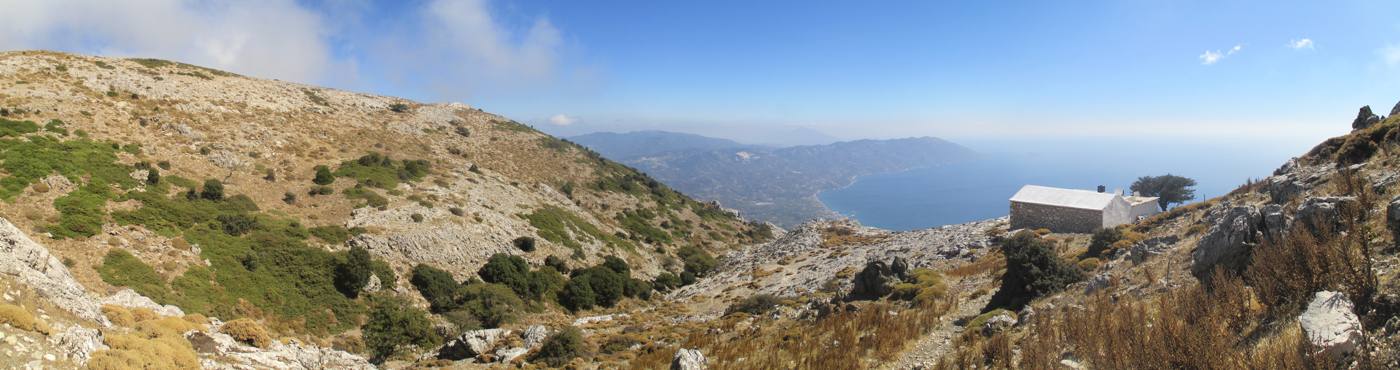
Samos ranks among the greenest islands in the eastern Aegean, close enough to Turkey to see the mainland across the strait. The island spreads sights across a wide area, from ancient Pythagorio in the southeast to the wild coast near Karlovasi in the northwest. A day-by-day itinerary keeps this range manageable and cuts backtracking between clusters. Plan the whole trip with Greece Tours.
This guide lays out plans for three, five and seven days on Samos. Day one covers Pythagorio and its UNESCO monuments. Day two takes the north-coast beaches and the Ampelos wine villages. Day three offers a choice: the western walks or the southern Kerkis beaches. Extra days add Vathy, a boat to Turkey and quieter corners. A rental car ties the whole plan together on this spread-out island.
How do you plan a Samos itinerary on such a large, varied island?
Samos rewards a day-by-day itinerary that groups its ancient sites, north-coast beaches, mountain wine villages and western waterfalls by region. A rental car links these clusters efficiently, since the island spans about 43 km east to west.
Samos measures about 43 km from Vathy in the east to Karlovasi in the west, so distances shape every plan. Vathy, also called Samos Town, serves as the northeast capital and main ferry port. Pythagorio sits on the southeast coast near the airport, while Karlovasi anchors the northwest. A practical Samos itinerary treats these three towns as bases and radiates outward to nearby beaches and villages. The northern road links Vathy, Kokkari and Karlovasi along the coast. The southern route runs from Pythagorio toward the Kerkis beaches. Grouping sights by these axes cuts backtracking and keeps each day focused. Mountainous terrain slows driving, so short map distances still take real time behind the wheel.
Bus service connects the main towns, yet reaches beaches and villages sparingly, which is why drivers cover more ground.
A three-day plan covers the essentials without rushing. Day one takes Pythagorio, the Eupalinos Tunnel and the Heraion. Day two follows the north coast to Kokkari, Tsamadou and Lemonakia, then climbs to Vourliotes and Manolates for wine. Day three heads west to Karlovasi, the Potami waterfalls and the Seitani coves, or south to Votsalakia under Mt Kerkis. Five to seven days add Vathy and its Kouros, a boat to Kusadasi, and quieter east-coast beaches. Reviewing the full range of things to do in Samos helps set priorities before booking. Families favour swimming and short walks, while active travellers add the Mt Kerkis hike and longer coastal trails.
A rented car reaches each cluster within a single morning or afternoon, so no day feels stretched. Each version keeps the same regional clusters.
Driving on Samos follows two main roads plus mountain spurs. The north coast road connects Vathy, Kokkari and Karlovasi in about an hour without stops. The airport and Pythagorio sit about 15 km southwest of Vathy. Karlovasi lies about 30 km west of Vathy along the coast. Mountain roads to Manolates, Vourliotes and Kerkis climb in tight bends, so speeds drop. Fuel stations cluster near the towns rather than the villages, so topping up in Vathy or Karlovasi avoids detours. Parking in Pythagorio and Kokkari fills by midday in summer. Starting each day early beats both the heat and the crowds at the ancient sites and popular beaches.
An early start also frees the afternoon for a long swim or a village lunch. A compact car handles the narrow village lanes best.
Choosing a base narrows the daily driving. Pythagorio suits travellers who prioritise the ancient sites and the airport transfer. Kokkari fits beach days on the north coast and the Ampelos wine villages. Vathy works for the Kouros museum, the Turkey boat and the east-coast coves. Karlovasi places the Potami waterfalls and the Seitani coves within reach. A single base handles a three-day plan, since no corner sits more than about an hour away. Longer stays justify two bases, one east and one west, to cut repeated drives. Ferries dock at Vathy and Karlovasi, and the airport lies near Pythagorio. Matching the arrival point to the first base saves an extra transfer on day one.
Water and sun protection matter on every route, especially on the exposed western beaches.
What does day one in Pythagorio, the Eupalinos Tunnel and the Heraion include?
Day one concentrates on Pythagorio’s UNESCO monuments. Visitors tour the Eupalinos Tunnel aqueduct, walk the ancient harbour and theatre, then drive about 8 km to the Heraion sanctuary of Hera on the coastal plain.
Pythagorio wraps a working harbour in stone quays and tavernas on the southeast coast. The town honours Pythagoras, the mathematician born on Samos, with a statue on the mole. Pythagorio also forms half of the UNESCO listing named Pythagoreion and the Heraion of Samos. The ancient city walls, the Roman baths and the Castle of Lykourgos Logothetis ring the modern streets. A short climb reaches the castle terrace and its harbour views. Boats leave the quay for nearby beaches and the Kusadasi crossing to Turkey. The airport sits about 3 km west, so flight arrivals begin the tour here. Cafes and fish tavernas line the seafront promenade below the castle.
The Archaeological Museum of Pythagorio displays finds from the ancient city. Parking near the waterfront fills early, so a morning start pays off.
The Eupalinos Tunnel ranks among the ancient world’s engineering feats. Workers cut the aqueduct through Mount Kastro in the sixth century BCE to carry spring water into the city. Two teams dug from opposite ends and met near the middle underground. The tunnel runs about 1,036 metres, and a water channel drops below the walking passage. Visitors enter on the north side above Pythagorio and walk a lit, restored section. The route stays narrow and cool, so flat shoes and care help underground. Ticket entry limits numbers, so morning visits reduce waiting. The climb from the town takes about 20 minutes on foot. A short drive shortens that approach for travellers with a car.
Signboards inside explain the survey method that aligned the two headings. The channel once fed the city’s cisterns.
The Heraion of Samos honours Hera near the mouth of the Imvrasos river. The sanctuary lies about 8 km west of Pythagorio on the flat coastal plain. One tall column stands where a vast temple once held rows of columns. The site holds altars, foundations and the Sacred Way that linked it to the ancient city. Archaeologists date the great temple to the sixth century BCE, among the largest Greek temples of its age. The open ground offers scant shade, so a hat and water help. Entry pairs with the Pythagorio ticket at a combined rate. The setting near the sea and the airport runway feels quiet in the morning. Interpretive panels outline the sanctuary’s long ritual history.
A visit here rounds out the UNESCO half of day one.
An afternoon beach caps day one near Pythagorio. Potokaki stretches along the shore just west of the airport within a short drive. The organised sands there suit a swim after the ancient sites. Glykoriza and the Mykali strand extend the choice slightly further east. Evening returns to Pythagorio for dinner along the harbour. The quay tavernas serve local fish and Samos Muscat wine by the glass. A stroll to the castle terrace catches the sunset over the water. Day one therefore blends two UNESCO monuments with an easy coastal finish. The compact distances keep driving under an hour in total. This gentle pace suits a first day fresh off a ferry or a flight.
Wind rises at Mykali by afternoon, so mornings stay calmer there.
How does day two along the Samos north coast and Ampelos wine villages unfold?
Day two runs west from Vathy along the north coast. Travellers swim at Kokkari, Tsamadou and Lemonakia in the morning, then climb Mount Ampelos to Vourliotes and Manolates for Samos Muscat wine in the afternoon.
Kokkari sits about 10 km west of Vathy on the north coast. The village grew from a fishing harbour into a windsurf and swimming base. Whitewashed houses back a pebbled bay and a line of seafront tavernas. Twin headlands shelter the old port, while the open beach draws afternoon wind. Windsurfers favour that breeze, and rental gear waits along the shore. The pebbles slope into clear, deep water, so water shoes ease the entry. Kokkari also serves as the gateway to the Tsamadou and Lemonakia coves just west. Buses from Vathy reach the village, though a car opens the nearby beaches. Cafes and bakeries line the through road for an early coffee.
The harbour church marks the tip of the eastern headland. A morning start beats the wind and the parking crush.
Tsamadou lies about 2 km west of Kokkari below the coast road. Steps and a short path drop from the parking area to the pebbled cove. Pines edge the sand, and the deep water shades from turquoise to blue. One end of Tsamadou keeps a long naturist tradition. Lemonakia sits just west in a curved bay backed by a taverna. Both coves face north, so afternoon wind can build a swell. Morning brings calmer water and easier swimming at each. Tsabou extends the choice slightly further west along the same road. Sunbeds and umbrellas cover part of Tsamadou, while the far end stays free. The narrow lay-bys fill fast, so early arrival secures a space.
A car links these three coves within minutes of each other.
Vourliotes stands about 5 km inland and uphill from Kokkari on Mount Ampelos. A cobbled square with painted balconies anchors the mountain village. Tavernas here pour Samos Muscat, the sweet wine grown on the surrounding terraces. The Vronta Monastery sits nearby among cypress and vine slopes. Manolates rises higher still on the same Ampelos flank above the Aidonia gorge. Its car-free lanes wind past craft workshops and shaded courtyards. Both villages look north over vineyards toward the sea far below. The Muscat Blanc à Petits Grains ripens on these terraces under the PDO Samos name. A tasting pairs the wine with local honey and walnuts. Walnut and vine leaves shade the Manolates lanes through summer.
The mountain road climbs in bends, so an unhurried drive suits the gradient.
Day two therefore balances sea and mountain in one loop. The morning covers Kokkari and its coves at sea level. The afternoon climbs to Vourliotes and Manolates for wine and cooler air. The full circuit from Vathy runs about 60 km on quiet roads. A car makes the loop simple, since buses skip the high villages. Water and firm shoes help on both the pebbles and the cobbles. Sunset from Manolates spreads over the vineyards and the Aegean. Dinner in a mountain taverna closes the day with Muscat and grilled meat. The descent to a north-coast base takes about 30 minutes after dark. The route needs no repeats, since it returns by a different valley road.
This mix of beaches and vineyards defines the Samos north coast.
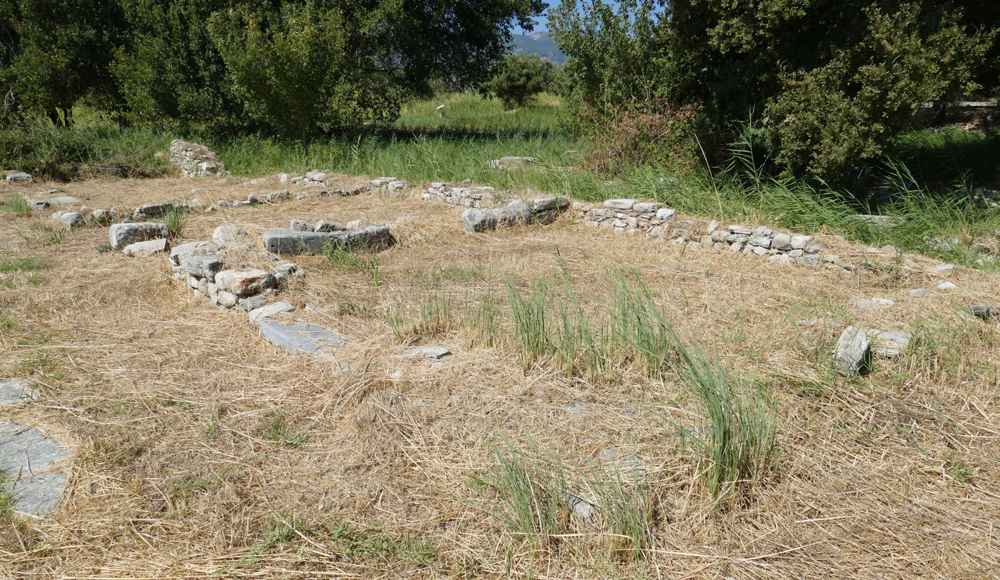
What fills day three in western Samos around Karlovasi, Potami and Seitani?
Day three explores western Samos from Karlovasi. Walkers reach the Potami waterfalls through a riverside gorge, then follow the coast path to the Mikro and Megalo Seitani coves inside a protected reserve.
Karlovasi spreads about 30 km west of Vathy as the island’s second town. The settlement splits into three parts, from the port up to the older inland quarter. A university campus and old tanneries mark its industrial past. The harbour handles ferries to Ikaria, Fourni and Piraeus. Neoclassical facades and stone warehouses line the waterfront district. Karlovasi works as the western base for the Potami and Seitani walks. Shops, banks and fuel stations here supply the sparser northwest. Potami beach lies about 2 km beyond the town toward the trailhead. The road ends at a car park where the gorge walk begins. Tavernas near Potami serve lunch beside the river mouth and the beach.
Free parking sits at the beach lot. An early start keeps the walk cool before midday heat.
The Potami waterfalls hide up a green gorge behind Potami beach. A signed path leaves the beach and follows the river inland. The tenth-century church of Metamorphosis stands early on the route among the trees. The trail crosses the stream and passes rock pools under a leafy canopy. The final stretch wades through cool water to a low fall and a plunge pool. Sturdy sandals grip the wet rocks better than smooth soles. The round walk from the beach takes about an hour at an easy pace. Ropes and steps aid the last scramble in the narrow rock cut. The shaded gorge stays cooler than the open coast. The lower pools alone reward a shorter family walk.
Swimmers cool off in the pool before the walk back.
The Seitani coves lie west of Potami inside a protected reserve. No road reaches them, so a coastal footpath serves as the only land route. Mikro Seitani opens first as a small pebble cove among rocks. Megalo Seitani spreads further on as a long sand beach below cliffs. The walk from Potami runs about one hour each way over exposed ground. Monk seals shelter along this coast, which forms part of the protected zone. Shade stays scarce, so water, a hat and firm shoes matter. Boats from Karlovasi also reach Megalo Seitani in calm weather. The reserve bans building, so the beaches keep a wild, empty feel.
Walkers carry out all litter, since no bins stand on the reserve. An early start avoids the midday sun on the open path.
Day three west rewards walkers over drivers. The gorge and coast paths reach places no road serves. Karlovasi anchors the day with food, fuel and parking. Potami beach offers an easy swim between the two walks. The combined Potami and Seitani outing fills a full day on foot. A shorter version stops at the waterfalls and skips the Seitani hike. Strong walkers link both in one long coastal loop. The return drive to a central base takes about 45 minutes. Karlovasi ferries also link Samos to Ikaria and Fourni for onward island-hopping. The town’s tavernas serve late for walkers back from the coast. Sunset over the western cliffs closes the northwest circuit.
This green, roadless corner shows a wilder side of Samos beyond the beaches and ruins.
How does an alternative day three head south to the Kerkis beaches of Votsalakia on Samos?
An alternative day three drives southwest under Mount Kerkis. Beachgoers spend the day at Votsalakia, Kampos and Balos on long sandy bays, then trade the northwest walks for swimming below the island’s highest peak.
Mount Kerkis rises to about 1,434 metres as the highest point on Samos. The bare limestone peak towers over the island’s southwest corner. Votsalakia sits at its foot about 50 km from Vathy by road. The drive south passes Pythagorio, then Marathokampos village on the mountain slope. The road descends to a string of beaches along the southwest shore. Kerkis blocks the north wind here, so these bays stay calmer than the north coast. The mountain also holds caves and old monasteries on its flanks. A long half-day covers the drive and a full beach afternoon. Marathokampos village overlooks the coast from higher ground with wide sea views.
The southwest sits farthest from Vathy, so an early departure helps. The route runs about 90 minutes each way from the northeast.
Votsalakia stretches as a long sand-and-shingle beach under Mount Kerkis. Tavernas, rooms and sunbeds line the shore behind the sand. The gentle shelf and calm water suit families with young children. Kampos beach continues west as an even longer open strand. Fewer buildings back Kampos, so it keeps a quieter feel than Votsalakia. Both beaches face south, away from the strong north wind. Shade comes from scattered tamarisk trees rather than cliffs or pines. The shallow entry warms early and stays calm through the day. Beach bars rent loungers and serve cold drinks along Votsalakia. Maps sometimes label Kampos as Votsalakia, which confuses a first visit. Both names describe the same continuous southwest bay.
The wide bays absorb crowds, so space stays easy to find even in summer.
Balos lies west of Kampos at the end of the southwest road. The small cove sits below the steep flank of Mount Kerkis. A dirt track and a short walk reach the quiet pebble beach. Beyond Balos the coast turns rugged, with boat access to hidden coves. Limnionas farther west offers another calm, shallow bay nearby. The clear water and Kerkis backdrop define this stretch of coast. Tavernas at Votsalakia and Marathokampos handle lunch before or after the swim. The Kerkis trailheads also start from villages above these beaches. Serious walkers climb the peak on a long, steep full-day route. The paved road ends near Votsalakia, so the coast beyond needs a track or a boat.
Most visitors keep the day for swimming and a mountain-view lunch.
The two day-three options split by interest. The western walks suit hikers who want the Potami gorge and the Seitani coves. The southern beaches suit swimmers who want long, calm sand under Mount Kerkis. Distance also differs, since Votsalakia sits about 50 km from Vathy. Karlovasi and the Seitani paths sit closer to a north-coast base. Families often pick Votsalakia for its shallow, sheltered water. Walkers often choose the shaded Potami gorge and the wild Seitani reserve. A seven-day stay fits both, on separate days. A car serves either option, since buses reach these edges rarely. The choice depends on whether the group prefers a swim or a walk. Either way, the loop returns by evening.
Both routes end the core Samos itinerary before any extra days at Vathy or Turkey.
How do days four and five on Samos cover Vathy, the Kouros museum and a Mt Kerkis hike?
Days four and five split Samos between culture and mountain effort. Day four explores Vathy, its harbour and the Archaeological Museum with the giant Kouros; day five climbs Mt Kerkis from Votsalakia for Aegean summit views.
Vathy wraps around a deep bay on the northeast coast, and its name means deep. The lower town lines a working harbour with cafes, ferry berths and the shaded town square. Above it, the older quarter of Ano Vathy climbs the hillside in tiled, stepped lanes. The Archaeological Museum of Samos anchors the day, holding the giant Kouros, a marble youth about 5 metres tall, alongside finds from the Heraion sanctuary. Two museum halls separate the monumental sculpture from smaller bronzes, ivories and pottery. A waterfront promenade, the metropolis church and small tavernas fill the hours between. The wine museum at nearby Malagari explains the island Muscat trade.
Give Vathy a relaxed morning, then drive the short east-coast road toward Kerveli for an afternoon swim before the mountain day ahead.
Mount Kerkis, also called Kerketeas, rises about 1,434 metres over the southwest, the highest point on Samos. Day five gives it a full morning start from Votsalakia or the monastery of Evangelistria on its flank. A marked trail climbs steep limestone slopes past chapels, caves and hermitages toward the summit ridge. The reward is a wide view across the Aegean to Ikaria, Fourni and the Turkish coast. The round walk needs a full day, sturdy footwear and plenty of water, since shade and springs are scarce high up. The Panagia Sarantaskaliotissa cave breaks the ascent. Cloud can wrap the peak by midday even in high summer.
Start early, before the heat builds, and turn back with a firm time limit rather than pushing a slow group to the top.
The giant Kouros dominates the Vathy museum, the largest surviving example of its kind in Greece. The museum sits a short walk from the main square. The marble youth, carved from Samian stone, once stood in the Heraion as a votive offering to Hera. Around it the galleries hold the Geneleos group, bronze griffin heads, ivory carvings and Egyptian imports that reached the island through trade. These finds show Samos as a wealthy maritime power under the tyrant Polycrates. A slow hour here connects the Pythagorio ruins seen earlier in the trip with the objects dug from them. Families with restless children can split the visit.
Letting one adult tour the halls while another takes the kids to the harbour ice-cream stalls and the fishing boats along the quay nearby.
Days four and five suit travellers who want depth beyond beaches and ruins. Culture fills day four at a gentle pace, with the museum, the promenade and an east-coast swim needing no early alarm. The mountain day demands fitness, and walkers unsure of the full Kerkis climb can take the lower loop to Evangelistria and back instead. Non-hikers can swap the summit for a drive around the southwest, stopping at Votsalakia beach and the Kerkis foothill villages. This pair of days works best from a Vathy or Kokkari base in the north. Book the museum visit for the cooler morning.
Keep the hike for a settled forecast, since exposed limestone offers little shelter from wind or sudden cloud on the upper slopes. Carry lunch for the trail.
What does a day boat from Samos to Kusadasi and Ephesus in Turkey involve?
A day boat crosses the Mycale strait from Vathy or Pythagorio to Kusadasi in about 1 to 1.5 hours. Most visitors join a tour to ancient Ephesus, then browse the Kusadasi bazaar before the evening return.
Samos sits about 1.2 km from the Turkish mainland at the narrowest point of the Mycale strait. The strait stays calm on settled summer mornings. Day boats run a set morning-out, evening-back schedule from Vathy and Pythagorio through the season, so planning the crossing early in a longer stay pays off. Booking ahead secures a seat and clears the passport paperwork the operator handles at the port. A passport is required for every traveller, and non-EU nationals must check Turkish visa rules before boarding. The route makes for a long day, roughly twelve hours door to door, so pairing it with rest either side helps.
Reading a full guide to a Kusadasi day trip before you go sets clear expectations on timing, borders and what the excursion covers.
Ephesus draws most day-trippers once the boat lands at Kusadasi. A short transfer reaches the ancient city, one of the best-preserved classical sites in the Mediterranean. The marble main street runs downhill past the Library of Celsus, its two-storey facade rebuilt from original blocks. The great theatre seated about 25,000 spectators and still frames the old harbour road. Guides point out the terraced houses, the public latrines and the temple fronts along the way. Tours often add the House of the Virgin Mary on Bulbul mountain nearby, a quiet pilgrimage chapel. Wear a hat and strong shoes, since the site bakes under midday sun with almost no shade.
Two to three hours inside Ephesus fills the core of the excursion before the drive back to the coast.
Kusadasi rewards the hours left after Ephesus with a working Turkish port town. The covered bazaar sells leather, carpets, spices, sweets and jewellery, and bargaining is expected rather than optional. A seafront promenade runs past cafes and fish restaurants toward the marina. Pigeon Island, joined to the shore by a causeway, carries a small Ottoman-era fortress and gives sea views back toward Samos. Turkish tea, baklava and grilled meze fill a late lunch before the return boat. Prices sit in Turkish lira, though euros pass in the tourist streets. Keep the passport handy for the evening border check on both sides.
The day gives a real taste of two countries within one strait, and travellers curious about the wider region often extend into a Turkish coast trip another time.
The Turkey day trip suits history lovers and travellers ticking off a second country from one base. Reserve it for a five-day stay or longer, since a three-day Samos visit fills quickly with the island’s own sights. Book the boat two or three days ahead in high summer, when seats sell out. Skip it in rough weather, as the open strait turns choppy under a strong meltemi. Families with young children can find the long transfers and heat tiring, so a shorter Kusadasi-only version works better for them. Bring water, sunscreen, cash and the passport, and leave large bags at the hotel. The excursion returns to Samos by early evening, leaving time for a harbour dinner.
Slot the trip mid-holiday rather than on an arrival or departure day, when ferries and flights compete for time.
Which quiet east-coast beaches near Vathy on Samos suit a slower day?
Psili Ammos and Kerveli sit southeast of Vathy on the east coast, facing Turkey across the strait. Both give calm, shallow water and a slower pace than the busier north-coast coves near Kokkari.
Psili Ammos, meaning fine sand, is the best-known sandy beach on the east coast of Samos, southeast of Vathy. Turkey looks close enough to touch across the narrow Mycale strait. Soft sand and shallow, gently shelving water make it a family favourite, with sunbeds and tavernas behind the shore. A small wetland just inland draws herons and migrating birds in spring and autumn. True sand is scarce on rocky Samos, so this cove fills fast in high summer. Arrive before mid-morning to claim space and parking. A second, quieter Psili Ammos lies further southeast near Mesokampos, useful when the famous one is packed.
The short drive from Vathy takes about twenty minutes on a paved road, and a bus also serves the beach in season.
Kerveli lies in a green, sheltered bay east of Vathy, reached by a winding road down through pines and olive groves. A small pebble-and-sand beach curves at the head of the inlet, with clear, calm water held by the enclosing headlands. A couple of tavernas sit above the shore under the trees, serving fish and local dishes. The bay stays sheltered when the meltemi churns the north coast, so Kerveli works on windy days. Nearby smaller coves such as Klima and Posidonio spread along the same east shore for a beach-hop by car. The setting feels quiet and residential, with holiday houses among the greenery rather than a resort strip.
The drive from Vathy takes about fifteen minutes, and the descent rewards you with a framed view over the bay.
An east-coast beach day pairs well with the Vathy sights, since both sit on the same northeast corner. Start with a museum or harbour morning in town, then drop to Psili Ammos or Kerveli for the afternoon. Pack a picnic or plan a long taverna lunch, as facilities thin out compared with the organised north-coast beaches. Snorkelling suits the clear water off both headlands, where rocks shelter small fish. The east coast catches morning sun and softer afternoon light, ideal for a relaxed, unhurried rhythm. These beaches reward travellers on their fourth or fifth day who want a rest between the ancient sites and the mountain walks.
A single tank of fuel covers the loop from Vathy to Kerveli, Psili Ammos and back with room to spare.
East-coast beaches differ from the famous north-coast trio near Kokkari in feel and crowd. Tsamadou and Lemonakia draw sunbed rows and windsurf energy; Kerveli and Psili Ammos stay lower-key and family-led. Reaching the east coast means a short drive from Vathy rather than the longer haul along the north road. Buses serve Psili Ammos in season, though Kerveli is easier with a car. The east shore faces sunrise over Turkey, a distinctive view no other Samos coast offers. Swimmers who dislike wind favour these sheltered inlets when the meltemi blows hard elsewhere. A slow east-coast day balances a trip weighted toward ancient sites and hikes, giving the calm middle that a week on Samos needs.
Bring shade, since natural tree cover, not sunbed umbrellas, defines the quieter coves here.
How transport work day by day on Samos, and why does a car help?
A rented car unlocks Samos best, since sights, beaches and villages spread across a 476-square-kilometre island. Buses link the main towns but run thin to remote coves and mountain villages, so most itineraries lean on a car.
Samos measures about 476 square kilometres, with beaches, ancient sites and villages spread far apart. A good road links Vathy, Pythagorio, Kokkari and Karlovasi, then narrows and climbs to the Ampelos villages and around Mt Kerkis. Rental offices cluster at the airport near Pythagorio and in Vathy, Kokkari and Karlovasi. Driving is on the right, roads are mountainous and winding, and a licence is required for every driver. Arranging Samos car rental before arrival secures a vehicle in peak weeks and often a better rate than walking up. A small car handles the towns and paved routes, while a scooter suits short coastal hops. Fuel stations sit in the main towns, not the villages.
Rough tracks to remote coves such as Seitani stay footpath-only, so leave a low car at the trailhead.
Transport shifts by day as the itinerary moves around the island. A Pythagorio day of ancient sites needs only short hops, walkable or a quick drive between the town, the Eupalinos Tunnel and the Heraion. The north-coast beach day runs the coast road from Vathy through Kokkari to Tsamadou and Lemonakia, then climbs to Vourliotes and Manolates. That mountain leg tests a car on tight switchbacks and demands low gears and patience. A west-coast day covers the longer 30-kilometre run to Karlovasi, Potami and the Seitani trailhead. Parking is easy at village edges and beach car parks, tighter in Vathy and Pythagorio centres in high summer.
Buses connect Vathy, Pythagorio, Kokkari and Karlovasi on set routes, useful for a car-free town day but slow for chaining beaches.
Later days bring their own transport logic on Samos. The Kusadasi boat day needs no car at all, since the crossing leaves from the Vathy or Pythagorio quay on foot. Leave the rental parked and walk aboard with just a day bag and passport. A Mt Kerkis hike drives southwest to Votsalakia, then swaps wheels for boots at the trailhead for the day. The east-coast beach day loops a short 15-to-20-minute run from Vathy to Kerveli and Psili Ammos. Airport transfers on arrival and departure fit around the airport’s Pythagorio location, close to the southeast bases. Returning the car the evening before an early flight avoids a rushed morning.
Plan fuel stops on the town days, since stations thin out on the mountain and west-coast legs.
A car turns a spread-out Samos into an easy island; going without narrows the trip sharply. Bus-only travellers can still reach Vathy, Pythagorio, Kokkari and Karlovasi, plus Psili Ammos and the main beaches on those routes. The mountain villages, Seitani coves and southwest strands grow hard or impossible without wheels. Taxis fill gaps for airport runs and evenings out, though costs mount over a week of beach-hopping. Scooters and quad bikes suit confident riders for short, sunny coastal days, but expose you on the fast coast road. Renting for the full stay usually beats daily hire on price and freedom.
Match the vehicle to the plan: a small car for couples touring widely, a larger one for families with beach gear, a scooter for a single north-coast base.
How does a family Samos itinerary differ from an active one?
A family Samos plan centres on shallow beaches, short drives and easy sights, keeping days unhurried. An active plan front-loads Mt Kerkis, the Seitani trek, Potami scrambles and long village walks, packing more effort into each day.
A family itinerary bases itself near a shallow, sandy beach and keeps daily drives short. Psili Ammos, Lemonakia and Tsamadou on the north and east give calm, gently shelving water for young swimmers. Votsalakia in the southwest works as a relaxed beach base with a long, easy strand under Mt Kerkis. Sights come in child-sized doses: the giant Kouros in the Vathy museum, the lit stretch of the Eupalinos Tunnel, and the Potami rock pools. A short boat trip along the coast breaks up beach days. Mountain villages like Manolates make cool, car-free afternoons among the vineyards. Mornings suit the beach and late afternoons the sights, with a long lunch and a midday rest between.
Keep the pace gentle, and choose one base to cut daily packing and driving.
An active itinerary trades midday rests for effort and covers more ground each day. The Mt Kerkis summit climb from Votsalakia fills a full day of steep limestone and Aegean views. The coastal walk from Potami to the Seitani coves adds 30 to 60 minutes each way on foot. The Potami gorge scramble to the upper waterfalls needs hands, a ladder and sure footing. Marked trails link Manolates and Vourliotes through pine and chestnut woods for half-day village loops. Kokkari’s meltemi wind feeds windsurfing off the north coast between hikes. Snorkelling the clear coves and a sea kayak along the shore round out the water side.
Base near Kokkari or Karlovasi for quick access to the trails, and read the forecast, since the high routes turn dangerous in strong wind.
Most groups blend the two styles across a week on Samos. Couples often mix one hard day, a Kerkis hike or a Seitani walk, with slower beach and wine days between. Multi-generational families can split a day, sending the fit members up a trail while others stay by the shallows. A teenager crew leans active, chaining windsurf lessons, cliff coves and gorge scrambles. Grandparents and toddlers anchor the plan to easy beaches and short museum visits. The island’s size supports both, since a car reaches a hard trailhead and a calm beach on the same morning. Alternate a big-effort day with a recovery day to avoid burnout over five to seven days.
Choosing a central base near Kokkari keeps both the north beaches and the Ampelos trails within a short drive.
Season shapes both variants on Samos. June and September give warm sea and open facilities for families, with thinner crowds than midsummer. May and October favour the active plan, cooler for the Kerkis climb and the Potami gorge, and green for the village trails. July and August bring the strongest meltemi, feeding Kokkari’s windsurf days but roughing the north-coast swimming that families want. Match the base to the group: Votsalakia or Pythagorio for beach-led families, Kokkari or Karlovasi for hikers and surfers. Build rest into a family week and effort into an active one, then let the shared days, a boat trip or a wine-village lunch, join the two.
Either way, a car and a settled forecast make the plan flow, whether the day ends on a summit or a shallow shore.
Frequently Asked Questions
How days are enough for Samos?
Five days suit Samos well, balancing ancient sites, beaches, mountain villages and a Turkey day trip without rushing. Three days cover only the highlights, and a full week adds depth and rest. Three days handle Pythagorio with the Eupalinos Tunnel and the Heraion, one north-coast beach and village day, and a west or south day. Five days add Vathy and its Kouros museum, plus a Kusadasi boat trip or a Mt Kerkis hike. Seven days fold in quiet east-coast beaches like Psili Ammos and Kerveli, a Seitani trek, and slower wine afternoons. The island measures about 476 square kilometres, so distances eat into short trips.
A car keeps a three-day visit workable and turns a week into an easy tour. Ferry and flight days count as half-days, since arrival and departure eat travel time from the plan. Match the length to your pace: active travellers pack more into five days, while families stretch the same ground across seven with rest days between.
What first-time visitors prioritise on Samos?
First visits centre on the UNESCO Pythagoreion, the north-coast beaches near Kokkari, the Ampelos wine villages, and the giant Kouros in the Vathy museum. These four anchor a first Samos trip. Pythagorio delivers the headline history: the Eupalinos Tunnel aqueduct driven through the hill, the Heraion sanctuary of Hera with its lone standing column, and the harbour marina. The beaches of Tsamadou and Lemonakia give the classic pine-backed swim. Manolates and Vourliotes pair mountain scenery with sweet Muscat tastings. Taste the PDO Muscat at the cooperative near Vathy on a wine afternoon. Vathy adds the archaeological museum and a working harbour capital. Slot a Potami waterfall walk or a Kusadasi day trip if time allows.
Keep the first visit focused rather than chasing every cove on a large island. A car links these sights across the northeast and southeast without long transfers. Spread them over four or five days, mixing a sight morning with a beach afternoon to hold an even pace throughout.
Can you do Samos without a car?
Samos works without a car for a beach-and-town trip, though it limits the mountain villages, remote coves and southwest. Buses connect Vathy, Pythagorio, Kokkari and Karlovasi on set routes. The KTEL bus network links the main towns and reaches Psili Ammos, the Kokkari beaches and Pythagorio’s sights, enough for a relaxed first visit based in Vathy or Kokkari. Services run less often outside high summer and rarely serve the Ampelos villages, Seitani coves or Votsalakia well. Taxis cover the gaps for airport runs, evenings and one-off trips, but the cost climbs over a week of beach-hopping. Organised day tours reach Ephesus, the wine villages and boat coves without your own wheels.
A scooter bridges the middle for confident riders on short coastal hops. Base yourself in a town on a bus route to keep a car-free plan simple. Accept that a large island rewards drivers, so a no-car trip trades wider reach for lower cost and no parking worry.
Is the Turkey day trip from Samos worth it?
The Kusadasi day trip rewards history lovers with ancient Ephesus and a taste of Turkey, reached by a 1-to-1.5-hour boat across the Mycale strait. It suits stays of five days or more. Day boats leave Vathy and Pythagorio on a morning-out, evening-back schedule through the season. From Kusadasi, most travellers tour Ephesus, with its Library of Celsus and great theatre, and often the House of the Virgin Mary. The Kusadasi bazaar and seafront fill the hours after the ruins. A passport is required, and non-EU nationals must check Turkish visa rules before booking. The day runs long, roughly twelve hours door to door, so it fits a longer trip better than a short one.
Book two or three days ahead in high summer, and skip it in a strong meltemi that roughens the crossing. Families with young children can find the transfers and heat tiring, so weigh the effort against a quiet Samos beach day instead.
What are the rainy-day options on Samos?
Rainy days on Samos turn to indoor culture, covered tastings and the museums. The Archaeological Museum of Samos in Vathy, the wine cooperative, and the tavernas of the mountain villages all shelter a wet day. The Vathy museum holds the giant Kouros and Heraion finds across covered halls, an easy hour or two out of the rain. The wine museum at Malagari and the cooperative near Vathy pair Muscat tasting with dry indoor time. Pythagorio’s small archaeological museum and the covered Eupalinos Tunnel work when showers pass. Mountain villages like Manolates and Vourliotes offer taverna lunches and craft workshops under cover. A drive between towns fills a grey morning with changing coast and hill views.
Rain rarely lasts long in the warm season, so a flexible plan waits it out over a long lunch. Save the beaches, the Kerkis climb and the Seitani walk for clear days, and shift culture forward when the forecast turns wet.
Which base town you choose on Samos?
Base choice depends on priorities: Pythagorio for history and the airport, Vathy for the harbour capital and ferries, and Kokkari for the north-coast beaches. Each suits a different Samos trip. Pythagorio, the UNESCO harbour town in the southeast, puts the Eupalinos Tunnel, the Heraion and the airport within easy reach, ideal for a first, history-led visit. Vathy, the northeast capital, gives the archaeological museum, ferry links and the east-coast beaches nearby. Kokkari, a north-coast fishing village, sits minutes from Tsamadou and Lemonakia with a windsurf scene. Votsalakia in the southwest anchors a beach-first, quieter stay under Mt Kerkis. Karlovasi serves the northwest near Potami and the Seitani coves.
The island is large, so a base near your main interest cuts daily driving. One base works for a five-day trip with a car; two-base splits suit a week covering both ends. Book the base early in high summer, when rooms fill fast. Match the town to whether history, beaches or hiking leads your plan.
How do you avoid backtracking on Samos?
Avoiding backtracking on Samos means grouping sights by region and touring the island in a loop rather than darting out and back. Cluster the southeast, north and west on separate days. Pair Pythagorio, the Eupalinos Tunnel and the Heraion on one southeast day, since they sit within about four kilometres. Chain the north coast in sequence: Kokkari, Tsamadou and Lemonakia, then up to Vourliotes and Manolates on the same Ampelos road. Save Karlovasi, Potami and the Seitani trailhead for a single west day, as the 30-kilometre run rewards one trip, not two. Keep the Kusadasi boat and a Kerkis hike as standalone days from their nearest ports.
A two-base plan, one southeast, one north or west, halves the longest drives on a week-long trip. Book accommodation near each day’s cluster to cut dead mileage. Read a map before setting out, and order the week so each day flows onward instead of doubling back over the same road.