
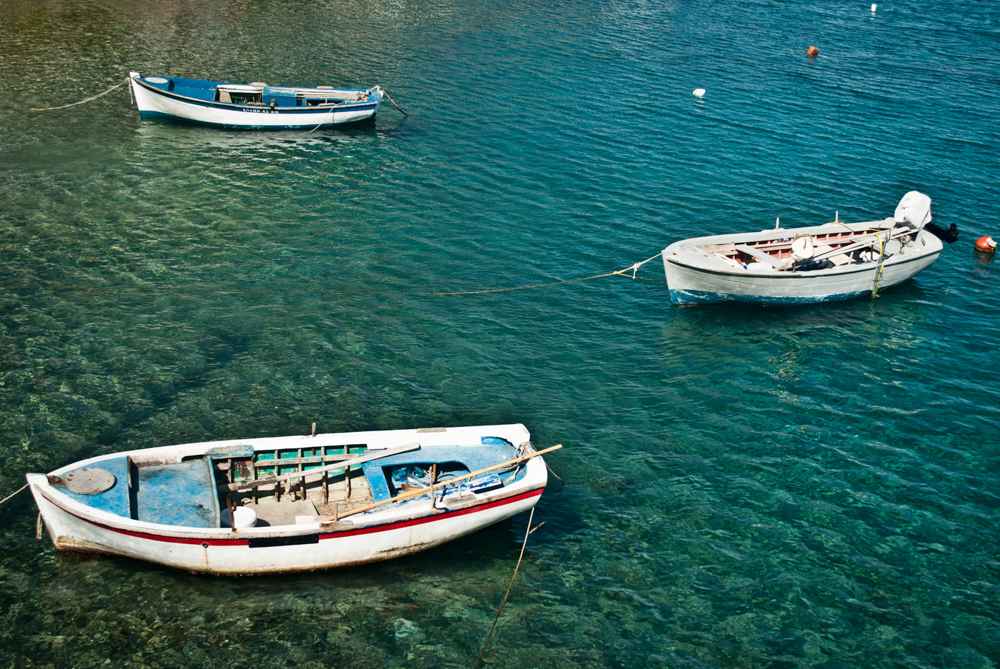
Lemonakia beach is a curved pebble cove on the north coast of Samos, set between the fishing village of Kokkari and the larger cove of Tsamadou. Clear turquoise water, pale grey-white pebbles and a sheltered horseshoe shape rank it among the island’s best-known organised beaches. The cove lies about 10 km west of the capital Vathy, below the main coast road that threads this green northern shore. Plan the whole trip with Greece Tours.
This guide places Lemonakia on the Kokkari coast, explains its horseshoe form and pale pebbles, and describes the clear water, swimming and snorkelling. It covers how sheltered the cove stays on still days and what the organised beach offers, from sunbeds to the taverna behind the shore. Access, parking and the meltemi wind round out a full picture of one of the north coast’s compact swimming coves.
Where is Lemonakia beach on the north coast of Samos between Kokkari and Tsamadou?
Lemonakia beach sits on the north coast of Samos, tucked between the fishing village of Kokkari and Tsamadou cove, about 10 km west of the capital Vathy below the main coast road.
Lemonakia occupies a short indentation on the green northern shore of Samos, the large eastern-Aegean island near the Turkish coast. The cove lies within the Kokkari resort area, roughly 10 km west of Vathy and a similar distance from Samos Airport near Pythagorio. Pine and scrub slopes fall toward the water, and the main coast road runs along the ridge just above the beach. Drivers reach it on the sealed road that links Vathy with Kokkari and Karlovasi. Buses on the Vathy-Karlovasi line stop near the top of the access path in the season. The wider island of Samos stretches from these northern pebble bays to Mount Kerkis in the far southwest.
Lemonakia forms one link in a chain of coves strung west of Kokkari along this stretch of shore.
Kokkari anchors this coast about 2 km east of Lemonakia, keeping a whitewashed harbour, tavernas and a windsurf scene on its long pebble bay. Tsamadou lies immediately west, a pine-backed cove reached from the same coast road within a couple of minutes by car. Tsabou follows further west, giving three neighbouring beaches along a short run of shore. The three coves share pale pebbles, clear water and the pine and tamarisk cover typical of the northern slopes. Green hills of Mount Ampelos rise behind, carrying trails up to the villages of Vourliotes and Manolates. Signposts on the coast road mark each cove, and small parking areas sit at the top of every access path.
This central-north stretch holds much of the island’s best-known beach scenery within about 4 km of Kokkari.
Vathy, the island capital and main ferry port, lies about 10 km east of Lemonakia along the coast road, roughly 15 minutes away. Pythagorio and Samos Airport sit around 25 km south over the ridge, reached across the island in about 40 minutes by car. Karlovasi, the second town and ferry port, stands about 20 km west past Kokkari and the Ampelos foothills. Kokkari’s harbour and tavernas stand about 2 km east, the nearest village for supplies and rooms. Taxis run from Kokkari and Vathy for those without a rental. The central-north position puts Lemonakia within easy reach of both ferry ports and the airport, and close to the mountain villages inland above Kokkari.
Signs for the beach appear on the road as it dips between Kokkari and Tsamadou.
The north coast of Samos runs green and indented from Vathy west past Kokkari to Karlovasi, cut by a string of pebble coves. Lemonakia sits at the heart of this run, flanked by Tsamadou to the west and Kokkari’s bay to the east. Behind the shore the land climbs fast to Mount Ampelos, the wooded range that feeds the Muscat vineyards of Vourliotes and Manolates. Streams from the slopes reach the sea between the coves, keeping the hillsides green into summer. The coast faces due north across open water toward Chios and Ikaria on the horizon. This aspect gives long sea views from the beach and exposes the shore to the meltemi.
Lemonakia shares the setting with its neighbours yet keeps its own tucked, self-contained bay.
What gives Lemonakia beach its curved horseshoe shape and pale pebbles?
Lemonakia curves in a tight horseshoe, its arc of pale grey-white pebbles wrapping a small bay between two low headlands. The enclosing shape and shelving pebble bed define the cove’s calm, compact character.
The horseshoe outline comes from two rocky arms that reach out and curl toward each other, narrowing the mouth of the bay. Between them the shore bends in a smooth curve rather than a straight line, so the water stays enclosed on three sides. A short crescent of open pebbles fronts the water at the centre of the arc. The headlands cut the swell rolling in from the open Aegean, and the compact bay measures only a short walk end to end. Green slopes climb straight from the back of the beach, framing the cove and blocking road noise from above.
This tucked form gives Lemonakia a pocket feel, distinct from the longer open bays at Kokkari and Votsalakia. The shape also concentrates shade from the pines onto the western corner in the afternoon.
Pale pebbles cover Lemonakia from the waterline to the tree shade at the back, ranging from fine gravel to smooth stones the size of an egg. The stones sit light grey and white, warmed pale by the sun, and give the shallows their bright, clear tone. A pebble bed like this stays clean underfoot and keeps the water free of stirred sand, unlike the island’s rare true-sand beaches. Water shoes help on the stones, which turn hot by midday and slope steeply into the sea. The pebbles continue below the surface, so the seabed stays firm and visible about three metres down. The pebble strip narrows at high water and widens on calm mornings.
This mineral shore, backed by pines, marks Lemonakia clearly apart from sandy Psili Ammos on the east coast.
Two low rocky points frame Lemonakia, one at each end of the arc, dropping in tumbled boulders to the water. The eastern point separates the cove from the next inlet toward Kokkari, while the western point divides it from Tsamadou. Grey limestone and schist form these arms, streaked and split where the sea has worked the base. Pines and low scrub cling to the slopes above, throwing shade onto the pebbles at the western end late in the day. The rock underfoot turns slippery near the waterline, so swimmers enter over the pebble centre rather than the points. The bay measures roughly 100 metres across the mouth between the two points.
These arms give the cove its shelter and its snorkelling ground, and mark the clear line where pebble beach meets standing rock.
Behind the pebbles at Lemonakia a low bank of tamarisk and pine marks the top of the beach against the slope. The trees give the cove its only natural shade, pooling under the branches at the western corner through the afternoon. Roots and fallen needles bind the back of the beach, where the pebbles give way to dry earth and scrub. Cicadas sound from the pines in high summer, and the scent of resin carries over the stones. The slope above rises steeply to the coast road, screening the beach from passing traffic. Below the surface the pebbles grade into coarse gravel and then bare rock toward the points.
This green backdrop, rare on drier Aegean islands, marks the wooded character of the Samos north coast.
How clear is the turquoise water at Lemonakia beach and what is swimming like?
Lemonakia holds clear turquoise water over its pale pebble bed, shading from bright green in the shallows to deep blue offshore. Swimming is easy on calm days, with the seabed dropping steeply close to shore.
Turquoise tones dominate the water at Lemonakia because the pale pebble seabed reflects sunlight up through a clear column. Green light fills the first metres near the shore, then deepens to blue as the bottom falls away from the beach. The lack of sand or river silt keeps the sea transparent, so swimmers see stones and fish below them. This clarity ranks Lemonakia among the north coast’s clearest coves, alongside Tsamadou and Tsabou next door. The pages on Samos beaches group these northern pebble bays for their bright, see-through water. Depth reaches over head height within a dozen strokes, so the cove suits confident swimmers.
Morning light before the wind rises gives the sharpest colour and the flattest surface for a first swim of the day.
Swimming at Lemonakia works best in the enclosed centre of the horseshoe, where the headlands still the water on calm days. The pebble bottom shelves quickly, reaching swimming depth within a step or two of the waterline. Strong swimmers cross to the rocky arms on either side, where the water deepens and cools over darker stone. Children and weaker swimmers keep to the shallow inner curve, though the steep drop calls for a close eye. The steep entry and rounded stones make water shoes and a careful first step worthwhile. No river feeds the bay, so the water stays warm and salty through the swimming season.
On windless mornings the surface stays glassy, and the cove holds its calm longer than the exposed Kokkari bay to the east.
Sea temperature at Lemonakia climbs through the warm months, warm enough for long swims from early summer into autumn. The north coast catches the meltemi, which stirs the surface and can drop the water a degree or two on windy afternoons. Calm mornings warm the shallow inner curve first, while the deeper mouth stays cooler over the darker seabed. The pebble bottom holds no silt, so the water clears fast after wind and stays bright to the eye. Salt content runs high in this open Aegean water, giving strong buoyancy for floating. Water clarity reaches well past head depth, so the bottom stays in view.
Colour shifts through the day, from pale green at dawn to deep blue under the midday sun. The clean, clear conditions draw swimmers back to Lemonakia across the whole season.
Entry at Lemonakia goes over rounded pebbles that shelve steeply, so swimmers reach depth within a short wade from the shore. Water shoes ease the walk in and guard against urchins on the rocks near the two points. The enclosed centre suits steady swimmers and floaters, while the open mouth calls for care once the wind lifts. No lifeguard works the cove, so parents watch children closely on the sudden drop. On flat days the bay stays calm for laps between the headlands, a natural pool ringed by rock. Buoys mark the swimming zone off the beach in the busy season. Rougher afternoons push short waves onto the pebbles, and the backwash drags at the steep bank.
Reading the wind before a swim keeps the cove safe, calm at dawn and livelier by mid-afternoon.
Is Lemonakia beach good for snorkelling and how sheltered is it on still days?
Lemonakia rewards snorkelling along its two rocky headlands, where clear water and stone reefs shelter fish. The horseshoe shape shelters the cove on still days, holding the surface calm when the meltemi drops.
Snorkelling at Lemonakia centres on the two rocky headlands that close the bay, where boulders and stone shelves hold marine life. Clear water over the pebble floor gives long sightlines, so masks pick out fish, urchins and the odd octopus among the rocks. The western arm carries more crevices and shade, drawing wrasse, bream and small schools into the cooler water. Snorkellers follow the shore outward rather than swimming into the open channel, keeping over the reef where the fish gather. The neighbouring cove of Tsamadou beach offers similar rocky edges a short walk west. A waterproof camera and fins help along the headland, where the water deepens over darker rock.
Flat mornings give the clearest view, before wind chop breaks up the light on the surface.
Shelter at Lemonakia comes from the horseshoe form, which turns its back on the swell and holds a pocket of calm water. The two headlands block waves rolling along the coast, so the inner bay stays flatter than the open shore nearby. Still days leave the surface almost glassy, mirroring the green slopes and drawing swimmers to the clearest water of the week. The meltemi, the summer north wind, can push chop into the cove by afternoon, since this coast faces the open Aegean. Boats anchor off the mouth on calm days, sheltered by the same headlands. Wind funnelling along the same shore feeds the Kokkari windsurf scene minutes to the east.
Early starts catch the stillest sea, before the daytime breeze builds and ruffles the exposed north coast.
Marine life at Lemonakia gathers where pebble floor meets the rock of the two headlands, the richest ground for a mask. Sea bream, wrasse, damselfish and sand smelt hold over the stones, and octopus and urchins tuck into crevices in the arms. The clear, shallow water lets snorkellers follow the eastern point toward the next inlet, staying close to the rock. Posidonia seagrass patches lie off the mouth in deeper water, sheltering small fish and keeping the sea clear. Fins, a mask and a rash top handle the exposed skin on a long float in the sun. Snorkellers stay inside the buoyed zone and watch for boats near the open channel.
The cove ranks with Tsamadou and Tsabou for easy, rewarding snorkelling on the north coast.
The meltemi shapes conditions at Lemonakia through high summer, a dry north wind that funnels down the Aegean onto this coast. Its gusts build through the day and can raise a short, steep chop across the exposed mouth by afternoon. The horseshoe headlands still take the edge off, so the inner bay stays swimmable when the open shore turns rough. Kokkari, 2 km east, harnesses the same wind for windsurfing on its broad, unsheltered bay. South-coast beaches like Votsalakia lie in the lee on meltemi days, a fallback when the north blows hard. Mornings almost always start calm before the wind fills in, the surest window for flat water.
Checking the forecast for wind direction guides the choice of cove on any given day. The wind usually eases at dusk, leaving the cove calm again.
What facilities does Lemonakia beach have, including sunbeds and a taverna?
Lemonakia runs as an organised beach in season, with rows of sunbeds and umbrellas across the pebbles and a taverna set back beneath the trees. A small car park and a short path serve it.
Sunbeds and straw umbrellas line the central pebbles at Lemonakia through the warm season, arranged in rows above the waterline. An operator sets them out for hire, so visitors rent a lounger and shade rather than carrying their own gear down the path. The organised section covers the middle of the cove, while the pebble strip toward the headlands stays open for towels. Shade is otherwise thin once the morning sun clears the ridge, since the pines sit mostly behind the beach. Early arrivals claim front-row beds before the cove fills on summer middays. Prices for beds sit in line with other organised Samos coves, so bring cash for the day.
A quieter fringe at either end suits those who prefer space away from the packed centre.
A taverna sits at the back of Lemonakia under the trees, serving swimmers through the main season without leaving the cove. The kitchen turns out standard Greek beach fare — grilled fish, salads, cooked dishes and cold drinks — for lunch between swims. Its terrace gives shade and a view over the horseshoe bay, a cool spot when the pebbles heat up at midday. Visitors reach the beach on a short, steep path from a small car park beside the coast road above. The parking fills fast in high summer, so an early drive from Kokkari or Vathy secures a space. Toilets and a shower stand near the taverna, the only built facilities at the cove.
No shops sit on the beach, so water, snacks and sun cover come down the path with you.
Access to Lemonakia runs down a short, steep path from the coast road, dropping through pines to the pebbles below. A small dirt car park sits at the top beside the road, filling early on summer days. The walk down takes only a couple of minutes, though the return climb tests visitors in the midday heat. Signs on the road mark the turn between Kokkari and Tsamadou, easy to miss at speed. Buses on the coast road pause near the trailhead for those without a car. The path has no rail, so sturdy footwear helps on the loose surface. Arriving before mid-morning secures parking and a shaded spot, well ahead of the day’s crowd from Kokkari and Vathy.
The nearest shops and cash machines stand in Kokkari, about 2 km east.
A day at Lemonakia pairs well with the neighbouring coves, a short hop west to Tsamadou or Tsabou for a change of scene. Kokkari, 2 km east, adds harbour tavernas, rooms and shops for an evening after the beach. The mountain villages of Vourliotes and Manolates sit a short drive inland for a cooler lunch among the vineyards. Bring water, snacks, sun cover and a mask, since only the single taverna serves the cove. Cash covers the sunbeds and the kitchen, as card machines are unreliable on the beach. A towel and shade help at the open ends beyond the umbrella rows. Sunset light turns the western headland gold as the wind drops.
Combining Lemonakia with Kokkari and the Ampelos villages fills an easy day on the green north coast of Samos.
How do you reach Lemonakia beach and where do you park?
Lemonakia sits below the Kokkari-to-Karlovasi coast road, about 10 km west of Vathy. A signed turn drops to a small car park, and a short walking path descends the final stretch to the pebbles.
Drivers reach Lemonakia on the main north-coast road that links Vathy, Kokkari and Karlovasi. The turn-off sits about 2 km west of Kokkari village, marked by a brown beach sign at a bend. The road runs high above the water here, so the cove appears below as a green-framed horseshoe. A narrow slip road leaves the tarmac and drops toward the shore, ending at a levelled gravel area under the pines. The gradient is steep in places, and the surface tightens near the bottom, so a low car takes it slowly. Vathy lies roughly 10 km east, and the airport near Pythagorio sits about 25 km away by road.
The KTEL bus between Vathy and Karlovasi passes the junction, leaving a short walk down to the sand.
The car park at Lemonakia is a compact gravel clearing rather than a paved lot. It sits just above the shoreline, a minute’s walk from the pebbles. Space holds about forty cars under the pines, and it fills by late morning in July and August. Cars then line the slip road and the verge above, adding a short uphill walk back at the end of the day. Shade from the trees keeps part of the parking cool, a real advantage on the hottest afternoons. No barrier or ticket booth stands at the entrance, and the ground is uneven, so wheels sit level with care.
Arriving before eleven, or after four, gives the best chance of a spot near the path. Scooters and motorbikes tuck in easily even when the car spaces run out.
The path down from the car park is short, dropping to the pebbles in under a minute. A packed-earth track with a set of rough steps winds between tamarisk and pine to the western end of the cove. The slope is gentle enough for children and for carrying a cool box, though flip-flops slip on loose grit after dry spells. Handrails are absent, and the last step onto the pebbles is a small drop. Beach gear, umbrellas and picnic bags all come down easily on this stretch. Wooden posts mark the top of the track beside the parked cars. The short gap between car and sand makes Lemonakia easier than coves reached by long staircases.
At day’s end the climb back up warms the legs but takes only a minute or two.
Reaching Lemonakia without a car works through the north-coast bus or a short taxi from Kokkari. The KTEL service between Vathy and Karlovasi passes the junction on the main road, dropping walkers at the top of the slip road. The walk down from the highway then takes about five minutes on foot. Taxis from Kokkari cover the 2 km in minutes and suit an evening return. Cyclists tackle the climb back to the road as the steepest part of the trip. Boat trips along the north coast from Kokkari also pause off the cove, letting swimmers reach the pebbles from the water. Renting a car or scooter still gives the most freedom on this spread-out island.
No direct bus stops on the sand itself, so a short downhill walk is part of every carless visit.
What are the neighbouring coves of Tsamadou and Tsabou like near Lemonakia?
Tsamadou and Tsabou flank Lemonakia within a 1 km stretch of the same pine-backed coast. Tsamadou lies just west with a clothing-optional end, while Tsabou sits further along, quieter and less organised than its two neighbours.
Tsamadou is the closest cove to Lemonakia, a short walk or one-minute drive west along the coast road. Pines and tamarisks crowd right to the pebbles, giving natural shade that Lemonakia’s more open slope lacks. Sunbeds and a canteen work the eastern half in season, while the western end has long carried a clothing-optional reputation. Clear, deep water off the pebbles draws snorkellers to the rocky sides of the bay. A steep path and a small parking area serve it, much like its neighbour. Walkers link the two coves in under fifteen minutes along the shoulder of the road. The name marks a distinct stop on the north-coast bus and boat routes.
Tsamadou ranks among the island’s best-known beaches, so it fills fast on calm July and August mornings.
Tsabou lies further west along the coast, the quietest of the three sister coves. Fewer sunbeds and a smaller road sign leave it calmer than Lemonakia and Tsamadou on peak days. A mix of pebbles and coarse sand slopes into clear water backed by low green hills. The cove sits close to the road, with a rough pull-in rather than a proper car park. Snorkellers explore the rocky edges, and the open aspect catches the meltemi much like its neighbours. Its low profile keeps it off most day-trip lists, so parking stays open later into the morning. Tsabou suits swimmers who want the same clean water with thinner crowds and less organisation.
A short drive of two or three minutes connects it to Lemonakia along the same twisting coast road.
Walking connects all three coves along the coast road in well under half an hour. A shoulder path and the tarmac verge link Tsabou, Lemonakia and Tsamadou past pine and scrub. The short chain lets swimmers hop between beaches to chase shade or dodge the wind. Tsamadou holds the most shade and the clothing-optional end, Lemonakia the tidiest horseshoe, and Tsabou the fewest crowds. Each cove keeps pale pebbles and clear turquoise water, so the swimming feels similar across the trio. Signposts on the main road name each cove, so the turns are easy to spot from a car. Drivers park once and stroll the rest, saving the tight slip roads on a busy day.
This cluster forms the core of the north-coast beach run west of Kokkari for most visitors.
Choosing between the three coves comes down to shade, crowds and the wind on the day. Tsamadou wins for tree cover and for swimmers happy near a clothing-optional end. Lemonakia suits those wanting a compact organised cove with sunbeds and a single taverna. Tsabou rewards anyone chasing quiet water and open parking later in the morning. On a strong meltemi all three take waves, so the sheltered south coast becomes the fallback. Families often settle at Lemonakia for the short path and calm horseshoe on still days. Snorkellers work the rocky flanks of each bay, where the pale pebbles give way to clear, deep water over stone.
A single afternoon covers all three at a relaxed pace by car. The coves share the same clean Aegean water and pine backdrop, so no choice disappoints.
How close is Kokkari to Lemonakia and what is its windsurf scene?
Kokkari sits about 2 km east of Lemonakia, a five-minute drive along the coast road. The village funnels the meltemi across its bay, and that steady north wind makes Kokkari a long-standing windsurfing centre on Samos.
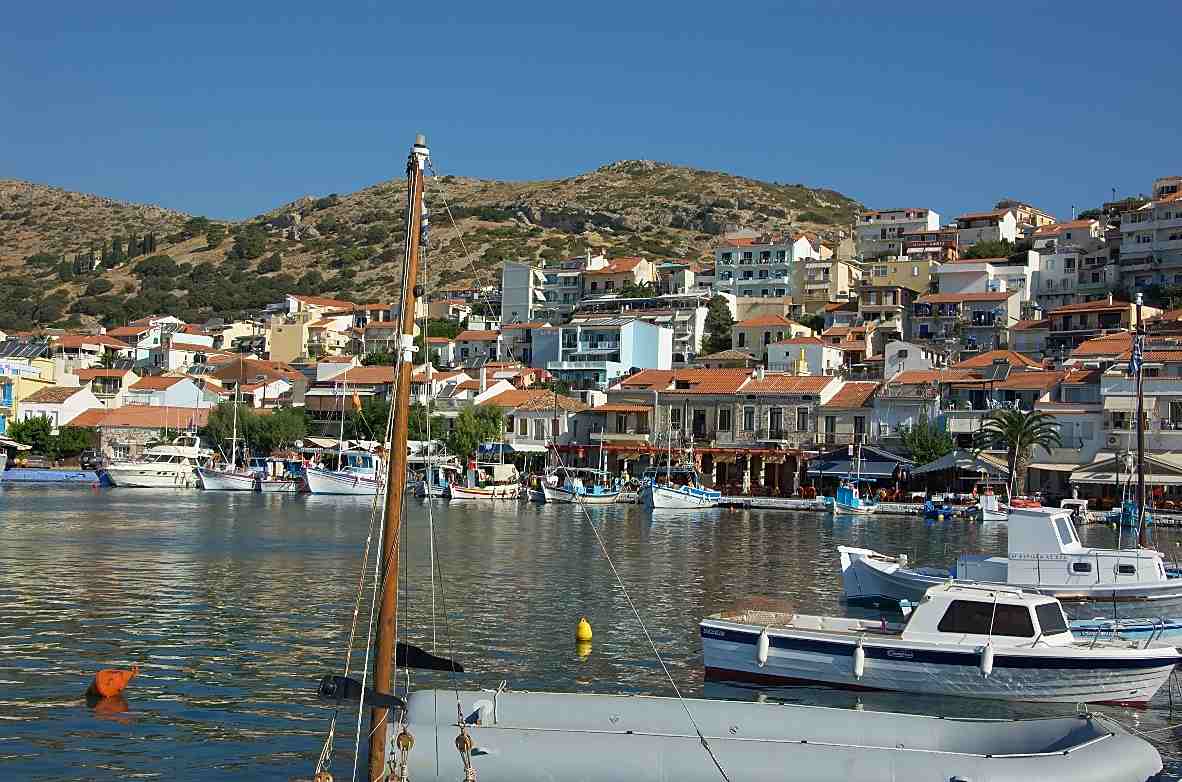
The fishing village of Kokkari lies minutes east of Lemonakia and anchors this whole stretch of coast. A whitewashed harbour, tavernas along the quay and a headland chapel give the village its shape below the green slopes. Fishing boats still tie up beside the pebble bay, though the village now ranks as the island’s busiest resort. Rooms, cafes and a supermarket make it the natural supply stop for a Lemonakia beach day. The coast road runs straight from the harbour to the cove in about five minutes by car. The headland splits the bay into a sheltered side and a windward side. Walkers and cyclists cover the 2 km on the shoulder when the light traffic allows.
Kokkari’s spread of services explains why beach-goers base here and drive out to the quieter coves.
Windsurfers gather at Kokkari because the meltemi accelerates as it rounds the north coast. The main bay and the long pebble beach east of the headland catch a steady cross-shore breeze through high summer. Schools and rental stations set up on the beach, hiring boards, rigs and wetsuits and running lessons for beginners. Flat water inshore suits first-timers, while stronger gusts offshore draw experienced sailors onto bigger sails. The season peaks in July and August, when the meltemi blows hardest for days at a stretch. Sailors rig on the shingle and launch straight into the bay within a minute. Kite and wing riders share the same wind on the outer beach when space allows.
This reliable wind sets Kokkari apart from the calmer resort bays on the sheltered south coast.
Basing at Kokkari puts Lemonakia, Tsamadou and Tsabou within a five-minute drive west. A morning windsurf session in the bay pairs neatly with an afternoon swim at the calmer coves. The village square and waterfront fill with tavernas for lunch and dinner between beach trips. Buses on the Vathy-Karlovasi line stop in Kokkari, linking the resort to the ferry ports and airport. Scooter and car hire in the village reach the beaches, the mountain trails and Vathy alike. Evening light on the harbour draws walkers back for a meal after a day on the pebbles. Trails climb from behind the village to the Ampelos villages of Vourliotes and Manolates. A day here mixes surf, sand and mountain.
Kokkari’s balance of wind, water and services makes it the practical hub for this coastline.
Boat trips from Kokkari harbour cruise west past Lemonakia and the sister coves in season. Small craft anchor off the pebbles, letting passengers swim ashore where the road access feels tight. The five-minute road hop still beats the boat for a straightforward beach day at the cove. Taxis wait on the Kokkari waterfront for a quick lift out to Lemonakia and back. Cyclists ride the rolling coast road between village and cove, gaining sea views at every bend. Kokkari’s shops stock the sunscreen, water and snacks that Lemonakia’s single taverna cannot fully cover. The harbour also runs longer trips along the coast toward Karlovasi and the wilder western beaches.
A short taxi or drive keeps Lemonakia within easy reach. This tight link between resort and cove defines how most visitors work the north coast.
How does the meltemi wind affect Lemonakia on the exposed north coast?
The meltemi, a dry north wind of Aegean summer, hits Lemonakia head-on because the cove faces open north sea. Strong days bring chop, waves and drifting pebbles, while calm mornings leave the horseshoe glassy and clear.
The meltemi blows from the north and northwest across the Aegean through high summer. Dry, cool and steady, it can run for days at a stretch before dropping for a calm spell. Lemonakia opens straight onto this wind, since the whole north coast of Samos faces the sea it crosses. Kokkari, just east, turns the same wind into a windsurf asset, while the coves take it as swell. The strait to Turkey and the island’s shape funnel the gusts along this shore. Morning often starts calm, with the wind building through the afternoon as the land heats. A run of windy days can end as abruptly as it starts, returning the sea to glass.
Locals read the day early and pick a coast to match the forecast. The pattern repeats across July and August.
Waves reach Lemonakia whenever the meltemi strengthens, breaking onto the pebble shore. The water clouds with stirred grit, the swim turns bouncy, and sunbeds shift back from the waterline. The horseshoe shape gives partial shelter, so the cove often stays calmer than open beaches nearby. Swimmers still enter easily on moderate days, though the shorebreak tumbles pebbles around the feet. Umbrellas strain and towels catch sand once the gusts pass a certain strength. Spray carries up the slope on the strongest gusts, reaching the parked cars. The taverna and sunbed crew read the wind and set up accordingly each morning. Deeper water offshore keeps its clarity even when the shorebreak churns.
On the hardest meltemi days the whole north coast, Lemonakia included, turns rough and cool.
Dodging the meltemi means switching coasts when the north wind blows hard. The sheltered south and southwest beaches, led by Votsalakia under Mt Kerkis, stay calm on the same day. Psili Ammos and Kerveli on the east coast also duck much of the north swell. Checking the wind forecast the night before saves a wasted trip to a churning Lemonakia. Mornings on the north coast often give a calm window before the afternoon build. Sunbathers who want flat water simply start early at the cove and move on by noon. A rented car makes the switch quick, since the calm coast lies nearby.
Bus riders find the change harder, so timing the north coast for a calm morning helps most. This coast-swapping is a normal part of a Samos beach holiday through the windy months.
Swimming safety at Lemonakia depends on reading the wind and the shorebreak. Moderate chop suits confident swimmers, while a strong meltemi makes the entry over pebbles awkward for children. Waves rebound off the rocky sides, so the corners of the cove churn more than the centre. Strong offshore gusts can push inflatables and lilos out to sea, a real hazard on windy days. Keeping children in the shallow middle of the horseshoe stays safest when whitecaps appear. Cool wind masks the strong summer sun, so sunburn creeps up on breezy afternoons. A hat and a shirt help once the wind carries spray across the pebbles.
Watching the flags and the sunbed crew’s cues gives a clear read on conditions. Calm mornings remove most of these worries, returning the cove to easy swimming.
Who does Lemonakia beach suit and what are the best times of day to visit?
Lemonakia suits couples, families and swimmers who want a compact organised cove with sunbeds and a taverna. Early morning brings calm water and open parking, while late afternoon delivers soft light and thinner crowds.
Couples and swimmers form the core crowd at Lemonakia, drawn by the compact organised cove. Families join them on calm days, when the sheltered horseshoe and short path suit children well. Snorkellers work the rocky flanks, while sunbed-and-taverna comfort appeals to those wanting an easy day. Anyone weighing a north-coast base can read the beach guides on where to stay in Samos before booking. Kokkari, two minutes east, makes the natural home base for repeat visits to the cove. Backpackers and bus travellers manage a day trip from Vathy with a short walk down. Divers and long swimmers enjoy the clear, deep water off the pebbles.
The cove rewards beach-lovers over party crowds, since it stays quiet after the sunbeds close. The single taverna and sunbed rows make it easier than the wild western coves.
Morning is the calmest time at Lemonakia, before the meltemi builds and the crowds arrive. Water lies glassy soon after sunrise, giving the clearest swimming and the best snorkelling visibility. The car park stays open, and the short path sees little traffic in the first hours. East light warms the pebbles while the western pines still hold shade over part of the cove. Sunbeds go out early, so an eight or nine o’clock arrival secures a front-row spot. Families gain calm shallows and cooler air for children before the midday heat peaks. Parking near the path is simplest before the late-morning rush fills the gravel clearing. The early hours also beat the midday tour boats.
A morning swim then leaves the rest of the day for Kokkari, the villages or a second beach.
Midday brings the fullest crowds and the thinnest shade at Lemonakia. Sun stands overhead, the pines shade little of the open slope, and the car park overflows onto the road. Heat and any building meltemi make the middle hours the least comfortable stretch. Late afternoon then reverses the day as the sun drops and the crowds thin out. Soft, low light warms the cove, and the pebbles glow against the turquoise water. Shade returns to the western side as the sun swings toward the ridge. Departing day-trippers free up sunbeds and parking for a calmer second swim. Swimmers reclaim the water once the wind and heat both ease.
The taverna quietens too, making the hours after four a favourite window for a relaxed visit. A sunset drink at Kokkari ends the day well.
Matching the visit to the day gets the most from Lemonakia across the season. Calm mornings suit families and snorkellers, while breezy afternoons favour a shorter, shadier stop. June and September give warm water, open facilities and thinner crowds than peak August. July and August fill the car park early, so a dawn start or a late arrival works best. Windless days turn the horseshoe glassy, the ideal moment for a long, slow swim. On a hard meltemi the south coast beckons, saving Lemonakia for a calmer morning. Spring and autumn bring cooler swims and quiet pebbles for walkers passing the coast. A flexible plan beats a fixed one on this wind-shaped shore.
Reading wind, crowd and light together lets each visitor time the cove to their own pace.
Frequently Asked Questions
Is Lemonakia beach good for young children?
Lemonakia suits young children on calm days, when its sheltered horseshoe keeps the water quiet and clear. The cove faces open north sea, so the meltemi can bring waves, making a morning visit the safest choice. The short path from the car park runs under a minute, easing the trip with buggies, cool boxes and beach toys. Pebbles cover the shore rather than sand, so water shoes protect small feet on entry and underfoot. Sunbeds, umbrellas and a single taverna provide shade, drinks and snacks close at hand. The shallow centre of the cove gives the calmest, safest swimming for toddlers on still days. Parents keep children in the middle, away from the rockier corners where waves rebound.
Cool wind can mask the strong sun, so a hat, shirt and sunscreen matter even on breezy afternoons. The nearby sandy beaches of Psili Ammos and Votsalakia give a softer alternative when the north wind blows hard.
Where do you park at Lemonakia beach?
Parking at Lemonakia uses a small gravel clearing under the pines, just above the shore. A signed slip road leaves the main Kokkari-to-Karlovasi coast road and drops steeply to the levelled area. Space holds about forty cars, and it fills by late morning through July and August. Cars then line the slip road and the verge above, adding a short uphill walk at the day’s end. No barrier, booth or ticket machine stands at the entrance, and the surface sits uneven, so wheels rest level with care. Shade from the trees keeps part of the parking cool on hot afternoons. Arriving before eleven, or after four, gives the best chance of a spot near the path.
Scooters and motorbikes tuck in easily even once the car spaces run out. The slip road is narrow and steep, so a slow, careful approach helps in a low car. Kokkari, two minutes east, offers more parking and a short taxi or drive out to the cove.
Does Lemonakia beach have sunbeds and a taverna?
Lemonakia offers rows of sunbeds and umbrellas plus a single taverna in the summer season. The organised setup covers much of the pebble shore, so shade and a drink stay close to the water. Sunbeds go out early, and a morning arrival secures a front-row pair before the crowds build. The taverna serves food, cold drinks and snacks through the day, sparing a long trip back to the car. Facilities run through the warm months and wind down outside the main season, when the cove turns quiet. Pebbles cover the shore, so a mat or the hired beds beat lying on the stones directly. Free space remains at the edges for anyone bringing their own umbrella and towel.
Kokkari, two minutes east, stocks the supermarket supplies that the single taverna cannot fully match. On calm days the sunbed rows fill fast, so early birds gain the best pick. A strong meltemi pushes the beds back from the churning waterline.
Is Lemonakia beach good for snorkelling?
Lemonakia rewards snorkellers with clear, deep water and rocky sides framing the pebble cove. The pale stones give way to clean turquoise water, so visibility stays high on calm mornings. The rocky flanks at each end of the horseshoe hold the most fish, weed and texture to explore. Depth builds quickly off the pebbles, suiting confident swimmers who follow the edges toward open water. Calm days offer the best conditions, since the meltemi clouds the shallows with stirred grit once it blows. Morning brings the flattest, clearest water before the afternoon wind and crowds arrive. A mask, snorkel and water shoes handle the pebble entry and the rockier corners.
The neighbouring coves of Tsamadou and Tsabou give similar rocky edges within a short walk or drive. Deeper water stays clearer than the shorebreak even on breezier days, so the outer cove still works. Bright sun through the middle of the day lifts colour and visibility over the rocks.
What is Lemonakia like on windy meltemi days?
Lemonakia turns choppy on windy meltemi days, because the cove faces open north sea head-on. Waves break onto the pebble shore, the water clouds with stirred grit, and swimming grows bouncy. The horseshoe shape gives partial shelter, so the cove often stays calmer than fully open beaches nearby. Sunbeds shift back from the waterline, and umbrellas strain once the gusts pass a certain strength. Strong offshore wind can push inflatables and lilos out to sea, a real hazard for children. Cool wind masks the strong sun, so sunburn creeps up on breezy afternoons despite the lower feel. The meltemi usually builds through the afternoon, so a calm morning swim beats a windy noon.
On the hardest days the sheltered south coast, led by Votsalakia under Mt Kerkis, stays calm instead. Checking the wind forecast the night before saves a wasted trip to a churning cove. Kokkari, minutes east, turns the same wind into its windsurf scene.
What beaches are near Lemonakia on the Samos north coast?
Lemonakia sits amid a cluster of north-coast coves west of Kokkari on Samos. Tsamadou lies just west, a pine-backed pebble cove with a clothing-optional end and natural shade. Tsabou sits further along, the quietest of the three, with fewer sunbeds and open parking later in the morning. All three share pale pebbles, clear turquoise water and the same exposure to the meltemi. Walkers link the coves along the coast road in well under half an hour. Kokkari, two minutes east, adds a fishing harbour, tavernas and the island’s windsurf beach. Further afield, Potami mixes sand and pebbles below a river gorge west near Karlovasi.
The east-coast Psili Ammos offers true sand and shallow water facing Turkey, a softer family choice. Votsalakia in the southwest gives a long strand under Mt Kerkis, sheltered on most wind days. A car turns this whole spread into an easy string of beach stops across the island. Each cove sits a short drive from the next.
When is Lemonakia beach at its quietest?
Lemonakia stays quietest early in the morning and late in the afternoon, away from the midday peak. Water lies glassy soon after sunrise, and the car park holds open space before the late-morning rush. Sunbeds fill fast on calm July and August days, so an eight or nine o’clock arrival beats the crowds. Late afternoon then empties as day-trippers leave, freeing sunbeds and parking for a calmer second swim. June and September bring thinner crowds than peak August, with warm water and open facilities. May and October turn the cove quiet again, with cooler sea and quiet pebbles underfoot. Windy meltemi days also clear the beach, though the water turns choppy in exchange.
The neighbouring Tsabou cove stays calmer than Lemonakia on busy days, a quieter fallback nearby. Midweek generally beats weekends, when island residents add to the beach numbers. Arriving at opening or after four o’clock gives the calmest stretch of the day.