
Tsamadou is a pebble cove on the north coast of Samos, set just west of the fishing village of Kokkari. Pine trees run down the slope to the shore, framing clear, deep water and pale grey stones. The cove draws swimmers and snorkellers to its transparent sea, while sunbeds and a small canteen serve part of the beach in summer. A steep path and small parking area lead down from the coast road above. Plan the whole trip with Greece Tours.
This guide covers where Tsamadou sits and how the pine-backed cove looks, the clear deep water and swimming. The snorkelling over rocks and the pale pebbles, the sunbeds and canteen in general terms. The clothing-optional far end. The neighbouring coves of Lemonakia and Tsabou lie minutes away, and the meltemi wind shapes conditions along this coast. Approximate distances and facilities are given in general terms for planning a visit.
Where is Tsamadou beach on Samos, and how does the pine-backed cove west of Kokkari look?
Tsamadou sits on the north coast of Samos, a pebble cove just west of the fishing village of Kokkari. Pine trees run down the slope to the shore, framing clear water and pale stones.
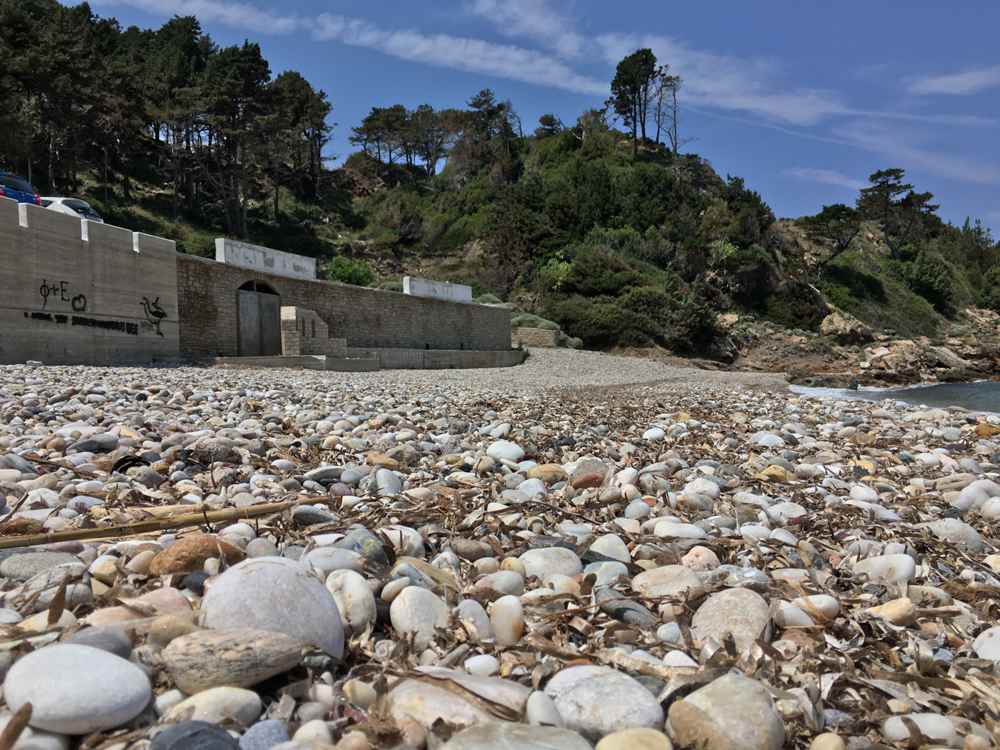
Tsamadou lies about 3 km west of Kokkari on the north coast of Samos, reached from the main coast road toward Karlovasi. A steep, narrow lane drops from a bend in the road to a small parking area above the cove. Wooden steps and a short dirt track link the parking to the pebbles below. Pines and tamarisk trees cover the slope behind the beach and reach almost to the waterline. The cove is small and sheltered by low headlands on each side. Pale grey pebbles form the shore, and the seabed shelves quickly into deep, clear water. The green hills of Mt Ampelos rise directly behind, giving the beach a wooded backdrop.
Tsamadou ranks among the most photographed beaches on the island for this pine-fringed setting.
The village of Kokkari sits about 10 km west of Vathy, and Tsamadou opens just beyond it along the same shore. Three coves line this short stretch: Tsamadou, then Lemonakia, then Tsabou, each set into the wooded coastline. Low rocky points separate the beaches, so each keeps its own small bay. The pines grow close to the pebbles at Tsamadou, casting patches of natural shade in the early hours. A single track and footpaths connect the coves for walkers who want to compare them. The road above carries buses and cars between Kokkari and Karlovasi. From the parking bend, the whole cove is visible below, curved between two green headlands.
Tamarisk trees line the back of the cove near the water. This clustering of pine-backed coves defines the north coast west of Kokkari.
The descent to Tsamadou is short but steep, dropping through pine and scrub on a rough path. Sturdy footwear helps on the loose stones near the top of the track. The parking area holds a limited number of cars, so it fills early on windless summer days. Overflow cars line the narrow road above, and the bus between Kokkari and Karlovasi stops on the main road nearby. Once down, the pebbles run in a gentle curve between the two headlands. Shade sits under the pines at the back in the morning, then narrows as the sun climbs. The cove faces roughly north, open to the Aegean and the wind that funnels along this coast.
Reaching Tsamadou takes only minutes on foot from the road.
Pale pebbles give Tsamadou a bright shoreline that contrasts with the dark pines above. The stones are smooth and rounded, ranging from pea-size to fist-size across the beach. Water clarity is high over the pale seabed, showing shades of turquoise close in and deep blue further out. The pine slope shelters the back of the cove and scents the air on warm afternoons. Two green headlands frame the view out to the open sea. The bright stones warm underfoot by midday. Photographers favour the spot from the road bend, where the curve of the cove sits below the trees. The combination of pebbles, clear water and pine gives Tsamadou its reputation on the north coast.
Visitors often pair it with the neighbouring Lemonakia cove in a single trip.
What is swimming like in the clear, deep water at Tsamadou beach?
The water at Tsamadou is clear and deep, shelving steeply from the pebble shore. Swimmers reach comfortable depth within strides, and the clarity shows the pale stones on the seabed well below the surface.
The seabed at Tsamadou drops away quickly from the waterline, so the beach reaches swimming depth close to shore. Strong swimmers value this deep, clear water for proper strokes rather than wading. The pebble bottom keeps the sea free of sand clouds, holding visibility high even when swimmers stir the shallows. Turquoise tones fill the water near the pebbles, deepening to blue where the seabed falls away. The cove faces north, so the surface stays cool and fresh through the season. Underwater the pale stones and patches of rock show clearly metres down. Entry is easy over the smooth pebbles, though the steep shelf means children need close watching.
Water shoes make the pebble entry easier underfoot. Tsamadou rewards confident swimmers who want depth and clarity together.
The meltemi wind funnels along the north coast of Samos and can raise short waves at Tsamadou. On breezy afternoons the surface turns choppy, and the pebbles shift underfoot in the wash. Calm mornings give the flattest, clearest water for swimming and floating. When the wind blows hard, the neighbouring south-coast beaches stay sheltered as an alternative. The deep water means swells reach the shore with force rather than breaking far out. Waves also cool the water and clear any drifting weed from the cove. Swimmers watch the pebble bank at the waterline, which the waves can steepen. On settled days the cove is calm and glassy from early until the breeze builds.
Checking the wind forecast before a visit helps time the calmest hours at Tsamadou.
Lemonakia, the next cove west, offers similar clear water in a slightly smaller bay backed by pines. Tsabou lies just beyond, a longer pebble beach that stays quieter than its two neighbours. All three coves share the deep, transparent water typical of this pine-lined coast. Families with older children who swim well find Tsamadou manageable on calm days. The steep entry and quick drop suit strong swimmers more than toddlers paddling in shallows. Buoyed swim lines are absent, so bathers judge depth and wind for themselves. The pebble shore holds no sudden sandbanks or hidden currents inshore. The clear water lets swimmers spot rocks and the seabed before diving in.
Comparing the three coves on foot takes under half an hour along the connecting paths above the shore.
The clear water at Tsamadou stays inviting from the late-spring warm-up into mid-autumn. June and September bring comfortable sea temperatures with fewer swimmers in the cove. Midsummer warms the surface most, while the meltemi keeps the north coast fresher than the sheltered south. Early morning gives the calmest, clearest conditions before the wind and the crowds arrive. The sea holds a pleasant swimming warmth well into the autumn months in a mild season. Swimmers who want depth, clarity and pines together rate Tsamadou among the finest north-coast dips. The cove drops off fast, so a short swim out reaches deep blue water. Floating on the surface, bathers look back at the pine slope and the pale pebble curve.
This mix of deep water and forest backdrop defines a Tsamadou swim.
Is Tsamadou beach good for snorkelling, and what are the pale pebbles like?
Tsamadou suits snorkelling well, with clear water over rocky edges and a pale pebble seabed. Fish gather around the rocks below the two headlands, and the smooth grey pebbles line both the shore and the shallows.
Snorkellers at Tsamadou head for the rocky sides of the cove below the two pine-topped headlands. Clear water and a pale seabed make it one of the better snorkelling Samos beaches on the north coast. Small fish shelter among the rocks and weed at the edges of the bay. The pebble bottom in the centre reflects light and keeps visibility high on calm days. Depth increases quickly, so snorkellers float over a shelving seabed within metres of shore. Rock crevices near the headlands hold the most marine life to watch. A mask and fins are enough, since the interesting ground sits close to the surface at the sides.
Calm mornings give the steadiest, clearest water for exploring the rocks. Bathers keep clear of the rocks when waves pick up.
The pebbles at Tsamadou are pale grey, smooth and rounded by the sea over long ages. Sizes range from small gravel near the waterline to fist-sized stones higher up the beach. The bright shore contrasts sharply with the dark green pines that back the cove. Underwater the same pale pebbles cover the shallows, giving the sea its bright turquoise cast. The stones warm quickly in the sun, so a mat or towel makes lying down easier. The rounded stones make no dust, keeping towels and gear clean. Walking barefoot across the pebbles takes care, and water shoes help at the entry. Between the pebble patches sit low rocks that draw fish and snorkellers.
The pale seabed close in and the darker rock at the sides create two distinct snorkelling zones.
Snorkellers over the rocks at Tsamadou watch small Aegean fish moving through the weed and crevices. Wrasse, damselfish and bream feed around the boulders below the headlands. Sea urchins cling to the rock, so bathers step with care near the edges. The clear water carries good light down about four metres for spotting fish and stones. Away from the rocks the pale pebble floor stretches empty and bright toward the open sea. Snorkelling stays best on calm mornings before the meltemi ruffles the surface. Both headlands offer similar ground, so snorkellers can explore either side of the cove. The neighbouring coves of Lemonakia and Tsabou hold comparable rocky edges for those extending the trip.
This mix of pebble and rock makes Tsamadou a steady snorkelling choice.
Snorkelling gear stays simple at Tsamadou, since the water is clear and the ground close to shore. A mask, snorkel and fins cover the cove and the rocky sides. No equipment rental sits on the beach itself, so visitors bring their own kit. The pale pebbles offer a clean, firm base for leaving bags and towels near the water. Shade thins by midday, so an umbrella helps snorkellers resting between swims. The steep pebble bank at the entry needs care when stepping in with fins on. Fresh water for rinsing the salt off is worth carrying down. Once past the shallows, the clear water and pale floor open a wide view underwater.
Pairing the pale pebbles above with the rocky snorkelling below fills an easy half-day at the cove.
What facilities, sunbeds and canteen does Tsamadou beach offer?
Tsamadou runs sunbeds and umbrellas on part of the beach in the summer season, with a small canteen for drinks and snacks. The rest of the cove stays free of facilities for towels on the pebbles.
Sunbeds and straw umbrellas cover part of Tsamadou through the summer, set in rows on the pebbles. The organised stretch sits toward the centre of the cove, near the access path. A rental fee applies for a bed-and-umbrella set, paid at the beach in season. The rows sit back from the waterline under the pines for shade. The small resort village of Kokkari lies minutes east and supplies most visitors to the cove. Beyond the sunbed rows the beach stays open for those laying towels straight on the stones. Space fills quickly on calm summer days, so early arrival secures a bed in the shade. The sunbeds face the clear water and the pine-topped headlands across the bay.
Facilities stay modest here compared with the larger organised beaches near the towns.
A small canteen operates at Tsamadou during the summer months, set back near the pebbles. It serves cold drinks, water, coffee and light snacks to beachgoers through the day. The canteen saves the walk back up to the road for refreshments in the heat. Opening runs with the season, so the stand closes outside the busy summer weeks. No full taverna sits on the beach, so a proper meal means driving to Kokkari. Bringing extra water is wise on hot days, since supplies at the canteen stay limited. Prices at beach canteens sit above those in the village. The stand sits near the sunbed rows, within easy reach of the organised stretch.
For a fuller choice of food, the tavernas of Kokkari lie a short drive east along the coast.
Tsamadou keeps its facilities light, so visitors plan for a partly unserviced cove. Sunbeds and the canteen cover the centre, but the ends of the beach have none. No lifeguard watches the water, so swimmers judge the wind and depth themselves. Toilets and showers are limited, which suits a short beach visit more than a full day unprepared. Towels, water, sunscreen and shade for the free stretches make the trip comfortable. The pebbles need a mat, since they grow hot and press hard underfoot by afternoon. Parking is tight, so arriving early or coming by bus eases the day. A bus runs along the coast road between Kokkari and Karlovasi in season.
A cool box of food turns the cove into an easy picnic spot between swims and snorkelling.
The organised part of Tsamadou draws families and couples who want a bed and shade for the day. The free stretches beyond suit those who prefer towels, quiet and their own pace. Both groups share the same clear water and pale pebble shore. Renting a sunbed near the canteen keeps drinks and shade within easy reach. Choosing the free ends means carrying gear but escaping the busiest strip. On peak summer days the organised centre fills first, then the towel spaces along the sides. Music and noise stay low across the small pine-backed bay. The cove stays small, so even a full beach feels contained between its headlands.
Balancing the serviced centre against the open ends lets each visitor set the pace of the day at Tsamadou.
Is there a clothing-optional section at the far end of Tsamadou beach?
The far end of Tsamadou has long carried a clothing-optional reputation, set apart from the organised centre. Bathers who prefer to cover up stay near the sunbeds, while the quieter end toward the headland draws naturists.
The clothing-optional stretch of Tsamadou lies at the far end of the cove, away from the access path. Pines and rocks screen this corner, giving it more privacy than the central pebbles. Naturists have used this end of the beach for a long time, and the custom is well known locally. The organised sunbeds and canteen sit toward the middle, keeping the two zones apart. The pines behind cast dappled shade over this end in the morning. No sign marks the divide, so the change is a matter of local habit rather than rule. Bathers wanting textile space stay near the centre and the sunbed rows. Those seeking the clothing-optional end walk toward the quieter headland corner.
This informal split lets both groups share Tsamadou without friction across the small cove.
Tsamadou works as a mixed beach, where clothing-optional use stays at one end by custom. Visitors respect the informal boundary, so families and naturists keep to their own stretches. Photography without consent is discouraged at the clothing-optional corner, as on any naturist beach. The quieter far end draws fewer sunbeds and more towels laid on the open pebbles. Newcomers can settle near the centre first and judge the beach before choosing a spot. The relaxed north-coast setting and pine cover suit this long-standing arrangement. The corner stays calm and low-key through the day. Similar clothing-optional corners appear at other quiet coves along the coast. Keeping to the established zones lets the whole cove stay easy and welcoming.
Discretion and courtesy define the far end of Tsamadou more than any posted rule.
Reaching the far end of Tsamadou means walking across the pebbles from the central access path. The stretch sits under the pines toward the western headland, a short stroll from the sunbeds. Rocks and trees give the corner shelter from the busier middle of the cove. The same steep path and parking above serve the whole beach, including this quieter end. Wind here matches the rest of the north-facing cove. No separate entrance leads to the clothing-optional stretch, so all bathers arrive together. The walk over the pebbles takes only a couple of minutes from the foot of the path. Snorkelling over the rocks near the western headland lies within reach of this end.
The quiet corner and pine shade reward those who carry their gear a little further along the shore.
The far end of Tsamadou completes a cove that mixes organised comfort with quiet, natural corners. Families, couples, swimmers, snorkellers and naturists each find a stretch that fits along the same short beach. The clothing-optional custom sits at one end without affecting the sunbeds and canteen elsewhere. Bathers seeking more space walk on to Lemonakia or Tsabou, where similar quiet corners exist. The pine backdrop and clear water tie the whole cove together from end to end. Respecting the informal zones keeps Tsamadou relaxed for every kind of visitor. Buses and cars reach it easily from Kokkari and Vathy. The beach rewards an early start, good shade and a plan for the wind.
From the busy centre to the naturist far end, Tsamadou stays one of the north coast’s defining coves.
How do you get down to Tsamadou beach and where do you park?
Tsamadou sits below the Kokkari–Karlovasi coast road, about 3 kilometres west of Kokkari on the north coast of Samos. A marked turnoff drops to a small parking area, and a steep path descends through pines to the pebbles.
The Kokkari–Karlovasi coast road runs high along the north shore of Samos, above Tsamadou. Drivers reach the cove from a signed turnoff about 3 kilometres west of Kokkari village. A blue beach sign marks the junction, easy to miss at speed on the bends. The side lane narrows within metres and drops toward the shoreline through pine and scrub. Signposts point down to Tsamadou, Lemonakia and Tsabou from the same stretch of road. The turning sits between the Lemonakia and Tsabou junctions on the winding coastal route. A rental car or scooter handles the descent most directly, matching how visitors tour the north coast.
The road carries the island bus line, so walkers can also alight near the top of the access lane. The junction lies roughly 12 kilometres west of Vathy along the shore.
The parking area for Tsamadou is a compact gravel clearing partway down the access lane. Room stretches to roughly 30 cars, filling by late morning through July and August. Early arrivals before 10 secure a space near the top of the footpath. Latecomers park along the verge of the narrow lane, adding a longer walk to the pebbles. The surface stays rough and unpaved, so drivers take the descent slowly over loose stones. Shade under the roadside pines keeps parked cars cooler through the midday hours. A second, smaller clearing serves the neighbouring Lemonakia cove a short distance east. Turning space at the bottom is tight, so reversing back up the lane needs care.
Arriving early rewards visitors with both a parking spot and quieter pebbles below the pines.
The footpath down to Tsamadou drops sharply from the parking clearing to the shoreline. Loose stones and tree roots cross the trail, so sturdy sandals beat flip-flops on the descent. The path falls about 40 metres over a short distance through pine shade to the pebbles. Handrails cover the steepest section, helping on the climb back up in the heat. The walk down takes around 4 minutes, while the return climb takes longer under the sun. Carrying a cool box or heavy bag makes the gradient harder in both directions. Pines line the whole path, throwing shade that eases the descent in the morning. Reaching the pebbles, the trail opens onto the western end of the cove.
Steady footing and a light load keep the short climb manageable for most visitors.
Public buses on the Vathy–Karlovasi line pass the Tsamadou turnoff on the road above the cove. Riders alight at the junction and walk down the access lane and footpath to the beach. Services run through the day in summer, thinning on weekends and outside the peak months. A rental car or scooter still gives the freest reach along the indented north coast. Parking, fuel and the winding bends factor into any plan built around the beach. The wider transport picture appears in guides to things to do in Samos. Taxis from Kokkari cover the short hop for visitors skipping the bus or a hire car.
Combining the bus down with a walk back up suits car-free travellers based in Kokkari. The stop sits on the main road a short climb above the pebbles.
What are Lemonakia and Tsabou, the coves next to Tsamadou on Samos?
Lemonakia and Tsabou flank Tsamadou along the same north-coast strip west of Kokkari. Lemonakia lies just east below the road, a small pebble cove under pines, while Tsabou sits further west, wider and often calmer than its neighbours.
Lemonakia is the cove immediately east of Tsamadou, about 500 metres along the coast. A curve of pale pebbles sits below a steep, pine-clad slope reached by its own access lane. The name points to the lemon-green tint the water takes over the bright stones. Sunbeds and a canteen operate behind the pebbles through the warm season, like at Tsamadou. The cove faces north, so the meltemi reaches it on a windy summer afternoon. A separate car park serves Lemonakia from the coast road above the shoreline. The two coves share the same headland, with a rocky point dividing their beaches. Walkers cross between Tsamadou and Lemonakia by road, since no shore path links them directly.
Lemonakia draws swimmers wanting the same setting in a slightly smaller cove.
Tsabou lies west of Tsamadou, the third in the north-coast trio near Kokkari. The cove runs wider and more open than its two neighbours, backed by scrub and low pines. Grey pebbles line the shore, and the seabed deepens quickly a short way out. Fewer sunbeds cover Tsabou, so the pebbles stay more open for towels than at Tsamadou. A rough track and small clearing serve the beach from the coast road above. The wider mouth catches the north wind, raising more chop on a blustery day. Tsabou draws visitors seeking room away from the busier Tsamadou pebbles in peak season. A roadside taverna near the junction feeds beach-goers through the summer months.
The open aspect gives long views west along the green Samos coastline toward Karlovasi.
The three coves string along about 2 kilometres of the Kokkari–Karlovasi road. Tsamadou sits in the middle, with Lemonakia to the east and Tsabou to the west. Each cove keeps its own turnoff, car park and footpath down from the coast road. Driving between them takes 2 to 3 minutes, so a visitor can sample all three in a day. Beach-hoppers start at the calmest cove for the day’s wind and move on as it shifts. The headlands between the beaches carry no linking shore path, so hops go by road. A morning at Tsamadou pairs easily with an afternoon move to sheltered Tsabou or Lemonakia.
Comparing the three in one trip shows how the wind and crowd differ across a short stretch. Signposts mark each turning clearly along the winding coastal route.
Choosing among Tsamadou, Lemonakia and Tsabou turns on space, shade and the day’s wind. Tsamadou offers the pines to the shore, Lemonakia the smallest curve, and Tsabou the widest mouth. All three sit within a short drive of Kokkari, the natural base for the north-coast beaches. Visitors weighing Kokkari against Pythagorio or Vathy can compare options in our guide to where to stay in Samos. Staying in Kokkari puts the trio minutes away by car, scooter or a short bus ride. A base further east at Vathy adds about 20 minutes of driving to reach the coves. The three beaches reward a flexible plan that follows the calmest water each day.
Picking the cove by the morning wind keeps every north-coast beach day on flat pebbles.
How do the meltemi wind and midday sun affect Tsamadou beach on Samos?
The meltemi blows from the north through summer, hitting Tsamadou head-on and raising short waves by afternoon. Pine shade behind the pebbles thins around midday, so morning visits catch both calmer water and cooler cover.
The meltemi is a dry north wind that sweeps the Aegean through the summer. It strengthens across July and August, blowing hardest in the afternoon and dropping at night. Tsamadou faces north, so the wind reaches the cove head-on off the open sea. Short, choppy waves build at the shoreline once the meltemi picks up past midday. The same wind funnels along the coast to feed the Kokkari windsurf scene nearby. Wind strength ranges from a light breeze to a 6-force blow that flattens umbrellas. The headland to the west gives the pebbles slight shelter on a moderate day. Reading the morning forecast turns the meltemi from a surprise into a planning tool.
The wind also clears the summer air and cuts the humidity along the coast.
Waves at Tsamadou build fast once the afternoon meltemi crosses the open water. The pebble shore takes the swell head-on, churning the shallows and clouding the near water. Swimmers move to the sheltered western corner under the headland when the wind rises. A strong blow pushes umbrellas over and drives sunbathers up under the pines. Beach-goers reading a forecast of 5 to 6 force switch to a south-coast beach instead. The drive to sheltered Pythagorio or Votsalakia takes about 1 hour across the island. A calm morning at Tsamadou often turns choppy by 2 in the afternoon. Watching the wind and leaving early beats the worst of the swell on breezy days.
The pebbles drain and dry fast once a swimmer climbs clear of the waterline.
Shade at Tsamadou comes from the pines that crowd the back of the pebbles. Morning sun slants through the trees, keeping the western end cool until about 11. The overhead midday sun shrinks the shade to narrow patches close to the treeline. Sunbathers claim the shaded pebbles early, since the cover thins fast toward noon. An umbrella fills the gap on the open shore where the pines give no cover. The pebbles hold heat through the afternoon, radiating warmth underfoot away from the shade. A hat, water and a rented umbrella handle the exposed middle hours on the beach. Late afternoon returns shade as the sun drops behind the western headland and pines.
Arriving early secures both a shaded spot and a calmer sea before the wind.
Timing a Tsamadou visit around the wind and sun makes the day easier. Mornings deliver the calmest water and the widest pine shade before the meltemi builds. A swim before 11 catches flat water over the pale pebbles ahead of the crowds. Midday brings the strongest sun and the first afternoon gusts along the north coast. Beach-goers pack shade and water for the exposed middle hours between noon and 3. Late afternoon eases as the sun sinks and the shade spreads back across the pebbles. A windy forecast shifts the plan to a sheltered south-coast cove for the day. Checking the wind and the hour keeps a Tsamadou beach day on calm, shaded pebbles.
Cooler evenings draw swimmers back for a final dip before the drive up.
Does Tsamadou beach suit families, and who else enjoys the cove on Samos?
Tsamadou suits confident swimmers, couples and active beach-goers more than families with toddlers. The steep access path, deep pebble entry and afternoon wind challenge small children, while teenagers and adults handle the cove with ease.
Families with older children find Tsamadou workable, though the cove asks more than a sandy bay. The steep footpath down demands care with young kids, buggies and beach gear. Pebbles at the waterline drop quickly into deep water within about two metres. Strong swimmers among the children manage well, while toddlers need close watching at the edge. Water shoes protect small feet on the stones both in and out of the sea. The afternoon meltemi raises waves that can unsettle nervous young swimmers on the north coast. Shade under the pines gives families a cooler base away from the open pebbles. Parents wanting shallow, calm water pick Psili Ammos or Pythagorio over Tsamadou for toddlers.
Older, confident kids treat the cove and short path as part of the fun.
Couples and independent travellers take to Tsamadou for its pines, pebbles and quiet setting. The short, steep path filters out the biggest crowds, keeping the beach calmer than town sands. Sunbeds and a canteen cover part of the shore, while the far end stays open for towels. Swimmers who like a deep pebble entry off pale stones find the cove rewarding. The pine-shaded back of the beach suits long, slow days with a book and a swim. A walk over to Lemonakia or Tsabou adds variety without moving base from the trio. Photographers value the pale pebbles and pine frame in the low morning light.
The cove draws a mix of Greek and foreign visitors through the summer season. Its looks and pine setting place it among the island’s best-known beaches.
Tsamadou does not suit every visitor despite its looks and pine setting. The steep access path deters those with limited mobility or heavy gear to carry down. Pebbles underfoot and a fast-deepening entry unsettle weak swimmers and very young children. Limited parking turns midday arrivals into a longer walk from the roadside verge. The afternoon meltemi drives wind-shy sunbathers toward the sheltered south coast instead. Sunbathers needing broad, all-day shade struggle once the midday sun shrinks the pine cover. Visitors after full resort facilities find the canteen and sunbeds more basic than a town beach. Anyone wanting flat, shallow sand picks Psili Ammos or Pythagorio over the pebble cove.
Matching the beach to the group keeps a north-coast day smooth for everyone. A quick look at the group settles the choice before the drive.
Tsamadou fits active swimmers, couples and families with older, confident children best. The cove rewards a group ready for a short, steep walk and a pebble entry. Shade, sunbeds and a clear cove make a full beach day workable with the right plan. Families with toddlers gain more from the shallow sand of Psili Ammos near Vathy. Wind-shy visitors watch the meltemi forecast and switch to the south coast on rough days. Early arrivals beat the parking crush, the midday sun and the afternoon chop together. Beach-hoppers pair Tsamadou with Lemonakia and Tsabou for a varied north-coast outing. Knowing the cove’s demands lets each traveller decide whether it fits their group.
The pebble beach rewards those who arrive prepared for its short climb. A little planning turns the cove into an easy north-coast day.
How do you combine Tsamadou with Kokkari and pick the best time of day?
Tsamadou pairs naturally with Kokkari, the fishing and windsurf village 3 kilometres east. Mornings bring calm water and easy parking, while late afternoons deliver returning shade and a sunset drink back in Kokkari’s harbour.
Kokkari sits about 3 kilometres east of Tsamadou, an easy pairing for a north-coast day. The former fishing village keeps a whitewashed harbour, tavernas and a headland chapel above the sea. Windsurfers gather off its pebble bay, where the meltemi delivers steady summer wind. A morning swim at Tsamadou pairs with a harbour lunch in Kokkari just a short drive east. The village holds mini-markets, bakeries and cafés for stocking a beach cool box. Buses link Kokkari with the Tsamadou turnoff for car-free trips along the coast. Evening tables on the Kokkari waterfront draw beach-goers back after a day on the pebbles. The village works as the natural base and supply stop for the three coves.
Walking trails also climb from Kokkari toward the mountain villages of Ampelos.
Mornings at Tsamadou deliver the calmest water and the easiest parking of the day. The meltemi stays low before noon, leaving the pebble shore flat for swimming. Arriving before 10 secures a space in the small clearing at the top of the path. Pine shade covers the western end in the morning, cool before the overhead sun arrives. Calm water and quiet pebbles reward the early swimmer ahead of the crowds. A morning at the cove leaves the afternoon free for Kokkari or the mountain villages. The bus down and the footpath suit an early car-free start from Kokkari. Cooler air makes the climb back up the steep path easier before midday.
Early hours give the beach at its calmest and least crowded. A dawn start also frees the afternoon for the villages inland.
Afternoons at Tsamadou bring the strongest sun and the first meltemi gusts. Shade thins to narrow strips under the pines through the middle hours. Beach-goers wanting an afternoon swim pack an umbrella and plenty of water. Late afternoon eases as the sun drops behind the western headland and shade returns. The wind often settles toward evening, flattening the pebble shore for a final dip. A late swim pairs with the short drive back to Kokkari for sunset on the harbour. Tavernas along the waterfront serve fish and Samos Muscat as the light fades. Evening light over the pale pebbles draws photographers to the quiet cove.
Cooler air makes the climb back up the path easier at the day’s end. The settled evening sea rewards a last swim before the drive back.
A full north-coast day threads Tsamadou, Kokkari and the three coves into one loop. An early swim at Tsamadou beats the parking crush and the afternoon wind. A midday move to sheltered Tsabou or Lemonakia follows the calmest water as the meltemi shifts. Lunch in Kokkari’s harbour breaks the day with fish, salad and shade. An afternoon walk climbs from Kokkari toward Vourliotes or Manolates on Mt Ampelos. A final swim at Tsamadou catches the returning shade and the settling evening wind. Sunset drinks on the Kokkari waterfront close the loop back at the village base. This plan matches each hour to the wind, the sun and the crowd.
A car or scooter ties the stops together across the short coastal stretch. This loop fills a full day without a long drive between stops.
Frequently Asked Questions
Is Tsamadou beach on Samos good for families with kids?
Tsamadou suits families with older, confident children more than those with toddlers. The steep footpath down from the parking area demands care with young kids and beach gear. Pebbles at the waterline drop quickly into deep water within about two metres, so weak swimmers need close watching. Water shoes protect small feet on the stones both in and out of the sea. The afternoon meltemi raises short waves on the north coast that can unsettle nervous young swimmers. Pine shade behind the pebbles gives families a cooler base through the middle of the day. Parents of toddlers gain more from the shallow sand at Psili Ammos near Vathy or Pythagorio’s town beach.
Older children treat the cove and short climb as part of the adventure. Arriving early secures a parking spot, a shaded patch and calmer water before the wind builds. A morning visit works best for families ahead of the afternoon sun and swell on the pebbles.
Where do you park at Tsamadou beach on Samos?
Parking at Tsamadou is a compact gravel clearing partway down the access lane off the coast road. Space stretches to roughly 30 cars and fills by late morning through July and August. Arriving before 10 secures a spot near the top of the footpath to the pebbles. Latecomers park along the narrow verge of the lane, adding a longer walk down to the beach. The surface stays rough and unpaved, so drivers take the descent slowly over loose stones. Turning space at the bottom is tight, so reversing back up the lane needs care. A separate, smaller clearing serves the neighbouring Lemonakia cove a short distance east.
Buses on the Vathy–Karlovasi line drop car-free visitors at the turnoff on the road above. Shade from the roadside pines keeps parked cars cooler through the midday hours. An early arrival rewards drivers with both a space and the quieter, calmer pebbles before the crowds and wind arrive.
Does Tsamadou beach have sunbeds and a canteen?
Tsamadou carries sunbeds, umbrellas and a canteen on part of the beach through the warm season. Two beds and an umbrella cost a set daily rate, often waived with a food or drink order at the canteen. The beds cover the central and eastern stretch of the pebbles behind the waterline. The quieter western end stays open for visitors spreading a towel on the stones. The canteen serves coffee, cold drinks and snacks a short walk back from the shore. Toilets sit near the beach, though facilities stay more basic than at a town beach. Cash covers beds and snacks, since card machines can fail on the north coast.
Arriving before midday secures a shaded bed under or near the pines on a busy day. The far end keeps its quieter, facility-free character for those wanting space. Beach-goers after a full resort setup find Pythagorio or Kokkari’s organised beaches better stocked than the Tsamadou canteen.
Is snorkelling good at Tsamadou beach on Samos?
Tsamadou offers clear snorkelling over its pebble bottom and along the rocky headlands that frame the cove. The pale stones keep the water transparent, since no sand clouds the visibility on a calm day. The seabed deepens quickly a short way out, drawing snorkellers toward the rocky edges where fish gather. The western and eastern points hold the best rock structure for spotting fish close to shore. Snorkelling works best on a windless morning, before the afternoon meltemi stirs the surface. A mask, snorkel and water shoes handle the pebble entry and the rocky flanks with ease. The neighbouring coves of Lemonakia and Tsabou give the same clear water for a change of scene.
Calm days off Kokkari turn the whole north coast glass-flat for the sharpest underwater views. The deep entry means confident swimmers gain the most from the cove’s edges. An early start beats both the crowds and the wind for the clearest water at Tsamadou.
Which Samos coast do you pick when Tsamadou is windy?
Tsamadou faces north, so the summer meltemi hits the cove head-on and raises short waves by afternoon. The wind strengthens across July and August, blowing hardest after midday and easing at night. A calm morning at the cove often turns choppy by 2 in the afternoon. Swimmers move to the sheltered western corner under the headland when the wind picks up. Beach-goers reading a forecast of 5 to 6 force switch to the south coast instead. Pythagorio’s bay, Psili Ammos near Vathy and Votsalakia under Mt Kerkis stay calm behind the mountains. The drive from Tsamadou to a sheltered south beach takes about 1 hour across the island.
A northerly of 4 force or less keeps Tsamadou swimmable through the day. Umbrellas struggle in a strong meltemi, so a sheltered cove becomes the safer choice. Checking the morning wind and starting early beats the worst of the swell on the Tsamadou pebbles. A flexible plan that swaps coasts keeps every summer beach day on calm water.
What beaches are near Tsamadou on Samos?
Tsamadou sits between Lemonakia and Tsabou, its two closest neighbours on the Kokkari–Karlovasi coast. Lemonakia lies about 500 metres east, a smaller pebble cove under a steep pine slope with its own parking. Tsabou runs wider and more open a short way west, with fewer sunbeds and more space for towels. The three coves string along about 2 kilometres of the coast road, each with its own turnoff. Driving between them takes 2 to 3 minutes, so a visitor can sample all three in a day. Kokkari’s own pebble bay lies about 3 kilometres east, backed by the village harbour and tavernas. Further west, Potami near Karlovasi mixes sand and pebbles below a river gorge and waterfalls.
Beach-hoppers follow the calmest cove for the day’s wind across this short stretch. The headlands carry no linking shore path, so hops between the coves go by road. Signposts mark each turning along the winding route above the shoreline.
When is Tsamadou beach quietest on Samos?
Tsamadou stays quietest early in the morning and outside the peak of July and August. Arriving before 10 finds the pebbles calm, the parking open and the water flat before the crowds. Late afternoon thins the beach again as day trippers climb back up the path toward the road. Late spring, June, September and October bring warm sea with far fewer visitors than high summer. The western end of the cove keeps its quieter, facility-free character even on a busy day. Midday in August fills the parking and the sunbeds, so the middle hours draw the biggest numbers. The neighbouring Tsabou cove usually holds fewer people than Tsamadou for those seeking space.
A windy forecast empties the north coast, leaving the pebbles quiet for the wind-hardy few. Shoulder-season weeks match warm swimming with calm, uncrowded pebbles under the pines. An early start or a spring and autumn visit delivers the quietest days at the cove. Weekdays also draw fewer beach-goers than summer weekends on the north coast.