
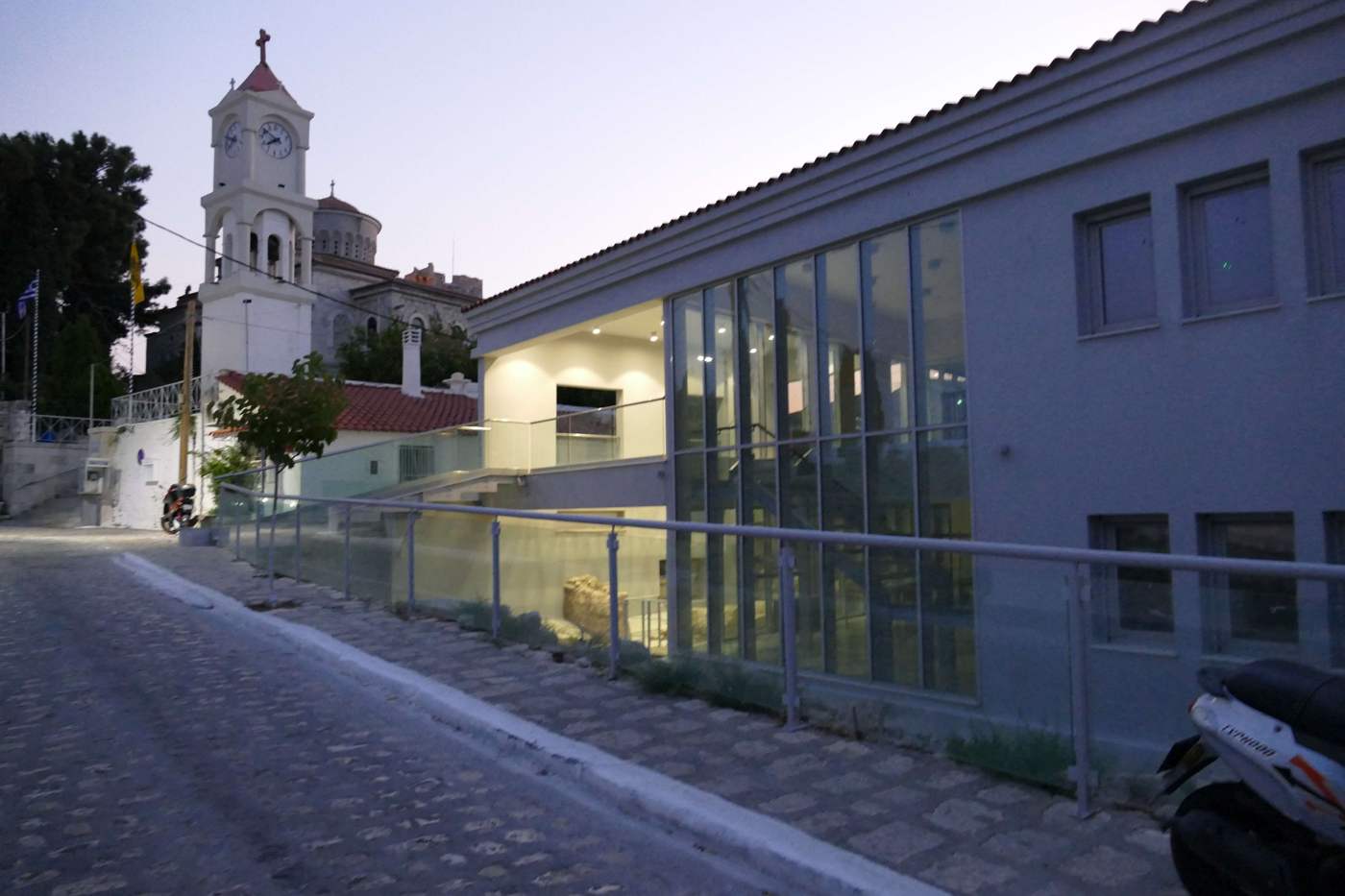
Pythagorio sits on the southeast coast of Samos, wrapped around a sheltered bay where the ancient capital once stood. The town takes its name from Pythagoras, the mathematician born on the island. Whitewashed lanes climb the hillside above a working marina, and ancient monuments cluster within a short walk of the quay. Plan the whole trip with Greece Tours.
This guide covers what Pythagorio is and how its harbour works. It explains the UNESCO listing that protects the town and its ancient sights. It walks through the Castle of Lykourgos Logothetis and the archaeological museum. It maps the beaches on either side of the town. It ends with the airport that makes Pythagorio a practical first base on Samos.
What is Pythagorio on Samos, and what defines its harbour and marina?
Pythagorio is the historic harbour town on the southeast coast of Samos, built over the ancient capital and renamed for the mathematician Pythagoras. A marina lined with tavernas fronts the sheltered bay below the hillside streets.
Pythagorio occupies the southeast corner of Samos, about 14 kilometres south of the capital, Vathy. The town wraps around a small bay that the ancient Greeks chose as their main harbour. The modern marina sits directly over that historic anchorage. Fishing boats, day-trip caiques and private yachts share the quay. A stone breakwater shelters the water from the open Aegean. Tavernas, cafes and shops line the waterfront in one continuous strip. Most visitors arrive first at the marina, then work outward from there. The layout stays compact and easy to walk. The harbour serves as the obvious anchor point. Hillside neighbourhoods rise behind it toward the ancient walls.
Whitewashed houses with tiled roofs climb the slope above the bay. Narrow lanes lead up to the castle terrace that overlooks the town.
The harbour front runs for about 300 metres and stays busy through the warm months. Ferries and hydrofoils use the quay for links to nearby islands. In season, boats also cross the narrow Mycale strait toward the Turkish coast. That coast sits only about 1.2 kilometres from Samos at its closest point. Small boats leave the marina for beaches that roads cannot reach. Fishermen sell the morning catch to the tavernas behind them. Behind the first row of buildings, lanes climb between tiled roofs and bougainvillea. The scale keeps the town intimate rather than resort-like. The working port character stays obvious even at the height of summer.
Yachts refuel and reprovision at the quay before the next island hop. Locals still repair nets and hulls along the same waterfront each week.
Pythagorio serves as the southern gateway to the island. The wider destination guide to Samos lists three main bases. Vathy sits in the northeast with the ferry port and administrative offices. Karlovasi anchors the northwest as the second port town. Pythagorio covers the southeast with its airport and UNESCO monuments. The distance between the three towns stays modest across the island. A car or the local bus links them within an hour. Travellers who want ancient sites, a marina and quick airport access choose Pythagorio. Those chasing the ferry timetable usually settle in Vathy instead. Beach-focused visitors often base themselves near Kokkari on the north coast.
Pythagorio still suits a first stay for its mix of history and coast. The compact core keeps daily driving times short across the southeast.
Evenings define the marina experience in Pythagorio. Tables spread across the quay as the boats settle for the night. The water reflects the lights of the tavernas along the front. Menus lean on local fish and Samian Muscat wine. That wine comes from the terraced slopes of Mount Ampelos. Standard Greek dishes fill out the rest of the plates. Prices track other Aegean harbour towns rather than resort markups. The town keeps a residential core that stays lived-in outside the peak. Children play on the quay while families eat late into the night. A short seafront promenade connects the marina to a small town beach. The walk from dinner to a morning swim takes only minutes.
Fishing boats set out again before dawn from the same berths along the quay.
Why does Pythagorio hold UNESCO World Heritage status, and what ancient sights lie nearby?
Pythagorio holds UNESCO World Heritage status as Pythagoreion, listed together with the Heraion sanctuary of Hera. The designation protects the ancient harbour, the Eupalinos aqueduct tunnel, the Roman baths and the surrounding archaeological remains.
The UNESCO listing covers Pythagoreion and the Heraion as one property. It recognises the density of ancient engineering on this stretch of coast. Pythagoreion refers to the fortified ancient town beneath and around modern Pythagorio. The Heraion sanctuary stands about 6 kilometres west near the village of Ireon. The two sites document a powerful island city-state of the Archaic era. That state reached its height under the tyrant Polycrates. The designation protects the ancient harbour mole and the town walls. It also covers the hillside theatre and the Roman-era baths. The great tunnel aqueduct falls inside the same protected zone. The whole area works as an open-air record of ancient technology.
Visitors read the layers of the town within a short walk. Signposts mark each monument across the compact archaeological reserve near the shore.
The most celebrated monument is the Eupalinos Tunnel. Crews drove this aqueduct straight through the hill above Pythagorio. The work dates to the reign of the tyrant Polycrates. Diggers started from both ends at once and met in the middle. That feat of ancient surveying still draws engineers and historians. The tunnel carried fresh water to the ancient town below. It runs for more than a kilometre through solid rock. A lit and railed section stays open to visitors today. The walk leads deep inside the mountain along the old channel. The site sits a short drive from the marina. A steady uphill path also reaches it on foot.
Cool air fills the passage even on hot days. The tunnel ranks among the reasons the town earned its World Heritage listing.
The ancient harbour mole still shapes the marina by the sea. The Archaic breakwater of Polycrates runs beneath the present quay. Boats today tie up above stonework laid over two thousand years ago. Nearby stand the remains of Roman baths and an early basilica. Stretches of the ancient fortification wall still ring parts of the town. The compact spread lets visitors trace three eras on foot. Archaic, Roman and Byzantine layers sit within one short afternoon walk. Signboards mark the main points across the harbour district. The archaeological reserve keeps the shore and hillside under one status. The theatre above the town adds a wide view over the roofs.
Excavated foundations line the lanes between the marina and the walls. The living port and its Archaic origins stand side by side today.
The ancient monuments form only part of a stay here. The wider list of things to do in Samos ties the town to more. Beaches, mountain villages and wine country fill the rest of the island. Within Pythagorio, the sights reward a slow half-day on foot. The theatre gives a view over the roofs to the sea. The tunnel offers a cool underground contrast to the summer heat. The harbour ruins connect the living port to its Archaic origins. The monuments cluster tightly across the old town core. Most travellers see the headline sites without long drives. They then spend the rest of their time on the coast.
The hills of Mount Ampelos hold villages and vineyards to explore. A single base covers history and landscape with short journeys each day.
What can visitors see at the Castle of Lykourgos Logothetis and the archaeological museum in Pythagorio?
The Castle of Lykourgos Logothetis crowns the hill above Pythagorio, a stone fortress from the Greek War of Independence. The nearby archaeological museum displays finds from the ancient town and the Heraion sanctuary.
The Castle of Lykourgos Logothetis stands on a low hill above the harbour. It marks the western edge of Pythagorio. Logothetis led the Samian forces during the Greek War of Independence. The fortress marks where the islanders repelled an Ottoman landing. Stone walls enclose a compact defensive compound on the height. The ground has held fortifications since antiquity. Builders reused older masonry in parts of the walls. The ramparts open a view across the marina and coastal plain. The strait toward the Turkish shore fills the far horizon. Beside the castle stands the Church of the Transfiguration. Islanders raised it to commemorate the victory over the Ottomans. A small square fronts the church beside the walls.
The whole terrace serves as a historical site and a quiet vantage point over the bay.
The archaeological museum of Pythagorio gathers finds from the ancient town. Excavations across the UNESCO zone supplied most of the collection. Displays cover sculpture, pottery, coins, inscriptions and everyday objects. The pieces trace daily life from the Archaic period onward. Roman and Byzantine layers round out the wider story. The collection complements the larger museum in Vathy. Vathy holds the monumental Kouros of Samos and the richest Heraion finds. Together the two museums present the island story in sequence. Pythagorio focuses tightly on its own harbour and hinterland. The building sits within the town near the marina. A visit slots easily between the waterfront and the castle climb. Air conditioning makes it a cool midday stop in summer.
Clear labels guide visitors through each period on display inside the halls.
The two sights pair naturally on one walking route. A visitor can start at the marina below the town. The lanes climb to the castle terrace for the coastal view. A short descent then reaches the museum for context. The route returns to the waterfront within a couple of hours. The distances stay short across the old core. A cafe stop fits between the two stops. Vines and awnings shade parts of the streets in summer. The castle honours the War of Independence on the hill. The museum reaches back to the Archaic era below it. The pairing spans more than two thousand years of Samian history. It does so within a short stretch of walking.
Both sit inside the protected core rather than out on the airport road toward Ireon.
The castle terrace works well in the late afternoon. Softer light falls over the strait as the heat eases. Entry to the church and grounds stays generally free. The museum charges a modest admission like other Greek collections. Neither site takes long to see. They suit a break between beach time and dinner on the quay. The elevated ground once controlled the approach to the harbour. Whoever held the hill also held the port below. Standing there makes that strategic logic clear at once. The view links the town, the bay and the ancient sites. Boats and rooftops spread out beneath the ramparts. The runway and the Potokaki shore show to the west.
This corner of Samos reads as one connected landscape from the height above the harbour.
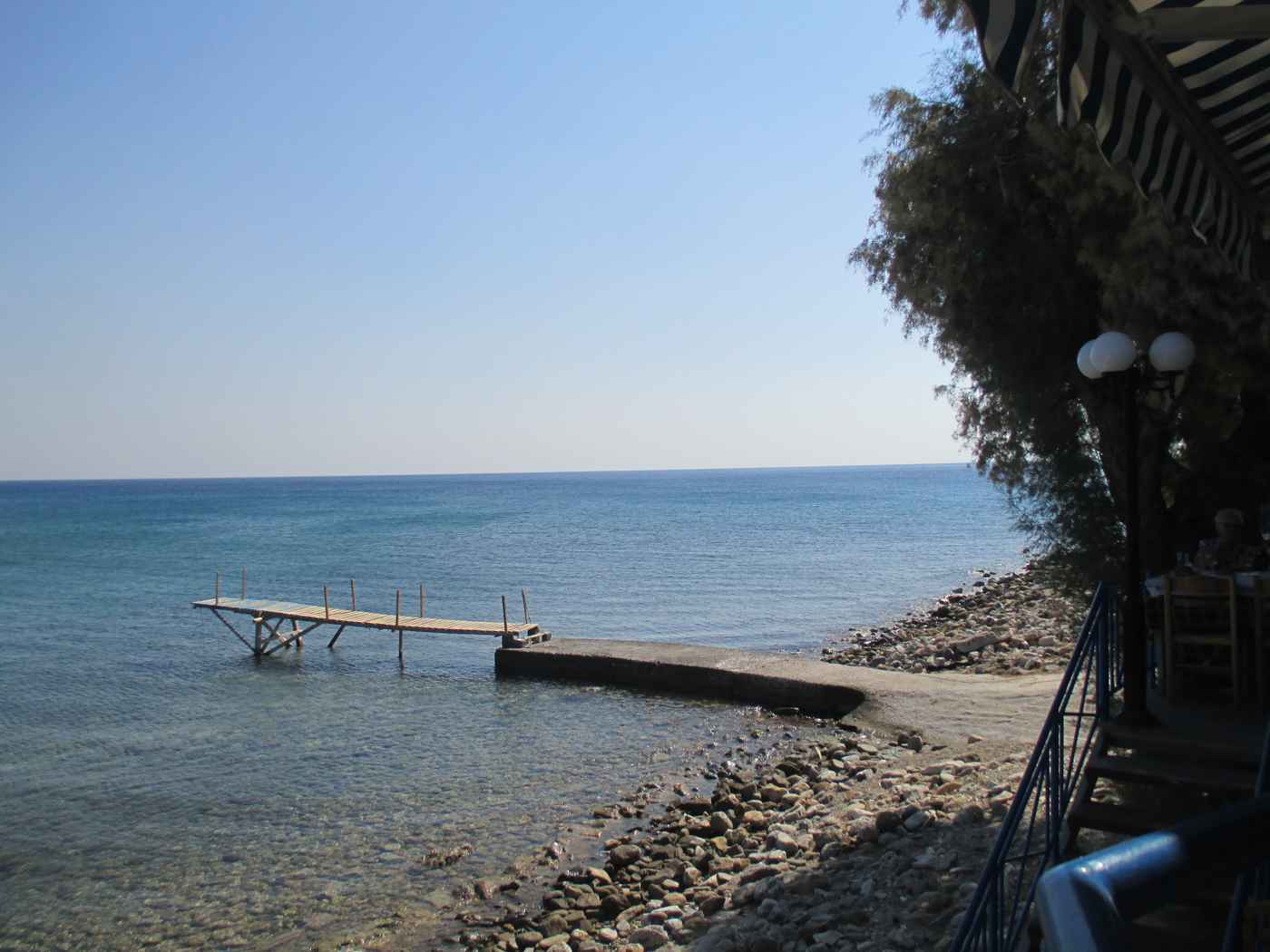
Which beaches lie near Pythagorio on Samos, and how do you reach them?
Beaches spread on both sides of Pythagorio, from the town beach on the marina to Potokaki and its long shingle strand near the airport, plus Glykoriza and quiet coves reached by short drives or boat trips.
Pythagorio keeps a small town beach at the eastern end of the marina. It forms a narrow band of sand and shingle. The tavernas sit within walking distance of the water. The beach suits a quick swim between sightseeing stops. Its easy access keeps it busy through the day. West of the town lies the long strand of Potokaki. It runs past the ancient harbour wall along the coastal plain. Potokaki stretches for more than a kilometre toward the airport. The beach mixes sand and fine shingle underfoot. It shelves gently into clear, calm water. Sunbeds, cafes and watersports line it through the season. Tamarisk trees offer patches of natural shade behind the sand.
Space stays plentiful even at the height of summer. Roadside parking and the flat approach suit families with young children.
East of Pythagorio the coast turns rockier. The coves shrink between low headlands. Glykoriza sits a short drive out of town. It forms a small bay with calm water and a taverna. A hotel backs the beach for shade and service. The road beyond threads toward Psili Ammos. That fine-sand beach faces the narrow strait to Turkey. Quieter bays at Kerveli and Mykali lie on the way to Vathy. These east-coast beaches face the sheltered mainland channel. The water stays calm when the north wind rises. Pine and scrub back parts of the shore for shade. Tavernas near the sand serve fish and local dishes. A hire car reaches them in twenty to thirty minutes.
The local bus covers part of the route through the summer season.
Boat trips widen the options beyond the road network. Small operators leave the marina at Pythagorio each morning. They reach beaches folded into the coastline west and south. Cliffs hide strands that no track descends to reach. The sheltered southeast coast gives calmer launching conditions. Departures rarely cancel during the peak months. Day boats also cross to the islet of Samiopoula. That low island lies off the south coast of Samos. Clear shallows and one seasonal taverna ring its shore. The trips trade busy roadside beaches for quiet coves. Visitors reach spots that open only from the water. Swimming stops and lunch often fill the schedule. Prices cover the crossing and time ashore.
Snorkellers favour the clear water around Samiopoula. Every boat returns to the harbour by evening for dinner on the quay.
Longer, sandier coast waits southwest under Mount Kerkis. Votsalakia and Kampos lie about an hour by car from Pythagorio. Their beaches run for kilometres beneath the island’s highest peak. Closer to home, Potokaki stays the workhorse beach by the airport. The town beach handles quick swims for convenience. The rocky east coves hold calm water on windy days. Boat-only bays offer solitude away from the road. This variety within easy reach suits a first stay. A single base at Pythagorio samples the whole coastline. Drives run from half an hour to about an hour each way. Travellers cover sand, shingle and rock without changing hotels. Water taxis and buses fill gaps for those without a car.
The harbour town keeps every coastal option within a short radius of the marina.
How close is the airport to Pythagorio, and why does the town work as a base on Samos?
Samos International Airport lies about 3 kilometres west of Pythagorio, the closest town to the runway. Short transfers, clustered monuments, a marina and beaches on both sides make Pythagorio a practical first base.
Samos International Airport carries the name Aristarchos of Samos. It honours the ancient astronomer born on the island. The airport sits about 3 kilometres west of Pythagorio. The runway runs beside the Potokaki shore on the coastal plain. Arriving flights pass low over the beach on approach. The short distance keeps taxi transfers to about ten minutes. Hotels in the town often stand first after landing. That proximity draws travellers for their opening or closing nights. Tight schedules favour Pythagorio over distant Vathy or Karlovasi. A long transfer otherwise eat into the arrival day. Car-hire desks operate inside the airport terminal. Buses run between the airport road and the town.
Picking up a vehicle on arrival opens the whole coast to a visitor. The runway location keeps the last morning simple before a flight.
Pythagorio works as a base because so much sits close by. The marina supplies dinner and boat trips each day. The ancient sights fill a half-day on foot near the quay. The castle and museum add historical depth to a stay. Beaches line the coast on both sides of the town. Vathy lies about 14 kilometres northeast for the main ferry port. The Kouros museum also stands in the island capital. The Heraion sanctuary sits roughly 6 kilometres west of the town. A hire car reaches Manolates and Vourliotes on Mount Ampelos. The wine terraces and Kokkari beaches fall within an hour. The central-southeast position keeps daily driving times short.
Ferry links from Vathy add day trips to Ikaria or Patmos. The close airport rounds out the practical case for the town.
Accommodation in Pythagorio spans small hotels, studios and rooms. Most stand within walking distance of the marina. The right area depends on the style of the trip. Staying near the harbour puts tavernas and sights on the doorstep. The town beach also sits a short walk away. Properties toward Potokaki trade the town buzz for beach access. They also sit closer to the airport for early flights. The compact town lets most visitors manage without a car. A stay based on the marina needs little driving. Travellers then hire a car for wider island days. The mix of walkable core and easy roads keeps the base flexible. Studios with kitchens suit families on longer stays.
Rooms above tavernas put dinner one floor below. The choice suits both short breaks and longer touring holidays on Samos.
The practical case for Pythagorio rests on balance. The town blends a working harbour with UNESCO monuments. A museum and a castle add depth to the visit. Beaches spread along the coast on either side. The shortest airport transfer on the island helps too. Pythagorio avoids the ferry-port bustle of Vathy. The capital, the Heraion and the north coast stay within an hour. Evenings on the marina open each day gently. Mornings at Potokaki follow with sand and calm water. Afternoons among the ancient sights fill the hours between. Boat trips add sea days without a long drive. Wine tastings on Mount Ampelos round out a week.
Long journeys never dominate a stay based here in the harbour town. This blend of history, coast and logistics anchors a first visit to Samos.
What do the ancient harbour mole and the Roman baths reveal at Pythagorio on Samos?
The ancient harbour mole and Roman baths mark Pythagorio as a working ancient port. The curved breakwater still shelters the marina, while the Roman thermae ruins sit inland near the modern town.
The ancient harbour mole of Pythagorio is a stone breakwater built to protect the fleet of the tyrant Polycrates in the sixth century BC. Herodotus praised the mole as one of the great works of the Greeks, alongside the Eupalinos Tunnel and the Heraion temple. The modern jetty of the marina rests on and beside this ancient foundation, so today’s fishing boats moor where ancient triremes once sheltered. Divers and swimmers can see submerged blocks off the harbour arm on calm days. The mole ran roughly 360 metres into the bay, closing the natural cove into a defended port.
Walking the marina quay, you trace the same line the ancient engineers set, linking the town’s harbour past directly to its living waterfront. Interpretive signs near the quay explain the ancient port layout.
The Roman baths of Pythagorio, known as the Thermae, stand a short walk from the marina near the town’s edge. Built when Samos lay under Roman rule, the complex kept the hot, warm and cold rooms of a classic bathhouse, with hypocaust floors raised on brick pillars for underfloor heating. Mosaic fragments and marble facing survive across the site, showing the comfort the Roman town enjoyed. A gymnasium and a basilica stood in the same quarter, part of the civic centre of ancient Samos. The baths lie close to the Eupalinos aqueduct’s outflow, which fed the town’s fountains and pools.
Fenced ruins let visitors read the plan from the path, and the archaeological remains connect naturally to the wider UNESCO Pythagoreion sights clustered around the town.
The two ruins together explain why Pythagorio earned UNESCO World Heritage listing beside the Heraion. The harbour mole shows the naval power of Polycrates, while the Roman baths mark centuries of continued urban life on the same spot. Both sites sit within a compact archaeological zone that also holds the theatre, the aqueduct and the ancient walls. A visit pairs easily with a walk to the Heraion of Samos, the great sanctuary of Hera about six kilometres west along the coast. Reading the harbour and baths first gives context for the temple ruins and the finds displayed in the Vathy museum.
This layered history, from Archaic port to Roman town, is what makes Pythagorio more than a pretty marina. The whole circuit stays walkable within a single relaxed morning.
The ancient harbour arm still shapes daily life in Pythagorio. Fishing boats unload at dawn where the ancient mole meets the modern pier, and the small lighthouse at its tip guides yachts into the marina. Swimmers use the sheltered water inside the breakwater, and the promenade along the arm gives long views to the castle hill and the Mycale strait. The Roman baths, quieter and less visited, reward those who walk five minutes inland from the seafront. Together the mole and the thermae bracket the town’s story, from Archaic sea power to Roman leisure, within a stroll of the cafes.
Few Greek harbours let you touch two thousand years of engineering so close to the coffee tables, and that closeness is part of Pythagorio’s lasting appeal.
What are eating and evenings like on the Pythagorio marina on Samos?
Eating and evenings on the Pythagorio marina center on the waterfront tavernas below the town. Fish, meze and Samos Muscat fill the quayside tables, and the strip stays lively from sunset until late.
The marina waterfront of Pythagorio carries a continuous line of tavernas, ouzeries and cafes facing the moored boats. Tables spread onto the quay under awnings and tamarisk trees, so diners watch yachts and fishing caiques while they eat. Menus lean on the day’s catch — grilled fish, calamari, octopus and shrimp — beside Greek staples like moussaka and grilled meats. Local dishes appear too, from Samos-style stuffed vegetables to revithokeftedes chickpea fritters. Carafes of the island’s sweet and dry Muscat accompany most meals, along with ouzo and tsipouro. Prices climb closer to the water and drop in the back lanes uphill, where smaller family kitchens serve locals.
The setting, rather than any single dish, defines the marina meal, framed by the ancient harbour and the castle above.
Evenings in Pythagorio begin with the volta, the slow stroll along the marina as the light softens. Families and visitors walk the quay, children play by the boats, and cafe tables fill for coffee, wine or an early ouzo. As dinner service builds, the tavernas run late into the night, and a row of bars near the harbour keep music going after the kitchens close. The pace stays relaxed rather than club-driven; Pythagorio trades on a harbour-town calm, not a party scene. Street lamps and boat lights double on the water, and the floodlit castle marks the skyline above the roofs. Live Greek music turns up at waterfront tavernas on scheduled nights, drawing dancers to the quay.
The waterfront remains the natural center of night-time life across the whole town.
Staying on the marina puts every evening option at the doorstep, which is why first-time visitors regularly pick Pythagorio. Our guide to where to stay in Samos compares it with Vathy and Kokkari. Rooms above and behind the waterfront let guests walk home from dinner in minutes. Breakfast cafes open early for those catching boats or the airport, and bakeries on the back streets sell tiropita and fresh bread. The quay doubles as the town’s meeting point, where day-trip boats board in the morning and return at dusk to the same tables. Sitting with a coffee, you watch the working harbour shift from fishing to tourism through the day.
This tight overlap of eating, sleeping and boarding is central to the marina’s easy daily rhythm.
Food beyond the waterfront widens the choice for anyone staying more than a night. The village of Ireo near the Heraion and the airport road hold tavernas set among orchards and fields, away from the harbour bustle. Souvlaki grills and bakeries around the town square feed quick, cheap meals between sights. Seasonal festivals, or panigyria, bring village squares alive with grilled meat, wine and music on saints’ days through summer. Sweet Samos Muscat closes most dinners, sometimes poured as a complimentary digestif with fruit. Coffee culture runs strong from morning frappe to late-night espresso along the quay.
This range, from harbour fish tavernas to inland village grills, means Pythagorio suits both a quick stop and a longer stay without the food growing repetitive across the week.
What day trips and boat trips can you take from Pythagorio on Samos?
Day trips and boat trips from Pythagorio reach the Heraion, the wine villages and beaches by road, plus boats to Samiopoula islet and across the Mycale strait to Kusadasi in Turkey.
Boat trips leave the Pythagorio marina through the season for the coast and nearby islets. Day cruises round to the small green islet of Samiopoula off the south coast, where a sheltered bay gives swimming and a beach taverna. Other boats follow the shore to remote southern coves reachable only from the water, stopping for snorkelling and lunch aboard. Fishing trips and sunset cruises run from the same quay, booked at kiosks along the waterfront. The marina is also a yacht and sailing base, with charters exploring the strait and the neighbouring islands of Fourni and Ikaria. Crossings to the Turkish port of Kusadasi, gateway to ancient Ephesus, depart from Vathy and Pythagorio.
Taking about an hour across the narrow Mycale strait between the island and the mainland coast.
The Turkey crossing is the headline day trip from this side of Samos. Fast boats reach Kusadasi in about an hour, where organised tours run on to Ephesus, one of the best-preserved ancient cities of the Mediterranean. Travellers see the Library of Celsus, the great theatre and the marble streets before returning by evening boat. Passports are required, and the border formalities add time at each end. Independent visitors can also spend the day in Kusadasi itself, a busy resort with a bazaar and seafront. The narrow strait, about 1.2 kilometres wide at its tightest point near Mycale, makes Samos the closest Greek island to the Turkish coast.
This proximity turns a second country and a UNESCO ancient city into a realistic single-day outing from Pythagorio.
Road day trips from Pythagorio open the whole southeast and the island’s green interior. The Heraion sanctuary lies about six kilometres west, an easy pairing with the town’s own ruins for a half-day of archaeology. The wine villages of Mt Ampelos, Vourliotes and Manolates, sit an hour north through pine forest, with tavernas, tastings and marked walking trails. The north-coast beaches around Kokkari, Tsamadou and Lemonakia, reach within about 45 minutes by car. Longer drives cross to Karlovasi and the Potami waterfalls, or southwest under Mt Kerkis to the quiet beaches of Votsalakia. A hire car or scooter unlocks these routes, since bus links from Pythagorio are limited.
The compact southeast means a cluster of ancient sights and beaches fit into one unhurried day from the marina.
Guided excursions save the driving for those without a car. Coach and minibus tours from Pythagorio combine the Eupalinos Tunnel, the Heraion and a wine village into a single scheduled loop. Boat-and-bus combinations pair a morning cruise with an afternoon in the hills, or the Turkey crossing with an Ephesus tour. Jeep safaris climb the dirt tracks of Mt Kerkis and the interior to villages and viewpoints off the paved roads. Local agencies along the marina sell these trips, and hotels arrange pickups from the door. Booking a day ahead secures a place in the busy months. By hire car, boat or organised tour alike, Pythagorio works as a launch point for the sights.
A base here rarely leaves a visitor short of a full day’s plan.
How do you get around Samos from Pythagorio?
Getting around from Pythagorio works best by hire car or scooter, since the island is large. Buses link the town to Vathy and the airport, and taxis and boats cover shorter hops.
A hire car is the practical way to explore Samos from a Pythagorio base. The island stretches about 43 kilometres west to east, so reaching Karlovasi, the Seitani coves or Mt Kerkis needs private transport for a full day out. Rental agencies cluster in Pythagorio, along the airport road and in Vathy, offering cars, jeeps and scooters. Roads are paved and well signed between the main towns, though mountain routes to Manolates and Kerkis turn narrow and winding. Scooters and quad bikes suit the short southeast runs to beaches and the Heraion in fair weather. Fuel stations line the main roads near Pythagorio and the airport.
Booking ahead in the busy months secures a vehicle, as demand outstrips the island’s fleet through the peak summer weeks.
Public buses connect Pythagorio with Vathy and the main villages on the KTEL network. Services run times a day between Pythagorio and the capital, with links to the airport, Ireo and the beaches, thinning outside summer and on Sundays. The bus station near the marina posts the timetables, and fares are low compared with car hire. Taxis wait at a rank by the harbour and serve airport transfers, beach runs and evenings out; agreeing the fare or meter first is standard practice. The airport lies only about 3 kilometres west, a short taxi or bus ride, or a flat cycle.
Car-free visitors combine buses for the main towns with taxis or boat trips for the gaps, which covers most of a Pythagorio-based itinerary through the season.
Pythagorio itself is walkable, a compact grid of lanes rising from the marina to the main road. The waterfront, tavernas, ancient harbour and lower sights sit within a flat five-minute stroll, while the castle and museum climb the low hill above. Parking tightens near the marina in high summer, so drivers use the lots on the town edge and walk in. The beaches on either side of town, and the airport, lie within cycling distance on quiet stretches. Getting between Pythagorio and the Heraion works by car, bus or a longer bike ride along the coast road.
This walkable core, ringed by short drives to the main sights, lets visitors park the car for whole days and move around the town on foot. Signposts point to each ancient site from the quay.
The airport’s location beside Pythagorio shapes arrival and departure days. Flights from Athens and seasonal charters land about 3 kilometres from the marina, so transfers take minutes by taxi or hotel car. Ferry travellers land instead at Vathy or Karlovasi, about 15 to 35 kilometres away by road, then drive or bus to Pythagorio. Within the southeast, the town, the airport, the Heraion and the nearest beaches form a tight triangle easily linked in a day. Reaching the far north and west, Kokkari, Karlovasi, Potami and Kerkis, rewards an early start and a full tank. This mix of a close airport.
A walkable centre and open roads north makes Pythagorio one of the simplest bases for moving around Samos without wasted time on transfers or long backtracking.
Who does Pythagorio suit as a base on Samos?
Pythagorio suits first-time visitors, history lovers and couples who want the airport, ancient sights and a lively marina close together. Families and quieter beach seekers also fit, though large-island touring needs a car.
Pythagorio suits the first-time visitor to Samos above all. The town packs the island’s headline sights — the UNESCO Pythagoreion, the Eupalinos Tunnel, the Heraion and the castle — within a short radius of the marina. The airport sits about 3 kilometres away, cutting transfer time on arrival and departure days. Waterfront hotels, tavernas and boat trips gather in one walkable strip, so a car stays optional through the opening days. History-minded travellers gain most, standing among ancient harbour works, a Roman bathhouse and a great temple in a single base. Couples find the marina’s evening stroll and quayside dinners an easy nightly rhythm.
A short and easy trip that samples the best of Samos without long drives makes Pythagorio the natural first choice on the whole island.
Families settle into Pythagorio for its flat marina, shallow town beaches and short transfer from the airport. Children can walk the quay safely, watch the fishing boats and swim at the sandy stretches on the town’s edges. The nearby beach of Potokaki, a long shingle-and-sand strand west toward the airport, gives sunbeds and shallow water. Evenings stay family-friendly, built around dinner on the waterfront rather than late bars. History becomes tangible for older children in the tunnel, the castle and the harbour ruins. Beach-focused visitors who still want restaurants and sights, not just a resort strip, find the balance here.
The town works for a mixed group where part of the group wants ruins and others want the sea, since both sit within a short walk or drive.
Pythagorio works less well for particular travellers, which is worth naming. Seekers of the wildest, emptiest beaches sit far from Seitani, Kerkis and the northwest, an hour or more away by car. Night-owls chasing bars and clubs find the marina calm, with Kokkari or Vathy livelier for late drinks. Visitors touring the whole island equally often prefer a central base, since Pythagorio anchors the southeast corner. Sea approaches land elsewhere, as ferries dock mainly at Vathy and Karlovasi, adding a transfer for boat arrivals. None of this rules the town out; it simply defines the fit.
Knowing these trade-offs lets travellers weigh Pythagorio against Vathy, Kokkari or a mountain village and match the base cleanly to how they plan to spend their days on Samos.
Pythagorio holds a rare mix on Samos, combining a UNESCO ancient town, a working marina and the airport in one compact base. The town rewards a first visit, a history-led trip or a family week with sights, sea and dinners within a short walk. Longer or wider Samos holidays add a car to reach the north coast, the wine villages and Mt Kerkis from here. A stay here trades the empty wildness of the west for convenience, culture and an easy evening rhythm on the quay. Weighing those strengths against the island’s other bases points travellers back to Pythagorio for a first or short trip.
The town earns its place as the standard starting point for exploring Samos, backed by its history, position and transport links.
Frequently Asked Questions
Is Pythagorio worth staying in on Samos?
Pythagorio is worth staying in for most first visits to Samos, thanks to its blend of history, sea and convenience. The town sits over the ancient capital, so the UNESCO Pythagoreion, the Eupalinos Tunnel, the Roman baths and the castle stand within a short walk of the marina. The airport lies about 3 kilometres west, cutting transfer time to minutes. Waterfront tavernas, boat trips and hotels cluster along one quay, giving an easy base without a car for the first days. Beaches spread on both sides of town, and the Heraion sanctuary sits about six kilometres away. The trade-off is distance from the wild northwest beaches and the quieter mountain villages, which need a longer drive.
Travellers wanting ancient sights, a lively marina and a short airport hop rate Pythagorio highly. Those chasing empty coves or nightlife weigh Kokkari, Vathy or a village instead, matching the base to their plans. Booking early in the peak summer weeks secures the best marina rooms.
Is Pythagorio good for a holiday with kids?
Pythagorio works well for a holiday with kids, combining safe walking, shallow beaches and short travel times. The flat marina lets children stroll the quay, watch fishing boats and eat at waterfront tavernas without traffic worries. Sandy, shallow beaches on the town’s edges and the long Potokaki strand toward the airport suit young swimmers. The airport sits about 3 kilometres away, so tired children face only a short transfer on arrival. Family-friendly evenings revolve around dinner on the quay rather than late bars, keeping a gentle rhythm. Older children engage with living history in the Eupalinos Tunnel, the hilltop castle and the ancient harbour ruins.
Boat trips to Samiopoula islet or a swim cruise break up the days on the water. Ice-cream shops, bakeries and calm streets round out the practical side. The main caveat is heat and sun in high summer, so shade, water and midday breaks matter for younger family members here throughout the day.
Is Pythagorio walkable?
Pythagorio is highly walkable, built as a compact town rising from the marina to the main road above. The waterfront, tavernas, cafes, ancient harbour and lower ruins sit within a flat five-minute stroll along the quay. The Castle of Lykourgos Logothetis and the archaeological museum climb a low hill, a short uphill walk from the sea. Lanes are narrow and part-pedestrian near the harbour, keeping cars to the edges. Most hotels and rooms lie within walking distance of dinner, so guests leave the car parked overnight. Parking tightens near the marina in high summer, so drivers use lots on the town edge and walk in.
Beyond the core, the beaches on either side and the airport fall within cycling range on quiet roads. Reaching the Heraion, the wine villages or the north coast needs a car or bus. Within the town itself, though, feet handle everything, which is part of Pythagorio’s appeal as a base.
What are evenings like in Pythagorio?
Evenings in Pythagorio center on the marina, where the waterfront fills for the volta stroll, dinner and drinks after sunset. Families and visitors walk the quay as the light fades, children play by the boats, and cafe tables fill for coffee, wine or ouzo. Tavernas along the water serve fish, meze and Samos Muscat late into the night, framed by the floodlit castle above. The mood stays relaxed rather than club-driven, so Pythagorio reads as a harbour town, not a party resort. A row of bars near the harbour keeps music going after the kitchens close, and live Greek music turns up at waterfront tavernas on scheduled nights.
Boat lights and street lamps double on the calm water, adding to the setting. For a bigger night out, Kokkari and Vathy offer livelier late bars a short drive away. Most visitors, though, settle happily into the marina’s slow evening rhythm of dinner, a stroll and a nightcap by the sea.
What beaches are within reach of Pythagorio?
Pythagorio reaches a wide spread of beaches, from town-edge sands to famous north-coast coves. Beside the town, small sandy and pebble stretches sit within a walk, while the long Potokaki strand runs west toward the airport with sunbeds and shallow water. The south coast near the Heraion holds quiet shingle beaches and the green islet of Samiopoula, reached by boat. Driving about 45 minutes north brings the pine-backed pebble coves of Tsamadou, Lemonakia and Tsabou around Kokkari, three of the island’s best-known beaches. Longer trips west reach Potami’s sand-and-pebble beach and the wild Seitani coves near Karlovasi, a monk-seal refuge. Southwest under Mt Kerkis lie the long strands of Votsalakia and Balos.
Town beaches and Potokaki suit families wanting minimal travel, while the north and west reward a car and a full day. This range lets a Pythagorio base mix easy local swims with day-trip beaches across the whole of Samos through the warm season.
How far is Pythagorio from Vathy (Samos Town)?
Pythagorio lies about 12 to 14 kilometres from Vathy, the island capital, a drive of roughly 20 to 25 minutes across the southeast. The road climbs over low hills between the south and northeast coasts, linking the two main towns directly. KTEL buses run between them times a day in summer, thinning in the off-season and on Sundays, and taxis cover the route on demand. Vathy holds the Archaeological Museum of Samos with the giant Kouros, a working ferry harbour and the old upper quarter of Ano Vathy. Visitors staying in Pythagorio often drive to Vathy for the museum, the ferries or the wine museum at nearby Malagari.
The short distance makes a half-day trip to the capital easy from a Pythagorio base. In the other direction, Vathy travellers reach Pythagorio, the airport and the UNESCO sights just as quickly. The two towns work closely together within the compact southeast of the island.
When is Pythagorio quiet versus busy?
Pythagorio is busiest in July and August, when Greek and European visitors fill the marina, beaches and hotels, and quietest from late autumn to early spring. June and September bring warm sea, open tavernas and thinner crowds, the balance most travellers prefer. May and October stay calm and mild, good for the ancient sights and walking, with cooler water and easy parking. Winter turns the town over to local life, with reduced flights, fewer open tavernas and a quiet marina. High summer books out early, so rooms and cars need reserving ahead, while the shoulder months leave more choice on arrival.
The UNESCO sights, the Eupalinos Tunnel and the Heraion, stay open across the warm months, less crowded outside peak weeks. For a lively marina and full services, midsummer delivers; for calm streets, open sights and lower prices, the shoulder season around June, September and October suits a Pythagorio stay better. Booking a month ahead helps most in the peak weeks.