
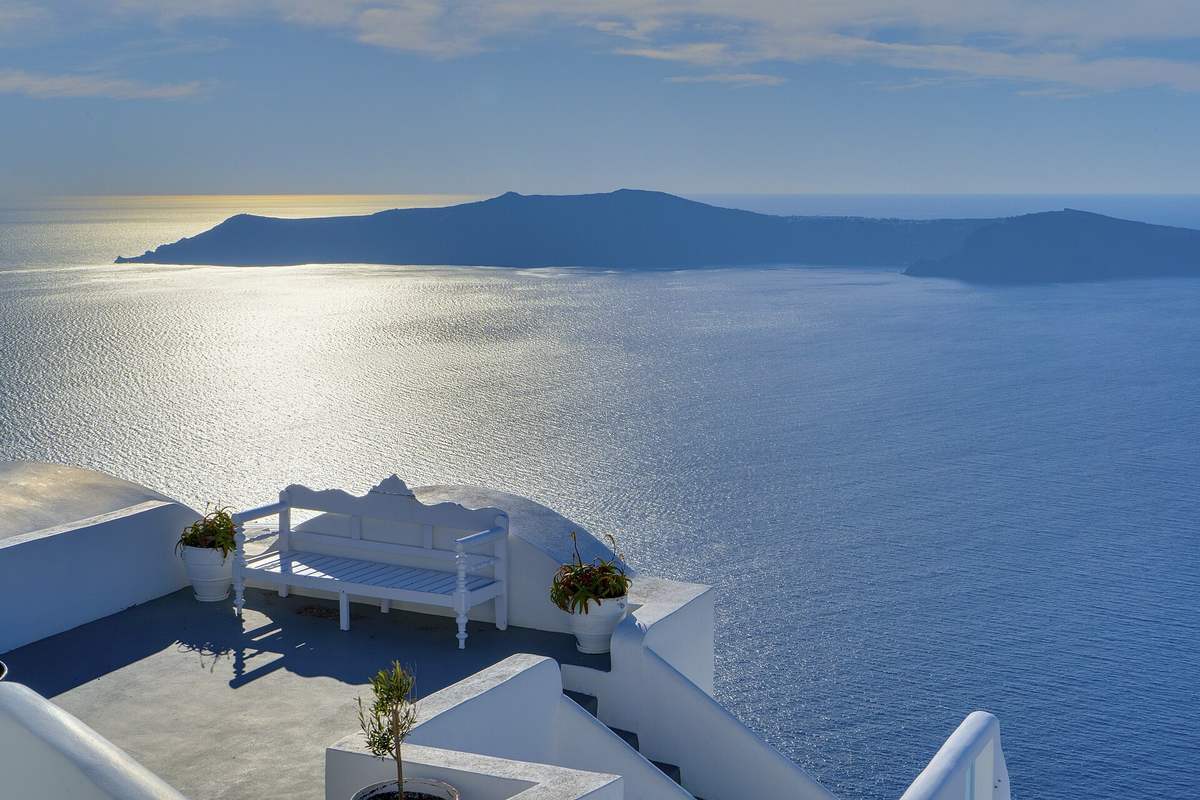
Mykonos vs Santorini is the classic Greek-island dilemma. Mykonos is the island of golden sandy beaches, glamorous beach clubs and world-class nightlife, while Santorini is famous for its dramatic volcanic caldera, clifftop towns, spectacular sunsets and romance. This guide compares them on beaches, scenery, nightlife, things to do, getting around and how to choose.
Both are iconic Cyclades and pair perfectly on one trip, as set out in the Mykonos travel guide. The sections below compare them in full.
What is the main difference between Mykonos and Santorini?
The main difference is character. Mykonos is the beach and party island, with golden sands, glamorous beach clubs and famous nightlife. Santorini is the scenic, romantic island, with a volcanic caldera, whitewashed clifftop towns and spectacular sunsets.
Mykonos and Santorini are the two most famous Cycladic islands, yet they deliver very different experiences. Mykonos is the glamorous beach and party island. Long golden sandy beaches, crystal-clear water, designer beach clubs and one of the best nightlife scenes in the world define it, all wrapped in a beautiful, walkable old town.
Santorini is all about its extraordinary scenery. The island is the rim of a sunken volcano, and its whitewashed, blue-domed towns of Fira and Oia cling to the edge of a dramatic caldera high above the sea. It delivers the most famous sunsets in Greece, along with volcanic-sand beaches and renowned wineries. The choice comes down to what you want most: beaches, beach clubs and partying point to Mykonos, while views, romance and sightseeing point to Santorini. Many travellers combine both, set out alongside the guide to getting from Mykonos to Santorini.
How do the beaches compare?
Mykonos has far better beaches, with long stretches of golden sand, clear water and glamorous beach clubs ideal for swimming and lounging. Santorini’s beaches are dramatic, with black and red volcanic sand, but rockier and less suited to relaxed swimming.
Beaches are one of the clearest differences between the two islands, and Mykonos wins for a traditional beach holiday. Mykonos is famous for golden sandy beaches and clear turquoise water. The choice runs from the lively party beaches of Paradise and Super Paradise to family-friendly Platis Gialos, Ornos and Kalo Livadi, all lined with sunbeds, tavernas and beach clubs and made for swimming and sunbathing.
Santorini’s beaches are striking but very different. Thanks to the island’s volcanic origins they feature black, red and white sand and pebbles, which look dramatic and unique but are darker, get hot underfoot and are rockier and less comfortable for relaxed swimming. The famous caldera side has almost no beaches at all. If golden sand, clear water and beach days are a priority, Mykonos is the obvious choice, while Santorini’s beaches are more of a curiosity than a highlight, set out alongside the guide to Mykonos beaches.
How do the scenery and sunsets compare?
Santorini has the more spectacular scenery and sunsets, with its dramatic caldera, whitewashed clifftop towns and world-famous sunset at Oia. Mykonos is beautiful too, with its old town, windmills and Little Venice sunset, but Santorini’s caldera views are unmatched.
Santorini is in a class of its own for scenery and generally takes the crown. The island’s defining feature is its caldera, the flooded crater of an ancient volcano. Around it the towns of Fira, Imerovigli and Oia perch on sheer cliffs hundreds of metres above the sea, their white, blue-domed buildings tumbling down the slopes to create some of the most photographed views on earth. The sunset over the caldera, especially from Oia, is world-famous and intensely romantic.
Mykonos is beautiful too. Its postcard-perfect old town of whitewashed lanes, the iconic windmills and the waterfront houses of Little Venice give a lovely sunset over the sea, though it cannot match the drama and grandeur of Santorini’s clifftop panoramas. For breathtaking views and romance, Santorini leads, set out alongside the guides to Little Venice and the windmills.
How does the nightlife compare?
Mykonos has far livelier nightlife, with world-class clubs, beach parties, bars and a glamorous scene that runs until dawn. Santorini’s nightlife is more relaxed, centred on sunset cocktails, wine bars and dinners. For partying, Mykonos wins easily.
Nightlife is another area where the islands diverge sharply, and it is often the deciding factor. Mykonos is one of the great party destinations of the world. The scene runs from day-into-night beach parties at Paradise and Scorpios, to the glamorous bars and clubs of Mykonos Town and Little Venice, with international DJs and a stylish crowd keeping the island alive until sunrise. If partying, dancing and a buzzing scene are what you want, Mykonos delivers like few places.
Santorini’s nightlife is more low-key and romantic. It focuses on watching the sunset with a cocktail, lingering over dinner at a clifftop restaurant, sampling local wines at the island’s wineries and enjoying a relaxed drink, rather than big clubs and late-night parties, though Fira has some bars and a modest club scene. Mykonos is for nightlife and partying, Santorini for romantic, gentle evenings, set out alongside the guide to Mykonos nightlife.
What is there to do on each island?
Mykonos is about beaches, beach clubs, nightlife, the old town and a boat trip to ancient Delos. Santorini offers more sightseeing: the caldera towns, the Oia sunset, wineries, the Fira-to-Oia hike, volcano boat trips and ancient Akrotiri.
The two islands suit different kinds of days. On Mykonos, the main activities revolve around the beaches and the sea: lounging at beach clubs, swimming, watersports and beach-hopping by water taxi. Exploring the beautiful old town with its shops, museums, windmills and Little Venice fills the rest, along with the nightlife and the short boat trip to the sacred archaeological island of Delos.
Santorini offers a greater variety of sightseeing beyond the beach. Days there mean wandering the clifftop towns of Fira and Oia, watching the famous sunset, touring the volcanic-soil wineries and tasting the distinctive local wines. The scenic caldera-edge hike from Fira to Oia, a boat trip to the volcano and hot springs, and a visit to the prehistoric ruins of Akrotiri round it out. Santorini offers more sightseeing, while Mykonos centres on beaches and nightlife, set out alongside the guides to a Delos tour and things to do.
Which is easier to get around?
Mykonos is easier to get around, being relatively flat with a good bus network, a walkable old town and easy beach access. Santorini is more dramatic but harder, with steep terrain, many stairs and clifftop towns that challenge those with mobility issues.
Practical ease of getting around is worth weighing, and here Mykonos has the edge. Mykonos is a relatively flat island with a compact, walkable old town, a decent public bus network linking the main beaches and the town, and the water taxi for beach-hopping. Navigation is generally straightforward, making it comfortable for most visitors, including families.
Santorini, while spectacular, is far more vertical and demanding. Its famous towns cling to steep cliffs reached by hundreds of steps and winding paths, and the caldera setting means constant climbing. The terrain can be genuinely difficult for older travellers, families with young children, or anyone with mobility issues, with the donkey paths and stairs of Fira and Oia being tiring. If easy, relaxed navigation matters, Mykonos is friendlier, set out alongside the guides to the bus and getting to Mykonos.
Which island is prettier, the towns and views?
Santorini is the prettier island for grand views, thanks to its caldera panoramas and clifftop towns. Mykonos is prettier at ground level, with its whitewashed lanes, bougainvillea, windmills and Little Venice. Santorini wins for drama, Mykonos for intimate charm.
Both islands rank among the most photogenic places in Greece, but their beauty works on a different scale. Santorini’s appeal is the sweeping panorama. Fira, Imerovigli and Oia line the caldera rim, and every terrace, blue dome and cliffside pool frames the same immense drop to the sea. Photographers chase the light along the caldera, and the towns look their best from a distance, tumbling down the cliff.
Mykonos rewards the eye up close. Its old town is a maze of whitewashed lanes, bright doors, bougainvillea and small chapels, with the windmills and Little Venice as its signature scenes. The prettiness is human-scale and walkable rather than vertiginous. For grand views Santorini wins, while Mykonos charms at street level, set out alongside the guide to the best photography spots in Mykonos.
Which island offers better value and lower costs?
Mykonos and Santorini are both among the pricier Greek islands, with premium hotels, beach clubs and dining. Mykonos tends to have the higher beach-club and nightlife spend, while Santorini’s caldera-view hotels command top rates. Value is similar overall.
Neither island is a budget destination, and both sit at the expensive end of the Cyclades. On Mykonos the biggest costs are the beach clubs, where sunbeds and dining carry premium rates, and the nightlife, where drinks and tables are dear. Accommodation ranges from luxury villas to more modest studios, so careful choices keep costs manageable, set out alongside the guides to visiting Mykonos on a budget and where to stay.
On Santorini the premium is concentrated in the caldera-view hotels of Oia and Imerovigli, which are among the most expensive rooms in Greece, and in sunset-view dining. Rooms away from the caldera edge cost far less. Both islands reward booking early and travelling in the shoulder months, when rates ease and crowds thin. In broad terms the two are comparably priced, with the spend simply landing in different places.
How do the crowds and best time to visit compare?
Both islands are busiest in July and August, when crowds and prices peak. Late spring and early autumn are quieter and more comfortable. Santorini’s caldera towns feel especially packed at sunset, while Mykonos’s crowds concentrate on the beaches and in the nightlife.
Timing shapes the experience on both islands. High summer brings the fullest energy but also the heaviest crowds, the highest prices and strong heat. Santorini’s crowding is most acute in Oia around sunset, when narrow lanes fill with visitors competing for the view. Mykonos’s peak pressure falls on the popular beaches and on the old town’s nightlife strip after dark.
The shoulder seasons of late spring and early autumn suit both islands well. The weather stays warm, the sea is swimmable, and the towns and beaches are calmer. For Mykonos specifically, the timing trade-offs are set out in the guide to the best time to visit Mykonos. Choosing the shoulder months is the simplest way to enjoy either island with more room to breathe.
How do you get to Mykonos and Santorini?
Both islands are easy to reach, with their own airports and busy ferry ports. Mykonos and Santorini receive direct flights from Athens and seasonal international routes, plus fast and conventional ferries from Athens and the other Cyclades throughout the season.
Access is straightforward for both islands, which is part of why they anchor most Cyclades trips. Each has an airport with frequent domestic flights from Athens taking around 40 to 50 minutes, plus seasonal direct international flights in summer. Ferries are the other main route, running from the Athens ports of Piraeus and Rafina and connecting both islands to the wider Cyclades network, set out in the guide to getting to Mykonos.
For island-hopping trips, the ferry links between Mykonos, Santorini and neighbours such as Paros and Naxos make it simple to string several islands together. Flying suits travellers short on time or arriving from abroad, while ferries reward those who want to see the Aegean at sea level and move between islands at a relaxed pace. Booking flights and ferries early in peak season secures the best times and fares on both islands.
Which island has the better food and dining?
Both islands offer excellent Greek and Mediterranean dining. Mykonos leans toward glamorous seafront tavernas and high-end restaurants tied to its beach-club scene. Santorini pairs its cuisine with caldera-view terraces and local wines grown in volcanic soil.
Dining is a genuine highlight on both islands, though the settings differ. Mykonos delivers a stylish restaurant scene that spans traditional tavernas in the old town, fresh seafood by the water, and glamorous venues linked to the beach clubs and nightlife. The emphasis is on quality Cycladic cooking, local cheeses and grilled fish served in a lively atmosphere across the old town and seafront, set out alongside the guides to Mykonos restaurants and Mykonos food.
Santorini’s dining draws on its wine heritage. The island grows Assyrtiko and other grapes in its volcanic soil, and restaurants sit on caldera-edge terraces where the meal comes with the sunset. Local specialities include cherry tomatoes, white aubergine, fava and capers grown in the volcanic ash. Mykonos wins for buzz and beach dining, while Santorini wins for wine pairings and view-led meals, so the better food scene depends on the mood you are after rather than one island clearly leading.
How does the weather compare on each island?
Both islands share a hot, dry Cycladic climate with long summers and mild winters. Mykonos is famous for the strong meltemi wind that cools July and August. Santorini is generally a little warmer and less windy, with hot, still days at the height of summer.
The two islands sit close together in the Aegean, so their seasons broadly match. Summer is hot and dry with reliable sunshine, spring and autumn are warm and pleasant, and winter is mild but quieter, with much of the tourist trade closed. The clearest difference is the wind. Mykonos is well known for the meltemi, a strong northerly wind that blows in July and August, cooling the heat but stirring up the exposed northern beaches, set out in the guide to Mykonos weather.
Santorini feels the meltemi too but is often a touch warmer and calmer, with hot, still afternoons common at the peak of summer. For beach days this means Mykonos travellers may seek out sheltered south-coast bays on the windiest days, while Santorini’s limited beaches feel the heat more directly. In the shoulder months both islands enjoy comfortable temperatures and lighter winds, which most visitors find the most rewarding time to travel.
Can you do a day trip between Mykonos and Santorini?
A day trip between the islands is possible by fast ferry but rushed, given the 2 to 3 hour crossing each way. Staying a few nights on each is far more rewarding, letting you see the caldera or the beaches without a tight schedule.
The fast ferry links the islands in around 2 to 3 hours, which prompts some travellers to ask whether a day trip works. Sailing across in the morning and returning in the evening is technically possible, but the plan is tiring and leaves only a short window on the ground once the crossings are counted. A day trip barely scratches the surface of either island’s beaches, towns and views.
The far better approach is to build both islands into the itinerary with a few nights on each. This removes the pressure of ferry timetables, lets you enjoy the Oia sunset or a full Mykonos beach day at a relaxed pace, and makes the crossing a scenic part of the trip rather than a race. Planning the route in advance keeps ferry connections smooth, set out alongside the guide to Mykonos island hopping.
Which should you choose, Mykonos or Santorini?
Choose Mykonos for golden beaches, beach clubs, nightlife and a lively holiday. Choose Santorini for spectacular caldera views, romance, sunsets, wine and sightseeing. For a honeymoon or scenery pick Santorini; for beaches and partying pick Mykonos.
The right island depends on the holiday you want, and each excels at different things. Choose Mykonos if your priorities are golden beaches, glamorous beach clubs, world-class nightlife, a charming walkable town and an energetic, social atmosphere. It is ideal for beach lovers, partygoers, groups of friends and anyone wanting glamour and fun.
Choose Santorini if you are drawn to spectacular scenery, the dramatic caldera and clifftop towns, the world-famous sunsets, romance, wine and a richer mix of sightseeing. It is perfect for honeymooners, couples and those seeking views and a relaxed, romantic pace. If you cannot decide, the two are linked by a 2 to 3 hour ferry, so many travellers visit both, set out alongside the guides to a Mykonos honeymoon and a Mykonos itinerary.
Can you visit both Mykonos and Santorini?
Yes, you can easily visit both Mykonos and Santorini on one trip. A direct ferry links them in around 2 to 3 hours. Spending a few days on each pairs the beaches and nightlife of Mykonos with Santorini’s caldera views.
For many travellers the best answer to the Mykonos versus Santorini question is simply to visit both, and combining them is straightforward. The two islands are connected by frequent direct ferries through the season, with the fast boats covering the crossing in around 2 to 3 hours, so you can hop between them with ease as part of one trip.
A classic plan is to spend a few days on each. Enjoy the golden beaches, glamorous beach clubs and famous nightlife of Mykonos, then cross to Santorini for its caldera, whitewashed clifftop towns, sunsets, wine and romance. This pairing gives real variety, balancing energy and beaches with scenery and sightseeing, and lets you experience two very different sides of the Cyclades. For a week in Greece, doing both is often ideal, while for a shorter trip you might focus on one and add a taste of the other. Booking ferries and rooms ahead in peak season makes the combination smooth, set out alongside the guide to getting from Mykonos to Santorini.
Frequently Asked Questions
Does Mykonos or Santorini have better beaches?
Mykonos has far better beaches, with long stretches of golden sand, clear water and glamorous beach clubs ideal for swimming and lounging. Santorini’s beaches are dramatic, with black and red volcanic sand, but rockier and less suited to relaxed swimming. For a classic beach holiday, Mykonos clearly wins.
Which is better for a honeymoon, Mykonos or Santorini?
Santorini is generally better for a honeymoon, with its romantic caldera views, world-famous sunsets, clifftop towns and intimate atmosphere. Mykonos suits honeymooners wanting glamour, beaches and nightlife alongside romance. Many couples visit both, pairing Santorini’s romance with the beaches and energy of Mykonos.
Is Mykonos or Santorini more expensive?
Both islands are among the pricier Greek destinations. Mykonos carries the higher spend on beach clubs and nightlife, while Santorini’s caldera-view hotels in Oia and Imerovigli are among the most expensive rooms in Greece. Costs are broadly comparable, so booking early and travelling in the shoulder months helps on either island.
Should you visit Mykonos or Santorini?
Choose Mykonos for golden beaches, beach clubs and nightlife, and Santorini for spectacular caldera views, sunsets, wine and romance. For scenery and a honeymoon pick Santorini; for beaches and partying pick Mykonos. Better still, combine both via the easy ferry for the best of each on one trip.