
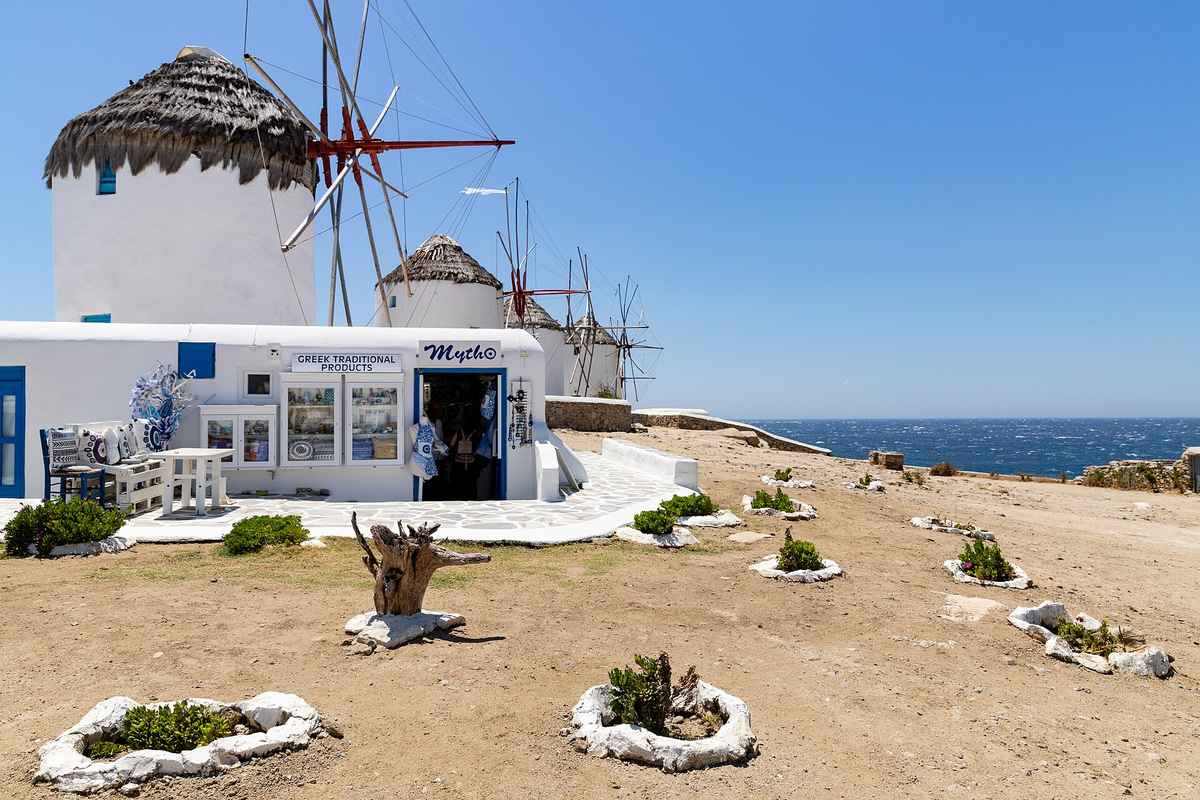
Mykonos weather is a hot, dry Mediterranean climate with mild, wet winters and warm to hot, dry, sunny summers cooled by the meltemi wind. Average temperatures range from about 11°C in January to around 26°C in August, with the sea warmest from July to September. This guide covers the climate, month by month, the wind, the sea and the best time to go. Plan the whole trip with Greece Tours.
Understanding the weather is key to planning a trip in the Mykonos travel guide. The sections below cover the climate in full.
What is the climate of Mykonos like?
Mykonos has a hot, dry Mediterranean climate: mild wet winters and hot, dry, sunny summers cooled by the meltemi wind. Rainfall is low from May to September. Temperatures average near 11°C in winter and 26°C in high summer.
Mykonos has a classic hot-summer Mediterranean climate, shaped by its position in the central Aegean among the Cyclades. The pattern is one of two clear seasons. Winters are mild, changeable and relatively wet. Summers are long, hot, dry and very sunny. Rainfall concentrates in the cooler months from November to March. The summer from May to September is almost entirely dry with abundant sunshine, often more than ten hours a day at the peak.
The island is also famously breezy, swept in summer by the meltemi, a strong northerly wind that tempers the heat and keeps the air fresh. Average temperatures climb from about 11°C in the coldest month of January to around 26°C in the hottest month of August. Sea temperatures lag behind the air, warming through the season. This reliable, sunny, dry summer climate is a big part of why Mykonos is such a popular beach destination, set out alongside the guide to the best time to visit. The seasons each have their own character.
What is the weather like month by month?
Mykonos is coldest in January and February near 11°C, cool through March and April, warm in May and June, hot and dry in July and August at 25 to 26°C, then warm into September and October before cooling.
Mykonos weather follows a clear yearly arc. January and February are the coldest months. Daytime highs sit around 13 to 15°C, averages near 11°C, with cooler nights and the most rain, though still milder than much of Europe. March and April warm gradually, bringing spring flowers, cool but pleasant days and occasional showers, with April reaching the high teens. May is warm, sunny and largely dry, with highs in the low twenties. June is hot and dry with long sunny days.
July and August are the peak of summer: hot, dry and intensely sunny, with average temperatures around 25 to 26°C and highs into the low thirties, tempered by the meltemi wind. September stays warm and sunny with highs in the mid to high twenties and the sea at its warmest, making it a favourite month. October cools gently into the low twenties with the first autumn rains. November and December turn cooler and wetter as winter returns. This rhythm shapes when to visit, set out alongside the guides to when to visit and a Mykonos itinerary. The wind is a defining feature.
What is the meltemi wind and how does it affect the weather?
The meltemi is a strong, dry northerly wind that sweeps the Aegean in summer, mainly July to early September. On Mykonos it cools the heat and keeps skies clear, but churns north-facing beaches and disrupts ferries.
The meltemi is one of the most distinctive elements of Mykonos weather and central to the island’s summer character. It is a strong, dry, fair-weather wind that blows from the north and north-east across the Aegean, most reliably from July to early September, sometimes lasting days at a time. Its effects are mostly welcome. It tempers the high summer heat, keeps humidity low and the skies a brilliant clear blue, and gives Mykonos its famous fresh, breezy air. The windmills that symbolise the island were built to harness exactly this wind.
There are trade-offs, though. When the meltemi is strong it turns genuinely gusty, blowing sand and making umbrellas and loose items hard to manage. It churns the sea on exposed north-facing beaches like Ftelia, which is why windsurfers love them. On the windiest days it also delays or cancels small boats and the fast ferries, so travellers keep flexible plans. South-facing beaches stay more sheltered, set out alongside the guides to the windmills and Ftelia Beach. The sea warms steadily through the year.
What are the sea temperatures in Mykonos?
The sea around Mykonos is coolest in winter near 15 to 16°C, warms to about 20°C by mid-May, and reaches its warmest of 24 to 25°C from July to September. Swimming stays pleasant June through October.
Sea temperature matters as much as air temperature for a beach holiday. Around Mykonos the water warms more slowly than the air, lagging the seasons by a month or two. In winter and early spring the Aegean here is at its coolest, around 15 to 16°C, too chilly for most swimmers. As spring advances the sea warms steadily, reaching 18 to 20°C by mid-May, swimmable for the hardier but still brisk. Through June the water climbs into the low twenties.
From July to September the sea is at its warmest and most inviting, around 24 to 25°C, comfortable for long swims and watersports. It holds much of this warmth into October, often still around 22°C early in the month, which is why early autumn remains good for swimming even as the air cools. The strong meltemi still stirs the surface and makes exposed beaches choppy even when the water is warm. For the best swimming, the window from June to early October is ideal, set out alongside the guides to the beaches and Paradise Beach. The weather guides the best time to go.
When is the best weather for visiting Mykonos?
The best weather for Mykonos runs from late May to early October, when days are warm, sunny and dry and the sea is swimmable. June and September are the sweet spots, with less extreme heat, wind and crowds.
The weather makes Mykonos a reliable summer destination, but some months balance heat, sea, wind and comfort better than others. The broad window of late May to early October offers warm to hot, sunny, dry days and a sea warm enough for swimming, so any visit in this span enjoys good beach weather. Within it, June and September stand out as the sweet spots. Both bring hot, sunny days and warm seas, but with gentler heat than the fierce peak of July and August, a touch less of the strongest meltemi, and fewer crowds than midsummer.
July and August deliver the hottest, driest, sunniest weather and the warmest sea, ideal for guaranteed heat and the liveliest scene, though the meltemi blows hard and the island is busiest. May and October are cooler and a little more variable but still pleasant, good for sightseeing and quieter beaches. Winter is mild but wet and many businesses close. For most travellers, the shoulder months give the best mix, set out alongside the guides to when to visit and getting to Mykonos. The weather also shapes what to pack.
What do you pack for the Mykonos weather?
For Mykonos in summer, pack light breathable clothes, swimwear, strong sun protection, sunglasses, a hat and a light jacket for breezy evenings stirred by the meltemi. In spring and autumn add warmer layers and a light raincoat.
Packing well for Mykonos means dressing for heat, sun and wind together. In the summer months of June to September, pack light, breathable clothing in natural fabrics, plenty of swimwear, and comfortable sandals for the cobbled streets. Above all pack strong sun protection: high-factor sunscreen, sunglasses and a hat are essential under the intense Aegean sun, where it is easy to burn. Because the meltemi cools the evenings and the breeze feels sharp after sunset, bring a light jacket or wrap for dinners, plus something smarter for the restaurants and nightlife. A secure hat and a windproof layer help on the windiest days.
For spring and autumn visits in April, May and October, add warmer layers, long sleeves for cooler evenings and a light raincoat or umbrella, as temperatures are lower and occasional showers more likely. Comfortable footwear for walking the hilly town and exploring is useful year-round. Packing for sun, sea and wind keeps you comfortable, set out alongside the guide to a Mykonos itinerary. The questions below cover the points travellers ask most.
Does it rain much in Mykonos?
No, Mykonos has low overall rainfall, concentrated almost entirely in the cooler months from November to March. The summer from May to September is very dry and sunny, with rain rare and brief. Winter brings most of the year’s showers.
Rainfall is one of the most reassuring aspects of the Mykonos climate for holidaymakers, because the island is dry for the whole of the main season. The Mediterranean climate concentrates almost all of the year’s rain into the cooler half, from roughly November through March, when occasional showers and the odd stormy spell pass through, greening the landscape and filling the cisterns. December and January are typically the wettest months, yet even these see only a modest total spread across relatively few rainy days, and the rain rarely lasts long.
From late spring into autumn, rain becomes a rarity. The peak summer months of June, July and August are almost entirely dry, with long sequences of cloudless, sunny days and only the slimmest chance of a brief shower, which is exactly why this is such a dependable beach season. May, September and October are also predominantly dry and sunny, with the first autumn showers holding off until well into October.
A summer trip to Mykonos can therefore be planned with great confidence in dry, sunny weather, and even spring and autumn visits enjoy mostly fine days. The reliable lack of rain, combined with the cooling meltemi breeze, is a key part of the island’s appeal, set out alongside the guide to the best time to visit. The sunshine makes the beaches the star.
When is the hottest time in Mykonos?
The hottest time in Mykonos is mid-summer, through July and August, when average temperatures reach 25 to 26°C and daytime highs climb into the low thirties. The dry heat is tempered by the meltemi wind, which keeps humidity low.
Mid-summer marks the peak of the Mykonos heat. Through July and August the sun is at its strongest, the days are longest, and averages hold around 25 to 26°C with highs into the low thirties. The heat here is a dry heat, so it feels less oppressive than a humid climate would at the same reading. The meltemi wind is the great moderator: on the hottest afternoons its steady northerly flow carries the edge off the heat and keeps the air fresh. Nights stay warm and pleasant, ideal for late dinners and beach clubs. Travellers who prefer strong but softer heat lean towards June or September, when the sun is still generous but the peak intensity has eased.
How does the meltemi wind affect Mykonos?
The meltemi is a strong northerly summer wind that cools the Mykonos heat, keeps skies clear and humidity low, and shapes daily life. It exposes north-facing beaches to chop, favours windsurfers, and on its strongest days delays ferries and boats.
The meltemi defines a Mykonos summer more than any temperature reading. Blowing hardest through July and August, it draws cool, dry northern air across the Aegean and holds the humidity down, so the heat stays comfortable and the sky a clear blue. Its influence reaches the water, the beaches and the ferry timetable. North-facing bays such as Ftelia turn choppy and become a magnet for windsurfers and kitesurfers, while sheltered south-facing beaches stay calm for swimming and sunbathing. On the windiest days the fast ferries and small excursion boats run late or pause, so flexible plans help. The island’s iconic windmills stand as a monument to this same wind, which once turned their sails to grind the island’s grain.
Frequently Asked Questions
What is the hottest month in Mykonos?
The hottest month in Mykonos is August, with average temperatures around 25 to 26°C and daytime highs often into the low thirties, closely followed by July. Both are hot, dry and very sunny, tempered by the meltemi wind. The sea is also at its warmest, around 24 to 25°C, in these months and September.
What is the meltemi wind in Mykonos?
The meltemi is a strong, dry northerly wind that blows across the Aegean in summer, mainly from July to early September. On Mykonos it cools the heat, keeps the skies clear and humidity low, but it can be gusty, churning the sea on north-facing beaches and occasionally disrupting ferries and small boats.
When is the sea warmest in Mykonos?
The sea around Mykonos is warmest from July to September, at around 24 to 25°C, comfortable for long swims and watersports. It warms to about 20°C by mid-May and holds warmth into October at around 22°C, so the best swimming window runs from about June through early October.
What is the best month to visit Mykonos for weather?
June and September are the best months to visit Mykonos for weather, with hot, sunny, dry days, a warm sea and gentler heat, wind and crowds than July and August. Both are considered shoulder-season sweet spots, sitting between the cooler edges of May and October.
Is Mykonos warm in winter?
Mykonos is mild rather than warm in winter, with daytime highs around 13 to 15°C and averages near 11°C from December to February. Winters are the wettest part of the year, the sea drops to about 15 to 16°C, and many businesses close, as described in the guide to Mykonos in winter.