
A Mykonos itinerary of three days is the perfect first visit, balancing the whitewashed lanes of Chora and Little Venice, a day trip to sacred Delos, and time on the famous beaches and in the legendary nightlife. This guide sets out the three days, day by day, plus what to do with more time, a one-day plan, getting around and tips.
Three days captures the essence of the Mykonos travel guide. This plan covers town, culture, beaches and nightlife. The sections below set out each day in full.
Is 3 days enough for Mykonos?
Three days covers the Mykonos highlights: the old town of Chora with Little Venice and the windmills, a day trip to Delos, and time on the beaches and in the nightlife. A first visit fits comfortably into 72 hours.
Three days is the classic length for a first trip to Mykonos and enough to experience its different sides without rushing. You explore the whitewashed old town of Chora with its windmills and Little Venice, take the short boat trip to the sacred archaeological island of Delos, and enjoy the beaches and a taste of the nightlife. It is a full but rewarding three days.
A fourth or fifth day lets you slow down, sample more of the island’s 25 named beaches, take a boat cruise and settle into the relaxed rhythm. Even a single cruise day covers the best of Chora. The island measures roughly 85 square kilometres, and good bus and water-taxi links mean you waste little time getting around, so a short stay still feels complete, set within the wider list of things to do in Mykonos. Day one is for the town.
What should you do on day one?
Day one explores Mykonos Town: wander the whitewashed lanes, see the Kato Mili windmills and the Panagia Paraportiani church, shop along Matoyianni street, and watch the sunset from Little Venice before dinner and drinks in town.
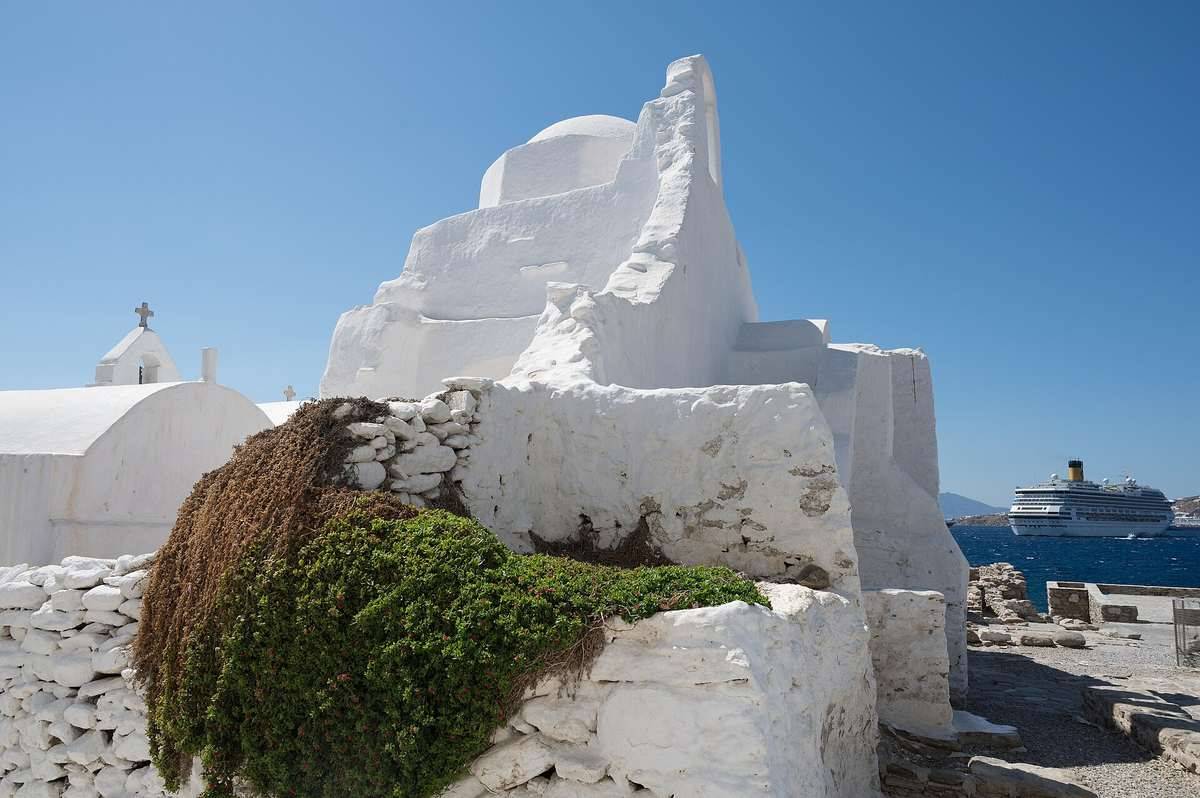
Day one belongs to Chora, the island’s heart. Spend the morning getting pleasantly lost in the maze of powder-white lanes, admiring the cubic houses, bougainvillea and tiny chapels, then browse the boutiques, galleries and jewellers along Matoyianni street. Reach the two icons of the town: the row of five hilltop windmills known as Kato Mili, and the five-in-one Panagia Paraportiani church, a whitewashed cluster of four chapels topped by a fifth.
Pause for a long lunch in a lane taverna and visit the Aegean Maritime Museum or the Archaeological Museum in the heat of the afternoon. As the day cools, claim a seat at a waterfront bar in Little Venice an hour before sunset to watch the sun sink into the sea beside the windmills, the classic Mykonos moment.
Stay on for dinner and the start of the nightlife in the lively town. It is a gentle, scenic first day that captures the island’s character, set out alongside the guides to Mykonos Town and Little Venice. Day two heads to Delos.
What should you do on day two?
Day two takes the morning boat to Delos for a guided tour of the sacred ancient island, then an afternoon at a beach or on a Delos-and-Rhenia cruise that adds swimming in turquoise coves. End with a relaxed dinner.
Day two balances culture and the sea. Take a morning boat across to Delos, the uninhabited sacred island and mythical birthplace of Apollo and Artemis. A guided tour covers its temples, mosaics and the Terrace of the Lions, the row of marble lions that once numbered 16, alongside the House of Dionysus with its floor mosaic. The site closes on Mondays, so plan the Delos day around that.
The crossing from the old port takes about 30 minutes. Combine the tour with a Delos-and-Rhenia cruise that continues to the uninhabited island of Rhenia for swimming and snorkelling in clear coves, with lunch on board, filling the whole day on the water.
Spend the afternoon instead on a south-coast beach such as Platis Gialos or Ornos, swimming and lunching by the sea. Keep the evening calm, perhaps a Little Venice sunset and a quiet dinner in the lanes, conserving energy for a bigger night ahead, set out alongside the guides to Mykonos day trips and Delos. Day three is for the beaches.
What should you do on day three?
Day three enjoys the beaches and the nightlife: pick a beach to match your mood, from family-friendly Ornos to Paradise or celebrity Psarou, spend the day swimming and lounging, and round off the trip with a night out.
Day three is all about the beaches and the nightlife. Choose a beach to suit your style: calm, family-friendly Ornos or Platis Gialos for easy swimming, Psarou with its Nammos beach club for people-watching, or Paradise and Super Paradise for the day-long beach parties. Elia and Kalo Livadi, on the longer south-east coast, offer wider sands and fewer crowds.
Spend the day swimming, lounging on a sunbed and lunching by the sea, hopping between beaches by water taxi along the south coast. Then, for the classic Mykonos finale, move into the nightlife, building from a beach-club afternoon into a night at Cavo Paradiso or Scorpios, or in the bars and clubs of Chora that run until dawn.
A sunset cruise or a long dinner in Little Venice makes a gentler close to the trip. Either way, it is a high-energy finish, set out alongside the guides to the beaches and nightlife. With more time, there is more to reach.
What if you have more than 3 days?
More than three days adds beach-hopping along the south coast by water taxi, a ferry day trip to Tinos, Naxos or Paros, and a visit to the inland village of Ano Mera and the Armenistis lighthouse. Extra days reach the wilder north.
Four or five days rewards the extra time with a more relaxed, varied trip. Spend a day beach-hopping along the south coast by water taxi, sampling the island’s beaches from Psarou to long Elia and the quieter eastern bays. Use another day for a ferry day trip to a neighbouring island: religious Tinos 30 minutes away, or the sandy beaches and old towns of Paros or Naxos around an hour off, for a change of scene.
Devote time to the parts of Mykonos beyond the coast. The inland village of Ano Mera centres on the Panagia Tourliani monastery, founded in the sixteenth century, with a carved marble bell tower and a shaded village square of tavernas. The Armenistis lighthouse on the north-west cape gives sunset views over the Tinos strait.
The wild, windswept beaches of the north, Fokos and Agios Sostis, stay undeveloped, with no sunbeds and a single taverna. Longer stays also let you slow down, lingering over beach days and long dinners, set out alongside the guides to day trips and when to visit. Even a single day works.
What is a 1-day Mykonos itinerary?
One day in Mykonos, such as a cruise stop, focuses on Mykonos Town: wander the lanes of Chora, see Little Venice, the windmills and the Paraportiani church, browse Matoyianni street, then take a bus or taxi to Ornos or Platis Gialos for a swim.
Cruise passengers and short-stop visitors can still capture the island’s essence in a single well-planned day. Head straight into Mykonos Town and spend the morning wandering the maze of white lanes, taking in the windmills, the waterfront of Little Venice and the Panagia Paraportiani church, with time to browse the boutiques of Matoyianni street and enjoy a coffee or lunch by the old harbour.
A spare afternoon suits a bus or short taxi to a south-coast beach such as Ornos or Platis Gialos for a swim and a taste of the beach scene before returning. Cruise visitors should note the tender and bus times and keep the day central, since the town alone rewards the stop, set out alongside the guide to Mykonos Town. Getting around is easy.
How do you get around for the itinerary?
This itinerary runs on the cheap KTEL buses linking Mykonos Town with the beaches, water taxis along the south coast, and hired car, quad or taxi. A boat covers the Delos day trip, and the pedestrianised old town is explored on foot.
Mykonos measures compact and connected, so this itinerary needs little driving. The KTEL public buses run from the two terminals in Mykonos Town, Fabrika and the old port, to the main beaches: Ornos, Platis Gialos, Paradise, Super Paradise, Elia and Kalo Livadi. Fares run low, and buses stay frequent, with late services in the summer season bringing revellers home from the beach clubs.
Water taxis shuttle along the south coast between the beaches, an easy way to beach-hop on day three. The Delos day trip runs by dedicated boat from the old port. Chora itself is explored entirely on foot, since the old town is pedestrianised, so you park or leave the bus at its edge.
The wilder north and remote coves suit a hired car or quad, and total freedom of timing comes with your own wheels. For this town-and-south-coast plan the buses, water taxis and the occasional taxi or transfer cover the whole route, set out alongside the guide to getting around Mykonos. One more point is worth knowing.
What should you not miss in Mykonos?
The five essentials are wandering the whitewashed lanes of Chora, the sunset from Little Venice and the windmills, a day trip to ancient Delos, at least one of the beaches, and a taste of the nightlife.
Five experiences explain why travellers return to Mykonos. The first is getting lost in the maze of Chora, with its white lanes, bougainvillea, boutiques and chapels, the core of the island’s character. The second is the sunset, shared between the row of Kato Mili windmills and the waterfront bars of Little Venice, the classic Mykonos moment that rewards an unhurried hour.
The third is the boat trip to Delos, a step back into the ancient world and a contrast to the modern glamour. The fourth is time on at least one beach, whether the family calm of Ornos, the polish of Psarou or the party of Paradise, to feel the island’s beach culture.
The fifth is a night out, even just sunset cocktails and a lively dinner, to sample the nightlife that made the island’s name. Fit these five into your trip and you will have seen the real Mykonos, set out alongside the guide to things to do in Mykonos. The questions below cover the points travellers ask most.
How do you get to Mykonos?
Mykonos is reached by ferry from Piraeus and Rafina, and by flights to Mykonos Airport from Athens and European cities. Ferries take 2 to 5 hours depending on the vessel, and the airport sits 4 kilometres from Chora.
Ferries are the classic route to Mykonos. Fast catamarans from Rafina, the port nearest Athens Airport, reach the island in about 2 hours 30 minutes. Conventional and high-speed ships from Piraeus, the main port of Athens, take 3 to 5 hours depending on the vessel and stops. Boats dock at the New Port at Tourlos, 2 kilometres north of Chora, linked by shuttle bus and taxi.
Flying is the fastest option. Mykonos Airport handles domestic flights from Athens of about 40 minutes, plus seasonal direct flights from London, Paris, Rome and other European cities. The airport lies 4 kilometres south-east of Mykonos Town, a short taxi or bus ride from the centre.
The choice depends on your route. Travellers already in Athens often pair a city stay with the Rafina fast ferry, while those arriving from abroad in the summer season find a direct flight simpler. Booking is set out alongside the guide to getting to Mykonos. Where you sleep shapes the days.
Where should you stay in Mykonos for this itinerary?
Mykonos Town suits this itinerary best, keeping you central to the sights, the Delos boat and the nightlife. Ornos, Platis Gialos and Psarou trade that walkable buzz for quieter beachfront bases with easy bus links to Chora.
Mykonos Town, or Chora, is the natural base for a 3-day trip. You wake among the lanes, walk to Little Venice and the windmills, catch the Delos boat from the old port, and stay out late without a drive home. Rooms range from small guesthouses in the back lanes to design hotels on the windmill hill, and the trade-off is summer noise and a walk with luggage into the pedestrian zone.
Ornos, 3 kilometres south, offers a sheltered sandy bay, a cluster of tavernas and frequent buses to town, making it a balanced family base. Platis Gialos, a little further south-east, lines a long beach that serves as the water-taxi hub for the south coast, so beach-hopping starts at your doorstep.
Psarou, next to Platis Gialos, is the polished address, home to the Nammos beach club and a quieter, upscale strip of hotels. Couples wanting calm choose Agios Ioannis or Kalo Livadi, while first-timers who want the classic atmosphere stay central, set out alongside the wider Mykonos travel guide. The season shapes the crowds.
What is the best time to visit Mykonos for this itinerary?
May, June and September suit this itinerary best, with warm sea, open beach clubs and thinner crowds than the July and August peak. The shoulder season keeps the nightlife running while making Chora and Delos calmer to explore.
Late spring and early autumn hit the sweet spot for a 3-day plan. May and June bring sea temperatures climbing into the low 20s Celsius, long daylight, and beach clubs and boat trips already running, without the density of high summer. September holds the warmest sea of the year and quieter lanes as the peak crowds thin.
July and August are the peak. The island runs at full tilt, with every beach club, boat and bar open and the nightlife at its height, but Chora is dense, prices climb, and the meltemi wind blows hardest, closing Delos boats on the roughest days. Book rooms and Delos tickets well ahead for these two months.
April and October sit at the edges of the season. The weather stays mild and the island calm, but the beach clubs, restaurants and boat services wind down, so the party side of Mykonos fades. Timing is set out alongside the guide to the best time to visit Mykonos. Practical points help before arrival.
What should you know before visiting Mykonos?
Chora is pedestrianised, so park at the edge and walk. Cards work widely, but carry cash for tavernas and buses. Pack sun protection and a light layer for the meltemi wind, and remember Delos closes on Mondays.
The pedestrian old town shapes the practical planning. Cars stay outside Chora, so day-trippers use the ring-road car parks or arrive by bus, and hotels inside the zone mean a short walk with luggage. Wear flat shoes for the marble lanes, which turn slippery when wet or polished smooth by footfall.
Money and weather come next. Cards are accepted across hotels, beach clubs and shops, but small tavernas, kiosks and the KTEL buses run on cash, so carry euros. The summer sun is strong; a hat, high-factor sunscreen and water matter on open beaches. The meltemi, a dry north wind, can gust for days, cooling evenings and choppy on the boats.
Two timing rules save a wasted trip. Delos closes on Mondays and in rough seas, so build the archaeological day around that. Water taxis run to a summer timetable that thins after the season, and the last bus from the beaches leaves earlier than the clubs close, so check return times before a late night out.
What does a 4-day or 5-day Mykonos itinerary add?
A fourth day adds a full round of south-coast beach-hopping and the inland village of Ano Mera. A fifth day adds a ferry day trip to Tinos, Naxos or Paros, plus the wild north beaches of Fokos and Agios Sostis.
The fourth day turns the trip from highlights to depth. Devote it to beach-hopping by water taxi, moving from Platis Gialos to Paradise, Super Paradise, Elia and Kalo Livadi across the south coast, with lunch at whichever bay suits the wind. An afternoon inland reaches Ano Mera, its Panagia Tourliani monastery and a village square that keeps its everyday Cycladic rhythm.
The fifth day opens the wider Cyclades. A ferry day trip crosses to religious Tinos, 30 minutes off, with its marble villages and pilgrimage church, or runs about an hour to Paros and Naxos for old towns and long sandy beaches. Each gives a change of pace from the Mykonos glamour and returns you by evening.
Spare hours on either day suit the wild north coast. Fokos and Agios Sostis stay undeveloped, reached by track, with a single taverna and no sunbeds, a contrast to the organised south. The Armenistis lighthouse caps a sunset drive, set out alongside the guide to Mykonos day trips. Budget is the final planning question.
How much does a 3-day Mykonos trip cost?
Cost splits into inexpensive basics and premium extras. Ferries, KTEL buses and casual tavernas stay affordable, while beach clubs like Nammos, cocktails in Little Venice and design hotels in Chora push a Mykonos trip toward the higher end.
The transport and everyday side stays reasonable. The KTEL buses charge a low flat fare to the beaches, water taxis cost a little more, and lane tavernas away from the waterfront serve honest Greek food at fair prices. Ferry tickets to and from Athens sit in a moderate band, cheaper on the slower Piraeus ships than the fast Rafina catamarans.
The glamour side is where costs climb. Front-row sunbeds at Nammos on Psarou, bottle service at the beach clubs, and cocktails at the Little Venice waterfront rank among the most expensive in Greece. Design hotels on the windmill hill and in-season rooms inside Chora carry a premium over Ornos or Platis Gialos.
The total depends on which Mykonos you choose. A traveller using buses, staying just outside the centre and eating in the lanes spends far less than one booking a design hotel and beach-club days. Mixing both, a couple of splurge moments against affordable basics, keeps the trip balanced without inventing a fixed figure here.
Which Mykonos beaches fit this itinerary?
Ornos and Platis Gialos suit families and easy swimming, Psarou is the polished club scene, Paradise and Super Paradise host the beach parties, and Elia and Kalo Livadi offer wider, calmer sands on the south-east coast.
The south coast holds the organised beaches, sheltered from the meltemi wind and served by bus and water taxi. Ornos is a compact sandy bay ringed by tavernas, the calmest and most family-friendly, with shallow water for children. Platis Gialos stretches longer, lined with sunbeds and hotels, and acts as the water-taxi hub where the coastal boats begin their runs.
Psarou, the neighbouring cove, is the glamour address, home to the Nammos beach club and a strip of upscale sunbeds. Paradise and Super Paradise, further east, are the party beaches, with day-long music, DJs and beach bars that build into the night, the loudest choice for a young crowd.
The eastern beaches trade the buzz for space. Elia is the longest sandy beach on the island, with organised sunbeds and a quieter feel, while Kalo Livadi curves as a broad bay with a scatter of tavernas. The wild north beaches, Fokos and Agios Sostis, stay undeveloped for a windswept contrast, set out alongside the guide to the beaches of Mykonos. The nightlife defines the evenings.
What is the Mykonos nightlife like on this trip?
Mykonos nightlife builds from sunset cocktails in Little Venice through beach-club afternoons at Scorpios and Paradise into late clubs like Cavo Paradiso in Chora. The town bars and clubs run until dawn in the summer season.
The evening starts gently and climbs. Sundown draws crowds to the waterfront bars of Little Venice and the terraces below the windmills, where cocktails meet the classic view. From there, dinner in the lanes of Chora precedes the first bars, which fill as the night deepens.
The beach clubs bridge day and night. Scorpios on Paraga headland runs a long sunset ritual of music and dancing, while Paradise and Super Paradise carry their daytime parties into the small hours. These sit on the south coast, reached by bus, taxi or water taxi from town.
The late clubs finish the night. Cavo Paradiso, above Paradise beach, hosts international DJs until sunrise, and the bars and clubs of Chora run until dawn in high summer. A gentler close, a long dinner and a nightcap in Little Venice, suits travellers who prefer atmosphere over the party, set out alongside the guide to Mykonos nightlife. A sample plan ties the days together.
What is a sample 3-day Mykonos schedule?
Day one walks Chora and ends at the Little Venice sunset. Day two takes the morning Delos boat and an afternoon beach. Day three beach-hops the south coast and finishes with a night out at a beach club or in town.
A workable structure keeps each day themed without overpacking it. On day one, arrive and settle in town, then spend the afternoon in Chora among the lanes, the Kato Mili windmills and the Panagia Paraportiani church, timing a waterfront seat in Little Venice for the sunset before dinner in the lanes.
On day two, catch the morning boat to Delos for the guided tour, returning by early afternoon for a swim at Platis Gialos or Ornos, or continue on a Rhenia cruise for the full day on the water. Keep the evening calm to bank energy for the finale.
On day three, ride a water taxi along the south coast, sampling Psarou, Paradise or Elia to match your mood, with lunch by the sea. Build the evening from a beach-club afternoon into a night at Cavo Paradiso, Scorpios or the Chora clubs. This frame flexes for a fourth or fifth day of beach-hopping and ferry trips, set within the things to do in Mykonos.
Where do you eat on a Mykonos itinerary?
Lane tavernas in Chora serve Greek staples away from the waterfront, Little Venice offers the sunset dining view, the beaches of Ornos and Kalo Livadi have seafood tavernas, and Ano Mera keeps a village square of everyday cooking.
The old town holds the widest choice. Back-lane tavernas away from the harbour serve grilled fish, local kopanisti cheese, tomato fritters and Cycladic dishes at fairer prices than the waterfront. The Little Venice edge charges a premium for the sunset view, so travellers often split the day, sunset drinks on the water and dinner in a quieter lane.
The beaches double as lunch stops. Ornos, Platis Gialos and Kalo Livadi each keep seafront tavernas where a swim pairs with grilled octopus and a carafe of wine. The beach clubs at Psarou and Paradise serve their own polished, pricier menus for those staying through the afternoon.
Inland dining offers a change. The village square of Ano Mera, beside the monastery, keeps tavernas serving slow-cooked meat and everyday Cycladic cooking away from the coastal crowds. Timing meals around the sunset and the beach days keeps the itinerary flowing, set within the wider Mykonos travel guide. The questions below cover the rest.
What can you see in Chora on this itinerary?
Chora holds the Kato Mili windmills, the Panagia Paraportiani church, the Little Venice waterfront, Matoyianni shopping street, the old harbour, and the Aegean Maritime and Archaeological museums, all walkable within the pedestrianised old town.
The town packs its landmarks into a compact grid of lanes. The five Kato Mili windmills stand in a row on the low hill above Little Venice, the most photographed sight on the island, best at sunset. The Panagia Paraportiani, a whitewashed cluster of four chapels crowned by a fifth, sits by the Kastro quarter near the sea.
Little Venice runs along the water’s edge, a row of tall houses whose balconies overhang the waves, now bars and restaurants facing the sunset. Matoyianni street threads the town as the shopping spine, lined with boutiques, jewellers and galleries, while the old harbour keeps its fishing boats and cafes.
Two small museums fill an afternoon in the heat. The Aegean Maritime Museum traces Cycladic seafaring, and the Archaeological Museum holds finds from Delos and Rhenia, including grave markers and pottery. A short walk covers them all, since the old town bans cars, set out alongside the guide to Mykonos Town. The Delos day rewards a closer look.
What do you see on the Delos day trip?
The Delos day trip covers the Terrace of the Lions, the House of Dionysus with its floor mosaic, the Sacred Way, the ancient theatre and the Sanctuary of Apollo, on an uninhabited island reached by a 30-minute boat.
Delos ranks among the richest archaeological sites in Greece. The Terrace of the Lions presents a row of marble guardian lions that once numbered 16, carved as an offering, their weathered forms facing the sacred lake. The Sanctuary of Apollo anchors the site as the mythical birthplace of the god, with temple foundations and votive bases spread across the plain.
The residential quarter preserves detail. The House of Dionysus and the House of the Masks keep floor mosaics of the god and theatrical scenes, while the ancient theatre and its great cistern climb the slope of Mount Kynthos. A guided tour reads these ruins into a picture of a once-thriving trading city.
Practical points shape the visit. The site closes on Mondays and in rough seas, there is no shade or shop, so water and sun cover matter, and the last return boat sets the length of the stay. A combined Rhenia cruise adds a swim on the return, set out alongside the guide to Delos. The final questions cover common queries.
How do you plan the Delos and beach days together?
Pair Delos with a south-coast beach by taking the early morning boat from the old port, touring the site by late morning, and returning by early afternoon to swim at Platis Gialos or Ornos, both a short bus ride from town.
The two halves of day two link through timing. The early Delos boat, leaving the old port around mid-morning, gives a cooler tour before the sun peaks on the shadeless site, and returns by early afternoon. That leaves the warmest hours for the sea, so the guided ruins and a swim fit one day without a rush.
The beach choice follows the return port. Platis Gialos and Ornos sit closest to Chora, 3 to 4 kilometres out and served by frequent KTEL buses, so you reach a sunbed within 20 minutes of the Delos boat docking. Psarou, next to Platis Gialos, adds the Nammos club for a longer, polished afternoon by the sea.
The full-water alternative skips the beach transfer. A combined Delos-and-Rhenia cruise runs the tour, then anchors off uninhabited Rhenia for swimming and snorkelling in clear coves, with lunch on board, filling the whole day at sea. Either version keeps the evening free for dinner in the lanes, set out alongside the guide to Mykonos day trips. The questions below cover the rest.
Frequently Asked Questions
Is 3 days enough for Mykonos?
Three days is enough for Mykonos’s highlights: the old town of Chora with Little Venice and the windmills, a day trip to the ancient island of Delos, and time on the beaches and in the nightlife. It suits a first visit, though a fourth or fifth day adds more beaches at a slower pace.
What is the best Mykonos itinerary for first-timers?
The best Mykonos itinerary spends day one exploring Chora, the windmills and Little Venice at sunset; day two on a Delos day trip and a beach or Rhenia cruise; and day three on the beaches and a big night out. Staying in Mykonos Town keeps you central to the sights and nightlife.
How do you get around Mykonos in 3 days?
In three days you get around by the cheap KTEL buses linking the town with the beaches, by water taxi along the south coast, or by hired car, quad or taxi. A boat covers the Delos day trip, and the old town is explored on foot, as it is pedestrianised. Late buses serve the nightlife.
How many days do you need in Mykonos?
Three days is the ideal length for a first visit, covering Chora, a Delos day trip, and the beaches and nightlife. Four or five days add south-coast beach-hopping, the inland village of Ano Mera and a ferry day trip to Tinos, Paros or Naxos. A single cruise day still covers Mykonos Town.
Do you need a car in Mykonos?
You do not need a car for a town-and-beach itinerary. The KTEL buses reach the main south-coast beaches, water taxis link them, and Chora is pedestrianised and walked on foot. A hired car or quad helps only for the wild north beaches, Ano Mera and the Armenistis lighthouse.
Is Delos worth visiting?
Delos is worth the day trip for anyone interested in ancient Greece. The uninhabited island holds the temples, mosaics and the Terrace of the Lions of a once-thriving sacred city and the mythical birthplace of Apollo. The boat crosses from the old port in about 30 minutes, and the site closes on Mondays.
What is the best area to stay in Mykonos?
Mykonos Town is the best base for this itinerary, keeping you central to the sights, the Delos boat and the nightlife. Ornos and Platis Gialos suit families and beach lovers with quieter sandy bays and bus links, while Psarou is the polished, upscale choice near the Nammos beach club.
Can you do Mykonos as a day trip?
Mykonos works as a single day, especially for cruise passengers. Focus on Mykonos Town: the lanes of Chora, Little Venice, the windmills and the Panagia Paraportiani church, plus Matoyianni street. A spare afternoon suits a short bus or taxi ride to Ornos or Platis Gialos for a swim before returning.
When does Delos close?
Delos closes on Mondays throughout the year, and boats stop running in rough seas when the meltemi wind is strong. Build the archaeological day around a Tuesday-to-Sunday window, take an earlier boat for a cooler visit, and check the return times, since the last boat sets how long you can stay on the island.
What is the best month to visit Mykonos?
May, June and September are the best months, with warm sea, open beach clubs and thinner crowds than the July and August peak. September holds the warmest sea of the year. April and October stay mild and quiet, but the beach clubs and boat services wind down toward the edges of the season.
How do you get from Athens to Mykonos?
From Athens, take a fast ferry from Rafina, the port nearest Athens Airport, reaching Mykonos in about 2 hours 30 minutes, or a conventional ship from Piraeus in 3 to 5 hours. A domestic flight from Athens Airport lands at Mykonos in about 40 minutes, the fastest option in the summer season.
Is Mykonos Town walkable?
Mykonos Town is fully walkable and pedestrianised, so cars stay outside the old town. You explore the lanes, Little Venice, the windmills and Matoyianni street entirely on foot. Park or leave the bus at the edge of Chora, and wear flat shoes, since the polished marble lanes turn slippery underfoot.