
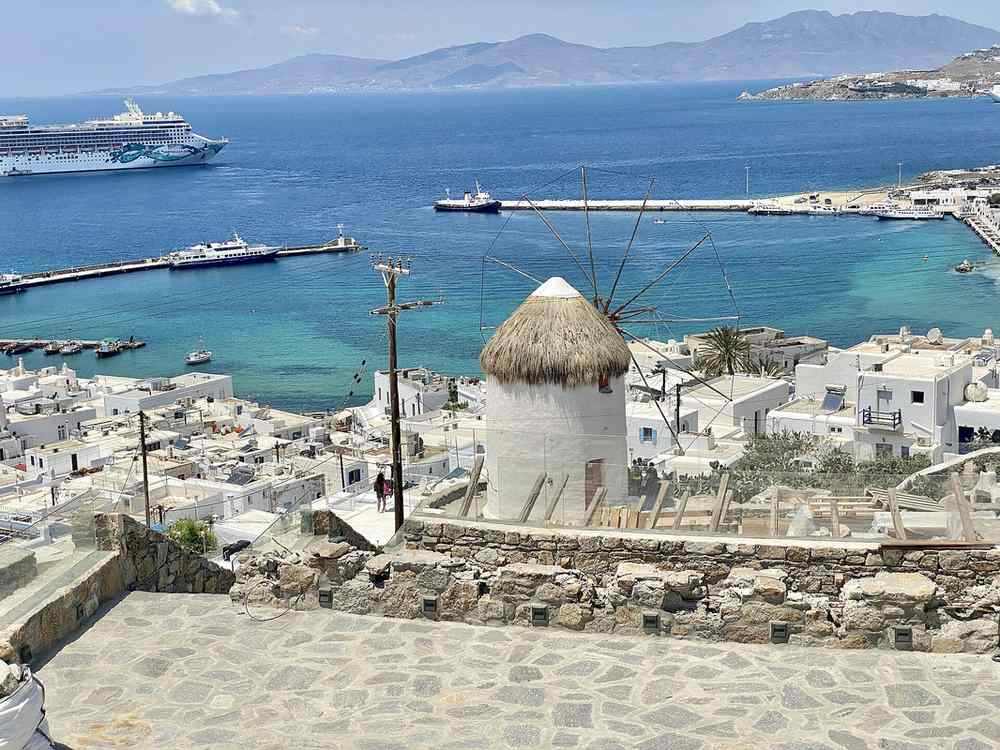
The best things to do in Mykonos are exploring the whitewashed lanes of Chora and Little Venice, watching the sunset by the windmills, taking a day trip to sacred Delos, enjoying the famous beaches and experiencing the legendary nightlife. Beyond that, the island offers museums, the traditional village of Ano Mera, the Armenistis lighthouse, windsurfing, diving and sailing. This guide covers the top attractions, the beaches, the nightlife, the day trips, the lesser-known sights, the activities, the family options and what you can do for free. Plan the whole trip with Greece Tours.
Mykonos packs a remarkable amount into a small island, the heart of this Mykonos travel guide. There is far more here than partying, from culture and history to beaches and watersports. The sections below cover everything worth doing.
What are the top attractions in Mykonos?
The top attractions in Mykonos are Mykonos Town (Chora) with its maze of whitewashed lanes, the waterfront quarter of Little Venice, the iconic hilltop windmills, and the much-photographed Panagia Paraportiani church. Together they form one of the loveliest old towns in Greece.
Mykonos Town, known to locals as Chora, is the island’s beating heart and its greatest sight. It is a labyrinth of powder-white, walled lanes deliberately built as a maze to confuse pirates. Today those lanes are lined with bougainvillea, tiny blue-domed churches, designer boutiques, galleries, restaurants and bars. On its western edge sits Little Venice, where 18th-century sea captains’ houses rise straight from the water with colourful wooden balconies. This is the most famous sunset spot on the island.
Above the town stand the iconic Kato Mili windmills, a row of round whitewashed mills on a low hill. Nearby stands the extraordinary Panagia Paraportiani, five chapels merged into one dazzling, sculptural white form. It is often called the most photographed church in Greece. These four sights sit within easy walking distance of each other. Simply wandering and getting pleasantly lost among them is the quintessential Mykonos experience, set within the wider Mykonos Town. The beaches are an equally big draw.
What can you do at the beaches?
At the Mykonos beaches you can swim in clear water, lounge at glamorous beach clubs and join the famous beach parties. The south-coast beaches, from family-friendly Ornos to celebrity Psarou, suit every mood, with sunbeds, tavernas and clubs lining the sand.
The beaches are central to the Mykonos experience. They stretch mostly along the sheltered south coast, which stays calm even when the meltemi wind blows, and they range widely in character. Ornos and Platis Gialos are family-friendly and well organised, with calm, shallow water, restaurants and easy bus access. Psarou is the celebrity favourite, home to the legendary Nammos beach club and lined with moored superyachts.
Paradise and Super Paradise are the party beaches, with day-long beach parties and a young, lively crowd, while Elia is the island’s longest stretch of sand. Quieter, more natural beaches such as Agios Sostis and Fokos on the north reward those willing to drive. Whether you want to relax on a sunbed, dine by the sea, snorkel in clear water or dance all afternoon, a beach matches your mood, set out alongside the guide to Mykonos beaches. The nightlife is world famous.
What is there to do at night?
At night Mykonos offers some of the best nightlife in the world, from the bars and clubs of Chora and Little Venice to the open-air clubbing of Cavo Paradiso and the chic beach club Scorpios. The action runs late, from midnight until dawn.
Mykonos has been a byword for nightlife for decades, and the island delivers across every style and budget. In Mykonos Town the narrow streets come alive after dark with cocktail bars, open-air dance spots and clubs. The seafront bars of Little Venice are perfect for sunset drinks before the night unfolds. For serious clubbing, Cavo Paradiso, perched on a cliff above Paradise Beach, is one of Europe’s most famous open-air clubs and hosts world-class DJs until daybreak.
The elegant Scorpios at Paraga blends sunset rituals, dining and music in a bohemian-luxe setting, and the beach clubs led by Nammos and SantAnna turn a day at the beach into a glamorous party. The island is also one of the world’s top LGBTQ destinations, with a vibrant gay scene centred on Super Paradise and the town’s historic bars. Most venues only get going after midnight, so the Mykonos night is a long, late one, set out alongside the guide to Mykonos nightlife. Delos makes a memorable day trip.
What day trips can you take?
The classic day trip is to sacred Delos, the mythical birthplace of Apollo and a UNESCO World Heritage Site, reached by a short boat ride. Cruises often combine Delos with the uninhabited island of Rhenia for swimming in turquoise coves.
No visit to Mykonos is complete without the short boat trip to Delos, the tiny sacred island just offshore. It has no permanent population but ranks among the most important archaeological sites in Greece. Believed to be the birthplace of the gods Apollo and Artemis and protected by UNESCO, it is famous for its iconic Terrace of the Lions, the marble Sanctuary of Apollo, the mosaic-floored Hellenistic houses and a whole ancient town. Guided tours explore the site, which closes on Mondays.
Boat trips regularly pair Delos with neighbouring Rhenia, an uninhabited island with solitary sandy coves and crystal-clear water ideal for swimming and snorkeling, often with lunch on board. Beyond Delos, fast ferries open up day trips to traditional Tinos, lively Paros and big, varied Naxos, set out alongside the guides to the Delos trip and Mykonos day trips. There is more to discover off the beaten track.
What are the lesser-known sights?
Beyond the icons, you can visit the inland village of Ano Mera with its 16th-century Panagia Tourliani monastery, climb to the Armenistis lighthouse for sweeping views, and explore the museums of Chora. The Rarity Gallery shows world-class contemporary art.
Mykonos rewards those who look past the party scene. In the centre of the island, the traditional village of Ano Mera is built around the fortified 16th-century Panagia Tourliani monastery. The monastery holds an ornate marble bell tower, a carved wooden iconostasis and a small religious museum, offering a quiet, authentic counterpoint to glamorous Chora, along with tavernas around its village square. On the north-west headland, the 19th-century Armenistis lighthouse rewards a short drive with sweeping views over the sea, the sunset and neighbouring Tinos.
Back in town, the Archaeological Museum displays finds from sacred Rhenia, and the Aegean Maritime Museum celebrates the island’s seafaring past. The Folklore Museum and the preserved Lena’s House recreate old Mykonian life, while the Rarity Gallery is internationally renowned for hyper-realist contemporary sculpture and art, set within the wider Mykonos Town. Active travellers have plenty to keep them busy too.
What activities and watersports are there?
Mykonos offers windsurfing at Ftelia and Korfos, scuba diving from the south-coast beaches, sailing and yacht cruises to Delos and Rhenia, plus quad and jeep tours, cooking classes and sunset cruises. Strong winds make it a top windsurfing island.
The Island of the Winds is a natural playground for water and outdoor activities. The breezy north-coast bays of Ftelia and Korfos rank among the best windsurfing and kitesurfing spots in Greece, with schools renting gear and giving lessons. Dive centres on the sheltered south coast run scuba trips and PADI courses, exploring reefs, caves and clear water. Sailing is a highlight, from group catamaran day cruises along the coast to private yacht and gulet charters for a glamorous day at sea with lunch and drinks.
On land, you can hire a quad or buggy or join a jeep tour to reach hidden beaches and viewpoints. You can also take a Greek cooking class or wine tasting, or simply end the day on a sunset cruise out of the old port, set out alongside the guides to Mykonos day trips and the beaches. Families and quieter visitors are well served too.
What is there to do for families and quieter visitors?
Families and quieter visitors can enjoy the calm, shallow beaches of Ornos, Platis Gialos and Agios Stefanos, the traditional village of Ano Mera, the museums in Chora, and gentle boat trips and beach-hopping by water taxi. Mykonos is more than nightlife.
Despite its party reputation, Mykonos works well for families and travellers seeking a calmer trip. The sheltered south-coast beaches of Ornos, Platis Gialos and Agios Ioannis have shallow, gentle water, sunbeds, shade and restaurants ideal for children. Agios Stefanos near the new port is another easy, family-friendly bay.
Away from the coast, the village of Ano Mera and its monastery offer a relaxed afternoon, and the small museums of Chora suit a cooler hour out of the sun. A daytime boat trip or beach-hopping by water taxi along the south coast is fun for all ages. Exploring the lanes of Chora in the gentler morning or evening, before the nightlife crowd arrives, is a pleasure for everyone, set out alongside the guides to where to stay and the best time to visit. Some of the best experiences cost nothing.
What can you do for free in Mykonos?
For free in Mykonos you can wander the whitewashed lanes of Chora, watch the sunset from the windmills or Little Venice, photograph the Panagia Paraportiani church, walk the harbour and enjoy the public beaches. The island’s greatest pleasures cost nothing.
Mykonos has a glamorous, pricey reputation, but its finest experiences are free. Wandering the maze of dazzling white lanes in Chora, admiring the bougainvillea, the painted doors and the tiny churches, costs nothing and is the heart of the island’s charm. The famous sunset is free from the public walkway along the Little Venice waterfront and from beside the row of windmills, where crowds gather each evening. Photographing the sculptural Panagia Paraportiani church needs no ticket.
Strolling the old and new harbours, watching the fishing boats and spotting the island’s pelican mascot, costs nothing. So does laying a towel on the free public stretches of beaches like Paradise, Platis Gialos and Agios Stefanos. Even window-shopping along Matoyianni street is part of the fun, set out alongside the guides to Little Venice and a Mykonos itinerary. A few more highlights round out a full trip.
Where are the best sunset spots?
The best sunset spots in Mykonos are the Little Venice waterfront, the Kato Mili windmills above town, the 180 Sunset Bar near the old castle, the beach club Scorpios at Paraga, and the Armenistis lighthouse. Each frames the light differently.
Sunset is a daily ritual on Mykonos, and the island offers many stages for it. Little Venice draws the biggest crowds, its balcony bars and sea-level cafes filling well before the sun drops behind the water. Just above, the Kato Mili windmills give a wider, higher panorama over the rooftops and harbour. For a quieter view, the 180 Sunset Bar beside the ruined Gyzi castle looks straight west across the Aegean.
Down the coast, the beach club Scorpios turns the golden hour into music and cocktails on the rocks at Paraga. Further out, the Armenistis lighthouse rewards a short drive with an open horizon toward Tinos and no crowds at all. Arriving 30 to 45 minutes early secures a good spot at the popular locations, and the walk back through the lit lanes of Chora is a pleasure in itself.
Where can you shop and dine in Mykonos?
You can shop for designer fashion, jewellery, art and local crafts along Matoyianni Street, then dine on fresh seafood, Cycladic cheese and grilled meats at tavernas in town, Ano Mera and along the beaches. Mykonos blends luxury boutiques with authentic Greek cooking.
Shopping is a genuine attraction on Mykonos. Matoyianni Street, the main pedestrian artery of Chora, lines up international fashion houses, Greek designers, jewellery workshops and art galleries in a run of restored whitewashed buildings. The side lanes hide smaller boutiques selling handmade sandals, ceramics, honey and the island’s kopanisti cheese. The Rarity Gallery and other art spaces make browsing a cultural outing as much as a retail one.
Dining spans the full range. Waterfront tavernas in Little Venice serve grilled octopus and fresh fish as the sun sets, while family-run kitchens in Ano Mera plate up slow-cooked lamb and local vegetables at gentler prices. Beach restaurants at Ornos, Psarou and Platis Gialos pair seafood platters with sea views. Trying the Mykonian specialities of louza cured pork, kopanisti cheese and amygdalota almond sweets rounds out the island’s flavour.
Can you go walking or hiking in Mykonos?
Yes, you can walk and hike in Mykonos, from the coastal path linking the south-coast beaches to the trail out to the Armenistis lighthouse and the old paths around Ano Mera. The windswept landscape rewards early-morning walks before the heat builds.
Mykonos is not a dramatic hiking island like Crete or Naxos, but it holds rewarding walks for those who explore on foot. A well-trodden coastal path connects the string of southern beaches from Platis Gialos through Paraga to Paradise, threading past coves and chapels with the sea always in view. The stroll takes about an hour one way and passes small tavernas and beach bars where you can pause for a swim, a cold drink or a shaded lunch before carrying on.
Inland, the drive-and-walk route to the Armenistis lighthouse opens up the wilder north coast, its terraced fields dotted with dry-stone walls and grazing goats. Around Ano Mera, old donkey paths link farms, chapels and the monastery through a quiet, rural interior far from the beach crowds. Early morning and late afternoon are the times to go, when the light is soft and the meltemi wind eases.
What relaxing and wellness activities are there?
For relaxation in Mykonos you can book a spa treatment at the luxury resorts, join a beach yoga session, take a gentle sunset sailing cruise, or spend a slow day on a quiet organised beach. The island balances its party energy with calm experiences.
Behind the nightlife, Mykonos runs a strong wellness scene. The island’s five-star resorts and boutique hotels operate full spas offering massages, facials and hammam rituals, many with sea-view treatment rooms open to non-guests by appointment. Beach clubs and yoga studios schedule morning and sunset yoga and pilates classes on the sand, pairing gentle movement with the sound of the Aegean.
A slower day is easy to arrange. Booking a sunbed at a quiet organised beach such as Agios Sostis or Kalo Livadi, ordering a long lunch and swimming between naps is restorative in itself. A private sunset sailing cruise, drink in hand as the coast slips by, offers the same calm on the water. These relaxed choices sit comfortably beside the beaches and day trips for a balanced trip.
How many days do you need in Mykonos?
You need three to four days in Mykonos to enjoy the highlights without rushing: a day for Chora, a day for a Delos trip and a beach, and a day or two for more beaches and nightlife. Shorter cruise visits still cover the town.
Mykonos is small, so a focused trip goes a long way. Three to four days is the sweet spot for a first visit. That is enough to explore the lanes, windmills and Little Venice of Chora, take the boat trip to Delos, sample two or three of the island’s varied beaches and dip into the famous nightlife, all at a comfortable pace.
Visitors arriving on a cruise for one day can still see the best of Chora and one nearby beach. Those who love the beach and party scene, or who want to island-hop to Tinos or Paros, will happily fill five days or more. The island’s compact size and good bus and water-taxi links mean you waste little time getting around, so even a short stay feels full, set out alongside the guides to a Mykonos itinerary and getting around. The questions below cover the points travellers ask most.
Frequently Asked Questions
What should you do in Mykonos?
Mykonos is best for exploring Chora and Little Venice, watching the sunset by the windmills, seeing the Panagia Paraportiani church, taking a day trip to Delos, enjoying the south-coast beaches and experiencing the famous nightlife. It also has museums, the village of Ano Mera and watersports.
Is Mykonos only about partying?
Mykonos is not only about partying. Alongside the world-famous nightlife, it has the beautiful old town of Chora and Little Venice, the iconic windmills, the most photographed church in Greece, the sacred archaeological island of Delos, museums, the village of Ano Mera and lovely beaches for all tastes.
What is the best day trip from Mykonos?
The best day trip from Mykonos is the short boat ride to Delos, the sacred archaeological island and mythical birthplace of Apollo, a UNESCO World Heritage Site. Cruises often combine Delos with the uninhabited island of Rhenia for swimming in turquoise coves, often with lunch on board.
What can you do in Mykonos with kids?
With kids in Mykonos you can enjoy the calm, shallow beaches of Ornos, Platis Gialos and Agios Stefanos, take a daytime boat trip or water taxi along the south coast, visit the Ano Mera village square and monastery, and explore the small museums of Chora during the hotter hours.
When is the best time to visit Mykonos?
The best time to visit Mykonos is late spring and early autumn, when the weather is warm, the sea is swimmable and the crowds are thinner than at the summer peak. High summer brings the hottest days, the strongest meltemi winds and the liveliest nightlife across the island.