
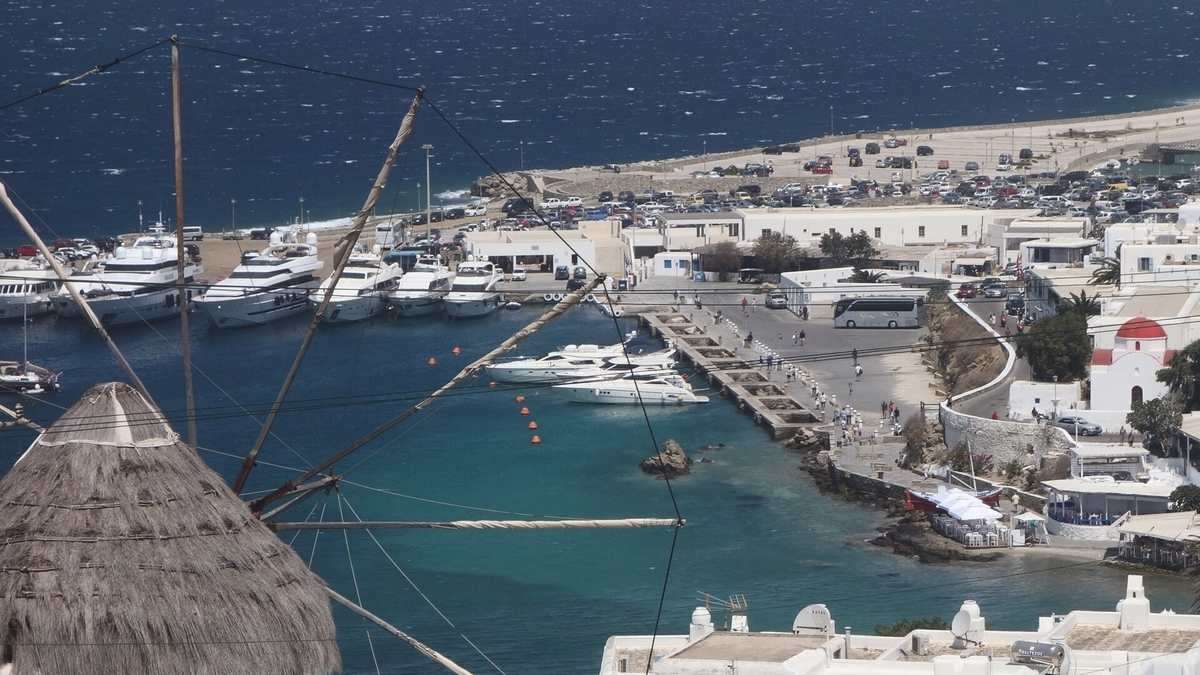
The Mykonos bus network, run by KTEL, links Mykonos Town with the main beaches, the airport, the ports and the villages from three central stations, with cheap fares of around 1.50 to 2.50 euros. This guide covers the routes, the stations, the timetables, the fares, how to buy tickets and tips for getting around by bus. Plan the whole trip with Greece Tours.
The bus is the most affordable way to get around in the Mykonos travel guide. The sections below cover it in full.
What is the Mykonos bus network like?
The Mykonos bus network is run by KTEL and connects Mykonos Town with the main beaches, the airport, the ports and the villages. Buses are frequent in summer, cheap at around 1.50 to 2.50 euros, and reliable, making them the most economical way to get around the island without a hire car or taxi.
The public bus network on Mykonos, operated by the regional KTEL company, is the backbone of getting around the island affordably and is a genuine alternative to a hire car or the island’s scarce, pricey taxis. The buses link Mykonos Town with the most popular destinations, including the south-coast beaches, the airport, the New and Old Ports and the inland village of Ano Mera, running frequently through the summer high season. Fares are very low, typically between about 1.50 and 2.50 euros depending on the distance, making the bus by far the cheapest way to travel. The buses are generally modern, reliable and well used by both visitors and locals, though they can get crowded at peak times in July and August. For travellers on a budget, those nervous about driving on the narrow roads, or anyone wanting to leave the car behind for a beach day, the bus is an excellent, practical option, set out alongside the guide to getting to Mykonos. The network runs from three main stations.
Where are the bus stations in Mykonos?
Mykonos buses run from three main stations in and around Mykonos Town: Fabrika in the south of town, the Old Port stop to the north, and the OTE stop near the Old Port. Fabrika serves the south-coast beaches and airport, while the Old Port and OTE serve the north, Ano Mera and the eastern beaches.
Knowing which station serves your destination is the key to using the Mykonos bus network, as routes are split between three main hubs in and around Mykonos Town. The Fabrika station, at the southern edge of the Chora, is the busiest and serves the popular south-coast and west-coast destinations, including Platis Gialos, Psarou, Ornos, Agios Ioannis, Paradise and Paraga, as well as the airport. The Old Port stop, to the north of town near the harbour, serves the New Port at Tourlos and the north-west beaches such as Agios Stefanos. The nearby OTE stop handles the routes east and inland, including Ano Mera, Kalafatis and Elia. So in general you head to Fabrika for the south and the airport, and to the Old Port or OTE area for the north and east. Checking which station your beach departs from before setting out saves confusion, and the stations are all within walking distance of the town centre, set out alongside the guides to Mykonos Town and Platis Gialos. The routes cover the main sights.
What routes and beaches does the bus serve?
The Mykonos bus serves the main beaches and destinations: Platis Gialos, Psarou, Ornos, Paradise, Paraga and the airport from Fabrika; Ano Mera, Kalafatis and Elia from the OTE stop; and the New Port and Agios Stefanos from the Old Port. Some quieter and northern beaches are not served and need a car.
The bus network covers most of the destinations visitors want, though not every beach. From the Fabrika station you can reach the popular south and west-coast beaches of Platis Gialos, Psarou, Ornos, Agios Ioannis, Paradise and Paraga, plus the airport, making it easy to get to the busiest beaches without a car. From the OTE stop, buses run east and inland to the village of Ano Mera, the watersports beach of Kalafatis and the long beach of Elia. From the Old Port, services link the New Port at Tourlos, where ferries and cruise ships dock, and the north-west beach of Agios Stefanos. However, many of the quieter and more remote beaches, such as Lia, Fokos, Kapari, Agios Sostis and the north-coast coves, have no bus service at all and require a hire car, scooter or the water taxi to reach. So the bus is ideal for the main beaches but leaves the hidden ones to those with their own transport, set out alongside the guides to Paradise Beach and Elia Beach. Timetables run through the day and night.
What are the bus timetables?
Mykonos buses are frequent in the summer high season from May to September, running roughly from early morning until late, with many routes operating until around midnight and some popular beaches and the town served by night buses. Frequency drops sharply outside summer, so always check the current timetable at the station.
The Mykonos bus runs on a seasonal schedule that is generous in summer and sparse in winter. During the high season from May to September, services are frequent on the main routes, with buses to the popular beaches and the airport running regularly through the day, often every 30 minutes or so on the busiest lines, from early morning until late at night. Many routes operate until around midnight, and on the busiest summer nights night buses connect the town with the major beaches and party spots, so you can get back after an evening out. Outside the high season, from autumn through spring, frequency drops sharply and some routes are greatly reduced, so the bus is far less convenient then. Crucially, timetables change every year and by season, so the most reliable approach is to check the current schedule at the terminal station, on the posted timetables, or via the official Mykonos bus information, rather than relying on old times. Planning around the timetable, especially the last bus back, ensures a smooth day, set out alongside the guide to when to visit. The fares are low and simple.
How much do Mykonos buses cost and how do you pay?
Mykonos bus fares are low, usually between 1.50 and 2.50 euros depending on the distance, with night buses slightly more. You buy tickets in cash from the driver or at the central station ticket offices. Carry small change, as the buses are cash only and the simple flat fares make budgeting easy.
One of the great advantages of the Mykonos bus is its low, straightforward cost. Fares depend on the length of the journey but generally fall between about 1.50 and 2.50 euros for a single trip to the beaches or around the island, with night-bus fares slightly higher than daytime ones. This makes the bus dramatically cheaper than a taxi, especially for a family or group, and excellent value for getting to the beaches. Tickets are bought in cash, either directly from the driver as you board or in advance from the ticket offices at the central stations such as Fabrika, so it is important to carry enough small change and coins, as cards are not accepted on the buses. There are no complex zones or passes to worry about for ordinary trips, just a simple flat fare per journey. The low cost and easy payment make the bus a budget traveller’s best friend on Mykonos, set out alongside the guide to Mykonos on a budget. A few tips help you ride it well.
What are the best tips for using the Mykonos bus?
Carry small cash for fares, check the timetable and the right station for your destination, and note the last bus back, especially after a night out. Arrive early at the station in peak season as buses fill up, allow extra time on busy summer days, and keep a back-up taxi or lift in mind.
A few simple tips make travelling by bus on Mykonos easy and stress-free. Always carry enough small cash and coins for your fares, as the buses are cash only and drivers may not have change for large notes. Before setting out, confirm which of the three stations, Fabrika, the Old Port or the OTE stop, serves your destination, and check the current timetable posted at the station, paying special attention to the time of the last bus back so you are not stranded at a beach in the evening or after a night out. In the peak of July and August the buses get very busy and can fill up, so arrive at the station a little early to be sure of a seat, especially for popular beaches, and allow extra time as summer traffic can cause delays. Keep a back-up in mind, such as a taxi or a lift, for the busiest times or remote returns. With cash, the right station and the timetable in hand, the bus is a reliable, cheap way to explore, set out alongside the guide to day trips. The bus suits some trips better than others.
When should you use the bus versus a car or taxi?
Use the bus for the main beaches, the airport and the ports on a budget, and to avoid parking and driving. Use a hire car or scooter to reach the quiet, remote beaches the bus does not serve, and a taxi for late-night returns or door-to-door trips, bearing in mind the island’s taxi shortage.
Choosing between the bus, a hire vehicle and a taxi depends on your plans, and often a mix works best. The bus is ideal when you are visiting the main, well-served beaches such as Platis Gialos, Paradise, Ornos or Elia, travelling to or from the airport and ports, or simply want to save money and avoid the stress of driving and parking on the narrow, busy roads; it is the budget and car-free traveller’s natural choice. A hire car, scooter or quad becomes essential when you want to reach the quieter, remote beaches the bus does not serve, such as Lia, Fokos, Kapari, Agios Sostis and the north coast, or to explore freely on your own schedule. Taxis are useful for door-to-door convenience, late-night returns when buses have stopped, or with luggage, but bear in mind the island’s notorious taxi shortage and higher cost, so pre-booking a transfer is wise for key journeys. Combining the cheap bus for the main beaches with occasional taxis or a short car hire gives the best balance, set out alongside the guides to car rental and the water taxi. The questions below cover the points travellers ask most.
Does the bus go to Mykonos Airport and the ports?
Yes, the Mykonos bus serves the airport from the Fabrika station and the New Port at Tourlos from the Old Port stop, both cheap at a few euros. This makes the bus a budget way to arrive and depart, though luggage space is limited, so a taxi or transfer may suit heavier bags better.
The bus is a practical, inexpensive option for reaching the airport and the ports, useful for arrivals, departures and day trips. From the Fabrika station in Mykonos Town, buses run to Mykonos Airport, only about 4 kilometres away, for a few euros, a budget alternative to a taxi or transfer for those travelling light. From the Old Port stop, services connect the New Port at Tourlos, where the ferries and cruise ships dock, so you can reach your boat affordably, and the Sea Bus water shuttle also links the New Port with the town for cruise passengers. The main drawback for airport and port trips is luggage, as the buses have limited space for large suitcases and can be crowded in summer, so travellers with heavy bags may prefer a taxi or pre-booked transfer for comfort and certainty, especially to catch an early flight or ferry. For light packers and budget travellers, though, the bus links to the airport and ports are a handy, cheap choice, set out alongside the guides to Mykonos Airport and the cruise port. The questions below cover the points travellers ask most.
Frequently Asked Questions
How much does the Mykonos bus cost?
Mykonos bus fares are low, usually between 1.50 and 2.50 euros depending on the distance, with night buses slightly more. You buy tickets in cash from the driver or at the central station ticket offices, so carry small change, as the buses are cash only and the simple flat fares make budgeting easy.
Where do Mykonos buses leave from?
Mykonos buses run from three main stations: Fabrika in the south of town for the south-coast beaches and airport, the Old Port stop for the New Port and Agios Stefanos, and the nearby OTE stop for Ano Mera, Kalafatis and Elia. Check which station serves your destination before setting out.
Does the bus reach all the beaches in Mykonos?
No, the bus serves the main beaches like Platis Gialos, Paradise, Ornos and Elia, but many quiet and remote beaches such as Lia, Fokos, Kapari and Agios Sostis have no bus service and need a hire car, scooter or the water taxi to reach. The bus is best for the popular, well-served beaches.