
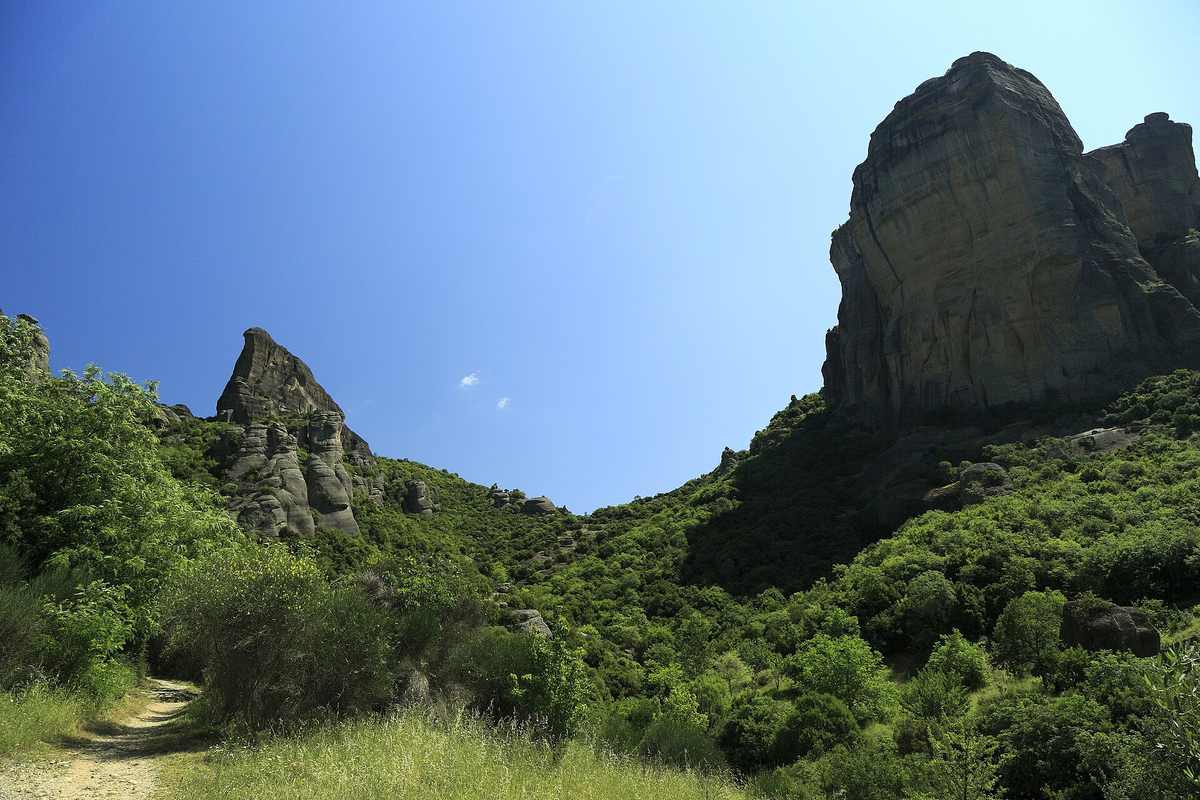
Meteora rewards travellers who arrive with a clear plan, and that matters most when stairs or distance are a concern. The six working monasteries sit on tall sandstone pillars, and their history built around defence, not easy entry. You can still experience the rock formations, the valley views and the sacred atmosphere without climbing every staircase. The paved ring road, a small set of car parks and one near-level monastery open the region to visitors who use a wheelchair or tire on steps. This guide sets out honest expectations and practical choices so you spend your day on the parts you can enjoy, planned with My Greece Tours.
Accessible planning starts with distinguishing what you view from the road and what requires a stair climb. Our Meteora travel guide covers the wider region, while this page focuses on mobility, transfers and the one monastery reached across a footbridge. The sections below cover the accessibility of each monastery, the role of the ring road and viewpoints, transport and transfer options, where St Stephen fits for step-free entry, and how to prepare a comfortable, realistic itinerary. Expect candour rather than promises: five of the six climbs stay demanding, so the plan works around them instead of pretending they vanish for wheelchair users.
How accessible are the Meteora monasteries?
Five of the six Meteora monasteries are reached only by long stone staircases cut into the rock, roughly 140 to 300 steps, with no public lifts. St Stephen is the exception, entered across a short footbridge.
The five stair-served monasteries, Great Meteoron, Varlaam, Roussanou, Holy Trinity and St Nicholas Anapafsas, each demand a climb of roughly 140 to 300 steps carved into the sandstone. The stairs replaced older rope-and-net lifts that once hauled monks and supplies, so the modern route still reflects a defensive design rather than visitor comfort. Handrails run along most flights, yet the treads stay uneven and steep, and there is no wheelchair route to these interiors. Travellers who manage short stair sections with rest stops can attempt St Nicholas Anapafsas, the smallest climb, though even that tests stamina.
Honest framing helps here: the interiors of these five remain out of reach for wheelchair users, and the value lies in the approach and the views instead.
St Stephen breaks the pattern because a car park sits beside it and a short, near-level footbridge crosses to the entrance rather than a stair climb. That single detail makes St Stephen the practical choice for visitors with limited mobility who still want to step inside a working convent. The interior keeps thresholds, doorsills and patches of uneven stone, so it is easier rather than fully step-free, and a companion often smooths the crossing. Reviewing the full set of Meteora monasteries before you travel lets you match each site to your comfort with stairs. Plan St Stephen as your interior visit and treat the other five as viewpoints admired from the road below.
Can you see Meteora without climbing stairs?
Yes. The paved ring road links a series of viewpoints and car parks where you photograph the monasteries on their pillars without climbing. A car or accessible transfer reaches these points directly for step-free viewing.
The ring road is the single most useful feature for limited-mobility travel in Meteora. It threads between the pillars and pauses at laybys and small car parks positioned directly opposite the monasteries, so you take in Great Meteoron, Varlaam and Roussanou from the roadside without touching a staircase. Several stops sit close to the parking, needing only a short, level walk or roll to the railing, while others reward a brief stroll for a cleaner angle. Sunset light on the sandstone reads especially well from the western viewpoints, and a driver who knows the timing positions you before the crowds.
Approaching Meteora this way turns the region into a scenic drive with framed photo stops rather than a series of exhausting climbs.
Photography from the road holds up remarkably well because the monasteries were built to be seen against the sky. You capture the pillars, the valley and the layered rock without ever leaving level ground, and a tripod at a railing gives steady results in low light. Our Meteora photography notes flag which viewpoints face the morning and evening sun, so you plan stops around the light instead of the stairs. Kalabaka town, spread on flat ground below the rocks, adds foreground shots of the cliffs rising behind rooftops. A road-based route lets a wheelchair user, a traveller with a cane or anyone wary of steps come home with the same iconic frames the climbers photograph from above.
What transport makes Meteora easier for limited mobility?
A private car or accessible transfer that follows the ring road removes the hardest parts of a Meteora visit. Guided accessible tours and private drivers handle parking, timing and the level viewpoints between stair climbs.
A private transfer or accessible taxi lets you skip the long walks between parking areas and monastery gates that public buses and self-guided visits impose. A driver drops you at each viewpoint railing, waits, and moves on, which keeps level walking to a minimum and preserves energy for the one interior you plan to enter. Vehicles with space for a folding wheelchair or extra transfer time exist in the area, and booking ahead confirms the fit rather than gambling on the day. Planning your day around getting around Meteora by car turns a physically demanding site into a comfortable, seated tour with photo stops.
Confirm your specific needs when you reserve so the vehicle and route match your mobility.
Guided accessible tours pair a driver with a guide who paces the route to your stamina and reads the monastery schedules, since the six sites rotate their weekly closing days. A guide steers you toward the least demanding options, positions you for the best light and handles the practical friction of parking and timing. Group coach tours rarely suit limited-mobility visitors because they assume everyone climbs, so a private booking usually serves you better. Comparing Meteora tours ahead of time reveals which formats offer seated viewing, flexible pacing and a vehicle that reaches St Stephen’s car park. A well-briefed driver becomes the difference between a stressful scramble and a calm, scenic outing across the ring road.
Is St Stephen monastery in Meteora wheelchair friendly?
St Stephen is the most accessible Meteora monastery because a short, near-level footbridge replaces the usual stair climb. The interior still has thresholds and uneven stone, so treat it as easier rather than fully step-free.
St Stephen sits on a pillar reached from a car park by a short footbridge that stays close to level, so you cross rather than climb hundreds of steps. That footbridge is the reason limited-mobility visitors single out St Stephen as their interior visit, and it is genuinely gentler than the staircases at the other five monasteries. Inside, the ground shifts to old stone with raised thresholds at doorways, small changes in level and cobbled patches, so a self-propelled wheelchair user usually welcomes a companion for a push over the sills. The convent, run by nuns, keeps a calm atmosphere and holds space for quiet viewing.
Reading the dedicated St Stephen monastery page helps you picture the layout before you arrive.
St Stephen also holds notable painted interiors, and admirers of Byzantine wall painting will find the visit worthwhile beyond its easy access. The wider tradition of Meteora frescoes reaches its peak in the stair-served monasteries, yet St Stephen still rewards a slow look at its decorated spaces. Plan a relaxed pace, since the interior stone tires legs even without a stair climb, and use the benches and shaded spots to rest. Dress code applies here as it does everywhere in Meteora, so cover shoulders and knees before you cross the bridge. Treat St Stephen as the accessible heart of your day: the one interior you enter, framed by viewpoints you photograph from the road on either side.
How do I plan an accessible Meteora day?
Base yourself in flat Kalabaka, book a private accessible transfer, view five monasteries from the ring road, and enter St Stephen across its footbridge. Confirm step-free rooms and monastery opening days before you travel.
Kalabaka, the town directly below the rocks, spreads across relatively flat ground and makes the easier base for limited-mobility travellers. Kastraki, the neighbouring village, climbs the slope and adds gradients that tire wheelchair users, so Kalabaka usually wins for level pavements and short distances to cafes. Certain hotels in the town offer step-free rooms and accessible bathrooms, and confirming the exact setup by direct contact beats trusting a generic listing. Reviewing options for where to stay in Meteora narrows the search to properties near the ring-road access and the transfer pick-up points. A flat base shortens every journey of the day and leaves you with energy for the viewpoints and the one interior visit you have chosen.
Build the day around the monastery rota, because each of the six closes on a set day and the schedule shifts between the warm and cold seasons. Aim St Stephen for a day it opens, then string the ring-road viewpoints around it for photos and rests. Pack water, sun cover and modest clothing that meets the dress code, and allow generous time at each stop rather than racing the clock. A private driver or accessible guide removes the parking and timing stress, and telling them your mobility needs at booking secures the right vehicle.
Realistic expectations matter most: you will enjoy the rocks, the road and St Stephen fully, while the five stair-served interiors stay a view from below rather than a climb.
Frequently Asked Questions
Are there lifts or elevators at the Meteora monasteries?
No public lifts serve general visitors at the Meteora monasteries. Five of the six are reached only by long stone staircases cut into the rock, roughly 140 to 300 steps each, and these remain the sole route for the public. Small cargo cable systems and internal lifts exist at some sites, but they move monks, nuns and supplies rather than tourists, so you cannot count on them for access. The one genuine exception is St Stephen, entered across a short, near-level footbridge from its car park instead of a stair climb, which makes it the practical interior visit for anyone with limited mobility.
The honest planning takeaway is that the five stair-served monasteries stay off-limits to wheelchair users inside, and the region’s accessibility rests on the ring road, the viewpoints and St Stephen. Treat the climbs as optional and build your day around the level options rather than expecting mechanical help at the gates.
Can a wheelchair user visit accessible Meteora and still enjoy it?
Yes, a wheelchair user can enjoy Meteora fully with the right plan, even though the interiors of five monasteries stay out of reach. The paved ring road delivers you by car to viewpoints and car parks directly opposite the pillars, where you photograph Great Meteoron, Varlaam, Roussanou and the others without climbing a single step. St Stephen adds an interior visit across its short footbridge, giving you the atmosphere of a working convent at close range. Kalabaka town, on flat ground below the cliffs, offers level cafes, restaurants and foreground photo angles of the rocks rising behind the rooftops. A private accessible transfer or guided tour handles parking, pacing and timing, so the physical strain drops sharply.
The experience centres on the extraordinary landscape, the sacred setting and the light on the sandstone, all of which the ring road delivers. Set expectations honestly, and Meteora rewards the visit rather than disappointing it.
Do accessible transfers and step-free hotels exist in Meteora?
Yes. Private accessible transfers and drivers operate in the Kalabaka area, and they follow the ring road to drop you at each viewpoint and at St Stephen’s car park with minimal level walking. Vehicles with room for a folding wheelchair or with extra transfer time are available, and confirming the exact setup at booking secures the right fit for your needs. Certain hotels in Kalabaka offer step-free rooms and accessible bathrooms, and the flat town centre keeps distances short between the accommodation, the cafes and the transfer pick-up points. Kastraki, the neighbouring village, sits on a slope and adds gradients, so Kalabaka usually serves limited-mobility travellers better.
Direct contact with any property beats a generic listing, since photos and standard descriptions rarely detail door widths, thresholds or bathroom layouts. Book the transfer and confirm the room in advance, state your mobility requirements clearly, and you arrive with the logistics settled and the day free for the views.