
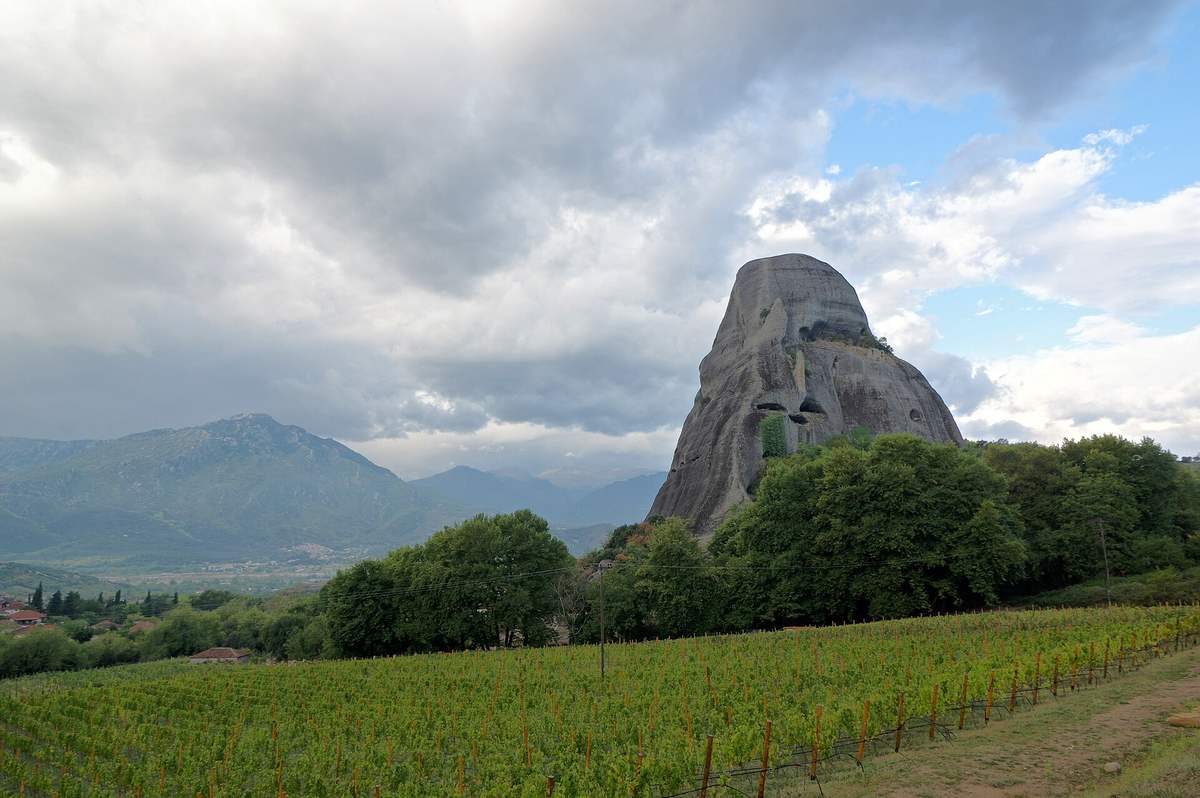
Meteora rises above two settlements that hold almost every bed near the rock pillars. Kalabaka and Kastraki sit at the foot of the towering sandstone columns, minutes from the monasteries above. Kalabaka is the larger town, with a railway station, restaurants and hotels across all budgets. Kastraki is a smaller, quieter village pressed right against the rocks. Your choice shapes the whole trip: transport access, dining options, walking distance to trailheads and the drama of the view from your window. This guide compares both bases, room types and practical logistics so you can match the location to your travel style with My Greece Tours.
Picking a base near Meteora comes down to a handful of clear trade-offs between town convenience and village calm. Both settlements sit within a short drive of the monasteries, so neither leaves you far from the main sights. Our Meteora travel guide frames the wider region, and this page zooms in on where you sleep. Rock-facing rooms carry a premium for good reason at sunrise and sunset. The sections below cover Meteora accommodation overall, Kalabaka as a base, Kastraki as a base, rooms with rock views and how to reach the monasteries once you have settled in.
Where should you stay in Meteora?
Stay in Kalabaka for transport, dining and a full range of hotels, or in Kastraki for a quieter village pressed under the rocks. Both sit minutes from the monasteries, so the decision rests on convenience versus calm.
Meteora accommodation concentrates in two neighbouring settlements at the base of the rock pillars. Kalabaka anchors the area as the main town, holding the train station, the widest choice of restaurants and hotels ranging from simple guesthouses to comfortable mid-range properties. Kastraki lies just to the northwest, a traditional village tucked directly beneath the towers. The two sit close enough that a short walk or a five-minute drive links them. Your priorities decide the base. Travellers arriving by train or bus lean toward Kalabaka for its connections and services. Walkers and photographers often prefer Kastraki for its proximity to the trailheads and its raw rock backdrop. The Meteora monasteries remain a short drive from either point.
Budget, transport and pace all steer the choice between the two bases. Kalabaka suits visitors who want dinner options within a handful of steps, a pharmacy, a bank and easy onward travel. Kastraki rewards those who value quiet evenings and a view of the rocks from the doorstep. Neither location strands you far from the sights, and a variety of guests split the difference by staying in one and eating in the other. Guided Meteora tours collect guests from hotels in both settlements, so tour access does not favour one base over the other. Consider how you arrive, how you plan to move around and whether nightlife or silence matters more before you book a room here.
Why choose Kalabaka as your base in Meteora?
Kalabaka is the larger town and the practical base for most visitors. It holds the railway station, a bus link, restaurants, shops, banks and hotels across every budget, making arrivals, dining and onward travel straightforward for travellers without a car.
Kalabaka works as the logistical heart of any Meteora trip. The town sits on the railway line, with direct services linking it to Athens and Thessaloniki through Paleofarsalos, so rail travellers step off almost at the foot of the rocks. Buses connect the town to regional hubs and the train station stands within the settlement itself. Restaurants line the central squares and side streets, covering tavernas, bakeries and cafes for early starts. Supermarkets, pharmacies and ATMs cover practical needs that a smaller village cannot. The accommodation range spans simple family-run rooms to larger hotels with parking and breakfast.
This spread makes Kalabaka the safe default for first-time visitors who want services close at hand and a base that handles arrival and departure without fuss.
Staying in Kalabaka keeps the region open without a car. Guided Meteora tours depart from town hotels, and taxis wait near the central square for shorter hops to the monasteries or trailheads. The northern edge of town climbs toward the rocks, so upper-street properties still deliver strong views despite the town setting. Evening life centres on the squares, where dinner runs late and the lit pillars loom overhead. The town also serves walkers well, since the paths for hiking in Meteora start a short distance uphill. Kalabaka rewards travellers who want everything within reach and who value a lively base over a hushed one. It remains the recommended starting point for anyone new to the area.
What makes Kastraki a good base near Meteora?
Kastraki is a smaller, traditional village pressed right under the rock pillars. It offers quiet, closer access to trailheads and guesthouses with dramatic rock views, making it a favourite of walkers and photographers seeking calm over convenience.
Kastraki sits barely two kilometres from Kalabaka yet feels a world apart. The village nestles directly beneath the towers, its stone houses and narrow lanes framed by sheer rock on almost every side. Guesthouses and rooms dominate the accommodation here, an array of family-run and modest in scale, and a range of face the pillars head on. The pace is slow. Evenings stay quiet, dinner tavernas number a handful rather than dozens, and the loudest sound is often the wind against the cliffs. The village puts you closest to a cluster of trailheads, so the paths for hiking in Meteora begin near your door.
Walkers heading up to the older routes and hidden hermitages gain a real head start by basing here rather than in the town.
Kastraki trades services for setting, and a mix of visitors take that deal gladly. Shops and restaurants are fewer, and a short walk or drive to Kalabaka covers anything the village lacks. The reward is the view. Rooms angled toward the rocks catch the changing light through the day, and the pillars glow at sunset with the village in shadow below. The Meteora monasteries sit a short drive uphill, close enough that a car or a tour reaches them in minutes. Photographers value the clear sightlines and the quiet dawn light. Families and couples seeking a peaceful retreat find the village a gentle contrast to the busier town.
Kastraki suits travellers who came for the rocks first and the amenities second.
Which rooms with rock views should you book in Meteora?
Rooms facing the rock pillars command a premium and reward it at sunrise and sunset. Match the room to your trip: town-view hotels in Kalabaka for convenience, rock-facing guesthouses in Kastraki for the most dramatic outlooks.
Rock-view rooms rank among the most sought-after beds in the region. Properties in both settlements advertise pillar-facing rooms, and demand is highest for the light at either end of the day. Sunrise paints the eastern faces gold, while sunset throws the pillars into warm relief with the valley cooling below. Kastraki holds the largest share of guesthouses with unobstructed rock views, thanks to its position directly under the towers. Kalabaka counters with upper-town hotels whose higher floors clear the rooftops and open onto the cliffs. Booking a view room early matters in peak months, since these rooms sell first.
Confirm the orientation before you reserve, because a room merely near the rocks is not the same as one that faces them across an open sightline.
Choosing by trip type sharpens the decision. Couples chasing a romantic outlook favour a rock-facing balcony in a quiet Kastraki guesthouse. Photographers weigh the compass direction against the shots they want, and the best time to visit Meteora shapes both crowd levels and the angle of the light. Families often prioritise space, parking and breakfast over a premium view, which points back toward Kalabaka’s larger hotels. Solo walkers may skip the view entirely to stay near the trailheads. Weigh the extra cost of a rock room against how considerable time you will actually spend in it.
A traveller out at the monasteries and on the paths all day gains less from a view room than one planning slow mornings on the balcony.
How do you reach the monasteries from your Meteora base?
Reach the monasteries by car, taxi, guided tour or on foot from either settlement. A single paved loop road links all six active monasteries, and marked footpaths climb from both Kalabaka and Kastraki for walkers.
The six active monasteries sit on the ridge above the two villages, connected by one paved loop road. Drivers reach them in ten to fifteen minutes from either base and park in small lots near each entrance. Taxis run the same route for those without a car and can wait or return at an agreed time. Guided Meteora tours handle transport, timing and commentary, collecting guests from hotels in both settlements. Walkers reach a wide range of monasteries on foot by the old stone paths that climb from the villages, a rewarding approach that echoes how pilgrims once arrived.
The Meteora monasteries keep varied opening days, so check the current schedule before setting out to avoid a closed gate.
Practical habits smooth every visit to the monasteries. Modest dress is required: covered shoulders for all, and long skirts for women, with wraps often lent at the door. Start early to beat both the heat and the tour coaches, especially in summer. Carry water and sturdy shoes, since each monastery involves a climb of a spread of steps carved into the rock. Plan the loop by opening days rather than distance, grouping the monasteries open on your date. The best time to visit Meteora influences crowds, opening patterns and comfort on the exposed paths.
Combining a drive with a stretch of hiking in Meteora lets you touch both the road and the trail sides of the region in a single unhurried day.
Frequently Asked Questions
Should I stay in Kalabaka or Kastraki?
Choose Kalabaka for convenience and Kastraki for calm. Kalabaka is the larger town, holding the railway station, buses, a full range of restaurants, shops, banks and hotels across every budget. It suits travellers arriving without a car and those who want dining and services within a short walk. Kastraki is a smaller traditional village pressed directly under the rock pillars, roughly two kilometres away. It offers quieter evenings, closer trailhead access and guesthouses with dramatic rock views, favoured by walkers and photographers. Both sit within a short drive of the monasteries, so neither leaves you far from the main sights.
A variety of visitors stay in one and eat in the other, since the two settlements sit close together. Weigh transport needs, dining preferences and the value you place on silence against amenities before booking. First-time visitors relying on public transport usually find Kalabaka the more practical base.
Which area is best for a first visit to Meteora?
Kalabaka works best for most first visits. The town serves as the practical base, sitting on the railway line with direct services from Athens and Thessaloniki through Paleofarsalos, plus bus links and taxis waiting in the central square. Its range of restaurants, supermarkets, pharmacies and banks covers every need close at hand, and hotels span budgets from simple rooms to comfortable mid-range properties. This concentration of services removes friction from arrival, dining and departure, which matters most on a first trip when you are still learning the area. Guided tours depart from town hotels, and the footpaths for reaching the monasteries start a short distance uphill.
Kastraki remains a fine alternative for visitors wanting quiet and rock views from the start, particularly walkers and photographers. A first-time traveller balancing sightseeing, meals and logistics generally gains the most from Kalabaka’s central position and its fuller set of services and transport connections.
Do I need a car to stay in Meteora?
You do not strictly need a car, though one adds flexibility. Kalabaka’s railway station and bus links bring you to the base without driving, and the town’s restaurants, shops and services sit within walking distance. Reaching the monasteries above works by taxi, guided tour or on foot along the marked stone paths that climb from both villages. Guided tours collect guests from hotels in Kalabaka and Kastraki, handling transport, timing and commentary, which removes the need to drive the loop road yourself. Taxis run the same route and can wait or return at an agreed time.
A car helps most if you plan to visit the monasteries at your own pace, combine Meteora with wider Thessaly touring or stay in Kastraki, where services are fewer. Walkers can rely entirely on the footpaths and their own legs to reach a selection of monasteries. Weigh your itinerary, budget and comfort with driving narrow mountain roads before deciding.