
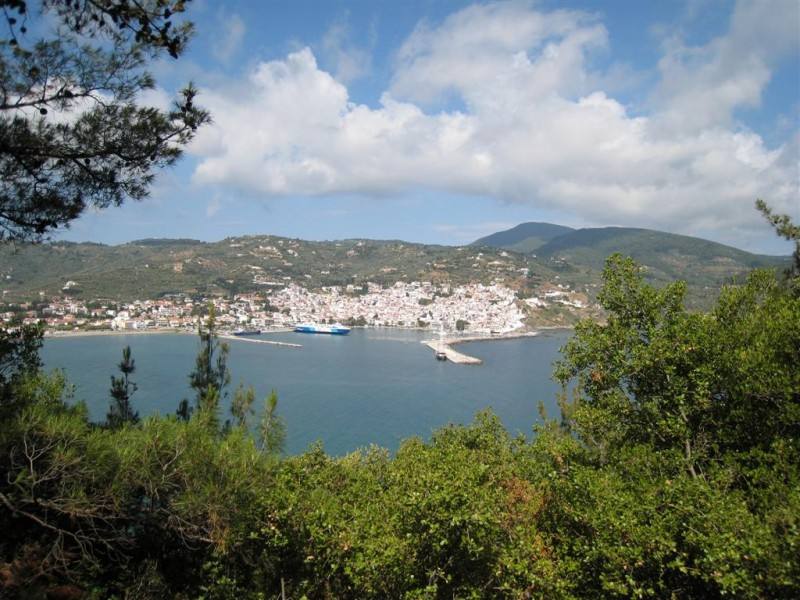
Limnonari Beach sits in a sheltered cove on the south coast of Skopelos, a pine-covered island in the Northern Sporades. The bay holds fine, pale sand, a rare surface on an island where pebble beaches dominate the coastline. A single taverna with rooms stands above the shore, and the calm, shallow water draws families to this compact horseshoe of sand near the port of Agnontas. Plan the whole trip with Greece Tours.
Reaching Limnonari takes about 15 minutes by car from Skopelos Town, following the road toward Agnontas and turning off along a short lane to the cove. Water taxis also cross from the neighbouring port bay of Agnontas in the summer months. The enclosing headlands keep the sea flat and clear, so the beach reads as one of the calmest, most sheltered swimming spots on the south coast.
How do you get to Limnonari Beach on Skopelos?
Limnonari Beach lies about 15 minutes by car from Skopelos Town, along the Agnontas road and a short signed lane to the cove. Water taxis also run from Agnontas through summer, and a small car park sits above the sand.
The drive from Skopelos Town to Limnonari follows the main road that runs south and west toward Agnontas, the island’s second harbour. Cars leave the town, climb over a wooded ridge and drop toward the south coast, covering roughly 8 kilometres in about 15 minutes. A signposted lane branches off before Agnontas and descends a short distance to the cove, ending at the parking ground above the sand. The tarmac stays in fair condition for standard rental cars, though the final lane narrows between olive trees and pines. Renting a car or scooter gives the most dependable access, since the public bus keeps to the main road rather than the beach turnoffs.
The guide on how to get to Skopelos sets out ferries and island transfers in detail.
Water taxis offer a second route to Limnonari across the short stretch of coast from Agnontas. The port bay of Agnontas sits just east of the cove, and small boats hop between the two through the summer season, covering the distance in minutes. Arriving by sea removes any concern about the lane and the parking ground above the beach, which fills on busy days. The approach shows the sandy crescent set against its wooded slope, a view the road hides until the final descent. Agnontas doubles as the island’s alternative ferry port when the meltemi closes the main harbour, so boats gather in its sheltered water.
Travellers pairing beach time with a harbour lunch often walk or ride between Agnontas and Limnonari, linking the working fishing bay with the sandy cove next door.
The parking ground behind Limnonari sits on the flat above the cove, holding a limited number of vehicles along the lane and the open ground. Spaces fill from late morning through the afternoon in July and August, so drivers arriving after 11am park higher on the lane and walk down. A short path drops from the parking area to the sand through a fringe of trees, easing the approach in shade. No formal car park or attendant works here, so the ground fills on a first-come basis. Early arrival, before the water taxis and rental cars converge, secures both a close pitch and a spot on the sand.
Visitors basing near the south coast reach Limnonari fastest, and the overview of where to stay in Skopelos weighs each base against this shore.
The road south from Skopelos Town to Limnonari ranks among the shorter beach drives on the island, yet it crosses varied ground on the way. Leaving the town, the route climbs through olive groves and pine before dropping toward the coast near Stafylos and then bending west toward Agnontas. Drivers gain sea views at the ridge, with the south coast opening below on clear mornings. The tarmac stays in fair shape, though blind bends on the descent call for a steady pace. Scooters handle the road well in dry weather, giving riders open views for most of the way.
Fuel stations cluster near the town rather than the south-coast beaches, so topping up before departure avoids a return trip. The short distance keeps Limnonari within easy reach of any base around Skopelos Town.
What does Limnonari Beach on Skopelos look like?
Limnonari Beach forms a compact horseshoe cove of fine, pale sand about 150 metres wide.
The shoreline at Limnonari carries fine, light-coloured sand across most of its length, a surface that sets it apart on a coast built largely from pebble and shingle. The sand stays soft underfoot and runs smoothly into the water, so the shallows keep a clean, sandy floor rather than a bank of stones. The cove curves in a tight arc, sheltered at both ends by low rocky points that break the swell. Depth builds slowly from the shore, producing a wide band of shallow water for wading and gentle swimming. The seabed holds sand near the centre and rock along the edges, where small fish gather.
This sandy floor, rare on the island, gives Limnonari an easy, comfortable entry that pebble beaches nearby cannot match.
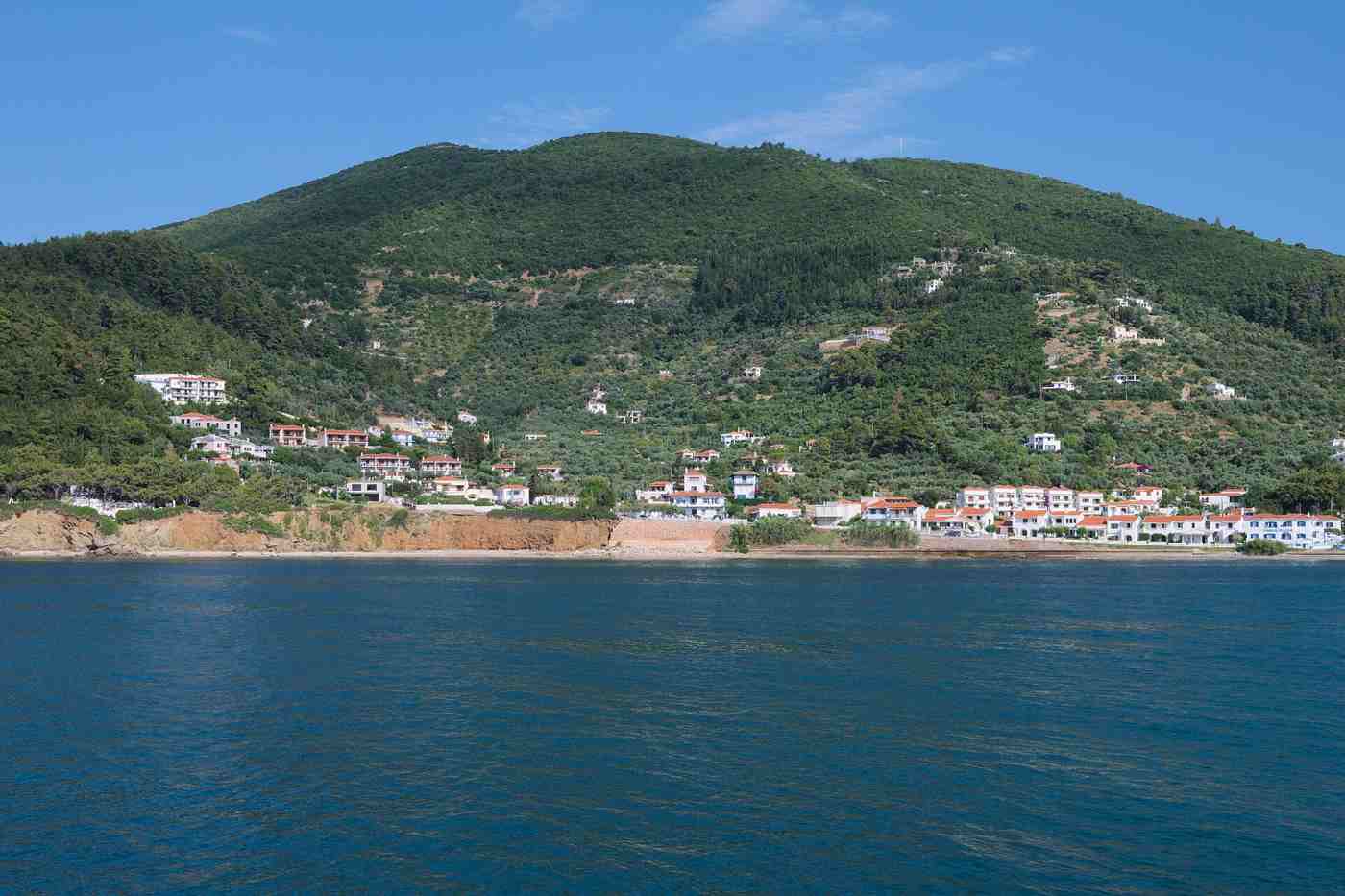
Low, wooded slopes rise behind Limnonari, running down toward the top of the sand rather than towering over it. Olive trees, pines and scrub cover the ground, giving the cove a green frame without the tall pine wall that backs the west-coast beaches. A line of trees near the shore throws patches of natural shade across the sand through parts of the day. The taverna and its rooms sit low on the slope above the beach, kept small against the greenery. Behind the tree line the ground climbs gently toward the ridge that separates the cove from the Agnontas road. That soft, low backdrop, rather than any cliff or resort, defines how Limnonari reads from the water.
A sheltered pocket of sand set into a quiet, green stretch of the south coast.
The water at Limnonari stays clear and calm across most of the summer, held in by the points that enclose the cove. Northerly meltemi winds strike the far coasts of the island, leaving this south-facing bay comparatively still. Visibility often reaches four to five metres down, so swimmers see the sandy floor and the fish moving over the rocks at the edges. The shallow entry warms early in the day, while the deeper water toward the mouth of the cove keeps a cooler, richer blue. On calm mornings the surface sits almost flat, ideal for a long, unhurried swim across the arc of the bay.
Afternoon breezes raise a light ripple without building real waves, since the enclosing points block the open swell. This steady, sheltered character defines the cove.
Seen from the water, Limnonari reads as a single green pocket, the wooded slope curving around a pale crescent of sand. No large hotels or apartment blocks break the tree line, since building on the cove stays limited. The taverna sits low among the trees toward one end, its structure kept in scale with the greenery behind it. Sunbeds and umbrellas occupy the central sand, while the quieter ends stay open for towels. The scene shifts through the day, calm and shaded at dawn, bright and busy by noon, then soft as the sun drops behind the western ridge.
This blend of fine sand, low green slopes and sheltered water gives Limnonari a gentle, enclosed look that ranks it among the calmer Skopelos beaches.
Why is Limnonari one of the few sandy beaches on Skopelos?
Limnonari holds fine sand because its sheltered cove traps sediment washed from the surrounding slopes, while wave action stays low.
Skopelos ranks among the greenest islands in the Sporades, and its coastline runs mostly to pebble, shingle and rock rather than sand. Steep, pine-covered slopes drop toward the sea along much of the coast, and the stronger swell on open shores sorts the shallows into rounded stones. Limnonari breaks this pattern because its cove sits deep and enclosed, screened from the northerly winds that drive the swell. Sheltered water lets finer material settle instead of washing away, so sand builds along the shore rather than pebbles. The low slopes behind the cove feed sediment down toward the beach over time.
This combination of shelter, gentle gradient and a protected aspect explains why Limnonari gathers sand where open beaches nearby hold stone, a contrast that shapes the whole south coast.
The sandy floor gives Limnonari a practical edge over the island’s pebble beaches, and travellers notice the difference at the waterline. Fine sand runs smoothly into the shallows, so swimmers enter without the awkward, stony footing that pebble shores demand. Children build and dig on the soft sand, an activity the pebble beaches cannot offer. The clean, sandy bed keeps the shallows clear, since fine sand settles quickly rather than clouding the water for long. Beach shoes stay optional here, a contrast with the pebble coves where they ease the entry. This soft surface draws families and beginner swimmers to Limnonari across the season, filling the cove on hot days.
The rarity of sand turns the beach into a specific draw on Skopelos, a reason travellers seek it out over the pebble bays nearby.
A short list of beaches on Skopelos carries genuine sand, and Limnonari sits near the top of it. Stafylos beach, closer to the town, mixes sand with fine pebble in a green setting and shares the south coast’s sheltered aspect. Milia and Kastani on the west coast run to pebble backed by pine, while the northern coves lean to rock and shingle. Limnonari stands out for the fineness and extent of its sand, held in a cove calm enough to keep the floor clear. This scarcity shapes how travellers plan a beach day, since the sandy spots cluster on the south and draw families accordingly.
Knowing which beaches hold sand and which hold pebble helps set expectations before the drive, and Limnonari rewards those seeking a soft, shallow entry over open water.
The enclosed shape of the cove protects both the sand and the swimming through the season on Skopelos. Rocky points reach out at either end, narrowing the mouth and blocking the open swell that reshapes exposed beaches. Inside this natural pocket the water stays flat on most days, so the sand holds its form rather than washing into banks. The gentle gradient adds to the effect, spreading the small waves thin before they reach the shore. This shelter also warms the shallows early in the day, since little cold water mixes in from the open sea.
The result is a stable, sandy beach that changes little through the summer, a dependable pocket of calm water on a coast where wind and swell rule the open shores.
What facilities does Limnonari Beach on Skopelos have?
Limnonari Beach offers sunbeds and umbrellas for rent, a taverna with rooms set above the shore, and natural tree shade along the sand. The taverna serves food and drink through the day. No permanent lifeguard station operates on the beach.
Organised sunbeds and umbrellas fill the central section of Limnonari, arranged in rows across the sand toward the water. The taverna manages the rentals, and a pair of loungers with a shared umbrella forms the standard unit. Matting runs between the rows in places, easing the walk over the warm sand. Prices vary through the season and are set by the operator, so checking on arrival avoids surprises. The front rows fill first once the midday crowd builds, while the shaded beds near the trees hold their appeal through the afternoon. Visitors bringing their own gear lay towels on the free sand toward the quieter ends of the cove.
This mix of rented comfort and open shore lets both organised and independent beachgoers settle within the same compact bay across the day.
The taverna at Limnonari sits above the beach, a short walk up from the sunbed rows, and forms the social centre of the cove. It serves cooked meals, salads, drinks and coffee through the day, so a full lunch stays within reach of the sand. Tables sit under trees and a shaded terrace, catching the breeze off the water through the meal. Skopelos carries a strong food reputation across the Sporades, and island menus feature local plates such as the well-known Skopelos cheese pie. Dining on site removes the need to drive out for food, letting a beach day stretch without interruption.
The taverna also runs the sunbed rentals, so orders and lounger hire pass across the same operation. This on-shore kitchen, set into the greenery above the sand, anchors the cove.
The taverna at Limnonari runs rooms above the beach, a rare set-up that lets travellers stay directly over the sand. The rooms sit on the slope behind the shore, within a short walk of the water, and suit visitors seeking a quiet base away from the town. Waking beside the cove gives early access to the calmest water and the emptiest sand, before the day visitors arrive by road and boat. Booking ahead matters in high summer, since the rooms are few and the beachfront location draws steady demand. Staying on site turns Limnonari from a day trip into a longer stop, with the taverna handling meals a step from the door.
For travellers weighing where to base themselves, the overview of where to stay in Skopelos compares the town, the resorts and quiet coves like this one.
Facilities at Limnonari stop short of a full resort, so certain services call for planning ahead. No permanent lifeguard patrols the cove, a standard trait of beaches across the island, so swimmers watch the deeper water and keep children in the shallows. No shops sit at the beach beyond the taverna, and the nearest supplies lie back toward Skopelos Town. Toilet facilities operate through the taverna during opening hours. Mobile signal reaches the cove but weakens under the trees in places. Bringing water, sun protection and a hat covers the gaps, since shade thins toward midday.
This lean set-up keeps Limnonari closer to a natural beach than a commercial strip, and a look at the wider list of things to do in Skopelos helps round out a day on the south coast.
Is Limnonari Beach on Skopelos suitable for families?
Limnonari Beach suits families through its fine sand, shallow water and calm, sheltered cove. The seabed slopes slowly from the shore, giving children a wide band of safe, shallow water, while the taverna above the sand covers meals and drinks.
Limnonari ranks among the friendliest beaches on Skopelos for families with young children, thanks to its rare combination of sand and calm water. The fine, soft floor lets children wade, dig and build without the stony footing of the island’s pebble beaches. The seabed slopes gently from the shore, producing a wide band of shallow water where toddlers paddle within easy reach of a parent. The enclosing points block the open swell, so the surface stays calm even when the meltemi stirs the north coast. This shelter removes the sudden waves and drop-offs that unsettle small swimmers. Parents settle on rented sunbeds or towels close to the waterline, keeping children in view across the shallows.
The mix of soft sand and still water makes Limnonari a natural choice for a family beach day on the south coast.
The taverna above Limnonari eases a family day, since food, drinks and shade sit a short walk from the sand. Children switch between the water and a shaded lunch without a drive back to town, and the kitchen covers simple dishes alongside the fuller menu. Rented umbrellas and natural tree shade give parents a cool base through the hottest hours, protecting young skin from the midday sun. The rooms above the beach let families with small children stay on site, cutting the daily drive and putting the cove within steps of the door. Toilet facilities run through the taverna during opening hours. This compact set-up keeps everything a family needs within the cove.
From the shallow water to the shaded tables. A day at Limnonari stays easy to manage with children in tow.
Parents keep points in mind at Limnonari, since the cove carries no permanent lifeguard. Adults watch children near the mouth of the bay, where the water deepens toward the rocky points and the sandy floor gives way to rock. The shallow central zone stays safest for young swimmers, well inside the enclosing headlands. Beach shoes help near the edges, where rock replaces the sand underfoot. Midday sun calls for hats, cream and shade, as the tree cover thins over parts of the beach. Arriving early or during the shoulder months of June and September gives families more room on the sand and a calmer, quieter cove.
These simple measures keep a family day at Limnonari relaxed, matching the beach’s gentle water with a little care over sun and depth.
Against the island’s other beaches, Limnonari stands out for families on the strength of its sand and shelter. Stafylos, closer to the town, offers a similar calm setting but mixes sand with pebble, giving a firmer footing at the water. The west-coast beaches of Milia and Kastani run to pebble, which suits older children better than toddlers. Limnonari’s soft floor and shallow entry tip the balance toward the youngest swimmers, a point parents weigh when planning the week. The cove’s small scale keeps the family group together, unlike the long open strands where children roam. Pairing Limnonari with a quieter shoulder-season visit gives families the calmest conditions of all.
For a full view of which shores suit which ages, the guide to Skopelos beaches sets out the choices across the island.
When is the best time to visit Limnonari Beach on Skopelos?
Limnonari Beach rewards a visit from late May to early October, when the sea warms and the taverna runs a full service. June and September bring warm water with lighter crowds, while July and August fill the cove at midday.
Late spring and early autumn deliver the steadiest conditions at Limnonari, balancing warm water against smaller crowds. Through June the sea has warmed from the spring, the daytime heat stays moderate, and the taverna runs a full service without the peak rush. September holds the summer’s stored warmth in the water, often the warmest swimming of the year, while the July and August numbers fall away. These shoulder weeks free up parking, sunbeds and space on the sand, easing the pressure that builds at midday in high summer. Long daylight stretches the useful beach day into the evening across both periods. Travellers choosing these months trade the peak buzz for calm and room.
The guide to the best time to visit Skopelos sets out how each season feels across the island.
July and August bring the fullest cove at Limnonari, and the beach reaches capacity around midday. Water taxis arrive from Agnontas, rental cars fill the parking ground, and the sunbed rows book out along the central sand. Heat peaks in the early afternoon, drawing swimmers into the sheltered shallows and shade-seekers under the trees. The taverna runs at full pace, and the cove lifts into its liveliest hours. Arriving before 10am or after 4pm sidesteps the densest crowd, leaving the bay calmer at each end of the day. High summer suits travellers wanting the social feel of a busy beach, with company, service and full sun.
Planning around the midday peak keeps the visit comfortable even in the hottest stretch of the season, when the small cove fills quickly with day visitors.
The hour of arrival shapes a Limnonari day as much as the calendar month. Early morning brings flat water, empty sand and cool shade under the trees, the best window for a long swim and quiet photographs. Late afternoon returns the calm as the day visitors depart and the crowd thins, with warm light angling across the cove. Midday holds the fullest sun and the busiest shore, the moment to claim shade or take to the water. Wind patterns hold steady here through summer, since the enclosing headlands block the northerly meltemi that stirs other coasts. The sun drops behind the western ridge, giving the cove a soft, shaded close to the day.
Timing a visit to the morning or the late afternoon secures the calmest, coolest and least crowded hours on the sand at Limnonari.
Outside the core season the taverna winds down, and Limnonari returns to a quiet stretch of sand and low green slopes. Spring, from April into May, brings green hills, wildflowers and a cool sea still short of comfortable swimming temperature. The sand stays open for walks and photographs, and the surrounding slopes reach their deepest green after the winter rains. Autumn, past early October, drains the crowds while the water holds warmth for a time, though services close down. Winter leaves the cove empty, reachable only by car along the bare lane. Travellers visiting off-season trade facilities for solitude, walking the sandy shore without another soul in sight.
Matching the visit to the goal, swimming or scenery, decides which of these windows fits the trip best across the quieter half of the year.
How does Limnonari compare to other beaches on Skopelos?
Limnonari stands apart for its fine sand and calm cove, rare on a pebble-dominated island. Stafylos mixes sand with pebble nearby, Kastani carries film fame on the west coast, and Milia runs longer.
Along the south coast, Limnonari sits close to Stafylos and Agnontas, forming a cluster of sheltered beaches within a short drive of Skopelos Town. Stafylos mixes sand with fine pebble in a green setting and draws steady crowds for its easy access from the town. Agnontas holds a working fishing harbour rather than a sunbed beach, shaded by trees and lined with seafood tavernas. Limnonari sits between the two in character, quieter and more enclosed than Stafylos, sandier and more beach-focused than Agnontas. The three link along the same road within minutes of each other, so a day can take in all of them.
Choosing between them turns on mood: Stafylos for access, Agnontas for a harbour lunch, and Limnonari for its soft sand and calm, family-friendly water on the south coast.
The west-coast beaches offer a different experience from Limnonari, trading its sand for pebble backed by tall pine. Kastani, about 25 to 30 minutes further along the coast, carries global film fame as the main Mamma Mia beach and runs an organised set-up under the trees. Milia stretches as the longest beach on the island, a wide arc of pebble and sand with a wooded islet offshore. Panormos fills a deep, sheltered bay with the coast’s fullest range of tavernas and rooms. These beaches run larger and busier than Limnonari’s compact cove, and their pebble floors suit older swimmers over toddlers.
Limnonari answers a different need, a small sandy shore for a calm family day rather than a long strand or a film stop. The contrast lets a trip mix the two coasts across the week.
Beyond the south and west, quieter shores spread across the north of the island, offering a further contrast with Limnonari. Glysteri sits in a small bay near the town, sheltered and calm, with a taverna and clear water. Hovolo, below the village of Glossa, holds a rocky cove reached on foot and prized for low visitor numbers. These beaches lean to rock and pebble rather than sand, so Limnonari keeps its edge for a soft, shallow entry. Reaching the scattered northern coves often takes a longer drive or a boat, while Limnonari sits minutes from the town.
Travellers wanting to sample a run of beaches in a day frequently take to the water, and the guide to Skopelos boat tours sets out the routes that string the coves together along the coast.
Placed against the island’s full range, Limnonari earns its spot on sand and shelter rather than size or fame. It gives a soft, shallow entry that the pebble beaches cannot match, a calm cove that suits families, and a quiet feel a short drive from Skopelos Town. That balance sets it apart from the busier, larger beaches of the west coast and the working harbour of Agnontas next door. The compact scale keeps everything close, so a swim, a meal and a shaded rest happen within a short walk. Limnonari suits travellers wanting one calm, sandy stop rather than a full resort day.
Ranking the beaches depends on taste, yet Limnonari’s mix of rare sand, sheltered water and an easy drive keeps it high on family itineraries, as the guide to Skopelos beaches confirms.
What can you do at Limnonari Beach on Skopelos?
Limnonari Beach supports swimming, snorkelling and sunbathing in its sheltered cove, plus dining at the taverna above the shore. Walkers reach Agnontas along the coast, and the calm, shallow water suits paddling, floating and children’s play through the day.
Swimming heads the list of things to do at Limnonari, thanks to the calm, clear and sheltered water. The gentle slope of the sandy seabed produces a wide band of shallow water at the shore, safe for children and easy for weaker swimmers. Stronger swimmers cross the arc of the cove toward the enclosing points, where the water deepens over rock. The headlands block the open swell, so the surface stays workable even when other coasts turn choppy. The soft, sandy entry removes the awkward footing of the pebble beaches, letting swimmers wade in smoothly. Morning brings the flattest water and the fewest bodies in the cove, the best window for laps or a relaxed float.
This reliable, sandy-bottomed swimming stands as the core draw of Limnonari for most visitors across the season.
Snorkelling rewards a swim off Limnonari, where the clear water and rocky edges shelter a range of marine life. The rocks at either end of the cove draw wrasse, bream and small shoals that move within easy view of a mask. Visibility often reaches four to five metres on calm mornings, so the underwater scene reads sharply against the pale, sandy floor. The sheltered cove keeps the water still enough for slow, unhurried exploration close to shore. Bringing a mask and snorkel makes the most of the conditions, since no rental stand sits on the sand itself. The edges of the bay hold the richest life, away from the busiest central swimming zone.
This easy snorkelling adds a second dimension to a Limnonari visit, turning a straightforward swim into a look beneath the surface along the rocky points.
Sunbathing and quiet relaxation fill the hours between swims at Limnonari. The rented loungers, natural tree shade and soft sand give a range of spots to settle, from full sun on the front rows to cool shade near the trees. The fine sand suits lying directly on a towel, a comfort the pebble beaches cannot offer. The taverna supplies drinks and shade through the middle of the day, a base for reading or watching the boats cross from Agnontas. A slow lunch on the shaded terrace stretches the visit into the afternoon. Children fill the shallows and the sand with play, while parents settle nearby.
These unhurried pursuits, rather than any active sport, define how most visitors spend a day in the cove. Matching the beach’s calm water and enclosed, family-friendly setting on the south coast.
Limnonari works as a base for exploring the south coast on foot and by car. A path links the cove toward Agnontas over the low headland, a short walk that joins the sandy beach with the working fishing harbour and its seafood tavernas. Drivers reach Stafylos, the town and the west-coast beaches within a short run, chaining stops into one day. The quiet early hours suit a walk before the traffic and heat build on the coast road. Combining a Limnonari swim with a harbour lunch at Agnontas or a drive to Stafylos turns a single stop into a full day out.
The cove’s place near the town and the main road makes it a natural anchor for a wider south-coast itinerary, and the list of things to do in Skopelos fills out the options.
How do you plan a day at Limnonari Beach on Skopelos?
A Limnonari day works best with an early start, a car or water taxi for access, and water, sun protection and a hat packed in.
Planning a Limnonari day starts with timing the arrival, since the small cove fills fast in high summer. Reaching the beach before 10am secures a parking space, a shaded pitch and the calmest water of the day. The drive from Skopelos Town runs about 15 minutes along the Agnontas road, so an early breakfast in town sets up a full morning at the shore. Water taxis from Agnontas offer an alternative for those without a car, though departure times fix the schedule. Fuel, cash and supplies come easier in town than at the beach, so a quick stop before leaving covers the gaps.
Building the day around a morning arrival, rather than a midday one, lifts the whole visit. Keeping the heat, crowds and parking pressure manageable across the hours on the sand at Limnonari.
Packing for Limnonari covers the gaps left by its lean facilities. Water tops the list, since the sand heats up through the day and only the taverna sells drinks. Sun protection matters through the middle of the day, when the tree shade thins against the direct sun, so a hat, sunglasses and high-factor cream earn their place. A mask and snorkel unlock the marine life along the rocky edges, as no rental stand sits on the sand. A towel or mat suits the free stretches at the ends of the cove for travellers skipping the rented loungers. Cash covers sunbeds, food and drinks bought on site.
A light bag with these items, rather than a full cooler, matches a beach with a taverna on hand. Keeping the day easy and the load light on the walk down.
A Limnonari day settles into a natural rhythm once the morning swim is done. The early hours suit swimming and photography, while the water stays flat and the crowd stays thin. Midday shifts toward shade, a drink at the taverna, and lunch on the terrace as the sun and the numbers peak. The afternoon eases back into swimming and snorkelling as the day visitors begin to leave and the shore reopens. Late light draws walkers back toward Agnontas over the headland for a quiet end to the day. Building in a short walk to the fishing harbour or a drive to Stafylos breaks up the beach time without leaving the south coast.
Matching the activities to the hours, active early, restful at noon, active again late, gets the most from a single day in the cove.
Limnonari fits a wider Skopelos trip as a calm, sandy highlight rather than a full destination in itself. Pairing it with Agnontas next door builds an easy south-coast day, joining the sandy cove with a harbour lunch a short walk away. Combining the beach with Skopelos Town, the old harbour and the hillside lanes fills a varied day out. Travellers basing near the town or the south coast reach Limnonari fastest, cutting the daily drive. A single well-timed visit captures the swimming, the sand and the sheltered calm without a full day on the beach.
Reaching the island in the first place shapes the whole trip, and the guide on how to get to Skopelos covers the ferries and transfers that bring travellers to this quiet corner of the south coast.
Frequently Asked Questions
Is Limnonari Beach suitable for families?
Limnonari Beach suits families through its fine sand, calm water and sheltered cove. The soft, sandy floor lets children wade, dig and build in a way the island’s pebble beaches cannot match, while the seabed slopes slowly from the shore to give a wide band of shallow water. The enclosing headlands block the open swell, so the surface stays calm even when the meltemi stirs other coasts. Rented sunbeds and umbrellas, plus natural tree shade near the sand, give parents a comfortable base close to the water. The taverna above the beach covers snacks, drinks and full meals, removing the need to pack a large picnic or drive out for lunch.
The rooms above the shore even let families stay on site. No lifeguard patrols the cove, so adults watch children near the deeper water at the mouth. Arriving early or during June and September avoids the midday crowd, giving families more room and a calmer day at Limnonari.
Is there parking at Limnonari Beach?
Parking at Limnonari sits on the flat ground above the cove, along the lane and the open ground behind the beach. The area holds a limited number of vehicles, and spaces fill from late morning through the afternoon in July and August. Drivers arriving before 10am find the easiest choice of spots, while those coming at midday park higher on the lane and walk down. A short path drops from the parking area to the sand through a fringe of trees, staying shaded for much of the day. No formal car park or attendant operates here, so the ground fills on a first-come basis. Scooters slot in more easily than cars during the busiest hours.
Reaching Limnonari by water taxi from Agnontas removes the parking question entirely, since the boats land swimmers on the sand. For drivers, an early start remains the surest way to secure a close space, especially through the peak weeks of high summer on the south coast.
Why is Limnonari one of the few sandy beaches on Skopelos?
Limnonari holds fine sand because its deep, sheltered cove traps sediment and screens the shore from the swell. Skopelos runs mostly to pebble and shingle, formed where stronger waves on open coasts sort the shallows into rounded stones. The cove at Limnonari sits enclosed by rocky points and screened from the northerly meltemi, so finer material settles along the shore instead of washing away. The low slopes behind the beach feed sediment down toward the water over time, building the sandy floor. This combination of shelter, a gentle gradient and a protected south-facing aspect explains why sand gathers here where open beaches nearby hold stone.
The result gives travellers a soft, clean entry into the water, a contrast with the stony footing of most island beaches. Only a short list of Skopelos beaches carries genuine sand. Limnonari sits near the top of it, which draws families seeking an easy, shallow, sandy shore across the summer season.
Can you reach Limnonari Beach by water taxi from Agnontas?
Water taxis reach Limnonari across the short stretch of coast from Agnontas through the summer season. The port bay of Agnontas sits just east of the cove, and small boats hop between the two in minutes, landing swimmers on the sand. Arriving by sea removes the parking question that troubles drivers at midday, since the boats bypass the lane and the parking ground above the beach. The approach shows the sandy crescent set against its wooded slope, a view the road hides until the final descent. Agnontas doubles as the island’s alternative ferry port when the meltemi closes the main harbour, so boats gather in its sheltered water.
Travellers without a car find the taxis a practical way to reach the cove, while drivers sometimes pair a boat hop with a harbour lunch. Departure times set the schedule, so a water-taxi visit trades some flexibility for an easy, scenic ride between the two neighbouring bays on the south coast of Skopelos.
What should you bring to Limnonari Beach?
Packing for Limnonari makes up for its lean facilities. Water heads the list, since the sand heats through the day and only the taverna sells drinks. Sun protection matters at midday, when the tree shade thins against the direct sun, so a hat, sunglasses and high-factor cream earn their place. A mask and snorkel open up the marine life along the rocky edges of the cove, as no rental stand operates on the sand. A towel or mat suits the free stretches at the ends of the beach for travellers skipping the rented loungers. Cash covers sunbeds, food and drinks bought on site, since the taverna handles most transactions.
Beach shoes help near the rocky edges, though the sandy centre needs none. A light bag with these items, rather than a full cooler, matches a beach that already offers a taverna. Keeping the day easy and the load manageable on the short walk down to Limnonari.
Does Limnonari Beach have a taverna and rooms?
Limnonari runs a taverna set above the beach, along with rooms on the slope behind the shore. The taverna serves cooked meals, salads, drinks and coffee through the day, so a full lunch stays within reach of the sand. Tables sit under trees and a shaded terrace, catching the breeze off the water, and island staples such as the well-known Skopelos cheese pie feature on the menu. The taverna also manages the sunbed and umbrella rentals across the central sand. The rooms above the beach give travellers a rare chance to stay directly over a Skopelos cove, waking beside the calm water before the day visitors arrive.
Booking ahead matters in high summer, since the rooms are few and the beachfront setting draws steady demand. Staying on site turns Limnonari from a day trip into a longer, quieter base, with meals a step from the door and the sandy shore waiting below through the season.
When does Limnonari Beach get busiest?
Limnonari reaches its busiest around midday in July and August, the peak of the Greek summer season. Water taxis arrive from Agnontas, rental cars fill the parking ground above the cove, and the sunbed rows book out along the central sand. Heat peaks in the early afternoon, drawing swimmers into the shallows and shade-seekers under the trees, while the taverna runs at full pace. The crowd thins at each end of the day, so arriving before 10am or after 4pm finds the small cove far calmer. June and September carry warm water with lighter numbers, easing the pressure on parking, sunbeds and space on the sand.
Outside the core season the beach empties, and the taverna winds down its service. Timing a visit to the shoulder months or the quieter hours of a peak-season day secures the calmest conditions. For solitude, the early morning and the late afternoon consistently deliver the emptiest sand and stillest water at Limnonari.