
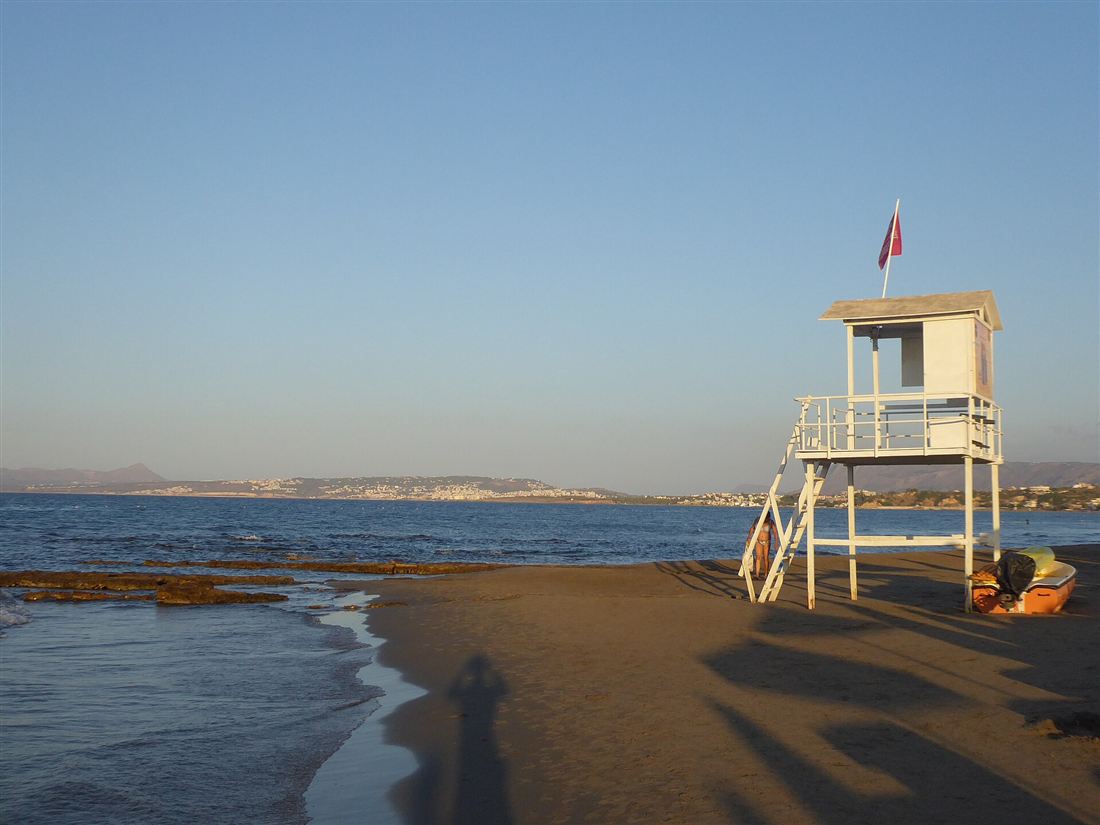
Chania with kids works because the walled old town of Chania is safe and walkable, the town beaches at Nea Chora and Agioi Apostoloi are shallow and sandy, and boat trips, the lagoon of Balos and the pink sand of Elafonisi fill easy family days. Plan the whole trip with Greece Tours.
This guide covers Chania with kids in full: whether the town suits families, the child-friendly old town and harbour, the shallow sandy beaches, the Maritime Museum, the boat trips, the Balos and Elafonisi family day trips, the aquarium and rainy-day options, where to stay, getting around with a pushchair and car seat, safety and packing, the best time to visit, and the ideal length of a family holiday among the things to do.
Is Chania good for families with kids?
Chania rewards families with children. The Venetian old town is flat, walkable and closed to cars, the town beaches drop into shallow warm water within a 15-minute walk of the harbour, and short boat trips fill the afternoons with easy adventure.
Chania sits on the north-west coast of Crete, the largest Greek island, and its historic core wraps around a horseshoe harbour built by the Venetians and reworked by the Ottomans. The lanes of the old town are paved in smooth stone, the traffic stops at the edge of the quarter, and pushchairs roll along the waterfront promenade without a single road to cross. Parents keep small children in sight against the water on one side and the shopfronts on the other, and the scale of the place stays human throughout.
Families base themselves within the walls or in the Nea Chora district just west of the harbour, where a sandy town beach and a run of fish tavernas sit five minutes apart. The town works as a single unit for a family: breakfast of bougatsa near the market, a morning swim off Nea Chora, an ice cream on the quay, a nap, and a sunset walk to the lighthouse. Distances stay short, the pace stays slow, and the destination hub at Chania maps the wider region for longer stays.
Crete’s summer brings dry heat from June to September, and the Cretan Sea off Chania warms to a temperature that suits toddlers by late spring. Shade comes from the harbour arcades, the plane trees of the squares and the awnings of the tavernas, so a family manages the midday sun without retreating indoors. The combination of car-free streets, calm water and warm sea makes Chania one of the gentlest introductions to Greece for a child under ten.
The town rewards a family that stays put. Chania airport sits 14 kilometres east of the centre, a 25-minute taxi ride, and the port of Souda receives the overnight ferry from Athens 7 kilometres from the harbour. From either arrival point a family reaches the old town in under half an hour, drops the bags and steps straight onto a car-free quay. Pharmacies, a general hospital, supermarkets and English-speaking doctors sit within the town, and the flat gradient of the centre keeps a day of walking within the reach of short legs.
What is there for kids in the Chania old town?
The old town gives children a car-free harbour to circle, a 21-metre Egyptian lighthouse to walk out to along the sea wall, horse-drawn carriage rides from the quay, ice-cream stalls at every corner, and a flat pushchair-friendly promenade the whole way round.
The harbour is the heart of a family day. Children walk the full curve of the quay from the Firka fortress at the west end to the customs house sheds at the east, watching fishing boats unload, ducks paddle in the corners and swifts wheel over the water. The Venetian lighthouse stands at the tip of the long breakwater, and the walk out to its base runs about 500 metres along a broad stone mole with the open sea on both sides. The lighthouse itself carries an Egyptian-built minaret shape from the era of Egyptian rule over Crete, and its silhouette becomes the picture every family takes home.
Horse-drawn carriages wait near the mosque of the Janissaries at the harbour edge, and a slow clip-clop loop of the waterfront turns a tired toddler into a delighted passenger. Ice-cream counters and gelato windows line the quay and the approach streets, so a treat stays within arm’s reach at every turn. The narrow lanes behind the front, especially Skridlof (the leather street) and the small squares off it, reward a wander with puppet-sized shops, a Venetian well or two and the surprise of a hidden courtyard.
The whole circuit is flat and paved, which keeps a pushchair rolling from the market gate to the maritime museum without a step to lift over. Parents park a buggy outside a taverna, order a plate of chips and grilled fish, and let older children explore the immediate lanes within sight. For a longer list of family-friendly stops and rainy-day ideas, the guide at things to do in Chania sets out the options across the town and its edges.
Two further stops keep older children busy inside the walls. The Archaeological Museum in the restored Halepa quarter displays Minoan pottery, clay tablets and mosaic floors that connect a child to the Bronze Age palace culture of Crete, and the visit stays short. The eastern harbour holds the Great Arsenal and the surviving Venetian shipyards, long stone-vaulted sheds where galleys once wintered, and the scale of the arches impresses a young visitor. A climb onto the Firka ramparts at the west end delivers the best free view of the harbour, the town roofs and the White Mountains rising behind.
What are the best beaches in Chania for kids?
Nea Chora, Agioi Apostoloi and Kalamaki are the three town-side beaches that suit children best. All three carry soft sand, shallow entries, sunbed and umbrella hire, showers, lifeguard cover in high season and tavernas at the back, and all sit within a 10-minute drive of the old harbour.
Nea Chora is the town beach, a 300-metre strip of sand a five-minute walk west of the harbour. The water shelves gently, a rope-and-buoy line marks the swimming zone, and a paved promenade of fish tavernas runs the length of the sand so parents eat within sight of a paddling child. The proximity makes Nea Chora the default first swim of a Chania holiday, reachable on foot with a bucket and spade before the heat builds.
Agioi Apostoloi lies about 4 kilometres west of the centre and breaks into a series of small sheltered coves separated by low rocky spurs and a pine-shaded headland. Each cove holds calm, shallow water that stays warm and still, which turns the beach into a natural nursery pool for toddlers. Kalamaki, a little further west, opens into a wider organised sandy bay with a gentle slope, full sunbed rows, watersports for older children and a bus link back to town. The regional round-up at Chania beaches ranks these against the famous lagoons further out.
Every one of the three carries the practical kit a family needs: paid parking or a bus stop nearby, freshwater showers to rinse the salt off, sunbeds and umbrellas for a shaded base, and a taverna or kiosk for lunch and cold drinks. Blue Flag status covers Agioi Apostoloi and Kalamaki in the high season, a mark that certifies water quality, lifeguard provision and cleanliness. The shallow entries and the on-hand facilities remove the friction that makes beach days hard with small children.
Timing turns a good beach day into an easy one. The north-west coast of Crete picks up an afternoon wind, so a family arrives for the calm morning water, breaks for lunch and shade in the taverna heat of midday, and returns for a late-afternoon swim once the breeze drops. The town bus reaches Kalamaki and Agioi Apostoloi from the central Chania station for a few euros, which frees a family from parking, and a beach trolley or wheeled cool-box carries the towels, sun cream and snacks the short distance from the stop to the sand.
Is the Maritime Museum good for children?
The Maritime Museum of Crete entertains children well. It fills the Firka fortress at the harbour mouth with detailed ship models, real anchors and cannon, naval instruments and a hands-on section, and the visit runs a compact 45 minutes to an hour, which matches a child’s attention span.
The museum occupies the Firka, the Venetian bastion that guards the west side of the harbour entrance, so the building itself is an attraction: thick walls, a courtyard of cannon and a rampart with a view straight across to the lighthouse. Inside, the collection runs from prehistoric seafaring through the Venetian and Ottoman periods to the naval history of the Battle of Crete. The scale models of galleys, sailing ships and warships line the halls at a child’s eye level, and the exhibits of anchors, mines, shells and diving gear give small hands something concrete to point at.
A separate exhibition on the harbour side holds the reconstruction of the Minoan ship, a rebuilt Bronze Age vessel built from timber and rope by the methods of the period. The build and the voyage it made turn an abstract idea into a real boat a child walks around. Ship models, brass instruments, sailors’ knots and a periscope-style display keep the pace varied, so the museum reads as a series of discoveries rather than a corridor of glass cases. The lower hall holds a scale model of the old town under siege, and a child traces the harbour walls, the lighthouse and the streets of the walk outside against the miniature below.
Practical details help a family plan: the museum charges a low entry fee with reduced rates for children, the halls are cool in the summer heat, and the position at the harbour mouth places it at the start or end of a lighthouse walk. A family threads the museum into a morning that also takes in the sea wall and an ice cream, and the whole loop stays inside the old town on foot.
The Battle of Crete gallery adds a story older children follow with interest. The exhibit lays out the parachute drop of the airborne assault on the island, the resistance that met it and the evacuation across the White Mountains, told through maps, uniforms, medals and photographs. A visiting child links the display to the landscape outside, since the mountains that fill the horizon from the ramparts are the same peaks the story crosses. The museum shop sells rope-knot kits, ship model postcards and toy boats, and the timber Minoan ship moored at the harbour extends the visit onto the water for a final look.
What boat trips suit families in Chania?
Family boat trips from Chania run from a full-day Balos and Gramvousa cruise to short glass-bottom and pirate-themed harbour sailings and a semi-submarine with underwater windows. The short trips last 45 minutes to two hours and depart straight from the old harbour quay.
The glass-bottom boats and the pirate-themed sailing ships leave from the moorings along the Venetian harbour, and their short circuits of the bay and the nearby coast fit a young child’s stamina. On a glass-bottom deck children watch fish and the seabed pass under a viewing panel without leaving the boat, and the pirate boats add flags, a costumed crew and a theme that turns the ride into a story. The semi-submarine sinks its lower cabin below the waterline, seating passengers at portholes for a face-to-face view of shoals, rocks and the odd wreck in the clear water.
The headline day trip is the cruise to Balos lagoon and Gramvousa islet on the far north-west tip of Crete. The boat leaves from Kissamos port, a 40-minute drive west of Chania, and delivers the turquoise shallows of Balos, a lagoon so shallow that toddlers wade far from shore in ankle-deep warm water. Gramvousa adds a Venetian fortress on a hilltop and a shipwreck in its bay, and the day mixes swimming, a short climb and a boat ride into one outing.
Families match the trip to the age of the crew: the harbour glass-bottom and pirate sailings for the youngest, the semi-submarine for a curious six-year-old, and the full Balos cruise for a family with older children who handle a long day at sea. Booking desks line the harbour front, and morning departures dodge the afternoon wind that builds along this coast. A short list of family sea trips also appears in the wider Chania activity guide for cross-reference.
A few sensible steps keep a boat day smooth. Each child wears a sun hat and a rash vest, since the deck holds no shade and the reflected glare doubles the sun, and a supplied life jacket goes on for the youngest before the boat leaves the mooring. The pirate and glass-bottom sailings anchor in a calm cove for a swim stop, so a towel and goggles earn their place in the bag. Travel-sickness bands settle a queasy stomach on the longer Balos run, and a packed snack bridges the gap between departure and the first taverna stop on Gramvousa.
Where do families swim in warm shallow water near Chania?
Families find the warmest, shallowest water at the west-town coves of Agioi Apostoloi, the sheltered bays of Chrissi Akti and Iguana beach, and the organised sand of Kalamaki and Stalos. All shelve gently over sand, sit within 6 kilometres of the harbour and hold still water through the morning.
Agioi Apostoloi leads the list because its rocky spurs break the sea into small enclosed pools where the water warms fast and the waves die at the headland. The main cove drops into knee-deep sand a long way out, and the pine headland behind it throws afternoon shade. Right beside it, Chrissi Akti and Iguana beach share the same sheltered bay, adding more soft sand, sunbeds and a beach bar, so a family moves between coves as the sun tracks across the sky.
West along the coast, Kalamaki and Stalos open into wider organised bays with the same gentle gradient and the added draw of watersports for older children. Stalos, about 6 kilometres from the centre, keeps a broad sandy shallow zone and a run of tavernas at the back, and the local bus reaches it from the town for a family without a car. Each of these beaches earns its place through water that stays warm and level, the single feature that matters most with a toddler.
The town beach at Nea Chora remains the fallback for a quick dip, a five-minute walk from the harbour with the same shallow entry on a smaller scale. For a family choosing a base, the string of west-town beaches from Nea Chora through Agioi Apostoloi to Stalos forms an unbroken run of child-safe swimming, and a holiday flat anywhere along it puts warm shallow water within a short stroll of the front door.
Water shoes solve the one hazard these gentle beaches hold, the patches of sea urchins and smooth rock that hide between the sandy stretches, and a cheap pair from a harbour shop protects small feet. The Cretan Sea stays clear and clean along this coast, with a lifeguard on the Blue Flag bays through July and August, and the shallow zone warms to bath temperature by afternoon. A family fixes a base towel under a hired umbrella, rotates between the swim, the shade and a snack, and holds a young child’s beach day together without a battle over the sun.
What do kids eat in Chania?
Children eat well in Chania. Harbour and back-street tavernas serve grilled chicken, chips, souvlaki, cheese pies, mild dolmades and fresh fish, the bakeries sell bougatsa and koulouri from early morning, and gelato and loukoumades cover the sweet end at every corner.
Cretan taverna food maps neatly onto a child’s palate. Grilled chicken skewers, pork souvlaki, chips fried in olive oil, plain rice and simple salads carry no spice and no surprise, and a child who refuses everything else eats a warm cheese pie. Milder Cretan dishes tempt the more adventurous: dakos, the rusk topped with grated tomato and soft mizithra cheese, reads as a dry pizza to a small eater, and boureki, the Chania courgette-and-potato bake, arrives soft and mild. Fresh fish comes off the harbour boats, and a taverna fillets a small portion for a child on request.
Breakfast belongs to the bakeries. Bougatsa, the Cretan filo pastry filled with soft mizithra cheese or sweet custard and dusted with sugar, is a Chania speciality served warm from a handful of dedicated shops near the market. Koulouri sesame rings, tyropita cheese pies and spinach spanakopita fill a pocket for a beach morning, and the smell of the ovens pulls a family in before the heat builds. Fresh orange juice and cold milk sit on every counter.
The sweet trail runs from the gelato windows of the harbour to the loukoumades stalls, where hot dough balls arrive drenched in Cretan thyme honey and cinnamon. Sfakianopita, the thin Sfakian pancake filled with soft cheese and topped with honey, brings a mountain speciality down to the coast, and children treat it as a warm crepe. Between the tavernas, the bakeries and the sweet stalls, a family in Chania feeds a fussy child at any hour without a search.
Tavernas here welcome children as a matter of course. Waiters bring a plate of bread and olives the moment a family sits, high chairs stand ready at the harbour and back-street places alike, and the kitchen splits a large grill platter into child portions without a fuss. Meals run late by British habit, so a family eats an early dinner at seven while the tables fill after nine, and the harbour front turns into an evening stage of buskers, boats and lights that holds a child’s attention through the courses.
Is the Chania covered market fun for kids?
The Chania covered market entertains children. The cross-shaped Agora building holds four arms of stalls under a high roof, with hanging cheeses and sausages, barrels of olives, mounds of honey and herbs, live fish on ice, and small counters serving Cretan snacks to eat on the spot.
The Agora stands at the southern edge of the old town, a grand cross-plan hall of stone and iron modelled on a covered market of the era. A child walks the four arms in a few minutes and meets a new sight at every stall: whole cheeses and cured sausages hung in rows, open barrels of green and black olives, jars of thyme honey stacked in gold walls, sacks of dried mountain herbs and bunches of dittany, the Cretan wild herb. The fishmongers’ ice slabs hold octopus, red mullet and the morning’s catch, and the display fascinates a child who has only met fish on a plate.
The market doubles as a snack stop. Small counters tucked into the arms grill sausages, ladle bean soup, cut slices of cheese and pour raki and orange juice, so a family samples Cretan food in bite-sized portions between the stalls. Children taste a sliver of graviera cheese, a spoon of honey or a warm cheese pie, and the sensory rush of smells and colours turns a shopping errand into an outing. Vendors hand out samples freely, and the exchange gives a shy child a small dose of Greek. A stall of dried fruit and nuts sells figs, raisins, almonds and carob rusks by the scoop, and a child fills a paper bag with a beach snack for a euro or two.
The Agora also serves as a cool, shaded refuge in the midday heat, roofed and open at the ends so a breeze moves through. A family loops the market on the way from the old town to the beach, picks up olives, cheese and fruit for a picnic, and lets the children choose a honey jar or a bag of dried figs to carry home. The market sits five minutes from the harbour, closing the town-side circuit of sights that keep a child busy from morning to dusk.
A short game turns the visit into an activity. A parent hands a child a small list, a lemon, a piece of graviera, a jar of honey and a bag of figs, and the four arms of the cross become a treasure hunt with a picnic as the prize. The herb stalls sell dittany, thyme, oregano and mountain tea in paper twists that a child sniffs and picks, and the honey vendors line their shelves in shades from pale flower to dark thyme. Souvenir stalls near the entrances sell painted worry beads, olive-wood toys and boxed sweets, and the whole hall packs a full sensory outing into a stop of half an hour.
What family day trips leave from Chania?
Four day trips suit families from Chania: Balos lagoon by road and boat, Elafonisi’s shallow pink-sand shallows 76km southwest, the Aquarium of Crete near Heraklion, and Kournas Lake for pedal boats 47km east.
Balos lagoon sits on the Gramvousa peninsula northwest of Chania. Families reach it two ways. The boat departs Kissamos port, a 42km drive from Chania town, and cruises past Gramvousa islet with its Venetian fort before anchoring at the lagoon. The road route ends at a car park above the bay, followed by a 20-minute downhill walk to the sand. The lagoon holds warm ankle-deep water over white sand, a natural paddling pool for toddlers and early swimmers.
The Aquarium of Crete, CretAquarium, stands at Gournes, 79km east of Chania near Heraklion. Sixty tanks hold sharks, rays, groupers and Mediterranean species, and the indoor route runs cool through the hottest afternoon. Kournas Lake, Crete’s only freshwater lake, lies 47km east near Georgioupoli. Families hire pedal boats and rowing boats by the hour, spot terrapins along the reed edge, and picnic under the plane trees. Each trip pairs a car journey with a reward children name for themselves: a boat, a shark tank, a lagoon.
The starting point for planning every route is the Chania hub, which maps the town against the beaches and gorges of the west. A single day trip per two-day rest block keeps young travellers fresh, and the drive doubles as a nap window for the smallest passengers.
Distance sets the order of the trips. Kournas Lake at 47km and Balos at 42km to the boat port make the shorter runs, right for a family finding its feet in the first days. Elafonisi at 76km and the aquarium at 79km demand an early start and a packed bag, better placed mid-holiday once the children hold the routine. Pair each drive with a beach day either side, and the week absorbs three big outings without a tired child at the wheel-side window.
Is Elafonisi good for young children?
Elafonisi ranks first for young children. A wide lagoon holds warm water 30 to 60cm deep across a sandbar, the sand carries a pink tint from crushed shell, and a shallow wade of 40 metres crosses to the islet nature reserve.
Elafonisi beach lies 76km southwest of Chania town, a 90-minute drive through the mountain villages of Elos and the chestnut forest of the Kissamos interior. The main beach faces a protected lagoon where a long sandbar breaks the open sea. Behind that bar the water warms to bath temperature by mid-morning and stays knee-high for tens of metres, so parents stand beside toddlers rather than treading water. The pink sand appears in patches where waves grind red Foraminifera shell into the white grains, brightest along the tide line.
The islet across the channel forms a protected European Natura reserve of dunes, sea daffodils and nesting birds. Families wade the shallow channel, ankle to thigh depth on a calm morning, and follow the marked paths that keep feet off the fragile dune plants. Sunbeds and umbrellas line the mainland strip, a canteen sells water and snacks, and lifeguards watch the swimming zone through the high season. For the full route, tides and parking notes, the Elafonisi beach guide sets out the drive and the layout. Arrive before 10am to claim shade and beat the tour coaches that fill the car park by midday.
Practical notes shape a young family’s day here. The southern exposure means afternoon wind builds on the open side of the sandbar, so the sheltered lagoon holds the calm water children need. There is a car park charge at the entrance, a first-aid point by the main canteen, and toilets near the road. Shade runs scarce beyond the rented umbrellas, so the folding beach tent earns its place in the boot. The drive back climbs through the chestnut forest of Elos, a cooling break in the shade of the plane trees where a taverna feeds the return leg.
Is the Samaria Gorge suitable for kids?
The Samaria Gorge suits children aged 12 and older with hiking stamina. The route runs 16km from Xyloskalo at 1,230 metres down to Agia Roumeli on the coast, a 5 to 7 hour walk on rough stone. The Imbros Gorge, 8km and gentle, fits younger legs.
Samaria descends the White Mountains through a national park of Cretan pine, wild goats named kri-kri, and the narrow Iron Gates where the walls close to 3 metres apart under 300-metre cliffs. The trail is one-way and downhill, yet the surface of loose rock and river crossings tests knees and ankles across a full day. There is no exit midway and no vehicle access, so the walk ends only at the sea, where a ferry carries walkers from Agia Roumeli to Sougia or Chora Sfakion for the bus back to Chania. Children under 12 find the distance and the heat draining.
Imbros Gorge answers the same wish for a shorter effort. It runs 8km from Imbros village down to Komitades near the south coast, a 2 to 3 hour walk with a modest drop and smooth ground underfoot. The narrowest point squeezes to 2 metres, tall enough to thrill a child and short enough to finish before lunch. A taverna at each end and a taxi link back to the car make Imbros the family gorge of the region, while Samaria stays the reward for older teenagers who hike.
For a first gorge with children, timing and kit decide the day. Start Imbros by 9am to walk in the cool, carry a litre of water per person and a snack, and wear trainers with grip for the smooth polished rock. The gorge holds shade through much of its length, and the drop stays gentle enough for a six-year-old to manage the full 8km at a walking pace. Book the return taxi from Komitades before setting off, or leave a second car at the bottom, so the finish meets a ride rather than a wait in the sun.
What is there near Chania for a rainy or hot day with kids?
Chania holds indoor options for wet or scorching hours: the Maritime Museum in the Firka fortress, the Archaeological Museum on Chalidon Street, the CretAquarium 79km east, and indoor soft-play centres in the newer western districts of the town.
The Maritime Museum of Crete occupies the Firka bastion at the harbour mouth, opposite the Venetian lighthouse. Model ships, cannon, shells and a naval history room fill two floors, and the ramparts give children a walk along the old defences with the sea below. The Archaeological Museum sits inside a former Venetian monastery on Chalidon Street in the old town, displaying Minoan pottery, jewellery and mosaics from the region of ancient Kydonia. Both stand within the walled centre, a short walk from the harbour caf\u00e9s.
The CretAquarium at Gournes turns a hot afternoon into a cool indoor circuit past sharks and rays. Closer to home, the western districts of Nea Chora and Koumbes hold air-conditioned play centres with ball pits, climbing frames and slides for under-eights, priced by the hour with a caf\u00e9 for waiting parents. A wet day also opens the harbour arcades, where the leather workshops of Skrydlof Street, the Odos Stivanadika, let children watch craftsmen cut and stitch. These stops fill the two-hour block between a late breakfast and the return of good beach weather.
A hot midday follows the same indoor logic as a wet morning. The Municipal Market of Chania, the cross-shaped Agora, roofs a hall of butchers, cheese stalls and herb sellers where a family shops for a picnic out of the sun. The covered Venetian arsenali on the eastern harbour house the maritime restoration hall, home to a full-scale reconstruction of a Minoan-era sailing ship that children walk around. Ice-cream parlours line the harbour front, and the shaded arcades of Halidon and Zambeliou streets hold the pace to a stroll until the late-afternoon sun drops and the beach calls again.
Where do families stay in Chania?
Families stay in three zones: the west-town resorts of Agioi Apostoloi and Kato Daratso with pools and shallow beaches, self-catering apartments across Nea Chora, and old-town rooms for walkers who trade a pool for the harbour on the doorstep.
The western strip from Nea Chora through Agioi Apostoloi to Kalamaki lines up beach hotels and apartment complexes with children’s pools, gardens and gated grounds. The coves here shelve gently and the sand runs fine, so a family walks from room to shallow water in minutes. Buses on the town line stop along the coast road, and tavernas cluster at each small bay, which keeps the evening meal a short pushchair ride from bed.
Self-catering apartments suit families who cook breakfast and store snacks, cutting the cost and the fuss of a fussy toddler at a restaurant table. Nea Chora places a working beach five minutes from the old harbour, the middle ground between resort and centre. The old town itself rewards families with older children who walk well, trading a pool for Venetian lanes, the harbour and the morning market. The where to stay in Chania guide breaks the districts down by budget and travel style. Match the base to the ages: pool and shallow bay for toddlers, harbour lanes for teenagers.
Room layout matters as much as location for a family. A two-bedroom apartment or interconnecting hotel rooms give parents an evening once the children sleep, and a kitchenette handles the early breakfast a hungry toddler demands before the dining room opens. Ground-floor units cut the stairs for a pushchair, and a poolside room shortens the dash for forgotten armbands. West-town complexes at Agioi Apostoloi wrap a shallow children’s pool beside the main one, while the old-town rooms trade that pool for a courtyard and the harbour a lane away. Book a base within a short walk of a supermarket, and the daily restock of water, fruit and sun cream stays a chore of minutes.
How do you get around Chania with kids?
A hire car with pre-booked child seats gives families the widest reach to Balos, Elafonisi and Kournas. Town buses link the west-coast beaches for a low fare, and pushchairs need care on the cobbled lanes and stepped alleys of the old town.
Car hire opens the whole region. The gorges, the western lagoons and the inland villages sit beyond the bus network, and a car turns a two-hour excursion into a same-day return. Book infant and toddler seats with the rental at the point of reservation, name the exact ages, and confirm the isofix or belt fitting on collection. Chania airport lies 14km east of town and the port at Souda 7km southeast, both linked by the coast road. Parking in the old town runs tight, so families use the harbour-edge car parks and walk in.
Town buses run the western coast line from the central Kydonias terminal out to Agioi Apostoloi, Kalamaki and Platanias, cheap and frequent through the day, which suits a family based on the strip who skips the car for a beach hop. Intercity KTEL coaches reach Kissamos, Rethymno and the gorge trailheads. Inside the walled centre, the marble cobbles and the occasional flight of steps jolt a pushchair, so a lightweight buggy or a soft carrier for a baby beats a heavy pram on the harbour lanes.
Taxis fill the gaps the buses miss. A licensed taxi rank sits at Plateia 1866 on the edge of the old town, and drivers carry families to the airport, the port and the nearer beaches for a metered fare. Ride-hailing runs thin on Crete, so a phone number for a local taxi firm saves a late-night wait. For the beach hop along the west strip, the town bus wins on cost, and a day pass covers a family that rides out in the morning and back after the afternoon swim. Fuel stations line the national road east and west of town, so a hire car starts each big trip with a full tank and a clear route.
Is Chania safe and easy for a family holiday?
Chania rates as a safe, low-stress family base. Crete records low violent crime, pharmacies and a general hospital serve the town, the tap water runs safe to drink in the newer districts, and the pace of long lunches and late strolls fits children’s rhythms.
The old town stays walkable and watched, busy with families into the evening along the harbour and the pedestrian lanes. Petty theft demands the usual care with bags in crowds, and the harbour edge and the Venetian walls need a hand held near the drops, yet the everyday risk to a family stays low. Drivers on the mountain roads to the gorges take the bends slow, and the beaches on the sheltered north coast break gentle for young swimmers.
Healthcare covers the region well. Pharmacies, marked by a green cross, staff trained advisers for minor complaints and stock sun remedies, and the General Hospital of Chania handles emergencies on the eastern edge of town. Carry the European Health Insurance Card or private cover, and note the pharmacy rota posted on each door for out-of-hours needs. Tap water in Chania town and the resorts runs safe to drink, though bottled water travels easier on a beach day. The Cretan habit of a shaded midday meal and a late-evening volta hands parents a natural nap-then-play structure that keeps small children calm.
Cretan hospitality shapes the daily ease of a family trip. Tavernas welcome children as guests rather than tolerate them, high chairs appear without a request, and kitchens plate a simple portion of chips, grilled chicken or pasta for a fussy eater. Locals greet a baby with warmth, and the shared-plate meze table lets a toddler graze at their own pace. The pedestrian harbour and the traffic-free lanes of the old town hand children room to run within a parent’s sight, and the long summer evenings stretch the useful day past a northern bedtime.
What do you pack for Chania with kids?
Pack for sun, sea and stone: high-factor sun cream, wide hats and UV swim shirts, water shoes for the pebbly south-coast coves, a folding beach shade, refillable water bottles, and a soft carrier for a baby on the old-town cobbles.
The Cretan sun bites hardest between 11am and 4pm, so sun protection leads the bag. Factor 50 cream, a broad hat and a long-sleeve rash vest cover a child through a full beach morning, and a pop-up shade or beach tent gives a baby a cool floor away from the glare. Reef-safe cream protects the sea-daffodil shallows at Elafonisi. Water shoes matter on the pebble and rock coves of the Sfakia coast and the entry to Seitan Limania, where bare feet meet hot stone and sharp edges.
Hydration runs constant in the heat, so refillable bottles and an insulated flask beat single-use plastic on a long drive to Balos or the gorge trailheads. A small first-aid kit with plasters, antihistamine and rehydration sachets covers scrapes and stings, and a change of dry clothes rides in the day bag for the trip home. For town evenings, a lightweight carrier lifts a tired toddler over the cobbles better than a pram, and a torch reads well on the dim harbour lanes after dinner. Swim nappies and a wet bag round out the beach kit for the youngest.
A few extras earn their weight for the drives and the town. A tablet loaded with films and a set of headphones settles a toddler on the 90-minute run to Elafonisi, and a couple of familiar snacks bridge the gap to a late Cretan lunch. Sun sleeves and clip-on shade for a pushchair guard a baby on the harbour front, and a lightweight cotton blanket doubles as a picnic mat and a cover for a cool evening by the sea. A power bank keeps a phone charged for maps and photos through a full day away from the base.
When is the best time to visit Chania with kids?
Late June and September deliver the best family weeks. The sea warms to 24 to 25\u00b0C, daytime air sits near 28\u00b0C, the school-holiday peak of late July and August passes, and the beaches and gorges thin out for calmer, cheaper travel.
Sea temperature drives the choice for a family. By late June the north-coast water reaches a warm 24\u00b0C and holds through September into October, the span that turns a swim from a gasp into a pleasure for a young child. The lagoons of Balos and Elafonisi warm faster still over their shallow sand. September adds the reward of a sea heated all summer, the warmest bathing of the year, paired with air that eases off the August peak and light that softens for the evening harbour walk.
Crowds and price move with the calendar. July and August pack the beaches, fill the car parks by mid-morning and lift accommodation rates to the yearly high, while late June and September restore space on the sand and shorten the queue for a gorge ferry. The best time to visit Chania guide sets the month-by-month sea and weather figures against the crowd curve. For a family with pre-school children free of term dates, these shoulder weeks win on every measure.
What is the ideal length of a Chania family holiday?
Seven nights fit a Chania family holiday. A week covers the old town and harbour, three or four beach days on the sheltered west coast, and one or two day trips to Elafonisi, Balos or Kournas Lake without the rush that tires young children.
A seven-night rhythm balances rest and reach. Two days settle the family into the harbour, the market and the nearest beach, learning the town at a toddler’s pace. Three or four days anchor on the west-coast sand at Agioi Apostoloi or Nea Chora, where the shallow bays reward repeat visits and the short walk home suits a nap. The remaining days hold one or two excursions, spaced with a beach day between so a long drive never lands back to back with another.
Ten nights open the wider island for families who add the Imbros Gorge walk, the CretAquarium near Heraklion, or a night in the Sfakia villages of the south. A stay under five nights forces a choice between town, beaches and trips, and the drive times to the western lagoons eat a short break. Seven nights hand a family the full trio, town, sea and one signature day out, and end on a rested note rather than a scramble. Book the middle days for the furthest trips, when the children have found their holiday stride.
A sample week reads simply. Days one and two hold the town, the harbour and the nearest beach at Nea Chora. Day three drives to Kournas Lake for the pedal boats and back for an early night. Days four and five rest on the west-coast sand with a market morning between. Day six makes the long run to Elafonisi, and day seven closes on a slow harbour breakfast, the market, and a final swim before the flight. That shape hands a family a full island week with a single big drive at each end of the middle stretch, and it leaves the children eager rather than worn.
Frequently Asked Questions
Is Chania good for families with kids?
Chania suits families well. The car-free old town is safe and walkable, the town beaches at Nea Chora and Agioi Apostoloi are shallow and sandy, and boat trips, the Balos lagoon and the pink sand of Elafonisi make easy, memorable family days.
What are the best things to do in Chania with kids?
The best family activities in Chania are the harbour and lighthouse walk, the shallow town beaches, a Balos or glass-bottom boat trip, the Maritime Museum, the covered market, and the shallow pink-sand lagoon at Elafonisi on a day trip.
When is the best time to visit Chania with kids?
Late June and September are the best time for Chania with kids, pairing warm calm seas with thinner crowds and gentler heat than the July-August peak. The shoulder weeks ease the beaches, the queues and the prices for families.