
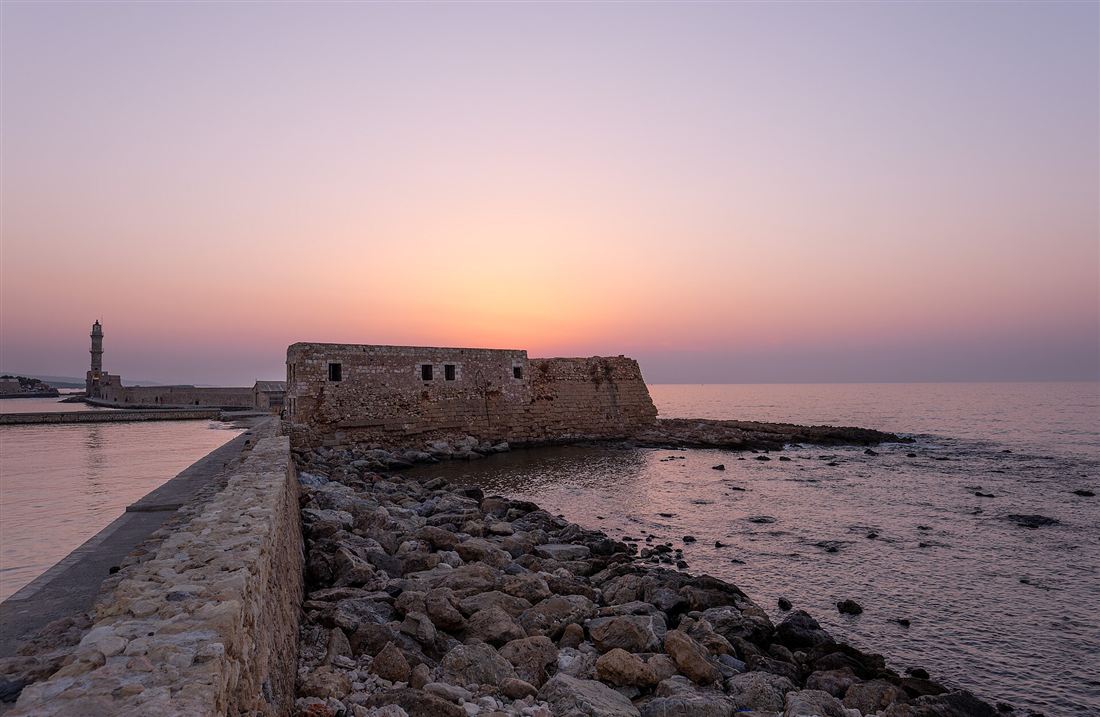
The best time to visit Chania in western Crete is May to June and September to October, when the sea stays warm, the days run hot and dry, the crowds thin from the July-August peak, and the gorges and beaches sit at their finest. Plan the whole trip with Greece Tours.
This guide covers the best time to visit Chania in full: the year-round weather pattern, the season-by-season breakdown, the best month, the windows for the beaches and the Samaria Gorge, the quietest and cheapest times, the family window, the summer heat and the meltemi wind, the sea temperature by month, the off-season town, and the festivals that shape a trip, before you plan the things to do.
When is the best time to visit Chania?
The best time to visit Chania falls in May, June, September and October. These four months pair warm dry days of 24-28\u00b0C with a sea of 21-24\u00b0C, thin crowds and hotel rates well below the July-August peak.
Chania sits on the north-west coast of Crete, and its climate rewards travellers who avoid the two extremes of the calendar. High summer brings fierce heat and packed beaches, while deep winter brings rain and shuttered seafront tavernas. The shoulder windows of late spring and early autumn thread the gap: the Venetian harbour stays lively, the Samaria Gorge stays open, and the beaches of the west coast draw a fraction of the August numbers. The mygreecetours.org guide to Chania maps this rhythm across the town, the mountains and the coast.
May and June deliver the fresh green of a Cretan spring that has not yet burned to gold. Daytime highs climb from 24\u00b0C in May to 28\u00b0C in June, night temperatures hold near 15-18\u00b0C, and rainfall drops to a handful of millimetres. The sea warms from 20\u00b0C to 23\u00b0C across the two months, comfortable for a long swim by early June. September and October reverse the arc: the land bakes dry, but the sea holds the heat of summer at 24\u00b0C and 22\u00b0C, so autumn swimming outlasts the crowds by weeks.
Travellers who prize hot water and long light choose July and August and accept the heat and the queues. Travellers who prize solitude, low prices and green landscapes choose April or November. The centre of the target for balance sits squarely in the four shoulder months, and September stands as the single strongest all-round choice for warm sea, open sites and manageable numbers.
The choice also turns on the traveller’s priorities beyond weather. A walker who plans to trek the Samaria Gorge waits for the May reopening and prefers the cooler air of late spring or early autumn to the furnace of July. A beach traveller set on the west-coast lagoons times the visit for June or September, when the water reaches 23-24\u00b0C and the shuttle boats to Balos run on calm seas. A traveller drawn by Cretan food and village life targets the September harvest, when raki distilling and olive picking fill the tavernas of Apokoronas and Kissamos. Each of these goals points back to the same shoulder-season core.
What is the weather like in Chania through the year?
Chania runs a textbook Mediterranean climate: hot dry summers and mild wet winters. July and August peak near 30-32\u00b0C with near-zero rain, January and February sit at 12-16\u00b0C with the year’s heaviest rainfall, and spring and autumn bridge the two with warm dry stretches.
The summer pattern is stable and predictable. From June to September the sky stays clear for weeks at a stretch, humidity stays moderate on the coast, and rainfall totals fall close to zero millimetres per month in July and August. Daytime highs hold at 29-32\u00b0C, night lows stay warm at 21-23\u00b0C, and the ground bakes to the pale ochre that defines a Cretan summer. The sea climbs to its annual maximum of 25-26\u00b0C in August, warm enough for hours in the water.
The winter pattern inverts the picture. From November to February the Azores high retreats and Atlantic depressions cross the island, so Chania takes the bulk of its yearly rain in this stretch. December and January each record 90-140 millimetres across a scatter of wet days, daytime highs settle at 15-16\u00b0C, and night lows drop to 8-10\u00b0C on the coast. The White Mountains behind the town carry deep snow through winter and into April, a striking backdrop above a sea that never freezes and rarely falls below 16\u00b0C.
Spring and autumn form the transition. April and May see rainfall taper from 30 millimetres to under 15, temperatures rise week on week, and the landscape peaks in green before the summer drought. October and November reverse it: the first rains return, the air cools from 25\u00b0C to 19\u00b0C, and the sea gives up its warmth slowly, holding 22-24\u00b0C into mid-October. Sunshine stays generous year-round, with Chania recording bright skies on the majority of days even in the wet months.
The mountains shape the local variation. The White Mountains rise to 2,450 metres directly behind the town, and their bulk pulls rain from the passing depressions, so the villages of the Sfakia and Apokoronas foothills record heavier winter totals than the coast. Temperatures drop with altitude at roughly 6\u00b0C per 1,000 metres, so a summer day of 31\u00b0C in Chania town reads as a fresh 20\u00b0C on the Omalos plateau at the head of the Samaria Gorge. Travellers who feel the coastal heat retreat to the mountain villages for cool air and shade, and the temperature gap turns a stifling August afternoon at sea level into a comfortable one at height.
Is spring a good time to visit Chania?
Spring is an excellent time to visit Chania. From April to May the gorges run green, wildflowers carpet the hills, daytime temperatures rise from 20\u00b0C to 25\u00b0C, and the sea warms from 18\u00b0C to 21\u00b0C, all before the summer crowds and prices arrive.
April opens the Cretan spring at its most vivid. Rain from the winter feeds the streams that thread the White Mountains, so the Samaria Gorge, Imbros Gorge and Agia Irini Gorge run with clear water and bloom with orchids, anemones and Cretan ebony. The Samaria Gorge reopens to walkers in the first days of May once the snowmelt subsides, and an early-season hike through it delivers cool air, full waterfalls and a fraction of the July foot traffic. Daytime highs of 20-22\u00b0C suit long days on the trail without the summer heat that turns a gorge walk into an ordeal.
May pushes the season forward. Temperatures climb to 24-25\u00b0C, rainfall drops below 15 millimetres for the month, and the beaches of the west coast open for swimming as the sea reaches 20-21\u00b0C. Elafonissi and Balos draw day-trippers, yet the numbers stay far below the August crush, and a morning at either lagoon feels spacious. The mygreecetours.org guide to the Chania beaches sets out which of the west-coast lagoons reward an early-season visit before the peak fills the shuttle boats and the car parks.
Spring also carries the town’s calendar highlights. Orthodox Easter falls between April and early May, and Chania marks it with candlelit processions through the old town, roasted lamb in the villages of Apokoronas and Kissamos, and a warmth of welcome that the peak season dilutes. Hotel rates in April and May run at a fraction of the July-August level, tavernas keep local hours rather than tourist ones, and the Venetian harbour returns to a working rhythm. For walkers, botanists and travellers who prize a green landscape over a hot sea, spring stands among the two finest windows of the year.
Is summer a good time to visit Chania?
Summer suits beach-focused travellers who accept heat and crowds. From June to August Chania hits 29-32\u00b0C by day, the sea peaks at 25-26\u00b0C, and the meltemi wind cools the afternoons, but July and August bring the year’s densest crowds and its highest prices.
June marks the sweet spot within summer. Daytime highs of 28-29\u00b0C stay short of the July furnace, the sea reaches a swimmable 23-24\u00b0C, and the long daylight stretches past 8pm, yet the heaviest crowds hold off until schools break for the holidays. Early June delivers hot beach days at Falasarna and Seitan Limania without the mid-summer squeeze, and the Samaria Gorge stays walkable in the morning cool before the midday heat builds in the ravine.
July and August bring the full weight of the Cretan summer. Temperatures peak at 30-32\u00b0C, night lows hold at 22-23\u00b0C, and rainfall falls to near zero, so the days blur into a run of cloudless heat. The meltemi, a dry north wind, sweeps the Aegean and reaches Crete through these months, gusting hardest in the afternoons. It knocks the edge off the heat and clears the haze, yet it whips up chop on exposed north-facing beaches and unsettles the boat crossings to Balos and Gramvousa. West-coast lagoons on the sheltered side reward wind-wary swimmers on the blowiest days.
The trade-off in high summer is human, not meteorological. Elafonissi, Balos and the old harbour fill to capacity, the shuttle boats and car parks reach their limits by mid-morning, and hotel rates hit their annual ceiling. Restaurant tables in the Venetian harbour demand a wait, and the popular beaches reward an early start over a leisurely one. Travellers set on the warmest possible sea and the fullest festival calendar accept the crowds as the price of peak. Those with flexibility gain more from June’s calmer edge or from the autumn window that follows.
The summer daylight extends the day at both ends. Sunrise breaks before 6.30am in June and July, and sunset holds past 8.30pm, so a full 15 hours of light stretch the beach day and open the cool early mornings for a gorge walk or a west-coast drive before the heat peaks. Beach tavernas, boat trips and the old-town nightlife run at full tempo through the summer, and the festival calendar fills with village panigyria, open-air cinema and music along the harbour. Travellers who want the fullest run of open-air life accept the heat and the numbers as the cost of the season’s energy, and an early start at Elafonissi or Balos buys back the space that the mid-day crowds take.
Is autumn a good time to visit Chania?
Autumn is the finest all-round window in Chania. Through September and October the sea holds the summer’s warmth at 22-24\u00b0C, daytime air settles at 25-28\u00b0C, the August crowds thin out fast, and hotel prices drop from their peak while the beaches and gorges stay fully open.
September is the standout month of the Cretan year for balance. The land keeps the heat of summer, so days run warm and dry at 27-28\u00b0C, but the sea reaches its own annual comfort peak at 24\u00b0C after a full summer of warming. Swimming stays effortless into October, and the west-coast lagoons of Elafonissi and Balos empty of their August throng as the family holidays end. The meltemi eases through September, so the boat crossings to Gramvousa steady and the north-facing beaches calm. Long swims, open tavernas and thinning car parks combine into the year’s best coastal stretch.
October carries the balance forward with a gentler edge. Daytime highs cool to 23-25\u00b0C, the sea holds 22-23\u00b0C into the middle of the month, and the first autumn rains arrive as brief showers rather than sustained downpours. The Samaria Gorge stays open into late October before the winter closure, and a walk through it in the autumn cool avoids both the spring meltwater and the summer heat. Grape and olive harvests fill the villages of Apokoronas and Kissamos, and the tavernas serve the new season’s produce to a fraction of the summer crowd.
Autumn also rewards the budget. Hotel rates fall steeply from the August ceiling through September and October, flights ease, and the beaches, sites and restaurants operate on full summer hours until the season winds down at the end of October. For a traveller who wants a warm sea, a full run of open attractions, room to move and a lower bill, the September-October window outperforms every other stretch of the calendar.
Is winter a good time to visit Chania?
Winter suits travellers who prize quiet, low prices and dramatic scenery over swimming. From November to March Chania stays mild at 12-16\u00b0C by day, takes the year’s heaviest rain, empties of tourists, and frames its Venetian harbour against snow-capped mountains.
Chania’s winter is mild by northern-European measures and wet by Mediterranean ones. Daytime highs hold at 15-16\u00b0C in December and January, night lows settle at 8-10\u00b0C on the coast, and frost stays away from sea level. The rain arrives in bursts: December and January each collect 90-140 millimetres across scattered wet days, separated by bright spells of clear winter sun. Snow blankets the White Mountains from November through April, and the sight of deep snow above a mild green coastline defines the Cretan winter. The sea cools to 16-18\u00b0C, too cold for a long swim, yet the harbour, the beaches and the mountain villages stay open to walkers.
The winter town belongs to its residents. The Venetian harbour trades its summer bustle for a working calm, the old-town tavernas serve Cretan winter cooking to locals rather than crowds, and the museums, the market and the backstreets reward a slow visit with no queues. Hotel rates fall to their annual floor, flights run at off-peak prices, and a room with a harbour view costs a fraction of its August rate. Orange and lemon groves fruit through the cold months, and the villages of Apokoronas keep their tavernas and their raki flowing through the quiet weeks.
Winter closes the beach season and the Samaria Gorge, which shuts from late October until May, so a winter trip trades swimming and gorge-walking for town life, mountain views, low-season prices and the company of Cretans rather than tourists. Travellers who prize a lively empty harbour, dramatic snow-and-sea scenery and the lowest bill of the year find their window here. Those set on swimming look to the shoulder months instead.
Winter light rewards photographers and walkers. The low winter sun rakes the Venetian harbour and the lighthouse in gold through the short afternoons, the air clears to sharp visibility after each front passes, and the snow line on the White Mountains drops close to the villages. Coastal walks along the empty beaches of Kissamos and the trails of the Akrotiri peninsula stay open and mild through the cold months, and the citrus groves and olive terraces keep the countryside green rather than the parched gold of summer. A December visit trades the sea for the mountains, the crowds for the calm, and the peak bill for the year’s lowest, a clear exchange for the traveller who wants Crete without the summer.
What is the best month to visit Chania?
September ranks as the single best month to visit Chania. It pairs the warmest sea of the year at 24\u00b0C with dry 27-28\u00b0C days, thinning crowds and falling prices. May, June and October follow close behind, and July-August rank lowest for value despite the hottest water.
The month-by-month ranking runs on the balance of sea warmth, air temperature, crowd density and price. September tops it: a sea of 24\u00b0C after a full summer of heating, dry days of 27-28\u00b0C, the August throng gone, and hotel rates in retreat. The gorges and beaches stay fully open, the meltemi eases, and the autumn harvest fills the village tavernas. No other month combines a warm sea with light crowds and falling prices as cleanly.
May, June and October form the second tier, each strong for a distinct traveller. May delivers the greenest landscape, the reopened Samaria Gorge and rock-bottom shoulder prices, with a sea warming through 20-21\u00b0C. June brings hot beach days at 28-29\u00b0C and a 23-24\u00b0C sea before the peak crowds land, the strongest early-summer window. October holds a 22-23\u00b0C sea and 24\u00b0C days into mid-month with the year’s emptiest beaches, ideal for a quiet late swim. April and November sit a rung below, prized for solitude and price but constrained by a cooler sea and the first or last rains.
July and August rank lowest on value despite topping the sea-temperature table at 25-26\u00b0C. Peak heat of 30-32\u00b0C, the densest crowds of the year at Elafonissi and Balos, the highest hotel rates and the strongest meltemi combine to weigh down the experience for everyone but the committed beach traveller. December through February close the ranking for warmth and swimming, yet lead it for quiet and price. The verdict holds firm across the calendar: September for the best all-round month, the surrounding shoulder months for the runners-up, and the deep summer and deep winter for travellers with a single fixed priority.
When is the best time to visit Chania for the beaches?
July, August and September deliver the warmest sea and the surest beach days. The water climbs to 25C by August, air temperatures hold at 29C to 31C, and rain stays absent, so the swimming window runs unbroken from late June to early October.
Chania owns the two most photographed beaches in Crete, and both reward the high-summer traveller with calm, warm water. Elafonisi, on the south-west tip, spreads pink-tinted sand across a shallow lagoon that warms to 26C in August, so wading families reach the sandbar islet in knee-deep water. Balos, on the north-west Gramvousa peninsula, mixes turquoise shallows with a white-sand spit; the boat from Kissamos runs a full daily schedule from June to October, and the lagoon holds bath-warm water through that stretch.
North-coast beaches near the town \u2014 Agioi Apostoloi, Nea Chora and Stavros \u2014 face the Sea of Crete and warm faster than the exposed south. The meltemi, the dry north wind of July and August, kicks up chop on north-facing sand in the afternoon, so morning swims stay glassy and the wind drops after sunset. South-coast beaches at Sougia, Paleochora and Frangokastello sit in the lee of the White Mountains, escape the meltemi, and stay swimmable into late October when the north cools.
Timing within the day matters as much as timing within the season. The high-summer sun burns fast between 11:00 and 16:00, so the beach-focused traveller claims a sunbed by 09:00, swims through the calm morning, and retreats to shade at midday. The lagoon beaches reward the earliest arrivals with empty sand and mirror-flat water, because the Balos and Elafonisi boats land their first crowds by late morning. Plan the beach half of a trip through the things to do in Chania guide to pair each coast with the right week.
When is the best time to visit Chania for hiking the Samaria Gorge?
May, June, September and October give the finest gorge hiking. The Samaria Gorge opens from the start of May to the end of October, and the shoulder months hold air temperatures near 22C to 26C, cool enough for the 16-kilometre descent without the July furnace.
The Samaria Gorge runs 16 kilometres from the Omalos plateau at 1,250 metres down to the coast at Agia Roumeli, and the walk takes five to seven hours. In July and August the lower gorge bakes at 32C, and the exposed final stretch past the Iron Gates turns punishing, so the cooler shoulder weeks reward walkers with firmer legs and clearer heads. May brings running water at every spring station and wildflowers across the Omalos plateau; October brings thinner crowds and low-angled light through the pines.
The gorge stays shut from November to late April when snowmelt and rockfall make the riverbed lethal, so the season is fixed and non-negotiable. Guided transfers leave Chania town at 06:00 to reach the top gate by 07:30, and the last ferry out of Agia Roumeli sails at 17:30, which sets a hard turnaround for every hiker. Carry two litres of water even in the shoulder months, because the springs thin as summer advances. The full route detail, transfer times and fitness notes sit in the Samaria Gorge guide.
When is the best time to visit Chania to avoid the crowds?
May, early June, late September and October empty the old town without emptying the tavernas. Air temperatures hold at 22C to 27C, the sea stays swimmable at 20C to 23C, and the Venetian harbour walkways clear of the August press.
Peak visitor numbers land in the second half of July and the whole of August, when cruise arrivals and charter flights push the harbour promenade shoulder-to-shoulder after 18:00. The shoulder months strip that density away. In May and October the narrow lanes of the Splantzia and Topanas quarters open up, tables at the waterfront fish tavernas free up without a booking, and the queue for the Balos boat shrinks to a short wait.
Late September marks the sharpest drop. The school-holiday families depart in the first week, charter capacity falls, yet the sea still holds August warmth at 24C and the sun still delivers eight beach hours. October pushes the quiet further: the archaeological museum, the Maritime Museum and the covered market keep full hours, hotel rates fall by a third, and the crowds that filled Elafonisi thin to a scattering. Anyone chasing photographs of the lighthouse without a hundred strangers in frame books the last week of September or the first fortnight of October.
When is the cheapest time to visit Chania?
November to March delivers the lowest prices, with the shoulder weeks of May and October close behind. Winter flights from northern Europe drop to a third of August fares, and old-town guesthouses cut room rates by half against the July peak.
Airfare drives the biggest saving. A August round-trip from London into Chania airport runs at a premium; the identical route in February falls to a fraction of that, and even the shoulder weeks of May and late September undercut peak by 40 percent. Package charters vanish in winter, so independent scheduled flights via Athens set the winter price, and those stay low across December, January and February outside the Christmas fortnight.
Accommodation follows the same curve. A harbour-view room that commands a peak nightly rate in August drops by 50 percent in the shoulder months and by more in deep winter, when a slice of old-town guesthouses close and the ones that stay open compete on price. Car hire, the single most useful spend in Chania, falls hardest of all: a small hatchback that costs a premium in August rents for a quarter of that in January.
The single cheapest week outside deep winter is the second half of May and the second half of October, the moments the season turns. In those weeks flights and rooms sit at shoulder prices while the sea still swims at 20C to 22C and the gorge stays open, so the value traveller banks the winter discount without losing the summer activities. Booking flights three months ahead locks the low fare, because charter capacity thins first and the last seats price up sharply as the shoulder tips toward peak. Dining prices hold steady year-round, because the tavernas price for locals in winter, so the off-season traveller eats the same grilled fish for the same euros as the August visitor.
When is the best time to visit Chania for families?
Late June and September suit families best. Both months hold warm 24C to 26C seas, gentle heat near 28C, and the shoulder either side of the school-holiday peak, so parents dodge the August crush while children still swim every day.
The trade-off families weigh is the school calendar against the crowd and the heat. August guarantees the term break but hands parents the hottest fortnight, the fullest beaches and the highest prices. Late June solves two of those three: the sea has warmed to 24C, the meltemi stays light, and the Elafonisi lagoon runs shallow and warm for small children, all before the August peak arrives. Families tied to the summer break pick the first week of July over the middle of August for the same reason.
September rewards families whose children start term late or who travel before school resumes. The water holds its summer warmth, the daytime heat eases to 28C, and the shallow north-coast beaches at Agioi Apostoloi and Marathi stay calm and lifeguarded. Buggies roll the flat harbour promenade with ease, the old-town lanes quieten after the August exodus, and the boat trips to Balos run half-empty. Base a family stay near Nea Chora or Agioi Apostoloi for sand within a short walk, and browse the Chania hub for the child-friendly beaches and short excursions that fill a family week.
When is the hottest time in Chania and how do you cope?
July and August form the hottest stretch, with daytime highs of 29C to 31C and inland spikes past 35C. The meltemi, a dry north wind, tempers the coast, and shade, an early start and a midday break carry visitors through it.
The heat concentrates in the last fortnight of July and the first fortnight of August, when the sun delivers thirteen daylight hours and the mercury holds above 29C from mid-morning to early evening. Inland at the foot of the White Mountains and down the exposed south coast, still air pushes readings past 35C. Humidity stays low on the coast, which makes the heat drier and flatter than a tropical summer, yet the midday sun burns fast for anyone unshaded.
The meltemi is the built-in relief. This dry north wind blows across the Aegean through July and August, cooling the north-facing beaches and the harbour town by four to five degrees in the afternoon, though it whips up chop and interrupts the small ferries to Balos on its strongest days. Cope by front-loading the day: hike, sightsee and swim before 11:00, retreat to shade or a shuttered room from 13:00 to 17:00 in the local rhythm, and return to the beach and the tavernas in the cool of the evening. Drink two litres of water across the day, wear a brimmed hat through the exposed Samaria descent, and pick south-coast Sougia or Frangokastello when the meltemi shuts the north.
What is the sea temperature in Chania by season?
The sea swings from 16C in winter to 25C at the August peak. Comfortable swimming runs from late May, when the water reaches 20C, to late October, when it holds 22C, giving Chania a five-month bathing window.
Winter marks the floor. From January to March the Sea of Crete cools to 16C, cold for a full swim yet warmer than most northern coasts, and hardy locals still take a morning dip off Nea Chora. April lifts the water to 18C as the sun strengthens, and May crosses the 20C threshold that most visitors treat as the start of the season. By the end of May the north-coast shallows warm faster than the open sea and reach 21C.
Summer holds the peak. June brings 23C, July 24C, and August tops the curve at 25C, with sheltered lagoons at Elafonisi and Balos running a degree or two warmer in the shallows. The autumn tail is the season’s gift: September stays at 24C as the air cools, and October eases back only to 22C, so the water outlasts the crowds by a month. The south coast at Paleochora and Frangokastello holds its warmth latest of all, sheltered from the north wind, and stretches swimmable water into the first week of November.
The lag between sun and sea explains the calendar’s shape. The water heats slowly through spring and cools slowly through autumn, so the sea trails the air by a month at each turn. This lag hands the shoulder traveller the paradox that makes late September the sharpest week of all: the air has already dropped to a comfortable 27C while the sea still holds its August warmth. The same lag punishes the early-May visitor, whose warm 24C afternoon meets a 20C sea that stings on the first plunge. Reading the water rather than the air fixes the beach timing, and the number to chase is the 22C mark that turns a bracing dip into a lingering swim.
Is Chania worth visiting in the off-season?
Chania rewards the off-season traveller. The winter town keeps a mild 15C to 17C daytime climate, the harbour tavernas stay open for locals, and the Venetian old town empties of crowds, so November to March delivers the place at its most authentic.
Crete winters far milder than mainland Greece. Daytime temperatures hold at 15C to 17C through December and January, frost stays rare on the coast, and bright still days outnumber the wet ones, so the off-season visitor walks the harbour, the covered market and the old Venetian and Ottoman quarters in a light jacket. Snow crowns the White Mountains behind the town, which sets a striking backdrop against the palm-lined waterfront, yet the sea-level town escapes it entirely.
The town lives year-round, which separates Chania from the resort islands that shutter in winter. The covered market, the leather lane of Skridlof, the archaeological museum and a core of harbour fish tavernas keep full hours because the locals sustain them. The trade-off is honest: the Samaria Gorge shuts, the Balos and Elafonisi boats stop, and the beach life pauses, so the off-season trip trades swimming and gorge-walking for empty lanes, low prices, mountain drives and long unhurried lunches. A traveller who wants the Cretan town rather than the summer resort finds November to March the truest season of all.
What festivals and events shape the best time to visit Chania?
Orthodox Easter in spring, the summer cultural season from June to September, and the autumn harvest anchor the calendar. Easter fills the churches and squares, the summer festivals light the Venetian harbour, and the September grape and olive harvest opens the villages.
Orthodox Easter is the emotional peak of the Cretan year, falling in April or early May. Good Friday processions wind by candlelight through the old town, Holy Saturday midnight brings fireworks over the harbour, and Easter Sunday turns every village courtyard into a spit-roast feast of lamb. A traveller who times a spring visit to Easter week trades a quiet shoulder trip for the island at its most communal, though tavernas book out and transport tightens across the holiday.
Summer stacks the cultural calendar. From June to September the town stages open-air concerts, theatre and dance in the Venetian harbour and the fortress, the sardine festival lights up Nea Chora, and the outdoor cinema runs under the stars. The season closes with the harvest: September brings the grape pressing and the raki-distilling that runs into November across the mountain villages, and October opens the olive harvest that defines the region. Timing a late-September or October trip to the harvest earns an invitation to the working villages that the summer beach crowd never reaches, and rounds out the reasons the shoulder months hold the deepest rewards.
What is the ideal time to visit Chania overall?
Late May to mid-June and September to mid-October form the ideal windows. Both pair warm 22C to 24C seas with gentle 26C to 28C heat, thin crowds and lower prices, delivering the beaches, the gorge and the old town without the August extremes.
The verdict weighs four things at once: sea warmth, air comfort, crowd density and price. The two shoulder brackets win on all four. Late May and early June hand the traveller a sea past 22C, wildflowers on the Omalos plateau, the Samaria Gorge open with running springs, and an old town yet to fill. September and early October answer with August-warm water at 24C, the harvest opening in the villages, and the crowds gone home, all at rates a third below the peak.
The peak of July and August stays the right pick for one profile only: the family locked to the school break who wants the hottest sea and the fullest festival calendar and accepts the crowds and the prices that come with it. Everyone else \u2014 the beach-seeker chasing empty sand, the walker facing the 16-kilometre gorge, the couple after a quiet harbour dinner, the traveller counting euros \u2014 finds the shoulder months the sharper choice. The single standout fortnight is the last week of September into the first week of October: warm sea, empty lanes, harvest tables and half-price rooms, the whole of Chania at its very finest and its calmest.
Frequently Asked Questions
What is the best time to visit Chania?
May to June and September to October are the best time to visit Chania, pairing warm seas and hot dry days with thinner crowds and lower prices than the July-August peak. These shoulder months suit beaches, gorges and the old town alike.
What is the hottest month in Chania?
July and August are the hottest months in Chania, with daytime highs around 30 degrees Celsius, the warmest sea near 25 degrees, and the strong meltemi wind that tempers the north-coast heat. These are also the busiest and priciest weeks.
Is Chania worth visiting in winter?
Chania rewards a winter visit with mild days, a quiet old town, open tavernas and low prices, set against snow on the White Mountains. Rain falls between November and February, and the beach season pauses until spring.