
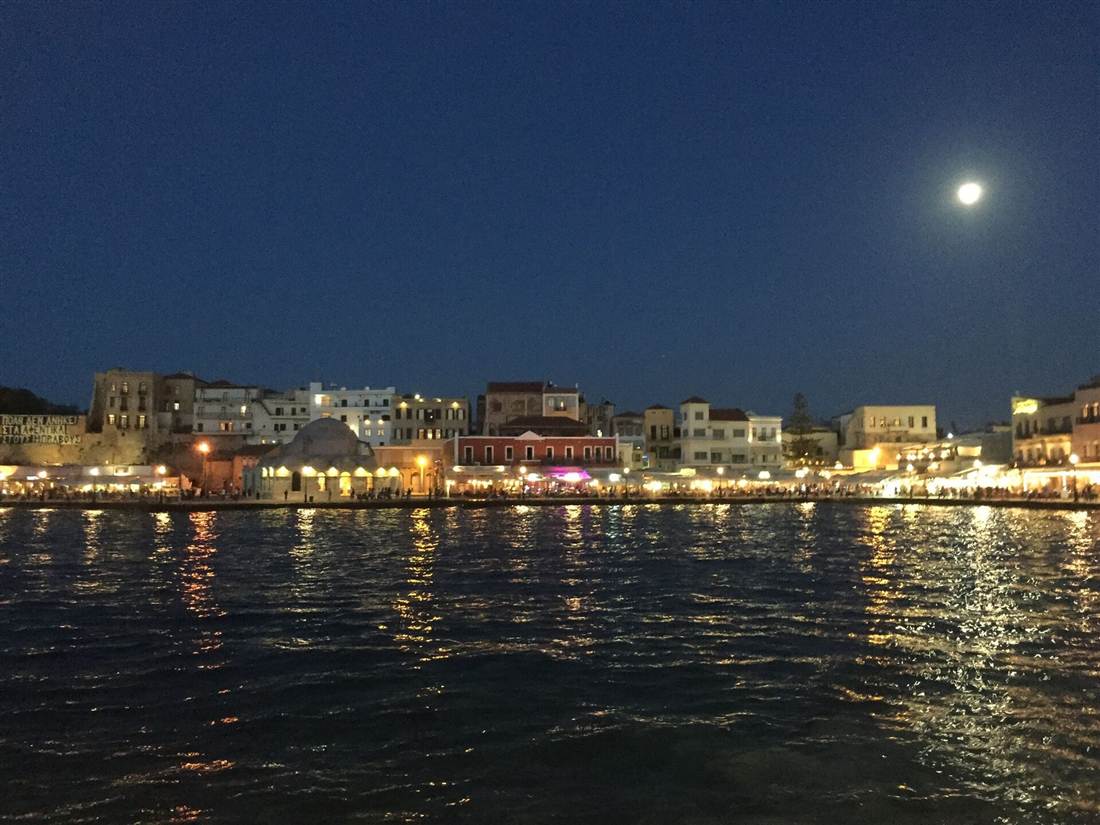
Chania nightlife runs from the cocktail bars and roof terraces of the Venetian harbour in Chania to the plane-shaded squares and rakadika of Splantzia and the summer beach clubs of the Platanias strip west of town, an evening scene that favours atmosphere over volume. Plan the whole trip with Greece Tours.
This guide covers Chania nightlife in full: the harbour-front bars and the roof terraces, the Splantzia squares and wine bars, the cocktail and sunset spots, the clubs and beach bars of Platanias and Agia Marina, the Cretan lyra live music, the quiet raki and wine culture, the family early evening, the late Greek hours, and how the scene shifts by season, from a base in the old town or a town hotel.
What is the nightlife like in Chania?
Chania nightlife is relaxed and harbour-led. The Venetian port fills with cocktail bars and roof terraces, the Splantzia squares hold the raki bars and wine spots, and summer beach clubs run west of town along the Platanias and Agia Marina strip.
The old town sets the tone. Drinkers spill along the curved Venetian quay under the lighthouse, ordering wine and long drinks at tables that face the water. The pace stays gentle through the early evening, then lifts after midnight as the harbour bars turn up the volume and the crowd moves between terraces. This is a scene built on strolling, sitting long, and drinking slowly rather than rushing between rooms.
Away from the tourist quay, the mood shifts by quarter. Splantzia, the old Ottoman and Byzantine district east of the port, keeps the local crowd with its plane-shaded squares, its raki bars and its small wine rooms. West of the city, the resort belt of Agia Marina, Platanias and Kato Stalos carries the dance floors, the beach clubs and the loudest late hours. A first-time visitor plans a night by area: harbour for the view, Splantzia for the locals, the western strip for the clubs. The Chania hub maps how these districts sit against each other.
Where do you go out in the Chania old town?
The Chania old town centres on the Venetian harbour front. Cocktail bars, wine terraces and roof-top lounges line the quay from the Firka fortress to the mosque, with narrow lanes behind holding smaller bars, and the lighthouse pier drawing the sunset crowd.
The harbour arc is the headline. Ground-floor bars occupy the old stone warehouses right on the water, and their tables run to the harbour edge, so a drink comes with a full view of the port, the lighthouse and the reflected lights. Above them, roof terraces sit on top of the same buildings and boutique hotels, and these upper decks command the best angle on the sunset and the illuminated fortress across the water. Prices on the front sit at the top of the town’s range, which the view pays for.
Behind the quay, the tangle of Venetian lanes hides a quieter layer. Topanas, the old Christian quarter to the west of the port, threads bougainvillea-draped alleys past small cocktail bars, courtyard wine spots and intimate rooms set into restored mansions. The Zambeliou and Theotokopoulou lanes carry much of this trade. A night here means starting on a roof terrace for the sunset, dropping to the water for the middle hours, then finishing in a hidden lane bar where the tables number a handful and the music stays low. The Chania old town guide walks these quarters in detail.
What is the Splantzia quarter like at night?
Splantzia is the local night quarter east of the harbour. Its plane-shaded squares fill with raki bars, or rakadika, and small wine rooms. The crowd skews Cretan and student, the prices drop below the quay, and the mood stays convivial rather than showy.
The heart of it is Plateia 1821, the square named for the year of the revolution, where a giant plane tree spreads shade over tables that belong to the surrounding rakadika. People arrive early for meze and tsikoudia, the Cretan grape spirit, and stay through the night as one round of little plates follows another. The eating and the drinking blur together here in the Cretan way, so a night in Splantzia is as much a long grazing dinner as a bar crawl. Conversation carries across the square and strangers end up sharing tables.
The lanes off the square add wine bars and music spots. Small rooms pour Cretan labels from the Kissamos and Kydonia vineyards by the glass, and a lyra or a laouto starts up in the corner as the tables fill. Because the quarter sits a short walk from the harbour crush yet feels a world quieter, it draws residents who want the old town without the tourist quay. A visitor who wants the real texture of Chania nights starts in Splantzia, orders raki and meze, and lets the evening find its own length.
Where are the cocktail bars and rooftop bars in Chania?
The cocktail and rooftop bars cluster on the Venetian harbour front and the Topanas lanes behind it. Roof terraces top the quayside warehouses and boutique hotels, delivering sunset views over the port, the lighthouse and the fortress, with skilled mixed drinks below on the water.
Chania takes its cocktails seriously. Bars on the front and in the Topanas alleys build drinks around Cretan spirits and botanicals, folding in local raki, thyme honey, herbs from the White Mountains and citrus from the plain, so a signature list reads of the island rather than of any generic bar menu. Bartenders here treat the craft as a point of pride, and the standard climbs each year as the town’s reputation as a destination for a good drink grows.
The rooftops are the prize seats. Perched above the harbour, the terraces catch the light as the sun drops behind the lighthouse and the sea turns copper, then hold the view as the port lamps come on and the illuminated Venetian walls glow across the water. Arriving an hour before sunset secures a rail-side table, because the best terraces fill fast on a clear evening. For a slower drink, the courtyard bars set into old mansions in Topanas trade the panorama for candle-lit stone and quiet, which suits a nightcap after the harbour crowds thin.
Where do you find clubs and late-night dancing in Chania?
Late-night dancing runs west of the city along the resort strip. Agia Marina, Platanias and Kato Stalos hold the beach clubs and dance bars, while a knot of louder late venues sits behind the eastern end of the old harbour for those staying in town.
Platanias is the dance capital of the region. A stretch of the coast road there packs bars and clubs that open their doors late and run until first light through the summer, playing mainstream dance, Greek pop and house to a young holiday crowd. Beach clubs along this belt work the daylight too, turning from sunbed-and-cocktail lounges in the afternoon into full dance floors after dark, with pool decks, DJ sets and party nights that headline the western resort scene. A taxi covers the ten kilometres from the old town, and the ride back runs through the small hours.
In the old town itself, the dancing concentrates at the eastern end of the harbour, near the Venetian arsenals and the mosque, where a cluster of bars pumps louder music and keeps the floor moving past the point when the quayside terraces quieten. These town venues suit anyone who wants to dance without leaving the walls, though the scale stays smaller than the western clubs. The pattern for a big night is clear: warm up on the harbour, then decide between the town cluster for convenience and the Platanias strip for the true club floor.
Where is there live music in Chania?
Live music lives in the Splantzia rakadika, the harbour tavernas and summer open-air stages. Cretan lyra and laouto players lead the nights in the old town, playing the island’s folk repertoire, while the resort bars book cover acts and DJs through the season.
The signature sound is Cretan. The lyra, a three-string bowed instrument held upright on the knee, drives the island’s music, backed by the lute-like laouto, and a night of it turns a taverna or a rakadika table into a folk session. Musicians strike up in the small wine rooms and meze bars of Splantzia and in the old-harbour tavernas, and the mantinades, the rhyming couplets sung between tunes, pull the room in. These sessions run long and grow as tsikoudia flows, and by the late hours the dancing forms in circles across the floor.
Summer widens the range. Open-air stages and courtyard venues host concerts through the warm months, from Cretan folk ensembles to Greek singer-songwriters and jazz nights, and the town’s cultural calendar puts music into squares and historic courtyards across the season. In the resorts west of town, bars run live cover acts, tribute nights and DJ sets aimed at the holiday crowd. A visitor after the authentic island sound heads for the rakadika; one after a summer concert checks the courtyard and open-air listings.
Is Chania good for a quiet drink and wine?
Chania rewards a quiet drink. Small wine bars pour Cretan labels by the glass in the old-town lanes and Splantzia, while the raki ritual of tsikoudia with meze anchors slow evenings. Courtyard bars set in restored mansions trade noise for candle-lit stone.
Crete grows its own wine, and Chania’s wine bars showcase it. Indigenous grapes such as Vidiano, Vilana, Romeiko and the red Kotsifali fill the glass lists, and the region around Kissamos and the Kydonia plain supplies the cellars, so a tasting flight here reads entirely of the island. The wine rooms cluster in the Topanas lanes and around Splantzia, where a small candle-lit space, a Cretan cheese and cured-meat board, and a knowledgeable pour make a full evening without a dance floor in sight.
The deeper ritual is raki. Tsikoudia, the clear Cretan grape spirit distilled after the harvest, closes meals and opens evenings across the island, poured freely and drunk with meze rather than shot alone. A rakadika night is the local template for a slow drink: little plates keep arriving, the raki keeps flowing, and the hours pass without anyone counting them. For a nightcap with no crowd at all, the mansion courtyard bars of the old town hold a handful of tables under vines, which suits a couple after a still, unhurried end to the night.
What is nightlife in Chania like for families and early evenings?
Early evenings in Chania belong to families. The volta, the traditional evening stroll, fills the harbour front and the market lanes, with ice-cream parlours, waterfront cafes and gentle bars welcoming children until late, so the first hours of the night suit every age.
The volta is the ritual that opens the Chania evening. As the heat drops, families walk the full curve of the Venetian harbour, past the lighthouse pier, the mosque and the old arsenals, greeting neighbours and stopping for a treat. Ice-cream parlours and gelato counters do their best trade at this hour, and the cafes that ring the port serve frapp\u00e9, juice and soft drinks alongside the first cocktails. Children run along the quay while parents sit, and the whole town takes the air together before the later, adult hours begin.
The pace makes the early evening genuinely family-friendly. Harbour-front tavernas seat families for a long dinner as the light goes, the pedestrianised old-town lanes stay free of traffic, and street performers and the passing crowd keep younger visitors entertained without a fixed bedtime. Because Greek nights start late, families dine at an hour when other countries are finishing, then stroll home as the bar crowd arrives. Choosing a base near the port keeps all of this on the doorstep, and the where to stay in Chania guide sets out the districts for it.
When does nightlife in Chania get going and how late does it run?
Chania nightlife starts late and runs long. Dinner fills the tavernas from nine, the harbour bars build from eleven, and the floor peaks after one. Town bars close around three, while the Platanias clubs and summer beach parties push through to sunrise.
The Greek clock governs everything. Locals eat late, so the tavernas hit their stride at ten as the heat of a summer day finally lifts, and the bar hours slide back to match. A visitor who arrives at a harbour terrace at nine finds it calm and the tables free; the same terrace at midnight is full and loud. Planning the night around this rhythm matters: an early dinner leaves hours to fill before the bars wake, so the pattern is a long meal, a slow first drink, then the busy hours from midnight on.
Closing times split by area. The old-town bars wind down between two and three as the quay empties and the lane bars call last orders. The western resort strip runs later, with the Platanias and Agia Marina clubs and beach parties carrying the floor until dawn through the peak of summer. Public transport stops before the late hours, so a night out west means a booked taxi both ways. In town, the walkable old quarter keeps the whole night within a short stroll of a harbour-side bed.
How does Chania nightlife change by season?
Chania nightlife peaks in high summer and slims to a local core in winter. The western beach clubs, open-air stages and resort dance floors run only through the warm months, while the old-town harbour bars, Splantzia rakadika and wine rooms stay open the year round.
Summer is the loud season. From late spring the beach clubs of Agia Marina, Platanias and Kato Stalos open their decks, the courtyard concerts and open-air music stages fill the calendar, and the harbour terraces run at capacity every warm night as the town’s population swells with visitors. This is the window for the full sweep of the scene: sunrise beach parties, big DJ nights and packed roof terraces all belong to the high-summer weeks, and the western resort strip lives almost entirely for this stretch.
Outside the season the town returns to its residents, and the character deepens. The beach clubs shutter, the resort strip empties, and the nightlife folds back into the old town, where the harbour cocktail bars, the Splantzia raki bars and the wine rooms trade steadily on a local crowd through autumn and winter. A cold-weather night in Chania means a warm rakadika, a lyra session, a glass of Cretan red and a quiet harbour rather than a dance floor. The year-round core is the town’s real backbone, and the summer spectacle is the layer that builds on top of it.
What do you drink on a night out in Chania?
The signature drinks are Cretan. Tsikoudia, the clear grape spirit called raki, leads every table, poured with meze. Cretan wine from Vidiano and Vilana whites and Kotsifali reds fills the wine bars, and harbour bartenders build cocktails on local raki, thyme honey and mountain herbs.
Tsikoudia is the drink that defines a Chania evening. Distilled from the grape pressings after the autumn harvest, it arrives cold and clear in a small carafe, drunk in unhurried sips with cheese, olives and rusks rather than downed as a shot. Hosts pour it as a gesture of welcome, and refusing the second round marks a visitor as a stranger. A raki table is the local unit of a night out, and the meze that ride alongside turn the drinking into a meal that stretches for hours.
The wine and cocktail lists deepen from there. Cretan vineyards supply the glass pours, so a wine bar flight moves through island grapes a visitor rarely meets elsewhere, from crisp Vilana and aromatic Vidiano to structured Kotsifali reds. On the harbour, the cocktail bars fold the same terroir into their glasses, mixing raki with citrus, honey and herbs off the White Mountains, and pouring cold local lager and the anise spirit ouzo for those after something simpler. Ordering the island’s own drinks turns a night into a taste of the place rather than a round of imports.
Which Chania district suits your night out best?
Match the district to the night. The Venetian harbour delivers views and cocktails, Splantzia the local raki-and-music scene, Topanas the quiet mansion-lane bars, and the western Platanias strip the beach clubs and late dancing. Basing near the port keeps most of it walkable.
A night planned by area runs smoothly. Couples after a sunset drink and a slow cocktail head straight for the harbour terraces and the Topanas lanes, where the tables are small and the setting does the work. Groups after the true Cretan evening of raki, meze and lyra point themselves at Splantzia and settle in for the long haul. Anyone chasing a dance floor books a taxi to Platanias and the western resorts, where the clubs and beach parties carry the small hours. The town rewards a plan that pairs the mood to the map.
Where a visitor sleeps shapes all of it. A bed inside the old town puts the harbour bars, the Splantzia squares and the Topanas lanes within a short, safe walk, so a night needs no transport and no timetable. A base out in the western resorts sits on the doorstep of the beach clubs but a taxi ride from the historic quarter. The pedestrianised old town stays busy and well-lit through the night, which keeps the walk home easy. Weighing these trade-offs before booking sets up the kind of nights a visitor came for.
Frequently Asked Questions
What is the nightlife like in Chania?
Chania nightlife is relaxed and atmospheric, built around the Venetian-harbour cocktail bars and roof terraces, the rakadika and wine bars of the Splantzia squares, and Cretan lyra music. The louder clubbing sits on the Platanias beach strip west of town.
Where is the best nightlife in Chania?
The old-town harbour front holds the best of Chania nightlife for a stylish drink with a view, Splantzia for a local crowd and raki, and the Platanias and Agia Marina strip for beach clubs and late-night dancing through the summer.
How late does nightlife run in Chania?
Chania nightlife follows late Greek hours, with dinner from nine, bars filling toward midnight and the harbour terraces running into the small hours. The Platanias beach clubs push on until dawn at the height of summer.