
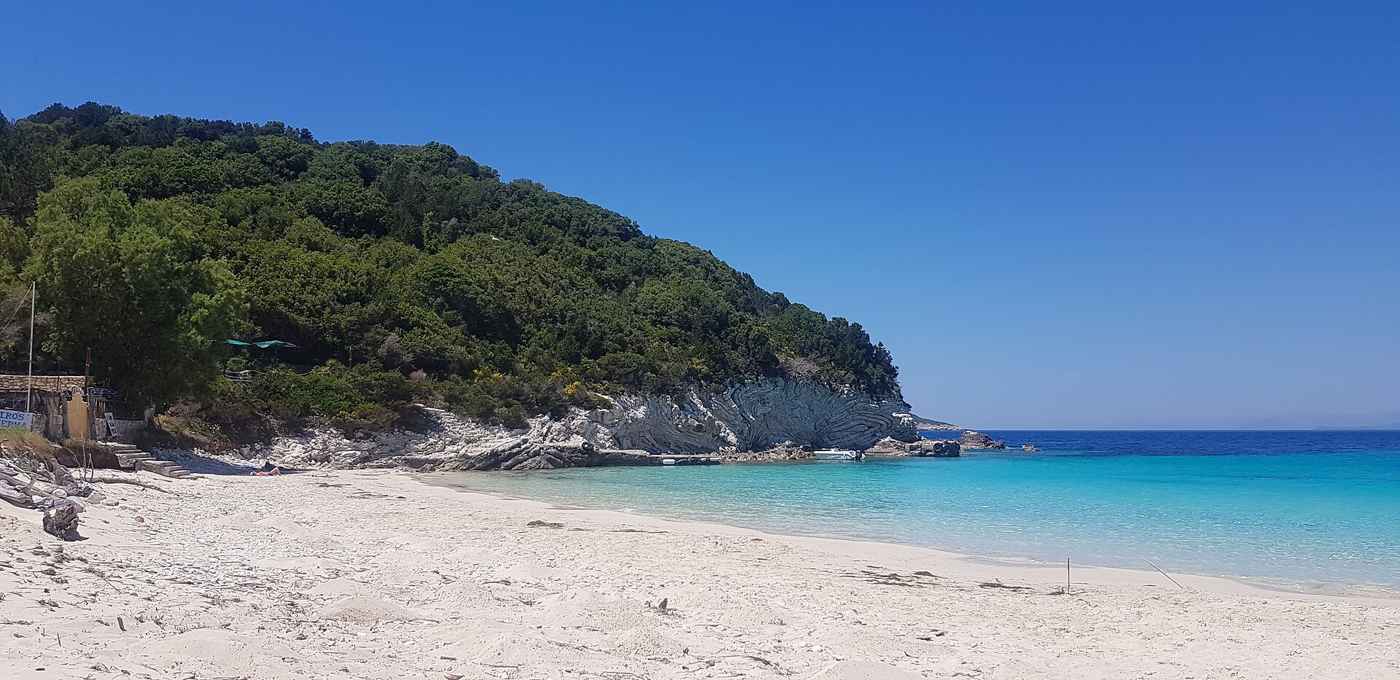
Antipaxos is a tiny island in the Ionian Sea. Lying just three kilometres south of Paxos and famous above all for two of the most beautiful beaches in Greece, Vrika and Voutoumi. Barely five square kilometres in size and home to only a handful of permanent residents, it has no hotels. No roads to speak of and no villages. Each summer it draws a steady stream of visitors who come by boat to swim in its shallow, brilliantly clear turquoise water. Covered in vineyards that produce a well-known local wine. Fringed by white-sand coves on its sheltered east coast and dramatic cliffs on its wild west side.
Antipaxos is the classic day-trip destination from Paxos and a highlight of every cruise from Corfu. The comparison people most often reach for is with the Caribbean. The water at its beaches really does have that impossible clarity and colour. Shading from the palest turquoise in the shallows to deep sapphire further out. For all its fame, the island stays wonderfully unspoilt, with no development beyond a few seasonal beach tavernas. That a visit feels like stepping into a small. Sunlit paradise that has barely changed with the years.
This guide covers Antipaxos in full: where it is, how to get there from Paxos and Corfu, its celebrated beaches of Vrika, Voutoumi and Mesovrika, what the island is known for. Its dramatic west-coast cliffs and sea caves, its vineyards and wine, its tavernas and facilities, where to stay, the best time to visit. Why this tiny Ionian gem is worth the short crossing. Whether you are planning a half-day swim across from Paxos or a full-day cruise down from Corfu. Everything you make the most of the island is set out below.
Where is Antipaxos?
Antipaxos is a small island in the Ionian Sea, about three kilometres south of Paxos and roughly twelve kilometres south of Corfu.
Antipaxos lies at the southern end of the little archipelago it shares with Paxos and Antipaxos, in the Ionian Sea off the northwest coast of the Greek mainland. It sits just three kilometres south of the main island of Paxos. Across a short and usually calm stretch of water. About twelve kilometres south of the larger, better-known island of Corfu.
The island is tiny, covering only around five square kilometres, and is administratively part of the municipality of Paxos. Its east coast, facing Paxos, is gentle and sheltered, holding the famous sandy beaches, while its west coast is exposed to the open sea and lined with steep cliffs and caves. This small size and simple geography are part of what makes Antipaxos so easy to visit and so unspoilt.
Antipaxos is reached only by small boats and water taxis, mostly from the harbour of Gaios on Paxos. This isolation has kept the island quiet and undeveloped. That even at the height of summer it retains the feel of a hidden, natural retreat rather than a busy resort.
How do you get to Antipaxos?
You reach Antipaxos by boat, as it has no airport and no car ferry.
The usual way to visit Antipaxos is by water taxi or small excursion boat from the port of Gaios on Paxos. In spring and summer these run daily, crossing the short channel to the beaches of Vrika and Voutoumi in around fifteen minutes. With a return ticket typically costing in the region of twenty-five euros. Boats are frequent through the day, so you can go over for hours or spend the whole day on the island.
Many visitors also see Antipaxos as part of a longer Corfu to Paxos day trip, on which a larger cruise boat sails down from Corfu, cruises the coasts of both islands, and anchors in the bays of Antipaxos so passengers can swim in the famous turquoise water. This is a popular option for those based on Corfu who want to see the whole island pair in a single day.
A further, very appealing option is to hire a small self-drive motorboat for the day from Gaios or Lakka on Paxos. No licence is needed for the smaller boats. This lets you cross to Antipaxos at your own pace. Drop anchor in a quiet cove, and combine the beaches with the sea caves along the coast. However you arrive, the crossing is short and the water usually calm, making the trip easy and enjoyable.
What is Vrika beach on Antipaxos like?
Vrika is the most famous beach on Antipaxos, a small cove at the island’s northern end with soft white sand and shallow, brilliantly clear turquoise water.
Vrika beach sits at the northern tip of Antipaxos and is the image most people picture when they think of the island. It is a compact, sandy cove framed by green slopes. Where the water shades from pale turquoise in the shallows to deeper blue further out. Clear that boats anchored offshore seem to float in mid-air. The gentle, shallow entry makes it especially good for children and less confident swimmers.
Despite its small size, Vrika is reasonably well organised in the summer season. Two tavernas operate just behind the sand, serving food and drinks to bathers, and sunbeds and umbrellas are available to rent for those who want a little comfort and shade. Even so, the beach keeps a natural, unspoilt feel, without the crowds of buildings found at busier resorts elsewhere.
Vrika is the main stop for water taxis from Gaios and for many of the cruise boats from Corfu. It can become busy at midday in high summer. Arriving early or later in the afternoon rewards visitors with the beach at its calmest, when the light on the water is at its most magical and the setting feels almost private.
What is Voutoumi beach on Antipaxos like?
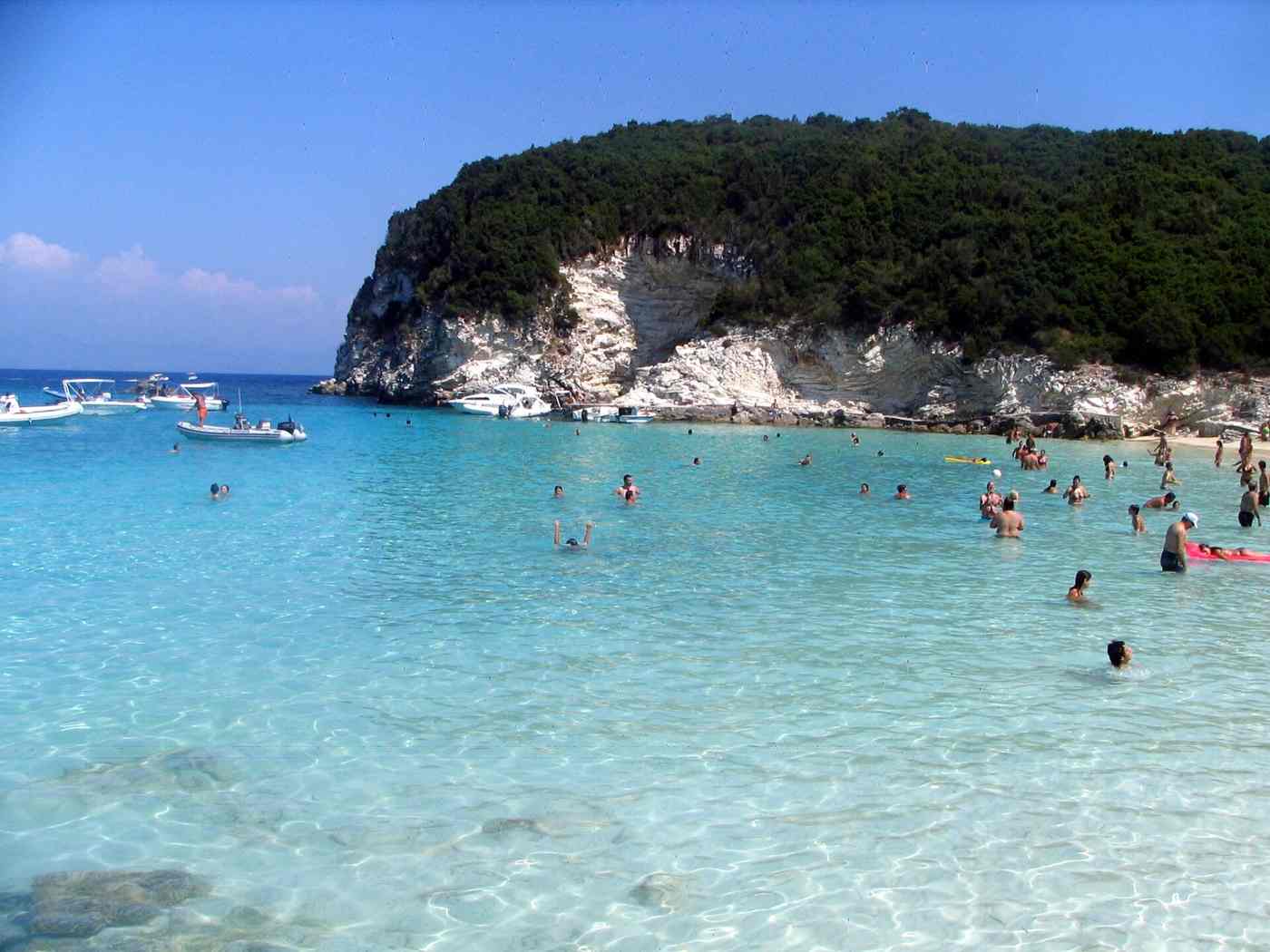
Voutoumi is the largest and most spectacular beach on Antipaxos, a long bay of white pebbles and sand backed by green, cliff-topped slopes.
Voutoumi lies a short distance south of Vrika along the east coast and is often considered the finest beach of the pair. One of the most beautiful in the whole Ionian. It is larger than Vrika, a sweeping curve of white pebbles and pale sand set against slopes clad in green scrub. With water of an almost unreal clarity and colour that ranges through every shade of blue and turquoise.
Above the beach, reached by a flight of steps up the hillside, sits a taverna with a notable outlook over the bay. Where visitors climb for a meal or a cool drink and one of the most photographed views in Greece. The beach itself has sunbeds and umbrellas in season, but remains gloriously undeveloped, with the emphasis firmly on the natural beauty of the setting.
A footpath links Voutoumi with Vrika. Taking around half an hour to walk over the low headland between them. It is easy to combine the two beaches in a single visit. Many boat trips anchor off Voutoumi for a swim. Its deep, clear water is a favourite for snorkelling and for simply drifting in the warm, glassy sea beneath the cliffs.
What is Mesovrika beach?
Mesovrika is a small, quiet pebble beach on Antipaxos, tucked between Vrika and Voutoumi.
Mesovrika, whose name means roughly the beach in the middle, occupies a little bay between the two great beaches of Antipaxos. It is smaller and pebblier than Vrika and Voutoumi. Crucially it has no tavernas, sunbeds or other facilities. Which keeps it far quieter than its celebrated neighbours even in the busy months.
For visitors seeking a more secluded, natural experience, Mesovrika is a delight. Its water is beautifully clear and usually very calm, and the rocky edges of the cove teem with small fish, making it an excellent place to snorkel. Boats sometimes anchor offshore here too, but the lack of facilities means it never fills up in the way the sandy beaches do.
Mesovrika is easy to include when walking between the two. Makes a perfect stop for a peaceful dip away from the crowds. Anyone who brings their own shade, water and snacks can happily spend a tranquil hours here in one of the loveliest and least developed corners of the island.
What is Antipaxos known for?
Antipaxos is known above all for its beaches, Vrika and Voutoumi, with their white sand and clear turquoise water, ranked among the best in Greece.
First and foremost, Antipaxos is celebrated for its beaches. The twin coves of Vrika and Voutoumi, with their soft sand, sheltered setting and astonishingly clear water. Regularly appear on lists of the finest beaches in Greece and the Mediterranean. They are the main reason visitors make the short crossing from Paxos or the longer cruise from Corfu.
Beyond the beaches, the island is well known for its vineyards. Much of its interior is covered with vines, and Antipaxos has long produced a respected local wine from grapes grown in its stony, sun-baked soil. The tradition is small in scale and largely for local consumption, but the vineyards give the island its distinctive green, cultivated interior and are an important part of its character.
Antipaxos is also known, by contrast, for its wild west coast, where steep white cliffs plunge into the sea and are pierced by caves and grottoes. Boat trips often round this side of the island to admire the dramatic rock formations. That the same tiny island offers both the gentle. Sandy bays of the east and the rugged, cliff-bound scenery of the west.
Are there tavernas and facilities on Antipaxos?
Antipaxos has a few seasonal tavernas at its main beaches, notably at Vrika and above Voutoumi, serving food and drinks in summer.
For such a tiny, undeveloped island, Antipaxos has just enough in the way of tavernas to keep day visitors fed and watered. At Vrika beach two tavernas operate through the season, while above Voutoumi a taverna perched on the hillside serves meals and drinks with a memorable view. These places offer fresh, simple food and are a pleasant part of a day on the island.
Outside these beach tavernas, however, facilities are minimal. There are no towns or villages, no shops, banks or petrol stations, and no organised resorts or large hotels. The island has only a handful of permanent inhabitants, and most services that visitors need are found back on Paxos rather than on Antipaxos itself.
This lack of development is precisely what many people love about the island, but it does mean coming prepared. Visitors are wise to bring plenty of drinking water, sun cream and a hat, as shade is limited. To carry enough cash for the tavernas and water taxi, since card facilities cannot be relied upon. With a little planning, a day on Antipaxos is wonderfully simple and carefree.
When is the best time to visit Antipaxos?
The best time to visit Antipaxos is from May to October, when the weather is warm, the sea is inviting and the boats from Paxos and Corfu are running.
Antipaxos is a summer destination, and the season for visiting runs broadly from May to October, when the weather is reliably warm and sunny and the water taxis and cruise boats are operating. Outside these months the island is very quiet, the tavernas are closed and boat services are sparse, so almost all visitors come during the warm half of the year.
For the ideal balance of good weather and smaller crowds, late spring and early autumn are hard to beat. In June and September the sea is warm enough for long swims, the sun is strong but not fierce. The famous beaches are noticeably less busy than at the peak. These shoulder months show Antipaxos at its most relaxed and beautiful.
July and August bring the hottest weather, the warmest sea and the largest numbers of visitors, as day-trippers pour in from Paxos and Corfu. The island is still gorgeous at this time, but the main beaches can be crowded around midday. In high summer it pays to arrive early or stay into the late afternoon, when the boats thin out and the coves regain their calm.
Can you stay overnight on Antipaxos?
Overnight stays on Antipaxos are very limited, as the island has no hotels and only a small number of rooms and villas to rent.
Antipaxos is overwhelmingly a day-trip island rather than a place to stay. It has no hotels or organised resorts. Its permanent population is tiny, so the accommodation on offer amounts to only a handful of private rooms. Studios and villas scattered among the vineyards, mostly let through the summer season.
For the great majority of visitors, then, the practical choice is to enjoy Antipaxos as a day trip and to sleep on the larger, better-served island of Paxos. The three villages of Paxos, Gaios, Loggos and Lakka, offer a good range of hotels, studios, apartments and villas, all within a short boat ride of the Antipaxos beaches.
Those few who do stay overnight on Antipaxos are rewarded with a rare experience. The island almost to themselves once the day boats have left, the beaches empty and the night sky brilliant over the sea. But such stays be arranged well in advance, and visitors must be comfortable with the near-total absence of shops and services on the island.
What are the sea caves and west coast of Antipaxos like?
The west coast of Antipaxos is wild and dramatic, a line of steep white cliffs plunging into deep blue water and pierced by sea caves and grottoes.
The western side of the island is a complete contrast, a rampart of steep limestone cliffs falling sheer into the open Ionian Sea. Exposed to the wind and waves, it has no beaches to speak of. Instead offers some of the most dramatic coastal scenery in the region. Carved by the sea into caves, arches and hidden grottoes.
Boat trips around the island often round this western coast so that passengers can admire the towering white cliffs from the water and peer into the sea caves. Where the light turns the water a deep, luminous blue. These caves are smaller and less famous than the celebrated blue caves of neighbouring Paxos, but they add to the sense of drama and wildness that surrounds tiny Antipaxos.
The west coast can be seen only from a boat, which is why hiring a small craft or joining a cruise is the best way to appreciate the whole of Antipaxos. Circling the island reveals its two faces, the gentle turquoise coves of the east and the fierce, beautiful cliffs of the west, in a single memorable trip. On a calm day the skippers of small boats will often nose gently into the mouths of the caves. Letting passengers admire the play of light on the water and the sculpted white rock at close quarters.
What is Antipaxos wine and are there vineyards?
Antipaxos is covered in vineyards that produce a prized local wine, long made by families on Paxos who own plots on the smaller island.
For all its fame as a beach paradise, Antipaxos is also, and has long been, an island of vineyards. Much of its small interior is planted with vines, which thrive in the stony. Sun-drenched soil and the mild Ionian climate. The cultivated green slopes give the island a surprisingly lush, agricultural character away from the coast.
The wine of Antipaxos has a considerable local reputation. Traditionally the vineyards are owned and worked by families from Paxos. Who cross over to tend their plots and bring in the harvest. The grapes are made into robust red and white wines in relatively small quantities. Much of this production has always been for local consumption, shared among families and served in the tavernas rather than exported on any scale.
This wine-making tradition is an essential part of what makes Antipaxos more than just a collection of beautiful beaches. The vineyards tie the little island to the farming heritage of Paxos and Antipaxos as a whole, and a glass of the local wine at a beach taverna, looking out over the turquoise water, is a fitting way to taste the character of the island.
What can you do on Antipaxos besides the beaches?
Beyond swimming and sunbathing, Antipaxos offers excellent snorkelling in its clear water, short walks between the beaches and up to viewpoints, boat trips around the cliffs and caves, and simple meals at beach tavernas.
The clarity of the water around Antipaxos makes snorkelling one of the great pleasures of a visit, especially at the quieter. Pebbly Mesovrika beach and along the rocky edges of the coves, where small fish gather in the shallows. Bringing a mask and snorkel lets visitors make the most of a sea that is as rewarding to look into as it is to swim in.
On land, there are gentle walks to enjoy, most famously the half-hour footpath over the headland between Vrika and Voutoumi, which gives lovely views down over both bays. Energetic visitors can also wander up among the vineyards for a sense of the island’s cultivated interior and wider views across the sea to Paxos and, on a clear day, distant Corfu.
Out on the water, hiring a small boat or joining a cruise opens up the whole coastline, from the sandy east-coast bays to the caves and cliffs of the west. Otherwise, the appeal of Antipaxos lies in doing very little, lingering over a long lunch at a beach taverna. Drifting in the warm sea. Soaking up the peace of one of the most unspoilt corners of the Ionian.
Why visit Antipaxos?
You visit Antipaxos for its extraordinary beaches and water, among the most beautiful in Greece.
The reason to visit Antipaxos is, quite simply, its beauty. Few places in Greece can match the colour and clarity of the water at Vrika and Voutoumi. To swim in these sheltered. Turquoise coves beneath green slopes and white cliffs is an experience visitors remember long after their holiday ends. For lovers of beaches and clear seas, the island is close to perfection. Photographs rarely do it justice, and many who come expecting a pretty beach are genuinely astonished by the intensity of the colours and the stillness of the water when they arrive in person.
Its very smallness and lack of development are part of the appeal. With no towns, roads or resorts, Antipaxos feels wild and untouched, a natural retreat where the pleasures are elemental, sun, sea, sand and a simple meal at a beach taverna. It offers a welcome contrast to busier, more built-up destinations, and a reminder of how the Ionian islands once were.
Best of all, this little paradise is remarkably easy to reach. A short boat ride from Paxos or a scenic cruise from Corfu. It can be enjoyed even on a short holiday in the region. Whether visited for hours or a whole day, whether as part of a cruise or an independent boat trip. Antipaxos is one of the great natural highlights of the Ionian and a place that no visitor to Paxos miss.
Frequently Asked Questions
Which is the best beach on Antipaxos, Vrika or Voutoumi?
Both Vrika and Voutoumi are outstanding. Which you prefer comes down to what you want from a beach, so visitors make a point of seeing both, walking the half-hour path that links them over the headland. Vrika, at the northern tip of the island, is the smaller and sandier of the two, with a gently shelving. Shallow entry into the water that makes it especially good for families with children and for less confident swimmers. It has two tavernas right behind the sand as well as sunbeds and umbrellas in summer. Voutoumi, a little further south, is larger and more dramatic, a sweeping bay of white pebbles and sand backed by green.
Cliff-topped slopes, with a taverna set high on the hillside above that offers one of the most famous views in Greece. Its water is deeper and notable for snorkelling, and the whole setting feels grander and wilder. If you are travelling with small children or want easy, shallow swimming, Vrika suit you best, while if you love spectacular scenery and clear, deeper water, Voutoumi is hard to beat. The happiest solution, and the one most people choose, is simply to visit both on the same trip.
Is Antipaxos worth visiting as a day trip?
Antipaxos is absolutely worth visiting as a day trip. Indeed a day trip is the way almost everyone experiences the island, since it has no hotels or resorts to speak of. From Paxos, a short water taxi ride of around fifteen minutes from the port of Gaios brings you to the beaches of Vrika and Voutoumi. With boats running frequently through the day in season and return tickets costing in the region of twenty-five euros. You can go across for hours or stay until the late afternoon. From Corfu, Antipaxos features on the popular full-day cruises that also take in Paxos and its blue caves, anchoring in the island’s turquoise bays for a swim.
The reward for making the trip is some of the most beautiful beach scenery in Greece. With water of remarkable colour and clarity, set against unspoilt green slopes and white cliffs. Because the island is so undeveloped, with only a few beach tavernas and no shops, it is wise to bring water, sun protection and cash. This simplicity is a large part of the charm. For anyone staying on Paxos or Corfu, a day on Antipaxos is one of the highlights of a holiday in the Ionian.
Does Antipaxos have any villages or towns?
Antipaxos has no towns and no real villages in the ordinary sense. Which is one of the things that sets it apart from its larger neighbour Paxos and from most other Greek islands. The island is tiny, only around five square kilometres. Its permanent population numbers just a handful of people. Most of whom are connected with the vineyards that cover much of the interior. Instead of villages, the island has a scattering of houses and small settlements among the vines. Along with a few private rooms and villas that are let to visitors in the summer season.
The only concentrations of activity are at the main beaches, Vrika and Voutoumi, where seasonal tavernas operate to serve day-trippers, and even these close outside the summer months. There are no shops, banks, petrol stations or organised resorts anywhere on the island, and no proper road network, since visitors arrive and move about mainly by boat. This near-total absence of development is precisely what gives Antipaxos its wild, unspoilt character, and why it feels so different from busier destinations. Anyone visiting therefore treat it as a natural, beach-focused day out rather than a place with the services and nightlife of a resort town.
How do you get from Paxos to Antipaxos?
Getting from Paxos to Antipaxos is quick and straightforward, since the two islands lie only about three kilometres apart across a short and usually calm stretch of sea. The most common way is to take one of the water taxis or small excursion boats that run daily in spring and summer from the main port of Gaios on Paxos. Crossing to the beaches of Vrika and Voutoumi in around fifteen minutes. These boats are frequent through the day. A return ticket generally costs in the region of twenty-five euros, so you can plan your visit around the beach you most want to see and choose how long to stay.
Another popular and very enjoyable option is to hire a small self-drive motorboat for the day from Gaios or Lakka, for which no licence is needed on the smaller craft. Allowing you to make the crossing at your own pace, anchor in a quiet cove and combine the beaches with a look at the sea caves along the coast. Some visitors also reach Antipaxos on the full-day cruises that sail down from Corfu and take in both islands. Whichever method you choose, the short distance and sheltered waters make the trip easy, and it is one of the essential experiences of a holiday on Paxos.
How much time do you need on Antipaxos?
How long you need on Antipaxos depends on how you like to spend your time, but for most visitors a half-day to a full day is ideal. Because the island is so small and its attractions are essentially its beaches, you do not need days to see it, yet its beauty richly repays an unhurried visit. A common plan from Paxos is to take an early water taxi across, spend the morning at one beach, walk the half-hour path over the headland to the other. Enjoy a long lunch at a beach taverna. Return in the afternoon, which fills a very satisfying day.
Those who prefer a quicker taste can go over for just hours in the morning or afternoon, when the sea is calmest and the crowds are thinner. Still come away having swum in the famous turquoise water. Visitors arriving on a full-day cruise from Corfu usually get a shorter window. Often an hour or two anchored off Vrika or Voutoumi for a swim, as part of a wider itinerary that also takes in Paxos and its blue caves. If you are hiring your own small boat, you can tailor the length of your stay exactly to your wishes, lingering as long as you like in the quieter coves.
In short, hours is enough to enjoy the highlights, but a full, relaxed day is the most rewarding way to experience the island.
Is Antipaxos good for snorkelling?
Antipaxos is one of the best places for snorkelling in the whole Ionian, thanks to the extraordinary clarity and calm of its water. The sheltered east-coast bays, where the famous beaches lie. Have water so clear that you can see the sandy and rocky seabed in fine detail. The gentle conditions make for easy, relaxed snorkelling even for beginners and children. The quieter, pebbly Mesovrika beach, tucked between Vrika and Voutoumi and without tavernas or sunbeds, is a particular favourite, as its rocky edges and clear, undisturbed water attract shoals of small fish and stay calm through much of the day. Along the rocky margins of Vrika and Voutoumi too there is plenty to see beneath the surface.
Drifting slowly over the seabed in the warm. Glassy shallows is one of the great simple pleasures of a visit. Because there are so facilities on the island, it is worth bringing your own mask and snorkel rather than relying on hiring them, along with water, sun protection and something to eat. Those exploring by small boat can also anchor off quieter stretches of coast to snorkel away from the busier beaches. With its combination of clear water, calm bays and abundant marine life, Antipaxos rewards anyone who takes the time to look beneath its beautiful turquoise surface.
See more:
- Skiathos Travel Guide
- Skopelos
- Skyrocket Your Plumbing Business: Essential SEO Services to Dominate Local Search
- Skyros
- Spetses
- Symi Island: The Complete Travel, Tours and Boat-Trip Guide
- Syros: Complete Travel Guide to the Capital of the Cyclades
- Temple of Apollo Private Tour: Athens Delphi Tour and Visitor Guide
- Thassos
- Thessaloniki Tours: Explore All Thessaloniki Tours & Excursions
- Thirasia
- Tinos
- Travel to Antiparos: Your Guide to Antiparos, Greece
- Trikeri
- Useful Travel Pages: Best Travel Websites & Must-Use Travel Resources
- Viator