
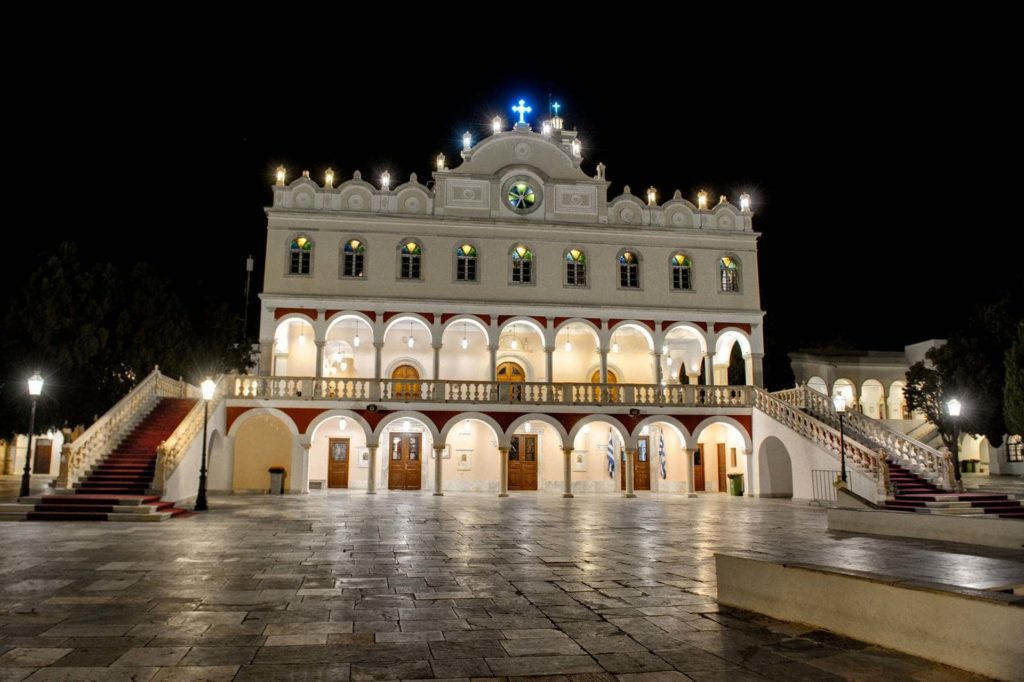
Tinos tours and travel guide: insider tips for beaches, marble villages, hikes, boat trips, and food — see Tinos in 4 days with local recommendations & hidden spots.
What are the top Tinos tours and things to do?
The top Tinos tours visit the Church of Panagia Evangelistria, the marble village of Pyrgos, the boulders of Volax and the stone dovecotes of the interior. Other Tinos tours add boat trips, wine tastings, guided hikes and the via ferrata.
Tinos is one of those Greek islands that rewards slow curiosity. Less promiscuous about nightlife than Mykonos and more rugged than Santorini, Tinos feels like a place where people still live rather than one built just for visitors. In this guide to Tinos tours, we’ll walk you through why Tinos deserves a spot on your Cyclades itinerary, the best things to do in Tinos, Greece, where to swim, eat, sleep, and how to make the most of short or long stays. We write from the perspective of local insiders, sharing the same spirit behind our Greece Tours. Expect practical tips, hidden spots, and itineraries that let you experience Tinos beyond the postcard.
Why do visitors book Tinos tours?
Visitors book Tinos tours for the pilgrimage church of Panagia Evangelistria, the living marble craft of the villages and quiet beaches. Tinos tours run at a slower pace than on Mykonos, a short ferry ride away.
Tinos is special because it manages to combine devout tradition, striking natural scenery, and a vibrant artisan culture without ever feeling self-conscious about it. At its heart is the Church of Panagia Evangelistria in Tinos Town, the most important pilgrimage site in modern Greece, but the island’s character extends far beyond that single landmark. We find that Tinos is where:
- Pilgrimage coexists with island life: pilgrims arrive from all over Greece, the most devout on foot, at particular times of year, yet village festivals and seaside tavernas continue year-round.
- Marble craft is a living tradition: the northern villages specialize in marble carving and sculpture, producing public art and delicate household pieces.
- Quiet beaches and secret coves are still possible: unlike neighboring Mykonos, Tinos has an abundance of unspoiled shorelines for families and snorkelers.
For travelers seeking authenticity, romantic seclusion, artisan workshops, and dramatic Cycladic landscapes without the crowds, Tinos delivers. We also appreciate how compact the island is: you can base yourself in one village and day-trip across diverse terrain in under an hour.
Which sights do Tinos tours visit?
Tinos tours visit Tinos Town and its pilgrimage church, Pyrgos and its marble workshops, the boulder village of Volax, and Triantaros and Dyo Choria with their frescoed churches. Guided Tinos tours also stop at the island’s stone dovecotes.
Tinos’s attractions are a mix of spiritual landmarks, architectural charm, and living craft. Below, we highlight the essentials and the less-obvious stops worth adding to your list.
Historic Villages And Cultural Highlights
Tinos’s villages are the island’s living museum. Pyrgos, our favorite, is a labyrinth of narrow alleys and marble-paved squares: its central piazza hums during village festivals. Volax (Vóla) is famous for its moon-like landscape and basket-weaving tradition; the boulders and tiny stone houses feel lunar and intimate. Stroll through Triantaros and Dyo Choria for frescoed churches and glimpses into older Cycladic life. We recommend leaving time to wander: the architecture, small chapels, and village fountains are attractions themselves.
Panagia Evangelistria And Pilgrimage Sites
The Church of Panagia Evangelistria in Tinos Town is the spiritual heart of the island. Pilgrims frequently arrive barefoot or after long walks to give thanks: during important feast days, the atmosphere is solemn and crowded. Even if you aren’t religious, the site’s cultural importance is palpable; the way local hospitality centers on pilgrimage gives you insight into modern Greek devotion.
Nearby, small chapels dot the hills and coastline. The chapels have simple icons and sea views. If you’re visiting during major religious holidays (Easter and August 15th are huge), plan: accommodation fills fast, and services can last through the night.
Marble Villages, Sculptures, And Local Artisans
Tinos is a center for marble carving. The village of Pyrgos hosts workshops and the Marble Arts Museum: you’ll see sculptors working on commissions and small-scale pieces. We like to visit studios where artists still transfer traditional motifs to contemporary sculptures. Collectors and casual shoppers alike can find handmade items, votive plaques, tableware, and garden sculptures, carved from local marble. If you care about provenance, ask about the stone’s origin: the artisans can tell you which quarries supplied their pieces and the family history behind their craft.
Which beaches do Tinos tours reach?
Tinos tours reach Agios Fokas near Tinos Town, the bay of Kolymbithra on the north coast and the long beach of Kionia west of the port. Private boat Tinos tours add coves that no road reaches.
Tinos has surprisingly varied shores: long sandy strands, pebbly bays, rocky coves, and wind-swept beaches good for watersports. We break them down so you can choose based on mood, family day, a quiet swim, or a romantic evening.
Best Family And Quiet Beaches
- Agios Fokas: Close to Tinos Town, this sandy beach is practical for families, with shallow water, a couple of tavernas, and proximity to services.
- Kolimbithra: A protected bay with calm waters and fine sand: suited to small children and relaxing afternoons.
- Kionia: A long stretch with both sandy and pebbly sections: it rarely feels crowded and has a pleasantly local vibe.
Hidden Coves And Snorkeling Spots
- Psili Ammos: Not to be confused with similarly named beaches elsewhere, this small bay rewards swimmers with clear water and good snorkeling along submerged rocks.
- Agios Ioannis (near Steni): We’ve taken snorkel gear here and seen curious fish hovering among boulders. Bring water shoes; the approach can be stony.
- Secluded coves west of Livada: Start early, and you can sometimes find a private slice of shoreline: the water clarity is excellent for exploring marine life.
Romantic Sunset Beaches And Spots
- The western headlands near Kolymbithra: These cliffs and small beaches capture the golden light in late afternoon.
- The hill above Volax: Not a beach, but a stellar sunset lookout with an unusual rocky foreground, ideal for a photo and a quiet moment.
- Chryssi Akti: A wide beach with soft sand where we’ve watched pastel sunsets with a bottle of local rosé.
Which outdoor Tinos tours cover hikes, climbs and water sports?
Outdoor Tinos tours include the guided hike from Tarambados to Komi, the via ferrata, rock climbing on Exomvourgo and the coastal walk to Kolymbithra. Water-based Tinos tours add snorkelling, sailing and swims in sheltered coves.
Tinos is a fantastic island. Whether you’re into easy coastal walks or more challenging climbs, and whether you prefer to be under sail or under the sea, Tinos has options to get your pulse up.
Top Hiking Trails And Scenic Walks
- Tinos Town to Kolymbithra coastal trail: A pleasant, gradient-friendly route that takes you past little coves and seaside chapels. We like doing this as a half-day outing combined with a beach stop.
- Volax circular route: Short, surreal, and ideal for photographers: the trail winds among the island’s signature boulders.
- Panagia to Pyrgos trail: This inland walk shows agricultural terraces, stone-built villages, and classic Cycladic vistas, great for late-afternoon light and cooler hours.
Wear sturdy shoes: the paths are dry-stone and can be slippery after rain. Carry water and a hat: services are limited on inland routes.
Climbing, Diving, Snorkeling, And Sailing Options
- Climbing: Tinos offers pockets of limestone suitable for sport climbing, especially near Volax and other sculpted rock formations. Local guide services can arrange routes by ability.
- Diving & Snorkeling: Small dive centers run guided dives to reefs and a few wrecks; snorkeling is best where rocks and seagrass create habitat for fish.
- Sailing & Windsports: The Meltemi wind season (July–August) brings reliable breeze for windsurfing and sailing. We recommend private charters for a tailored day: they can reach secluded bays that cars cannot.
If you’re after adrenaline, book equipment and certified instructors in advance during the high season.
Which Tinos tours run by boat, private charter or island hopping?
Tinos tours by boat include private charters to coves and sea caves, sunset cruises with a meal, and cruises from Tinos to Delos and Rineia. Island-hopping Tinos tours link the island with Mykonos, Syros and Andros by ferry.
One of the best ways to experience Tinos is from the water. From short private charters to adventurous island-hopping days from Athens, boats unlock quiet coves and neighboring islands that make any trip feel cinematic.
Best Day Trips And Private Boat Tours From Tinos
- Private boat to tiny coves and sea caves: These half- or full-day charters let you swim, snorkel, and picnic on otherwise inaccessible beaches. We arrange local skippers who know the best sheltered bays and where the fish are biting.
- Sunset cruise: A late-afternoon private cruise with champagne and a stop for a twilight swim makes for a romantic evening.
- Fishing & cultural sea tours: Combine a short fishing lesson with visits to coastal chapels and notes on local maritime lore, a favorite for families.
Most private charters depart from Tinos Town or Livada: book ahead in July and August.
Suggested Island-Hopping Itineraries (Mykonos, Syros, And Nearby Gems)
- Day trip to Mykonos: Quick and easy by ferry, a quick contrast in atmosphere, Tinos’s quiet for Mykonos’s cosmopolitan buzz. We suggest an early departure and late return to maximize time.
- Syros + Tinos loop: Syros’s neoclassical Ermoupoli pairs beautifully with Tinos’s villages: take the inter-island ferry, stay for a day, and return at your leisure.
- Hidden gems: Serifos and Sifnos are doable as part of a longer island-hopping route. If you have five days or more, string together Naxos, Paros, and the smaller islands for varied beaches, food, and hiking.
Ferry timetables change seasonally: check schedules in advance and consider private charters for flexible routes.
What food, drink and local experiences do Tinos tours offer?
Tinos tours serve louza cured pork, kopanisti cheese, artichokes and fresh fish in family tavernas. Food and wine Tinos tours add winery visits with tastings on the central plateau and cooking classes in village kitchens.
Tinos’s cuisine is unpretentious and tied to the land: fresh fish, dairy, and island-grown produce form the backbone of meals. We prioritize tavernas that celebrate local recipes and producers.
Where To Eat: Traditional Taverns And Local Specialties
- Local specialties to try:
- Louza: air-dried pork similar to prosciutto, flavored with local herbs.
- Mastelo: lamb or goat slow-cooked in a sealed pot with local wine and aromatic herbs, a Tinian classic.
- Sea urchin (when in season): served simply with lemon and olive oil.
- Tinian cheeses and pies: savory pies with local greens and cheeses are common at family tables.
- Recommended tavernas and options (examples we include on our local tours):
- A family-run taverna in Pyrgos where marble carving families eat after work.
- Seafront tavernas in Kionia for grilled fish just off the boat.
- Small village cafes serving pies and the morning Greek coffee ritual, a spot for people-watching.
We advise letting the staff recommend daily catches and specials. That’s where you find the simplest, best meals.
Food Experiences: Markets, Cooking Classes, And Wine Tastings
- Weekly village markets: These markets sell local honey, cheeses, and preserves. We like to shop there for picnic supplies.
- Cooking classes: Short hands-on classes teach how to make pies, mastelo, and other local dishes, a fun way to take skills home.
- Wine and spirits: Tinos has small producers experimenting with island varieties and distilled spirits; tastings are intimate and personal.
Where possible, we pair food activities with an artisan visit, for example, stopping at a marble workshop after a morning market visit to see how local life interlocks.


Where do visitors on Tinos tours stay?
Visitors on Tinos tours stay in Tinos Town near the port and the church, in Pyrgos for the marble villages, or by the beaches of Kionia and Agios Fokas. Inland villages such as Volax suit quiet Tinos tours on foot.
Tinos’s accommodation scene favors boutique hotels, renovated guesthouses, and small family-run pensions. Expect thoughtfully restored Cycladic homes rather than large resort blocks.
Neighbourhoods And Villages To Base Yourself In
- Tinos Town (Chora): Best for first-time visitors who want proximity to the port, the Church of Panagia, shops, and nightlife. It’s a practical hub for day trips.
- Pyrgos: Ideal for culture and artisan immersion, a village with character, good cafes, and walking access to marble studios.
- Kionia & Agios Fokas: Great for families who want beach access and calm evenings.
- Smaller inland villages (Volax, Dyo Choria): Excellent if you’re after peace, hiking, and a sense of rural island life, expect fewer restaurants but deeper authenticity.
Tips For Booking Boutique Hotels And Romantic Stays
- Book early if you want a specific boutique property in July–August.
- Look for family-run places that include breakfast; breakfasts there feature homemade jams and cheeses that tell you a lot about local produce.
- For romance, prioritize sea-view rooms and properties with private terraces or small plunge pools. We find that sunrise or sunset views make a big difference to the overall experience.

How do visitors reach Tinos and plan Tinos tours?
Visitors reach Tinos by ferry from Rafina, Piraeus, Mykonos and Syros, since the island has no airport. Tinos tours then start from Tinos Town, and a car or scooter covers the villages between them.
Practicalities can make or break an island trip. Below, we cover ferries, local transport, trip length, and packing tips so you can relax and enjoy Tinos.
Ferry Routes, Flights, And How Long To Stay
- Ferries: Tinos is connected by regular ferries to Rafina (near Athens), Mykonos, Syros, and other Cyclades islands. Rafina–Tinos is a common entry route for mainland arrivals. The ferry duration from Rafina is 3–4 hours, depending on the type of vessel and the number of stops.
- Flights: There’s no airport on Tinos: the closest airports are Mykonos or Syros, from there, short ferry hops complete the journey.
- Recommended length of stay:
- 2 days: Good for a quick highlight tour (Tinos Town, one village, a nearby beach).
- 4 days: Ideal balance, you’ll see beaches, visit a few villages, and take a short boat trip.
- 7 days+: Best for slow travel, hiking, fuller island-hopping, artisan visits, and unwinding without rush.
We recommend 4–7 days to feel unhurried and allow for weather contingencies.
Transport On The Island: Car Rental, Buses, And Taxis
- Car rental: The most flexible way to explore. Roads can be narrow and winding: a small car is the easier choice. Book in advance during peak months.
- Buses: A practical option for limited routes between main villages and beaches: schedules are seasonally adjusted.
- Taxis: Available but limited: pre-book for early departures or late returns, especially in remote villages.
If you plan to explore off-the-beaten-path trails or secluded coves, a car or private transfer is essential.
Best Time To Visit, What To Pack, And Accessibility Tips
- Best time to visit: Late May–June and September–early October are our top picks, with warm sea, fewer crowds, and comfortable daytime temperatures. July–August is the busiest with stronger winds (Meltemi) and higher prices.
- What to pack: Lightweight layers, sturdy walking shoes, a hat and sunscreen, snorkeling gear if you prefer your own, and a light jacket for evenings. Bring cash for small village purchases: ATMs are available but can be unreliable during the low season.
- Accessibility tips: The Church of Panagia has steps and can be crowded during pilgrimage. Some beaches are pebbly or accessed via stairs: pick accommodation and activities that match mobility needs. Contact us at MyGreeceTours for tailored accessibility advice and services.
How do Tinos tours fit into 2, 4 and 7 days?
Two days of Tinos tours cover Tinos Town, Pyrgos, Volax and one beach. Four days add a boat trip and the inland villages. Seven days of Tinos tours leave time for hikes, wine tastings and a day trip to Mykonos or Delos.
Below are three practical itineraries we recommend to help you structure time on Tinos according to the pace you prefer.
2-Day Quick Highlights Itinerary
Day 1: Arrive in Tinos Town. Visit Panagia Evangelistria, wander Chora’s alleys, and eat fresh fish in the harbor. Sunset walk to Agios Fokas for an evening dip.
Day 2: Early drive to Pyrgos for marble workshops, short hike around Volax, afternoon at Kolimbithra beach, evening return to the port for ferry or onward travel.
This pace is brisk but gives you key flavors of Tinos.
4-Day Balanced Itinerary: Beaches, Villages, And Boat Trip
Day 1: Settle into your base (we recommend Pyrgos or Tinos Town). Evening stroll and dinner in a local taverna.
Day 2: Morning at Kolymbithra, afternoon in Volax and Dyo Choria, dinner in a village square.
Day 3: Private half-day boat charter to secluded coves and snorkeling spots: afternoon free for artisan visits.
Day 4: Visit marble villages and the Marble Arts Museum, relax at Kionia, and depart.
This itinerary mixes relaxation, culture, and a boat experience without rushing.
7-Day Slow Travel Itinerary For Deeper Exploration
Days 1–2: Explore Tinos Town, Panagia, and nearby beaches: ease into island time.
Days 3–4: Move inland, stay in Pyrgos or Volax, do longer hikes, attend a cooking class, visit marble studios.
Day 5: Boat trip to nearby islets and snorkeling coves: picnic on board.
Day 6: Day trip to Mykonos or Syros (or combine both on a longer hop), return at night.
Day 7: Leisurely morning, final walk through olive groves, local market shopping, depart.
Seven days allow immersion: we can arrange artisan visits, private chefs, and off-grid hikes to craft a truly local experience.
How do Tinos tours respect local customs?
Tinos tours respect local customs by keeping quiet and dressing modestly in Panagia Evangelistria, buying from village artisans and eating in family tavernas. Walkers on Tinos tours carry their rubbish out of the coves.
We believe responsible travel keeps Tinos special. Small actions protect the island’s culture and landscape.
How To Support Local Communities And Respect Pilgrimage Traditions
- Support local businesses: Eat in family tavernas, buy from artisans, and choose small accommodations whenever possible. These direct purchases have outsized benefits for island families.
- Respect pilgrimage spaces: If you visit Panagia Evangelistria or attend services, dress modestly and keep quiet during ceremonies. Photography rules differ between churches, so ask first.
- Time your visits considerately: High-feast periods are sacred times, not just tourist spectacles; be mindful of crowds and avoid imposing on rituals.
Sustainable Activities And Leaving No Trace On Beaches And Trails
- Pack out what you bring: Small coves lack bins. Carry a reusable bag for trash.
- Stick to marked trails: Erosion is a real risk on dry-stone paths.
- Use reef-safe sunscreen near seagrass beds and snorkeling areas.
- Choose responsible operators: For boat trips and activities, ask about fuel efficiency, group size, and conservation policies.
We encourage visitors to treat Tinos like a place they’ll return to: leave it as you found it, or better.
Who do Tinos tours suit?
Tinos tours suit pilgrims, art lovers who follow the marble trail, walkers, families who want quiet beaches and couples on a sunset cruise. Four days or more give Tinos tours room to follow the island’s slower pace.
Tinos rewards curiosity and a slower pace. Whether you come for a pilgrimage, marble art, quiet beaches, or a romantic sunset cruise, the island feels like a personal discovery rather than a checklist. Our advice: give yourself at least four days if you can, stay with a family-run guesthouse, and let local recommendations guide your days. If you’d like an insider hand in planning, from private boat charters to artisan visits and boutique hotel recommendations, we at Greece Tours craft personalized experiences that showcase Tinos’s best while respecting its traditions and landscapes. Pack good shoes, an appetite for simple, honest food, and enough patience to let the island reveal itself.
What marble details do Tinos tours show in Pyrgos?
Pyrgos on Tinos fills its lanes with carved marble fanlights above doorways, marble fountains in the squares and ornate tombstones in the village cemetery. The Museum of Marble Crafts and the house museum of sculptor Yannoulis Chalepas explain the craft.
Pyrgos is the largest village in the north of Tinos. It has trained generations of sculptors. Their work stands in churches and squares across Greece.
The Museum of Marble Crafts shows quarrying tools and carving techniques. Yannoulis Chalepas is the best-known sculptor from Tinos. His house in Pyrgos keeps his tools and models on display.
Guided marble tours of Pyrgos run as half-day morning trips of four to five hours. Some add a harbour lunch in nearby Panormos.
Which local foods do Tinos tours taste?
Tinos food tours taste kopanisti and graviera cheese, louza cured pork, artichokes, capers, sun-dried tomatoes and local honey. Stops cover a dairy, a charcuterie workshop and a farm, then end with a meze meal at a taverna.
Kopanisti is a soft, peppery cheese with a sharp flavour. Graviera is a hard table cheese with a sweet note.
Spring tours catch the artichoke harvest in Komi and Volax. Late summer brings sun-dried tomatoes and figs to the table.
A food tour runs three to four hours with four or five stops. The guide links each product to the village that makes it.
Which Tinos tours taste local wine?
Tinos wine tastings centre on T-Oinos, a vineyard planted among granite boulders on the central plateau near Falatados. Its vines of assyrtiko and mavrotragano grow in pockets between the rocks. Smaller producers around Falatados and Steni pour raki and home wine.
The granite soil and the strong wind concentrate the fruit. T-Oinos wines reach fine-dining lists in Athens. The wineries of Tinos welcome visitors for cellar tours.
A wine tour lasts two to three hours. It walks the vineyard, visits the cellar and pairs three to five wines with local cheese and charcuterie. A tasting fits after a morning in the marble villages.
Where do Tinos tours by jeep and on foot go in the interior?
A jeep safari or guided hike on Tinos reaches the dovecote valley of Tarambados, the boulder fields above Volax and the Venetian ruins on Exomvourgo, the hill with the widest view of the island. Full-day safaris add remote chapels and east-coast beaches.
A full-day jeep safari runs six to eight hours in a 4×4 with a local driver. The tracks reach places that rental cars avoid. Lunch stops in a mountain village such as Falatados or Steni.
Guided hikes follow the island’s marked footpaths. A gentle marble path links Kardiani and Isternia. A steady climb up Exomvourgo ends at the ruins of the Venetian fortress on the summit. The hiking trails of Tinos link the villages across the interior.
Tarambados holds a valley of ornate dovecotes. The towers carry geometric patterns of stone slabs. Golden hour lights them for photographs.
Which Orthodox and Catholic sites do Tinos tours visit?
Cultural Tinos tours visit the Church of Panagia Evangelistria, Kechrovouni Monastery with the cell of Saint Pelagia, and the Archaeological Museum. Inland, the villages of Loutra and Xinara keep the Catholic heritage left by Venetian rule.
A guide explains the vision of Saint Pelagia and the discovery of the icon. Each August, pilgrims climb the carpeted lane to the church on their knees.
Kechrovouni Monastery is a convent on a mountainside. Its whitewashed lanes and cells form a small fortified village.
Venetian rule brought the Catholic faith to Tinos. Catholic and Orthodox communities still live side by side on the island. A cultural tour runs three to four hours.
Which questions do visitors ask about Tinos tours?
Visitors ask what to do in four days, how to plan transport, which beaches suit children and whether to book Tinos tours in advance. The answers below cover each of these Tinos tours questions.
What are the best things to do in Tinos, Greece, during a 4-day visit?
On a 4-day itinerary, mix beaches (Kolimbithra, Kionia), village visits (Pyrgos, Volax, Dyo Choria), a half-day private boat for secluded coves and snorkeling, plus time at Panagia Evangelistria and a marble workshop visit. End days with local tavernas and a sunset lookout for a balanced experience.
How do I plan transport and days for Tinos tours?
Ferries connect Tinos with Rafina, Mykonos, and Syros; no airport. Plan 2 days for highlights, 4 days for a relaxed visit, and 7+ days for slow travel. Rent a small car for flexibility, use seasonal buses for main routes, and pre-book rentals in summer.
Is Tinos a good island for families, and what beaches are best for children?
Yes, Tinos suits families with calm, shallow beaches like Agios Fokas and protected Kolimbithra. Kionia offers long sandy and pebbly stretches with a local vibe. Choose accommodations near services and bring basics, since small villages have limited facilities.
Do I need to book Tinos tours and boat trips in advance?
Yes—during July–August and around major religious holidays, book private charters, climbing guides, or diving lessons well ahead. Popular half-day and sunset cruises, plus certified instructors for watersports, sell out quickly; booking ensures preferred times and smaller, more personalized groups.
Can you do a day trip to Tinos from Mykonos and still see the key sights?
A day trip from Mykonos is possible by early ferry, but it will be rushed. You can visit Panagia Evangelistria, stroll through Tinos Town, and see one nearby village or a short beach, but for marble workshops, hiking, and boat trips, plan at least 2–4 days to avoid feeling hurried.
Find more experiences in My Greece Tours:
- Meteora Greece: Explore Meteora Monasteries & Unforgettable Meteora Tours
- Milos Travel: The Ultimate Guide to Milos, Greece
- Mycenae Tours: Experience Legendary Archaeological Site
- Mykonos Greece: The Absolute Guide To Survive
- Mystras Tours: Uncover the Mysteries of Mystras with a Byzantine Castle Tour
- Naxos Greece: The Ulitmate Guide & Incredible Things to Do
- Paros Greece Travel Guide: Things to Do in Paros, Explore Paros Island
- Paxi Antipaxi Tours: Explore Paxos and Antipaxos – Experience Paxos Tours & Antipaxos Tours
- Pelion Greece: The Ultimate Pelion Travel Guide
Explore Tinos: tours, tickets & day trips
- Tinos Itinerary for 2, 4 and 7 Days
- Things to Do in Tinos
- Tinos Boat Tours and Island-Hopping Day Trips
- Tinos Walking Tour
- Tinos Day Trip from Mykonos
- The Cruiser Elli at Tinos
- Tinos Sunset Cruise
- Tinos to Delos Cruise
- Andros to Tinos Ferry
- Mykonos to Tinos Ferry
- Naxos to Tinos Ferry
- Paros to Tinos Ferry
- Piraeus to Tinos Ferry
- Rafina to Tinos Ferry
- Santorini to Tinos Ferry
- Syros to Tinos Ferry
- Best Time to Visit Tinos
- How to Get to Tinos
- Where to Stay in Tinos
- Tinos Boutique Hotels
- Tinos Luxury Villas
- Tinos Villages
- Tinos Apartments
- Tinos Car Rental