
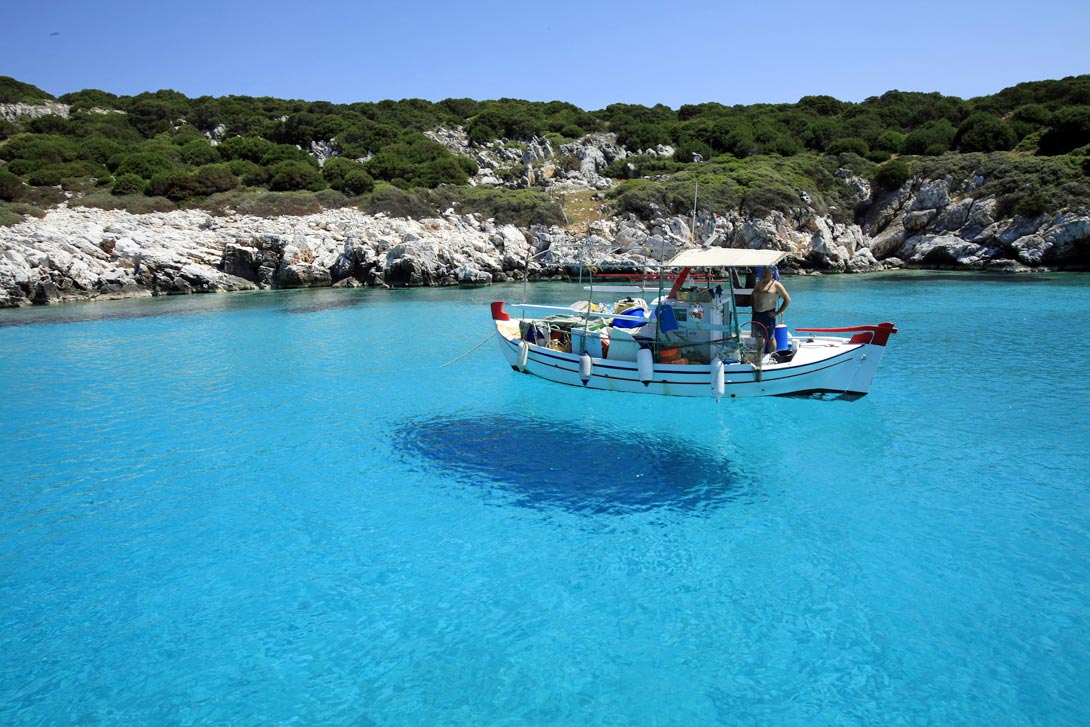
Discover Skyros Island, Greece, a serene escape with authentic culture, secluded beaches, and rich island traditions for your next travel adventure.
Skyros Travel Guide: Discover Greece’s Hidden Island Gem — What To See, Do, And Eat
We discovered Skyros on a late‑season trip and were struck immediately: this is the Greece many travelers long for but rarely find, rugged pine forests, quiet pebble coves, a medieval capital that feels frozen in time, and a living folk tradition that still shapes daily life. For anyone building island‑hopping plans, designing a private Greece tour, or seeking a less crowded alternative to Mykonos and Santorini, Skyros rewards curiosity with authenticity.
In this guide, we’ll explain what makes Skyros unique, the best times to visit and how to get there, how to move around, the top sights and experiences, where to eat and sleep, and sample 3‑ and 7‑day itineraries you can use for independent travel or to build into a small‑group Greece travel package.
No tour operator runs guided tours on Skyros itself, so the tours below cover Evia, where the Skyros ferry leaves from the port of Kymi.
Why Visit Skyros: What Makes The Island Unique
Skyros sits at the southeastern edge of the Sporades archipelago and doesn’t try to be anything other than itself. We find three main qualities that set it apart and make it worth adding to any Greek islands tour.
- Living traditions and island crafts
Skyros is famous for its artisans. Wood carving and textiles are alive here; the hand‑carved wooden toys, painted motifs, and the distinctive Skyrian costumes still appear at festivals and in family wardrobes. We’ve watched local carvers at work in the Chora (Skyros Town), and the craftsmanship feels like a tangible link to the island’s history.
- Diverse landscapes without the crowds
Within a short drive, you can move from dense pine forests and inland hills to isolated pebble beaches and dramatic cliffs. Unlike the high season bustle on Santorini or Mykonos, Skyros offers quiet bays where we’ve had the sea almost to ourselves. Birdwatchers also appreciate the migratory populations that pass through each spring and autumn.
- Strong sense of place and community
The Chora, a honeycomb of narrow streets, neoclassical mansions, and a medieval Kastro, feels intimate. Locals run family tavernas, produce distinctive local cheeses and honey, and celebrate saints’ days with processions, music, and dance. For cultural tours in Greece looking to offer authentic experiences, Skyros provides encounters that feel personal and unmanufactured.
Practical note: Skyros is not a luxury party island: it’s for travelers who value authenticity, nature, and slow exploration. If you’re planning island tours in Greece and want to include a stop that deepens cultural understanding rather than just deliver postcard views, Skyros is an excellent choice.
Where is Skyros, and how is the island shaped?
Skyros is the southernmost and largest island of the Sporades, lying 35 km east of Evia. It covers 209 square kilometres and counted 3,052 residents in the 2021 census. Pine forest covers its northern half, and bare mountains under Mount Kochilas (792 m) fill the south.
Skyros sits near the centre of the Aegean and belongs to the regional unit of Euboea, and it lies closer to Evia than to the other Sporades. Two mountain masses define its shape. The northern half, known in Greek as Meroi, carries dense pine forest below the 403-metre peak of Olympos, a landscape that matches the other Sporades and northern Evia. The southern half rises to Mount Kochilas at 792 metres, beside the peaks of Koumari, Piriones and Fanoftis, and its bare, rocky slopes resemble southern Evia and the Cyclades. A low strip of semi-flat, hilly ground runs north to south between the two masses and joins them. For a side-by-side look at size, access and pace, read our Milos vs Skyros comparison.
Daily life gathers on two coasts. The capital, Chora, faces the Aegean on the east side, while ferries dock at Linaria on the west coast. Linaria became the port of Skyros in 1828 on a proposal by the council of elders, because the old anchorage at Magazia beach, today’s Molos, was unsafe.
- Chora: the capital, home to 1,725 people in 2021, rises in tiers on the west slope of a 179-metre rock near the east coast.
- Linaria: the west-coast port, linked to Chora by an 11 km paved road through Acherounes and Aspous.
- Kymi ferry: the locally owned Skyros Shipping Company runs the car ferry Achilleas between Kymi on Evia and Linaria in 1 hour 45 minutes, once a day each way in winter and twice daily in the summer season.
- Airport: Skyros Island National Airport (IATA code SKU) lies 17 km north of Chora at Trachi, inside a Hellenic Air Force base, and has handled civil flights since 1984.
What are the myths and history of Skyros?
Skyros enters Greek myth as the kingdom of Lycomedes, the king who threw Theseus from a cliff and hid the young Achilles among his daughters. History adds the Athenian conquest by Cimon in 475 BC, Venetian and Ottoman rule, and union with Greece in 1830.
In the myth, Theseus fled Athens and sought refuge at the court of Lycomedes, king of the Dolopians, who pushed him off a cliff because he feared the honoured guest as a rival for his throne. Plutarch records the story, and Greek accounts place the killing at Spilia Andrioti. A post-Homeric myth brings Achilles to the same court. At the request of his mother Thetis, Lycomedes hid him among his 7 daughters, dressed as a girl named Pyrrha, and there he fathered Neoptolemus with the princess Deidamia. Odysseus arrived disguised as a pedlar with fabrics, perfumes, jewellery and weapons; only “Pyrrha” reached for the weapons, and Odysseus took Achilles to Troy. Achili bay, on the east coast of Skyros, is said to be the place from which Achilles sailed.
Recorded history starts with Cimon. Around 475 BC, according to Thucydides, the Athenian strategos defeated the Dolopians, settled Athenian colonists and claimed to have found the bones of Theseus, which he carried back to Athens. After the Fourth Crusade, Geremia Ghisi took Skyros in 1204, the Byzantines recovered it in 1277, and Venice ruled again after the Fall of Constantinople until Hayreddin Barbarossa seized it for the Ottoman Empire in 1538. Under the Ottomans Skyros kept privileges and had no Turkish garrison, but pirate raids drove its people up into the Kastro. Skyros backed the War of Independence of 1821 with money and ships and joined the Greek state in 1830.
- Kastro: the Byzantine-Venetian castle on the 179-metre rock above Chora, built on the ancient acropolis that myth names as the seat of Lycomedes; its walls date to the Venetian period of the 13th to 15th centuries.
- Monastery of Agios Georgios: founded in AD 962 by Saint Athanasius the Athonite beside the Kastro, with Greek sources crediting the building to Nikephoros Phokas; it honours Saint George, the patron saint of Skyros.
Who was Rupert Brooke, and why is he buried on Skyros?
Rupert Brooke was the English poet of the war sonnet “The Soldier”. He died of septicaemia on 23 April 1915, aged 27, aboard a French hospital ship moored off Skyros on the way to Gallipoli, and his comrades buried him that night in a Skyros olive grove.
Brooke was born in Rugby, Warwickshire, on 3 August 1887. After war broke out in August 1914, he joined the Royal Naval Division as a temporary sub-lieutenant and served at the siege of Antwerp. He sailed with the Mediterranean Expeditionary Force on 28 February 1915, The Times Literary Supplement printed “The Soldier” on 11 March, and the sonnet was read from the pulpit of St Paul’s Cathedral on Easter Sunday, 4 April. An infected mosquito bite turned into streptococcal sepsis. French surgeons operated twice to drain the abscess, and Brooke died at 4:46 pm aboard the hospital ship Duguay-Trouin.
The expeditionary force had orders to sail at once, so Brooke was buried at 11 pm the same day, at a spot chosen by his friend William Denis Browne, with the poet Patrick Shaw-Stewart helping at the funeral. Stanley Casson published the essay Rupert Brooke and Skyros in 1921, and Karl Shapiro set his 1941 poem “Scyros” on the island as a tribute to and irony upon Brooke.
- Grave: the tomb stands in an olive grove beside the road to Tris Boukes harbour, near Tristomo bay in the south of Skyros, and carries the text of “The Soldier”.
- Route: from Linaria, a coastal road runs east to Kalamitsa, and from there the road continues south to Tris Boukes.
- Statue: “Immortal Poetry”, made by the sculptor Michael Tombros in 1930, stands in Brooke Square in Chora.
- Cross: the original wooden cross from the grave is kept at Rugby School with the memorials of Old Rugbeians.
What are the Skyros ponies?
The Skyros pony, or Skyrian horse, is a native miniature horse breed that stands 92 to 115 cm tall. A 2009 count recorded 220 in Greece, 152 of them on Skyros; the breed is a protected species and was declared critically endangered in 1991.
The Skyrian horse ranks among the rarest horse breeds in the world. Coats are bay, dun, brown or black, the long, thick mane runs a shade darker than the coat, and the small, hard hooves need no shoes. The breed is believed to descend from horses that Athenian colonists brought to Skyros in the 5th century BC, and one theory links it to the horses on the Parthenon frieze. In ancient times it lived across Greece; today it survives in the wild only on Skyros, which makes the herds a living link to the horses of ancient Greece.
Island farmers caught ponies from the semi-wild herds of the mountainous south and used them to thresh grain at harvest, carry loads, pull carts and ride. The herds roam free on Mount Kochilas from October to the end of spring and return to their owners in summer, when food and water run short. Bareback races of 6 horses per heat ran before the herds went back to the mountain, a custom that ended in the 1960s, the same decade in which farm machinery took over their work. Crossbreeding with feral donkeys, which produces mules, still threatens pure lines.
- Protection: the European Union lists the Skyrian horse among rare farm-animal breeds and funds its conservation.
- Export ban: a decision of the Ministry of Rural Development and Food bars the sale of Skyros horses off the island, with stallions exempt.
- Stud book: the Skyrian Horse Society keeps the stud book and builds a pedigree for the breed.
- Where to see them: the Skyros Island Horse Trust runs breeding, conservation, education and welfare projects, and free-roaming herds graze the NATURA 2000 slopes of Mount Kochilas.
What is the Skyros Carnival, and who are the Geros and the Korela?
The Skyros Carnival is the island’s Apokries festival, held in the 3 weeks before Clean Monday. The Geros wears a black cape, a goatskin mask and up to 50 kilograms of flock bells; the Korela, a young man in white Skyrian dress, dances around him.
The Skyros Carnival opens with the Triodion on the Sunday of the Publican and the Pharisee, 22 days before Great Lent, and returns every weekend until Clean Monday. The dates move each year with Orthodox Easter, and the festival peaks over the final 4 days of Apokries, a name meaning farewell to meat. Masked groups cross the market of Chora, the central street that climbs from the Linaria road to the castle, and the boldest Geroi climb the stepped lanes to the top and ring the bells of the Monastery of Agios Georgios beside the castle walls. The carnival casts 3 masked figures, with the Korela and the Frangos escorting the Geros:
- Geros (Old Man): a hooded black cape, white woven shepherd’s breeches, trochadia sandals, a mask of young kid-goat hide, a shepherd’s crook and 2 to 3 rows of flock bells around the waist.
- Korela: a male dancer in traditional Skyrian women’s dress, dominated by white against the black of the Geros, waving a handkerchief as he circles the Old Man.
- Frangos (the Frank): European-style trousers, a carnival mask and 1 large bell at the waist; this figure satirises the Skyrians themselves.
The second strand of the Skyros Carnival, the Trata, adds the recital of satirical verses. Scholars trace the custom to Dionysian rites and the fertility festivals of ancient Greece. The ferry between Kymi and Linaria adds sailings during Apokries, as it does at Easter, Christmas and on 15 August, so book the crossing early for a carnival weekend on Skyros.
What makes the houses and crafts of Skyros unique?
A Skyros house splits its interior with the boulmes, a carved wooden partition 1.8 metres high that carries a raised sleeping loft, the sofas. Hand-painted plates line a high shelf, copper plates hang beneath it, and Skyros embroidery covers the textiles.
The traditional house of Skyros is a rectangular stone building, whitewashed inside and out, with walls 70 centimetres thick at the base that thin towards the top. In Chora the houses stand small, white and wall to wall, built upward to stay close to the castle. A central wooden post carries the flat roof, the liakos, sealed with dark melangi clay that householders renewed every 3 years. Inside, the boulmes divides the interior into 3 spaces: the sofas bedroom, reached by a wooden ladder called the askala; the apokrevato below it, used as the food store and kitchen; and the megali sala, the main hall with the fireplace, built-in cupboards and the low krevatsoula sofa.
- Embroidery: the signature Skyros craft, worked on household linen and the island costume in fine threads and multicoloured motifs.
- Woodcarving: carved furniture in maple, wild olive, mulberry, walnut and mahogany, led by the low Skyrian stool shaped like a miniature chair, a style that furnishes salons in Athens and other Greek cities.
- Ceramics and weaving: folk-art workshops in Chora and Gialos produce pottery, baskets and woollen rugs.
The Manos Faltaits Museum, founded in 1964 in a 19th-century mansion on Brooke Square, holds more than 10,000 objects, from costumes, textiles and ceramics to farming and herding tools, and ranks among the first local folklore museums in Greece. The Archaeological Museum of Skyros, established in 1963 and opened in 1973, shows finds from the Early Helladic period to Roman times in 2 galleries, including a Cypriot flask and a horse-shaped ritual rhyton, plus a full-size reconstruction of a Skyrian house.
Which villages and harbours make up Skyros?
Skyros centres on Chora, the hillside town of 1,725 residents below the castle, with Magazia and Molos on the beach beneath it. Linaria is the west-coast port, and Acherounes, Kalamitsa, Pefkos, Agios Fokas, Atsitsa and Trachi spread along the shore and the northern plain.
Chora is the administrative centre of Skyros and home to the majority of the island’s 3,052 residents, and 11 kilometres of asphalt road link it to Linaria. Chora’s figure comes from the 2021 census; the village figures below come from the 2011 census.
- Chora: an amphitheatre of white houses on the west slope of a 179-metre hill crowned by the castle, protected as a historic site since 1967.
- Magazia: the seafront quarter east of the hill, where the wine presses once stood, and the island’s harbour until 1828.
- Molos: the second-largest settlement on Skyros, with 618 residents, ancient poros quarries and the rock-cut chapel of Agios Nikolaos at Pouria.
- Linaria: the port of Skyros since 1828, with 116 residents, 4 berths for passenger ships and 2 for tourist boats.
- Acherounes: a village of 65 residents in the bay beside Linaria, on the main road to Chora.
- Atsitsa: a wooded hamlet on the north-west coast, 14 kilometres from Chora, facing an islet of the same name 300 metres offshore.
- Kalamitsa: a village of 43 residents east of Linaria, on the bay of the same name, with a long pebble beach.
- Pefkos: a village of 24 residents on a deep west-coast bay whose name means pine, with one of the island’s busiest beaches.
- Agios Fokas: a sand-and-pebble bay 13 kilometres southwest of Chora, named after the white chapel on the hill above it.
- Trachi: a lowland village of 196 residents in the north, east of Skyros Island National Airport and 1 kilometre from the Bronze Age site of Palamari.
A ring road ties the north of Skyros together: from Chora it runs past the airport to Atsitsa, turns south to Pefkos and rejoins the Chora to Linaria road. A second road links Aspous and Achilli to Kalamitsa, a coastal road joins Kalamitsa to Linaria, and buses run between Chora and Linaria to meet the ferries.
What does Skyros produce and serve at the table?
Skyros cooking pairs kid goat from the hills with lobster spaghetti from the sea, with the Skyrian ladopita oil pie between them. Island producers add myzithra, xinotyri and graviera cheeses, thyme and pine honey, and a local fava crop of more than 2 tonnes.
Farming, livestock, fishing, crafts and resin tapping in the pine forest support the economy of Skyros, and the island table follows the same split between mountain and sea. Livestock supplies the kid, the sea supplies fresh fish and the island’s lobsters, and local growers supply the split peas behind Skyros fava. The dishes to order:
- Astakomakaronada: lobster spaghetti, the sea dish of Skyros, cooked with the island’s own lobsters.
- Kid goat: the mountain dish, served roasted, oven-baked or pot-cooked.
- Ladopita: the Skyrian oil pie, served beside cheese pies, milk pies, rice pies and bougatsa.
- Dairy: myzithra, xinotyri, graviera and kefalotyri cheeses, plus trahanas.
- Mushrooms: forest mushrooms picked in autumn, and taftitsa, fried and served with garlic.
Off the coast, the islets of Skyros are reached only by boat. Valaxa, 4.3 square kilometres and 219 metres high, forms the western side of Kalamitsa Bay southwest of Linaria and shelters Kotschy’s gecko. Sarakino, 3.4 square kilometres and 131 metres high, lies southwest of Skyros and is known for its golden beach; both islets are uninhabited. Skyropoula, 3.8 square kilometres and 188 metres high, is covered with cedar forest and keeps a church of the Dormition founded in 1769. Rineia, 0.533 square kilometres, lies between Valaxa and Skyropoula under a cover of cedars. At the northern tip, near the end of the airport runway, the volcanic Podies islets carry black beaches and sit among the protected islets of Skyros.
Best Time To Visit & How To Get There
Best time to visit
We recommend two optimal windows depending on what we want from Skyros:
- Late spring (May–June): Wildflowers and mild sea temperatures make hiking and early swims pleasurable. Local festivals begin to pick up, and it’s before the main crowd surge.
- Early autumn (September–October): The sea stays warm, the light is golden, and family‑run tavernas reopen after August vacations. Temperatures are comfortable, and ferries remain regular.
July–August brings higher temperatures and more visitors, particularly locals from Athens. If you’re after the quietest experience, avoid the peak weeks of August (around the 15th, the Dormition of the Virgin, a major holiday).
How to get to Skyros
Skyros is accessible by sea and air, and the route you choose depends on your overall Greece itinerary.
- By ferry: Regular ferries connect Skyros with Kymi (on Evia), Alonnisos and other Sporades islands, and occasionally with Volos and Agios Konstantinos depending on the season. Ferries are the most scenic option and integrate well with island‑hopping plans. We usually book one of the morning departures to maximize daylight on arrival.
- By plane: Skyros has a small regional airport (SKU) with seasonal flights from Athens. Flights are short, about 40–50 minutes, and useful when time is tight or when combining short Greek tours.
- From Athens: You can fly direct from Athens Eleftherios Venizelos to Skyros or take a coach (KTEL) to ports like Kymi and then a ferry. If you’re organizing private or small group tours in Greece, combining a short flight with a private transfer from Skyros airport is efficient.
Booking tips
- Ferries: Check timetables early; schedules change seasonally, and services to smaller ports can be limited. We use a mix of official operator sites and reputable booking platforms to compare times and vessel types.
- Flights: Book flights in advance for summer travel. Low‑cost carriers sometimes serve Skyros seasonally, so monitor prices.
- Arrive prepared: Ferries can be subject to delays during strong meltemi winds (north Aegean winds). Keep a flexible buffer when connecting to onward transport or flights.
Top Things To Do And Must-See Sights
Skyros offers a compact set of attractions we can cover without rushing: a historic Chora, significant archaeological sites, unforgettable walks, and secluded beaches.
Chora (Skyros Town) and the Kastro
Begin in the Chora, sitting high above Molos. The town’s narrow alleys, painted houses, and stone stairways feel like a living museum. The Kastro, a fortified quarter, provides great vantage points over the Aegean and contains small local museums. We like to wander without a map here; the discoveries often come in the form of a hidden courtyard or an artisan’s workshop.
Molos (harbor) and traditional seaside life
Molos is where much of the island’s daily activity centers. Seafood tavernas line the water, fishers mend nets, and small boats bob in the harbor. It’s perfect for an easy evening meal watching the sunset.
Skyrian churches and monasteries
Skyros has many small churches and the impressive monastery of Saint George (Moni Agiou Georgiou). Visiting a local church during a festival gives a glimpse of deeply rooted religious and cultural traditions, including processions, music, and communal meals.
Beaches and coastal walks
- Molos Beach: Close and convenient for swimming and amenities.
- Atsitsa and Troulos: Shallow waters and sandy patches: family‑friendly.
- Pefkos and Kanapitsa: More secluded and framed by pines, ideal for snorkeling and quiet afternoons.
Hiking and nature
The island’s interior is a patchwork of pine forests and low ridges. We recommend trails leading to the island’s highest points for panoramic views. Birdwatchers and nature lovers will enjoy the quieter paths where migratory species stop en route.
Local markets and crafts
Visit the weekly market in the Chora for local cheeses, honey, and handwoven textiles. Look for Skyrian pottery and carved wood souvenirs; they make meaningful keepsakes and support local artisans.
Museums and archaeology
Small museums in the Chora house artifacts spanning prehistory to the Byzantine era. We especially appreciate exhibits that contextualize daily life rather than only grand narratives; they reveal how the island’s landscape shaped human activity.
Activities and seasonal experiences
- Sailing and boat trips: Half‑day and full‑day excursions let us explore caves and nearby islets.
- Fishing trips: Join local fishermen for hands‑on learning (and fresh catch dinners).
- Cultural festivals: If our timing aligns, we attend a local panigiri (saint’s festival) for music, dance, and food, an unbeatable way to experience Skyros culture from the inside.
Where To Stay, Eat, And Experience Local Culture
Where to stay
Skyros’s accommodation ranges from family‑run guesthouses in the Chora to seaside villas and mid‑range hotels by Molos. We choose where to stay based on priorities:
- For atmosphere: Book a pension or boutique guesthouse in the Chora so we can walk the alleys and attend evening events.
- For beach access: Choose a hotel near Molos or Troulos.
- For privacy and longer stays: Rent a villa inland surrounded by pines.
Insider tip: Many of the best stays are small and fill quickly: reserving a few months ahead for summer is prudent.
Where to eat
Skyros is a great place for simple, honest food. We favor tavernas that source fish locally and pair them with local cheeses and honey.
- Seafood: Grilled fish, fried calamari, and local octopus are staples. Ask where the catch came from: many tavernas will point to the fisher’s name.
- Skyrian specialties: Try kopanisti (spicy cheese variations), local goat dishes, and wild greens (horta) gathered from the countryside.
- Sweets and pastries: Seek out local bakeries for bougatsa and other phyllo‑based treats.
Recommended spots (examples we enjoyed)
- A seaside taverna in Molos for sunset fish plates.
- A family-run place in the Chora serving Skyrian goat and fresh salads.
- A traditional bakery near the central square for morning coffee and pastry.
Experiencing local culture
Participating in local life is the highlight of a Skyros visit. We suggest:
- Attend a panigiri: These village festivals combine church service, music, dancing, and communal feasting. They’re social glue here.
- Visit artisan workshops: Meet woodcarvers, weavers, and potters. Many are happy to explain techniques and sell pieces directly.
- Food experiences: Join a cooking class or a home‑hosted meal to learn recipes passed down through families.
Responsible travel note: Respect local customs, dress modestly when visiting churches, ask before photographing people at intimate moments, and support family businesses when you can. Small purchases directly help families keep traditions alive.
Sample 3-Day And 7-Day Itineraries
We’ve put together two practical itineraries to suit different trip lengths and travel styles, one compact 3‑day plan for a focused taste of Skyros, and a 7‑day option that lets us slow down, explore more of the interior, and add a neighboring island.
3‑Day Skyros Itinerary, Quick, immersive
Day 1: Arrival and Chora
- Morning: Arrive by ferry or flight and settle into your accommodation in the Chora or Molos.
- Afternoon: Walk the Chora, visit the Kastro, explore artisan shops, and the small museums.
- Evening: Sunset dinner at a Molos taverna.
Day 2: Beaches and village life
- Morning: Rent a car or ATV and drive to Atsitsa or Pefkos for swimming and snorkeling.
- Afternoon: Stop in Ano Meria (or a similar inland village) to see rural life and local farms.
- Evening: Attend a local taverna for live music if available.
Day 3: Boat trip and departure
- Morning: Half‑day boat trip to secluded coves, ideal for snorkeling.
- Afternoon: Return, pick up souvenirs, and prepare for departure.
7‑Day Skyros Itinerary, In‑depth exploration
Day 1–2: Chora and surrounding walks
- Explore the Chora in detail, visit small museums, and take a guided walking tour to understand the island’s history.
Day 3: Northern beaches and boat trip
- Full day boat trip to remote bays and sea caves. Picnic on a quiet beach.
Day 4: Inland villages and cuisine
- Drive through the island’s interior. Visit family farms, sample cheeses and honeys, and stop in village cafés.
Day 5: Cultural immersion
- Attend a workshop with a woodcarver or weaver. If a panigiri is on, participate in the celebrations.
Day 6: Neighboring island or extra rest day
- Option A: Day ferry to Alonnisos or a neighboring Sporades island for hiking or marine reserve visits.
- Option B: Stay and enjoy a leisurely beach day and spa or wellness treatment if available.
Day 7: Flexible morning and departure
- Morning for last photos, markets, and a relaxed lunch before traveling on.
Customizing for tours and groups
- For small group or private guided tours in Greece, Skyros can be paired as a quiet contrast to busier islands: 3‑day add‑ons to a Cyclades route, or as the concluding restful segment of a 10‑day island‑hopping itinerary.
- For historical or culinary tours, consider a visit to coincide with local festivals or arrange private workshops and meals with producers.
Conclusion
Skyros is the sort of Greek island that rewards curiosity and slow travel. For tour operators and travelers building Greece travel itineraries, it offers authentic culture, diverse landscapes, and quieter beaches, a counterpoint to the Cyclades staples. We’ve found Skyros especially satisfying when combined with neighboring islands or as a standalone escape focused on food, craft, and nature. If you’re planning your next Greece tour, consider adding Skyros for a genuine, human‑scaled island experience that lingers long after you leave.
Skyros Travel Guide: Frequently Asked Questions
What makes Skyros Island unique compared to other Greek islands?
Skyros stands out for its living folk traditions, renowned artisanship in wood carving and textiles, diverse landscapes from pine forests to quiet pebble beaches, and a strong local community centered around authentic cultural experiences.
When is the best time to visit Skyros Island?
The best times to visit Skyros are late spring (May–June) for wildflowers and mild sea temperatures, and early autumn (September–October) for warm sea, comfortable temperatures, and local tavernas reopening after summer vacations.
How can I get to Skyros Island from Athens?
You can reach Skyros by flying from Athens Eleftherios Venizelos Airport to Skyros Airport (SKU) with a short 40–50 minute flight, or by taking a coach to ports like Kymi and then a ferry to Skyros. Ferries also connect Skyros with other Sporades islands.
What are the top things to do on Skyros Island?
Top activities include exploring the historic Chora and Kastro, relaxing at secluded beaches like Atsitsa and Pefkos, visiting local markets and artisan workshops, taking boat trips to nearby islets, and attending cultural festivals for music, dance, and traditional food.
Are there family-friendly beaches on Skyros Island?
Yes, beaches such as Atsitsa and Troulos are known for their shallow waters and sandy patches, making them ideal for families seeking safe and comfortable swimming spots.
What kind of accommodations are available on Skyros Island?
Skyros offers a range of accommodations, including family-run guesthouses in the Chora for atmosphere, seaside hotels near Molos or Troulos for beach access, and private villas inland surrounded by pine forests for privacy and longer stays.
Find more experiences in My Greece Tours: