
Zagori Canyoning
Zagori canyoning is a guided descent of the Nefeli gorge at Papigo, where travellers walk, swim, slide and rappel down small waterfalls between smooth limestone walls. The gorge sits in the Pindus mountains of Epirus, in north-west Greece, and the descent is one of the most active ways to see the region on a trip planned with Greece Tours.
Two Zagori canyoning tours start at Papigo, and both follow the same narrow limestone canyon under the towers of Astraka. Certified guides rig the ropes, supply the wetsuit, helmet and harness, and decide on the day whether the water flow suits a descent. Zagori canyoning runs from late spring to early autumn.
What is Zagori canyoning?
Zagori canyoning is a guided descent of a mountain gorge in the Zagori region of Epirus, where travellers walk, scramble, swim through pools and rappel down waterfalls on ropes that certified guides rig and control.
Canyoning, also called canyoneering, follows a stream from the top of a gorge to its exit. The route is the water itself, so travellers move down the bed of the canyon instead of along a path above it. In Zagori, the descent takes place in the Nefeli gorge near Papigo, a narrow limestone canyon with smooth walls, clear pools and small waterfalls. Each Zagori canyoning trip combines five movements: walking, scrambling, swimming, jumping and rappelling.
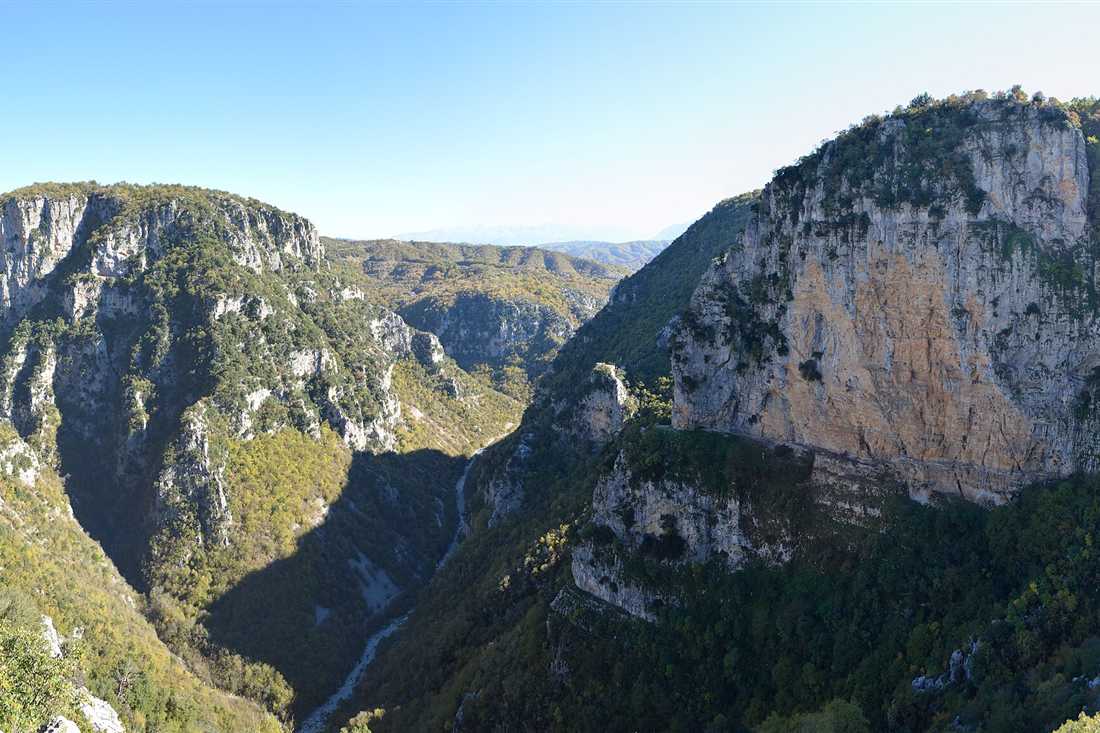
The region frames the activity. Zagori, also known as the Zagorochoria, is a group of 46 stone villages in the Pindus mountains of north-west Greece. The villages sit inside the Vikos–Aoös National Park, a UNESCO Global Geopark, and the limestone that shapes the park also shapes its gorges. Water has cut this rock into slots, chutes and basins, and Zagori canyoning uses that terrain as a natural route for a guided descent.
Which Zagori canyoning tours are on sale?
Two Zagori canyoning tours are on sale, and both start at Papigo: Papigo: Canyoning with Nefeli Rappelling and Waterfalls, Zagori, and Papigo: Zagori Nefeli Gorge Canyoning. Both tours descend the Nefeli gorge with certified guides and supplied gear.
The first tour, Papigo: Canyoning with Nefeli Rappelling and Waterfalls, Zagori, names rappelling and waterfalls in its title, so the day centres on rope work down the falls of the gorge. The second tour, Papigo: Zagori Nefeli Gorge Canyoning, names the gorge itself and follows the same canyon from top to exit. Both Zagori canyoning listings carry the meeting point, the start time and the full list of inclusions, so travellers check those details before booking.
The two listings differ in wording, not in setting. Each one runs in the same limestone canyon near Papigo with guides who rig the ropes and belay every rappel. Duration, group size, age limits and the exact route vary between operators, so the tour listing is the source for those details. A traveller who wants the most rope work on a Zagori canyoning day picks the title that names rappelling.
Where is the Nefeli gorge at Papigo?
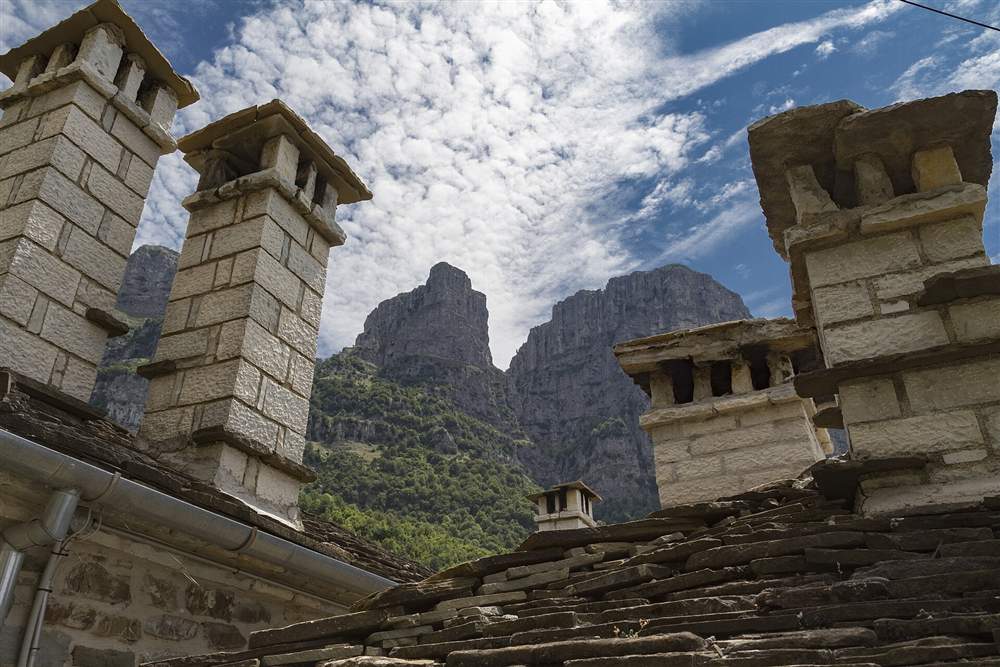
The Nefeli gorge lies near Papigo, the twin village of Megalo Papigo and Mikro Papigo in Zagori, under the limestone towers of Astraka. It is a narrow canyon with smooth rock walls, clear pools and small waterfalls.
Papigo is the base for Zagori canyoning. The village comes in two parts, Megalo Papigo and Mikro Papigo, and both sit at the foot of the Astraka towers, a wall of pale limestone above the rooftops. Stone lanes and cobbled mule paths run between the houses, and the Nefeli gorge cuts into the limestone close to the village. The tour listing gives the exact meeting point in Papigo.
Inside the gorge, the walls close in and the light drops. Water has polished the rock smooth, and the stream steps down through a chain of pools and small waterfalls. Close to the village, the Ovires rock pools of the Rogovo stream are a known summer swimming spot, and they show the same clear, cold mountain water that runs through every Zagori canyoning descent in the Nefeli gorge.
How does a Zagori canyoning descent run step by step?
A Zagori canyoning descent runs in a fixed order: a meeting in Papigo, a gear fitting, a safety briefing with ground practice, an approach to the start of the gorge, and then the descent through pools and waterfalls to the exit.
The day opens at the meeting point named on the tour listing. Guides hand out the wetsuit, helmet, harness and rappel device, and they check that each piece fits. The briefing follows, with ground practice on the rope before anyone faces a real drop. This practice teaches the stance and hand position for rappelling.
The descent itself mixes stretches of walking and scrambling with sections of water. At each pool, the guide checks the depth before a jump or a slide, and at each waterfall the guide rigs the rope and belays the rappel. Zagori canyoning moves at the pace of the group, and the exit leads out of the gorge on foot. Check the tour listing for timings.
- Meet – the group gathers at the point named on the tour listing.
- Gear up – guides fit the wetsuit, helmet and harness.
- Practise – a ground session teaches the rappel stance.
- Descend – the group walks, swims, jumps and rappels down the gorge.
- Exit – the group leaves the canyon on foot at the end.
What does rappelling down a waterfall involve?
Rappelling, also called abseiling, means lowering the body down a rock face on a rope, feet against the wall, while a guide controls the line. On a Zagori canyoning tour, the rappels run down the small waterfalls of the Nefeli gorge.
The guide fixes the rope to an anchor at the top of the fall and clips each traveller to it through the harness and the rappel device. The traveller leans back, sets the feet flat on the rock and walks down the face while feeding the rope through the device. The water runs over the rock beside or under the feet, so the grip of the shoe matters on every step.
The belay is the safety line of the rappel. A guide holds the rope and can stop a descent at any moment, so a slip means a pause, not a fall. The first tour on sale names rappelling and waterfalls in its title, which marks rope work as the centre of that Zagori canyoning day. Check the tour listing for the number and the height of the rappels.
Can canyoners swim, jump and slide in the Nefeli gorge?
Yes, canyoners swim, jump and slide in the Nefeli gorge, but only where the guide has checked the pool and marked the spot as safe. Zagori canyoning never includes a jump without the guide’s check first.
Swimming is part of the route, not an extra. Where a pool fills the gorge from wall to wall, the way forward is to swim across it. The wetsuit adds buoyancy and warmth, which makes these crossings easier in cold mountain water. Travellers who swim with confidence enjoy this part of Zagori canyoning the most, and the tour listing states the swimming level that each operator asks for.
Jumps and slides depend on the water depth and the flow on the day. Smooth, water-worn chutes of limestone form natural slides, and deep pools below some drops allow a jump. The guide goes first, checks the landing and then signals each person one at a time. Anyone who prefers not to jump takes the rope or walks around the drop where the rock allows it, so every Zagori canyoning jump stays optional.
Which gear does a Zagori canyoning tour supply?
Most Zagori canyoning tours supply a wetsuit, a helmet, a harness and a rappel device. Travellers bring their own canyoning or trail shoes with grip, and they check the listing for the exact list of what is included.
The wetsuit comes first because the water in the Nefeli gorge is cold mountain water, even in summer. Neoprene holds a thin layer of water against the skin, which the body warms, and it also pads knees and elbows against the rock. The helmet guards the head on scrambles and under the falls.
The harness and the rappel device form the rope system. The harness sits around the waist and legs, and the device clips to its front loop, where it creates friction on the rope. Guides check every buckle and every carabiner before each rappel. On a Zagori canyoning trip, footwear is the one item most travellers supply themselves, so the listing check before the day matters.
- Wetsuit – warmth and padding in cold mountain water.
- Helmet – head protection on scrambles and rappels.
- Harness – the anchor point for the rope system.
- Rappel device – friction control on the rope.
- Shoes – canyoning or trail shoes with grip, from the traveller.
Who can join a canyoning trip at Papigo?
Travellers with basic fitness, confidence in water and no fear of ropes can join a canyoning trip at Papigo. Age, swimming and fitness requirements differ between operators, so the tour listing gives the exact rules for each Zagori canyoning date.
Zagori canyoning asks for steady legs more than strength. The descent involves walking on uneven rock, stepping down ledges, climbing over boulders and swimming short stretches, so a traveller at home on mountain trails handles the terrain. The ground practice teaches the rappel method before the first drop, which suits first-timers.
Swimming matters more here than in other mountain activities. Some pools are deep, and the wetsuit helps but does not replace basic swimming skill. Minimum ages differ by operator, so families check the tour listing before booking a Zagori canyoning date. Travellers with knee, back or heart conditions check with the operator first, since the route includes jumps, scrambles and cold water.
- Fitness – comfort on uneven rock and short scrambles.
- Swimming – the ability to cross deep pools in a wetsuit.
- Age – a minimum set by each operator on the listing.
- Health – no condition that rules out jumps or cold water.
Is Zagori canyoning safe with certified guides?
Zagori canyoning is a controlled activity when certified guides lead it: they rig every rope, belay every rappel, check every pool before a jump and watch the weather for signs of a flash flood after rain.
The guide is the safety system of the day. Certified canyoning guides train in rope rigging, rescue and first aid, and they read the Nefeli gorge at its different water levels. The briefing sets clear rules for the group: stay behind the guide, wait for the signal at each drop, and never jump into a pool the guide has not checked.
Flash floods are the main natural risk in any canyon. Heavy rain upstream raises the water fast, and a narrow gorge offers little room to climb out. For this reason, guides read the forecast and the stream before every Zagori canyoning trip and call off a descent when rain threatens. A cancelled date is the safety system working, and the tour listing sets out the cancellation terms.
When is the best season for canyoning at Papigo?
The season for canyoning at Papigo runs from late spring to early autumn, when the water flow and temperature suit a descent. Flow changes with rain and snowmelt, so guides decide on the day whether the gorge is open.
Late spring brings the strongest water, fed by snowmelt from the Pindus peaks. The falls carry more volume, the pools run deeper and the water is at its coldest, so the wetsuit earns its place. Some Zagori canyoning dates in this period change route or move to another day when the flow runs too strong, and the guides make that call at the stream.
Summer brings lower, warmer water and long daylight, which suits first-timers and families. Shade from the high walls keeps the canyon cooler than the open slopes on hot days in Epirus. Early autumn keeps the water calm until the first heavy rains return. For each Zagori canyoning date, the guide checks the conditions that morning.
What do canyoners bring and wear in the gorge?
Canyoners bring canyoning or trail shoes with grip, a swimsuit to wear under the wetsuit, a towel and dry clothes for the end. The operator supplies the technical gear, and the tour listing gives the full kit list.
Shoes are the key item for Zagori canyoning. Wet limestone is slick, and a sole with deep lugs and sticky rubber holds on polished rock where a smooth sole slips. Closed shoes also protect the toes on boulders. Sandals, flip-flops and fashion trainers are the wrong choice for the gorge, while old trail shoes that are fine to soak do the job.
Under the wetsuit, a swimsuit or quick-dry sports underwear sits best. Leave phones, jewellery and watches at the hotel unless the guide carries a dry bag, which the listing confirms. After a Zagori canyoning day, dry clothes and a warm layer make the drive back comfortable.
- Shoes – canyoning or trail shoes with a grippy sole.
- Swimwear – a swimsuit to wear under the wetsuit.
- Towel – a quick way to dry off at the exit.
- Dry clothes – a full change and a warm layer.
- Water – a bottle for the approach and the walk out.
How does canyoning combine with the Vikos Gorge, rafting and the stone villages?
Zagori canyoning fits into a stay of two or three days in the region, alongside the Vikos Gorge hike, rafting on the Voidomatis river, a jeep tour of the villages and walks between the stone-arched bridges.
The Vikos Gorge is the neighbouring landmark of the national park, and a Vikos Gorge hike follows the canyon on foot instead of through the water. The Voidomatis river runs out of the Vikos Gorge and carries Voidomatis river rafting trips on clear, cold water. Both pair with Zagori canyoning on the days before or after the descent at Papigo.
For the villages, a Zagori jeep tour covers the stone settlements and viewpoints in one outing, and the stone bridges of Zagori link the old mule paths across the streams. Epirus has more water adventures further south, with Tzoumerka rafting in the mountains and Acheron river rafting and kayaking near the coast.
- Day one – Zagori canyoning in the Nefeli gorge at Papigo.
- Day two – the Vikos Gorge hike on foot.
- Day three – Voidomatis rafting and the stone bridges.
How do travellers book and reach Papigo from Ioannina?
Travellers book Zagori canyoning online through the tour listing, well ahead of summer dates, and reach Papigo from Ioannina, the base city of the region, which has its own airport and road links into the Pindus mountains.
Ioannina is the gateway to Zagori and the hub for trips across Epirus, with a lakeside old town, a castle and a full range of Ioannina tours. Travellers who arrive by air use Ioannina airport transfers to reach the city or the villages. From Ioannina, the road climbs into the Pindus mountains towards Papigo, and the Zagori canyoning listing names the meeting point.
Booking early secures a place, since Zagori canyoning runs in a fixed season and guides limit the number of people who descend at once. Read the listing for the start time, inclusions, age rules and cancellation terms before booking. Pick a date with a spare day after it, so a descent cancelled for rain or high water moves to the next morning.
Is Zagori canyoning worth it?
Zagori canyoning is worth it for travellers who want to see the limestone of the Vikos–Aoös National Park from inside a gorge, with ropes, pools and waterfalls, under the care of certified guides.
The activity shows a side of Zagori that roads and trails miss. The walls, pools and falls of the Nefeli gorge sit out of view from the villages, and the only way through is the water. The two Zagori canyoning tours at Papigo give first-timers a guided route with the gear supplied, and the day ends back in one of the 46 stone villages of the region.
Zagori canyoning suits travellers who swim, enjoy cold water and want a physical day in the mountains. Travellers who prefer dry rock pick other options, such as the Vikos Gorge on foot or Meteora rock climbing in Thessaly. For everyone else, a descent at Papigo pairs rope work, swimming and mountain scenery in one guided day.
Frequently Asked Questions
How long does Zagori canyoning take?
The length of a Zagori canyoning day varies by operator and by the water level in the Nefeli gorge. The tour listing gives the duration, which covers the gear fitting, the ground practice, the approach, the descent and the walk out from the canyon.
Is Zagori canyoning suitable for beginners?
Zagori canyoning suits beginners with basic fitness who swim with confidence. Guides give a briefing and ground practice before the first rappel, rig every rope and check each pool before a jump. The tour listing states the age and swimming requirements for each date.
Do travellers need their own gear for Zagori canyoning?
Most tours supply the wetsuit, helmet, harness and rappel device for the descent at Papigo. Travellers bring canyoning or trail shoes with grip, a swimsuit, a towel and dry clothes. Check the tour listing for the exact list of equipment that is included.
What happens to Zagori canyoning when it rains?
Rain raises the water in the gorge and brings a risk of flash floods, so guides check the forecast and the stream before each descent. When conditions are unsafe, the guide cancels or moves the date, and the tour listing explains the terms.
Where does Zagori canyoning start?
Zagori canyoning starts at Papigo, the twin village under the limestone towers of Astraka, and the descent runs through the Nefeli gorge nearby. Ioannina is the base city with an airport, and the tour listing names the exact meeting point.