
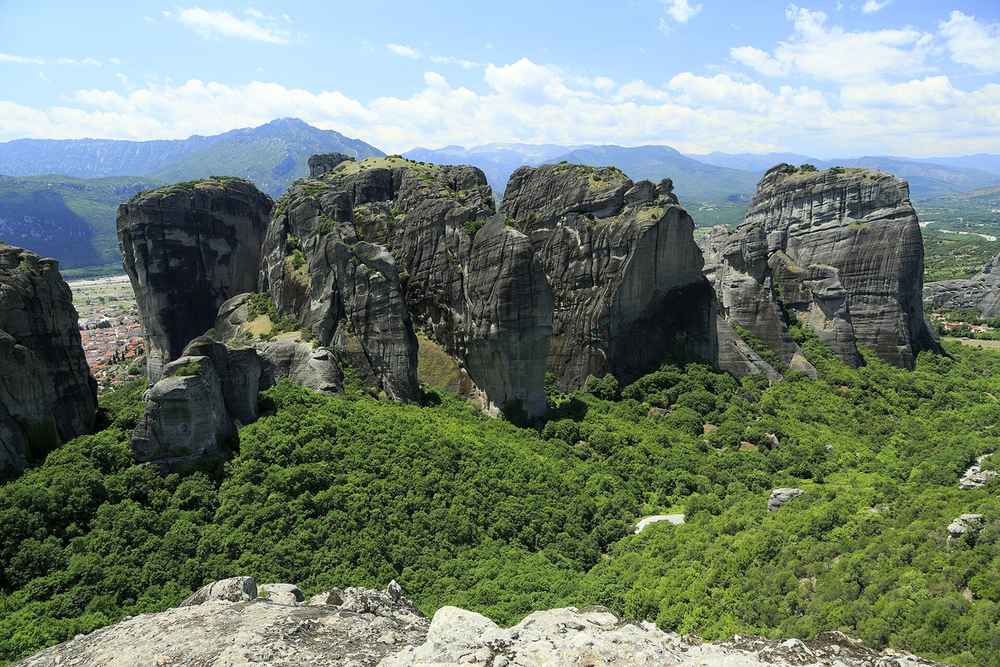
Rock climbing in Meteora draws climbers to a cluster of rounded conglomerate towers that rise straight from the Thessalian plain in central Greece. The rock is a natural cement of pebbles and cobbles fused into vertical pillars, and its rough, pocketed surface rewards balance and friction over brute pulling. German pioneers, led by Dietrich Hasse, opened most of the classic lines, and the towers now hold hundreds of multi-pitch routes across a wide grade span. The village of Kastraki sits at the foot of the rocks and serves as the climbers’ base. This guide explains the rock, the routes, the seasons, and the etiquette. Plan the trip with My Greece Tours.
Meteora is a traditional, adventure-style venue rather than a bolt-clipped sport crag, so the climbing suits confident, self-reliant parties who place their own gear. The wider Meteora travel guide sets the towers against the monasteries, the plain, and the town below. Climbers share the massif with pilgrims and monks, and respect for the active houses shapes access on certain pillars. The best windows fall in spring and autumn, when the conglomerate stays cool enough for friction. The sections below cover the rock and its history, the styles and grades, the seasons and conditions, the Kastraki base and access, and how to climb with a guide.
What makes rock climbing in Meteora distinctive?
Rock climbing in Meteora works a rare conglomerate: pebbles and cobbles cemented into vertical pillars. The rough surface favours friction, balance, and pocket holds, and routes run multi-pitch up towers that rise hundreds of metres from the plain.
The rock at Meteora is the heart of the experience. It is a conglomerate, a mass of rounded river pebbles and cobbles bound in a hard natural cement, weathered over long ages into smooth, bulging towers. Holds come as pockets between the embedded stones, as friction on the rough matrix, and as the occasional jug where a cobble juts proud. This texture demands trust in the feet and a light touch, since the pillars offer scant sharp edges to crimp. Rain turns the same surface glassy, so the rock reads best when dry and cool.
The setting adds to the character: the same rocks carry the famous Meteora monasteries on their summits, so a climber shares the massif with a living monastic landscape rather than an empty crag.
German climbers shaped the modern history of the venue. Dietrich Hasse and his contemporaries arrived and opened most of the classic multi-pitch lines through the second half of the twentieth century, mapping the towers and naming routes that still see steady traffic. Their ethic leaned traditional and bold, with sparse fixed protection and long run-outs on friction. That legacy defines Meteora today: it reads as an adventure venue, not a sport-bolted resort, and a leader weighs commitment, route-finding, and self-rescue as much as raw difficulty.
The rock itself is the draw for visitors who also come to walk; those pairing a climb with a day of hiking in Meteora read the towers from both the summits and the trails that wind along the valley floor below them.
What climbing styles and grades does Meteora offer?
Meteora is a traditional, multi-pitch venue with grades from moderate to very hard. Routes rely on friction and pocket climbing on conglomerate, sparse fixed protection, and long pitches, so leaders place their own gear and manage full-day commitments.
The dominant style is multi-pitch traditional climbing. A team ropes up at the base and works upward across four, five, or more pitches to a tower summit, belaying from stances along the way. Protection is a mix of fixed anchors at the belays and gear a leader places on lead, so parties carry a trad rack and read each pitch as they go. Bolting is restrained by design; the historic ethic kept lines clean and committing rather than sport-equipped. This means Meteora suits climbers comfortable with route-finding, rope management, and a degree of run-out on rounded stone.
A guided outing removes much of that burden, and operators fold climbing into broader Meteora tours for visitors who want the experience without carrying the responsibility of leading a demanding pitch.
Grades span a broad range, from moderate lines that welcome competent beginners alongside a guide up to very hard test-pieces for experienced leaders. The friction-based climbing rewards technique over power, so a route can feel steady in difficulty yet demand constant attention to footwork on the rounded rock. Pitch length varies, and full routes on the taller towers make for long days with an early start and a descent to plan and rig. Because the conglomerate lacks continuous cracks across much of its surface, holds and protection depend on pockets and embedded cobbles rather than clean seams.
Newcomers to the rock type often begin on gentler towers to learn the friction feel before committing to the harder walls, building confidence on the unusual surface across a first full day out.
When is the best season for Meteora rock climbing?
Spring and autumn are the best seasons for Meteora rock climbing. Cooler air gives the conglomerate the friction climbers need, while summer heat bakes the towers and winter brings rain, so the shoulder months hold the reliable windows.
Temperature drives the climbing calendar at Meteora. The rock relies on friction, and heat robs the conglomerate of grip while draining a climber on long, poorly shaded pitches. Summer days on the Thessalian plain run hot, so midday climbing in July and August turns uncomfortable and slick underfoot on the exposed towers. Spring and autumn deliver the sweet spot: cool, stable air that keeps the rock sharp for smearing and pocket work, with longer settled spells between weather fronts. A climber timing a visit for those months finds the towers at their best.
The seasonal picture matches the wider travel advice in the guide on the best time to visit Meteora, since the same cool, clear shoulder weather serves both climbers and sightseers on the rocks.
Conditions shift within a day as well as across the year. Early starts beat the afternoon warmth in the shoulder seasons and open the option of climbing shaded aspects while the sun swings around the massif. Rain glosses the conglomerate and closes it until the surface dries, so a wet spell rules out serious lines for a day or more. Winter brings colder, damper weather that suits the venue poorly, and most parties simply wait for spring to return. Wind and cloud also matter on the exposed towers, where a team sits high above the plain for hours at a stretch.
Checking a settled forecast before committing to a long multi-pitch route is standard practice, and a flexible itinerary lets a climber swap a wet day for walking without losing the trip entirely.
Where do climbers base themselves for Meteora, and how is access?
Climbers base in Kastraki, the village at the foot of the towers, a short walk or drive from most route bases. Access is generally open, though pillars beside active monasteries may be off-limits out of respect for worship.
Kastraki is the climbers’ village. It nestles directly beneath the rocks on the western side of the massif, closer to the pillars than the larger town of Kalabaka nearby, which puts route bases within a short approach on foot or by car. Rooms, tavernas, and small guesthouses serve visiting climbers, and the relaxed pace suits early starts and late returns from the rock. A stay in Kastraki shortens every approach and keeps a party close to the towers through a multi-day trip. The village also sits amid the trails that thread between the pillars, so rest days flow easily into walks.
Choosing a base here, over accommodation farther out, saves transfer time each morning and lets a climber react to weather and conditions without a long commute to the crag.
Access at Meteora carries a spiritual dimension that climbers must honour. The towers hold active monasteries, and the community expects restraint on pillars in direct view of, or adjacent to, the working houses. Certain routes near those monasteries are closed or discouraged out of respect for worship and the monks’ quiet, and a responsible climber checks the current situation before racking up at the base. Guided outings and local information keep parties on the sanctioned pillars and away from sensitive lines. Beyond that etiquette, general access to the climbing is open and free, with no crag entry fee to pay.
Weighing bases for the trip, a climber can review where to stay in Meteora, though Kastraki remains the natural home for time on the towers.
How do you climb with a local guide in Meteora?
Local guides run Meteora climbing for visitors who lack the gear, the grade, or the route knowledge to lead the trad towers. A guide supplies protection expertise, route-finding, and safety, matching the pitch and tower to the climber’s ability.
A guide is the practical route into Meteora for most visitors. The venue’s traditional, multi-pitch character and sparse fixed protection make it a poor choice for a first unsupervised trad outing, so an operator or a certified guide bridges the gap. The guide brings the rack, sets the anchors, leads the pitches, and reads the rounded rock, while the guest climbs and belays under close supervision. Ability sets the objective: a guide picks a moderate tower for a newcomer to the conglomerate and a harder line for a strong leader chasing a classic. A half-day taster suits first-timers, while a full day reaches a summit on one of the taller pillars.
Booking direct with a Kastraki-based guide keeps the arrangement simple and local, and it puts current access knowledge in the party’s hands from the outset.
Booking ahead secures a guide in the busy spring and autumn windows, when demand for the towers peaks alongside the good weather. A reputable operator confirms the climber’s experience, supplies helmets, harnesses, ropes, and shoes where needed, and briefs the party on the etiquette around the active monasteries before setting out from Kastraki. The guide also carries local knowledge of which pillars are open and which lines suit the day’s conditions, sparing a visitor a wasted approach to a closed or wet route. A guide can also fold the climb into a wider day on the massif, pairing a morning on the rock with the monasteries or Meteora photography from the viewpoints above.
Guiding turns a demanding trad venue into an accessible, memorable day on the most unusual rock in Greece.
Frequently Asked Questions
Is Meteora good for rock climbing?
Meteora ranks among the notable multi-pitch climbing venues in Europe, prized for its rounded conglomerate towers that rise straight from the Thessalian plain. The rock is a natural cement of pebbles and cobbles, and climbing on it rewards friction and balance over pure strength, which gives the venue a distinctive feel that sets it apart from crimpy limestone or cracked granite. German pioneers, led by Dietrich Hasse, opened the classic lines through the twentieth century, leaving a deep catalogue of routes across a wide grade span. The climbing is traditional and adventure-style, with sparse fixed protection and long committing pitches, so it suits confident leaders or guided guests rather than sport-crag clippers.
The setting adds to the appeal: the same towers carry ancient monasteries on their summits, so a climber works within a living cultural landscape. For anyone drawn to bold, technical, multi-pitch rock in a spectacular place, Meteora is an outstanding destination that repays the effort of getting there.
Do you need a guide to climb in Meteora?
A guide is strongly recommended for most visitors, though experienced trad leaders can climb independently. Meteora is a traditional, multi-pitch venue on unusual conglomerate rock, with sparse fixed protection, long pitches, and demanding route-finding, so it makes a poor place to attempt a first unsupervised trad outing. A local guide supplies the rack, sets anchors, leads the pitches, and reads the rounded rock while managing safety, letting a guest climb and belay under supervision. The guide also matches the tower and grade to the climber’s ability, picking a moderate line for a newcomer or a harder classic for a strong leader.
Crucially, a guide knows which pillars are open and which lines lie too close to the active monasteries to climb, keeping a party on sanctioned rock. Independent climbers with solid trad experience, their own gear, and current access information can lead here on their own, but they should research the etiquette and conditions carefully before racking up in Kastraki and heading to the base.
What kind of rock is Meteora made of?
Meteora is built of conglomerate, a sedimentary rock formed from rounded river pebbles and cobbles bound together in a hard natural cement. Over long geological ages, erosion carved the deposit into the tall, smooth, bulging pillars that define the landscape and rise straight from the plain of Thessaly. For a climber, this rock type shapes everything about the experience. Holds come as pockets between the embedded stones, as friction on the rough matrix around them, and as the occasional protruding cobble that offers a positive grip. The surface lacks the sharp edges and continuous cracks of granite or limestone, so climbing here leans on delicate footwork, smearing, and trust in friction rather than crimping or jamming.
Protection can be harder to arrange where cracks are absent, which reinforces the venue’s traditional, committing character. The same conglomerate towers hold the monasteries on their summits, tying the geology directly to the region’s history and its enduring fame across the climbing world.