
Western Greece tours cover the region on the Ionian side of the mainland: Patras with its carnival and its castle, the rack railway and the Cave of the Lakes at Kalavryta, Ancient Olympia and the Frankish castle of Chlemoutsi in Elis, the lagoons and saltpans of Messolonghi, Venetian Nafpaktos on the gulf, and the sanctuaries and lakes of Aetolia-Acarnania. Plan the rest of the trip with Greece Tours.
This page covers the Western Greece tours you can book from Patras, Olympia and Katakolo, what each regional unit holds, the sites, castles and monasteries, the gorges, lagoons and beaches, the wine and the food, the history from the Achaean League to 1826, and how the bridge, the ferries and the seasons shape the route.
What do Western Greece tours cover?
Western Greece tours cover Patras and its carnival, the rack railway and the Cave of the Lakes at Kalavryta, Ancient Olympia and the Frankish castle of Chlemoutsi in Elis, the lagoons of Messolonghi, Venetian Nafpaktos, and the lakes and sanctuaries of Aetolia-Acarnania.
The region covers 11,336 square kilometres on the Ionian side of the mainland and holds three regional units: Achaea and Elis in the north-west Peloponnese, and Aetolia-Acarnania across the gulf. Patras, the third city of Greece with about 215,000 people in its municipality, is the capital and the country’s western gate to Italy. Western Greece tours cross all three units in three days.
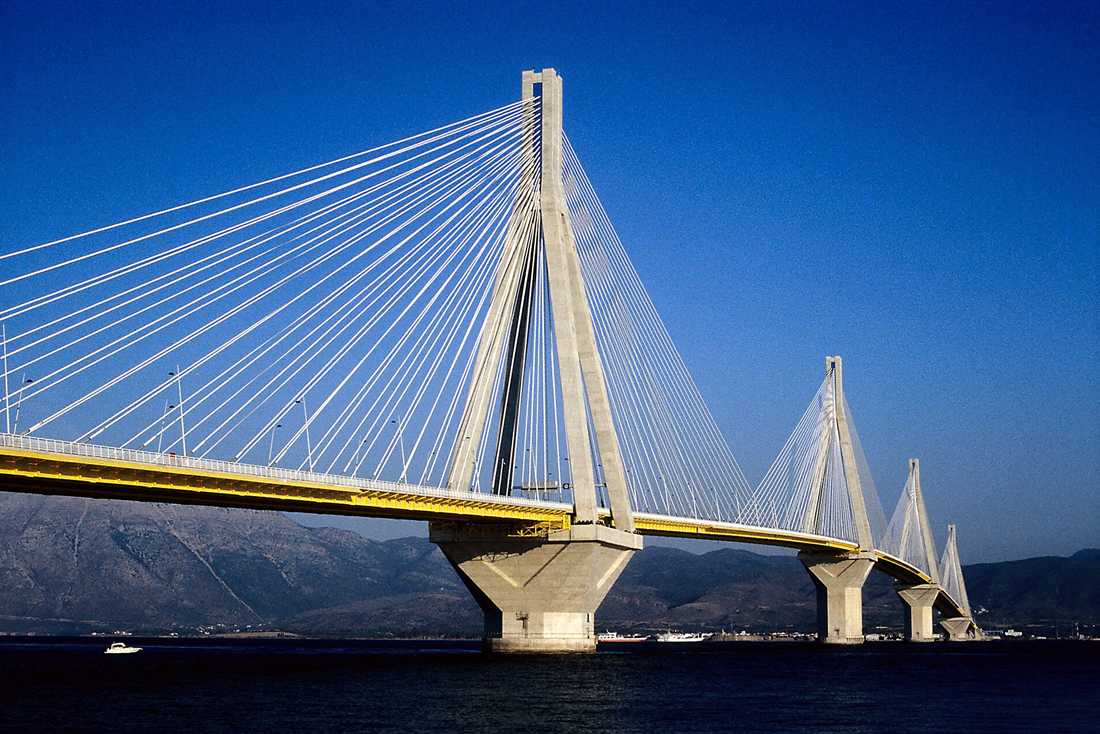
It is a region of crossings. The Rio-Antirrio bridge links the Peloponnese to the mainland in five minutes, the ferries from Patras reach Ancona, Bari, Brindisi and Venice, and the boats from Kyllini cross to Zakynthos and Kefalonia. That traffic has always run through it, and the sites stand along the routes. Western Greece tours use the bridge and the ferries as part of the route.
Which formats do Western Greece tours take?
- Patras city tours on foot or with wine tasting, taking the castle, the Roman odeon and Agios Andreas.
- Kalavryta days with the rack railway, the Cave of the Lakes and a winery.
- Olympia day trips from Patras, Katakolo or Athens, with the sanctuary and the museum.
- Messolonghi and lagoon visits, with the saltpans, the stilt huts and the Garden of Heroes.
- Nafpaktos and gulf days across the Rio-Antirrio bridge.
- Cruise excursions from Katakolo to Olympia for ships calling on the Ionian route.
Our pages on Olympia and Peloponnese tours cover parts of the region in detail, and Greece Tours sets out the rest of the country.
Which regional units make up Western Greece?
Western Greece holds Achaea with Patras, Aigio and Kalavryta, Elis with Olympia, Pyrgos, Katakolo and Chlemoutsi, and Aetolia-Acarnania with Messolonghi, Agrinio, Nafpaktos and the lakes. Patras is the regional capital.
The three units divide at the water. Achaea runs along the south shore of the Corinthian Gulf from Patras to the Corinthia border, with Mount Panachaiko above the city, Erymanthos and Chelmos inland and the Vouraikos gorge cutting between them. Elis is the plain and coast south of it, with the Alfeios valley and Olympia in its middle. Western Greece tours follow that order from north to south.
Aetolia-Acarnania is the largest unit in Greece by area and the emptiest of the three, a country of mountains, lagoons and the two biggest natural lakes in the country, Trichonida and Lysimachia. The Acheloos, the second longest river in Greece, drains it into the Ionian opposite the Echinades islands. Western Greece tours reach it over the Rio-Antirrio bridge.
- Achaea – Patras, Aigio, Kalavryta, the Vouraikos gorge and the Cave of the Lakes.
- Elis – Ancient Olympia, Pyrgos, Katakolo, Kyllini, Chlemoutsi and the Kaiafas lake.
- Aetolia-Acarnania – Messolonghi, Aitoliko, Agrinio, Nafpaktos, Thermos and Lake Trichonida.
- Rio-Antirrio bridge – the 2,880 m cable-stayed crossing of the gulf, opened in 2004.
- Patras port – the ferries to Italy and to the Ionian islands.
- Araxos airport – the regional airport 45 km west of Patras.
Western Greece tours drive between them in short hops: Patras to Kalavryta 40 km, Patras to Olympia 120 km, Patras to Messolonghi 50 km over the bridge, and Messolonghi to Nafpaktos 40 km along the gulf.
Which Western Greece tours run from Patras?
Western Greece tours from Patras run guided city walks with hidden corners, city tours with a wine tasting, the Kalavryta day with the Cave of the Lakes and a winery, the full-day trip to Ancient Olympia, and the Katakolo excursions for cruise passengers.
Patras is the base. “Patras: Guided City Tour with Hidden Gems” walks the upper town and the castle; “Patras City Tour with Optional Visits and Wine Tasting” adds a cellar; “Patra: Kalavryta, Cave of the Lakes and Winery Tour” takes the mountain day; and “Ancient Olympia Full-Day Tour from Patras” runs the 120 km south to the sanctuary and back. Western Greece tours start from its waterfront.
Katakolo, the port of Pyrgos, handles the cruise calls. Ships on the Adriatic and Ionian routes anchor there for Olympia, 35 minutes inland, and the town’s own tours run to Patras and to the Elis coast when the call is long enough. Western Greece tours meet the ships there in the morning.
Western Greece tours also work as a self-drive loop. The motorway runs Athens to Patras in two and a half hours, the bridge crosses to Antirrio in five minutes, and the coast roads follow both shores of the gulf, so the region is covered by car in three or four days. Our page on the Patras city tour covers the capital.
What do Western Greece tours see in Patras?
Western Greece tours in Patras see the church of Agios Andreas, the largest in Greece, the Venetian and Byzantine castle above the town, the Roman odeon, the stairs of Agiou Nikolaou, the Achaia Clauss winery of 1861 and the carnival that fills the city before Lent.
The city is built in tiers at the foot of Mount Panachaiko, with a grid of arcaded streets laid out after independence and an upper town of squares and stairways above it. Its history runs four thousand years, it was a cosmopolitan Roman centre, and Christian tradition puts the martyrdom of Saint Andrew here. Western Greece tours walk the stairways to the castle.
Agios Andreas, finished in 1974 beside the older church, holds the saint’s skull and the cross on which he was crucified, both returned in the 20th century, and seats 5,500 people under a dome 46 m high. The castle above the centre was built in the 6th century on the ancient acropolis and rebuilt by Franks, Venetians and Ottomans, and the Roman odeon of the 2nd century AD stands below it, used again for concerts. Western Greece tours open the city day there.
The Patras carnival is the largest in Greece. It runs from 17 January to Clean Monday with parades, the treasure hunt of the Bourboulia balls and a night parade of floats, and it ends with the burning of the carnival king in the harbour. The Archaeological Museum of Patras, opened in 2009, is the second largest in the country. Western Greece tours in those weeks book early.
Achaia Clauss, founded in 1861 in the hills above the city, made Mavrodaphne the wine that carries the region’s name; its cellars and the Imperial Hall are shown to visitors. Western Greece tours take the city in a day and the winery in an afternoon.
What do Western Greece tours see at Kalavryta?
Western Greece tours at Kalavryta ride the Odontotos rack railway up the Vouraikos gorge, visit the Cave of the Lakes with its thirteen terraced lakes, the monastery of Mega Spilaio and the Agia Lavra where the revolution was proclaimed, and the memorial to the massacre of 13 December 1943.
Kalavryta sits at 750 m on the Vouraikos, 40 km south-east of Patras between Erymanthos and Chelmos. Italian engineers built the rack railway from Diakopto between 1885 and 1895; the metre-gauge line climbs the gorge in 22 km with a rack section on the steepest grades, through tunnels and along ledges above the river, and the run takes about an hour. Western Greece tours take the train up from Diakopto.
The Cave of the Lakes lies 17 km from the town near Kastria. It is an old underground river on three levels: in winter the snowmelt turns it into a torrent with waterfalls, and in summer it leaves thirteen terraced lakes behind, walked on raised platforms. Pausanias mentions it, and the legend of Melampus curing the daughters of Proetus is set in it. Western Greece tours pair it with the town in one day.
- Odontotos railway – Diakopto to Kalavryta, 22 km up the Vouraikos gorge in about an hour.
- Cave of the Lakes – thirteen lakes on three levels, near Kastria.
- Mega Spilaio – the monastery built into a cliff, founded in the 4th century by tradition.
- Agia Lavra – where Germanos of Patras is said to have raised the banner in March 1821.
- Kalavryta memorial – the hill where 13 December 1943 is marked, with the clock stopped at 2.34.
- Chelmos ski centre – the runs at 1,700 to 2,340 m above the town.
On 13 December 1943 German troops executed the male population of the town and burned it; the museum in the old school and the memorial on the hill record it, and the clock on the church is kept at the hour it happened. Western Greece tours take the train up and the road back, which makes the day.
What do Western Greece tours see at Olympia and in Elis?
Western Greece tours in Elis see Ancient Olympia with its sanctuary of Zeus, stadium and museum, the Frankish castle of Chlemoutsi above Kyllini, the port of Katakolo, the site of ancient Elis itself and the lake and dunes of Kaiafas on the coast.
Olympia is the reason most visitors come to the region. The sanctuary lies in the valley of the Alfeios among pines and wild olives, with the temple of Zeus, the temple of Hera, the workshop of Pheidias, the palaestra and the stadium that held 45,000 people. The museum beside it holds the Hermes of Praxiteles, the Nike of Paionios and the pediments of the temple of Zeus. Western Greece tours give the site and the museum half a day.
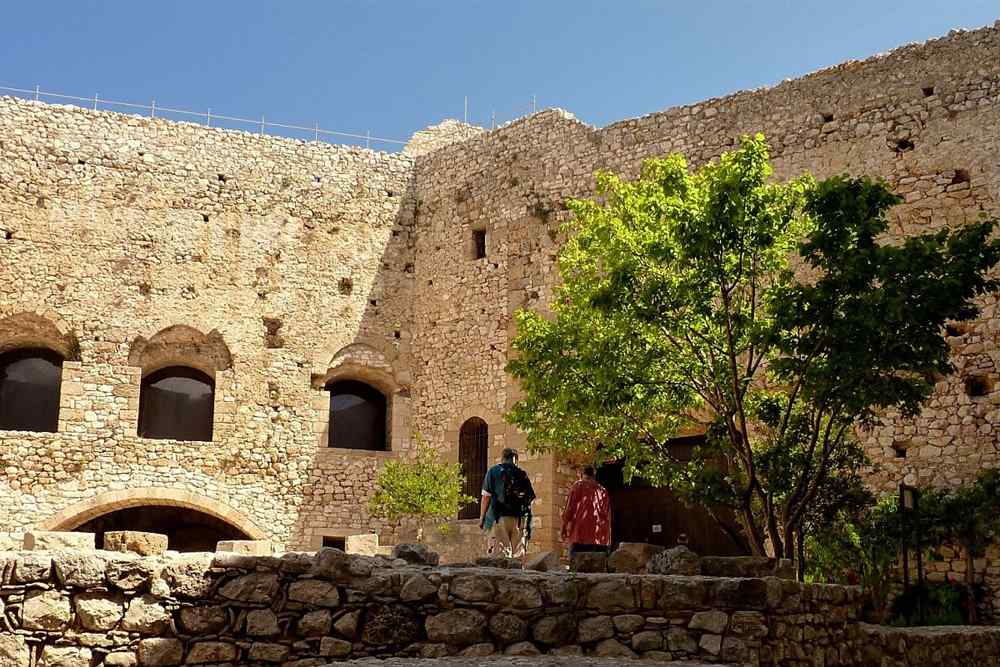
Chlemoutsi, above the village of Kastro near Kyllini, is the finest Frankish castle in Greece. The Crusader rulers of the Principality of Achaea built it in the early 1220s on a plateau 226 m above the sea, with a hexagonal keep around an inner court and two-storey halls along its length, and it survives largely in its 13th-century state. Western Greece tours climb its keep for the Ionian view.
- Ancient Olympia – the sanctuary, the stadium and the museum in the Alfeios valley.
- Chlemoutsi – the hexagonal Frankish keep above Kyllini, with its gallery museum.
- Katakolo – the cruise port, 35 minutes from Olympia, with its own small museums.
- Ancient Elis – the city that organised the Games, with a theatre, north of Pyrgos.
- Kaiafas – the lake, the thermal springs and the dune beach on the Elis coast.
- Kyllini – the port for Zakynthos and Kefalonia, with thermal baths in the pines.
Our pages on Olympia, the guided tour of the site and Katakolo to Olympia cover the sanctuary and its approach.
What do Western Greece tours see at Messolonghi?
Western Greece tours at Messolonghi see the lagoon with its stilt huts and saltpans, the Garden of Heroes where Byron and the defenders are commemorated, the Gate of the Exodus, the Byron museum and the island of Aitoliko on its causeways.
Messolonghi stands between the Acheloos and the Evinos on the Gulf of Patras, with the largest lagoon complex in Greece around it. The pelades, wooden huts on stilts with reed roofs, stand out in the water, the saltpans work the shallows, and the avgotaracho, salted and waxed grey mullet roe, is the town’s export and Greece’s bottarga. Western Greece tours drive the causeways at the end of the day.
The siege made its name. The town held out against Ottoman and Egyptian forces from 1825, and on the night of 10 April 1826 the garrison and the townspeople attempted a mass breakout, the Exodus, in which most of them died. Lord Byron had arrived in January 1824 to join the cause and died there of fever on 19 April 1824; the Garden of Heroes holds his cenotaph among the graves of the philhellenes. Western Greece tours walk the Garden of Heroes for it.
Aitoliko, 12 km north, sits on an island in its own lagoon joined to both shores by stone bridges, a town of narrow lanes and fishing boats. The wetland between them is a Ramsar site with flamingos, herons and pelicans, and the road across the causeways is the best of the region’s short drives.
Western Greece tours take the lagoon in the late afternoon, when the light is on the water and the fishermen work the traps.
What do Western Greece tours see at Nafpaktos and on the gulf?
Western Greece tours at Nafpaktos see the round Venetian harbour with its towers, the castle that climbs the hill above it in five walled enclosures, the statue of Cervantes on the quay, and the gulf where the battle of Lepanto was fought on 7 October 1571.
Nafpaktos sits on the north shore of the Corinthian Gulf, 3 km west of the Mornos, and its harbour is the picture of the town: a circular basin closed by two towers, with tavernas around it and the castle rising behind. The fortress runs from the harbour to the summit in five enclosures, Byzantine and Venetian work with Ottoman repairs. Western Greece tours stop at the harbour for lunch.
The town controlled the entrance to the gulf, which is why it changed hands through every war fought in it. Athens used it as a naval station in the Peloponnesian War, the Venetians held it in the 15th century as Lepanto, the Ottomans took it in 1499, and in 1571 the Holy League destroyed the Ottoman fleet off it in the last great galley battle. Miguel de Cervantes fought there and lost the use of his left hand; his statue stands beside the harbour. Western Greece tours read that history in the five walls.
- Venetian harbour – the round basin with its two towers and the chain across the mouth.
- Nafpaktos castle – five enclosures climbing the hill, open and free to walk.
- Cervantes statue – on the quay, marking Lepanto and the writer who fought in it.
- Gribovo and Psani – the town beaches either side of the harbour.
- Rio-Antirrio bridge – 2,880 m of cable-stayed crossing, 10 km east.
- Mornos delta – the river mouth and the gulf shore towards Galaxidi.
Our page on Central Greece tours covers the far shore of the same gulf, an hour east of the bridge.
Which ancient sites beyond Olympia do Western Greece tours visit?
Western Greece tours visit Thermos, the federal sanctuary of the Aetolians above Lake Trichonida, Kalydon with its sanctuary of Artemis Laphria, the river port of Oiniades on the Acheloos, ancient Elis north of Pyrgos, and the walls of Pleuron above Messolonghi.
Thermos was the political and religious centre of the Aetolian League, which ran most of central Greece in the 3rd century BC. Its long temple of Apollo stands on a terrace with the stoas of the assembly around it, and Philip V of Macedon sacked the place twice, in 218 and 206 BC, which is why the site reads as foundations rather than buildings. Western Greece tours reach it on the Trichonida road.
Kalydon, on the road between Messolonghi and Nafpaktos, is the city of the Calydonian boar hunt, with the sanctuary of Artemis Laphria and a heroon whose underground chamber survives. Oiniades, west of Messolonghi, keeps ship sheds cut into the rock of a silted harbour, a theatre and a circuit of polygonal wall in the Acheloos marshes.
- Thermos – the Aetolian federal sanctuary and its temple of Apollo above Trichonida.
- Kalydon – the sanctuary of Artemis Laphria and the heroon on the Evinos road.
- Oiniades – the rock-cut ship sheds and theatre in the Acheloos delta.
- Ancient Elis – the city that ran the Olympic Games, with its theatre north of Pyrgos.
- Pleuron – the Hellenistic walls and theatre on the hill above Messolonghi.
- Dymi and Rio – the Achaean sites on the coast west and east of Patras.
None of them takes a coach, and Oiniades and Pleuron have no ticket office. Western Greece tours reach them by car on the way between the bigger names, which is how the region works.
Which beaches and lagoons do Western Greece tours reach?
Western Greece tours reach Kalogria and the Strofylia forest in Achaea, Kourouta and Kaiafas in Elis, the Kyllini and Glyfa coast facing Zakynthos, the town beaches of Nafpaktos, and the lagoons of Messolonghi and Aitoliko behind them.
The Ionian coast is long, flat and sandy, with dunes and umbrella pines behind it rather than cliffs. Kalogria, west of Patras, runs beside the Strofylia forest and the Prokopos lagoon, a wetland of about 20 square kilometres protected under Ramsar with turtles, herons and one of the largest stone pine forests in Europe. Western Greece tours use it for the afternoon swim.
- Kalogria and Strofylia – sand, dunes and the pine forest and lagoon behind it.
- Kourouta – the beach of Amaliada in Elis, shallow and long.
- Kaiafas – dune beach, thermal lake and pine forest south of Pyrgos.
- Kyllini and Glyfa – the coast facing Zakynthos, with the ferry port between them.
- Nafpaktos – Gribovo and Psani either side of the Venetian harbour.
- Messolonghi and Aitoliko – lagoons for birds and saltpans rather than swimming.
The gulf coast east of Patras is pebble and narrow, with the road and the railway along it; the Ionian side carries the sand. Western Greece tours put the beach in the afternoon and the site in the morning, since the two are rarely more than 40 km apart.
Which outdoor tours run in Western Greece?
Outdoor Western Greece tours walk the Vouraikos gorge beside the rack railway, climb Chelmos and Erymanthos, ski at Kalavryta, raft the Ladon and the Evinos, kayak on Lake Trichonida and watch birds in the Strofylia and Messolonghi wetlands.
The Vouraikos is the classic. Walkers take the train up to Zachlorou or Kalavryta and come down the gorge on the old rail path and the riverbed, three to five hours between rock walls with the line crossing above them. Chelmos, at 2,355 m, carries the ski centre and the Styx waterfall, the black water the ancients swore by, on its north face. Western Greece tours walk it downhill from the train.
- Vouraikos gorge – the walk from Kalavryta or Zachlorou down to Diakopto.
- Chelmos and the Styx – the summit, the ski centre and the waterfall of the underworld river.
- Erymanthos – the mountain of the boar, walked from Kalentzi and Lechouri.
- Lake Trichonida – kayaking and cycling on the largest natural lake in Greece.
- Rafting – the Ladon in Achaea and the Evinos in Aetolia, in spring.
- Strofylia and Kotychi – birdwatching in the Ramsar wetland west of Patras.
The Aroania observatory on Chelmos, at 2,340 m, runs the largest telescope in Greece and opens to visitors. Western Greece tours combine the mountain days with Kalavryta and the lake days with Messolonghi.
What do Western Greece tours eat and drink?
Western Greece tours eat the avgotaracho of Messolonghi, salted mullet roe sealed in beeswax, eels from the lagoons, the cheese pies and tsoureki of Patras, and drink Mavrodaphne and Muscat from the Patras vineyards and the tsipouro of the mountains.
Messolonghi built a trade on its lagoon. Grey mullet roe is salted, pressed, dried and dipped in beeswax to make avgotaracho, which carries a protected designation and is eaten in thin slices; the same water gives eels, which are smoked or grilled, and the saltpans supply the sea salt. Western Greece tours taste it at the harbour tavernas.
- Avgotaracho Messolongiou – the waxed mullet roe with its own designation of origin.
- Lagoon eels and mullet – smoked, grilled or cooked in the traps.
- Mavrodaphne of Patras – the sweet red made since Gustav Clauss started in 1861.
- Muscat of Patras and Rio – the white appellations of the same hills.
- Feta and graviera – from the Erymanthos and Aetolian pastures.
- Olives and oil – from the Elis plain and the Acheloos valley.
Achaia Clauss put the region on the wine map, and the estates around Patras now bottle dry reds and whites beside the sweet wines. Western Greece tours book the cellar visits with the city day, since most of them sit within 20 minutes of Patras.
What history do Western Greece tours tell?
Western Greece tours tell of Olympia and its Games, the Achaean League, Saint Andrew at Patras, the Frankish Principality of Achaea at Chlemoutsi, the battle of Lepanto in 1571, the Exodus of Messolonghi in 1826 and the massacre at Kalavryta in 1943.
The Games ran at Olympia from 776 BC by tradition until Theodosius ended them in the 4th century AD, and the Eleans who organised them grew rich on the sanctuary. The Achaean League, refounded in 280 BC from the cities of Achaea, became the last serious Greek power before Rome broke it in 146 BC and sacked Corinth. Western Greece tours start the history there.
Christian tradition brings Saint Andrew to Patras and has him crucified there on an X-shaped cross. After 1204 the Frankish Principality of Achaea ran the north-west Peloponnese from Andravida with Chlemoutsi as its stronghold and Glarentza as its port, and the Venetians and Ottomans fought over the gulf for the next four centuries.
The modern chapters are two sieges and a massacre. Messolonghi held out from 1825 and broke out in April 1826, with Byron already dead in the town; Kalavryta lost its men on 13 December 1943; and the region was the first in the Peloponnese to rise in 1821, at Agia Lavra by tradition on 25 March.
Western Greece tours read that sequence along one road: a sanctuary, a castle, a harbour and a memorial within a hundred kilometres.
How do visitors reach Western Greece, and when do the tours run?
Visitors reach Western Greece by motorway from Athens to Patras in about two and a half hours, by the Rio-Antirrio bridge from Central Greece, by ferry from Italy and the Ionian islands, and through Araxos airport. The tours run through the year, with the coast in summer and the sites in spring and autumn.
Patras is the gateway. The Olympia Odos motorway runs from Athens along the Corinthian Gulf, the bridge crosses to Antirrio in five minutes, and the port takes the ferries from Ancona, Bari, Brindisi and Venice as well as the boats to Kefalonia and Ithaca. Kyllini, further south, runs the crossings to Zakynthos. Western Greece tours arrive and leave through it.
- Athens to Patras – 215 km, about two and a half hours on the motorway.
- Patras to Olympia – 120 km, about an hour and a half.
- Patras to Kalavryta – 40 km by road, or the rack railway from Diakopto.
- Patras to Messolonghi – 50 km over the Rio-Antirrio bridge.
- Katakolo to Olympia – 35 minutes, the cruise excursion route.
- Kyllini to Zakynthos – about an hour and a quarter by ferry.
Spring and autumn suit the sites, the gorge and the lagoons; summer fills the Ionian beaches; and winter brings snow to Chelmos and the carnival to Patras. Western Greece tours base themselves in Patras for the north, in Olympia or Pyrgos for Elis, and in Messolonghi or Nafpaktos for the far shore, and three or four days cover the region.
Frequently Asked Questions
What is Western Greece?
One of the thirteen administrative regions, made of Achaea, Elis and Aetolia-Acarnania. Patras is its capital, and it runs from the Corinthian Gulf and the Ionian coast to the Peloponnesian interior.
How long do Western Greece tours take?
A day for Patras and the Rio bridge, a day for Kalavryta and the Cave of the Lakes, a day for Olympia, and four to five days for the region with Messolonghi and Nafpaktos.
What is the Odontotos?
The rack railway from Diakopto to Kalavryta, opened in 1896, which climbs 750 m through the Vouraikos gorge in about an hour on a metre-gauge line with a rack section.
Which ferries serve Patras?
The lines to Ancona, Bari, Brindisi and Venice in Italy and the boats to the Ionian islands. Patras is the country’s third port and the main western gateway.
What is at Messolonghi?
The lagoon with its stilt huts and saltpans, the Garden of Heroes where Byron is commemorated, and the memory of the Exodus of April 1826, when the besieged garrison and townspeople broke out.
What happened at Nafpaktos?
The naval battle of Lepanto was fought off the town on 7 October 1571, when the Holy League destroyed the Ottoman fleet. The Venetian harbour and its towers stand in the middle of the modern town.
Where is Ancient Olympia?
In Elis, in the valley of the Alfeios 18 km from Katakolo, with the sanctuary of Zeus, the stadium, the workshop of Pheidias and the museum that holds the Hermes of Praxiteles and the temple pediments.
What is Chlemoutsi?
The best preserved Frankish castle in Greece, built about 1220 above Kyllini in Elis by Geoffrey I of Villehardouin, with a hexagonal keep and a gallery museum inside it.
Which wine comes from Western Greece?
Mavrodaphne and Muscat from the Patras vineyards, with Achaia Clauss, founded in 1861, as the best known producer, and the Nemea and Ionian wines sold beside them.
What is the Cave of the Lakes?
A cave near Kastria above Kalavryta with thirteen terraced lakes on three levels, walked on raised platforms for about 500 m of its length.
How do you reach Western Greece?
By the motorway from Athens to Patras in about two and a half hours, by the Rio-Antirrio bridge from Central Greece, by ferry from Italy and the Ionian islands, and by Araxos airport near Patras.
When is the best time for Western Greece tours?
April to June and September to October for the sites and the gorges, July and August for the Ionian beaches, and the carnival weeks before Lent for Patras.