
Katakolo to Olympia is one of the finest and easiest shore excursions in the whole Mediterranean. When a cruise ship calls at the small western Greek port of Katakolo, the great sanctuary of Ancient Olympia, birthplace of the Olympic Games, lies just thirty-five kilometres inland, under an hour away by road. From the pier you reach the ruined Temple of Zeus, the ancient stadium and the superb Archaeological Museum on a ship excursion, a private tour, a taxi, the local train or the public bus, and return to your ship within a normal port day. This complete guide covers the distance, every way to get there, the costs, how long you need, what to see, and the practical tips that make the trip smooth.
This guide covers Katakolo to Olympia in full: the distance and drive, ship excursions, private tours, taxis, the train and the bus, costs, how long you need at the site, what to see, tips for cruise passengers, what else to do in Katakolo, and whether to go guided or independent. Read it beside the full Ancient Olympia guide, the guide to Ancient Olympia tickets and opening hours and the guide to how to get to Olympia.
How far is Olympia from Katakolo port?
Olympia is about thirty-five kilometres from Katakolo port, a drive of thirty to forty minutes inland. The route runs from the harbour through the town of Pyrgos and along a valley to Archaia Olympia, so the ancient site is easily reached and returned within a cruise ship’s stay in port, which usually lasts between four and eight hours.
It is a short drive. At about thirty-five kilometres, Olympia is only thirty to forty minutes from the port, so the excursion leaves plenty of time at the site.
The route runs through Pyrgos. The road passes the regional town of Pyrgos on the way to Olympia, so the drive is simple and well served by transport.
It fits a port day. With a round trip of little over an hour on the road, Olympia comfortably fits the four to eight hours most ships spend at Katakolo.
Why do cruise ships stop at Katakolo?
Cruise ships stop at Katakolo almost entirely to visit Ancient Olympia. The little port has few attractions of its own, but it is the closest harbour to one of the greatest archaeological sites in Greece, so it is a regular call on eastern Mediterranean and Greek Isles itineraries. Passengers come ashore mainly to make the short trip inland to Olympia.
Olympia is the draw. The port exists on cruise itineraries because of Olympia, so nearly every passenger heads inland to the ancient sanctuary.
The port is small. Katakolo itself is a modest fishing and marina town, so it serves as a gateway rather than a destination in its own right.
It is a regular Greek call. Katakolo features on many Greek Isles and eastern Mediterranean cruises, so it is one of the busiest cruise gateways to the Peloponnese.
What are the ways to get from Katakolo to Olympia?
There are five main ways to get from Katakolo to Olympia: a ship’s organised shore excursion, an independent private or small-group tour, a taxi, the local train, and the public KTEL bus. Each reaches the site in under an hour, and the choice depends on budget, comfort and how much guidance you want at the ruins.
Ship excursions are simplest. The cruise line’s own shore excursion includes transport, entry and a guide, so it is the most effortless way to reach Olympia.
Independent tours cost less. Private and small-group tours booked ahead often cost less than the ship’s excursion, so many passengers arrange their own guide at the pier.
Taxis, train and bus suit the independent. A taxi, the local train or the public bus reach Olympia cheaply, so budget and independent travellers make their own way to the site.
Is the ship’s shore excursion to Olympia worth it?
The ship’s shore excursion to Olympia is the most convenient choice, including transport, entry, a guide and the guarantee that the ship waits if the tour runs late. It costs more than booking independently, but it removes all planning and risk. For first-time cruisers or those wanting a worry-free day, the ship excursion is the safest and easiest way to see Olympia.
It removes all worry. The ship’s tour handles transport, tickets and timing, so passengers simply step off and on the coach with nothing to arrange.
The ship waits for it. If a ship-organised tour is delayed, the vessel waits, so there is no risk of being left behind.
It costs a premium. The convenience of the ship excursion comes at a higher price than independent options, so budget-minded passengers often look elsewhere.
Is an independent tour from Katakolo to Olympia a good idea?
An independent tour from Katakolo to Olympia is an excellent choice for many cruise passengers. Local operators run private and small-group tours from the pier that include a driver, a guide and entry, often at a lower price than the ship’s excursion and with smaller groups. Booking a reputable operator in advance secures a guide and a guaranteed return in good time for the ship.
Groups are smaller. Independent tours often run in small groups or private cars, so they give a more personal visit than a large coach party.
Prices are lower. Booking directly with a local operator usually costs less than the ship’s excursion, so independent passengers save money.
Timing is reliable. Reputable operators guarantee a return well before sailing, so independent tours reach the ship in good time when booked with care.
How do you get from Katakolo to Olympia by train?
A local train runs from Katakolo to Olympia in under an hour, chiefly in the cruise season. Operated by the Greek railway, it leaves from a small station near the port and runs inland through Pyrgos to Olympia, close to the archaeological site. The round-trip fare is modest, so the train is a cheap and pleasant independent option for cruise passengers.
It runs in the cruise season. The local train operates when ships are in port, so it is timed for cruise passengers visiting Olympia.
It is cheap and simple. The round-trip fare is low and the station sits near the pier, so the train is an easy budget choice.
It ends near the site. The train stops close to Olympia, so passengers walk a short way to the entrance on arrival.
Can you take a taxi from Katakolo to Olympia?
Yes, taxis wait at Katakolo port and run to Olympia in about thirty to forty minutes. A one-way fare is a fixed rate, and many drivers offer a round trip with waiting time at the site. A taxi suits small groups who want door-to-door transport without a guide, and sharing the fare between several passengers makes it good value.
Taxis wait at the pier. Cabs line up at the port when ships arrive, so passengers find one easily on stepping ashore.
Fares are fixed. The taxi fare to Olympia is a set rate, so passengers know the cost before setting off.
Sharing saves money. Splitting the fare among a small group makes the taxi affordable, so it suits families and small parties.
How do you get from Katakolo to Olympia by public bus?
The public KTEL bus from Katakolo to Olympia runs via the town of Pyrgos, where passengers change to a second bus. It is the cheapest option, but the connection and timetable make it slower and less reliable than the train or a tour, so it suits budget travellers with time to spare rather than cruise passengers on a tight schedule.
It runs through Pyrgos. The public bus goes first to Pyrgos, where a change is needed for Olympia, so the trip involves two legs.
It is the cheapest way. The KTEL fare is the lowest of all, so the bus suits the tightest budgets.
It suits the unhurried. The change and timetable make the bus slower, so it fits travellers with time rather than those racing a ship’s schedule.
How much does it cost to get from Katakolo to Olympia?
Costs from Katakolo to Olympia vary by mode. The public bus and the local train are the cheapest, at a few euros each way. A taxi is a fixed fare best shared between several people. Independent private and small-group tours cost more but include a guide, and the ship’s own shore excursion is usually the most expensive option of all.
Train and bus are cheapest. Both cost only a few euros each way, so they are the budget choices for reaching Olympia.
Taxis are shared. A taxi is a set fare divided among the group, so it is affordable for small parties.
Tours cost more but add a guide. Independent and ship tours include a guide and entry, so their higher price buys expertise and ease.
How long do you need at Olympia from a cruise?
You need about three to four hours at Olympia from a cruise: roughly two hours for the archaeological site and one to two hours for the Archaeological Museum. With the short drive each way, this fits comfortably within a port stay of five hours or more, and leaves time for the museums, the stadium and a look at the town.
The site takes two hours. Walking the temples, the stadium and the training grounds fills about two hours, so the ruins alone need a good part of the visit.
The museum adds one to two hours. The Archaeological Museum rewards an hour or more among its sculptures and bronzes, so a full visit takes half a day.
It fits the port day. With the short transfer, three to four hours at Olympia sit easily inside a normal cruise stop, as the guide to Olympia tickets and hours sets out.
What do you see at Olympia from Katakolo?
From Katakolo you see the full sanctuary of Olympia: the ruined Temple of Zeus that held a Wonder of the ancient world, the older Temple of Hera, the ancient stadium where the Games were run, the training grounds, and the Archaeological Museum with the Hermes of Praxiteles and the temple sculptures. It is a complete visit to the birthplace of the Olympic Games.
The temples anchor the site. The great Temple of Zeus and the Temple of Hera stand at the heart of the sanctuary, so they are the first monuments cruise visitors seek.
The stadium is the highlight. The ancient stadium, entered through its tunnel, lets visitors walk and run the track, so it is a favourite of every cruise excursion.
The museum crowns it. The Archaeological Museum holds the masterpieces of Olympia, so a cruise visit pairs the ruins with their finest art, as the museum guide describes.
What tips help cruise passengers visiting Olympia?
The best tips for cruise passengers are to leave the ship early before the site fills, to wear sturdy shoes and bring a hat, sunscreen and water for the open ruins, to book an independent tour or train ahead for the best value, and to allow a comfortable margin for the return so as never to risk missing the ship. A guide or audio guide brings the ruins to life.
Leave the ship early. An early start means reaching Olympia before the crowds, so the site is cooler and quieter.
Come prepared for the sun. Good shoes, a hat, sunscreen and water make the open site comfortable, so passengers walk the ruins with ease.
Keep a safe margin. Allowing extra time for the return protects against delays, so passengers reach the ship well before it sails.
What else is there to do in Katakolo?
Beyond Olympia, Katakolo offers a pleasant seafront of tavernas and shops, sandy beaches a short walk or drive away, and a small museum of ancient Greek technology. Some tours combine Olympia with a local winery, an olive farm or a beach, so passengers with a longer port stay add a taste of the countryside or a swim to their day.
The town has a seafront. Katakolo’s waterfront is lined with tavernas and shops, so passengers relax there before or after Olympia.
Beaches lie close. Sandy beaches sit a short way from the port, so those with time enjoy a swim in warm weather.
Tours add wine and farms. Some excursions pair Olympia with a winery or an olive farm, so passengers taste the produce of the region alongside the ruins.
Is the Katakolo to Olympia excursion worth it?
Yes, the Katakolo to Olympia excursion is well worth it and is one of the best shore excursions in Greece. Olympia is a UNESCO World Heritage Site, the birthplace of the Olympic Games and home to a Wonder of the ancient world, all reached in under an hour from the port. Few cruise calls offer so great a site so close to the pier.
The site is world-class. Olympia is among the most important places in Greece, so the excursion reaches a truly major site.
It is close and easy. The short transfer makes the trip simple and low-risk, so it suits every kind of cruise passenger.
It defines the port. Because Olympia is why ships call at Katakolo, the excursion is the whole point of the stop, so missing it means missing the port’s great attraction.
What is Katakolo port like?
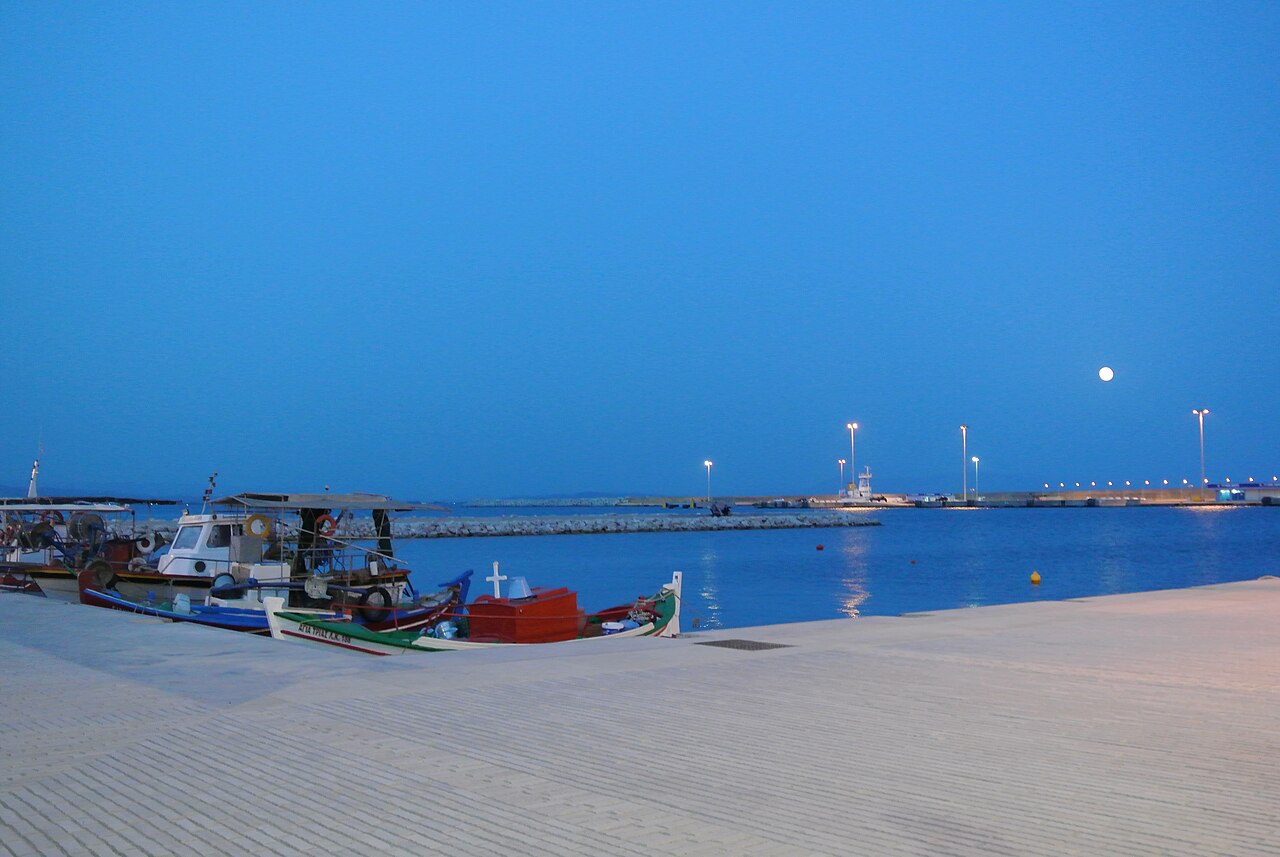
Katakolo is a small, pleasant port on the west coast of the Peloponnese, with a single cruise pier, a marina and a short seafront of tavernas, cafés and souvenir shops. Ships dock right beside the town, so passengers walk straight off into the harbour. Taxis, tour operators and the train station all wait within a few minutes of the pier.
Ships dock by the town. The cruise pier sits beside the harbour, so passengers step ashore directly into Katakolo without a shuttle.
The seafront is compact. A short waterfront of tavernas and shops lines the harbour, so the town is easily explored on foot.
Transport waits at the pier. Taxis, tour desks and the train station all lie a short walk from the ship, so onward travel to Olympia is quick to arrange.
What is Ancient Olympia?
Ancient Olympia is the sanctuary of Zeus in the western Peloponnese where the Olympic Games were held every four years for nearly twelve centuries. A UNESCO World Heritage Site, it holds the ruined Temple of Zeus, the Temple of Hera, the ancient stadium and two museums, so it is one of the most important and rewarding archaeological sites in all of Greece.
It is the birthplace of the Games. Olympia hosted the Olympic Games from 776 BC, so it is the origin of the world’s greatest sporting tradition.
It is a sacred sanctuary. The site was a religious centre dedicated to Zeus, so its ruins are temples and altars as well as athletic grounds.
It is a World Heritage Site. Olympia is listed by UNESCO for its outstanding importance, so a visit reaches a site of global significance, as the full Ancient Olympia guide describes.
What is the Temple of Zeus at Olympia?
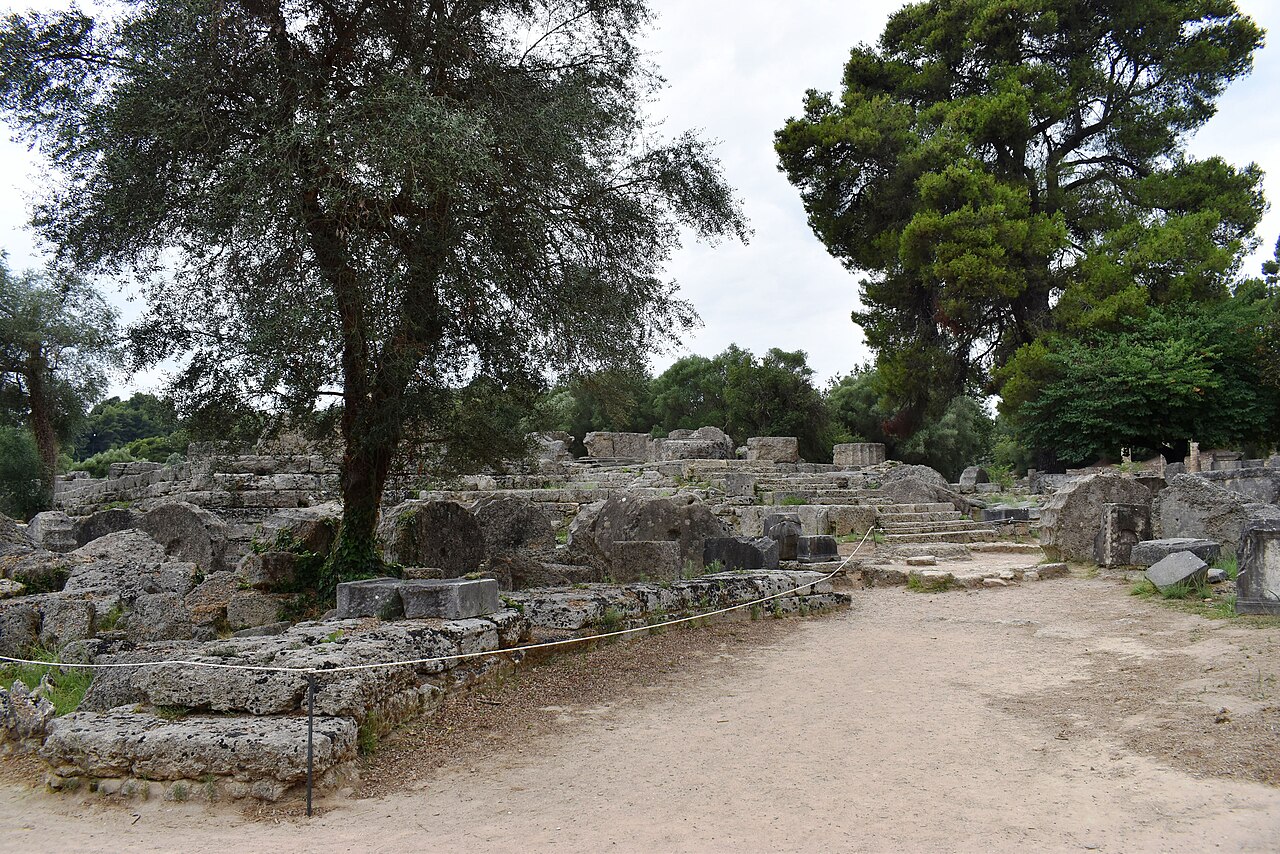
The Temple of Zeus was the greatest temple of the sanctuary, a huge Doric temple built in the fifth century BC to house the gold-and-ivory Statue of Zeus by Pheidias, one of the Seven Wonders of the ancient world. Today its massive fallen column drums lie where earthquakes left them, at the centre of the archaeological site cruise visitors explore.
It held a Wonder of the world. The temple sheltered the colossal statue of Zeus, so its fame rested on the masterpiece it contained.
Its ruins astonish. Great column drums lie stacked along the ground, so the temple’s scale is clear even in ruin, as the guide to the Temple of Zeus sets out.
It anchors the visit. The temple stands at the heart of the site, so it is a central stop on every cruise excursion to Olympia.
What is the ancient stadium at Olympia?
The ancient stadium at Olympia is the running track where the Olympic Games were held, entered through a stone-vaulted tunnel. Its clay track still stretches its original 192 metres between the marble start and finish lines, framed by grass banks that once held up to 45,000 spectators. Cruise visitors walk the tunnel and run the track as the ancient athletes did.
It is the heart of the Games. The stadium is where the foot races and most events were contested, so it is the highlight of the Olympic story.
You can run the track. The arena is open, so cruise passengers race the 192-metre track, a favourite moment of the excursion, as the guide to the Ancient Stadium of Olympia describes.
The tunnel is unforgettable. The vaulted crypt through which athletes entered still stands, so walking it onto the track is a memorable experience.
What is the Archaeological Museum of Olympia?
The Archaeological Museum of Olympia holds the finds from the sanctuary, including the sculpted pediments of the Temple of Zeus, the celebrated Hermes of Praxiteles, the flying Nike of Paionios, and the richest collection of ancient bronzes in the world. It stands a short walk from the site and is covered by the same ticket, so cruise visitors see both on one visit.
It holds the temple sculptures. The pediments and metopes of the Temple of Zeus fill its central hall, so the temple’s art is seen after its ruins.
It has the Hermes and Nike. The Hermes of Praxiteles and the Nike of Paionios are its most famous statues, so the museum draws every visitor.
It is on the same ticket. The museum shares the combined ticket with the site, so cruise passengers visit both at no extra cost.
What is the Museum of the History of the Olympic Games?
The Museum of the History of the Olympic Games in Antiquity is a smaller museum in Olympia devoted to the Games themselves rather than the sanctuary’s art. It displays objects connected with the events, the athletes and the victors, and it is covered by the same combined ticket, so cruise visitors with time add it to their tour of the site and the main museum.
It focuses on the Games. The museum tells the story of the contests, the athletes and the prizes, so it complements the main museum’s art.
It shows athletic objects. Displays include equipment, prize vessels and images of the events, so it brings the ancient Games to life.
It shares the ticket. The Games museum is covered by the combined ticket, so a full visit takes in the site and both museums.
What to bring on the Katakolo to Olympia excursion?
For the Katakolo to Olympia excursion, bring sturdy, comfortable shoes for the uneven ground, a hat and high-factor sunscreen for the open site, plenty of water, and some euros in cash for tickets, snacks or the taxi. In summer add sunglasses and light clothing. The site has little shade, so sun protection and water matter most on a warm cruise day.
Footwear matters most. The paths are uneven and the marble is smooth, so closed, comfortable shoes keep passengers steady around the ruins.
Sun protection is essential. The open site offers little shade, so a hat, sunscreen and water are needed against the strong sun.
Carry some cash. Euros in cash cover tickets, snacks and the taxi or train, so a little money in hand smooths the independent trip.
Is Olympia from Katakolo good for families?
Yes, Olympia is an excellent cruise excursion for families. Running the ancient stadium track where the Olympic Games began is a highlight for children, the open site is safe to explore, and the museums are small enough to hold young attention. The story of the Games, the athletes and the cheats’ statues brings the history alive for young cruise passengers.
Children run the stadium. Racing the ancient track is a favourite with children, so the excursion is active and fun for families.
The site is open and safe. The wide, level sanctuary lets children explore freely, so families move at their own pace.
The story engages them. The tale of the Games and its champions holds young interest, so the museums reward families as well as scholars.
Is Olympia accessible from a cruise for limited mobility?
Olympia is partly accessible for cruise passengers with limited mobility. The Archaeological Museum is on one level with ramps and suits wheelchairs, and a marked accessible route covers part of the archaeological site. The ground in the wider site is uneven, with gravel and slopes, so a companion helps, and accessible transfers from the port can be arranged with tour operators in advance.
The museum is accessible. The single-level museum with ramps welcomes wheelchairs, so its masterpieces are open to every visitor.
The site has an accessible path. A marked route covers part of the site on firmer ground, so wheelchair users reach the main monuments.
Transfers can be arranged. Operators provide accessible vehicles from the port when booked ahead, so limited-mobility passengers reach Olympia in comfort.
What combined excursions include Olympia?
Many excursions from Katakolo combine Olympia with a taste of the countryside. Popular options pair the archaeological site with a local winery for wine tasting, an olive farm to see how olive oil is made, or a stop at a sandy beach for a swim. These combined tours suit passengers with a longer port stay who want more than the ruins alone.
Wine tours are popular. Some excursions add a visit to a local winery, so passengers taste the wines of the region alongside Olympia.
Farm visits show rural life. Olive farms and food tastings feature on some tours, so passengers see the produce of the countryside.
Beach stops add a swim. Combined tours sometimes include a nearby beach, so passengers with time cool off after the ruins.
What beaches are near Katakolo?
Several sandy beaches lie near Katakolo, within a short drive of the port. The long beaches of the western Peloponnese coast offer soft sand and warm, shallow water, ideal for a swim on a hot cruise day. Passengers who finish at Olympia early, or who prefer sea to ruins, spend the rest of their port stay on the beach.
The coast has long beaches. Sandy stretches line the western Peloponnese near Katakolo, so a beach is easy to reach from the port.
The water is warm and shallow. The gentle, warm sea suits families and swimmers, so a beach stop is a pleasant end to the day.
They suit a relaxed day. Passengers who want sea rather than sightseeing enjoy the beaches, so the port offers more than Olympia alone.
What is the best time to visit Olympia from a cruise?
The best time to visit Olympia from a cruise is early in the port day, leaving the ship as soon as it clears so as to reach the site before the midday heat and the peak of the crowds. Spring and autumn cruises enjoy the mildest weather, while high-summer calls are hot, so an early start and sun protection matter most in July and August.
Early is best. Reaching Olympia soon after the ship arrives means a cooler, quieter site, so an early start rewards cruise passengers.
Shoulder seasons are mildest. Spring and autumn bring comfortable weather, so cruises at those times enjoy the pleasantest conditions.
Summer needs care. High summer is hot at the open site, so an early visit and good sun protection are essential on summer calls.
How was Ancient Olympia rediscovered?
Ancient Olympia was lost for centuries under river silt until European travellers identified the site in the eighteenth century. Large-scale excavation by German archaeologists later uncovered the temples, the stadium and the sculptures, and the finds filled the Archaeological Museum. The excavations continue today, so cruise visitors walk a site still yielding its ancient treasures.
It was buried and lost. Floods covered Olympia in deep silt, so the sanctuary vanished for centuries.
Travellers found it again. Scholars identified the site in the eighteenth century, so the lost Olympia returned to the map.
Archaeologists uncovered it. A long German excavation revealed the temples, the stadium and the museum’s treasures, so the sanctuary was brought back to light.
Why is Olympia famous?
Olympia is famous as the birthplace of the Olympic Games, held there every four years for nearly twelve centuries in honour of Zeus. It was the site of the Temple of Zeus and its gold-and-ivory statue, a Wonder of the ancient world, and it remains the place where the Olympic flame is lit before every modern Games, so cruise visitors reach a site of global fame.
It gave the world the Games. The Olympic Games began at Olympia, so the sanctuary is the origin of the greatest sporting tradition.
It held a Wonder of the world. The statue of Zeus by Pheidias stood in its temple, so Olympia was famed for one of the Seven Wonders.
It lights the modern flame. The Olympic flame is still kindled at Olympia, so the sanctuary remains part of every modern Games.
How does Katakolo compare to other Greek cruise ports?
Katakolo stands out among Greek cruise ports for offering a world-class archaeological site so close to the pier. Unlike busy island ports focused on beaches and towns, Katakolo is a quiet gateway whose whole purpose is Olympia. Passengers reach a UNESCO World Heritage Site in under an hour, so the port punches far above its small size.
It is a gateway port. Katakolo exists for Olympia, so it differs from island ports with attractions of their own.
It is quiet and easy. The small port is calm and simple to navigate, so passengers move ashore and inland without fuss.
It reaches a great site. Few ports put so important a site so close, so Katakolo offers exceptional value for a shore day.
What food and drink can you try near Katakolo?
Near Katakolo you can try the food and wine of the western Peloponnese. The seafront tavernas serve fresh fish, grilled meats, Greek salads and local olive oil, while the region’s wineries produce good wines from local grapes. A meal on the harbour or a tasting at a country winery makes a fine end to a day at Olympia.
The tavernas serve Greek classics. Fresh fish, grilled meats and salads fill the harbour menus, so passengers eat well by the sea.
The region makes good wine. Local wineries produce wines from Peloponnese grapes, so a tasting adds to the day for those on a combined tour.
Olive oil is a local product. The countryside around Olympia produces fine olive oil, so it is a favourite taste and souvenir of the region.
What is the weather like for a Katakolo to Olympia excursion?
The weather for a Katakolo to Olympia excursion is warm and Mediterranean. Summers are hot and dry, often above thirty-five degrees with little shade at the open site, while spring and autumn are warm and pleasant. Cruise passengers dress for sun in summer and keep a light layer for cooler spring or autumn mornings, and the green valley owes its trees to winter rain.
Summers are hot. High-summer calls bring strong heat and sun to the shadeless site, so an early start and sun protection are essential.
Spring and autumn are mild. The shoulder seasons bring comfortable warmth, so they are the pleasantest times for the excursion.
The valley stays green. Winter rain keeps the setting lush, so Olympia is greener than many Greek sites even in the dry season.
What other monuments do you see with the Olympia ticket?
The Olympia ticket covers the whole sanctuary, so beyond the Temple of Zeus and the stadium cruise visitors also see the Palaestra and Gymnasium where athletes trained, the round Philippeion of the Macedonian kings, the Workshop of Pheidias, the Leonidaion guest house and the row of city treasuries. The site rewards a slow walk among many monuments.
The training grounds survive. The Palaestra and Gymnasium show where the athletes prepared, so visitors see the practice halls beside the competition grounds.
The Philippeion stands apart. The elegant round monument of the Macedonian kings is a rare circular building, so it marks the reach of Macedon into the sanctuary.
The workshop remains. The building where Pheidias made the statue of Zeus still stands, so the birthplace of a Wonder is part of the walk.
What is the little train from Katakolo to Olympia like?
The little train from Katakolo to Olympia is a simple local service that runs the short line inland in under an hour. It leaves from a small station by the port, follows the valley through Pyrgos, and stops near the archaeological site. Air-conditioned in the modern carriages and cheap to ride, it is a relaxed, scenic and independent way for cruise passengers to reach Olympia.
It leaves from the port. The station sits near the pier, so passengers board a short walk from the ship.
It follows the valley. The line runs inland through Pyrgos to Olympia, so the ride offers glimpses of the western Peloponnese countryside.
It ends near the site. The train stops close to the entrance, so passengers walk a short way to the ruins on arrival.
Is Olympia worth it with only a few hours in port?
Yes, Olympia is well worth visiting even with only a few hours in port. With the short transfer, a stay of five hours or more allows two hours at the site and one at the museum with time to spare. Even a shorter call gives enough time for the highlights, the stadium and the Temple of Zeus, so the excursion suits almost every port schedule.
Short transfers help. The under-an-hour drive leaves most of the port day for the site, so even a brief call reaches Olympia.
The highlights fit a short visit. The stadium and the temples are seen quickly, so a shorter tour still captures the essentials.
Longer calls add the museum. A stay of five hours or more allows the full site and the museum, so a normal port day covers everything.
What currency and tips do you need for the excursion?
You need euros for the Katakolo to Olympia excursion. Cash covers entry tickets, the train or taxi, snacks and souvenirs, though cards are accepted for tickets and in many shops. Tipping a guide or driver is customary but modest. Carrying a small amount of euros in cash smooths the independent trip, where card payment is not always available.
Euros are the currency. Greece uses the euro, so passengers carry euros for the excursion.
Cash smooths the trip. Small amounts of cash cover tickets, transport and snacks, so a little money in hand helps independent travellers.
Tipping is modest. A small tip for a guide or driver is customary, so passengers keep a few coins for the courtesy.
What facilities are there at Olympia for cruise visitors?
Olympia has good facilities for cruise visitors. There is a car park at the site entrance, toilets at the site and the museum, a café and shops in the town of Archaia Olympia a short walk away, and a museum shop selling books and replicas. The nearby town also has tavernas and pharmacies, so everything a passenger needs is close to the ruins.
Parking and toilets are on hand. A car park and toilets serve the site and museum, so practical needs are met on arrival.
The town is a step away. Archaia Olympia, with cafés and tavernas, is a few minutes’ walk from the site, so refreshments are close.
The shop sells souvenirs. The museum shop offers books and replicas, so passengers find gifts and mementos at the site.
Can you combine Olympia and a beach in one day from Katakolo?
Yes, with a longer port stay you can combine Olympia and a beach in one day from Katakolo. A morning at the archaeological site and museum leaves the afternoon for a swim at one of the sandy beaches near the port. Some tours build in a beach stop, so passengers pair the birthplace of the Games with the warm Ionian Sea in a single shore day.
Mornings suit the ruins. Visiting Olympia early in the cool hours leaves the afternoon free, so the site comes first in the day.
Afternoons suit the beach. A swim at a nearby beach follows the ruins, so passengers relax by the sea after the sightseeing.
Tours can combine both. Some excursions build in a beach stop, so the day balances history and the sea.
What souvenirs can you buy at Olympia and Katakolo?
At Olympia and Katakolo you can buy souvenirs ranging from museum replicas of the Hermes of Praxiteles and ancient coins to local olive oil, honey and wine. The museum shop sells quality books and casts, while the harbour shops of Katakolo offer the usual holiday keepsakes. Local food products make the most authentic gifts of the region.
The museum shop sells replicas. Casts of the statues and reproductions of coins are sold at the museum, so passengers take home a piece of Olympia’s art.
Local produce makes fine gifts. Olive oil, honey and wine from the region are sold nearby, so food products make authentic souvenirs.
The harbour has keepsakes. The shops of Katakolo offer the usual holiday souvenirs, so passengers find gifts a step from the ship.
Frequently Asked Questions About Katakolo to Olympia
How long is the drive from Katakolo to Olympia?
The drive from Katakolo to Olympia takes about thirty to forty minutes, covering roughly thirty-five kilometres inland through Pyrgos. The route is straightforward on good roads, so whether by coach, taxi or car the transfer is short, leaving most of the port day free to explore the archaeological site and the museum.
The short transfer is one of the reasons Olympia is such a popular and easy cruise excursion from Katakolo.
Can you visit Olympia from Katakolo on your own?
Yes, you can visit Olympia from Katakolo independently by taxi, the local train or the public bus, and buy your entry ticket at the site. Many cruise passengers do so to save money and travel at their own pace. Allowing a safe margin for the return is essential so as never to risk missing the ship’s departure.
Independent visits work well for confident travellers, so many passengers skip the ship’s excursion and make their own way to the site.
What is the best way from Katakolo to Olympia?
The best way from Katakolo to Olympia depends on your priorities. A guided tour, whether the ship’s excursion or an independent one, is best for understanding the site. The train is best for budget and simplicity, and a taxi is best for a small group wanting door-to-door transport. For most cruise passengers, a small-group guided tour offers the best balance of value, comfort and insight.
Because Olympia is a site of ruins and foundations, a guide adds greatly to the visit, so a guided tour is the most rewarding choice for most passengers.
How early do you leave the ship for Olympia?
You leave the ship for Olympia as soon as it clears for passengers, usually shortly after docking. An early start means reaching the site before the midday heat and the peak of the crowds, and it leaves a comfortable margin for the return. Independent travellers in particular benefit from setting out early to allow for the train or bus timetable.
An early departure gives the coolest, quietest site and the safest margin for the return, so it is the wise choice for every cruise passenger.
Do you need to book the Katakolo to Olympia tour in advance?
You do not have to book the Katakolo to Olympia tour in advance, as taxis, the train and local operators are available at the pier. However, booking a reputable independent tour ahead secures a guide, a smaller group and a guaranteed return in good time, and it often costs less than the ship’s excursion, so advance booking is wise for the best value and peace of mind.
Booking ahead locks in a guide and a reliable return, so it suits passengers who want certainty and value on their shore day.
Is Katakolo the closest port to Olympia?
Yes, Katakolo is the closest cruise port to Ancient Olympia, only about thirty-five kilometres and under an hour inland. No other major port lies nearer the sanctuary, which is why cruise lines call at Katakolo specifically for Olympia. The short distance makes it one of the easiest and most reliable major-site shore excursions anywhere in the Mediterranean.
Its closeness to Olympia is the whole reason cruise ships call at Katakolo, so the little port is the natural gateway to the birthplace of the Games, and no rival harbour puts the sanctuary within so short and easy a transfer for passengers.
Can you walk from Katakolo to Olympia?
No, you cannot walk from Katakolo to Olympia, as the site lies about thirty-five kilometres inland, far too far to cover on foot in a port day. Passengers reach Olympia by ship excursion, private tour, taxi, the local train or the public bus. Within Katakolo itself, however, the harbour, shops and nearest beach are all easily explored on foot.
The distance rules out walking to the site, so every visitor to Olympia takes motorised transport, while the port town itself is comfortably covered on foot. For a full day, most passengers pair a guided or independent trip to the ruins with an hour or two back at the harbour before the ship sails, enjoying a coffee or a swim once the sightseeing is done and the ancient stones of Olympia are safely and memorably behind them.