
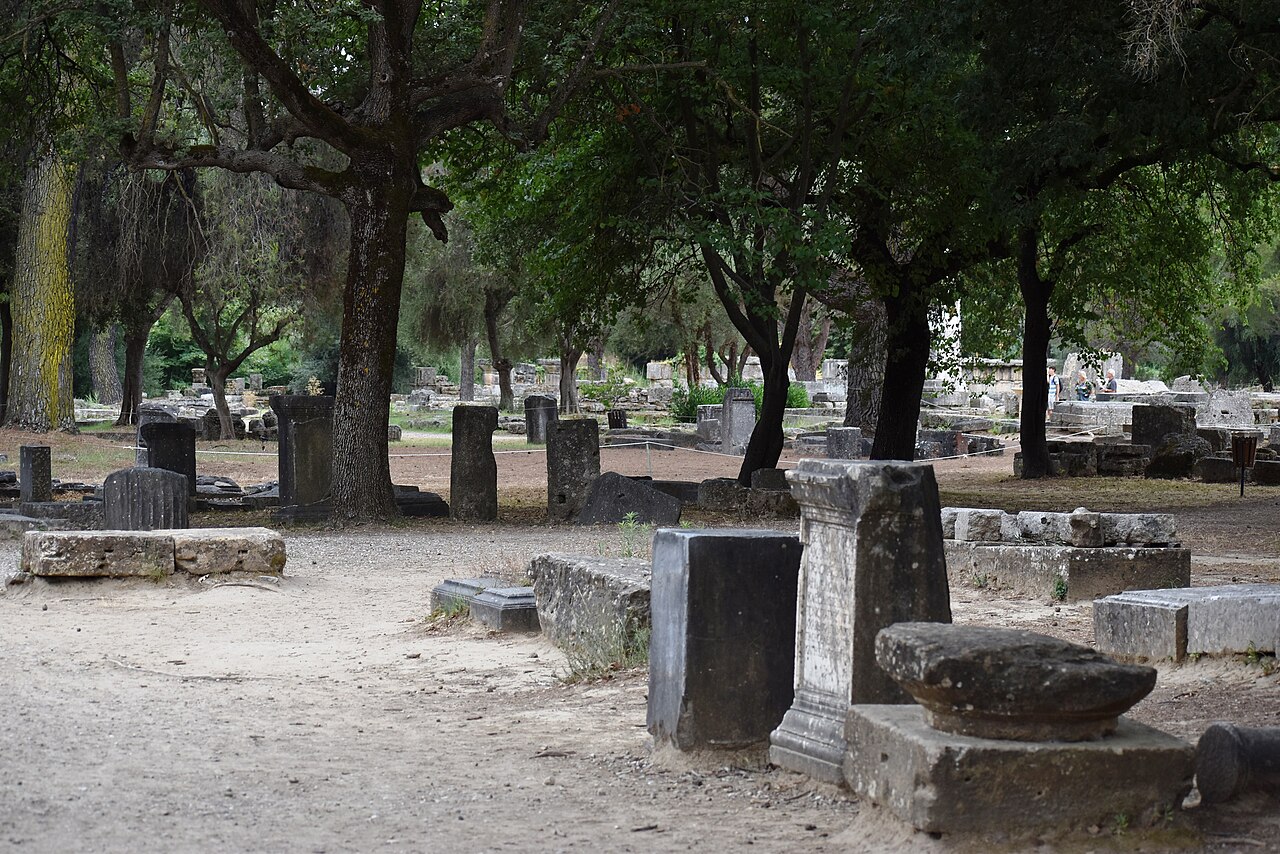
Ancient Olympia tickets open the door to one of the greatest sites in Greece, the sanctuary where the Olympic Games were born. A single combined ticket covers the whole archaeological site, the Archaeological Museum of Olympia and the Museum of the History of the Olympic Games, so one purchase takes in the ruined Temple of Zeus, the ancient stadium and the museum masterpieces in a half to full day. This complete guide covers ticket prices and every reduced and free category, opening hours by season, how and where to buy, skip-the-line and guided tours, the best time to avoid the cruise crowds, accessibility, facilities, getting there and how long you need.
Plan your visit with this guide beside the full Ancient Olympia guide, the Temple of Zeus at Olympia, the Ancient Stadium of Olympia and the Archaeological Museum of Olympia.
What do Ancient Olympia tickets include?
Ancient Olympia tickets are sold as a combined ticket that covers three attractions: the archaeological site of Olympia, the Archaeological Museum of Olympia, and the Museum of the History of the Olympic Games in Antiquity. One ticket admits visitors to all three, so the ruins, the sculptures and the story of the Games are seen on a single purchase.
The site is the centrepiece. The archaeological site holds the Temple of Zeus, the Temple of Hera, the stadium and the training grounds, so the combined ticket covers the whole sanctuary where the Games were held.
The main museum is included. The Archaeological Museum, with the Hermes of Praxiteles and the temple sculptures, is part of the ticket, so visitors move from the ruins to their treasures without a second purchase.
The Games museum is covered too. The Museum of the History of the Olympic Games in the town is also on the ticket, so the full story of the ancient Olympics is included in one price.
How much do Ancient Olympia tickets cost?
A full-price combined ticket for Ancient Olympia costs around twelve to fourteen euros in the main season, with a lower price in winter. The ticket covers the site and both museums. Reduced tickets cost about half the full price, and several categories of visitor, including European Union citizens under twenty-five, enter free with valid identification.
The full ticket is modest. The combined ticket costs about twelve to fourteen euros in summer and less in the winter months, so entry to three attractions remains good value.
Reduced tickets cost about half. Eligible visitors pay roughly half the full price, so students and older visitors from outside the free categories save on entry.
Prices change by season. The full price applies from spring to autumn and drops in winter, so the exact cost depends on the time of year, checked on the official ticketing site before a visit.
Who gets free entry to Ancient Olympia?
Several groups enter Ancient Olympia free of charge. Children under six, European Union citizens under twenty-five, and students of Greek and European universities enter free with valid identification. People with disabilities and an escort, and holders of certain professional and press cards, also enter free, so many visitors pay nothing with the right documents.
Young children are free. Children under six enter without charge, so families with small children pay only for the adults.
Young Europeans are free. European Union citizens under twenty-five and EU university students enter free on showing an identity card or passport, so young travellers from Europe pay nothing.
Documents are essential. Free and reduced entry depends on showing valid identification at the ticket desk, so visitors carry a passport or identity card to claim the discount.
Who qualifies for reduced Ancient Olympia tickets?
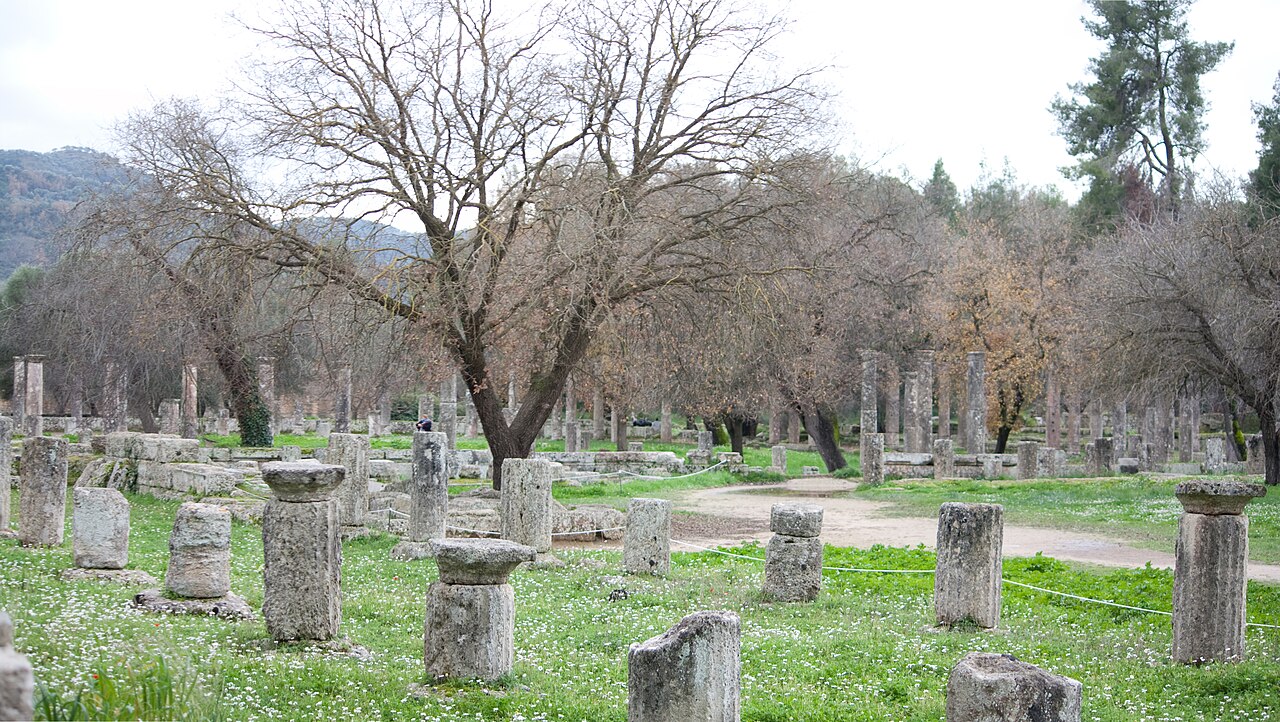
Reduced Ancient Olympia tickets, at about half the full price, are for visitors who fall outside the free categories but still qualify for a discount. These include non-European Union citizens aged over sixty-five and non-EU students, on production of valid identification or a student card. The reduced ticket, like the full ticket, covers the site and both museums.
Older non-EU visitors qualify. Visitors from outside the European Union aged over sixty-five pay the reduced price with a passport, so senior travellers save on entry.
Non-EU students qualify. Students from outside the European Union pay the reduced rate with a valid international student card, so young non-EU visitors also benefit.
The reduced ticket covers everything. Like the full ticket, the reduced ticket admits its holder to the site and both museums, so the discount applies to the whole visit.
What are the opening hours of Ancient Olympia?
Ancient Olympia opens daily, with hours that change by season. In the main summer season the archaeological site opens from early morning until the evening, around eight in the morning to eight at night, with last admission half an hour before closing. In winter the site closes earlier in the afternoon, and the museums keep slightly shorter hours than the site.
Summer hours are long. From spring to late summer the site stays open into the evening, so visitors have the whole day to explore the ruins and museums.
Winter hours are shorter. In the winter months the site closes in the afternoon, so a winter visit needs an earlier start to see everything in daylight.
Museum hours vary. The museums sometimes keep shorter hours than the archaeological site, so checking the current times on the official site avoids arriving after the museum has closed.
When is Ancient Olympia closed?
Ancient Olympia is open almost every day of the year, but it closes on a small number of public holidays. These usually include the main national and religious holidays such as New Year’s Day, Greek Independence Day in spring, Easter Sunday, and Christmas Day. On some other holidays the site keeps reduced hours, so checking before a visit avoids a closed gate.
Major holidays close it. The site shuts on a handful of national and religious holidays, so a visit is planned around these dates.
Some days have reduced hours. On certain holidays the site opens for a shorter time, so an early arrival is safest on those dates.
Check before travelling. Holiday closures and reduced hours are listed on the official ticketing site, so confirming the date prevents a wasted journey.
Are there free admission days at Ancient Olympia?
Yes, Ancient Olympia offers free admission on several set days each year, when everyone enters without charge. These free days usually include the sixth of March, the eighteenth of April for International Monuments Day, the eighteenth of May for International Museum Day, the last weekend of September for European Heritage Days, and the twenty-eighth of October. The site is busiest on these free days.
Set days are free for all. On a handful of dates through the year, admission is free to every visitor without a discount card, so these days offer entry at no cost.
They mark heritage events. The free days fall on international monument and museum days and national anniversaries, so they tie free entry to cultural celebrations.
They draw crowds. Free days bring larger crowds to the site, so an early arrival is wise for anyone visiting on one of them.
How do you buy Ancient Olympia tickets?
You buy Ancient Olympia tickets at the ticket office at the site entrance or online in advance. The official Greek e-ticketing service sells tickets online, and travel platforms sell combined entry tickets and guided tours. On-site tickets are paid by card or cash, and buying ahead saves queueing at busy times in summer and on cruise-ship days.
On-site tickets are simple. The ticket office at the entrance sells tickets on the day by card or cash, so visitors buy on arrival outside peak times without difficulty.
Online saves queueing. The official e-ticketing site and travel platforms sell tickets in advance, so booking ahead avoids the ticket queue on busy summer days.
Tours bundle the ticket. Guided tours and shore excursions include entry, so booking a tour handles the ticket as part of the package.
Can you buy Ancient Olympia tickets online?
Yes, you can buy Ancient Olympia tickets online before you arrive. The official Greek Ministry of Culture e-ticketing service sells timed entry tickets, and platforms such as GetYourGuide and Civitatis sell combined tickets and guided tours. An online ticket is shown on a phone at the entrance, so there is no need to collect a paper ticket first.
The official site sells e-tickets. The Greek e-ticketing service offers tickets for the site and museums, so visitors buy directly from the official source.
Platforms sell tickets and tours. Travel platforms sell entry tickets and guided visits, so visitors who want a guide book both together online.
A phone ticket is enough. Online tickets are scanned from a phone at the gate, so there is no paper to print or collect on arrival.
Is there a skip-the-line ticket for Ancient Olympia?
Ancient Olympia rarely has long ticket queues, but skip-the-line and pre-booked tickets help on the busiest cruise days. Buying online in advance or joining a guided tour lets visitors go straight in without waiting at the ticket office. Even so, the site is large and open, so crowding inside is far less of a problem than at busier city sites.
Queues are usually short. Olympia is quieter than the major Athens sites, so the ticket queue is usually brief outside peak cruise times.
Pre-booking beats the crowd. An online or tour ticket lets visitors skip the ticket desk, so pre-booking helps most on busy summer and cruise days.
The site absorbs crowds. The archaeological site is large and open, so even a busy day feels less crowded inside than a compact city monument.
Is a guided tour of Ancient Olympia worth it?
A guided tour of Ancient Olympia brings the ruins to life, turning scattered stones into the vivid story of the Games and the sanctuary. Guides explain the Temple of Zeus, the stadium and the museum masterpieces, and tours include the entrance ticket. Independent visitors do well with an audio guide, but a live guide is the richest way to understand the site.
A guide explains the ruins. Much of Olympia is foundations and fallen columns, so a guide is needed to picture the temples and the Games that once filled the sanctuary.
Tours include entry. Guided tours and shore excursions cover the ticket, so booking a tour bundles the guide and the admission together.
Audio guides are an option. An audio guide or a good written guide suits independent visitors, so a self-guided visit still rewards those who prefer to explore alone.
When is the best time to visit Ancient Olympia?
The best time to visit Ancient Olympia is early in the morning or late in the afternoon, and in spring or autumn rather than high summer. The site is open and shadeless, and cruise groups fill it in the middle of the day, so an early or late visit in the cooler seasons gives the softest light, the mildest heat and the quietest ruins.
Early and late are best. The middle of the day brings heat and cruise crowds, so arriving at opening or in the late afternoon gives a cooler, quieter site.
Spring and autumn suit it. April to June and September to October bring warm but comfortable weather, so the shoulder seasons are the most pleasant for walking the open site.
Summer needs an early start. July and August are hot and busy, so a summer visit works best first thing in the morning before the heat and the tour groups build.
How long do you need to visit Ancient Olympia?
You need about three to four hours to visit Ancient Olympia fully: roughly two hours for the archaeological site and one to two hours for the Archaeological Museum, with a shorter stop at the Museum of the History of the Olympic Games. A half day suits most visitors, while those with a deep interest in the Games take a full day.
The site takes two hours. Walking the temples, the stadium and the training grounds fills about two hours at a steady pace, so the ruins alone need a good half morning.
The museum adds one to two hours. The Archaeological Museum rewards an hour or two among its sculptures and bronzes, so the combined ticket fills a half to full day.
Plan for the heat. In summer the open site is hot by midday, so allowing extra time for shade and water makes the visit more comfortable.
Is Ancient Olympia accessible for wheelchairs and strollers?
Ancient Olympia is partly accessible. The Archaeological Museum is on one level with ramps and suits wheelchairs and strollers, and a marked accessible route runs through part of the archaeological site. The ground in the site itself is uneven in places, with gravel paths and some slopes, so a full tour of the ruins is harder for wheelchair users than the museum.
The museum is accessible. The single-level museum with ramps welcomes wheelchairs and strollers, so its masterpieces are open to every visitor.
The site has an accessible route. A marked path covers part of the site on firmer ground, so wheelchair users reach the main monuments even where the wider site is uneven.
The ground is rough in places. Gravel paths and slopes cross the site, so a companion helps a wheelchair user over the rougher stretches of the ruins.
What facilities are at Ancient Olympia?
Ancient Olympia has good visitor facilities. There is a car park near the entrance, toilets at the site and the museum, a café and shops in the town of Archaia Olympia a short walk away, and a museum shop selling books and replicas. The nearby town also has hotels, tavernas and pharmacies, so everything a visitor needs is close to the site.
Parking is close. A car park sits near the site entrance, so drivers park a short walk from the gate.
Toilets and shops are on hand. Toilets serve the site and museum, and a museum shop sells books and replicas, so practical needs are met on site.
The town is a step away. Archaia Olympia, with cafés, tavernas and hotels, is a few minutes’ walk from the site, so refreshments and services are close by.
What are the rules for visiting Ancient Olympia?
The rules for visiting Ancient Olympia protect the ancient monuments. Visitors keep to the marked paths, do not climb on the ruins or the fallen columns, and do not remove any stone or fragment. Photography for personal use is allowed, including in the museum without flash, while tripods, drones and professional equipment need permission. Food is kept to the picnic and café areas.
Stay on the paths. Visitors keep to the marked routes and off the monuments, so the fragile ruins are protected from damage.
Take nothing away. Removing any stone or fragment is forbidden, so the site is preserved intact for future visitors.
Photography is allowed. Personal photographs are welcome, including in the museum without flash, so visitors capture the site freely while drones and tripods need permission.
How do you get to Ancient Olympia?
You reach Ancient Olympia by car, bus or organised tour. The site lies in the western Peloponnese, about three and a half to four hours by road from Athens via the Corinth Canal and Patras, under an hour from the Katakolo cruise port, and within reach of Kalamata and Patras. Buses and trains serve the town of Archaia Olympia beside the site.
Athens is a long drive. Olympia is about three and a half to four hours from Athens by car or coach, so many visitors come on a day trip or as part of a Peloponnese tour.
Katakolo is close. The cruise port of Katakolo is under an hour away, so cruise passengers reach Olympia easily on a shore excursion.
Public transport serves the town. Buses and a seasonal train reach Archaia Olympia, so visitors without a car arrive by public transport, as the Ancient Olympia guide sets out.
Can you visit Ancient Olympia from a cruise ship?
Yes, Ancient Olympia is a popular cruise excursion from the port of Katakolo, which lies less than an hour away by road. Cruise ships calling at Katakolo offer shore excursions to Olympia, and independent passengers reach the site by taxi, local train or a booked tour, seeing the ruins and museum within a typical port day.
Katakolo is the cruise gateway. Many cruises call at Katakolo specifically for Olympia, so the site is one of the most visited cruise excursions in Greece.
Excursions handle the trip. Ship and independent shore excursions include transport and entry, so passengers reach Olympia and return within the port call.
Independent visits work too. Taxis and a local train link Katakolo to Olympia, so passengers who prefer to travel alone still see the site in a port day.
Where is Ancient Olympia located?
Ancient Olympia is located in the western Peloponnese, in the region of Elis, beside the modern town of Archaia Olympia. It lies in the green valley where the rivers Alpheios and Kladeos meet, about twenty kilometres inland from the Ionian Sea and the cruise port of Katakolo, and roughly a four-hour drive west of Athens.
It sits in western Greece. Olympia lies in the far west of the Peloponnese peninsula, so it is reached across the mountains from the eastern Argolid or along the coast from Patras.
It stands by its town. The archaeological site adjoins the small town of Archaia Olympia, so hotels, tavernas and the museums are within an easy walk of the entrance.
It lies in a green valley. The sanctuary sits among pines and plane trees where two rivers meet, so its setting is unusually lush for an ancient Greek site.
What can you see with your Ancient Olympia ticket?
Your Ancient Olympia ticket lets you see the whole sanctuary and its two museums. In the archaeological site stand the Temple of Zeus, the Temple of Hera, the ancient stadium, the round Philippeion, the Palaestra and Gymnasium, the Workshop of Pheidias and the Leonidaion. The museums hold the temple sculptures, the Hermes of Praxiteles and the story of the Games.
The temples anchor the site. The great Temple of Zeus and the older Temple of Hera stand at the heart of the sanctuary, so they are the first monuments most visitors seek out.
The stadium crowns the walk. The ancient stadium, reached through its vaulted tunnel, lies at the eastern end of the site, so it forms the climax of the visit.
The museums complete it. The Archaeological Museum and the Games museum hold the treasures of the sanctuary, so the ticket joins the ruins to their finest art and history.
What is the Temple of Zeus at Olympia?
The Temple of Zeus was the greatest temple of the sanctuary, a huge Doric temple built in the fifth century BC to house the gold-and-ivory statue of Zeus by Pheidias, one of the Seven Wonders of the ancient world. Today its massive fallen column drums lie where earthquakes left them, at the centre of the archaeological site.
It held a Wonder of the world. The temple was built around the colossal statue of Zeus, so its fame rested on the masterpiece it sheltered.
Its ruins astonish. Great column drums lie stacked along the ground, so the scale of the temple is clear even in ruin, as the guide to the Temple of Zeus at Olympia describes.
It stands at the centre. The temple occupies the middle of the sacred precinct, so it anchors the walk through the site.
What is the ancient stadium at Olympia?
The ancient stadium at Olympia is the running track where the Olympic Games were held, entered through a stone-vaulted tunnel. Its clay track still stretches its original 192 metres between the marble start and finish lines, framed by grass banks that once held up to 45,000 spectators seated on the earth.
It is the birthplace of the Games. The stadium is where the foot races and most events were contested, so it is the heart of the Olympic story.
You can run the track. The arena is open, so visitors race the 192-metre track as the ancient athletes did, as the guide to the Ancient Stadium of Olympia sets out.
The tunnel is unforgettable. The vaulted crypt through which athletes entered still stands, so walking it onto the track is a highlight of the visit.
What is the Archaeological Museum of Olympia?
The Archaeological Museum of Olympia holds the finds from the sanctuary, including the sculpted pediments and metopes of the Temple of Zeus, the celebrated Hermes of Praxiteles carrying the infant Dionysos, the flying Nike of Paionios, and the richest collection of ancient bronzes in the world. It stands a short walk from the site and is covered by the same ticket.
It holds the temple sculptures. The pediments and metopes of the Temple of Zeus fill its central hall, so the temple’s art is seen after its ruins.
It has the Hermes and the Nike. The Hermes of Praxiteles and the Nike of Paionios are its most famous statues, so the museum draws every visitor to them, as the guide to the Archaeological Museum of Olympia covers.
It is included in the ticket. The museum shares the combined ticket with the site, so it is seen on the same visit at no extra cost.
What is the Museum of the History of the Olympic Games?
The Museum of the History of the Olympic Games in Antiquity is a smaller museum in Olympia devoted to the Games themselves rather than the sanctuary’s art. It displays objects connected with the events, the athletes and the victors, from athletic equipment to prize vessels, and it is covered by the same combined ticket as the site and the main museum.
It focuses on the Games. The museum tells the story of the contests, the athletes and the prizes, so it complements the art of the main museum.
It shows athletic objects. Displays include equipment, victory tokens and images of the events, so it brings the ancient Games vividly to life.
It is on the same ticket. The Games museum is covered by the combined ticket, so a full visit takes in the site and both museums.
How do you get to Ancient Olympia from Athens?
You get to Ancient Olympia from Athens in about three and a half to four hours by road, a drive of some three hundred kilometres west via the Corinth Canal, Patras and the coast. Direct and connecting buses run from Athens, organised day trips include transport and a guide, and the drive passes several great ancient sites on the way.
The drive takes four hours. A car covers the distance from Athens in about four hours, so many visitors come on a long day trip or an overnight stay.
Buses connect the cities. Coaches link Athens to Olympia with a change at Pyrgos, so travellers without a car reach the site by public transport.
Tours handle the journey. Guided day trips and multi-day Peloponnese tours include the drive, so visitors reach Olympia without arranging their own transport.
How do you get to Ancient Olympia from Katakolo?
You get to Ancient Olympia from the cruise port of Katakolo in under an hour, a drive of about thirty-five kilometres. Cruise ships calling at Katakolo run shore excursions to Olympia, and independent passengers reach the site by taxi, a seasonal local train, or a pre-booked tour, comfortably within a typical port day.
Katakolo is the cruise port. Many cruises call at Katakolo specifically to visit Olympia, so the site is a major cruise excursion.
The trip is short. Olympia is under an hour from the port, so passengers reach it easily and return within the port call.
Several options serve it. Ship excursions, taxis, a local train and booked tours all link Katakolo to Olympia, so passengers choose the option that suits them.
Where do you stay near Ancient Olympia?
Most visitors who stay overnight sleep in the town of Archaia Olympia, a few minutes’ walk from the site. The town has hotels, guesthouses and family apartments, along with tavernas and shops. Staying overnight lets visitors reach the site early before the cruise groups arrive and enjoy the quiet green valley in the evening.
The town has the beds. Archaia Olympia offers hotels and guesthouses for every budget, so visitors base themselves within walking distance of the ruins.
An overnight beats the crowds. Staying in the town lets visitors enter at opening before the day trippers, so an overnight stay gives the quietest site.
The valley is restful. The green setting and small-town calm reward an evening in Olympia, so an overnight adds to the pleasure of the visit.
Where do you eat near Ancient Olympia?
You eat near Ancient Olympia in the tavernas and cafés of Archaia Olympia, the town beside the site. They serve Greek dishes such as grilled meats, salads, moussaka and local wine, with shaded terraces for a meal after the ruins. Cafés near the entrance offer drinks and snacks, so refreshments are close whether before or after the visit.
The town has the tavernas. Archaia Olympia is lined with tavernas and cafés, so visitors find a meal a short walk from the site.
Greek dishes fill the menus. Grilled meats, salads and local wine feature on the menus, so a meal in the town is a taste of the Peloponnese.
Snacks are near the gate. Cafés by the entrance serve cold drinks and snacks, so visitors refuel before or after walking the open site.
What is the weather like at Ancient Olympia?
Ancient Olympia has a warm Mediterranean climate. Summers are hot and dry, with temperatures often above thirty-five degrees and little shade on the open site, while spring and autumn are warm and pleasant. Winters are mild but wet, and the green valley owes its trees to the rain, so the site is lush compared with drier parts of Greece.
Summers are hot. July and August bring strong heat and sun to the shadeless site, so a summer visit is best early in the day.
Spring and autumn are mild. April to June and September to October are warm and comfortable, so the shoulder seasons are the pleasantest time to walk the ruins.
Winters are wet but mild. Winter brings rain and green growth with mild temperatures, so a winter visit is quiet and cool under changeable skies.
What to bring to Ancient Olympia?
Bring sturdy, comfortable shoes for the uneven ground, a hat and high-factor sunscreen for the open site, plenty of water, and a camera. In summer add sunglasses and light clothing, and in winter a rain jacket. The site has little shade, so sun protection and water matter most, and good shoes make the walk over gravel and marble easier.
Footwear matters most. The paths are uneven and the marble is smooth, so closed, comfortable shoes keep visitors steady around the site.
Sun protection is essential. The open site offers little shade, so a hat, sunscreen and water are needed against the strong sun.
Pack for the season. Sunglasses and light clothes suit summer, and a rain jacket suits winter, so visitors dress for the day’s weather.
How do you spend a day at Ancient Olympia?
A good day at Ancient Olympia starts early at the archaeological site, walking from the entrance past the Temple of Zeus and the Temple of Hera to the stadium in the cool morning. A midday break for lunch in the town follows, then the Archaeological Museum and the Games museum in the afternoon, ending with time in the green valley or a taverna.
Start with the site. The ruins are best in the cool early hours before the crowds, so the morning suits the walk through the sanctuary and the stadium.
Break for lunch. A meal in the town over the hottest part of the day rests tired legs, so the midday break fits between the site and the museum.
Finish with the museums. The Archaeological Museum and the Games museum fill the afternoon, so the day ends with the treasures that crown the visit.
What other sites can you combine with Ancient Olympia?
Ancient Olympia combines well with several sites of the western Peloponnese. Nearby stand the medieval Chlemoutsi Castle, the beaches and port of Katakolo, and, further afield, the remote Temple of Apollo Epicurius at Bassae. On a wider tour, Olympia pairs with Nafplio, Mycenae and Ancient Corinth to the east for a full circuit of the ancient Peloponnese.
Nearby castles and coast. Chlemoutsi Castle and the port of Katakolo lie close by, so Olympia pairs with a castle or a beach for a fuller day.
A great temple in the mountains. The Temple of Apollo Epicurius at Bassae, a UNESCO site, lies in the mountains to the south, so it joins Olympia on a longer tour.
A Peloponnese circuit. Olympia links with Nafplio, Mycenae and Ancient Corinth to the east, so it anchors a grand tour of the ancient Peloponnese.
Is Ancient Olympia worth visiting?
Yes, Ancient Olympia is well worth visiting. As the birthplace of the Olympic Games, a supreme sanctuary of Zeus and the home of a Wonder of the ancient world, it is one of the most significant sites in Greece, matched by a superb museum. The green valley setting, the original stadium track and the temple ruins reward every visitor.
Its significance is unmatched. Few places carry the historical weight of Olympia, so it ranks among the essential sites of Greece.
Its museum is superb. The Archaeological Museum holds masterpieces of Greek art, so the visit rewards both the ruins and the collection.
Its setting is beautiful. The green valley of two rivers gives Olympia a lush calm, so the sanctuary is as lovely as it is important.
Is Ancient Olympia good for children?
Yes, Ancient Olympia suits children well. Running the ancient stadium track where the Olympic Games began is a highlight for young visitors, the site is open and safe to explore, and the museums are small enough to hold young attention. The story of the Games, the athletes and the cheats’ statues brings the history alive for families.
Children run the stadium. Racing the ancient track is a favourite with children, so the stadium makes the visit active and fun.
The site is open and safe. The wide, level sanctuary lets children explore freely, so families move at their own pace.
The story engages them. The tale of the Games, the champions and the cheats holds young interest, so the museums reward families as well as scholars.
Why is Ancient Olympia famous?
Ancient Olympia is famous as the birthplace of the Olympic Games, held here every four years for nearly twelve centuries in honour of Zeus. It was the site of the Temple of Zeus and its gold-and-ivory statue, a Wonder of the ancient world, and it remains the place where the Olympic flame is lit before every modern Games.
It gave the world the Games. The Olympic Games began at Olympia, so the sanctuary is the origin of the world’s greatest sporting tradition.
It held a Wonder of the world. The statue of Zeus by Pheidias stood in its temple, so Olympia was famed for one of the Seven Wonders.
It lights the modern flame. The Olympic flame is still kindled at Olympia, so the ancient sanctuary remains part of every modern Games.
What are the Palaestra and Gymnasium at Olympia?
The Palaestra and Gymnasium at Olympia are the training grounds of the sanctuary, part of the archaeological site covered by the ticket. The Palaestra is a square colonnaded courtyard where wrestlers and boxers trained, and the Gymnasium is a large open field with covered running tracks where athletes prepared for the Games in the weeks before the festival.
The Palaestra trained the fighters. The colonnaded court of the Palaestra was where wrestlers, boxers and jumpers practised, so its rows of columns still frame the athletes’ training ground.
The Gymnasium held the runners. The Gymnasium’s covered tracks let runners and throwers train in any weather, so it was the larger of the two practice grounds.
They stand near the entrance. Both lie in the north-western part of the site near the entrance, so they come early on the walk through Olympia.
What is the Philippeion at Olympia?
The Philippeion is an elegant round monument at Olympia, part of the site covered by the ticket. Begun by King Philip of Macedon after his victory over the Greek cities and completed by his son Alexander the Great, it held gold-and-ivory statues of the Macedonian royal family. Its graceful circle of columns marks the reach of Macedonian power into the sanctuary.
It honoured the Macedonian kings. The Philippeion held statues of Philip, Alexander and their family, so it celebrated the royal house of Macedon at the heart of the Greek world.
It is a rare round building. The monument is one of the few circular structures at Olympia, so its ring of columns stands out among the rectangular temples.
It stands by the temples. The Philippeion sits within the sacred Altis near the Temple of Hera, so it comes on the walk between the great temples.
What is the Workshop of Pheidias at Olympia?
The Workshop of Pheidias is the building where the sculptor Pheidias created the gold-and-ivory statue of Zeus, part of the site covered by the ticket. Set west of the Temple of Zeus and built to the same dimensions as the temple’s interior, it later became an early Christian church, so its walls still stand tall among the ruins.
It made a Wonder of the world. Pheidias assembled the statue of Zeus in this workshop, so it is the birthplace of one of the Seven Wonders.
It matched the temple. The workshop was built to the interior size of the temple so the statue fitted exactly, so its plan mirrors the great building.
It became a church. In late antiquity the workshop was turned into a basilica, so its high walls survive better than most buildings at Olympia.
What is the sacred Altis at Olympia?
The Altis is the sacred walled precinct at the heart of Olympia, the holy core of the sanctuary covered by the ticket. Within its wall stood the Temple of Zeus, the Temple of Hera, the great Altar of Zeus, the Philippeion, the treasuries and hundreds of statues and offerings. It was the religious centre of the Games, entered by athletes on their way to the stadium.
It was the holy heart. The Altis enclosed the temples and altars of Olympia, so it was the most sacred ground of the sanctuary.
It held the great altar. The huge ash Altar of Zeus stood within the Altis before the Temple of Zeus, so the main sacrifices of the Games took place there.
It linked to the stadium. Athletes passed from the Altis through the tunnel to the stadium, so the sacred precinct and the arena were joined.
How was Ancient Olympia rediscovered?
Ancient Olympia was lost for centuries under river silt until European travellers identified the site in the eighteenth century. Large-scale excavation by German archaeologists later uncovered the temples, the stadium and the sculptures, and the finds filled the Archaeological Museum. The excavations continue today, so Olympia is both an ancient sanctuary and a living archaeological site.
It was buried and lost. Floods from the rivers covered Olympia in deep silt, so the sanctuary vanished for centuries.
Travellers found it again. Scholars identified the site in the eighteenth century, so the search for the lost Olympia began.
Archaeologists uncovered it. A long German excavation revealed the temples, the stadium and the museum’s treasures, so the sanctuary returned to the light.
Where is the Olympic flame lit at Olympia?
The Olympic flame is lit at the Temple of Hera in Olympia, the oldest temple of the sanctuary. Before every modern Olympic Games, a priestess kindles the flame from the sun’s rays using a parabolic mirror at the Hera altar, and it is then carried by torch relay to the host city, so Olympia remains part of every Games held today.
It is lit at the Heraion. The flame ceremony takes place at the altar of the Temple of Hera, so the oldest temple hosts the modern rite.
The sun kindles it. A priestess lights the flame from the sun with a mirror, so the ceremony uses the same source for every Games.
It travels to the host city. The flame is relayed by torch from Olympia to the Games, so the sanctuary opens every modern Olympics.
Can you picnic or bring food to Ancient Olympia?
You can bring water and snacks to Ancient Olympia, and there are shaded areas and a café near the entrance for a break. Full picnics are kept to the designated areas outside the monuments, and food and drink other than water are not taken among the ruins, so the site stays clean and the ancient stones are protected.
Water is welcome everywhere. Visitors carry water around the open site, so they stay hydrated in the heat.
Snacks have their places. Light food is eaten in the shaded and café areas rather than among the ruins, so the monuments stay clean.
The town has more. Tavernas and cafés in Archaia Olympia serve full meals, so a proper lunch is a short walk from the gate.
What treasuries stand at Olympia?
The treasuries at Olympia are a row of small temple-like buildings on a terrace below the Kronos hill, part of the site covered by the ticket. Built by Greek cities from across the mainland, the islands and the colonies, they held precious offerings to Zeus. Their foundations survive above the stadium entrance, so visitors pass them on the way to the arena.
Cities built them. Greek states from Sicily to Asia Minor raised treasuries at Olympia, so the row shows the reach of the sanctuary across the Greek world.
They held rich offerings. The treasuries stored valuable gifts dedicated to Zeus, so they were small strongrooms of sacred wealth.
They line the stadium path. The treasury terrace stands beside the entrance to the stadium, so visitors walk past it on the way to the track.
What is the Leonidaion at Olympia?
The Leonidaion is the large guest house of Olympia, part of the site covered by the ticket. Built to lodge important visitors and officials during the Games, it was the grandest accommodation in the sanctuary, a colonnaded building with rooms around a courtyard and later a garden pool. Its foundations stand in the south-west of the site.
It housed important guests. The Leonidaion lodged officials and distinguished visitors during the festival, so it was the finest guest house at Olympia.
It was a grand building. A colonnade surrounded its rooms and courtyard, so it was among the largest structures in the sanctuary.
It stands in the south-west. The Leonidaion lies in the south-western corner of the site, so it comes near the end of a full walk around Olympia.
What is the Nymphaeum of Herodes Atticus?
The Nymphaeum of Herodes Atticus is a grand Roman fountain at Olympia, part of the site covered by the ticket. Built by the wealthy Athenian benefactor Herodes Atticus, it brought fresh water to the sanctuary and was decorated with statues of his family and the Roman imperial house, several of which are displayed in the Archaeological Museum.
It brought water to the site. The Nymphaeum supplied fresh water to the sanctuary, so it served a practical need as well as a decorative one.
A rich Athenian built it. The benefactor Herodes Atticus paid for the fountain, so it marks the Roman age of Olympia.
Its statues are in the museum. Sculptures from the Nymphaeum are displayed in the Archaeological Museum, so its decoration survives indoors.
What tips help first-time visitors to Ancient Olympia?
The best tips for first-time visitors to Ancient Olympia are to arrive at opening before the cruise groups, walk the site first while it is cool and the museum after, wear sturdy shoes and bring water and sun protection, and take a guide or audio guide to understand the ruins. Allow a full half day, and stay overnight in the town for the quietest visit.
Arrive early. The morning is cool and quiet before the cruise groups, so an early start gives the best of the site.
See the site then the museum. Walking the ruins first and the museum afterwards puts the sculptures in context, so the visit builds naturally.
Come prepared and guided. Good shoes, water, sun protection and a guide make the visit comfortable and meaningful, so a little planning rewards the day.
Frequently Asked Questions About Ancient Olympia Tickets
Is one ticket enough for the site and the museum?
Yes, one combined ticket is enough for the archaeological site, the Archaeological Museum and the Museum of the History of the Olympic Games. There is no need to buy separate tickets, so a single purchase covers all three attractions of Ancient Olympia on the same day.
The combined ticket is the standard entry for Ancient Olympia, so almost every visitor buys it and sees the archaeological site and both museums together on one day.
Do you need to book Ancient Olympia tickets in advance?
You do not usually need to book Ancient Olympia tickets in advance, as queues are short outside peak times. On busy summer days and cruise-ship days, buying online ahead or joining a guided tour saves waiting at the ticket office, so advance booking is helpful rather than essential.
Most visitors buy on the day without trouble, so booking ahead mainly benefits those visiting at the busiest times or wanting a guide.
Are Ancient Olympia tickets valid for more than one day?
Ancient Olympia tickets are valid for a single visit on the day of purchase, covering the site and both museums. There is no standard multi-day ticket, so visitors plan to see all three attractions on the same day, which is comfortably done in a half to full day.
Because the site and museums sit close together, one day is enough to use the combined ticket fully, so a single-day ticket suits almost every visit.
Is there parking at Ancient Olympia?
Yes, there is parking at Ancient Olympia. A car park sits near the site entrance and further parking is available in the town of Archaia Olympia a short walk away. Coaches and cars both find space, so drivers and tour groups park close to the gate and reach the entrance on foot in a few minutes.
Parking near the entrance and in the town makes Olympia easy to reach by car, so independent visitors drive to the site without difficulty.
Are dogs allowed at Ancient Olympia?
Small dogs on a lead are generally allowed in the open archaeological site of Ancient Olympia, but not inside the museums. Assistance dogs are welcome throughout. Because the site is open and shadeless and summers are hot, water and shade are essential for any dog, so many visitors leave pets in cooler comfort during the hottest hours.
Leashed dogs join the walk through the open ruins, though the museums are for assistance dogs only, so pet owners plan around the museum visit.
What is the best month to visit Ancient Olympia?
The best months to visit Ancient Olympia are May, June, September and October. These months bring warm, comfortable weather, long daylight and fewer crowds than high summer, and the green valley is at its most beautiful. July and August are hot and busy, while the winter months are quiet, cool and sometimes wet.
Late spring and early autumn balance good weather with smaller crowds, so they are the ideal months to walk the open site in comfort, with warm sunshine, green surroundings and long, bright days for exploring the sanctuary at leisure.
Can you touch the ruins at Ancient Olympia?
No, you cannot touch or climb on the ruins at Ancient Olympia. Visitors keep to the marked paths and view the fallen columns, temples and stadium from beside them, protecting the ancient stones. The one exception is the stadium track, which is open for visitors to walk and run, so families still race the course of the first Olympic Games.
The monuments are protected from touch, but the open stadium track welcomes visitors, so the most hands-on experience at Olympia is running the ancient race.
Do children need a ticket for Ancient Olympia?
Children under six enter Ancient Olympia free of charge and need no paid ticket, though a free admission ticket is issued at the desk. Older children and students in the reduced or free categories show identification for their discount. Running the ancient stadium and the story of the Games make Olympia one of the most rewarding ancient sites in Greece for families.
Young children enter free while students claim reduced entry with a card, so families pay little for admission and gain a site that genuinely engages children of every age.