
A Patras city tour is a two to three hour guided walk from the Saint Andrew basilica through the Roman odeon and the upper town to the castle, priced from 35 euros a head, with a winery version that adds Achaia Clauss. Plan the rest of the trip with Greece Tours.
This page covers the tour: what it costs, the walking route, the basilica, the odeon, the castle, the carnival, the currant boom, the wineries, the day trips and how to book.
What does a Patras city tour cost?
From 35 to 70 euros a head for a two to three hour guided walk, 60 to 110 with a winery visit and tasting, 150 to 300 for a private half day, and 90 to 160 for a full day that adds Ancient Olympia or Kalavryta.
The walking price covers the guide and the commentary, and the museum entries are separate. A Patras city tour is booked around it.
Wine-tasting versions include the pours and a plate of meze at the estate. It decides which Patras city tour suits the party.
Cruise-passenger products are timed around the ship and include the port transfer. Every Patras city tour is routed around this.
Private tours quote by the party and set their own route.
Children go half price on the shared departures and free under six.
What does the Patras city tour cover on foot?
The Saint Andrew basilica, the Roman odeon, the medieval castle on the hill, the Apollon theatre on Georgiou Square, the covered market, the arcaded streets of the upper town and the staircases that connect the two levels.
Patras is built on two levels: the flat commercial lower town and the older upper town on the slope. Every Patras city tour is routed around this.
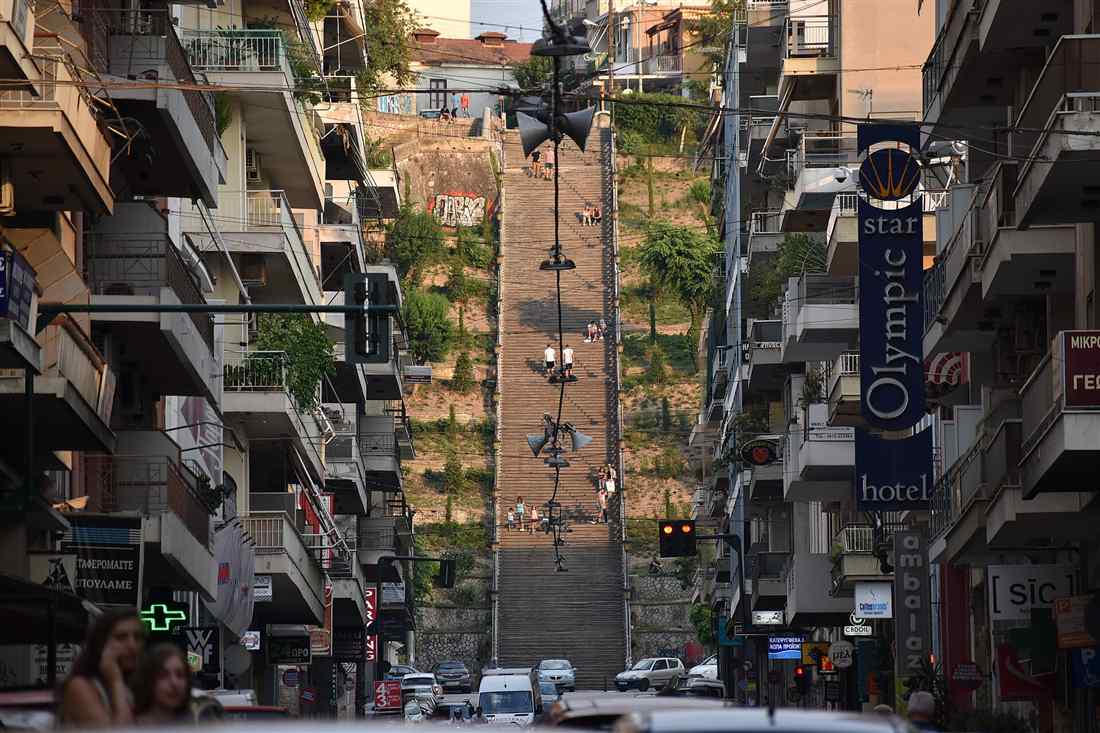
The staircases between them, Agiou Nikolaou and Gerokostopoulou, are the city’s signature. The Patras city tour price reflects it.
The arcades along the lower streets were built after the 1821 fire and cover the pavements. The Patras city tour listing states it plainly.
Walking the whole circuit takes two hours at a talking pace.
Most of it is pedestrianised and the traffic never intrudes.
What is the Saint Andrew basilica?
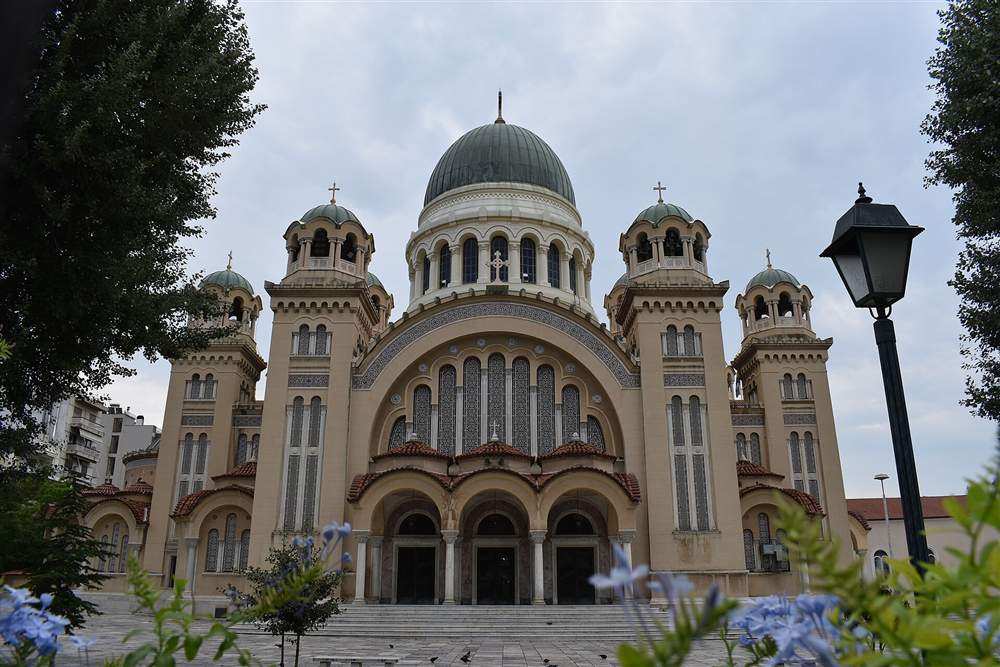
The largest Orthodox church in Greece and one of the largest in the Balkans, completed in 1974, holding the skull of the apostle Andrew and the X-shaped cross on which he was crucified in Patras in about 60 AD.
The dome rises 46 metres and the church seats 5,500. The Patras city tour listing states it plainly.
The relics were returned from Rome and Amalfi in 1964 and 1980. A Patras city tour fills first on that count.
The older church beside it dates from 1836 and stands over the ancient spring. This is what a Patras city tour delivers.
Andrew is the city’s patron and 30 November is its feast.
Entry is free and the dress code is the standard Orthodox one.
Every tour of the city includes it.
What is the Roman odeon?
A theatre of about 160 AD in the upper town, seating 2,300, excavated in 1889 and restored for performances, standing 25 years older than the odeon of Herodes Atticus in Athens.
The building was buried and forgotten until the nineteenth century. This is what a Patras city tour delivers.
It is used through the summer for concerts and theatre. The Patras city tour calendar is shaped by it.
The Roman colony of Patrae was founded by Augustus for his veterans after Actium.
Roman Patras was one of the largest cities in Greece and the odeon is what survives above ground.
Entry is free and the site is open through the day.
It sits five minutes below the castle on the walk up.
What is the castle?
A Byzantine fortress of the sixth century built on the acropolis of the ancient city with material from it, extended by Franks, Venetians and Ottomans, standing 800 metres above the port with a park inside its walls.
Justinian built the first circuit after the earthquake of 551. Patras city tour guides prepare for it.
The outer bailey is now a public park and the inner keep hosts events. Guests meet it within the first Patras city tour hour.
The view covers the gulf, the Rio-Antirrio bridge and the mountains of Aetolia.
Entry is free and the climb from the odeon takes ten minutes.
The 193 steps of the Agiou Nikolaou stair are the usual way up.
Sunset from the walls is the city’s own evening ritual.
What is the Archaeological Museum of Patras?
The second largest archaeological museum in Greece, opened in 2009 in a domed building on the national road, holding mosaics, grave goods and the Roman material of Achaia across three halls.
The Roman mosaics from the city’s villas are the collection’s strength. A Patras city tour settles this at the meeting point.
The building itself, a glass and steel dome over a reflecting pool, is a landmark on the approach. That is the Patras city tour advantage over a map.
Entry is 6 euros and a visit takes 90 minutes.
It sits three kilometres from the centre and the tours drive to it.
The Mycenaean and Geometric material comes from the cemeteries around the city.
Photography without flash is allowed throughout.
What is the Patras carnival?
The largest carnival in Greece and one of the largest in Europe, running from mid-January to Clean Monday, with a treasure hunt, a children’s parade, the Bourboulia masked balls and a grand parade of 50,000 participants.
The carnival dates in its modern form to 1829 and grew out of the merchant houses’ masked balls. The Patras city tour route is set by it.
The Bourboulia is the ball where women attend masked in a black domino and invite the men to dance. A Patras city tour covers the basilica around it.
The grand parade fills the city on the Sunday before Lent and draws 300,000 spectators.
Floats are built in a municipal workshop that runs all year and can be visited.
Hotels fill six months ahead for the carnival weekend.
Guides tell the carnival story on every walking tour, whatever the season.
What wineries are near Patras?
The Achaia Clauss estate founded in 1861 above the city, the Parparoussis and Oenoforos estates, and the Nemea and Mantinia regions within two hours, pouring Mavrodaphne, Muscat of Rio and Roditis.
Achaia Clauss produced the first bottled Greek wine sold abroad and its Imperial cellar is the visit. Guides raise it early on a Patras city tour.
Mavrodaphne of Patras is a fortified sweet red and carries a protected designation. The Patras city tour season turns on this.
Muscat of Rio and Muscat of Patras are the two white appellations of the area.
Roditis is the everyday dry white of Achaia and it comes from these hills.
Tastings run 10 to 25 euros and the estates take walk-ins in season.
Wine-tasting city tours pair the walk with one estate in the afternoon.
What is the Rio-Antirrio bridge?
A cable-stayed bridge 2,880 metres long opened in 2004, crossing the mouth of the Corinthian gulf on four pylons standing on the seabed rather than on piles, eight kilometres north-east of the city.
The seabed here is soft and seismic, so the pylons rest on gravel beds that let them move in an earthquake. It decides which Patras city tour suits the party.
The bridge replaced a ferry that ran for decades and still operates alongside it. A Patras city tour is booked around it.
The toll is around 14 euros for a car each way.
Viewing points on both shores are the photograph and the Rio castle sits beside the southern one.
It is the longest multi-span cable-stayed bridge in Europe.
Tours drive out to it or view it from the castle above the city.
What day trips run from Patras?
Ancient Olympia at two hours, the Kalavryta rack railway and the Cave of the Lakes at an hour and a half, Nafpaktos across the bridge, the Mavrodaphne wineries, and the Achaia beaches at Kalogria.
Olympia is the headline day trip and the tours run seven to nine hours with the site and the museum. The Patras city tour price reflects it.
The Odontotos rack railway climbs the Vouraikos gorge from Diakofto to Kalavryta in an hour. Every Patras city tour is routed around this.
The Cave of the Lakes at Kastria holds thirteen stepped lakes on three levels.
Nafpaktos has a Venetian harbour ringed by its walls, 45 minutes over the bridge.
Kalogria’s sand and pine forest sit 40 minutes south-west.
The Olympia version of that day sits at Olympia day trip from Athens.
What does a cruise call look like?
Ships berth at the new south port, two kilometres from the centre, and the standard four to six hour call covers the basilica, the odeon, the castle and a winery, with Olympia possible only on a long call.
Patras is a port of call on Adriatic and eastern Mediterranean itineraries. A Patras city tour fills first on that count.
The walk from the berth to the basilica takes 25 minutes and the shuttle takes five. The Patras city tour listing states it plainly.
Olympia needs four and a half hours of the call for travel alone.
Independent guides meet passengers at the terminal gate and cost half the ship’s excursion.
The city is small enough that a four-hour call sees the substance of it.
Ferries to Italy use the same port and dominate the traffic outside the cruise season.
How do you get to Patras?
Two and a quarter hours from Athens on the A8 motorway, 90 minutes from Olympia, a suburban rail link from Kiato, and ferries to Ancona, Bari, Brindisi and Venice from the port.
The motorway from Athens is fast and tolled the whole way. The Patras city tour calendar is shaped by it.
Intercity buses run from Kifissos in Athens every hour. This is what a Patras city tour delivers.
The old railway is out of service and the suburban line reaches Kiato with a bus connection.
Patras is the third largest city in Greece with 215,000 people in the wider area.
It is the main gateway between Greece and Italy by sea.
Arriving by ferry from Italy and starting a Greek trip here is a common pattern.
When is the best time to visit?
April to June and September to October for walking weather at 20 to 27 degrees, February for the carnival, and July and August for 33 degrees and a city that empties for the beaches.
Patras is a working university city rather than a resort, so it runs year round. Guests meet it within the first Patras city tour hour.
The carnival season from January fills the calendar and the hotels. Patras city tour guides prepare for it.
Summer evenings on the squares are the city’s own tourism.
Winter is mild and wet and the tours run on request.
Hotel rates run 45 to 110 euros a night outside carnival.
Nothing here books out except in the carnival fortnight.
How do you book a Patras city tour?
Book a day or two ahead in summer and on the morning itself out of season. Shared departures cap at eight to fifteen, and the wine-tasting versions fill first because the estates count heads.
Cruise-day products are timed to the ship and sold separately. That is the Patras city tour advantage over a map.
Private guides quote by the party and cover the museum entries on request. A Patras city tour settles this at the meeting point.
Free cancellation up to 24 hours ahead is standard on the platform listings.
Meeting points are Georgiou Square or the basilica forecourt.
The wider Peloponnese picture sits at Kalamata tours.
What is the upper town?
The old quarter on the slope below the castle, reached by the Agiou Nikolaou and Gerokostopoulou staircases, holding neoclassical houses, small squares, the odeon and the quiet streets the lower town lost to commerce.
The two levels are the city’s defining feature and the stairs are the link between them. A Patras city tour covers the basilica around it.
The Agiou Nikolaou stair runs 193 steps straight up from the harbour axis. The Patras city tour route is set by it.
Gerokostopoulou is the wider one with cafes on the treads themselves.
Neoclassical houses here date from the currant boom of the nineteenth century.
The upper town is where the walking tour slows down.
Evening on the stair cafes is a Patras institution.
Nothing here is more than fifteen minutes from anything else on foot.
What was the currant boom?
Patras grew rich on the Corinthian currant from the 1830s, exporting to Britain and France, and the wealth built the arcaded streets, the theatre, the mansions and the port before the trade collapsed in the 1890s.
The currant was Greece’s main export and Patras was its port. The Patras city tour season turns on this.
British and French merchant houses opened offices here and their names are still on the buildings. Guides raise it early on a Patras city tour.
The crash came when France imposed tariffs and planted its own vines after phylloxera.
The crisis drove the emigration wave to the United States from the Peloponnese.
The architecture of the centre is what the boom paid for.
Guides use the currant to explain why a provincial port has an opera house.
Achaia Clauss was founded in the same decades and for the same reason.
What is the Apollon theatre?
A municipal theatre on Georgiou Square built in 1872 by Ernst Ziller, a horseshoe auditorium modelled on La Scala, restored in the 1980s and running a full programme today.
Ziller was the German architect who built much of neoclassical Athens and the Syros town hall. A Patras city tour is booked around it.
The theatre predates the Athens equivalents and was the finest in Greece when it opened. It decides which Patras city tour suits the party.
Georgiou Square in front of it holds two lion fountains and the city’s main cafes.
Guided visits run when the theatre is not in use and the interior takes twenty minutes.
The carnival’s opening ceremony happens here.
It is the building that says most about what the currant money bought.
What is the covered market?
The municipal market building on Agiou Andreou, restored and reopened, holding fish, meat, cheese, spice and produce stalls under one roof, with tavernas and bars along its edges.
The building dates from the early twentieth century and was derelict for years. Every Patras city tour is routed around this.
Fish comes from the gulf and the stalls sell through the morning. The Patras city tour price reflects it.
The area around it is the city’s eating and drinking quarter after dark.
Food walking tours build around the market and the streets behind it.
Prices here are a third below the Athens equivalent.
The market is the stop where a city tour stops being about monuments.
What do you eat in Patras?
Tsipouro with meze in the quarter behind the market, bourekia, the local sausage, fish from the gulf, Mavrodaphne with dessert, and the fried dough pastries the city keeps for the carnival.
Patras eats late and the tsipouradika fill from nine in the evening. The Patras city tour listing states it plainly.
Meze arrives with each round rather than being ordered separately. A Patras city tour fills first on that count.
Achaia’s cheeses and the Kalavryta dairy products appear on every plate.
The student population of 30,000 keeps the prices down and the hours long.
Food tours of the market quarter run three hours and replace dinner.
The city is one of the cheapest places to eat well in Greece.
Mavrodaphne is poured as a dessert wine rather than with the meal.
What is Kalavryta and the rack railway?
A mountain town 80 kilometres east, reached by the Odontotos rack railway that climbs the Vouraikos gorge from Diakofto in an hour, with the 1943 massacre memorial, the Agia Lavra monastery and a ski centre above.
The railway was built in 1896 and is the only rack line in Greece. This is what a Patras city tour delivers.
The gorge section runs through tunnels and along ledges with the river below. The Patras city tour calendar is shaped by it.
The German army executed the male population of Kalavryta in December 1943 and the memorial marks it.
Agia Lavra is where the 1821 revolution was declared.
The Cave of the Lakes at Kastria is 15 kilometres further.
A full day from Patras covers the train, the town and the cave.
Tours sell it as the region’s best day out and they are right.
What is the port and the Italy connection?
Patras is Greece’s western gateway, with daily ferries to Ancona, Bari, Brindisi and Venice, a new southern port for the ferries and cruise ships, and the old northern port now given back to the city.
The crossing to Italy takes 15 to 22 hours depending on the route. Patras city tour guides prepare for it.
Lorries dominate the traffic and the passenger share is seasonal. Guests meet it within the first Patras city tour hour.
The old port waterfront has been redeveloped as a promenade.
Arriving from Italy puts a traveller two hours from Athens and ninety minutes from Olympia.
Cruise calls berth at the south port and shuttle to the centre.
The port is why the city exists in its modern form.
What are the common Patras city tour mistakes?
Treating Patras as a transit stop, arriving during the carnival without a room, expecting a beach resort, and trying to add Olympia to a four-hour cruise call.
Most visitors pass through between a ferry and a motorway and see nothing. A Patras city tour settles this at the meeting point.
Carnival weekend sells out the hotels months ahead. That is the Patras city tour advantage over a map.
The city’s own beaches are ordinary and the good ones are 40 minutes away.
Olympia and back is four and a half hours of driving.
The fifth is coming in August, when the residents have gone to the coast.
A night here on the way to or from Italy is what the city is built for.
What is Achaia Clauss?
A winery founded in 1861 by the Bavarian Gustav Clauss on a hill eight kilometres above the city, the first Greek winery to export in bottle, built as a stone complex with cellars, a chapel and a terrace over the gulf.
The Imperial cellar holds barrels reserved for heads of state and has done since the nineteenth century. The Patras city tour route is set by it.
Clauss created Mavrodaphne here as a fortified sweet red and named it after a woman from the story the estate still tells. A Patras city tour covers the basilica around it.
The buildings are a visit in themselves, with vaulted cellars and a view across the plain to the sea.
The estate has changed hands and reopened, and the tour and tasting run in season.
Wine-tasting city tours drive up here in the afternoon.
A visit takes 90 minutes with the cellars and the tasting.
What is the city’s ancient history?
An Achaean city from the Mycenaean period, a member of the Achaean League, refounded as the Roman colony of Patrae by Augustus in 14 BC for his Actium veterans, and one of the largest cities of Roman Greece.
Augustus settled legionaries here and granted the colony Italian rights. Guides raise it early on a Patras city tour.
The Roman city had an odeon, a theatre, an amphitheatre, baths and an aqueduct. The Patras city tour season turns on this.
Saint Andrew preached and was martyred here in about 60 AD, which made the city a Christian centre.
The Roman street grid still shapes the lower town’s blocks.
Excavations under the modern city have produced the mosaics in the museum.
The castle sits on the ancient acropolis and reuses its stone.
Guides run the Roman layer through the odeon and the museum rather than through ruins on the ground.
What does the city look like?
A grid of arcaded streets laid out after 1829 by the engineer Stamatis Voulgaris, rising from a working port to a castle hill, with three large squares, a university quarter and a waterfront rebuilt in the last decade.
Voulgaris planned the new city on a grid with wide avenues and squares, unusual for Greece at the time. It decides which Patras city tour suits the party.
The arcades run along both sides of the main commercial streets and cover the pavements. A Patras city tour is booked around it.
Georgiou, Olgas and Ypsila Alonia are the three squares the walk connects.
The university brings 30,000 students and keeps the centre busy year round.
The waterfront redevelopment turned the old port into a public promenade.
Patras reads as a nineteenth-century city rather than an ancient or a modern one.
Walking it is the way to see that, and the tours are built around exactly that.
What is Ypsila Alonia?
The upper square at the top of the Gerokostopoulou stair, planted with palms, holding the statues of Palaiologos and Germanos, the belvedere over the lower town, and the cafes that fill it in the evening.
The square sits on the old threshing floors, which is what its name means. The Patras city tour price reflects it.
The view from the balustrade covers the whole grid down to the sea. Every Patras city tour is routed around this.
Germanos of Patras is the bishop credited with raising the revolutionary banner in 1821.
The square is where the city walks on a Sunday.
It is the natural end of an upper-town walking route.
Concerts and carnival events use it through the year.
What museums are in the city?
The Archaeological Museum on the national road, the Museum of Folk Art, the Science and Technology Museum at the university, the Press Museum, and the municipal gallery in the old municipal hospital.
The archaeological museum is the one every tour includes and the others are specialist. A Patras city tour fills first on that count.
The Science and Technology Museum is the only one of its kind in Greece. The Patras city tour listing states it plainly.
The Press Museum covers the city’s nineteenth-century newspaper trade, which was substantial.
Entries run 3 to 6 euros and none takes more than ninety minutes.
Opening hours shorten in winter and the guides check before including them.
A city tour that includes one museum picks the archaeological one.
Is Patras worth a night?
Yes, and the case is the evening rather than the sights: a market quarter that fills at nine, tsipouradika with meze, a student city’s prices, and a walk down the lit staircases afterwards.
Most visitors pass through in daylight and see a working port. The Patras city tour calendar is shaped by it.
The city changes completely after dark and that is what a night buys. This is what a Patras city tour delivers.
Hotels run 45 to 110 euros and the good ones are on the squares.
A morning walking tour and an evening in the market quarter is the complete visit.
Ferry passengers arriving from Italy in the evening are already here for it.
Nothing about the city rewards a two-hour stop.
Anyone driving Athens to Olympia passes the turn-off and the city is worth the detour.
What is the carnival float workshop?
A municipal building on the edge of the city where the parade floats are designed and built through the year by a permanent crew, open to visitors on request, with the finished machines standing three storeys tall.
Work on the next parade starts within weeks of the last one ending. Guests meet it within the first Patras city tour hour.
Groups of volunteers, some of them families across three generations, build their own floats alongside the municipal crew. Patras city tour guides prepare for it.
The satirical themes are set late and kept quiet until the parade.
Guides arrange a workshop stop for parties that ask ahead.
The visit explains why the carnival is a civic institution rather than an event.
What is Nafpaktos?
A town across the Rio-Antirrio bridge with a circular Venetian harbour closed by two towers, a castle climbing the hill behind it, and the bay where the battle of Lepanto was fought in 1571.
The harbour is the most photographed small port on the Corinthian gulf. That is the Patras city tour advantage over a map.
The castle walls run from the harbour up to the keep in five stepped enclosures. A Patras city tour settles this at the meeting point.
Cervantes lost the use of his left hand at Lepanto and a statue on the quay marks it.
The drive from Patras takes 45 minutes including the bridge toll.
Half-day tours from the city pair it with the bridge viewpoints.
The beaches east of the town are the best within an hour of Patras.
What is the Rio castle?
An Ottoman fortress of 1499 at the narrowest point of the gulf, built by Bayezid II with a twin at Antirrio, known as the Castle of the Morea, standing directly beneath the modern bridge.
The pair were called the Little Dardanelles because they closed the strait with crossfire. A Patras city tour covers the basilica around it.
Venetians and Ottomans took and retook it through the seventeenth century. The Patras city tour route is set by it.
The bastions sit at sea level and the walls are entered across a moat.
The view up at the bridge pylons from inside the walls is the photograph.
Entry is free and the site sits eight kilometres from the centre.
Tours that drive to the bridge stop here rather than at a lay-by.
What beaches are near the city?
Kalogria at 40 minutes with sand and a pine forest behind it, Niforeika and Kato Achaia to the south-west, Psathopyrgos and Rio to the east, and the Nafpaktos beaches across the bridge.
The city’s own shoreline is a working port and not a swimming coast. The Patras city tour season turns on this.
Kalogria backs onto the Strofylia wetland and a protected forest. Guides raise it early on a Patras city tour.
Rio and Psathopyrgos are pebble and ten minutes from the centre by car.
Water in the gulf is calm and warms early in the season.
Residents drive out in August and the city empties for it.
A city tour that promises a beach means one of these rather than a town beach.
What is the nightlife like?
A student city of 30,000 undergraduates fills the market quarter and the Ypsila Alonia stairs from nine in the evening, with tsipouradika, bars on the arcaded streets and live rembetiko in winter.
The quarter behind the covered market is the centre of it. A Patras city tour is booked around it.
Prices run a third below Athens because the customers are students. It decides which Patras city tour suits the party.
Live music venues run from October to May rather than in summer.
The carnival season turns the whole centre into the venue.
Evening walking tours exist and end in the market quarter by design.
Nothing starts before ten and the streets are busiest at midnight.
Is the Patras city tour walkable?
The lower town is flat, gridded and largely pedestrianised, and the upper town is reached by two long staircases or a road that loops behind them, so a full circuit involves about 200 steps of climb.
The Agiou Nikolaou stair is the direct route and the steepest. Every Patras city tour is routed around this.
Gerokostopoulou is longer, wider and broken by cafe terraces. The Patras city tour price reflects it.
Taxis take the road up to the castle for anyone avoiding the steps.
The arcades keep the lower streets shaded in summer and dry in winter.
Distances are short and the basilica to the castle is 25 minutes on foot.
Guides pace the climb with the odeon as the halfway stop.
What is Saint Andrew’s feast?
The city’s patronal festival on 30 November, with a procession of the apostle’s relics from the old church to the basilica, the mayor and the archbishop at the head of it, and a public holiday across the city.
Andrew was crucified in Patras on an X-shaped cross, which became the saltire. The Patras city tour listing states it plainly.
His skull was returned from the Vatican in 1964 and the cross from Marseille in 1980. A Patras city tour fills first on that count.
The saltire is on the flags of Scotland and Russia through the same saint.
The basilica fills and the procession runs down Agiou Andreou street.
Hotels fill for the weekend around it.
Guides tell the Andrew story at the basilica whatever the date.
What is the Achaia region?
The north-western corner of the Peloponnese, running from the gulf coast up into the Aroania and Chelmos mountains, holding Patras, Aigio, Kalavryta, the Vouraikos gorge, the Mavrodaphne vineyards and the Kalogria wetland.
The coastal plain grows currants, citrus and vines and the mountains hold the ski centre. This is what a Patras city tour delivers.
Aigio is the second town, 40 kilometres east, known for its market and its plane-tree square. The Patras city tour calendar is shaped by it.
Chelmos rises to 2,355 metres with the Styx waterfall on its northern face.
The Helmos observatory at Aristarchos holds the largest telescope in south-east Europe.
Day tours from Patras reach every part of this within ninety minutes.
Ancient Olympia lies just outside it, in Elis, two hours south.
What is the Vouraikos gorge?
A 20-kilometre canyon cut by the Vouraikos river between Diakofto and Kalavryta, climbing 700 metres, carrying the rack railway on ledges and through tunnels, and walkable along the track in four hours.
The railway was engineered by an Italian firm and opened in 1896. Patras city tour guides prepare for it.
The rack section grips a toothed rail on the steepest gradients. Guests meet it within the first Patras city tour hour.
Walkers use the line itself between Diakofto and Zachlorou, timed around the trains.
The Mega Spilaio monastery sits above the gorge at Zachlorou, built into a cliff.
Train tickets run 10 to 20 euros each way and sell out at weekends.
The full-day tour from Patras drives to Diakofto and rides up.
How does Patras compare with Nafplio?
Nafplio is a small Venetian harbour town built for visitors; Patras is Greece’s third city, a working port and university town where the tourism is incidental and the prices and the evenings reflect that.
Nafplio takes two hours from Athens to the east and Patras two and a quarter to the west. A Patras city tour settles this at the meeting point.
Patras has the larger monuments and Nafplio the prettier streets. That is the Patras city tour advantage over a map.
Room rates here run below Nafplio by a third in every season.
Patras suits a traveller heading to Italy or to Olympia, which Nafplio does not serve.
Both cities are walked in a morning and both reward an evening.
The Nafplio walk sits at Nafplio walking tour.
Is Patras a good base?
Yes for the western Peloponnese: Olympia at two hours, Kalavryta at ninety minutes, Nafpaktos at 45 minutes, Delphi at two and a half hours over the bridge, and the Italy ferries from the port itself.
Three nights here reaches more ancient sites than three nights anywhere else in the region. The Patras city tour route is set by it.
Hotels run 45 to 110 euros and parking in the centre is manageable. A Patras city tour covers the basilica around it.
The A8 motorway puts Athens airport at two and three quarter hours.
Delphi across the bridge is a day that few visitors realise is possible.
Cruise passengers get one shot at the city and the residents get the rest.
The Delphi end of that drive sits at Delphi.
What do you bring on a Patras city tour?
Walking shoes for the staircases and the castle, covered shoulders for the basilica, water in summer, cash for the market stalls, and a jacket for an evening that cools off the gulf.
The climb to the castle is the day’s only physical demand. Guides raise it early on a Patras city tour.
Basilica dress rules are the standard Orthodox ones and wraps are lent at the door. The Patras city tour season turns on this.
Museum entry runs 6 euros and is separate from the tour price.
Card acceptance is universal in the city and the market stalls prefer notes.
Summer afternoons reach 33 degrees and the arcades are the shade.
Guides carry water on the walking products and name the entries at booking.
How does the Odontotos rack railway climb from Diakofto to Kalavryta?
The Odontotos runs 22.3 km on a 750 mm gauge from Diakofto to Kalavryta and climbs 720 m. On three rack sections a cogwheel under the train grips a toothed rail, on gradients up to 17.5 per cent. The ride takes about an hour each way.
Italian engineers built the line between 1889 and 1896. Steam locomotives worked it until 1959, when diesel railcars took over. The line was rebuilt with new rolling stock after 2007.
Zachlorou is the halfway halt in the gorge, with tavernas beside the track. Four or five trains run each day. One of the original steam locomotives of the 1890s stands on display at Diakofto station.
The Odontotos features in the guide to scenic train rides in Greece.
What does Kalavryta show on a day trip from Patras?
Kalavryta shows the Museum of the Kalavryta Holocaust, the memorial on Kappi hill and the cathedral clock stopped at 14.34. The town sits at 750 m, and a full day beyond the Patras city tour reaches it by road or rack railway.
During the massacre of 13 December 1943, German troops locked the women and children in the town school. That building now holds the museum, with photographs, objects and testimony. A white cross marks the execution ground on Kappi hill. The cathedral clock stays at the hour of the killings, and the town holds a commemoration on the date each year.
The ski centre on Chelmos lies 14 km above the town. It runs from December to March, with twelve runs between 1,700 and 2,340 m. The town square has plane trees and cafes, guesthouses fill on winter weekends, and the Kalavryta day trip from Athens reaches the town from the capital.
What is inside the Cave of the Lakes?
The Cave of the Lakes near Kastria holds thirteen stepped lakes on its middle level. In winter and spring, water spills from basin to basin in falls up to 4 m high. A railed walkway of about 500 m leads visitors through the lit section.
The cave runs about 2 km in total. A river flows through it, not a still pool. By late summer the lakes drop, and the basins show as stone rims on the cave floor.
Bones of hippopotamus came to light in the lower galleries. Curtains, columns and stone dams of calcite line the lit section. A visit lasts about 45 minutes at a steady 15 degrees. Tours from Patras pair the cave with Kalavryta and the monasteries in one mountain day.
Which monasteries does a day from Patras reach near Kalavryta?
A day from Patras reaches Mega Spilaio, an eight-storey monastery built against a cliff at 924 m above Zachlorou, and Agia Lavra, 6 km from Kalavryta at 961 m. Agia Lavra keeps the banner of the 1821 revolution in its museum.
Mega Spilaio claims to be the oldest monastery in Greece, founded in the 4th century. Fire destroyed it more than once, the last time in 1934. Its church sits inside the cave and holds an icon attributed to Saint Luke. A path climbs from the Zachlorou halt to the gate in about 40 minutes.
Tradition holds that Bishop Germanos of Patras blessed the revolt at Agia Lavra on 25 March 1821. German troops burned the monastery in 1943, and it was rebuilt. Its museum holds manuscripts and relics of the revolution.
Both monasteries ask visitors to cover shoulders and knees. The general rules appear in the guide on how to visit Greek monasteries.
How do you reach the Styx waterfall on Mount Chelmos?
The walk to the Styx waterfall starts at the village of Peristera and takes about two hours each way over rough ground. The water falls about 200 m down a black cliff at the head of the Mavroneri gorge, below the summit of Chelmos.
In myth, the gods swore their unbreakable oaths on the water of the Styx. An ancient rumour held that Alexander the Great died from poison carried from these falls.
Chelmos is the third highest peak of the Peloponnese. The Chelmos-Vouraikos National Park covers the massif and the gorge. The Aristarchos telescope at the summit observatory has a mirror 2.3 m across and opens to visitors in summer.
Snow holds on the north face into late spring, and the falls run strongest after the thaw. The last stretch of the walk follows the gorge bed.
What was the Achaean League that Patras helped found?
The Achaean League was a federation of the cities of Achaea. Patras was one of the four towns that revived it in 280 BC. The league drew in Corinth, Argos and Sparta, fought Macedon and then Rome, and ended in 146 BC.
Aratus of Sicyon led the league at its height and brought Corinth into it in 243 BC. Sparta was forced to join in 192 BC. The league then controlled most of the Peloponnese.
Rome defeated the league in the Achaean War of 146 BC. The consul Lucius Mummius sacked Corinth that year, and Greece passed under Roman rule. Julius Caesar refounded the destroyed city as a Roman colony, whose ruins stand at Ancient Corinth.
Frequently Asked Questions
What does a Patras city tour cost?
From 35 to 70 euros a head for a two to three hour guided walk, 60 to 110 with a winery visit and tasting, 150 to 300 for a private half day, and 90 to 160 for a full day adding Olympia or Kalavryta.
How long does the walk take?
Two hours at a talking pace for the full circuit: the basilica, the odeon, the castle and the upper town. The climb is about 200 steps, split between the Agiou Nikolaou and Gerokostopoulou staircases.
Is Patras worth a stop on the way to Italy?
Yes, for one night. The daylight city is a working port, and the market quarter, the tsipouradika and the lit staircases from nine in the evening are what the visit is actually for.