
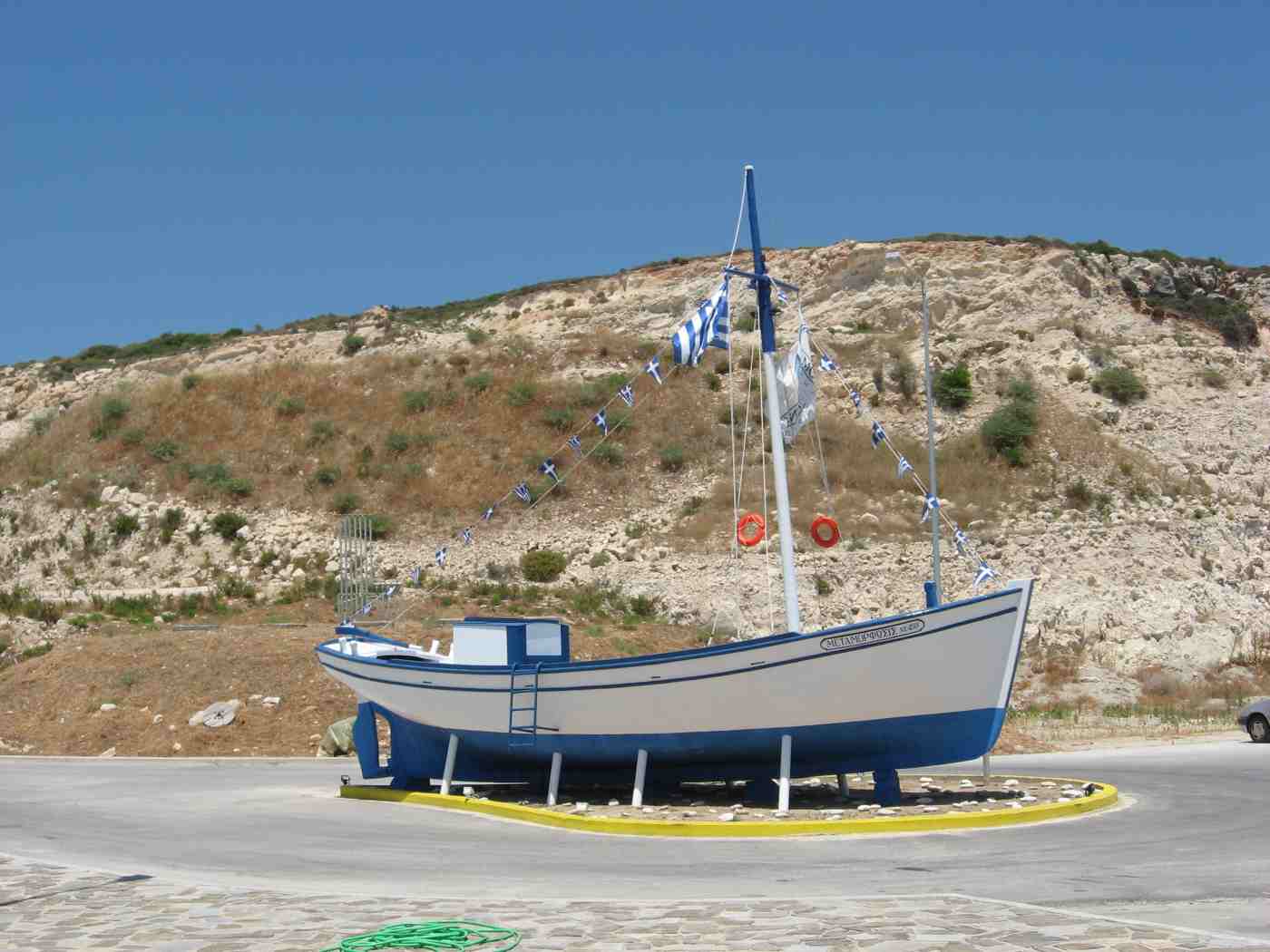
Vourliotes is a traditional mountain village on the north slopes of Mount Ampelos on Samos. It sits above Kokkari on the coast, set back among terraced Muscat vineyards and forest. Colourful stone houses cluster around a shaded central square ringed with tavernas. Narrow car-free lanes wind between them up and down the slope. The village ranks among the oldest inland settlements on the island. This guide covers the village, its square, its setting, and its long history. Plan the whole trip with Greece Tours.
The vineyards around Vourliotes grow the Muscat grapes behind the sweet Samos wine. Small tavernas on the square pour both the sweet and dry Muscat. A short walk above the houses stands the monastery of Panagia Vronda. Marked footpaths link Vourliotes with the neighbouring village of Manolates through the woods. A short road climbs to the village from Kokkari on the coast. This guide sets out the wine, the walks, and the daily life of Vourliotes.
What is Vourliotes, and why is it called a mountain village on Mount Ampelos?
Vourliotes is a traditional mountain village on the northern slopes of Mount Ampelos on Samos. Its stone houses sit amid terraced Muscat vineyards, and the settlement ranks among the oldest inland villages on the island.
Vourliotes stands on the green north face of Mount Ampelos, the second high massif of the island of Samos. Vineyards climb the slope below the houses in dry-stone terraces. The village grows the Muscat grapes that feed the island’s sweet wine tradition. Pine and chestnut woods rise behind the rooftops toward the ridge. A cool spring keeps the square green through the dry summer months. Farmers here work small plots rather than large estates. The altitude tempers the heat that presses on the coast below. Walkers reach the village along marked trails from the shore. Cars stop at the edge, since the core streets stay too narrow for traffic.
This upland setting has shaped Vourliotes into a compact stone settlement. Locals still tend the terraces by hand each season.
Mount Ampelos gives the village its backdrop and its name link to wine. Ampelos means vine in Greek, and vines cover its lower flanks. The peak rises above 1,000 metres over the northern coast. Vourliotes sits well up this slope at a cooler elevation. Terraces of Muscat grapes step down toward the sea. The soil and the mountain air suit the sweet white grape. Growers press both sweet and dry Muscat from these plots. Springs from the mountain feed the village fountains and gardens. Forest crowns the ridge above the highest vineyards. This mountain frame separates Vourliotes from the busy shore resorts. The setting keeps the village quiet even in high summer.
Ampelos thus defines both the farming and the calm of the place. Its slopes shelter the houses from the strongest winds.
Vourliotes ranks among the oldest inland settlements on the island. Its stone houses cluster tight against the slope for shelter. Narrow lanes thread between them with little room for vehicles. The core plan has changed little over past generations. Balconies and shutters carry bright colours above the grey stone. A shaded square anchors the middle of the village. Tavernas ring this square under plane trees and vines. Farming and small crafts have long supported the residents. Wine and olive oil come from the terraces around the houses. The village keeps a working character rather than a resort feel. Older residents still gather on the square in the evening. This long history gives Vourliotes its settled, lived-in look.
Each generation has kept the terraces and lanes in use.
Travellers reach Vourliotes by a short mountain road from the coast. The drive climbs through vineyards and forest over about four kilometres. Marked footpaths also link the village with the shore below. Most visitors come for the square, the wine, and the views. From the edge of the village the sea spreads far to the north. The mainland of Turkey shows across the strait on clear days. Vourliotes works well as a half-day trip from the beaches. Its tavernas serve local Muscat and simple mountain dishes. Crafts and produce from the terraces fill two or three small shops. The pace stays slow, matched to the mountain and the vines.
This blend of wine, history, and height defines the village. Vourliotes rewards a stop for anyone touring northern Samos.
How does Vourliotes sit above Kokkari and inland from the Samos coast?
Vourliotes sits high above Kokkari on the north coast of Samos, set back from the sea among vineyards and forest. A short winding road climbs from the shore to the village in about five kilometres.
Kokkari lies on the coast directly below Vourliotes to the north. The fishing and windsurf village marks the start of the mountain road. Drivers turn inland at Kokkari and climb through the vineyards. The route gains height in tight bends above the bay. Vourliotes appears after four kilometres among the terraces. The two places share the same slope of Mount Ampelos. Kokkari holds the beaches and tavernas along the shore. Vourliotes holds the wine, the square, and the quiet. Visitors often pair the coast and the village in one trip. The short distance makes the climb easy by car or on foot. This link ties the shore resort to the upland vineyards.
Kokkari thus serves as the coastal gateway to Vourliotes. The bay stays in view for much of the climb.
The village sits inland, away from the open sea and its winds. Vineyards and gardens fill the ground between the houses and the coast. This inland position keeps Vourliotes cooler than the shore in summer. Springs and shade hold the heat down on the square. The sea still shows in long views over the terraces below. Kokkari and its bay stay visible from high points in the village. Beyond the coast the strait toward Turkey opens to the north. The inland setting also shelters the crops from salt and wind. Muscat vines and olive trees cover the slope on every side. The distance from the beach keeps mass tourism at bay.
Vourliotes therefore feels rural and calm rather than coastal. This inland stance shapes both its climate and its character.
The mountain road is the main way up to Vourliotes. It leaves the coast road near Kokkari and climbs south. The tarmac winds through vineyard terraces and pine woods. Parking waits at the edge, since cars cannot enter the lanes. Walkers can also climb old paths that predate the road. These trails cut between the terraces from the shore to the village. The ascent gains about three hundred metres over a short span. Views widen with every bend back over the bay. The road continues past Vourliotes toward the higher forest. A branch leads up to the monastery of Panagia Vronda. This access from the coast keeps the village easy to reach.
The short climb rewards drivers and walkers with mountain air. Signposts mark the turn clearly from the coast road.
The setting above Kokkari gives Vourliotes wide sea views. Terraces drop away to the north below the last houses. The bay, the beaches, and the strait fill the panorama. Sunset light falls on the water beyond the vineyards. This vantage draws walkers and drivers to the village edge. The height also cools the evenings after hot coast days. Vines and forest frame every view from the square and lanes. The inland position keeps the noise of the resorts far below. Vourliotes trades beach access for calm, air, and outlook. Visitors climb for the wine and stay for the views. The coast and the mountain meet at this vineyard village.
This setting sums up the appeal of Vourliotes on Samos. Clear days stretch the outlook toward the Turkish shore.
What do the colourful houses and the shaded central square of Vourliotes look like?
Vourliotes centres on a shaded square ringed with tavernas under plane trees and vines. Colourful shutters, balconies, and doors brighten the grey stone houses that press close along the surrounding lanes.
The central square forms the heart of daily life in Vourliotes. Plane trees and vines throw shade across the paving. Tavernas set tables under this canopy through the warm months. A fountain fed by mountain springs stands near the middle. Villagers and visitors share the benches in the cool shade. The square stays busy from late morning into the night. Coffee, meze, and local Muscat pass across the tables. Children play on the paving while elders talk nearby. The setting feels enclosed by the houses on every side. Lanes run off the square into the tight village core. This shaded space gives Vourliotes its social centre. The square draws every visitor soon after they arrive.
Vines trained overhead deepen the shade through summer noon. Musicians sometimes play here on summer evenings.
The houses of Vourliotes carry bright paint over their stone walls. Shutters and balconies show blue, red, green, and ochre. This colour marks the village against the grey mountain behind. Wooden balconies overhang the narrow lanes on the upper floors. Flowers in pots line the sills and the steps. Old homes date back over past generations in the same families. Thick walls and small windows suit the mountain climate. Vines climb the fronts and shade the doorways in summer. The dense plan leaves little space between neighbours. Lanes twist between the walls with steps and archways. This colourful, close-packed core defines the look of Vourliotes. The houses draw photographers along every turning lane.
Whitewashed trim outlines the doors and window frames. Cats rest on the warm steps through the afternoon.
Tavernas ring the square and spill along the nearby lanes. They pour the local sweet and dry Muscat by the glass. Kitchens serve mountain dishes from the surrounding farms. Grilled meats, greens, cheese, and bread fill the tables. The wine comes from vineyards on the slopes around the village. Meals run long under the plane trees in the shade. The mood stays calmer than at the coastal resorts. The tavernas keep a family character rather than a tourist gloss. Diners look out over the terraces toward the distant sea. Evening brings lamps and cooler air to the square. This food and wine anchor the appeal of Vourliotes. The tavernas turn a short visit into a long meal.
Vines shade the outdoor tables through the afternoon. Local honey and preserves appear on tavern menus.
The square and its tavernas work together as one space. Stone houses close the sides and frame the plane trees. The fountain, the shade, and the tables draw people all day. Lanes lead off into the colourful core of the village. Balconies overhang the narrow ways just steps from the square. This compact centre makes Vourliotes easy to explore on foot. Visitors wander the lanes then return to the shade to rest. The blend of colour, stone, and greenery marks the place. The square holds the social life of the whole village. Wine and food keep the tables full into the evening. This heart gives Vourliotes its warm, lived-in feel.
The central square remains the reason people climb up. Old plane trees have shaded this spot for generations.
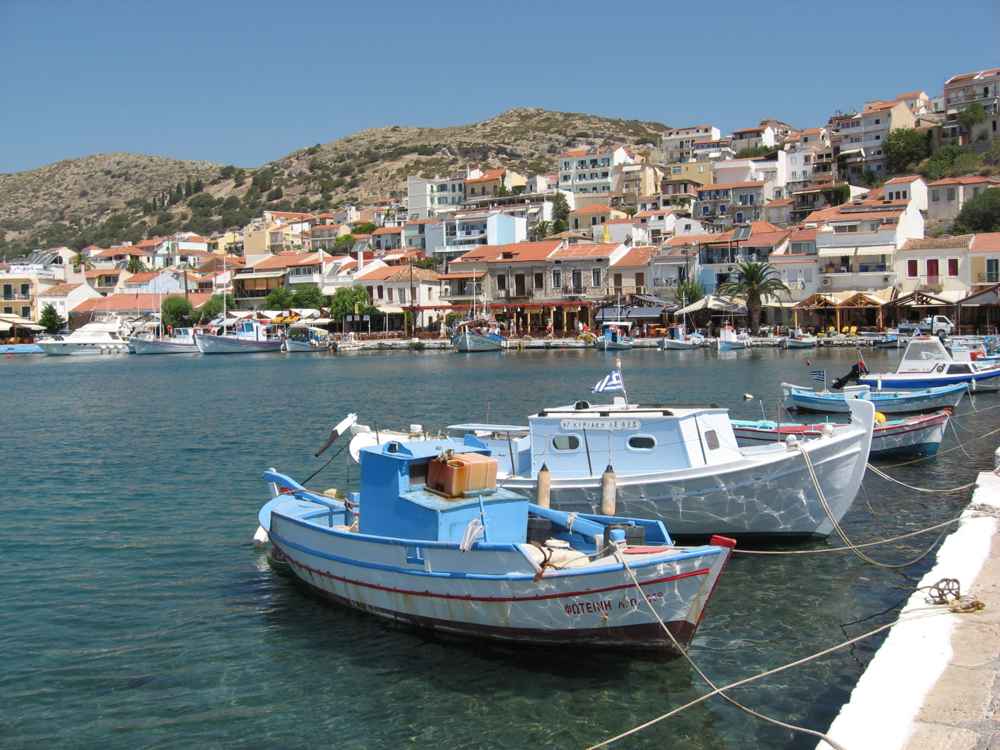
What are the car-free lanes and everyday village life like in Vourliotes?
Vourliotes keeps a core of narrow, car-free lanes that wind between the stone houses. Cars park at the edge, and daily life runs on foot around the square, the fountains, and the surrounding vineyard terraces.
The lanes of Vourliotes stay too narrow for cars to pass. Stone steps and archways break the ways between the houses. Vehicles halt at car parks on the village edge. Residents and visitors move through the core on foot. This layout keeps the streets quiet and safe for walking. Deliveries come by small carts or by hand up the lanes. Cats, pots of flowers, and doorways line every turn. The paths climb and drop with the slope of the hill. Balconies almost meet overhead in the tightest sections. The plan dates from a time before cars reached the village. This car-free core protects the old character of Vourliotes. Walking is the only way to see the place well.
Signs at the edge point walkers into the lanes.
Marked footpaths link Vourliotes with the nearby village of Manolates. The trail runs through pine and chestnut woods along the slope. Walkers cross vineyards and streams between the two villages. The route takes about an hour on foot each way. Both villages sit high on the north face of Ampelos. The path gives long views over the coast and the sea. Springs and shade break the walk at points along it. Manolates offers its own square, tavernas, and craft shops. Visitors often pair the two villages in a single day. The woods stay cool even when the coast turns hot. This trail ties Vourliotes into the wider mountain network.
The walk ranks among the best on northern Samos. Signposts mark the trailhead near the edge of Vourliotes.
Village life in Vourliotes follows the seasons of the vineyards. Growers tend the Muscat vines on the terraces through the year. The grape harvest in autumn draws the whole community. Families press wine and dry grapes for the sweet Muscat. Olive picking follows in the cooler months after the vintage. Daily life centres on the square, the tavernas, and the church. Elders gather for coffee while farmers pass on their rounds. Craftspeople sell weaving, ceramics, and local produce in small shops. The rhythm stays slow and tied to the land. Festivals mark saints’ days with music and food on the square. This working life sets Vourliotes apart from the resorts.
The village lives by its vines as it long has. Bells from the church mark the hours on the square.
The car-free plan shapes the whole feel of Vourliotes. Silence fills the lanes apart from voices and birdsong. The absence of traffic lets people talk across the square. Children move freely through the stepped ways and yards. This calm sets the village apart from the coastal towns. Visitors slow their pace to match the quiet streets. The layout also keeps the old stone core intact. Cars and buses wait below, out of sight and sound. Walking reveals the balconies, doorways, and hidden courtyards. Every turn opens a new view of stone and colour. This human scale defines life in Vourliotes today. The village rewards those who explore it slowly on foot. Doorsteps open straight onto the shaded lanes.
Pots of basil and geranium scent the air.
Why is Vourliotes counted among the oldest villages on Samos?
Vourliotes ranks among the oldest inland villages on Samos, founded when islanders moved uphill for safety from coastal raids. Its stone core, terraced vineyards, and church trace a long, continuous mountain settlement.
Vourliotes counts among the oldest inland villages on the island of Samos. Islanders built high on Ampelos to escape raids from the sea. The mountain site gave cover, water, and land for vines. The village name is said to come from settlers from Vourla. That town lay on the Asia Minor coast across the strait. The stone houses and lanes reflect this long, defensive past. Terraced vineyards around the village date back past generations. The church and square mark the old core of the settlement. Successive families have farmed the same slopes for centuries. This depth of history sets Vourliotes apart on Samos. The village stands as a record of mountain life.
Its age shows in every wall, lane, and terrace. Old chapels dot the slopes around the village.
The setting on Ampelos explains why the village grew inland. Coastal raids pushed island communities up into the hills. Vourliotes rose on a slope with springs and good soil. The terraces let farmers grow Muscat vines and olives. The village supported itself far from the exposed shore. Stone houses packed close for defence and shelter. Narrow lanes and steps slowed any attackers from the coast. Over centuries the settlement spread around the central square. Wine from the terraces became the mainstay of the economy. The monastery of Panagia Vronda rose in the forest above. This pattern shaped the old mountain villages on Samos. Vourliotes stands among the best preserved of these.
The layout still shows this defensive origin clearly. Footpaths from that era still cross the slopes.
The monastery of Panagia Vronda stands in forest above the village. A short drive or walk leads up to it from Vourliotes. The site dates back centuries and draws pilgrims and walkers. Trees shade the courtyard and the old stone church. The monastery marks the deep religious history of the area. Its feast day fills the forest clearing with visitors. The walk up passes springs, vines, and pine woods. Views open back over the village and the coast. This link between village and monastery runs deep. Older residents keep the customs of the feast alive. The forest setting adds to the sense of age. Panagia Vronda anchors the spiritual life above Vourliotes.
White walls stand out against the dark pines. The path there stays cool through the summer heat.
Vourliotes today keeps the shape of its long history. The stone core, the square, and the terraces remain in use. Wine from the vineyards still fills the tavern tables. Old families hold homes passed down over generations. The car-free lanes protect the old plan from change. Visitors come for this blend of age, wine, and calm. The village avoids the heavy building of the coast. Its history lives in daily work rather than in museums. Vourliotes stands as one of the oldest villages on Samos. The mountain, the vines, and the stone tell that story. This depth gives the village its lasting appeal. Vourliotes rewards travellers who value history and quiet alike.
Each terrace wall marks the labour of past generations. The old paths still connect it to the sea.
How do the terraced Muscat vineyards around Vourliotes produce Samos wine?
Terraced Muscat vineyards ring Vourliotes on the slopes of Mount Ampelos, and the village pours its own sweet and dry wine. Small producers and square-side tavernas serve the local Muscat by the glass and bottle.
The vineyards climb the north face of Mount Ampelos in stone-walled terraces above Vourliotes. Farmers train the Muscat Blanc a Petits Grains vines on these narrow benches carved into the slope. The altitude runs from about 300 metres near the village to over 600 metres higher up the mountain. Cool mountain nights and warm days concentrate the sugar in the small white grapes. This terraced landscape yields the sweet PDO Muscat that carries the name of the island. The steep terraces allow only hand-picking, so families gather the crop by basket in early autumn. A walk among the surrounding hills shows how central the vine remains to daily life here.
The wider story of Samos wine begins on exactly these Ampelos benches above the village.
Tavernas around the shaded central square pour the local Muscat alongside plates of meze. Visitors taste the sweet golden dessert wine that made the island famous across Europe. Village tavernas also serve a drier Muscat that suits the grilled dishes and the cheese. A small glass of the sweet wine usually closes a meal with fruit or spoon sweets. Family producers in the village sell their bottles direct, and open their cellars to callers on request. The wine reaches the square from vineyards only a short walk uphill from the tables. Ordering a carafe of the house pour costs little and shows the everyday village style.
This close link between vine, cellar and table defines the character of Vourliotes for visitors who climb the mountain road above Kokkari.
Samos Muscat comes in a range of styles pressed from the same white grape. The sweet PDO version, rich in honey and apricot notes, is the best known abroad. A naturally sweet vin doux and a fortified vin de liqueur both age to a deep amber. Producers on Ampelos also bottle a dry white Muscat that keeps the grape’s floral scent. The sweet wines pair with desserts, blue cheese and dried figs grown on the island. The dry Muscat works with the fish and salads served in the coastal villages below. Tasting two or three styles side by side shows how one grape shifts with the method.
Vourliotes sits high enough on the mountain for the vines to hold their acidity and floral aroma through the long summer.
The Muscat harvest on Ampelos falls in late summer, when the grapes reach full sugar. Pickers carry baskets down the terraces to the village, and the must goes to the cooperative. Much of the island’s crop passes through the union of vintners based near Vathy. Buyers in Vourliotes taste before they choose a sweet or a dry bottle to carry home. Prices stay modest compared with mainland cellar doors, and the pours are generous ones. A sealed bottle of the sweet Muscat travels well and keeps for years in a cool place. Vineyard walks above the village reward the climb with wide views over Kokkari and the sea.
The vine, more than any monument, marks the rhythm of the year in this small mountain settlement above the coast.
What is the Panagia Vronda monastery in the forest above Vourliotes?
The Panagia Vronda monastery stands in pine forest on the slope above Vourliotes, a short drive or walk from the square. Its whitewashed courtyard and small church honour the Virgin, and a festival fills it each summer.
Panagia Vronda sits in the forest about 2 kilometres above Vourliotes on the Ampelos slope. A narrow paved road climbs from the village edge, and a marked path also leads up. The name Vronda, meaning thunder, ties the monastery to the storms that break over the mountain. Whitewashed walls enclose a quiet courtyard shaded by tall cypress and plane trees. A small stone church stands at the centre, its bell hung in a simple arch. Monks no longer live here year round, yet the buildings stay cared for and open by day. The drive up takes only two or three minutes, though the walk through the woods rewards slower travel.
Pine scent and birdsong replace the sound of the village once the road bends into the trees.
The church holds an icon of the Virgin that draws pilgrims from across the island. Faded wall paintings and a carved wooden screen fill the small interior with worn detail. A colonnaded gallery runs along one side of the courtyard, giving shade in the heat. Cells for visiting monks and a refectory line the enclosing wall behind the church. Water runs from a spring near the gate, a common feature of Samos mountain monasteries. The plain architecture reflects the practical building style of the island’s religious houses. Visitors keep shoulders and knees covered, as at any working Greek monastery today.
The caretaker opens the church on request during daylight, and entry costs nothing to the traveller who climbs the forest road above the village on foot.
The monastery clearing opens to a wide view north over the vineyards and the Aegean. Kokkari and its beaches appear far below, with the Turkish coast on the horizon beyond. Chestnut, pine and plane trees crowd the slope, part of the green mantle that covers Ampelos. Springs feed the streams that thread the woods and keep the ground damp through the summer. The air stays cooler here than on the coast, a real relief in the July heat. Benches under the trees give walkers a place to rest before the return to the village. The setting explains why the monks built high on the mountain, away from raids on the shore.
Few places on Samos combine forest, running water and a long sea view as this clearing does.
The monastery celebrates its feast in summer, when villagers climb for a liturgy and a shared meal. Long tables fill the courtyard, and the day mixes worship with music and local wine. Panagia Vronda pairs with the nearby monastery of Panagia Vrontiani, the older house above Vourliotes. Vrontiani ranks among the oldest religious foundations on Samos, set deeper in the mountain forest. Walkers often link both monasteries in a single loop that starts from the village square. The paths between them run through chestnut groves and past running mountain springs. A visit fits easily into a morning before lunch back in the tavernas of Vourliotes.
The climb, the shade and the view make the monastery one of the fixed points of a day out in the hills.
How do the marked footpaths lead from Vourliotes to Manolates through the woods?
Marked footpaths connect Vourliotes with Manolates through the pine and chestnut woods of Mount Ampelos. The walk covers roughly 4 kilometres one way, passes springs and streams, and takes about two hours at a steady pace.
The trail to Manolates starts at the western edge of Vourliotes near the last houses. Red waymarks and wooden signs guide walkers along the old path once used between the villages. The route drops into a wooded ravine, then climbs the far side toward Manolates on its spur. Pine, chestnut and plane trees shade most of the way, so the walk stays cool in summer. Streams cross the path in the damp months, fed by the springs that ring Mount Ampelos. The hike ranks among the most rewarding things to do in Samos for visitors based on the north coast. Sturdy shoes help on the loose stone and the occasional steep pitch of the path.
The clear signing makes a guide unnecessary for walkers used to mountain paths on the island.
The one-way distance between Vourliotes and Manolates runs about 4 kilometres on the marked path. A steady walker covers it in roughly two hours, with stops for water and for views. The route climbs and drops repeatedly, so the effort exceeds the flat distance alone. Both villages sit near 400 metres, yet the ravine between them adds real height gain. Walkers often ride a bus or a car to one village and walk across to the other. A return on foot makes a half-day outing of about four hours in total. Morning starts avoid the midday heat on the exposed upper sections of the trail.
Water and a hat matter, as no shop or spring-fed tap sits at the midpoint of the long wooded walk between them.
The path passes terraced vineyards, abandoned stone huts and old threshing floors along the way. Springs bubble from the hillside, and small chapels stand at bends in the wooded route. Manolates appears across the ravine, its houses stacked on a spur below the mountain peak. The village matches Vourliotes for narrow lanes, painted houses and tavernas around a small square. Birds fill the chestnut woods, and the area ranks among the greenest on the whole island. Views open north to Kokkari and the sea whenever the trees thin along a ridge. The two villages share the same mountain culture of wine, walnuts and mountain honey.
Walking between them shows the settled inland face of Samos, far from the busier beach resorts down on the coast below.
Walkers reach the trailhead by parking at the Vourliotes car park below the village edge. The path is best in spring and autumn, when the woods stay green and the heat eases. Summer walks work in the early morning, before the sun climbs over the eastern ridge. Winter rain makes the stone slippery and the stream crossings harder to cross on foot. No ticket or fee applies, and the paths stay open right through the year. A phone with an offline map helps where waymarks fade under fallen chestnut leaves. Tavernas at both ends serve food and the local Muscat at the finish of the walk.
Linking Vourliotes, Manolates and the monasteries makes a full walking day on the green northern slopes of Mount Ampelos.
How do you reach Vourliotes from Kokkari by car on the mountain road?
Vourliotes sits about 5 kilometres inland from Kokkari by a paved mountain road. The drive climbs the north slope of Ampelos in roughly fifteen minutes, and a car park waits at the village edge below the houses.
The road to Vourliotes leaves the coast road just west of Kokkari on the north shore. A signposted junction marks the turn inland toward the mountain villages of Ampelos. The paved route climbs steadily through terraced vineyards and old olive groves on the lower slopes. Bends grow tighter as the road gains height, so the pace stays slow and steady. The distance from Kokkari runs about 5 kilometres, covered in around fifteen minutes by car. Views over the sea widen with every turn as the coast drops away below the road. The same road continues to the higher villages once past the Vourliotes turn-off toward Manolates.
Drivers meet light traffic outside the summer peak, though buses, taxis and delivery vans use the route through the day.
A car park sits at the entrance to Vourliotes, since cars cannot enter the narrow lanes. The village keeps its centre free of traffic, so visitors leave vehicles at the edge. From the car park a short walk on foot reaches the central square in two or three minutes. Signs point the way, and the climb from the parking area up to the houses stays gentle. Spaces fill on summer middays, when tour groups and diners arrive at the same time. An early or a late visit finds the car park quiet and the lanes almost empty. The walk in from the car passes the first tavernas and the edge of the vineyards.
Leaving the car behind is part of the pleasure of a village built for feet, not wheels.
Vourliotes lies about 12 kilometres from Vathy, the island capital and main ferry port. The drive from Vathy takes around twenty-five minutes on the coast and mountain roads. From Pythagorio and the airport in the south-east, the trip runs closer to 40 kilometres. A car crosses the island from the south coast in about fifty minutes to reach the village of Vourliotes. Karlovasi, the second port in the north-west, sits about 20 kilometres to the west of here. Most visitors combine Vourliotes with Kokkari, Manolates and the north-coast beaches in a single day’s outing. A hire car gives the freedom to link these mountain villages at an unhurried pace.
The roads stay paved and well signed, though narrow and winding on the upper mountain sections near the villages.
A local bus links Vathy and Kokkari with the mountain villages on a limited timetable. Services run three or four times a day in summer and less often out of season. Walkers reach Vourliotes from Kokkari on foot by a marked path of about 4 kilometres. The climb on foot gains around 300 metres and takes close to ninety minutes in all. Taxis wait at Kokkari and Vathy and cover the short run up the mountain quickly. A hire car remains the simplest way to explore the inland villages on your own schedule. Cyclists tackle the climb, though the gradient and the heat make it a hard ride.
Every route ends the same way, on foot through the lanes into the heart of the village.
Who does the mountain village of Vourliotes suit best?
Vourliotes suits wine lovers, walkers and travellers who want quiet over nightlife. The village rewards slow visits built around tasting Muscat, hiking to Manolates and resting in the shaded square, rather than beach resorts and crowds.
Wine lovers find in Vourliotes a direct link to the vineyards that make Samos Muscat. Tavernas and small producers pour sweet and dry wine within a short walk of the vines. Tasting the golden dessert Muscat at its source means more than buying a bottle abroad. Cellar visits and vineyard walks fill an afternoon for anyone drawn to the grape. The village square gives a shaded seat to compare the styles over a slow lunch. Bottles bought here travel home as a reminder of the mountain terraces above the coast. The setting turns a simple glass of wine into a sense of place and of season.
For a traveller who plans a day around food and wine, the village earns the short drive uphill from the coast.
Walkers treat Vourliotes as a base for the marked paths across Mount Ampelos. Trails run to Manolates, to the forest monasteries and down toward Kokkari on the coast. The green woods and running springs set these hikes apart from the dry paths of the southern islands. A half-day loop links two villages and a monastery with only modest climbing along the way. Cooler mountain air makes summer walking easier here than on the exposed southern coast. Spring brings wildflowers, and autumn turns the chestnut woods gold along the walking routes. Sturdy shoes and an early start open the best of the network within a single walking day.
For anyone who rates a good walk over a sun-lounger, the village and its wooded slopes fully deliver.
Quiet-seekers value Vourliotes for its car-free lanes and its distance from the coast resorts. Nights stay calm, with only taverna chatter and the church bell breaking the mountain silence. The square fills at lunch and empties by evening, when day visitors return down to the coast. Staying overnight in the village gives the traveller the lanes and the dawn to themselves. Slow mornings over coffee and a book fit the unhurried pace of the whole place. The village makes a gentle counterweight to the busier resorts down along the coast. Views over the vineyards and the sea reward those who simply sit and look out to sea.
For rest rather than action, Samos villages match the calm found on these quiet upper mountain slopes.
Travellers set on nightlife, big beaches and resort comforts find little of that in Vourliotes. The village has no sand, no clubs and only a dozen small rooms to rent. Families with young children manage the square and short strolls, though long trails suit older kids. Drivers wary of narrow mountain bends approach the road with care, above all after dark. Anyone chasing a packed sightseeing list passes through in an hour rather than a day. The village rewards the traveller who slows down to match its slow, unhurried mountain rhythm. Wine, walks and quiet form the heart of what Vourliotes offers to the visitors who climb up.
Set against the coast below, it stands for the older, inland face of Samos, of vine and forest.
Frequently Asked Questions
Is Vourliotes worth the drive up from the coast?
Vourliotes rewards the short drive up from the coast for most visitors to northern Samos. The village sits only about 5 kilometres from Kokkari, a climb of roughly fifteen minutes by car. At the top waits a shaded square ringed with tavernas, narrow car-free lanes and painted houses. Terraced Muscat vineyards surround the village, and producers pour the sweet and dry wine of the island. The setting on Mount Ampelos gives cool air and wide views over the Aegean toward Turkey. Marked footpaths run from the edge of the village to Manolates and the forest monasteries above. A visit combines easily with Kokkari, the north-coast beaches and the neighbouring mountain villages in one day.
Travellers who want only sand and nightlife gain less from the trip inland to the hills. Those drawn to wine, walking and quiet villages find the short drive well spent. Half a day covers the square, a taste of Muscat and a walk into the woods above the houses.
Is Vourliotes a good place to visit with kids?
Vourliotes works well for families who enjoy relaxed village time over packed activity. The traffic-free lanes let children walk and explore without the danger of passing cars. The shaded central square gives parents a table while children move safely between the tavernas. Short strolls to the edge of the vineyards suit young legs and hold their interest for a while. The full footpath to Manolates, about 4 kilometres each way, better fits older children and teenagers. Tavernas serve simple grilled dishes, chips and local cheese that please most young eaters. The car park at the village edge means only a brief walk uphill to reach the centre.
Cooler mountain air makes summer afternoons here easier on children than the hot coast below. No beach or playground sits in the village, so a full day needs a coast stop too. A morning in Vourliotes, followed by a swim at Kokkari, balances the day for most families with children.
Where do you park when you visit Vourliotes?
A car park sits at the entrance to Vourliotes, since vehicles cannot enter the narrow lanes. Drivers leave the car at this edge lot and walk a short way up to the central square. The village keeps its centre free of traffic, so no parking exists among the old houses. Signs on the approach road point the way to the parking area below the village edge. Spaces fill on summer middays, when diners and tour groups arrive at the same time. An early or a late visit usually finds the car park quiet and easy to enter. The lot is unpaved and unmarked, with room for around forty cars at a time.
No fee applies, and the short walk uphill passes the first tavernas and the vineyards. Larger vehicles and campervans handle the narrow road with care on the tighter mountain bends. Leaving the car at the edge and walking in is part of visiting a village built for feet.
How hard is the walk from Vourliotes to Manolates?
Walking to Manolates from Vourliotes follows a marked footpath of about 4 kilometres one way. A steady walker covers the route in roughly two hours, with stops for water and for views. The path drops into a wooded ravine, then climbs the far side toward Manolates on its spur. Pine, chestnut and plane trees shade most of the way, keeping the walk cool in summer. Red waymarks and wooden signs guide the route, so a paid guide is not needed. Springs and small chapels break the walk, and terraced vineyards line parts of the path. Both villages share narrow lanes, painted houses and tavernas around a small central square.
Walkers often ride to one village and walk to the other, then return by bus or taxi. Spring and autumn offer the best conditions, with green woods and mild daytime temperatures. Sturdy shoes, water and a hat handle the loose stone and the exposed upper sections of the trail.
What can you see at the monastery above Vourliotes?
The monastery of Panagia Vronda stands in pine forest about 2 kilometres above Vourliotes. A narrow paved road climbs from the village edge, and a marked path also leads up through the woods. Whitewashed walls enclose a quiet courtyard shaded by cypress and plane trees around a small church. The name Vronda, meaning thunder, links the site to the storms that break over Mount Ampelos. Inside the church, an icon of the Virgin, faded wall paintings and a carved screen fill the space. A spring runs near the gate, and benches under the trees give walkers a place to rest. The clearing opens to wide views north over the vineyards and the sea toward Turkey.
The older monastery of Panagia Vrontiani sits deeper in the forest, among the oldest houses on Samos. A summer feast fills the courtyard with a liturgy, a shared meal and the local wine. Visitors keep shoulders and knees covered, and the caretaker opens the church by day at no charge.
What is the food and wine like in Vourliotes?
Tavernas around the central square of Vourliotes serve Greek mountain cooking and the local Muscat. Menus lean on grilled meat, garden vegetables, cheese and meze rather than long printed lists. The sweet golden Muscat, the wine that made Samos famous, closes most meals by the glass. Village tavernas also pour a drier Muscat that pairs with the savoury dishes and the cheese. Family producers in the village sell bottles direct, and open their cellars to callers on request. Prices stay modest, and a carafe of the house pour costs little beside the food ordered. The vineyards climb the slopes within a short walk, so the wine reaches the table young.
Spoon sweets, walnuts and mountain honey often appear at the end of a long meal. Lunch draws the biggest crowds, while evenings turn slow and quiet once day visitors leave. Booking is rarely needed outside peak summer, when the square fills with diners at midday under the trees.
When is the best time of year to visit Vourliotes?
Spring and autumn rank as the best seasons to visit Vourliotes on Mount Ampelos. In spring the woods turn green, wildflowers line the paths and the temperature suits long walks. Autumn brings the Muscat harvest, golden chestnut leaves and warm days without the summer heat. Summer works for a visit, though the midday sun makes the walks harder on the exposed sections. The mountain air stays cooler than the coast, giving relief on hot July and August afternoons. Winter turns quiet, with tavernas shuttered and rain that makes the stone paths slippery underfoot. The village square and tavernas run busiest at lunch right through the warm months.
Walkers gain most from the shoulder seasons, when the trails to Manolates stay cool and green. Wine lovers time a trip to the late-summer harvest, when the terraces fill with pickers. For quiet, the early and late months offer the lanes and the views almost entirely to yourself.