
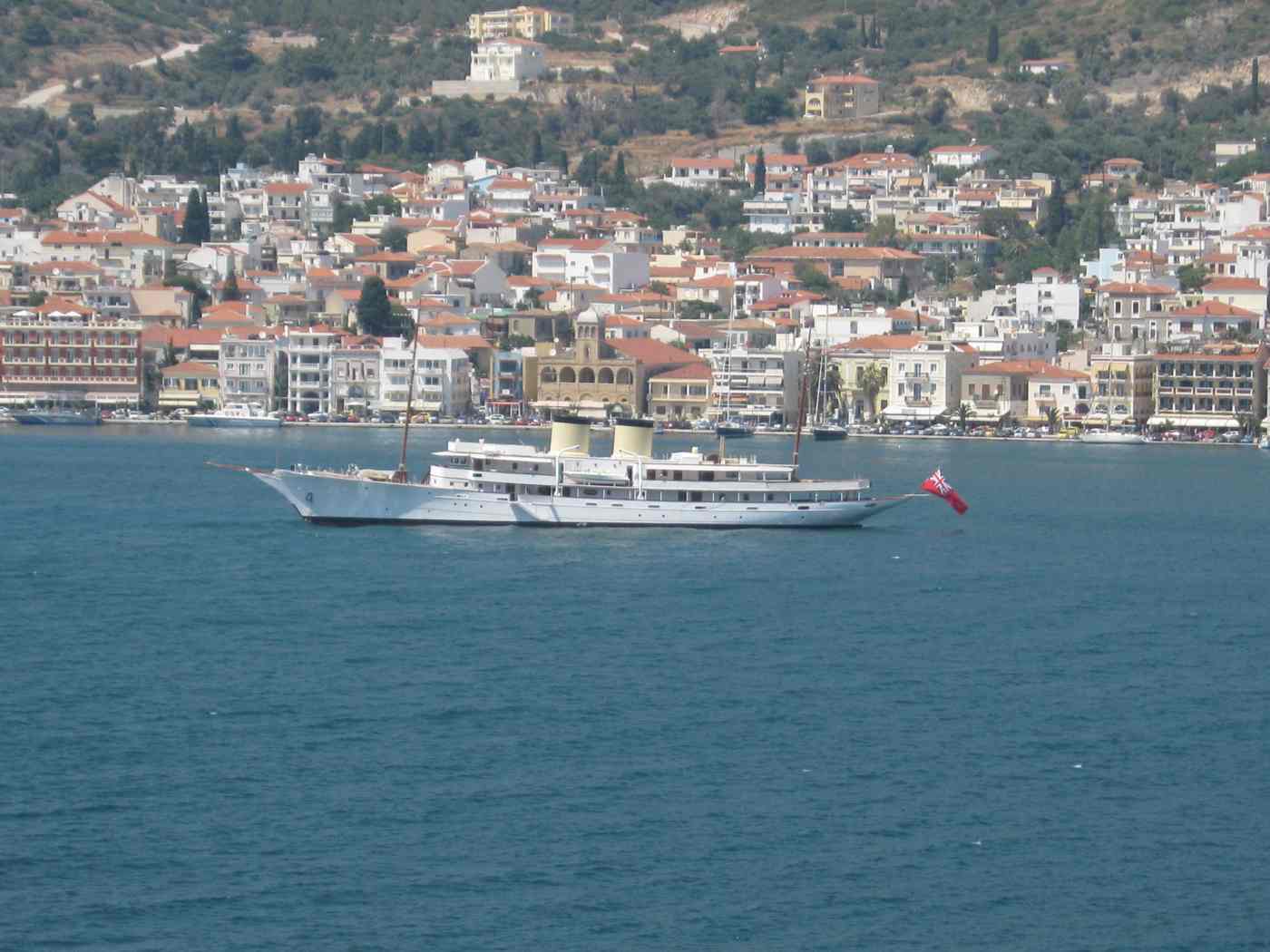
Samos holds one of the richest histories in the Aegean, out of all proportion to its size. The green, mountainous island off the coast of Asia Minor was settled from prehistory and grew into a leading Ionian city-state. Under the tyrant Polycrates it reached a golden age. Its fleet ruled the eastern Aegean, and its engineers raised works that Herodotus ranked above any in Greece. The same island gave the world three thinkers of the first rank. This history of Samos runs from Ionian settlers through Persian, Athenian, Roman and Byzantine rule to the modern Greek state. It is a long story written across ruins that visitors still walk today. Plan the whole trip with Greece Tours.
This guide traces the history of Samos through the people and works that made its name. It opens with the earliest settlers and the rise of the Ionian city, then turns to Polycrates and the golden age of the sixth century. It looks at the three great works praised by Herodotus, the Eupalinos Tunnel, the harbour mole and the temple of Hera. It then follows the island’s three famous minds: Pythagoras the mathematician, Aristarchus the astronomer, and Epicurus the philosopher. Each section keeps to named eras and figures, showing how one small Aegean island shaped Greek engineering, science and thought for the wider world.
How did the earliest settlement of Samos grow into a powerful Ionian city-state?
Samos was settled from prehistoric times and grew into a leading Ionian city-state. Ionian Greek colonists organised the island around a maritime capital on the south coast, building the wealth and fleet that later defined its Aegean power.
Samos lies in the eastern Aegean, close to the coast of Asia Minor across the narrow Mycale strait. Habitation on the island reaches back to the prehistoric age, when early communities farmed the fertile plains and fished the sheltered bays. The green, well-watered land and its position on sea routes made it attractive to settlers. Fresh springs and timbered hills supplied water and shipbuilding material close at hand. Ionian Greeks, part of the migration that populated the central Aegean coast, took the island and founded the city that bear the island’s name. You can trace this deep past across the ruins and museums of Samos today.
The ancient capital rose on the south coast, where a natural harbour and a defended acropolis anchored the growing town.
The Ionian city of Samos joined the Panionion, the religious league of the twelve Ionian states centred at Mycale on the facing mainland. Shared cult and festivals bound these communities, yet each kept its own government and ambitions. Samos built a strong navy and merchant fleet, trading across the Aegean and beyond to Egypt and the Black Sea. Its potters, bronzeworkers and shipwrights earned a wide reputation, and Samian goods travelled far by sea. Samian traders opened one of the earliest links between Greece and the Nile delta. Aristocratic clans, the geomoroi or landholders, governed the early city and drew wealth from grain, olives and vines.
Colonies and trading posts extended Samian reach, and the sanctuary of Hera grew into the island’s great religious centre, drawing offerings from distant shores and marking its rising prestige.
Rivalry with the neighbouring island of Miletus and with nearby Priene shaped early Samian politics, and disputes over borders and sea lanes were common. The geomoroi aristocracy faced pressure from merchants and craftsmen enriched by trade. Factional struggle and the ambitions of leading families gradually opened the way for one-man rule. Across the Ionian world, tyrants rose in this era, seizing power with popular and military backing against the old landed clans. On Samos this pattern reached its height under a single ruler who make the island a naval power feared across the Aegean.
The city already commanded respect, its temple, harbour and fleet marking it among the foremost states of Ionia and a match for its mainland and island neighbours alike.
The early city left marks still visible on the ground around Pythagorio, where the ancient capital stood. Stretches of the Archaic city wall, the line of the ancient harbour, and the foundations of public buildings survive among the modern town and fields. A defended acropolis once crowned the ridge above the sheltered bay. Exploring these remains ranks among the most rewarding things to do in Samos for anyone drawn to the deep past. The sanctuary of Hera on the south coast, reached by the Sacred Way, anchored the city’s religious life from the start. This early foundation, its fleet, its trade and its temple, set the stage for the golden age that followed.
The Ionian city had become one of the richest and most powerful communities in the whole Aegean world.
Who was the tyrant Polycrates and how did he bring Samos to its golden age?
Polycrates seized power over Samos and ruled it as tyrant at the height of its fortunes. He built a fleet of a hundred ships, dominated the eastern Aegean, enriched the island, and drew artists and engineers to a brilliant court.
Polycrates took control of Samos with his brothers, then set aside his rivals to rule alone as sole tyrant. He came to power in the sixth century before the common era, in the Archaic age of the Greek world. A hundred fifty-oared galleys, the pentekonters of his fleet, gave him command of the surrounding seas. His ships raided widely and levied the coasts and islands, and even friends were fair targets for his profitable piracy. Tribute, plunder and trade filled the island’s treasury and paid for grand public works. Polycrates ringed the capital with strong walls and improved the harbour of the ancient city.
His navy made Samos the leading sea power of the eastern Aegean, unmatched among the islands of Ionia during his reign.
Polycrates courted powerful allies and skilled talent from across the Greek world. He formed a bond with Amasis, the pharaoh of Egypt, exchanging gifts and envoys until, as the story goes, the friendship soured over his relentless good fortune. The poet Anacreon lived at his court and sang its pleasures, and the physician Democedes of Croton served him. Craftsmen, engineers and architects gathered on the island, drawn by the tyrant’s wealth and appetite for grand projects. Under his patronage the arts and sciences flourished, and Samos gained fame far beyond the Aegean. The court became a magnet for learning and luxury, its banquets and building schemes talked of throughout Ionia.
This concentration of skill made possible the celebrated engineering feats that later generations remembered as the tyrant’s lasting monuments.
The golden age of Samos rested on sea power, wealth and bold construction. Polycrates pushed the harbour works, the walls and the great temple of Hera to a scale that rivalled any Greek state. His fleet held the trade routes and forced neighbouring islands to acknowledge Samian strength. Yet the tyrant’s fortune drew envy. A famous tale tells how he threw a treasured ring into the sea to break his unbroken luck. Only to have it returned inside a fish. His end came through treachery on the mainland opposite, where a Persian governor lured him across the strait and killed him.
With his death the island’s brief supremacy faded, though the works he raised endured for centuries as proof of Samian ambition and skill.
Polycrates left a legacy larger than his own turbulent rule. The three works most linked to his golden age, the tunnel, the harbour mole and the temple of Hera, became bywords for Greek engineering. His court set a model of tyrant patronage that other rulers imitated across the Aegean. The memory of Samian sea power lingered long after Persia absorbed the island into its empire. Poets and historians kept his name alive, treating his rise and fall as a lesson on fortune’s turns. Later Greeks pointed to his monuments as evidence that a small island rivalled great kingdoms.
The tyrant’s era remains the brightest chapter in the long history of the island, the moment when Samos stood among the leading powers of the sixth-century Aegean world.
What are the three great works of Samos recorded by Herodotus?
Herodotus praised three great works on Samos above those of any other Greek land. He named the Eupalinos Tunnel that carried water through a mountain, the deep mole sheltering the harbour, and the vast temple of Hera at the Heraion.
Herodotus, the historian of Halicarnassus, singled out Samos for three achievements greater than any elsewhere in the Greek world. He wrote about the island partly because these works impressed him beyond the ordinary. The first was a tunnel driven through the base of a mountain to bring water to the ancient capital. Its builder, Eupalinos of Megara, dug it from both ends at once so the two crews met deep inside the rock. A visit to the Eupalinos Tunnel still lets travellers walk a lit stretch of this ancient aqueduct. The channel carried spring water from the far side of the hill down into the city below, hidden safely underground from any attacker.
The tunnel runs about one thousand and thirty-six metres straight through the limestone ridge.
The two teams of diggers relied on careful measurement to guide their converging tunnels. They started on opposite flanks of the hill and steered toward a meeting point deep within, correcting their line as the rock forced small detours. Their success, without modern instruments, marks one of the earliest triumphs of applied geometry in the ancient world. Herodotus grasped the difficulty and set the feat down for later ages to admire. A second, lower channel beside the walking passage held clay pipes that carried the water itself. The upper gallery gave workers room to inspect and clear the line.
This double design kept the supply flowing and let crews maintain the aqueduct, showing a mastery of hydraulic engineering rare among the Greek cities of its age.
The second great work was the mole that protected the harbour of the ancient city. Herodotus described a breakwater built out into deep water to shield the anchorage from wind and swell. The mole enclosed the port where Polycrates kept his fleet of galleys, a safe base for a navy that ruled the eastern Aegean. Stone tipped into the sea raised a barrier against the open water, a major undertaking for the age. The sheltered basin let ships load, unload and shelter in all weather, feeding the island’s trade and power. Remains of the ancient harbour still lie beneath and beside the modern harbour of Pythagorio.
This marriage of engineering and sea power underpinned the wealth that paid for the tunnel and the temple alike, binding the three works together.
The third great work was the temple of Hera, the largest Greek temple of its day. Herodotus ranked it above every other sanctuary he knew for sheer size. Its architects raised a forest of columns around the goddess’s cult on the south coast plain. The temple crowned a sanctuary that had drawn worshippers to Hera since the earliest days of the island. Together the three works, tunnel, mole and temple, showed a small island commanding resources and skill to rival great kingdoms. Herodotus preserved their fame, and his account remains the earliest witness to Samian achievement. Later travellers came to the island partly to see for themselves the marvels the historian had praised.
The three works still define the ancient glory of Samos, standing at the heart of its long story.
Why is Pythagoras of Samos remembered and what is his legacy?
Pythagoras of Samos founded a philosophical and mathematical brotherhood that shaped Western thought.
Pythagoras was born on Samos in the sixth century before the common era, in the age of Polycrates. The island of his birth gave him its name, and later Greeks always called him the Samian. He grew up in a wealthy trading city open to ideas from Egypt and the East. Tradition holds that he travelled to Egypt and Babylon, gathering knowledge of geometry, astronomy and religion. The town of Pythagorio on the southeast coast now carries his name in his lasting honour. His early life on the island shaped the mix of mathematics, music and mysticism that marked his teaching.
This island upbringing, at the height of Samian sea power, placed him among the currents of learning that flowed through the sixth-century Aegean world.
Pythagoras left Samos as a grown man, unwilling to live under the tyrant’s rule. He sailed west to Croton, a Greek city in southern Italy, and founded a school there. His followers, the Pythagoreans, formed a tight brotherhood bound by shared study and strict rules of life. They pursued mathematics, music and astronomy as paths to understanding a cosmos ordered by number. The famous theorem on right-angled triangles carries his name, though the brotherhood credited discoveries to the master collectively. They taught that whole-number ratios govern musical harmony, linking sound to measure. Their belief in the transmigration of souls set them apart in habit and diet.
From this southern-Italian base the Pythagorean tradition spread, carrying the name of the Samian across the wider Greek world for generations to come.
The legacy of Pythagoras reached far beyond his own lifetime and his own school. His idea that number underlies the order of nature shaped Greek philosophy and science for centuries. Plato drew on Pythagorean thought, and through him the notion passed into the whole Western tradition. Mathematicians built on the brotherhood’s work in geometry, ratio and the theory of numbers. Astronomers inherited the vision of a cosmos governed by measurable harmony and regular motion. The link between music and mathematics, first pressed by the Pythagoreans, still underlies the theory of scales. His name became a byword for the power of pure reason to reveal hidden order.
From a single island thinker grew a current of ideas that helped define how the West understands mathematics and the natural world.
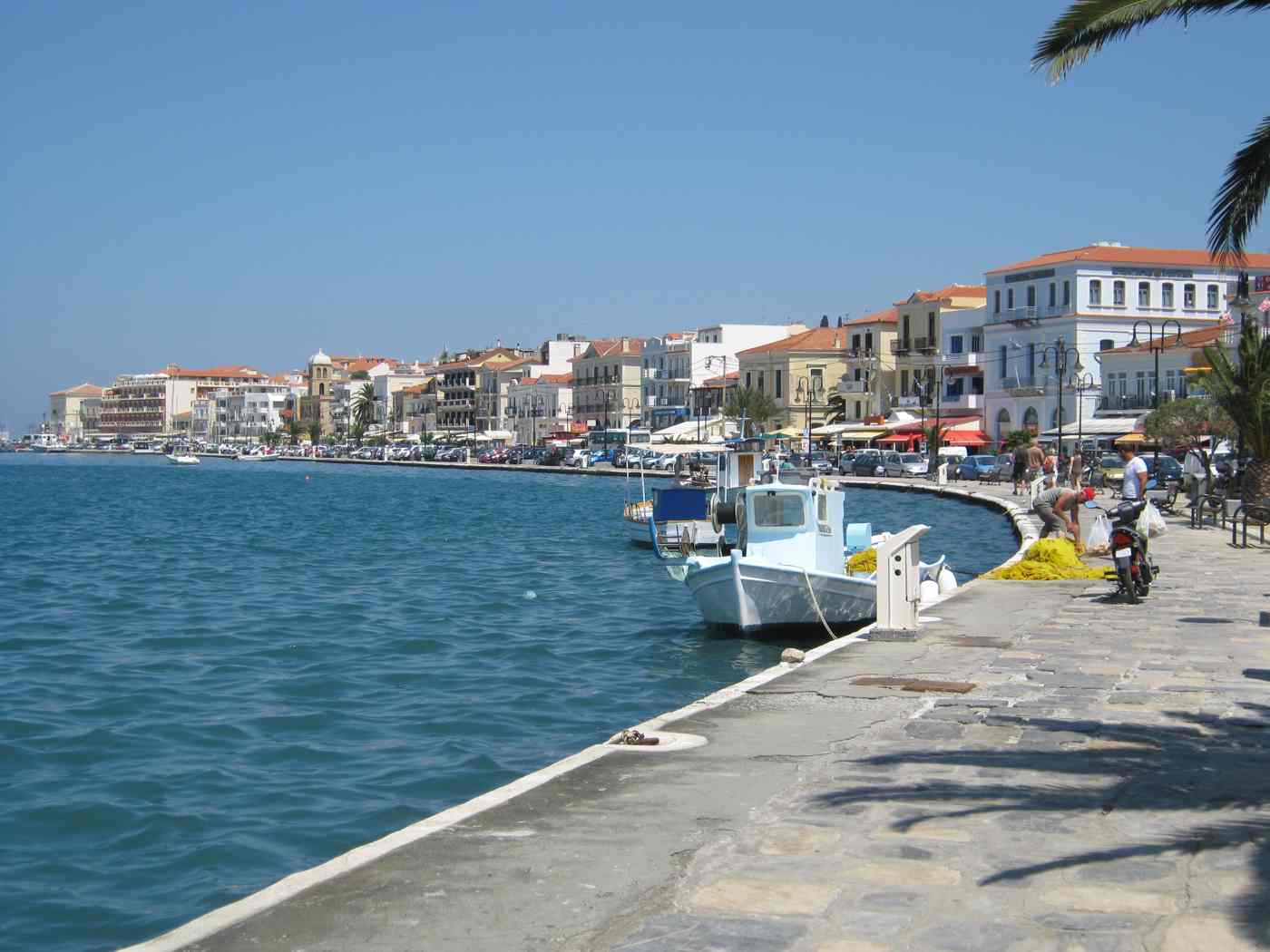
The island honours its most famous son in name and monument. Pythagorio, once the ancient capital, took his name in the modern age, and a statue on the harbour front shows him beside a right-angled triangle. Travellers who reach the town connect the abstract theorem with the real place of his birth. His story ties the mathematics learned in classrooms worldwide to a specific Aegean island. Few thinkers of the ancient world left so deep a mark on both science and popular imagination. The Samian remains a symbol of the leap from myth to reason in early Greek thought.
His birthplace on Samos stands as one of the true landmarks in the history of ideas, a small island that gave the world a giant of mathematics.
What did the astronomer Aristarchus and the philosopher Epicurus of Samos contribute?
Aristarchus of Samos proposed that the Earth orbits the Sun, anticipating the heliocentric model of later astronomy. Epicurus, raised on Samos, founded a philosophy that made tranquil pleasure and freedom from fear the aim of a well-lived human life.
Aristarchus was born on Samos in the centuries after Pythagoras, in the Hellenistic age of Greek science. He worked at a time when Greek astronomy and mathematics had reached great sophistication. He argued that the Sun, not the Earth, stands at the centre, and that the Earth turns on its axis and circles the Sun. This bold model set him centuries ahead of the accepted Earth-centred view of the cosmos. He also tried to measure the relative sizes and distances of the Sun and Moon by geometry. His reasoning was sound even where his instruments limited the result.
Ancient writers recorded his heliocentric idea, though most astronomers rejected it in favour of an Earth at rest, leaving his insight to wait long for its vindication.
The heliocentric idea of Aristarchus waited nearly two thousand years for full acceptance. Renaissance astronomers revived the Sun-centred model and credited the Samian as its ancient forerunner. Copernicus knew of his proposal and named him among those who had placed the Sun at the centre. This makes Aristarchus a direct link between ancient Greek reasoning and the birth of modern astronomy. His method, using geometry to probe the heavens, shaped the later science of measuring the sky. The airport of Samos near Pythagorio carries his name, honouring the island’s great astronomer. His work shows that Samos produced not one but a line of original scientific minds.
From the Pythagoreans to Aristarchus, the island held a place at the frontier of Greek thought about number and the cosmos.
Epicurus, though Athenian by citizenship, spent his boyhood on Samos, where his father had settled as a colonist. The island gave the future philosopher his early years before he moved to Athens and founded his school. There, in a garden outside the city, he taught a philosophy of calm and moderate pleasure. He held that pleasure means freedom from bodily pain and mental disturbance, not indulgence. He argued that the world is made of atoms moving in the void, and that the gods do not meddle in human affairs. This physics freed his followers from fear of death and divine punishment. His garden welcomed friends, women and even slaves as equals in study.
The aim of life, he taught, is a serene state of mind reached through simple living, friendship and the study of nature.
The philosophy of Epicurus outlasted the ancient world and still carries his name. Epicureanism spread through the Greek and Roman worlds, and the Roman poet Lucretius set its physics into a great poem. His teaching on atoms fed into the later scientific idea that matter is built of tiny particles. His ethics of moderate pleasure and freedom from fear still shape modern debate about the good life. Three thinkers of the first rank, Pythagoras, Aristarchus and Epicurus, thus trace their roots to a single Aegean island. This concentration of genius gives Samos a place in the history of science and philosophy out of all proportion to its size.
The island’s story joins its ancient engineering, its sea power and its thinkers into one remarkable record of achievement.
How did Persian, Athenian and Hellenistic rulers govern Samos?
Samos fell under Persian control after Polycrates’ death, then joined the Ionian Revolt and later the Athenian-led Delian League. Hellenistic kings ruled the island once Macedonian and successor powers absorbed the eastern Aegean.
Persian rule reached Samos when the satrap Oroetes lured Polycrates to the mainland and executed him. A Persian client named Syloson, the brother of Polycrates, then seized the island with Darius’ backing and depopulated much of it. Samian ships afterwards served the Persian fleet during the campaigns against the Greek mainland. The island switched sides during the Ionian Revolt, when the eastern Greek cities rose against their overlords. Samian captains wavered at the sea battle of Lade off the Ionian coast, and their squadrons withdrew mid-engagement. Persian dominance returned once the revolt collapsed, and the island paid tribute again through the following generations.
Visitors tracing this era study the harbour walls and fortifications at Pythagorio, where layered defences record each shift of power across the narrow strait.
Athenian influence followed the Persian Wars, when Samos joined the Delian League and contributed warships rather than tribute money. The island ranked among the strongest naval members, keeping its own fleet and democratic government for decades. A dispute with Miletus over the town of Priene triggered the Samian War, and Pericles led an Athenian force that besieged the city of Samos. The rebellion collapsed after a long siege, and Samos lost its walls, its fleet and its independence. Loyalty to Athens revived late in the Peloponnesian War, when the Samian democrats hosted the Athenian navy as a base. Grateful Athenians granted the Samians citizenship for that service.
Modern travellers read this Athenian chapter in the museum inscriptions and in the classical layers beneath the later harbour town.
Hellenistic rulers claimed Samos after Alexander’s empire fractured among his generals. The island passed between the Ptolemies of Egypt and the Seleucid kings, who prized its harbour as a naval station in the eastern Aegean. Ptolemaic garrisons held Samos for long stretches, funding temples and civic building across the island. The sanctuary of Hera stayed a major pilgrimage centre, and rulers dedicated statues and offerings at the Heraion of Samos to advertise their piety. The kingdom of Pergamon later absorbed the island as its power grew along the coast. Craft workshops and vineyards prospered under these dynasties, and Samian pottery travelled across Mediterranean trade routes.
Travellers today trace the Hellenistic phase through column bases, altars and inscribed dedications still standing on the sanctuary plain west of the harbour town.
Samian coinage from these centuries shows how the island shifted allegiance while keeping its identity. Mints struck the lion’s scalp and the prow emblem under Persian, Athenian and Hellenistic masters alike. The city walls grew in successive rings as each power reinforced the harbour against rival fleets. Grain, oil and wine sustained the population, and the terraced hillsides carried the same vineyards that later made the island famous. Warfare between the great powers repeatedly drew Samos into eastern Aegean campaigns because of its position beside the Turkish coast. The Mycale strait, about 1.2 kilometres wide, made control of the island a strategic prize.
Museum galleries in the capital arrange this long ancient sequence so visitors can follow Samos from Ionian city-state toward its Roman future.
What happened to Samos through the Roman, Byzantine and pirate-raid centuries?
Roman rule brought Samos peace and provincial status within the province of Asia. Byzantine emperors later governed the island from Constantinople, organising it under a naval theme. Repeated pirate raids across later centuries emptied harbours and drove settlers inland.
Roman power absorbed Samos as the Republic pushed east against the Hellenistic kingdoms. The island briefly served as a base for Roman commanders during their Aegean campaigns, and the emperor Augustus wintered here more than once. Samos gained a period of free status as a reward, keeping local self-government under imperial oversight. Roman senators and travellers admired the temple of Hera and carried away statues for their villas back in Italy. Ancient Greek and Roman writers described the island’s harbour, its wine and its sanctuary. Aqueducts, baths and paved roads from the Roman phase still surface during excavations near the old harbour town.
Visitors reading Roman Samos study reused columns, marble portraits and coloured mosaic fragments displayed in the archaeological collections of the island capital.
Byzantine administration reorganised Samos as Christianity spread across the Aegean. Early basilicas rose over older pagan sanctuaries, and one was built from the ruined stones of the temple of Hera itself. The island became part of a naval theme, supplying ships and sailors to the imperial fleet guarding the sea lanes. Fortified settlements moved to defensible ridges as coastal life grew dangerous. Monasteries founded in this era anchored village communities and preserved farming across the mountains. Emperors valued Samos for timber, which shipwrights cut from its forests for the Byzantine navy. Chapels, fortress walls and carved Byzantine masonry survive across the interior today.
Travellers who follow the Byzantine thread visit hillside monasteries and the church foundations layered directly onto the ancient sanctuary plain near the harbour.
Pirate fleets turned the Aegean into a battleground as Byzantine control weakened. Arab raiders struck Samos during the early medieval centuries, and later corsairs from North Africa and the Turkish coast raided repeatedly. Coastal villages emptied because raiders seized captives for the slave markets. Survivors rebuilt on hidden inland slopes, out of sight of the sea, a pattern still visible in the mountain villages of Ampelos. The harbours fell silent, and cultivation retreated to sheltered valleys. Watchtowers and refuge caves from this violent age dot the shoreline and gorges. Depopulation grew so severe that the island was nearly abandoned before Ottoman resettlement.
Visitors sensing this dangerous era climb to villages such as Vourliotes and Manolates, whose stacked houses and narrow lanes were designed to hide families from raiders.
Samos entered the late medieval period thinned and vulnerable, a shadow of the wealthy Ionian city-state. Byzantine authority faded as Constantinople lost its grip on the outer Aegean islands. Genoese and other Latin lords began circling the depopulated coast, competing for trade and tribute. Fishing families and monks kept a thin population alive in the hills while the harbours stood deserted. The strategic position beside the Mycale strait that once brought wealth now brought only danger. Church records and traveller accounts describe abandoned fields and roaming livestock across the plains. Museum displays in the capital carry this Byzantine and medieval story through crosses, coins and carved screens.
Visitors moving between the ancient and modern galleries can measure how far the island fell before its later revival under new masters.
How did Genoese and Ottoman rule repopulate Samos?
Genoese lords held Samos briefly before the Ottomans took the depopulated island. An Ottoman admiral won repopulation rights and resettled Samos with mainland Greeks under tax privileges. New villages, monasteries and vineyards spread across the recovering interior.
Genoese families controlled Samos as part of their eastern Aegean maritime trading network. The Giustiniani clan, who ruled nearby Chios, extended their reach over the emptied island for a long period. Genoese interest centred on mastic, alum and the coastal trade routes rather than farming the interior. Their loose control left Samos exposed, and raids continued to strip the shoreline of settlers. The island changed hands as Genoese power in the region collapsed before the advancing Ottoman fleet. Latin towers and harbour defences from this phase blur into the older Byzantine fortifications along the coast.
Travellers studying the medieval island read this Genoese interlude in scattered coastal masonry and in the archives that record the merchant lords who taxed Samos from their base on Chios.
Ottoman conquest of Samos followed the fall of the surrounding islands to the Sultan’s fleet. The admiral Kilic Ali Pasha received the empty island as a personal grant and set out to repopulate it. His charter offered settlers seven tax-free years, self-administration and freedom to build churches. Greek families arrived from the Peloponnese, the mainland and other Aegean islands to claim land. New villages rose across the mountains, each clan founding its own settlement with a church at the centre. The population climbed steadily as vineyards, olive groves and grain returned to the terraces. Samos gained a reputation for relative freedom within the empire, ruled lightly from a distance.
Visitors tracing resettlement recognise the founding villages by their clustered churches and the family names still carried in the mountains.
Ottoman Samos developed a distinctive self-governing character over the following centuries. Local Greek notables administered the island under a lightly supervising Ottoman governor, collecting taxes and settling disputes. Wine, leather and shipbuilding grew into major trades, and Samian merchants sailed across the Aegean and Black Sea. Monasteries expanded their landholdings and became centres of farming, schooling and manuscript copying. The Muscat vineyards on the slopes of Mount Ampelos spread widely, laying the base for the island’s later wine fame. Tension rose as taxes tightened and the wider Greek national movement stirred the Aegean. Samian sailors and merchants carried revolutionary ideas home from the ports of Europe and the Black Sea.
Visitors reading the Ottoman centuries tour the old mountain monasteries, mansion houses and the terraced vineyards that still frame the interior.
The Greek War of Independence reached Samos when the island rose against Ottoman rule. Lykourgos Logothetis led the Samian revolt and organised the island’s defence around Pythagorio’s bay. Samian fighters repelled an Ottoman landing at the decisive sea and land battle in the strait below the Mycale ridge. Fireships and coastal batteries kept the imperial fleet from retaking the island through the long struggle. The victory saved Samos from destruction, yet the final peace left the island outside the new Greek kingdom. Diplomatic bargaining among the great powers assigned Samos a special status instead of full freedom. This unresolved outcome set the stage for the autonomous principality that followed.
Visitors reading the revolt climb to the hilltop chapels and monuments above the harbour that mark where Logothetis rallied the defenders.
What was the semi-autonomous Principality of Samos?
The Principality of Samos was a self-governing Christian state under nominal Ottoman suzerainty in the nineteenth century. A Christian prince appointed from Constantinople governed alongside a local assembly, and Samos paid a fixed annual tribute while running its own affairs.
The great powers created the Principality of Samos as a compromise after the revolt. Samos became a tributary state, self-governing in its internal affairs but still under the Sultan’s distant sovereignty. A Christian prince, usually a Greek from the Ottoman capital, held executive power on the island. An elected assembly of deputies and a senate managed local laws, taxes and public works. The prince resided in a new administrative capital laid out above Vathy’s harbour. This arrangement gave Samos its own flag, gendarmerie, courts and postal service. The settlement satisfied the powers by avoiding a wider war while granting Samians real self-rule.
Visitors exploring this era walk the neoclassical government quarter of Vathy, where the assembly hall and princely offices still line the upper town.
Prosperity returned to Samos across the principality’s decades of self-rule. The Muscat wine trade expanded, and Samian merchants exported barrels to France and across the Mediterranean. A cooperative union of growers organised the vineyards, giving the island a stable export income. Tobacco, leather tanning and shipbuilding added to the economy, and the port of Vathy grew busy. Schools multiplied under the assembly’s patronage, and Samos gained a reputation for education across the Aegean. Roads, a hospital and public buildings rose from tribute revenues kept on the island. The town of Vathy filled with neoclassical mansions built by wealthy trading families.
Visitors reading the principality’s growth admire these merchant houses, the old stone wine cellars and the civic buildings that give modern Vathy its nineteenth-century character.
Political life under the principality mixed local democracy with imperial oversight. The prince and the assembly often clashed over budgets, appointments and the limits of self-rule. Party factions formed around leading families, and elections stirred the island’s towns. Samian deputies pressed steadily for closer ties with the Greek kingdom across the water. Cultural life flourished, with newspapers, a public library and a theatre appearing in Vathy. The gendarmerie kept order, and the island stayed largely free of the taxes and conscription burdening the wider empire. National feeling deepened as generations grew up governing themselves in Greek.
Visitors interested in this civic story find the principality’s flag, seals, coins and portraits displayed in the town’s museums, alongside documents recording the long push toward union with Greece.
The principality’s later years grew tense as the union movement gained strength. Samians watched other Ottoman territories join Greece and pressed their own deputies to act. Popular princes governed well and won affection, while others faced protests and short, troubled terms. Economic strain from wine-market shifts sharpened political demands across the island. The assembly increasingly voted for measures aligning Samos with Athens rather than Constantinople. Crisis in the wider Ottoman Balkans finally opened the door to change. Samian leaders prepared to declare union the moment the great powers’ balance shifted. This self-governing experience left Samos with a strong civic tradition that outlasted the principality itself.
Visitors tracing the countdown to union read the assembly’s resolutions and the patriots’ letters preserved in the archives and museums of Vathy.
How did Samos unite with Greece, and how does its history show to visitors today?
Samos declared union with Greece during the Balkan Wars of the early twentieth century, ending Ottoman suzerainty. The island’s layered past now shows through UNESCO monuments, mountain villages, museums and the neoclassical capital that visitors explore across the whole island.
Union with Greece came during the Balkan Wars, when the Ottoman Empire lost its Aegean grip. Samian leaders, headed by the statesman Themistoklis Sofoulis, expelled the last Ottoman officials and declared union. The Greek fleet’s victory in the surrounding sea sealed the island’s incorporation into the kingdom. The principality’s flag came down, and Samos became an ordinary Greek prefecture at last. Decades of self-rule ended, yet the island kept its assembly hall, courts and civic buildings. Sofoulis went on to national prominence, later serving as a Greek prime minister. The long road from tyranny through empire to freedom finally closed.
Visitors reading the union study the monuments, street names and museum displays in Vathy that honour Sofoulis and the deputies who brought Samos into Greece.
Modern Samos absorbed the upheavals that swept twentieth-century Greece. Refugees from the Asia Minor catastrophe arrived across the narrow strait, reshaping villages and adding new settlements. Occupation during the Second World War brought hardship, resistance in the mountains and heavy emigration afterward. Thousands of Samians left for Athens, Australia and America, thinning the mountain villages that pirates had once forced people to build. Tourism gradually became the island’s mainstay, drawing travellers to the beaches, monuments and wine country. The airport near Pythagorio opened the island to direct flights from across Europe. Ferries from Piraeus and the neighbouring islands tie Samos into the wider Aegean network.
Visitors sensing this recent history notice the mix of returning emigrants, refugee-descended families and the tourism economy that now shapes daily life on the island.
The whole span of Samian history stands open to travellers across the island today. Ancient Samos survives at the UNESCO site, where the Eupalinos Tunnel, the ancient harbour and the theatre cluster near Pythagorio. The sanctuary of Hera spreads across the coastal plain, its single standing column marking the vanished great temple. The archaeological museum in Vathy guards the colossal kouros, bronze offerings and finds from the sanctuary and the ancient city. Medieval and Ottoman Samos appears in the mountain villages, monasteries and watchtowers scattered through the interior. The nineteenth-century principality shows in Vathy’s neoclassical government quarter and merchant mansions.
Visitors moving from the coastal ruins to the hill villages and the town museums can read every era in one compact island, from Ionian city-state to modern Greek prefecture.
Reading Samian history rewards a route that links the coast, the mountains and the museums. A morning at the UNESCO monuments near the harbour town covers the Polycrates golden age and the great engineering. The sanctuary plain to the west then fills in the religious heart of the ancient city. An afternoon in the mountain villages of Ampelos exposes the medieval and Ottoman survival, when raids drove people uphill. The neoclassical streets of Vathy carry the principality and the union story into view. The two archaeological museums bind the whole sequence together with statues, coins and inscriptions. Visitors who follow this thread grasp how one small island produced Pythagoras, resisted empires and governed itself before joining Greece.
This whole story fits a landscape they can cross in a single day.
Frequently Asked Questions
Where can visitors see ancient Samos today?
Ancient Samos concentrates in two linked UNESCO areas near the southeast coast: the town of Pythagorio and the sanctuary plain to its west. Pythagorio sits over the ancient city. Its Eupalinos Tunnel, rebuilt harbour mole and Greek theatre survive within walking distance of the modern seafront. The Eupalinos Tunnel remains the highlight, a long aqueduct bored straight through the mountain from both ends at once. Castle Lykourgos, hilltop chapels and stretches of the ancient wall crown the ridge above the bay. The Heraion, the great sanctuary of Hera, spreads across the coastal plain about six kilometres west, reached by a short drive along the shore. One tall column, temple foundations, altars and the Sacred Way mark the site.
Clear panels explain each monument along the walking paths. Between the two areas, the local museums display statues and finds lifted from the ground. Visitors who combine Pythagorio, the tunnel and the Heraion in one day cover the core of ancient Samos completely.
What were the three great works of Polycrates on Samos?
The three great works are the engineering feats Herodotus praised on Polycrates’ Samos: the Eupalinos Tunnel, the harbour mole and the temple of Hera. The Eupalinos Tunnel carried fresh water more than a kilometre through the mountain above the ancient city. Two teams dug it from both ends and met in the middle. It ranks among the earliest deep tunnels engineered with geometry, and visitors can still walk part of its dark, level channel. The harbour mole enclosed the ancient port at Pythagorio, sheltering the tyrant’s powerful war fleet behind a massive breakwater. Modern Pythagorio’s marina rests over that same ancient basin.
The temple of Hera at the Heraion was among the largest Greek temples ever begun, planned on a colossal scale to outshine every rival sanctuary. One re-erected column now marks it. Together the three works display the wealth, ambition and technical mastery that made Polycrates’ Samos a leading power of the archaic Aegean.
What is the connection between Pythagoras and Samos?
Pythagoras was born on Samos, and the island claims the famous mathematician and philosopher as its most celebrated son. He grew up in the ancient city during the era of Polycrates. He then left the island, reportedly to escape the tyrant’s rule, and settled in southern Italy. There he founded his philosophical and mathematical brotherhood at Croton. Samos honours him everywhere: the harbour town was renamed Pythagorio in his memory, and a tall statue on the waterfront shows him holding a right-angled triangle. The airport also carries the name of Aristarchus, another Samian, the astronomer who first proposed a sun-centred cosmos.
Epicurus, founder of Epicurean philosophy, spent his youth on Samos as well, giving the small island a remarkable trio of ancient thinkers. Visitors walk the same harbour, hills and sanctuary that shaped these men. Standing in Pythagorio, beside the statue and above the ancient city, brings the Pythagoras connection to life more vividly than any textbook.
What can visitors see in the Samos archaeological museum?
The Archaeological Museum of Samos in Vathy holds the finest finds from the Heraion sanctuary and the ancient city. Its centrepiece is a colossal marble kouros, a youth statue standing about five metres tall, among the largest surviving from ancient Greece. Galleries fill with votive offerings that pilgrims brought to Hera from across the Mediterranean. Bronze griffin heads, ivory carvings, Egyptian and Near Eastern imports, and wooden objects preserved in the mud all survive. These offerings prove how far Samos traded and how rich its great temple grew. Sculpture, inscriptions and architectural fragments trace the sanctuary’s long life through the archaic and classical eras.
A separate museum at Pythagorio displays finds from the ancient city and harbour, including Roman statues and mosaics. Together the two collections cover the island from the archaic golden age through Roman times. Visitors who tour the Vathy museum before or after the Heraion understand exactly what once filled the now-empty sanctuary plain.
What traces of the Principality of Samos can visitors find?
Traces of the Principality survive mainly in Vathy, the capital the self-governing state built above its harbour. The upper government quarter keeps neoclassical public buildings from the principality’s decades. The former assembly hall, the prince’s residence and administrative offices line dignified stone streets. Merchant mansions built by wine and tobacco traders line the slopes, restored today as hotels, offices or museums. The town’s central square, gardens and civic architecture date largely from this prosperous self-ruling age. Museums in Vathy display the principality’s own flag, seals, coins, postage and portraits of its princes and deputies. Old wine cellars and harbour warehouses recall the Muscat export trade that funded the state.
Churches and schools across the island also rose under the assembly’s patronage. Street names and monuments also honour the principality’s leading figures. Visitors who walk uphill from the modern seafront into the old government quarter can read the whole nineteenth-century self-rule story in the streets, mansions and museum cases of Vathy.
Which Byzantine and Ottoman sites can visitors explore on Samos?
Byzantine and Ottoman Samos survives mainly in the mountains, where danger once pushed people inland. Byzantine remains include hillside monasteries, small stone chapels and fortress walls built when pirate raids emptied the coast. An early Christian basilica stands on the Heraion plain, built from the ruined stones of Hera’s temple, marking the shift to Christian worship. The Ottoman resettlement founded the mountain villages that still define the interior: Vourliotes, Manolates, Pyrgos and others, with their clustered houses, plane-shaded squares and central churches. The great monasteries, such as the historic Vrontiani Monastery near Vourliotes and others on Mount Ampelos, date largely from this period and remain active pilgrimage sites.
Terraced Muscat vineyards climbing the slopes are themselves an Ottoman-era legacy. Watchtowers and refuge points along the shore recall the raiding centuries. Visitors who drive the mountain roads between these villages and monasteries experience the medieval and Ottoman island directly, far above the ancient monuments on the coast.
What themes visitors keep in mind when reading Samos’s history?
Three themes tie Samian history together and help visitors make sense of the sites. The first is the sea. Samos rose and fell with maritime power, from Polycrates’ war fleet to the Byzantine navy, the pirate raids and today’s ferry links. The second is the mountain-versus-coast rhythm: prosperity built the harbours, while danger repeatedly drove people up into the villages of Ampelos and Kerkis. Ancient wealth, medieval fear and modern tourism all left their mark on this vertical landscape. The third is self-rule. The ancient city-state, the semi-autonomous Ottoman resettlement and the nineteenth-century Principality all show Samos governing itself. This tradition shaped its strong local identity.
Holding these threads, a visitor reads each monument as part of one story rather than isolated ruins. This framework turns a compact island into a living lesson in Aegean history. The UNESCO coast, the mountain villages and the neoclassical capital then combine into a single, legible history stretching from Pythagoras to modern Greece.