
Votsalakia, also called Kampos, is the main beach resort on the southwest coast of Samos. The long strand of sand and pebbles runs beneath Mt Kerkis, the island’s highest mountain, well away from the busier north and east. Shallow, gently shelving water and a low strip of tavernas, rooms and sunbeds make it a calm, family-friendly base. Plan the whole trip with Greece Tours.
This guide covers where Votsalakia sits under Mt Kerkis and the long sand-and-pebble beach. It then turns to the shallow water, the family appeal, the shore-road strip of tavernas and small hotels, and the sheltered southwest aspect. Nearby Psili Ammos and Balos extend the coast west for quieter swims.
Where is Votsalakia (Kampos) beach on Samos, and how does it sit on the southwest coast under Mt Kerkis?
Votsalakia, also called Kampos, sits on the southwest coast of Samos beneath Mt Kerkis, the island’s highest mountain at about 1,434 metres. The beach lies far from the busier northern and eastern resorts.
Votsalakia lies on the southwest corner of Samos, about 45 kilometres by road from the capital Vathy and roughly 35 kilometres from Pythagorio. The route crosses the island through Karlovasi and the western villages, then drops toward the coast under the mountain. Reaching this side of Samos takes about an hour by car from the airport near Pythagorio. The beach forms the main resort of the far southwest, well away from the northern villages of Kokkari and the eastern strands near Vathy. Its position under the highest peak gives the whole bay a mountainous backdrop. Drivers follow signs for Marathokampos and Votsalakia, the two names used across the area, before the road meets the long shore.
The hill village of Marathokampos sits above, with its small port Ormos Marathokampou nearby.
The name Kampos comes from the fertile plain behind the beach, planted with olive groves and vineyards. Locals use Votsalakia, Kampos and Marathokampos beach for the same long stretch of coast, which can confuse first-time visitors. The bay opens to the south and west, framed by the bulk of the mountain and the lower ridges around it. Small streams cross the plain and reach the sea at two or three points along the shore. The setting stays green well into summer, unlike drier Aegean islands. From the beach, the summit ridge dominates the skyline, rising steeply within a short distance of the water.
This closeness of high mountain and open sea gives Votsalakia a character different from the flatter resorts on the eastern side of the island.
Mt Kerkis rises to about 1,434 metres directly behind Votsalakia, the second-highest peak on any eastern Aegean island. Its grey limestone slopes climb from near sea level to the summit within about five kilometres inland. Walkers reach caves, small chapels and the monastery of Panagia Makrini on the mountain’s flanks above the coast. The steep face catches cloud on cool mornings, then clears to bright sun by midday over the beach. Goats and low scrub cover the higher ground, while pines and olives fill the slopes nearer the shore. The mountain blocks the strongest northerly winds, a key reason the southwest bay stays calm for swimming.
Standing on the sand, visitors look straight up at one of the tallest coastal mountains anywhere in the Greek islands.
Access to Votsalakia runs along a single coastal road that threads behind the sunbeds and tavernas. Cars park on gravel pull-ins and small lots set back from the sand, close to the beach entrances. Buses from Vathy and Karlovasi reach Marathokampos and the coast, though the service is limited. Most visitors arrive by rented car or scooter, which suits the spread-out layout of the resort. The far western end grows quieter, where the built strip thins and the shore runs on toward Psili Ammos and Balos. Cyclists ride the flat road between the beaches, using the mountain as a constant marker. Signposts in the villages point clearly to Votsalakia and Kampos.
This ease of movement along one clear road keeps the whole southwest coast simple to explore in a day.
What is the long sand-and-pebble beach at Votsalakia like, and how shallow is the shelving water?
The strand runs long and wide, mixing fine sand with rounded pebbles along the waterline. Shallow, gently shelving water reaches out about 20 to 30 metres before dropping, giving swimmers a calm, safe entry.
The beach at Votsalakia stretches for well over a kilometre along the southwest shore, one of the longest on the island. Fine grey sand covers much of the strand, mixed with smooth pebbles that give the beach its name, votsala meaning pebbles. The pebble bands sit mostly at the waterline and toward the eastern end, while softer sand spreads across the wide central section. The shore stays gently sloped, so the beach never feels steep underfoot even where the pebbles gather. Compared with other Samos beaches, Votsalakia offers far more length and space than the small north-coast coves near Kokkari.
Its scale means the sunbeds and swimmers spread out, and the sand rarely feels crowded even at the height of summer. The water sits close to the parked cars, an easy carry with beach gear.
Shallow water is the beach’s best-known feature, shelving out slowly for about 20 to 30 metres before deepening. Children wade and play well offshore while still standing, which makes the bay popular with young families. The seabed mixes sand and small pebbles, so water shoes help on the stretches where stones cover the bottom. Clear, clean water runs along the whole strand, with visibility of five metres or more on calm days. The gentle gradient means waves stay small, breaking softly even when a light swell reaches the coast. Swimmers cross the shallow band easily, then find deeper water good for longer swims farther out.
This combination of calm, shallow and clean water sets Votsalakia apart from the steeper, quicker-dropping beaches on the north coast.
Sunbeds and umbrellas line much of the central beach, set in neat rows behind the pebble waterline. Open sand remains at both ends for visitors who prefer to lay a towel away from the loungers. The wide beach holds both groups comfortably, since its length spreads people along hundreds of metres of shore. Tavernas behind the sand rent the sunbeds, often waiving the fee for guests who order food or drinks. Natural shade stays limited, so umbrellas and a line of tamarisk trees provide most cover from the midday sun. The eastern end near the main access holds the busiest sunbed rows and the closest tavernas.
Walkers heading west find emptier sand within about three hundred metres, where the built strip gives way to open coast.
Votsalakia faces southwest, so the water takes on a deep blue under the strong afternoon light. Sunsets over the sea draw people to the western tavernas, where the sun drops behind the headland toward Balos. The beach keeps its warmth late into the evening, and swimmers stay in the water long after other coasts cool. Small fishing boats moor off the shore, and the odd caique crosses the bay toward the port at Ormos Marathokampou. The clean water holds its clarity through the day, helped by the gentle currents along this sheltered coast. Views west take in the low island of Samiopoula and, on clear days, the distant hills of the Fourni islands.
This open western outlook gives the long beach a calm, spacious feel unmatched elsewhere on the island.
Why does Votsalakia suit families and keep such a relaxed resort feel?
Families choose Votsalakia for its shallow entry, soft sand and unhurried pace. The wide beach gives children room to play, while the shore-road tavernas and sunbeds keep everything within a short, easy walk.
Families make up much of the summer crowd at Votsalakia, drawn by the safe, shallow water and easy layout. The gentle shelving lets small children paddle far from shore while staying within their depth. Parents settle on sunbeds at the water’s edge, keeping a clear line of sight across the open sand. The wide beach gives room for ball games, sandcastles and long walks without crowding other groups. Tavernas sit steps from the sand, so families reach lunch, shade and toilets without a long trek. The calm sea rarely produces strong waves or currents, which reassures parents of young swimmers. Grandparents and toddlers share the shallows together on calm afternoons.
This mix of shallow water, space and close facilities explains why Votsalakia ranks among the island’s top family beaches.
The resort keeps an unhurried pace, without the nightlife or noise of larger Greek beach towns. Days run around swimming, long lunches and slow walks along the shore, rather than crowds and loud bars. Evenings stay quiet, with tavernas serving dinner beside the water and no clubs open late. The low-rise buildings and spread-out layout keep the whole strip calm and easy to navigate on foot. Older couples and families return year after year, valuing the steady rhythm and familiar faces. The distance from the airport and main towns filters out day-trippers, so the beach draws mostly staying guests. Children ride bikes along the flat shore road in the early evening.
This relaxed character defines Votsalakia far more than any single attraction, and it shapes how visitors plan their time.
Marathokampos village sits on the hillside above the beach, its old houses stacked below the mountain slopes. A short drive up leads to narrow lanes, a village square and views over the whole southwest bay. Families combine beach days with visits to the village for a change of scene and cooler air off the mountain. The small port of Ormos Marathokampou lies just east along the coast, with fishing boats and a working quay. Local produce reaches the tavernas from the plain behind, including olive oil, honey and the sweet Muscat wine of the island. This link between beach, village and plain gives the area more depth than a simple resort strip.
Visitors who explore inland find a working landscape rather than a purpose-built holiday zone.
Facilities suit families well, with tavernas, mini-markets and rooms strung along the shore road behind the beach. Toilets and showers stand near the main sunbed areas, run by the tavernas that manage the loungers. Mini-markets sell water, snacks, beach toys and basics, so families skip long drives for supplies. Rooms and studios sit within a short walk of the sand, cutting the daily journey to nothing. Parking spreads along the road, close enough that carrying young children and beach gear stays easy. Medical help, banks and larger shops lie in Marathokampos and Karlovasi, a short drive inland or along the coast. Cots and high chairs turn up in the tavernas along the strip.
This everyday practicality, close to the sand, is a large part of why families settle here for a week or more.
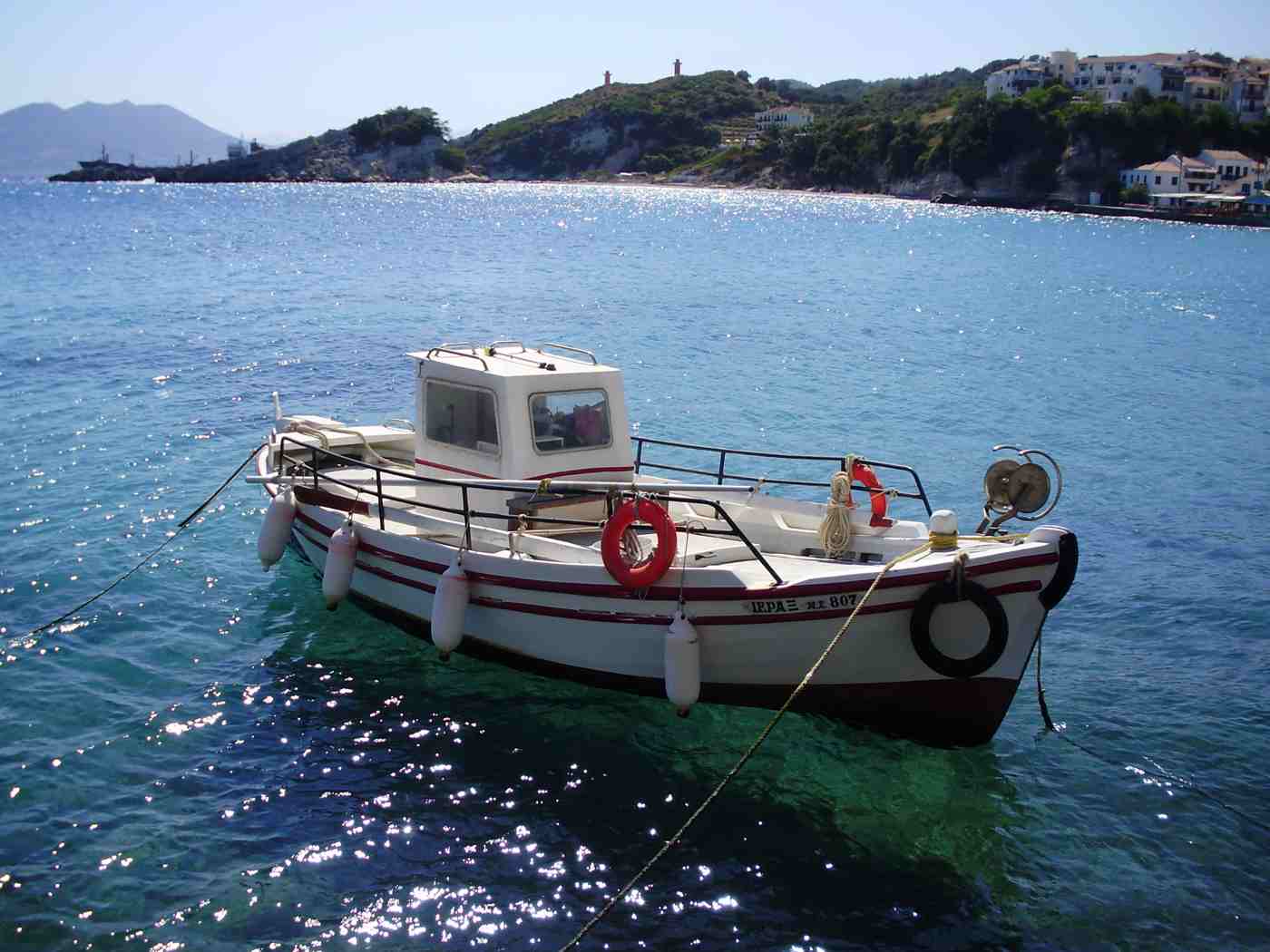
What lines the shore road at Votsalakia in sunbeds, tavernas and small hotels?
A single shore road backs the beach, lined with sunbed rows, tavernas and small hotels. The strip stays low and spread out, mixing rooms and studios with tavernas that face the water directly.
A single shore road runs the length of Votsalakia, forming the spine of the whole resort. Tavernas, rooms and small hotels line this road, most set just back from the sand behind the sunbeds. The buildings stay low, rarely rising above two or three storeys, in keeping with the open coastal setting. Gaps between the buildings open onto the beach, so the sea stays in view along much of the strip. The road runs almost flat and straight, easy to walk end to end in about twenty minutes. Its layout spreads the resort along the coast rather than stacking it into a dense centre. Bougainvillea and tamarisk soften the fronts of the buildings along the way.
This linear plan keeps Votsalakia feeling open and unhurried, with the beach never more than a step away.
Tavernas dominate the shore strip, most facing the water with terraces set under awnings or vines. They serve Greek staples through the day, from grilled fish and meat to salads, mezedes and local Muscat wine. These tavernas rent the sunbeds in front of them, folding the fee into the price of lunch or drinks. Prices and menus stay broadly similar along the beach, reflecting the local, family-run nature of the resort. Beach bars mix in among the tavernas, serving coffee, cold drinks and light snacks from morning onward. The eastern end near the main access holds the densest cluster of tavernas and the busiest terraces.
This close run of eating places means visitors rarely walk far for a meal, a drink or an afternoon coffee.
Small hotels, rooms and studios provide most of the beds at Votsalakia, spread along and just off the shore road. Family-run properties dominate, offering simple rooms with balconies, fridges and air conditioning within a short walk of the sea. No large resort complexes rise over the beach, which keeps the skyline low and the crowds thin. Studios with kitchenettes suit families who cook their own meals, cutting costs over a longer stay. Rates stay moderate compared with the well-known islands, reflecting the quiet, out-of-the-way location. Booking ahead helps in peak summer, since the modest number of beds fills quickly in July and August. Balconies look out over the sea or up toward the mountain slopes.
This small scale of accommodation is central to the resort’s calm, uncommercial feel and steady returning trade.
The strip covers most day-to-day needs beyond food and beds, within an easy walk of the sand. Mini-markets sell groceries, water and beach gear, while a bakery and a couple of shops round out the basics. Sunbed and umbrella hire runs through the tavernas, with prices set at a similar level along the beach. Watersports stay low-key, limited to pedal boats, kayaks and the odd stretch of calm-water swimming lanes. Car and scooter hire helps visitors reach the wider southwest, though most book vehicles in the larger towns first. Cash matters here, since card acceptance varies and the nearest banks sit inland at Marathokampos and Karlovasi.
This compact set of services keeps the resort self-contained, so a car trip out becomes a choice rather than a daily need.
How do the sheltered southwest aspect and afternoon sun shape a day at Votsalakia?
The southwest coast catches strong afternoon and evening sun, keeping the beach bright late in the day. Mt Kerkis shelters the shore from the northerly meltemi, so the water often stays calmer here.
The southwest coast sits in the lee of Mt Kerkis, which shields Votsalakia from the strong summer meltemi winds. This northerly wind sweeps the north and east coasts through July and August, kicking up waves and chop. The bulk of Mount Kerkis breaks the airflow, so the southwest bay often stays calm when other coasts turn rough. Swimmers cross to Votsalakia on windy days precisely because the water here holds flat and clear. The shelter is not total, and a southerly wind can still push a swell onto the beach. On most summer days, though, the bay ranks among the calmer stretches of the whole island.
This wind shadow is the main reason the southwest coast built up as a resort in the first place.
Afternoon light defines the southwest coast, where the sun swings around to face the beach after midday. Morning sun rises behind the mountain, so the sand can lie in shade until mid-morning on the inland side. By early afternoon, the sun clears the ridge and lights the whole bay until it drops into the sea. This rhythm suits late risers and long lunches, with the best beach light arriving after noon. Sunsets over the water close the day, the sun sinking behind the headlands toward Balos and the open sea. West-facing tavernas fill for the evening light, a fixed ritual across the resort’s short strip. Long shadows from the mountain reach across the sand in late afternoon.
This afternoon-and-evening pattern shapes how visitors plan their day, saving the beach’s brightest hours for later on.
The shore west of Votsalakia runs on toward Psili Ammos and the quieter strand of Balos. Psili Ammos, meaning fine sand, lies about two kilometres along the coast, a smaller and softer beach. Balos sits farther west again, reached by a rough track, drawing swimmers who want emptier sand and calmer water. The three beaches share the same sheltered southwest aspect under the mountain, linked by the coast road and short tracks. A short drive or a long walk connects them, so a single base opens three or four beaches within easy reach. Each grows quieter heading west, away from the tavernas and sunbeds of the main Votsalakia strip.
This chain of sheltered beaches gives the southwest coast far more range than its single long strand suggests.
The best time for Votsalakia runs from late spring through early autumn, when the sea warms and winds ease. High summer brings the calmest water on this coast, as the mountain holds off the meltemi that troubles the north. Late afternoon suits the beach best, with warm sun, flat water and the tavernas filling for the evening. Spring and autumn bring cooler air, fewer visitors and green slopes on the mountain behind the sand. Hikers pair a Kerkis climb with beach days, tackling the summit in the cool morning before the afternoon heat. Water temperatures stay comfortable well into October, extending the swimming season past the busy summer weeks.
This blend of warm sea, shelter and afternoon sun makes Votsalakia a steady choice across the long Greek season.
What lies west of Votsalakia along the Samos southwest coast?
Psili Ammos and Balos stretch west of Votsalakia along the southwest shore. Psili Ammos sits about 1 km away with finer sand, while Balos continues past it as a quieter, less developed cove.
Psili Ammos sits about 1 km west of Votsalakia on the same open southwest bay. The name means fine sand, and the strand here runs softer underfoot than the pebbled stretches nearer Kampos. A short surfaced road links the two, and walkers cover the distance in around 15 minutes along the shore. The water shelves gently, so the shallows extend well out before the depth increases. A short row of sunbeds and one taverna back the sand in high season, yet crowds stay thinner than along the main resort front. Mt Kerkis rises directly behind, throwing shade across the western end late in the afternoon.
Swimmers reach clear, calm water on most mornings before the afternoon breeze lifts across the bay. Parking sits on the verge beside the access track.
Balos lies just beyond Psili Ammos at the western tip of the developed shore, roughly 2 km from Votsalakia. The cove mixes sand and small pebbles, and a single track drops down to a short strand backed by tamarisk trees. Fewer sunbeds reach this far, so visitors spread their own towels across the open sand. The seabed stays shallow near the shoreline and deepens slowly, which keeps the swimming easy for weaker swimmers. A small seasonal canteen sells cold drinks and snacks close to the parking area. Kerkis shelters the bay from the north wind, so the surface holds calm through much of the morning.
Balos marks the point where the road network thins and the wild western headland of Samos begins its long, empty run toward Seitani.
Three beaches share the southwest bay in sequence: Votsalakia, then Psili Ammos, then Balos. Each sits a short hop from the next, so a single day can sample all three by car or on foot. Votsalakia offers the fullest line of tavernas and sunbeds, Psili Ammos softens the sand, and Balos strips the setting back to near-empty shore. The water clears as the development thins westward, rewarding snorkellers who drift along the rocky edges between the coves. Afternoon light falls warm across the whole bay as the sun sinks toward the Fourni islets offshore. Families often start at Votsalakia for the facilities, then move west when the main strand fills after midday.
This westward chain gives the southwest its unhurried rhythm, far removed from the north-coast resorts around Kokkari.
Getting between the three beaches takes only minutes along the single shore road that hugs the southwest coast. Votsalakia to Psili Ammos runs about 1 km, and Balos lies roughly another 1 km past that. Cars park on gravel verges and small lots behind each strand, filling by late morning in peak weeks. Scooters weave the same route and slot into gaps the cars cannot use. Cyclists manage the flat coastal section, though the climb inland toward Marathokampos village tests the legs. The road ends soon after Balos, where the surface breaks up and the trail toward Seitani begins on foot only. Walkers link all three beaches in under 40 minutes at an easy pace.
A swim breaks the route at each cove along the sheltered southwest bay.
How does Mt Kerkis behind Votsalakia shape the hiking and its caves and chapels?
Mt Kerkis rises about 1,434 m directly behind Votsalakia, the highest peak on Samos. Marked trails climb from Kampos and nearby villages to the summit.
Mt Kerkis, also spelled Kerketeas, tops out at about 1,434 m and dominates the whole southwest of Samos. The bare limestone summit often catches cloud while the coast below stays bright and warm. Its steep flanks fall almost straight to the sea near Votsalakia, giving the bay its dramatic backdrop and its afternoon shade. Shepherds’ paths and older pilgrim routes lace the lower slopes, linking chapels, springs and grazing terraces. The mountain forms a natural wall that blocks the north meltemi, which explains the calm water on the southwest beaches. Two main village gateways, Votsalakia and Kosmadei, open the classic ascent routes toward the peak.
This mountain, rather than the beach alone, gives the southwest much of its pull for walkers seeking height and quiet above the shore.
Climbing Mt Kerkis ranks among the toughest things to do in Samos, a full-day hike of around 6 to 8 hours return. The marked path starts near Votsalakia and Kampos, rising through pine and scrub before breaking onto open rock higher up. The summit repays the effort with a view across the Aegean to Ikaria, Fourni and the Turkish mainland. Water carries a premium on the route, since springs run dry through the hot months and no canteen waits above the treeline. Early starts beat the midday heat and leave time for the long descent before dusk. Sturdy boots grip the loose limestone, which turns slick and awkward on the steeper upper sections.
Walkers rate the climb the standout summit challenge of the eastern Aegean.
The cave chapel of Panagia Sarantaskaliotissa hides on the northwest flank of Kerkis, reached by a steep stone stairway. Its name recalls the forty steps that lead up to the shrine set inside a natural grotto. Pilgrims and hikers detour here for the cool cave air and the wide view over the sea below. Lower down, the monastery of Evangelistria sits among cypress trees and serves as a common trailhead for the summit push. Small whitewashed chapels dot the slopes, marking springs, saints’ days and old herding routes across the mountain. The rock hides more caves used long ago as shelters and hermit cells.
These sites give the Kerkis walk a layer of history beyond the raw climb, rewarding slow hikers who pause along the marked path.
Shorter walks suit visitors who skip the full summit, looping through the villages of Kosmadei and Drakei on the west side. A forest track climbs from Votsalakia toward the Evangelistria monastery in about 90 minutes each way. The route gains height steadily and opens views back over the southwest bay and the Fourni islets. Spring and autumn bring the best hiking weather, with cooler air and wildflowers across the lower slopes. Signposts mark the main paths, yet a paper map and offline GPS track guard against wrong turns higher up. Goats and the occasional shepherd share the trails, but human company thins fast above the tree line.
Kerkis rewards walkers with the wildest terrain on Samos, a stark contrast to the sunbeds waiting back down at the shore.
How do you reach the Samos southwest and Votsalakia by car?
Votsalakia sits about 55 km southwest of Vathy and around 45 km from Samos airport near Pythagorio. A paved road runs through Pythagorio, Chora and Marathokampos, and the drive takes roughly 70 to 80 minutes.
Most visitors reach Votsalakia by car from Samos airport, which sits near Pythagorio on the southeast coast. The route runs west through Chora, Mytilinioi and Pyrgos before dropping toward the Marathokampos plain. The road is paved throughout, though the final stretch narrows and winds under the slopes of Mt Kerkis. Drivers cover the roughly 45 km in around 70 minutes, longer behind a slow truck on the bends. Signs point clearly to Marathokampos, Votsalakia and Kampos, so navigation stays simple even after dark. The last descent to the coast opens a wide view over the southwest bay and the sea beyond. A hire car gives the freedom to reach this far corner.
Public transport thins sharply toward the western end of Samos in low season.
Drivers from Vathy face a longer haul of about 55 km, crossing the island’s waist through Pyrgos and Koumaradei. The Karlovasi route on the northwest side runs a similar distance over the Kastania pass toward Marathokampos. Both roads climb and twist through pine forest, so the average speed stays low despite the modest kilometres. Fuel runs short in the southwest, which makes a top-up in Karlovasi or Pythagorio a sensible move. The mountain village of Marathokampos marks the gateway, perched above the coast about 4 km before Votsalakia. From there the road drops in tight hairpins to the shore, revealing the long strand and the bay.
Careful driving pays off on this final descent, where the gradient steepens and the verge falls away toward the sea.
Parking at Votsalakia relies on gravel lots and roadside verges strung along the shore road behind the beach. Spaces sit free of charge, filling from mid-morning through the peak weeks of July and August. Early arrivals grab the shaded spots under the tamarisk trees closest to the sand. Latecomers park farther along toward Psili Ammos and walk back a short distance to the main strand. Tavernas along the front often let patrons leave a car while they eat and swim. The flat coastal layout keeps every space within a two-minute stroll of the water. Room opens up quickly in the shoulder months, when the southwest empties and the lots stand half-full even at midday.
A short walk west always finds quieter parking near Balos when Votsalakia fills.
Scooters and small cars handle the southwest roads best, since the hairpins and narrow verges punish wide vehicles. Rental desks cluster at the airport, in Pythagorio and in Vathy, with two outlets in Karlovasi. Booking ahead secures a car in high summer, when demand strips the fleets bare by midday. Petrol stations sit in Marathokampos and along the main routes, though the pumps close early in the evening. The drive rewards patience with sea views, pine gorges and mountain villages strung along the way. Drivers fuel up, carry drinking water and start back before dark to clear the bends in daylight.
This far southwest corner sits at the end of the road, so every approach means a scenic mountain crossing to reach the long shore.
What is staying at Votsalakia like as a beach base on Samos?
Votsalakia works as a relaxed beach base on the southwest coast, with small hotels, studios and rooms lining the shore road. Guests wake steps from the sand, though the towns and their nightlife sit an hour’s drive away.
Accommodation at Votsalakia leans toward small family-run hotels, studios and self-catering rooms set close to the beach. Most properties stand along the shore road or just behind it, a short walk from the sand. Choices on where to stay in Samos widen greatly across the island, yet the southwest keeps its supply modest and low-rise. Sea-view balconies, simple kitchens and shaded terraces define the typical room here rather than large resort complexes. Prices sit below the polished north-coast bases, reflecting the quieter setting and the distance from the airport. Breakfast often comes from the taverna next door instead of a formal hotel buffet.
This low-key stock suits travellers who want the beach on the doorstep and the mountain filling the view behind the quiet town.
Tavernas line the Votsalakia front and serve grilled fish, Samos Muscat wine and simple Greek plates through the season. Two mini-markets stock basics for self-caterers, though the range stays narrower than in the towns. Sunbeds, umbrellas and small beach bars run along the sand, giving the base its light resort feel. Water sports desks appear at the main strand in summer, offering pedalos, kayaks and the odd banana-boat ride. Evenings stay quiet, with dinner on a terrace and the sound of the sea rather than loud bars along the front. The nearest full supermarkets and banks sit up in Marathokampos or back toward Karlovasi.
This spread of basics covers a beach holiday well, yet anyone wanting bustle drives to the towns for the busier scene.
Basing at Votsalakia trades town buzz for direct beach access and long, slow days by the calm water. Guests without a car find the setting confining, since shops, sights and nightlife all sit an hour away. A rental car turns the same base into a springboard for the whole southwest and the Kerkis trails. Day trips reach Pythagorio, Karlovasi and the wine villages of Mt Ampelos within an hour or so of easy driving. Sunset falls behind the mountain early, so evenings cool sooner here than on the east-facing coast. The pace suits readers, walkers and families over party-seekers chasing late bars and clubs.
Guests often book three nights to unwind fully, then shift base east to tour the ancient sites near Pythagorio and Vathy.
Booking early pays off at Votsalakia, since the small stock of rooms fills fast across the peak weeks of July and August. The southwest wakes in late spring and winds down by mid-autumn, when most places close for the season. Rooms cost least in May, June and September, when the sea stays warm and the crowds thin right out. Direct contact with family owners often secures better rates than the big booking platforms show. Most stays include free parking on-site or on the verge, a real perk on this car-dependent coast. Sea-facing rooms carry a premium, yet the front-row view over the bay and Kerkis justifies the extra outlay.
Winter shutters the base almost completely, so travellers plan the southwest as a firmly warm-season beach stay.
Who does the quiet Votsalakia southwest of Samos suit best?
The quiet southwest suits families, walkers and couples who value calm water, long beaches and mountain scenery over nightlife. Votsalakia rewards slow travellers with a car, while party-seekers and car-free visitors fit the northern resorts better.
Families gain the most from the wide Votsalakia southwest, thanks to shallow, gently shelving water and space to spread out. The long strand lets children roam and swim in safety while parents watch from a nearby sunbed. Calm mornings and a gradual seabed make the bay one of the safest swimming spots on the whole of Samos. Tavernas within steps of the sand solve the lunch problem without a drive or a long walk. Older children enjoy the pedalos, kayaks and the climb toward the Kerkis foothills behind the beach. The lack of loud nightlife means quiet evenings and early nights that suit young families well.
Grandparents join easily too, since the flat shore road and short distances keep every facility within an easy level stroll.
Walkers and nature lovers find their match in the southwest, where Mt Kerkis and its trails rise straight from the rocky shore. A morning on the summit path pairs neatly with an afternoon swim in the calm sheltered bay below. The empty headland beyond Balos draws hikers toward the wild Seitani coast and its Mediterranean monk seals. Birdwatchers scan the cliffs and gorges for raptors that ride the thermals above the mountain. Photographers work the changing light over the bay, the Fourni islets and the distant hills of Ikaria. The thin crowds and dark night skies reward those who value quiet over the buzz of a resort.
This corner rewards curiosity, pairing serious mountain walking with easy beach days in a single compact coastal base.
Party-seekers and night owls fit the southwest poorly, since the base shuts early and the nearest clubs sit an hour away. Travellers without a car struggle here too, cut off from shops, sights and transport links across the island. First-time visitors chasing the famous ruins base better near Pythagorio, closer to the airport and the UNESCO sites. Big-resort fans miss the pools, spas and animation that fill the north-coast hotels around Kokkari. The southwest instead rewards independent travellers who plan their own days and drive their own routes. Couples on a slow escape gain the calm, the sunsets and the space that a busy resort cannot match.
This filter keeps the crowds thin and the mood unhurried, exactly what draws its regulars back each season.
The southwest peaks in July and August, when families fill the sand and the tavernas hum through the warm evenings. June and September draw walkers and couples with softer heat, warm sea and far quieter beaches. Spring paints the Kerkis slopes green and loads the trails with wildflowers before the summer crowds arrive. Autumn holds the sea warm into October, rewarding late swimmers who share the strand with only a scatter of others. The base suits anyone content to swap nightlife for calm water, mountain walks and long, unhurried meals. Repeat visitors return for the same slow rhythm, booking the same rooms and the same taverna tables each year.
This steady, low-key southwest rewards those who read Samos as a place to slow down, not to rush around.
Frequently Asked Questions
Is Votsalakia beach good for families with young children?
Votsalakia ranks among the best family beaches on Samos, built for young children. The water shelves gently across a long, sandy stretch, so the shallows reach well out before the depth grows. Calm mornings keep the surface flat, and Mt Kerkis blocks the north wind that churns other coasts. Sunbeds, umbrellas and shade from tamarisk trees give parents a fixed base beside the sea. Tavernas sit within steps of the sand, solving lunch and snacks without a drive. The flat shore road means pushchairs roll easily and every facility waits close by. Older kids ride pedalos and kayaks or paddle in the safe shallows for hours.
Parking sits free right behind the beach, cutting the walk with bags and gear. Quiet evenings and early nights suit a young family’s routine far better than a loud resort. Late June and September bring warm, calm water with thinner crowds, the easiest weeks for a first beach holiday with children on Samos.
Is Votsalakia worth staying at despite the distance from Samos towns?
Votsalakia rewards a stay if a relaxed beach base outranks town buzz and easy sightseeing. The trade is real: Vathy and Pythagorio sit about an hour’s drive away by mountain road. A hire car erases most of that gap and opens the whole southwest plus the Kerkis trails. Guests wake steps from a long, calm beach with tavernas, sunbeds and Mt Kerkis behind. Day trips reach the wine villages, Karlovasi and the ancient sites within an hour of driving. Prices sit below the north-coast bases, and the crowds stay thin even in high summer. Travellers without a car feel the isolation, cut off from shops, transport and nightlife.
Party-seekers and first-time visitors chasing the ruins base better near Pythagorio instead. Walkers, families and couples on a slow escape gain the most from the quiet setting. The distance filters out the crowds, which is exactly why its regulars keep coming back each year to the southwest.
Where do you park at Votsalakia beach on Samos?
Parking at Votsalakia uses free gravel lots and roadside verges strung along the shore road behind the sand. No charge applies, and spaces sit within a two-minute walk of the water at every point. The shaded spots under the tamarisk trees fill first, snapped up by early arrivals before mid-morning. July and August see the lots busy from late morning through the hottest weeks of summer. Latecomers park farther west toward Psili Ammos and walk a short way back to the main strand. Tavernas along the front often let diners leave a car while they eat and swim. The flat coastal layout keeps the whole beach reachable on foot once parked.
Room opens fast in May, June, September and October, when the lots stand half-empty at midday. A short drive west finds quieter parking near Balos whenever the central strand fills up. Arriving before noon in peak season secures the best and closest spaces to the sea.
Which quieter beaches lie nearest to Votsalakia on Samos?
Psili Ammos and Balos rank as the nearest quieter beaches, both west along the same southwest bay. Psili Ammos sits about 1 km from Votsalakia, offering finer sand, gentle shallows and thinner crowds. Balos lies roughly 1 km farther on, a near-empty cove of sand and small pebbles under Kerkis. A short surfaced road links all three, and walkers cover the chain in under 40 minutes. The wild Seitani beaches wait beyond the road’s end, reached on foot along a rough coastal trail. Both Micro and Megalo Seitani draw hikers toward the monk-seal coast north of the headland. Limnionas, a small sheltered cove, sits a short drive west past Balos toward the cape.
Clear water and a shingle floor suit snorkellers there. These western strands trade tavernas and sunbeds for space, calm water and quiet. Anyone finding Votsalakia busy in high summer drives or strolls a short way west. The quiet southwest shore delivers calm water and near-solitude within minutes.
What water sports can you do at Votsalakia beach?
Votsalakia offers low-key water sports geared to families and casual swimmers rather than adrenaline seekers. Beach operators along the main strand hire pedalos and kayaks through the summer months. Stand-up paddleboards suit the calm morning water, when the bay lies flat under Mt Kerkis. A banana-boat or ringo ride runs on busy days for older children and teens. Snorkellers explore the rocky edges between Votsalakia, Psili Ammos and Balos, where the water runs clear. The sheltered southwest keeps the sea calm on most meltemi days that whip up the north coast. Windsurfers and kitesurfers head instead to Kokkari and the breezier northern beaches for stronger gusts.
Gear and lessons stay limited here, so serious surfers plan around the wind rather than the base. The calm gentle shallows and steady conditions make Votsalakia a fine spot for nervous first-timers to try paddling. Anyone wanting full water-sports centres finds a wider choice on the busier north-coast resorts.
Can you reach Votsalakia without a car on Samos?
Reaching Votsalakia without a car proves hard, since public transport to the southwest runs thin and slow. Buses from Vathy and Karlovasi serve Marathokampos and Votsalakia, but only twice a day in summer. The timetable thins outside July and August, and services drop away almost entirely in winter. A taxi from the airport or Pythagorio covers the roughly 45 km, though the fare climbs steeply on the long mountain route. Hotels sometimes arrange transfers for guests who book three nights on the southwest coast. Organised day trips and boat excursions reach the bay from Pythagorio and other resorts in season. Scooter and quad hire offers a cheaper wheels option than a full car for confident riders.
Walking or cycling suits only the last coastal stretch, not the long haul across the island. Most visitors still rent a car, which unlocks the beaches, the Kerkis trails and the wine villages inland far more freely across Samos.
When is the best time to visit Votsalakia beach on Samos?
Late June and September rank as the best time to visit Votsalakia, balancing warm sea with thin crowds. The water holds warmth from June into October, so swimming stays comfortable across a long window. July and August bring the hottest, busiest weeks, when the sunbeds fill and the tavernas stay lively. Families favour these peak weeks despite the crowds, drawn by the calm, safe shallows. May and June open the season with green Kerkis slopes, wildflowers and quiet beaches. September and October hold the sea warm while the crowds fade and prices ease back. Hikers pick spring and autumn for cooler air on the long climb up Mt Kerkis.
Winter shutters most rooms and tavernas, leaving the southwest quiet and largely closed. The sheltered bay stays calm on most summer days when the meltemi batters the north coast. Anyone chasing warm water with space to spread out targets the shoulder weeks of June or September.